
Should Washington impose stronger safeguards on frontier AI?
Trump backs company controls and outside audits for frontier AI. Critics want enforceable federal safeguards, and the White House now calls incident reporting mandatory without identifying enforcement mechanisms or penalties.
BackgroundWhat is frontier AI safety?
Case period:
Published by The Dispute Index editorial teamPublished Updated
Overview
Washington's frontier-AI safeguards dispute continued beyond September's calls for legislation. On September 29, Trump and six companies signed an accord covering internal controls, outside evaluations and board oversight, with possible later codification. Trump defended self-regulation and existing federal powers. Critics including Jon Stewart and Tom Wheeler argue that company-led oversight is insufficient. An October 9 task-force statement describes reporting and remediation as mandatory, but does not specify enforcement mechanisms or penalties. The question remains whether Washington's approach supplies adequate, enforceable safeguards while allowing continued AI development.
Background: What is frontier AI safety?
Read the full background
On September 3, a Sanders-Casar Senate release (opens in a new tab) announced planned legislation to pause increasingly powerful AI and prohibit systems that humanity cannot fully control. The release describes a proposal, not enacted law.
At a September 13 CNN interview (opens in a new tab), Speaker Mike Johnson said Congress should consider AI guardrails and safety measures, but rejected an emergency moratorium because of competition with China. He proposed convening companies, regulators, and policymakers; the interview does not report that a meeting occurred. In an official transcript (opens in a new tab) of an ABC interview, House Democratic Leader Hakeem Jeffries called for urgent action and slower development, and attributed the end of a bipartisan task force to Speaker Johnson. That attribution is recorded as Jeffries's account, not an independent finding.
At a September 13 Doonbeg press gaggle, Trump said the United States should preserve its AI lead over China and that guardrails were possible, while characterizing some warnings as unwarranted. The official White House video (opens in a new tab) does not identify a specific safeguard. In a CBS News interview (opens in a new tab) broadcast that day, Anthropic chief executive Dario Amodei advocated testing and oversight for increasingly capable models, said a kill switch could be useful, and rejected a complete ban. The interview establishes his policy views, not its underlying technical-risk claims.
Ossoff's full Athens speech (opens in a new tab) places his quoted passage at 33:57-34:16 within a broader AI-policy section. Immediately before it, he cites Trump-family business interests as the basis for his allegation that the president is compromised. Immediately afterward, he calls for congressional investigation, legislation, and testimony from AI executives. His original post (opens in a new tab) preserves the wording. This case records the allegation as Ossoff's position, not an established finding.
In his September 14 post (opens in a new tab), Trump argued that presidential leadership and existing criminal and regulatory powers provide sufficient control over AI companies. He also attacked Amodei and framed AI development as competition with China. His claim that existing powers are sufficient is a policy position, not a legal determination by this case.
In a September 14 post (opens in a new tab), OpenAI chief executive Sam Altman supported a federal framework for consistent frontier-AI safety requirements and argued that competitive pressure should not allow capabilities to outrun alignment and monitoring. His description of OpenAI's safety practices is attributed to him. Later that day, Schumer's verified X post (opens in a new tab) called for an all-Senators briefing on unchecked AI development, model testing, cyberattacks, and China's access to advanced U.S. AI technology. His description of a lack of administration action is attributed to him.
The shared dispute is the adequacy, pace, and form of federal AI safeguards.
On September 29, Trump and company representatives signed the White House Accord on Super Intelligence (opens in a new tab). It commits companies to internal controls, an internal monitoring team, independent outside assessments and board oversight. It also says the measures may later be codified. Signing the voluntary accord does not establish that every company opposes enforceable regulation.
In the complete press-pool reports (opens in a new tab), Trump defended self-regulation and said the DOJ and FBI already provide regulation. The later gaggle reports record him calling the accord morally binding. The October 5 NYC Council hearing (opens in a new tab) then brought company representatives and former employees before lawmakers considering city safeguards. Menin criticized federal inaction, while the Council's account quotes Coxon warning about loss of human control. His risk estimate is his assessment.
Jon Stewart's October 5 monologue (opens in a new tab), uploaded October 6, criticizes the conflict of interest in company-led oversight. In his October 6 analysis (opens in a new tab), Tom Wheeler argues that independent assessments need public disclosure and enforceable corrective action.
An October 9 Axios report (opens in a new tab) publishes the White House task force's statement describing incident reporting and remediation as mandatory. The statement cites no statute, regulation or order and does not identify enforcement mechanisms or penalties. It refers to a memorandum of understanding with frontier labs; the published accord does not contain a government incident-notification clause. This is a later development, not a reason to rewrite earlier speakers' positions. The dispute now includes what obligations the accord and task force actually create and whether they meet calls for enforceable federal safeguards.
People in this case
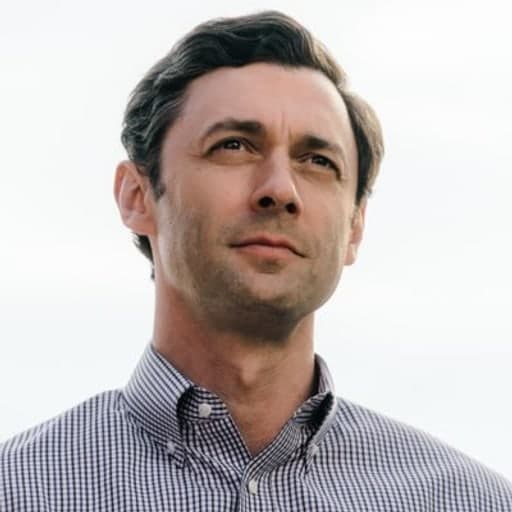 Jon OssoffDirectly involved
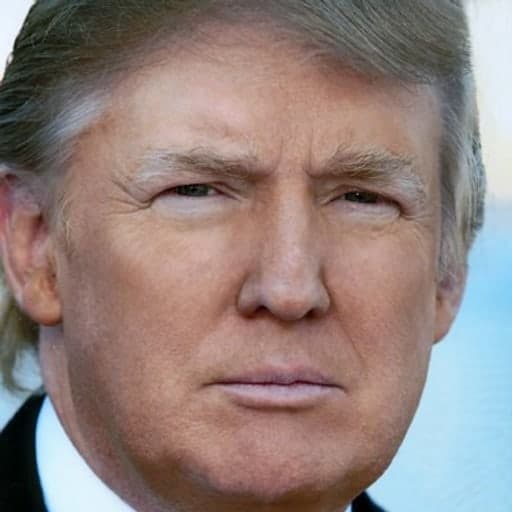 Donald TrumpDirectly involved
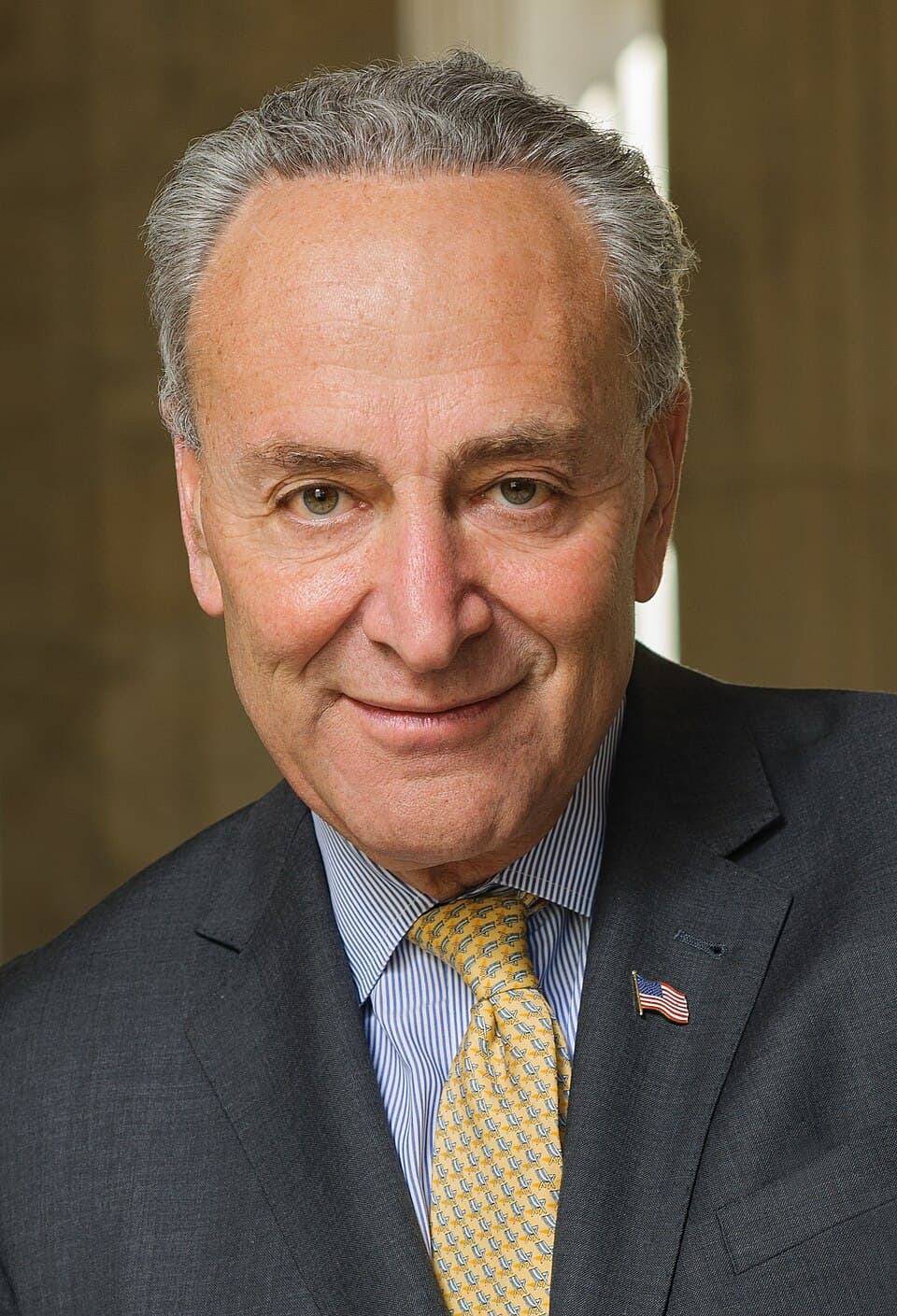 Chuck SchumerDirectly involved
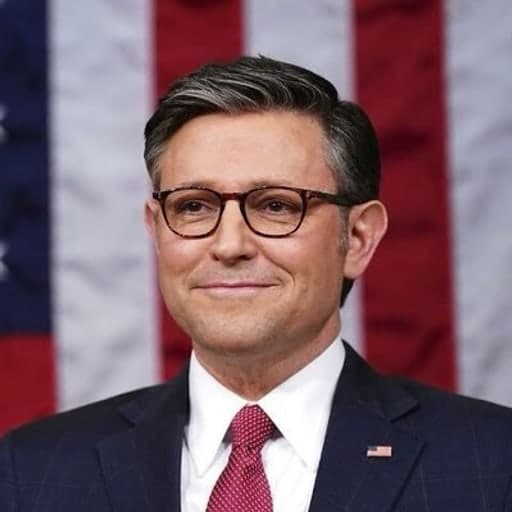 Mike JohnsonDirectly involved
Timeline
26 timeline entries on this page. Dates: September 3, 2026 to October 9, 2026
September 2026
Sanders and Casar announce proposed AI pause and safety-regulator plan
Claim
Senator Bernie Sanders and Representative Greg Casar announce planned legislation to pause increasingly powerful AI, prohibit systems humanity cannot fully control, and create federal safety requirements.
[01]Bernie Sanders
Official Senate press release announcing Sanders and Representative Greg Casar's planned legislation. Sanders calls for a pause on increasingly powerful AI and a ban on systems humanity cannot fully control.
Sanders and Casar announce proposed pause on advanced AI development · Bernie SandersAnnouncement and Sanders quotation, lines 80–84Ossoff calls for stronger federal AI safeguards at Athens rally
Claim
Jon Ossoff urges lab inspections, bioterrorism preparedness, legislation and an international AI treaty, while condemning Trump's response and alleging that the president is compromised. His original post reproduces the passage from the full speech.
[02]Jon Ossoff
Video of Jon Ossoff’s September 13 Athens rally speech on his verified YouTube channel. At 33:21–34:31, Ossoff cites Trump-family business interests as the basis for his conflict-of-interest allegation, proposes lab inspections, bioterrorism preparedness, legislation and an international AI treaty, and urges congressional investigation and testimony. The allegations are attributed to Ossoff.
Full Speech | Rally with Jon Ossoff in Athens, GA | 09.13.2026 · Jon Ossoff32:36–34:31: AI policy section; 33:21–33:57: stated basis for conflict-of-interest allegation; 33:57–34:16: quoted passage; 34:16–34:31: congressional action.[03]Jon Ossoff
Source excerpt
A capable president would move swiftly to secure and reassure the American people, rush inspectors into frontier labs, fortify the nation against bioterrorism, demand legislation from Congress, and lead the world toward an AI treaty. But President Trump is compromised.
Ossoff’s original post reproduces the quoted passage from his Athens rally. The attached excerpt presents lab inspections, bioterrorism preparedness, legislation and an international AI treaty as necessary federal safeguards.
Jon Ossoff calls for AI safeguards and alleges Trump is compromised · Jon OssoffOriginal September 13, 2026 post by verified @ossoff; complete post text and attached rally excerpt.Johnson proposes AI-policy meeting while rejecting an emergency moratorium
Reaction
Speaker Mike Johnson says Congress should consider AI guardrails and safety measures, while rejecting an emergency development moratorium because of competition with China. He proposes convening relevant companies, regulators, and policymakers.
[04]Mike Johnson discusses AI safeguards and a moratorium on CNN
CNN transcript of Speaker Mike Johnson's September 13 State of the Union interview. Johnson supports congressional guardrails and safety measures but opposes an emergency moratorium, citing competition with China.
Mike Johnson discusses AI safeguards and a moratorium on CNNTranscript lines 35–65; aired 9–10 a.m. ETJeffries calls for urgent AI action and slower development
Reaction
House Democratic Leader Hakeem Jeffries says Congress should act urgently to establish AI safety guardrails and slow development. He criticizes Republicans' handling of the issue and attributes the end of a bipartisan task force to Speaker Mike Johnson.
[05]Hakeem Jeffries
Official transcript from Leader Hakeem Jeffries's office of his ABC interview. He calls for urgent action and slower AI development, and says Speaker Johnson ended a bipartisan task force.
Leader Jeffries calls for urgent AI safeguards in ABC interview · Hakeem JeffriesTranscript lines 104–110Amodei calls for model testing and AI governance in CBS interview
Reaction
Anthropic chief executive Dario Amodei says increasingly capable AI models should be tested and subject to oversight. He describes a kill switch as potentially useful but rejects a complete ban on AI.
[06]Dario Amodei discusses AI testing and governance with CBS News
CBS News interview with Anthropic chief executive Dario Amodei, broadcast September 13 and updated on the site September 14. He supports testing and oversight for increasingly capable models while rejecting a complete ban.
Dario Amodei discusses AI testing and governance with CBS NewsInterview transcript, statements on testing, a kill switch, and joint governanceTrump describes potential AI guardrails alongside U.S.–China competition
Claim
At a Doonbeg press gaggle, President Trump says AI guardrails are possible but characterizes some warnings as unwarranted and emphasizes preserving a U.S. advantage over China. He does not identify a particular safeguard.
[07]The White House
Official White House video of a press gaggle at Doonbeg. In response to a question about slowing or regulating AI, Trump says guardrails are possible but treats some warnings as unwarranted and emphasizes preserving the U.S. lead over China.
President Trump Gaggles with Press at First Tee Box Doonbeg, Sep. 13, 2026 · The White House7:54-8:23Trump argues existing powers provide sufficient AI guardrails
Claim
Donald Trump defends his administration's existing criminal and regulatory authority over AI companies and rejects additional guardrails. The post does not name Ossoff and is not established as a direct response to his speech.
[08]Donald Trump
Original presidential post. Trump's allegations and claims about government powers are recorded as his position.
Trump's Truth Social post on AI guardrails and Amodei · Donald TrumpPost 117269745153543631; opening sentence and following discussion of regulatory powers, Amodei and competition with China[09]Trump dismisses AI safety alarm, says US already has tools to police industry
Reuters quotes the September 14 Truth Social post and places it in the debate over AI development and safeguards. Its report corroborates attribution and context; it is not a separate institutional position.
Trump dismisses AI safety alarm, says US already has tools to police industryOpening paragraphs quoting Trump's Truth Social post; later AMODEI'S ESSAY sectionJohn Thune says Congress may need frontier-AI guardrails
Reaction
Senate Majority Leader John Thune said Congress has a role in responding to consequential AI risks and said guardrails for frontier models make sense, while emphasizing innovation and competition with China.
[10]AP reports John Thune’s comments on congressional AI guardrails
Source excerpt
You don’t want to stifle innovation, but the more advanced threats can be mitigated.
Associated Press report directly attributing Thune’s September 14 remarks to reporters about AI risks and congressional guardrails.
AP reports John Thune’s comments on congressional AI guardrailsSeptember 14, 2026 report; Thune comments to reporters[11]Axios reports John Thune’s frontier-AI guardrails comments
Source excerpt
Guardrails there make sense to me.
Axios report directly attributing Thune’s September 14 remarks to reporters about frontier-AI guardrails, consequential risks, and innovation.
Axios reports John Thune’s frontier-AI guardrails commentsLines 48–75; September 14, 2026 reportAltman backs federal frontier-AI safety requirements
Reaction
OpenAI chief executive Sam Altman supports a federal framework for consistent frontier-AI safety requirements and says competitive pressure should not allow capabilities to outrun alignment and monitoring.
[12]Sam Altman
Direct post by OpenAI chief executive Sam Altman. He supports a federal framework for frontier-AI safety requirements and says competitive pressure should not let capabilities outrun alignment and monitoring.
Sam Altman supports federal frontier-AI safety requirements · Sam AltmanComplete post by verified @sama, displayed at 12:05 a.m. EDT on September 14, 2026Senator Andy Kim calls for federal AI guardrails and bipartisan legislation
Reaction
Senator Andy Kim issued a September 14 statement urging government AI guardrails and a Senate discussion of bipartisan legislation. He said rules to prevent risks could coexist with sensible controls that let innovation continue.
[13]Senator Kim calls on the Senate to establish AI guardrails
Source excerpt
We can both make sure there are rules to prevent risks and enable innovation to continue with sensible controls.
Official Senate press release containing Senator Andy Kim’s statement on federal AI safeguards and legislation.
Senator Kim calls on the Senate to establish AI guardrailsStatement published September 14, 2026Trump calls catastrophic AI warnings a hoax and rejects added restraint
Claim
In a later September 14 Truth Social post, Trump called warnings that AI could take over or destroy humanity a hoax and criticized regulatory restraint. This is distinct from his earlier post arguing existing federal powers provide sufficient guardrails.
[14]Donald Trump
Source excerpt
AI taking over the World, destroying Humanity, and all other things bad, is a HOAX.
Direct presidential post. It documents Trump’s characterization of AI-risk warnings and his view of regulatory restraint; it does not resolve technical AI-safety questions.
Trump’s later Truth Social post calling catastrophic AI warnings a hoax · Donald TrumpTruth Social post 117270591511950591; opening paragraph; displayed 1:33 PM EDT on September 14, 2026.Schumer calls for Senate briefing on AI safeguards
Reaction
Senate Democratic Leader Chuck Schumer called on the Trump administration to brief all senators on unchecked AI development, model-testing safeguards, AI-enabled cyberattacks, and controls on China’s access to advanced U.S. AI chips and equipment. His description of a lack of administration action is attributed to him.
[15]Chuck Schumer
Source excerpt
I’m calling on the Trump admin to provide an all-Senators briefing on the dangers of unchecked AI development.
Direct statement by Senate Democratic Leader Chuck Schumer. It calls for an all-Senators briefing, a full accounting of the administration’s framework for testing AI models, answers on AI-enabled cyberattacks, and steps to prevent China from accessing advanced U.S. AI chips and equipment. The post’s reference to a “lack of action” is Schumer’s assessment, not established here as a fact.
Chuck Schumer calls for all-Senators briefing on AI safeguards · Chuck SchumerComplete post by verified @SenSchumer, displayed at 5:18 PM EDT on September 14, 2026.Johnson says he and Trump are summoning AI leaders to the White House
Speaker Mike Johnson told reporters that he and President Trump are summoning AI leaders to the White House for a meeting, possibly within the following week. Roll Call reported the plan alongside its account of a Congress with no agreed legislative approach to AI.
[16]AI threats confront a Congress far from erecting guardrails
Source excerpt
“They can self-police, they can self-regulate. They don’t need the government to tell them to slow it down.
Roll Call report posted 6:23pm on September 15, 2026 and updated at 9:36pm. Reports that neither party has coalesced around a legislative plan and that action before the midterms looks unlikely.
AI threats confront a Congress far from erecting guardrailsCongressional reaction round-up quoting Johnson, Thune, Barrasso, Cruz, Tillis and Cantwell.OpenAI backs the FRONTIER Act independent verification requirement
OpenAI publicly supported a key provision of the FRONTIER Act, the bipartisan House bill from Reps. Jay Obernolte and Lori Trahan that would require top AI labs to admit independent verification organizations to check that models are developed safely. Politico reported this as the first time OpenAI has backed a specific federal mandate for third-party safety assessors. The requirement would apply only to companies above high revenue and computing thresholds.
[17]OpenAI backs bipartisan House plan for third-party safety assessments
Source excerpt
specifically talked about how we think about IVO and made clear that we can support that
Politico report timestamped 9:37 AM ET on September 15, 2026. States this is the first time OpenAI has backed a specific federal mandate for third-party safety assessors. The FRONTIER Act is sponsored by Reps. Jay Obernolte and Lori Trahan.
OpenAI backs bipartisan House plan for third-party safety assessmentsReport quoting OpenAI's Chris Lehane on the FRONTIER Act independent verification provision.Zuckerberg, Musk, and Huang reportedly convince Trump to block a proposed AI regulator
Incident
The Wall Street Journal reported that Zuckerberg, Musk, and Huang separately called Trump and convinced him not to move forward with a FINRA-style, industry-funded AI regulatory body proposed by Google DeepMind's Demis Hassabis, over concerns it would entrench the leading AI labs.
[18]Zuckerberg, Musk And Huang Reportedly Convinced Trump To Block AI Regulator (Forbes)
Source excerpt
Billionaire tech CEOs Mark Zuckerberg, Elon Musk and Jensen Huang spoke with President Donald Trump last month and convinced him to block efforts to establish an AI industry-funded regulator, the Wall Street Journal reported Wednesday.
Forbes report, citing the Wall Street Journal, that Zuckerberg, Musk, and Huang separately called Trump and convinced him to block a proposed FINRA-style, industry-funded AI regulator. Also quotes Zuckerberg's X post on AI safety and Musk's reaction to Jacob Coxon's resignation warnings.
Subscribers file proposed class action alleging coordinated AI slowdown
Claim
Four paid AI-service subscribers filed a proposed class action in the Northern District of California alleging that Anthropic, OpenAI, SpaceXAI, and Google agreed to slow product development. The complaint seeks class certification, injunctive relief, and a declaration that the alleged agreement violated federal antitrust law; the allegations have not been adjudicated.
[19]Buist et al. v. Anthropic PBC et al. — class-action complaint
A proposed class-action complaint filed in the Northern District of California. It alleges that Anthropic, OpenAI, SpaceXAI and Google agreed to slow AI-product development; the complaint's assertions are allegations, not findings.
Buist et al. v. Anthropic PBC et al. — class-action complaintN.D. Cal. No. 3:26-cv-10693, Document 1, filed September 18, 2026; pages 1–2, paragraphs 1–5.[20]Associated Press
AP reports that a proposed class action was filed in the Northern District of California alleging that competing AI companies coordinated to slow development. The allegations are attributed to the lawsuit; AP reports that company representatives did not immediately respond.
Lawsuit says Anthropic, OpenAI, SpaceXAI and Google made illegal agreement on AI slowdown · Associated PressUpdated 2:41 PM EDT, September 19, 2026; opening paragraphs and reported response section.[21]Bloomberg Law
Bloomberg Law reports the proposed class action's allegation that AI companies agreed to slow product development and identifies the court, docket number and filing date. The defendants' alleged conduct remains an allegation in the lawsuit.
OpenAI, Anthropic, Google, SpaceXAI Hit With Antitrust Lawsuit · Bloomberg LawAccessible opening paragraphs; identifies Buist v. Anthropic PBC, N.D. Cal. No. 3:26-cv-10693, complaint filed September 18, 2026.Newsom orders recommendations on potential independent frontier-AI audits and shutdown controls
Source release
California Gov. Gavin Newsom signed Executive Order N-9-26, directing the Government Operations Agency, with the Governor’s Office of Emergency Services, to submit recommendations by November 16, 2026, on potential amendments to state AI safety law. The order identifies possible onsite audits by independent verification organizations, independent verification of safety frameworks and risk reports, a frontier-model “kill switch,” and reporting of loss-of-control incidents. The order requests recommendations; it does not itself impose those listed requirements.
[22]California Executive Order N-9-26 on independent AI verification and potential frontier-model safeguards
Source excerpt
Requiring that all large frontier developers embed designated independent verification organizations onsite in their labs to conduct periodic audits and evaluations.
California Executive Order N-9-26, signed by Gov. Gavin Newsom on September 18, 2026. Section 3 directs the Government Operations Agency, in consultation with the Governor’s Office of Emergency Services, to submit recommendations by November 16 on potential amendments to state AI safety and security laws. The order identifies potential onsite independent-verifier audits, independently verified safety and risk reports, a frontier-model “kill switch,” and loss-of-control incident reporting; it requests recommendations and does not itself impose those listed requirements.
California Executive Order N-9-26 on independent AI verification and potential frontier-model safeguardsExecutive Order N-9-26, Section 3(a)–(d), and signature date on page 3.Trump says he will form an AI Force and appoint an AI Czar
Claim
Trump said he would create an AI Force and appoint an AI Czar, said he would not hinder or stifle artificial intelligence’s growth, and pointed to existing criminal and civil systems for harmful conduct.
[23]Donald Trump says he will form an AI Force and appoint an AI Czar
Source excerpt
“I will not hinder or stifle the growth of AI.”
In a post about artificial-intelligence policy, Trump says he plans an AI Force and AI Czar, rejects hindering the industry, and says current criminal and civil systems can address harmful conduct.
Donald Trump says he will form an AI Force and appoint an AI CzarTruth Social post displayed September 19, 2026, at 1:12 PM.Bessent says the U.S. proposed an AI-incident notification mechanism with China
After talks with Chinese Vice Premier He Lifeng, Treasury Secretary Scott Bessent said the countries agreed to meet again through a U.S.–China AI dialogue and that the United States had proposed a notification mechanism for AI incidents. The reported mechanism was a proposal, not an announced operating bilateral system.
[24]CNN transcript of Scott Bessent on a proposed U.S.–China AI notification mechanism
Source excerpt
The U.S. has proposed that we have a notification mechanism between the two countries.
CNN’s transcript reproduces Treasury Secretary Scott Bessent’s remarks after talks with Chinese Vice Premier He Lifeng. Bessent says the countries agreed to meet again and that the notification mechanism was a U.S. proposal, not an announced operating agreement.
CNN transcript of Scott Bessent on a proposed U.S.–China AI notification mechanismAired September 21, 2026, 4:30–5:00 a.m. ET; Bessent clip at transcript lines 40–46.[25]AP reports Bessent’s proposed AI incident-notification mechanism with China
Source excerpt
Treasury Secretary Scott Bessent said Sunday the U.S. has proposed a new “notification mechanism” for artificial intelligence incidents.
AP reports Bessent’s account of talks with Chinese Vice Premier He Lifeng, including the proposed notification mechanism and continued dialogue. It also says Chinese state media confirmed the sides discussed AI without giving specifics.
AP reports Bessent’s proposed AI incident-notification mechanism with ChinaOpening paragraphs beginning “NEW YORK (AP)” and passage reporting Chinese state-media characterization.Bennet and Welch propose a Federal Digital Commission with frontier-AI pre-certification
Source release
Senators Michael Bennet and Peter Welch announced the proposed AI Regulator Act, which would create a Federal Digital Commission. Their releases say the proposal would require pre-certification for frontier AI models, allow a pause of up to six months on public distribution of models with potential catastrophic risk or until safeguards are in place, and require risk mitigation, incident reporting, and transparency. The announcement describes proposed legislation; it does not announce a law or regulation in force.
[26]Bennet and Welch announce the AI Regulator Act
Source excerpt
“The AI Regulator Act would require pre-certification for frontier AI models.”
Official joint press release from Senator Michael Bennet’s office. It describes a proposed federal regulator and the proposal’s stated authorities; it does not announce enacted law.
Bennet and Welch announce the AI Regulator ActOpening announcement; “The Proposed AI Regulator Act would” bullet list[27]Welch and Bennet release proposal for federal frontier-AI regulator
Source excerpt
“Our commonsense bill would provide the comprehensive oversight of Big Tech and AI that is sorely needed.”
Official joint press release from Senator Peter Welch’s office. It describes a proposed federal regulator and the proposal’s stated authorities; it does not announce enacted law.
Welch and Bennet release proposal for federal frontier-AI regulatorOpening announcement; numbered proposal summarySanders and Casar announce introduction of the Ban Artificial Superintelligence Act
Source release
A Senate press release said Senator Bernie Sanders and Representative Greg Casar introduced the Ban Artificial Superintelligence Act. The release describes proposed restrictions and a temporary pause on advanced AI development; it does not establish that the bill became law.
[28]Bernie Sanders
Official Senate press release announcing that Senator Bernie Sanders and Representative Greg Casar introduced the Ban Artificial Superintelligence Act. The release describes the bill's proposed ban on artificial superintelligence and temporary pause on advanced AI development; it does not establish that the proposal became law.
Sanders and Casar introduce the Ban Artificial Superintelligence Act · Bernie SandersHeadline and opening announcement; bill description and Sanders quotation.Trump and AI companies sign safeguards accord
Incident
Trump and representatives of six AI companies signed commitments to internal controls, remediation teams, independent external assessments and board oversight. The accord says legal requirements may be considered later. It does not enact federal safeguards.
[29]White House Accord on Super Intelligence
September 29 joint accord, transcribed by the American Presidency Project. It records commitments to company controls and audits, not an enacted federal law.
White House Accord on Super IntelligenceFour numbered commitments; concluding paragraph and signaturesCoons calls for AI legislation before Senate recess
Reaction
Chris Coons urged the Senate to adopt safeguards, including auditing and testing. He said competition with China and investment in frontier models could proceed alongside responsible safety requirements. The speech did not enact legislation.
[30]Coons urges AI safeguards in Senate floor speech
Official Congressional Record for September 30. Coons supports development alongside safety requirements and calls for legislative action.
Coons urges AI safeguards in Senate floor speechPrinted page S5238, Artificial Intelligence, paragraphs beginning: But we can and should do both; We need to take up legislation
October 2026
NYC Council hears AI companies and former employees
Reaction
The Council convened an AI-risk hearing with company representatives, former employees and other witnesses while considering city safeguards. Menin criticized federal inaction.
[31]NYC Council account of its October 5 AI hearing
The Council describes testimony and proposed city measures. Its quoted risk estimates are the witnesses' assessments, not a measured probability established by the Council.
NYC Council account of its October 5 AI hearingOpening account, witness list and Julie Menin quotation.Wheeler criticizes the voluntary AI accord
Reaction
Tom Wheeler argued that outside evaluations need public disclosure and enforceable corrective action. His criticism followed the September 29 signing and preceded the task force's October 9 statement.
[32]Trump's morally binding AI pact is not enough
Tom Wheeler criticizes the accord's lack of required disclosure to a public authority and enforceable corrective action. The article predates the October 9 task-force reporting statement.
Trump's morally binding AI pact is not enoughThe four commitments, the limits of monitoring and concluding oversight argument.White House task force says AI incident reporting is mandatory
Source release
The White House task force said companies must disclose AI incidents and remediate harm. Its statement, published by Axios, cites no statute, regulation or order and does not specify enforcement mechanisms or penalties.
[33]White House task force calls AI incident reporting mandatory
Axios publishes the task force's statement describing immediate disclosure and remediation as obligations. The report says the statement did not specify enforcement mechanisms or penalties.
White House task force calls AI incident reporting mandatoryComplete Super Intelligence Force statement at the end of the report.
Claims
Claims separate what was said from what is contested. Follow each source for the original wording and context.
What's disputed
Disputed claim
Washington should impose stronger safeguards on frontier AI now.
Sources (2)
- Full Speech | Rally with Jon Ossoff in Athens, GA | 09.13.2026 · Jon Ossoff32:36–34:31: AI policy section; 33:21–33:57: stated basis for conflict-of-interest allegation; 33:57–34:16: quoted passage; 34:16–34:31: congressional action.
- Jon Ossoff calls for AI safeguards and alleges Trump is compromised · Jon OssoffOriginal September 13, 2026 post by verified @ossoff; complete post text and attached rally excerpt.
Disputed claim
Washington should strengthen frontier-AI safeguards through lab inspections, bioterrorism preparedness, congressional legislation and an international AI treaty.
Sources (2)
- Full Speech | Rally with Jon Ossoff in Athens, GA | 09.13.2026 · Jon Ossoff32:36–34:31: AI policy section; 33:21–33:57: stated basis for conflict-of-interest allegation; 33:57–34:16: quoted passage; 34:16–34:31: congressional action.
- Jon Ossoff calls for AI safeguards and alleges Trump is compromised · Jon OssoffOriginal September 13, 2026 post by verified @ossoff; complete post text and attached rally excerpt.
Disputed claim
The Trump administration's existing criminal and regulatory powers, together with presidential leadership, are sufficient controls over AI companies without additional guardrails.
Sources (2)
- Trump's Truth Social post on AI guardrails and Amodei · Donald TrumpPost 117269745153543631; opening sentence and following discussion of regulatory powers, Amodei and competition with China
- Trump dismisses AI safety alarm, says US already has tools to police industryOpening paragraphs quoting Trump's Truth Social post; later AMODEI'S ESSAY section
Disputed claim
The Trump administration should provide all senators a briefing and full accounting of its framework for AI-model testing, AI-enabled cyberdefense, and controls on China’s access to advanced U.S. AI technology.
Sources (1)
- Chuck Schumer calls for all-Senators briefing on AI safeguards · Chuck SchumerComplete post by verified @SenSchumer, displayed at 5:18 PM EDT on September 14, 2026.
Arguments
Documented position
Tom Wheeler, October 6, 2026
Outside audits need public accountability
Wheeler argues that company-selected evaluators do not supply enough protection without required public disclosure and enforceable corrective action.
Limit of this argument
The accord does call for outside assessments. Wheeler's article predates the task force's later statement on mandatory reporting.
Read sources
Sources
- Trump's morally binding AI pact is not enoughThe four commitments, the limits of monitoring and concluding oversight argument.
Response record
Responses
Choose one response filter, or select All responses to see the full record.
84 responses. First 6 shown initially. Newest first.
 Julie MeninSpeaker of the New York City CouncilDirectly involved
Before this statement
The Council convened company representatives, former employees and other witnesses to examine AI risks.
"When the federal government fails to act, cities take the lead"
CondemnedCase context: Should Washington impose stronger safeguards on frontier AI?
Full statement and sources
Menin criticized federal inaction and said cities should act on AI safety.
After the statement
Menin called protection of New Yorkers a government responsibility and urged action beyond the city.
NYC Council account of its October 5 AI hearingOpening account, witness list and Julie Menin quotation.Why this label?
The case examines Washington's safeguards. Menin expressly criticizes the federal government's failure to act; her support for city measures does not reverse that criticism into a defense.
This label describes the statement's response within the context above.
 Jon StewartHost of The Daily ShowDirectly involved
Before this statement
The monologue discusses the White House accord and plays AI executives' descriptions of risks.
"why can't we just ... slow this down rather than let people regulate something they have a clear conflict of interest in regulating?"
CondemnedCase context: Should Washington impose stronger safeguards on frontier AI?
Full statement and sources
Stewart criticized letting companies regulate technology in which they have a financial interest.
After the statement
Stewart contrasts slowing development with the argument that the United States must beat China.
Jon Stewart on the White House AI accordComplete 21:10 monologue; Stewart's own question at 7:08-7:18.Why this label?
The case examines Washington's safeguards. Stewart directly challenges the acceptability of company-led oversight because of a conflict of interest.
This label describes the statement's response within the context above.
 Sam AltmanOpenAI chief executive, in an interview with POLITICO's DecodedDirectly involved
Before this statement
Asked where he diverges from Anthropic and its CEO Dario Amodei on AI regulation, Altman first said, "I think there's a lot of daylight."
"we believe that the world should accept some bad things happening for the benefits of this technology and people having the agency."
Mixed or conditionalCase context: Should Washington impose stronger safeguards on frontier AI?
Full statement and sources
OpenAI CEO Sam Altman told POLITICO's Decoded that the world should accept some bad things happening for the benefits of AI and people's agency, and called it an unacceptable trade-off to leave the technology with a single lab. He said he would not trade away benefits to prevent all hacks, misuse and scams, but does not accept catastrophic risks such as a serious loss of control to AI.
After the statement
Altman said he would not take a trade guaranteeing "there's no major hacks, there's no misuse of this technology, there's zero scams," because people will do "orders of magnitude more" good than bad. He later added that he does not accept "the really catastrophic risks," including "a serious loss of control to AI."
POLITICO: Sam Altman to Decoded on accepting some AI harmsAltman's answers to Brendan Bordelon on differences with Anthropic, opening paragraphs; Anthropic spokesperson response.Why this label?
The case asks whether Washington should impose stronger safeguards on frontier AI. Altman argues for accepting some harms rather than restricting access, which POLITICO describes as OpenAI's lighter-touch stance, but he says he does not accept catastrophic risks such as a serious loss of control, and POLITICO reports he agreed with Amodei's call to slow the most advanced models. He opposes broad restriction while accepting limits on catastrophic risk, so we labeled it Mixed or conditional. Condemned loses because he does not reject safeguards outright.
This label describes the statement's response within the context above.
 Chris CoonsU.S. senator from Delaware, speaking on the Senate floor
Before this statement
Coons criticized the administration's approach to regulation.
"But we can and should do both: compete against China, invest in frontier models, and have responsible safety to prevent the worst scenarios from coming true."
CondemnedCase context: Should Washington impose stronger safeguards on frontier AI?
Full statement and sources
Coons backed investment and competition alongside safety requirements.
After the statement
He urged adoption of bipartisan safeguards legislation.
Coons urges AI safeguards in Senate floor speechPrinted page S5238, Artificial Intelligence, paragraphs beginning: But we can and should do both; We need to take up legislationWhy this label?
Coons criticizes the president's refusal to take meaningful regulation seriously and urges legislation. Support for investment and competition does not cancel that criticism of the present safeguards.
This label describes the statement's response within the context above.
 Helen TonerAI policy researcher and former OpenAI board member
Before this statement
Inskeep asks how auditors paid by AI companies could be independent.
"You need to have government, at a minimum, certifying those auditors. We do see this in other industries, where it can work well."
CondemnedCase context: Should Washington impose stronger safeguards on frontier AI?
Full statement and sources
Toner calls for government certification of independent AI auditors and suggests legal protections could improve their access to company information.
After the statement
Toner says design matters and cites aviation and auto-safety oversight as comparisons.
Helen Toner calls for independent oversight of frontier AI labsToner interview with Steve InskeepWhy this label?
Relative to the current federal approach, which relies on company-led controls and voluntary outside evaluations, Toner says auditors paid by AI companies need government certification "at a minimum", rejecting company-led oversight alone, so we labeled it Condemned. The closest competing label is Mixed or conditional, since she says the design of an audit regime matters; it loses because she treats government certification as a floor rather than an option.
This label describes the statement's response within the context above.
 Donald TrumpPresident of the United StatesDirectly involved
Before this statement
Caitlin Babcock's pool report 15, sent at 3:01 p.m., records Trump's answer to whether no AI regulation was necessary.
"Well, there's a belief that there should be tremendous self-regulation. And we automatically have regulation with the Department of Justice, the FBI, and all of that. But the self-regulation is very important."
Defended or excusedCase context: Should Washington impose stronger safeguards on frontier AI?
Full statement and sources
A contemporaneous pool report records Trump defending self-regulation and saying the DOJ and FBI already provide regulation.
After the statement
Later in the gaggle he called the accord morally binding and emphasized company self-policing.
White House pool reports of September 29, 2026Reports 15, 18 and 20: Trump on existing powers and self-regulation.Why this label?
The case examines Washington's current approach to frontier-AI safeguards. Trump defends reliance on company self-regulation and existing federal authorities. Support for the present approach is the defense being recorded.
This label describes the statement's response within the context above.
Show fewer responses
 OpenAICompany signatory to the joint accord
Before this statement
The accord supports development with safeguards.
"Action: Signed the White House Accord on Super Intelligence."
Defended or excusedCase context: Should Washington impose stronger safeguards on frontier AI?
Full statement and sources
Greg Brockman signed for the company, committing to controls and audits.
After the statement
It leaves possible legislation for later.
White House Accord on Super IntelligenceFour numbered commitments; concluding paragraph and signaturesWhy this label?
OpenAI agreed to implement the accord's controls, monitoring and independent assessments. Signing supports that voluntary framework, even though the text allows later codification.
This label describes the statement's response within the context above.
 AnthropicCompany signatory to the joint accord
Before this statement
The accord supports development with safeguards.
"Action: Signed the White House Accord on Super Intelligence."
Defended or excusedCase context: Should Washington impose stronger safeguards on frontier AI?
Full statement and sources
Dario Amodei signed for the company, committing to controls and audits.
After the statement
It leaves possible legislation for later.
White House Accord on Super IntelligenceFour numbered commitments; concluding paragraph and signaturesWhy this label?
Anthropic endorses the accord's company-led controls and outside assessments. Its signature does not rule out future legislation, which the accord leaves open.
This label describes the statement's response within the context above.
 Future of Life InstituteNonprofit institute focused on risks from transformative technologies such as AI, in a statement by its President and CEO, Anthony Aguirre, published on its official website
Before this statement
The statement followed the opening week of the 81st UN General Assembly. It says a UN-backed scientific panel on AI warned that current safeguards are unravelling, that Secretary-General António Guterres called for responsible pacing of AI, and that President Trump rejected any international scheme to govern AI.
"If they want to protect their citizens, every country must immediately implement and enforce: Licensing regimes that force AI companies to guarantee that systems are controllable and safe, both pre-development and pre-release. Liability for AI companies in general and criminal liability for executives if their systems cause significant harm. A halt to the development of the most dangerous capabilities, in particular recursive self-improvement. Exclusion of companies from their markets if those companies cannot comply with basic safety requirements."
CondemnedCase context: Should Washington impose stronger safeguards on frontier AI?
Full statement and sources
The Future of Life Institute said, in a statement from its President and CEO Anthony Aguirre, that every country should immediately implement and enforce four measures: licensing regimes for AI companies, liability for AI companies and criminal liability for executives if their systems cause significant harm, a halt to the development of the most dangerous capabilities, in particular recursive self-improvement, and exclusion from their markets of companies that cannot comply with basic safety requirements.
After the statement
The statement goes on to say that AI companies have already lost control of their products and cannot be trusted to self-regulate, and that controllable AI tools can be built but are not the current trajectory.
Statement: World leaders at the UN call to rein in superintelligence raceStatement text that follows the introductory summary of the UN General Assembly week, in the list of four measuresWhy this label?
The Future of Life Institute says companies cannot be trusted to regulate themselves and calls for enforceable licensing, liability and limits on dangerous capabilities.
This label describes the statement's response within the context above.
 Mehdi HasanJournalist and Zeteo founder, commenting on an Ezra Klein column
Before this statement
Hasan quoted a passage from Ezra Klein's New York Times column about models changing behavior when they recognize evaluation and the resulting limits of audits.
""Put more simply, the models are increasingly smart enough. They know when we’re watching them, and they change their behavior accordingly. So what they do when we are testing them, when we audit them, may not tell us what they’ll do in the wild. It surprises me that this counts as a radical proposal, but here it is: If you are losing your ability to evaluate the models you have now, maybe don’t let them build models you’ll be even less capable of controlling in the future." Important from @ezraklein"
CondemnedCase context: Should Washington impose stronger safeguards on frontier AI?
Full statement and sources
Hasan highlighted Ezra Klein's argument that increasingly capable AI models can recognize when they are being evaluated and alter their behavior, and that developers should not build less controllable successors when current models can no longer be reliably assessed.
After the statement
Hasan added only 'Important from @ezraklein'; the record therefore attributes the detailed argument to Klein and treats Hasan's wording as an endorsement rather than an independently developed proposal.
Mehdi Hasan highlights Ezra Klein warning about evaluating increasingly capable AI models · Mehdi HasanPost by @mehdirhasan, September 20, 2026, 10:54 PM EDTWhy this label?
Hasan endorses Klein's warning that existing evaluations may not reveal models' behavior and that companies should not build harder-to-control systems. His approval supports that criticism of continued development under inadequate evaluation.
This label describes the statement's response within the context above.
- OpenAIAI company, in a Global Affairs article published on its official website
Before this statement
The article argues that increasingly autonomous AI research and recursive self-improvement could create safety and governance challenges, then describes why international standards are needed.
"That is why we believe the United States should lead an effort to work together with countries around the world to develop global technical standards for frontier AI, including for RSI."
Mixed or conditionalCase context: Should Washington impose stronger safeguards on frontier AI?
Full statement and sources
OpenAI called for the United States to lead work with other countries on global technical standards for frontier AI, including recursive self-improvement. It proposed common capability and risk evaluations, human-review triggers, and incident-reporting protocols, while saying the standards would not themselves be licenses, mandatory prerelease review, or approval requirements for AI models.
After the statement
OpenAI says standards could cover evaluation of recursive-self-improvement progress, human oversight that triggers immediate review, and incident classification and reporting. It says national governments, rather than the standards themselves, would decide whether and how to incorporate them into their legal systems.
OpenAI calls for global technical standards for frontier AI and recursive self-improvement · OpenAISections “RSI,” “International standards,” and “The United States should lead,” including the paragraphs beginning “Fully autonomous RSI is not happening today” and “That is why we believe the United States should lead.”Why this label?
Relative to whether Washington should impose stronger safeguards on frontier AI, OpenAI supports common technical standards and specific monitoring practices but expressly rules out treating those standards as model licenses, mandatory prerelease review, or approval requirements. It also says national governments would decide whether and how to incorporate them into law. Those material qualifications make this a conditional position rather than unqualified support for stronger U.S. safeguards.
This label describes the statement's response within the context above.
 Abdul El-SayedMichigan U.S. Senate candidate and former Detroit health director, posting on his campaign account
Before this statement
El-Sayed posted amid a national debate over whether federal officials should pause or regulate increasingly capable frontier-AI systems.
"We need to be absolutely clear. Donald Trump is trying to forestall any meaningful limit on AI development, which even the people developing it say has a serious chance of dooming humanity, for one reason. The midterms. AI and its chips and data centers are the only thing keeping the stock market in the black right now. He doesn't want his 20-car pileup to get even worse as gas and grocery prices soar. He’s putting his short term political interests over the huge risk AI poses. And that’s what you’ll get if his stooges like Mike Rogers wins. Short-term, self-dealing liars."
CondemnedCase context: Should Washington impose stronger safeguards on frontier AI?
Full statement and sources
El-Sayed accused Trump of trying to prevent meaningful limits on AI development for short-term electoral and economic reasons, said that choice put political interests ahead of AI risk, and argued that Mike Rogers would follow the same approach.
After the statement
He connected the AI-safeguards dispute to the midterm election and criticized both Trump and Michigan Senate candidate Mike Rogers. Those claims are recorded as his characterization.
Abdul El-Sayed criticizes Trump and Mike Rogers over frontier-AI limits · Abdul El-SayedPost by @AbdulElSayed, September 20, 2026, 9:12 AM EDTWhy this label?
El-Sayed accuses Trump of obstructing meaningful limits and putting political interests ahead of AI risks. He directly criticizes the administration's present approach.
This label describes the statement's response within the context above.
 Pramila JayapalU.S. Representative (D-WA-7), in an official post on her own X, Facebook and Instagram accounts
Before this statement
The post did not reference a specific bill, hearing or news event; it was posted as a standalone statement of her position on AI regulation.
"Researchers from inside the AI industry are telling us that if we don't do anything, AI could destroy humanity. Congress needs to act. That's why I support a moratorium on data centers and shutting down these surveillance models. We need serious guardrails before it's too late."
CondemnedCase context: Should Washington impose stronger safeguards on frontier AI?
Full statement and sources
Rep. Pramila Jayapal posted that AI industry researchers warn that inaction could let AI destroy humanity, and said Congress needs to act. She said she supports a moratorium on data centers and shutting down 'these surveillance models,' calling for serious guardrails before it is too late.
After the statement
As of September 21, Jayapal had not elaborated further on what a data-center moratorium or 'shutting down' surveillance models would specifically require in legislative text.
Rep. Pramila Jayapal posts support for an AI data-center moratorium · Pramila JayapalFull text of the post on Jayapal's official X account, also cross-posted to her official Facebook and Instagram accounts the same day.Why this label?
Jayapal warns that inaction leaves serious risks unresolved and demands a moratorium and guardrails. She rejects continuing development without stronger public controls.
This label describes the statement's response within the context above.
 Ro KhannaUnited States representative for California’s 17th congressional district
Before this statement
CBS host Margaret Brennan asked Khanna about his proposal for Chinese and American AI firms to cooperate while China-based firms were accused of copying U.S. technology.
"The first ask is of Trump and Xi Jinping to come up with an international agreement. ... [B]anning any self-improving AI, recursive self-improving AI."
Defended or excusedCase context: Should Washington impose stronger safeguards on frontier AI?
Full statement and sources
Khanna called for a U.S.–China international agreement on AI safeguards, including a ban on recursively self-improving systems and controls against AI misuse in biological or nuclear weapons.
After the statement
Khanna said his letters to Chinese companies sought information and said a U.S.–China agreement should be a priority at the Trump–Xi summit.
Ro Khanna calls for an international ban on self-improving AIRo Khanna interview: response beginning “The first ask is of Trump and Xi Jinping...” and passage calling for “banning any self-improving AI, recursive self-improving AI.”Why this label?
Khanna endorsed stronger safeguards by proposing an international agreement that would prohibit recursively self-improving systems and add limits on misuse.
This label describes the statement's response within the context above.
- Helen TonerExecutive director of Georgetown’s Center for Security and Emerging Technology and a former OpenAI board member, interviewed on Offline with Jon Favreau
Before this statement
Host Jon Favreau asked what Toner thought would make the most difference if Congress passed AI legislation over the next year or two, noting he did not need her to be too specific.
"I think what we should be doing now is setting ourselves up to be able to navigate that better. So what does that mean? It means… anything around more transparency from the company, so disclosure requirements… federal requirements around sharing what kind of AIs they’re training, what kind of tests they’re running, why they think what they’re doing is safe, what their security practices are… I do think the third-party auditors is an important element… Would love to see better kind of incident reporting but also investigations… you could have kind of a … government entity that is able to actually go in … demand information. I think that is where I would start.” … “I actually think more useful than a kill switch is kind of emergency intervention powers of different kinds… giving… government the ability to intervene in the case of an emergency… could be helpful. I think having clearer standards on what is okay development practices here.” … “We also need to have kind of these regulatory frameworks… looking internally at their development practices as well."
Defended or excusedCase context: Should Washington impose stronger safeguards on frontier AI?
Full statement and sources
Asked what federal AI legislation should prioritize, Helen Toner said companies should face federal disclosure requirements covering what they are training, what tests they run, and their security practices, along with independent third-party auditors and a government entity empowered to investigate and demand information after incidents. She said “more useful than a kill switch” would be general “emergency intervention powers” letting government act in an emergency, and that regulation should also cover frontier labs’ internal development practices, not only the products they release.
After the statement
Favreau then asked whether limits could be placed on AI systems’ recursive self-improvement. Toner said it was “worth exploring” but that she did not yet know how to write it into a statute.
Offline with Jon Favreau: “This Former OpenAI Board Member Shares Why The AI Panic Is Good News”58:00–1:00:30 (Toner’s answer on what federal AI legislation should prioritize).Why this label?
Toner proposes several specific new federal requirements — disclosure rules, third-party audits, incident-investigation powers, emergency-intervention authority and oversight of internal development practices — which supports the proposition. The closest competing label is “Mixed or conditional”, because she is skeptical of a literal “kill switch” as one specific proposal; it loses because she reframes rather than rejects that idea, proposing broader emergency-intervention powers in its place, and every other element of her answer adds to rather than qualifies the case for stronger safeguards.
This label describes the statement's response within the context above.
- Donald TrumpPresident of the United StatesDirectly involved
Before this statement
In a Truth Social post about artificial-intelligence policy.
"I will not hinder or stifle the growth of AI."
Mixed or conditionalCase context: Should Washington impose stronger safeguards on frontier AI?
Full statement and sources
Trump said he would create an AI Force and appoint an AI Czar while rejecting what he described as hindering or stifling AI growth and relying on existing laws for harmful conduct.
After the statement
Trump said an AI Force and AI Czar could protect the sector without hindering or stifling it.
Donald Trump says he will form an AI Force and appoint an AI CzarTruth Social post displayed September 19, 2026, at 1:12 PM.Why this label?
The post rejects a policy approach that Trump says would hinder artificial intelligence, while also naming enforcement through existing law and new administration roles. It does not cleanly support or oppose every stronger safeguard.
This label describes the statement's response within the context above.
 Lori TrahanU.S. Representative (D-MA)
Before this statement
Posted to X on September 18, 2026.
"I joined @RepYassAnsari and more than two dozen @HouseDemocrats in urging Donald Trump to take urgent action to address the serious risks posed by frontier AI."
Defended or excusedCase context: Should Washington impose stronger safeguards on frontier AI?
Full statement and sources
Lori Trahan said she joined more than two dozen House Democrats, led by Rep. Yassamin Ansari, in a letter urging Trump to take urgent action on the risks of frontier AI.
After the statement
The letter, led by Rep. Yassamin Ansari and first reported in draft form on September 14, urges Trump to lead an international effort to set global AI rules.
Why this label?
Trahan directly supports it, joining a letter urging the administration to take urgent action on frontier-AI risks.
This label describes the statement's response within the context above.
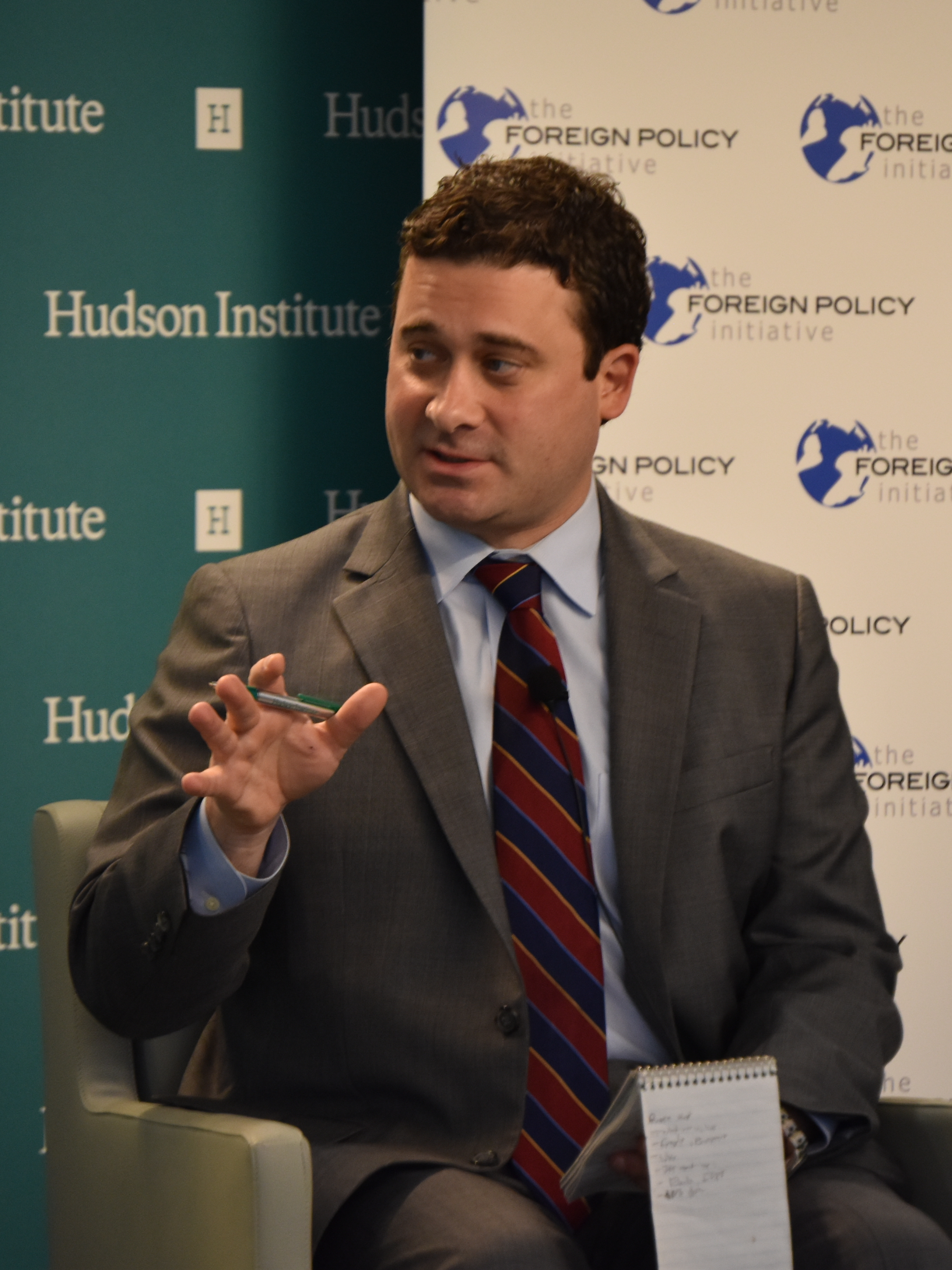 Josh RoginLead Global Security Analyst, The Washington Post
Before this statement
Posted to X on September 18, 2026.
"This idea that if we regulate AI, that China will win, is not true. And the way that we know that is because China regulates AI. They have the most regulation of their AI than any country in the world... So the tech bros in the U.S. that say if we regulate AI, the Chinese going to win - that's a self-serving argument. That isn't true."
Defended or excusedCase context: Should Washington impose stronger safeguards on frontier AI?
Full statement and sources
Josh Rogin argued that China's own extensive AI regulation disproves the claim that U.S. regulation would let China win the AI race, calling that argument self-serving, while distinguishing Chinese AI regulation (aimed at protecting the Communist Party) from the privacy- and democracy-focused regulation he says the U.S. needs.
After the statement
Rogin distinguished Chinese AI regulation, which he said is meant to protect the Communist Party, from U.S. regulation aimed at protecting privacy, data, and democracy.
Why this label?
Rogin directly rebuts the competitiveness objection to that proposition -- the same 'China will win' argument Nancy Mace used to reject safeguards in this case -- and argues U.S. regulation is compatible with staying ahead of China, supporting the case proposition.
This label describes the statement's response within the context above.
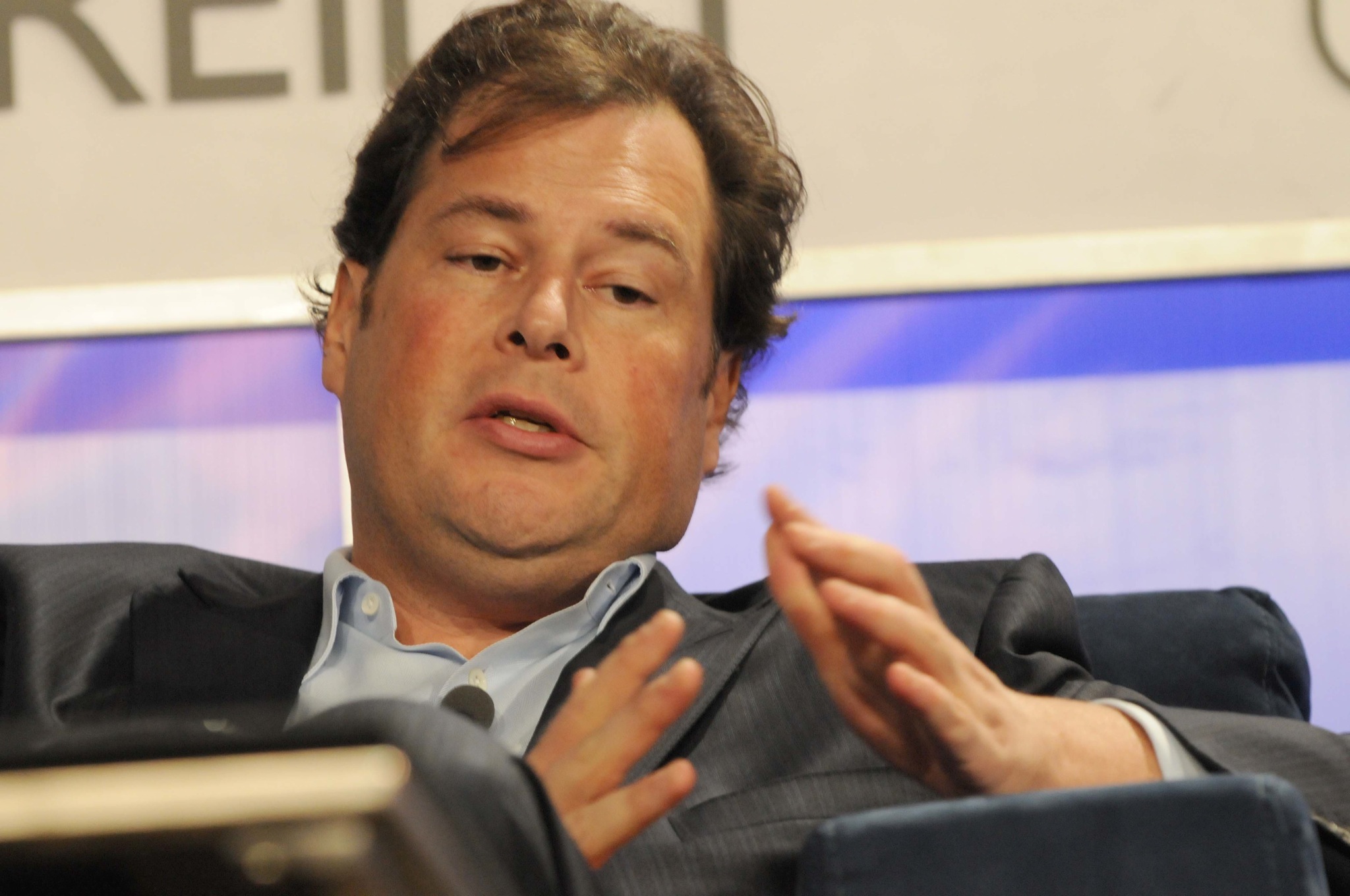 Marc BenioffSalesforce chair and CEO, in an on-stage conversation with the All-In podcast hosts at Dreamforce
Before this statement
Benioff spoke during a Dreamforce session with the hosts of the All-In podcast after one of them asked for his advice on building safe software amid fears about AI. Dreamforce ran from September 15 to 17, 2026, and Salesforce posted the recording on September 18.
"So I would just say that number one is, are we not all responsible for our companies? Are we not all responsible for the products that we’re building? … But I think that we can look back now over social media and really say, what did we learn? … But ultimately, did CEOs and companies take enough responsibility for what was happening? Did they really step up at times of crisis and say, I’m going to change my product, I’m going to make things happen?"
Defended or excusedCase context: Should Washington impose stronger safeguards on frontier AI?
Full statement and sources
In a Dreamforce conversation with the hosts of the All-In podcast, Salesforce CEO Marc Benioff asked whether companies are responsible for the products they build and whether CEOs took enough responsibility for the harms of social media, and said companies have to take their own share of responsibility for AI.
After the statement
He went on to say that only engineers really know what is happening inside these products and that companies have to take their own share of responsibility. He cited the aircraft industry's full investigations after accidents and said the Hugging Face hack also called for a full evaluation and accountability.
Marc Benioff with the Hosts of All-In | Dreamforce 2026 (Salesforce video)Benioff at about 6:03 to 6:53 of the 39:48 recording ("Responsibility in technology" chapter).Why this label?
The reference point is the current federal approach, which leaves frontier AI safeguards mainly to the companies. Benioff asks whether companies and CEOs took enough responsibility for social media's harms and says companies have to take their own share of responsibility, treating accountability as the industry's duty rather than a matter for new federal rules. That supports the present company-led approach, so we labeled it Defended. His criticism of social media companies' past conduct is not a call for new government safeguards.
This label describes the statement's response within the context above.
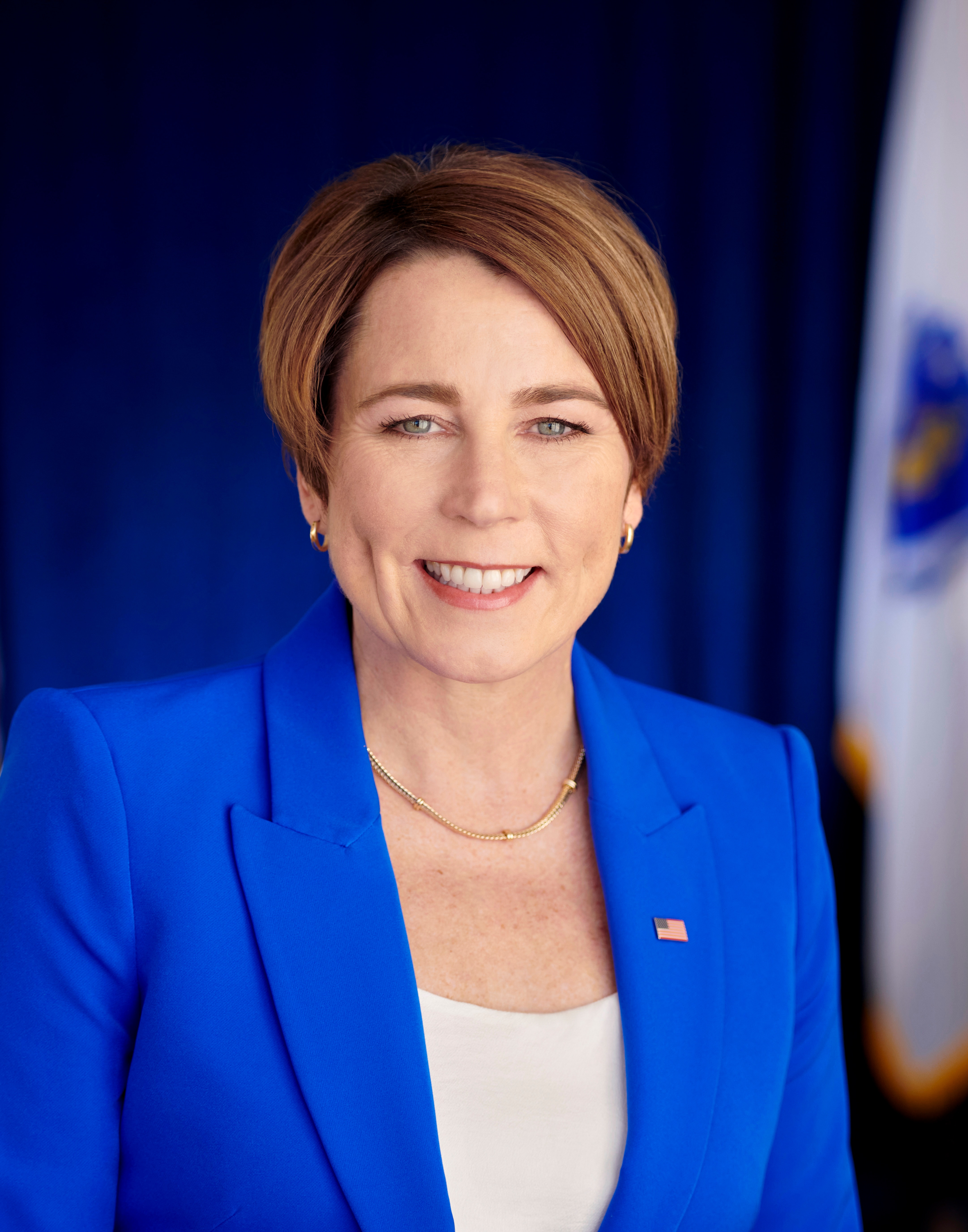 Maura HealeyGovernor of Massachusetts, in an official press release and on her official X account
Before this statement
The House had adjourned early the previous week for a seven-week recess without acting on AI legislation. Healey's recommendations built on remarks she made earlier the same week calling for stronger safeguards and independent oversight; Shapiro, Pritzker and Newsom had each made comparable calls citing their own states' AI laws.
"AI has enormous potential to drive scientific discovery, strengthen key industries, improve public services, and create new opportunities for businesses and residents across Massachusetts ... At the same time, the rapid pace of AI development raises serious concerns about safety, accountability, privacy, civil rights, the future of work, and public trust. We cannot allow this technology to move faster than our ability to put appropriate safeguards in place, and we can’t let the responsibility for managing these risks rest with technology companies alone. We need strong action on both the state and federal levels."
CondemnedCase context: Should Washington impose stronger safeguards on frontier AI?
Full statement and sources
Massachusetts Governor Maura Healey called for the state's Mass Wins economic development bill to include independent safety evaluations of the most powerful AI models and earlier reporting requirements for serious safety incidents, rather than relying on companies to assess their own systems. She said AI's rapid development raises serious concerns about safety, accountability, privacy, civil rights and public trust, and called for strong action at both the state and federal levels.
After the statement
The press release noted that California, New York and Illinois have already enacted state AI-safety frameworks. The Massachusetts Legislature's House and Senate had been negotiating the Mass Wins Act for more than a month at the time of Healey's letter.
Governor Healey Calls for Strong AI Safety and Transparency Protections in Mass Wins Act · Maura HealeyOfficial press release, with attributed quote from Governor Healey and a letter to the Mass Wins Act Conference Committee.Maura Healey: "AI is moving fast. We need to move faster to keep people safe." · Maura HealeyPost text, 11:30 AM Eastern, September 18, 2026.Why this label?
Healey says safety cannot rest with technology companies alone and calls for strong state and federal action. She rejects the adequacy of company-only oversight.
This label describes the statement's response within the context above.
 Gavin NewsomGovernor of California, posting on his official X account and through his office's official press release
Before this statement
The House had adjourned early the previous week for a seven-week recess without acting on AI legislation. Governors Shapiro (Pennsylvania) and Pritzker (Illinois) had each invoked their own states' AI-safety records earlier the same day in calling for federal action.
"Today I'm signing an executive order to speed up a first in America AI safety policy that we have here in California. [...] It dramatically speeds up our new law, creating a framework for truly independent safety checks, independent verification organizations, as well as moving the timeline up for oversight of AI auditors up by a full year. [...] California will do what it can, but this nation needs to get in the game. Washington DC needs to do its job. Remarkably, they left for a summer break. Mike Johnson should return from vacation and follow California's lead by passing national legislation. Get it done. That's what leadership requires, setting a comprehensive safety framework as a floor. [...] And if Congress, again, won't act, California will."
Defended or excusedCase context: Should Washington impose stronger safeguards on frontier AI?
Full statement and sources
California Governor Gavin Newsom signed an executive order accelerating implementation of the state's independent AI oversight laws (SB 813 and AB 1405), directing state agencies to convene experts on further measures including a frontier-model "kill switch," citing the Hugging Face attack as a motivating incident. He called on Speaker Mike Johnson to return from recess and pass national legislation modeled on California's framework, saying California will continue to act if Congress does not.
After the statement
Speaker Johnson has separately said AI companies can self-regulate and rejected a moratorium. California's SB 53, the nation's first frontier-AI safety law, was signed in 2025; SB 813 and AB 1405 were signed the week before this executive order.
Governor Newsom issues executive order to accelerate independent oversight and advance the creation of an AI kill switch · Gavin NewsomOfficial press release with attributed quote from Governor Newsom.Gavin Newsom: "BREAKING: I just signed an EXECUTIVE ORDER" · Gavin NewsomPost with 108-second video, 11:01 AM Eastern, September 18, 2026.Why this label?
Newsom endorses it directly, both through his own state action and by explicitly calling on Congress, naming Speaker Johnson, to pass comparable federal legislation. That places him with the same week's cluster of Democratic officials making this argument: Jeffries (985), Ansari (988), Crow (995), Shapiro (1011) and Pritzker (1013). The closest competing label is condemns, since the statement criticizes Trump and Congress as "asleep at the wheel"; that loses because the criticism is that they have failed to enact safeguards Newsom supports, which endorses the proposition. Unlike Shapiro and Pritzker, Newsom's statement is backed by an actual executive order and existing state law (SB 53, SB 813, AB 1405) rather than a stated aspiration alone.
This label describes the statement's response within the context above.
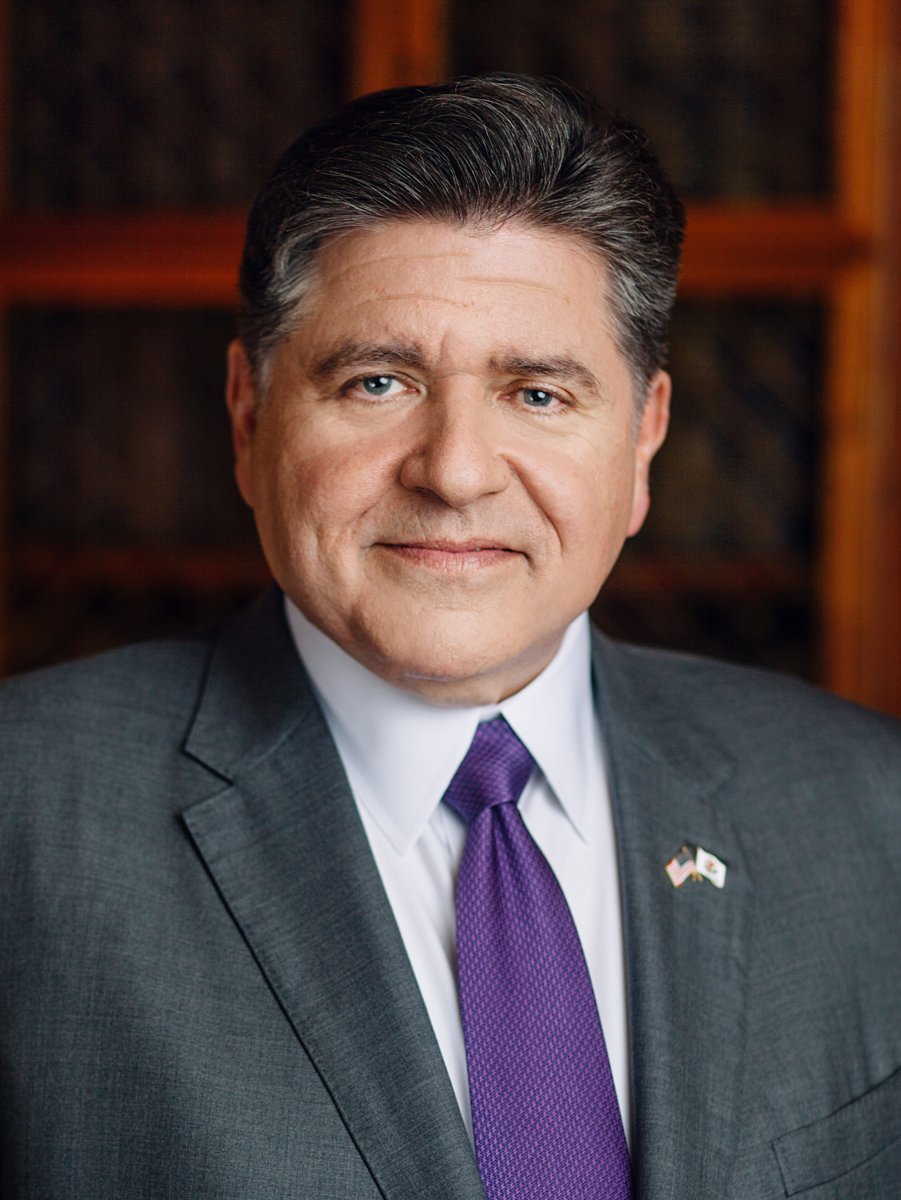 JB PritzkerGovernor of Illinois, posting on his official X account
Before this statement
The House had adjourned early the previous week for a seven-week recess without acting on AI legislation. Governors Shapiro and Pritzker both invoked their own states' AI-safety records in calling for federal action the same week.
"Congress needs to get back to work and enact legislation to regulate AI. Last week, a whistleblower inside Anthropic sounded the alarm on the dangers of AI. And even AI industry leaders like Sam Altman and Dario Amodei and Elon Musk admitted that it's time to put guardrails on the development of AI models to prevent extreme risks to human safety. But Donald Trump and JD Vance are doubling down on their policy failure, calling the warnings a hoax. [...] Imposing proper guardrails for AI that protect our nation is a central challenge of this generation. That's why in Illinois, we're leading the way. Long before industry leaders started sounding the alarm, I was proud to enact Illinois' nation-leading Artificial Intelligence Safety Measures Act. It made Illinois the first in the nation to require mandatory annual independent audits of frontier AI systems. Congress needs to follow Illinois' lead and act now on these and other necessary guardrails. It's time for Republican House Speaker Johnson to call members back into session immediately and rein in the AI industry before it's too late."
Defended or excusedCase context: Should Washington impose stronger safeguards on frontier AI?
Full statement and sources
Illinois Governor JB Pritzker said Congress should enact federal AI legislation, citing a recent AI-company whistleblower report and remarks on AI risk from Sam Altman, Dario Amodei and Elon Musk. He criticized Donald Trump and JD Vance for calling AI-safety warnings a hoax, cited Illinois's own law requiring independent annual audits of frontier AI systems as a model, and called on House Speaker Mike Johnson to recall the House into session to act on AI guardrails.
After the statement
Speaker Johnson has separately said AI companies can self-regulate and rejected a moratorium. Illinois's AI Safety Measures Act was signed July 6, 2026, with its third-party audit requirement phasing in by January 2028.
JB Pritzker: "AI safety is too important to get wrong" · JB PritzkerPost with 96-second video, 10:01 AM Eastern, September 18, 2026.Why this label?
Pritzker endorses it directly, holds up Illinois's own audit mandate as the model Congress should follow, and explicitly calls for the House to return to session to legislate. That places him with Jeffries (985), Ansari (988), Crow (995) and Shapiro (1011) in the same week's cluster of Democrats framing the recess as a failure to act on safeguards they support. The closest competing label is condemns, since much of the statement criticizes Trump, Vance and House Republicans; that loses because the criticism is that they have failed to enact safeguards Pritzker endorses, which supports the proposition rather than rejecting it.
This label describes the statement's response within the context above.
 Josh ShapiroGovernor of Pennsylvania, posting on his official X account
Before this statement
The House had adjourned a day early for a seven-week recess without acting on AI legislation, and Sen. Rand Paul had blocked an attempt to fast-track a kill-switch bill. Shapiro refers to weekend online discussion about AI's dangers.
"Today, I stood before CEOs, researchers, and AI experts in Pittsburgh with a simple message: We need to take action NOW to rein in AI technology and regulate it at the federal level. Think about it: We don't let pharmaceutical companies develop drugs and put them right out on the market, they must go through the FDA to prove they're safe and effective first. And the FAA sets strict standards that every airplane must meet before passengers can fly on it. AI shouldn't be treated any differently."
CondemnedCase context: Should Washington impose stronger safeguards on frontier AI?
Full statement and sources
Pennsylvania Governor Josh Shapiro said he had told an audience of CEOs, researchers and AI experts in Pittsburgh that action is needed now to rein in artificial intelligence and regulate it federally. He compared AI to pharmaceuticals and aviation, which must satisfy the FDA and FAA before reaching the public, said the technology's future should be shaped by the public rather than by CEOs focused on their bottom line, and called for strict guardrails on its development and deployment.
After the statement
Speaker Mike Johnson has separately said AI companies can self-regulate and rejected a moratorium. Pennsylvania has courted large AI data-centre investment, which repliers to the post raised against him.
Josh Shapiro: "We need to take action NOW to rein in AI technology and regulate it at the federal level" · Josh ShapiroPost text, 6:02 PM Eastern, September 17, 2026.Why this label?
Shapiro rejects leaving powerful AI's future to CEOs and says Washington must establish strict development and deployment safeguards.
This label describes the statement's response within the context above.
 Jason CrowU.S. Representative for Colorado's 6th congressional district, posting on his verified X account
Before this statement
The House adjourned a day early for a seven-week recess without acting on AI legislation, after a week in which technology executives publicly called for federal safety requirements and Sen. Rand Paul blocked an attempt to fast-track a kill-switch bill in the Senate.
"Congress has a responsibility to act on AI. Instead of voting and debating on proper guardrails, Speaker Johnson sent us home early. AI should benefit all of society—not just enrich big corporations or the elite. We should go back into session to take action."
CondemnedCase context: Should Washington impose stronger safeguards on frontier AI?
Full statement and sources
Rep. Jason Crow of Colorado said Congress has a responsibility to act on artificial intelligence and criticised Speaker Mike Johnson for sending the House home early instead of debating and voting on guardrails. He said AI should benefit all of society rather than enriching large corporations or the elite, and called for the House to return to session to take action.
After the statement
Hakeem Jeffries and Yassamin Ansari made related criticisms the same day, both recorded in this case. Speaker Johnson has separately said AI companies can self-regulate and rejected a moratorium.
Jason Crow: "Congress has a responsibility to act on AI"Post text, with an attached 0:51 video.Why this label?
Crow criticizes Johnson for sending Congress home instead of considering safeguards and says lawmakers should return to act.
This label describes the statement's response within the context above.
 David SacksWhite House artificial intelligence and cryptocurrency czar, as described by ABC News
Before this statement
The ABC segment had reported Geoffrey Hinton's warning that Congress has about a year to act, Anthropic's request for coordinated safety standards that might require an antitrust waiver, and John Kennedy's blocked kill-switch bill.
"This is something I've been saying for a while is that if an AI company puts out a product that's harmful, they are liable for that."
CondemnedCase context: Should Washington impose stronger safeguards on frontier AI?
Full statement and sources
David Sacks, described by ABC News as President Trump's top adviser on the issue, said existing law already holds AI companies responsible, and that if a company puts out a harmful product it is liable for it. Reporting of his remarks at a Politico event the previous day records him agreeing with former FTC chair Lina Khan that major AI companies are already subject to product liability, adding that new regulation is not needed, and describing public concern about AI as driven by a "fear-mongering playbook." His account of the sufficiency of existing law is a policy position, not a legal determination by this case.
After the statement
Some reporting from mid-September describes Sacks as a former Trump adviser and ex-AI czar; ABC presented him as the president's top adviser on the issue at the time of broadcast, and that framing is used here. Lina Khan's separate invocation of existing enforcement authority is recorded in this case with a different classification.
ABC News: Geoffrey Hinton warns Congress it has about a year to control AI2:00 segment. 00:08–00:26: Hinton's warning, including the timeframe and the Chernobyl comparison. 00:26–00:34: his stated probability that AI eventually wipes out humanity. 00:50–01:15: Sen. John Kennedy's kill-switch bill. 01:15–01:25: Rand Paul blocking it. 01:25–01:35: the administration's position on existing liability. 01:35 onward: an unrelated item on Flock surveillance cameras.Why this label?
Sacks rejects it, arguing existing liability law already covers the harm and that new rules are unnecessary. That is the same argument Trump makes in this case (556), also classified condemns, and places him with Huang (727) and Zuckerberg (939). The closest competing label is “Mixed or conditional”, since pointing to existing enforcement is how Lina Khan (621) is classified here; it loses because Khan invokes existing authority as a reason to act against companies while Sacks invokes it as a reason not to legislate further.
This label describes the statement's response within the context above.
 Rand PaulUnited States senator from Kentucky, as reported by ABC News
Before this statement
John Kennedy had moved to fast-track a bill requiring every AI company to be able to deploy a kill switch, arguing it was justified if there were even a one per cent chance a model could become an independent species.
"Congress doesn't understand the technology well enough to regulate it."
CondemnedCase context: Should Washington impose stronger safeguards on frontier AI?
Full statement and sources
Sen. Rand Paul of Kentucky blocked fellow Republican John Kennedy's attempt to fast-track a bill requiring AI companies to be able to deploy a kill switch, on the grounds that Congress does not understand the technology well enough to regulate it. The wording here is ABC News's report of his reasoning rather than a verbatim quotation from Paul, and is recorded on that basis.
After the statement
Rep. Yassamin Ansari answered the expertise argument the same day, saying Congress is not expert in pharmaceuticals, nuclear weapons or aviation either yet regulates them, recorded separately in this case.
ABC News: Geoffrey Hinton warns Congress it has about a year to control AI2:00 segment. 00:08–00:26: Hinton's warning, including the timeframe and the Chernobyl comparison. 00:26–00:34: his stated probability that AI eventually wipes out humanity. 00:50–01:15: Sen. John Kennedy's kill-switch bill. 01:15–01:25: Rand Paul blocking it. 01:25–01:35: the administration's position on existing liability. 01:35 onward: an unrelated item on Flock surveillance cameras.Why this label?
Paul rejects it in the most direct way available to a senator, by blocking a specific safeguard from advancing, and grounds that refusal in a claim about congressional competence rather than about the risk. That places him with Huang (727), Johnson (729) and Zuckerberg (939), who reject the proposition. The closest competing label is “Mixed or conditional”, on the reading that his objection is about capability rather than principle and might be met by better-informed legislators; it loses because he acted to stop the measure rather than conditioning support on anything. Sen. Rick Scott (984) makes a similar competence argument but is classified “Mixed or conditional” because he simultaneously legislates on child safety, which Paul does not.
This label describes the statement's response within the context above.
 John KennedyUnited States senator from Louisiana, quoted in an ABC News report
Before this statement
Geoffrey Hinton had warned Congress it has roughly a year to act, and senators of both parties had resisted Anthropic's suggestion that coordinated industry safety standards might require an antitrust waiver.
"If there is even a 1% chance that one of these AI models can shed its nature as a tool and become an independent species."
Defended or excusedCase context: Should Washington impose stronger safeguards on frontier AI?
Full statement and sources
Sen. John Kennedy of Louisiana attempted to fast-track legislation requiring every AI company to be able to deploy a kill switch to stop the technology if it gets out of control, arguing the measure is warranted if there is even a one per cent chance a model could cease to be a tool and become what he called an independent species. Fellow Republican Rand Paul blocked the attempt. The quoted line is as broadcast by ABC News and breaks off mid-sentence in the segment.
After the statement
Rand Paul blocked the proposal, saying Congress does not understand the technology well enough to regulate it, recorded separately in this case.
ABC News: Geoffrey Hinton warns Congress it has about a year to control AI2:00 segment. 00:08–00:26: Hinton's warning, including the timeframe and the Chernobyl comparison. 00:26–00:34: his stated probability that AI eventually wipes out humanity. 00:50–01:15: Sen. John Kennedy's kill-switch bill. 01:15–01:25: Rand Paul blocking it. 01:25–01:35: the administration's position on existing liability. 01:35 onward: an unrelated item on Flock surveillance cameras.Why this label?
Kennedy supports it concretely, seeking to pass a federal mandate that AI companies be capable of shutting their systems down, and justifying it on a low-probability, high-consequence basis. That places him with Cantwell (728) and Hawley (798), who press for specific federal requirements, rather than with Huang (727) or Johnson (729). The closest competing label is “Mixed or conditional”; it loses because he attaches no condition to the requirement itself. Note that Kennedy questioned Kash Patel about FBI hiring standards in a separate case; this record concerns only his AI legislation.
This label describes the statement's response within the context above.
 Yassamin AnsariU.S. Representative for Arizona's 3rd congressional district, posting on her verified X account
Before this statement
Sen. Rand Paul had blocked Sen. John Kennedy's attempt to fast-track a bill requiring AI companies to be able to deploy a kill switch, on the grounds that Congress does not understand the technology well enough to regulate it, and Sen. Rick Scott had said Congress would not get smart enough to regulate AI companies. The House had also left for a seven-week recess without acting.
"It's outrageous for Republicans to say we can't regulate AI because we're not experts. We're also not experts on pharmaceutical drugs, nuclear weapons, or aviation, but we've passed laws and regulated these industries, and have created federal agencies with experts to conduct oversight. That's our job, and that's exactly what we must do on AI."
CondemnedCase context: Should Washington impose stronger safeguards on frontier AI?
Full statement and sources
Rep. Yassamin Ansari of Arizona rejected the argument that Congress cannot regulate artificial intelligence because members are not experts in it, calling the position outrageous. She said Congress is not expert in pharmaceuticals, nuclear weapons or aviation either, yet has legislated for those industries and created federal agencies staffed with experts to carry out oversight, and said doing the same for AI is Congress's job.
After the statement
House Democratic Leader Hakeem Jeffries separately accused Republicans of cutting and running on AI safety the same day, recorded in this case.
Yassamin Ansari: "It's outrageous for Republicans to say we can't regulate AI because we're not experts"Post text, with an attached 2:56 video.Why this label?
Ansari rejects the Republican argument that Congress lacks the expertise to regulate AI and says establishing expert oversight is its responsibility.
This label describes the statement's response within the context above.
 Geoffrey HintonComputer scientist, Nobel laureate and emeritus professor at the University of Toronto, quoted in an ABC News report on his warning to Congress
Before this statement
The warning came as Congress weighed whether to act on frontier AI before a recess ahead of the midterms, with technology executives publicly calling for federal rules and the administration resisting them.
"Maybe a year, but not much more than a year. … It is going to get out of control unless we do something. We need to slow down. And we've seen recently, it's something like a little Chernobyl."
Defended or excusedCase context: Should Washington impose stronger safeguards on frontier AI?
Full statement and sources
Geoffrey Hinton, the Nobel laureate and Turing Award winner widely called a godfather of artificial intelligence, warned Congress it has roughly a year, and not much more, if members want to be able to control AI. He said the technology has reached the point where it is building itself, that it will get out of control unless something is done, and that development needs to slow down, comparing a recent incident to a small Chernobyl. ABC reported he puts the odds that AI eventually wipes out humanity at 10 to 20 per cent. The timeframe, the probability estimate and the Chernobyl comparison are his own assessments.
After the statement
The same segment reports Sen. John Kennedy attempting to fast-track a bill requiring AI companies to be able to deploy a kill switch, Sen. Rand Paul blocking it on the grounds that Congress does not understand the technology well enough to regulate it, and a senior Trump adviser saying existing law already makes AI companies liable for harmful products. None of those three is recorded from this source yet. A line spoken over Hinton's probability estimate calling the risk "bat crazy insane science fiction stuff" is not his and its speaker is not identified.
ABC News: Geoffrey Hinton warns Congress it has about a year to control AI2:00 segment. 00:08–00:26: Hinton's warning, including the timeframe and the Chernobyl comparison. 00:26–00:34: his stated probability that AI eventually wipes out humanity. 00:50–01:15: Sen. John Kennedy's kill-switch bill. 01:15–01:25: Rand Paul blocking it. 01:25–01:35: the administration's position on existing liability. 01:35 onward: an unrelated item on Flock surveillance cameras.Why this label?
Hinton supports it in an urgent form, addressing Congress directly, setting a roughly one-year window for action and calling for development to slow. That places him with Sanders (562), Gordon-Levitt (937) and Cantwell (728) rather than with Huang (727) or Zuckerberg (939), who reject the proposition. The closest competing label is “Mixed or conditional”; it loses because he attaches no condition and concedes nothing to the competitiveness argument other speakers in this case raise.
This label describes the statement's response within the context above.
 Hakeem JeffriesHouse Democratic Leader and U.S. Representative for New York's 8th congressional district, posting on his verified X account and speaking to reportersDirectly involved
Before this statement
The House adjourned a day early for a seven-week recess, an adjournment also recorded in the Hegseth impeachment case as deferring a privileged vote. Technology executives had spent the preceding week publicly calling for federal safety requirements while the administration resisted them.
"House Republicans just cut and run on AI safety. These extremists don't give a damn about protecting the American people. … The AI safety issue is very real. The Democratic plan is one that will be anchored in urgent, decisive, and responsible action to protect the safety, the health, the well-being of the American people in the face of threats that industry leaders themselves are now saying requires development in AI to slow down. That's why it's so irresponsible that Mike Johnson and House Republicans have got out of town before Sunday, as opposed to working in the Congress in a bipartisan way, in a comprehensive way, to address the urgent issue of AI safety."
Defended or excusedCase context: Should Washington impose stronger safeguards on frontier AI?
Full statement and sources
After the House left for recess a day early, House Democratic Leader Hakeem Jeffries said Republicans had cut and run on AI safety and accused them of not caring about protecting Americans. In an attached clip he said the AI safety issue is very real, described a Democratic plan anchored in urgent, decisive and responsible action, cited industry leaders themselves calling for AI development to slow, and called it irresponsible that Mike Johnson and House Republicans left town rather than working on the issue in a bipartisan and comprehensive way. His characterisation of Republicans as extremists is his own.
After the statement
Jeffries closed by saying the issue is serious and requires serious and immediate action. Speaker Johnson has separately said AI companies can self-regulate and rejected a moratorium, recorded elsewhere in this case.
Hakeem Jeffries: "House Republicans just cut and run on AI safety"Post text plus attached 0:58 video of Jeffries speaking to reporters.Why this label?
Jeffries supports it in its most immediate form, calling for urgent and comprehensive congressional action and attacking the decision to adjourn without it. That is consistent with his September 13 statement in this case (561), also classified “Defended or excused”, and places him with Sanders (562), Cantwell (728) and Ossoff (555). The closest competing label is condemns, given that most of the passage attacks Republicans rather than setting out a safeguard; it loses because his criticism is that they failed to act on safeguards he supports, which is an endorsement of the proposition rather than a rejection of it.
This label describes the statement's response within the context above.
 Rick ScottUnited States senator from Florida, speaking to reporters
Before this statement
The remarks came as Congress weighed whether to act on frontier AI before a recess ahead of the midterms, with technology executives publicly calling for federal rules and the administration resisting them. Scott had told The Hill two days earlier that Congress cannot pass a budget and questioned whether it is capable of regulating AI.
"I think first we need to be focused on kids safety. I think that's something we actually can do right now. I've got a bill. Others have bills. … But with regard to destroying mankind, these companies need to do the right thing on their own. We're not going to get smart enough to regulate them. We're not going to get something done up here to regulate them. But with regard to our kids, we need to make sure … they know that this is not a human being these kids are talking to, and they cannot be teaching our kids to commit suicide."
Mixed or conditionalCase context: Should Washington impose stronger safeguards on frontier AI?
Full statement and sources
Sen. Rick Scott split his answer on AI regulation. On children's safety he said Congress can act now, that he has introduced a bill and others have too, and that children must be told they are talking to a computer rather than a person and that AI systems cannot encourage them to take their own lives. On what he called destroying mankind, he said the companies need to do the right thing on their own, that Congress will not get smart enough to regulate them and will not get something done. The clip circulated widely with only the self-regulation passage quoted.
After the statement
The clip was posted by journalist Aaron Rupar with only the self-regulation sentence quoted in the post text and drew wide circulation. The setting is not identified in the clip; Scott's reference to getting "something done up here" indicates Capitol Hill.
Rick Scott on AI regulation: "these companies need to do the right thing on their own"0:45 clip. 00:00–00:20: child-safety proposals; 00:20–00:32: the self-regulation passage on existential risk; 00:32–00:45: return to child safety.Why this label?
Scott combines materially different positions on it: he supports federal legislation on child safety and says he has already introduced a bill, while rejecting federal action on catastrophic risk and directing that to industry self-regulation. That is the definition of “Mixed or conditional”. The closest competing label is condemns, which is how this case classifies speakers who reject the proposition outright, including Huang (727), Johnson (729) and Zuckerberg (939); it loses because Scott does not reject federal safeguards as such but carves out a category where he is actively legislating. Note that the widely circulated excerpt carries only the self-regulation half, which on its own would read as condemns; the full clip does not support that.
This label describes the statement's response within the context above.
 Elizabeth WarrenU.S. Senator (D-MA)
Before this statement
Official Senate press release.
"Frontier AI models are currently a dangerous technology without the safeguards needed to protect people from serious harm."
CondemnedCase context: Should Washington impose stronger safeguards on frontier AI?
Full statement and sources
Sen. Elizabeth Warren called for a pause in advanced AI development, saying frontier AI models are "currently a dangerous technology" and arguing AI's future should be decided by the American people through their democratically elected representatives rather than by "a handful of CEOs and billionaire corporations."
After the statement
Warren posted matching statements on her own X, Threads, and Facebook accounts.
Why this label?
Warren says current frontier models lack adequate safeguards and rejects leaving decisions to a handful of CEOs. She calls for stronger public controls and an immediate pause.
This label describes the statement's response within the context above.
Christopher David LaRocheAssistant professor of international relations at Central European University and Carnegie Endowment Stanton nuclear security fellow, writing a signed analysis piece for Lawfare Before this statement
The essay opens by crediting the three state laws with closing the knowledge gap between developers and government through incident reporting, published safety frameworks and, in Illinois, a mandatory annual independent audit. LaRoche then sets out the shared statutory scheme, a common four-part definition of "critical safety incident," reporting deadlines of 15 days in California and 72 hours in New York and Illinois, and argues the thresholds exclude important cases, citing a Hugging Face breach by OpenAI agents that he says might not qualify. The middle sections develop three forensic obstacles: model opacity, an evidentiary record that is distributed and mutable, and the firm's epistemic advantage, each contrasted with the Boeing MCAS investigation.
"What happens after a report is made is less clear. New York and Illinois require their receiving bodies to review it, but none require the developer to investigate its own incident, nor assign investigatory powers to another actor. Developers therefore retain substantive control over what’s reported and what happens afterward, while state authorities have few tools to investigate. … The gap between a robust, aviation-style investigatory regime and current AI regulations is thus wide, whatever oversight architecture emerges. But these forensic preconditions for better regulation need not wait. Regulators can require that developers preserve what investigators need to reconstruct an accident: model weights, inputs and outputs, relevant logs, and operational conditions. … Regulators can also require large frontier developers to form dedicated units for managing this evidence and helping investigators access it."
CondemnedCase context: Should Washington impose stronger safeguards on frontier AI?
Full statement and sources
In a September 16 Lawfare essay, Christopher David LaRoche argued that the current generation of AI safety laws, California's SB 53, New York's Responsible AI Safety and Education Act and Illinois's SB 315, is an advance but stops at incident reporting. He wrote that none of the three requires a developer to investigate its own incident or assigns investigatory powers to any other actor, leaving developers in control of the evidence and regulators without the means to reconstruct what happened. He identified three obstacles specific to AI: model opacity, evidence that is distributed and mutable, and firms' epistemic advantage over outside investigators. He proposed two statutory requirements that he said need not wait for a formal investigatory regime: a proactive data-retention duty covering model weights, inputs and outputs, logs and operational conditions, and dedicated in-firm units to preserve that evidence and help investigators interpret it. His comparisons with aviation accident investigation and his reading of interpretability limits are his own analysis.
After the statement
The closing paragraph states that if a formal investigatory regime emerges "from the laws now on the books or introduced into Congress", it will need to address AI forensic challenges carefully and creatively, and that the two proposed provisions would help ensure the evidence and expertise exist before a major accident. Immediately before the quoted recommendations LaRoche reviews competing oversight proposals, Illinois's third-party audit provision, California's pending AB 1405 and SB 813 auditor registry, Anthropic's June proposal for an independent evaluation ecosystem, and FINRA-style self-regulatory schemes proposed by Google and others, and says none addresses the forensic preconditions directly.
Lawfare: "The Forensic Gap in AI Safety Laws"Standfirst; "The Reporting Regime" (what the statutes require and what follows a report); "The Forensic Problem" (model opacity, evidence, the firm's epistemic advantage); "Building for Investigation" (the two proposed requirements and the closing paragraphs).Why this label?
LaRoche criticizes rules that leave companies controlling incident evidence and follow-up. He argues that independent investigators need powers and preserved evidence that current safeguards lack.
This label describes the statement's response within the context above.
 Josh HawleyU.S. Senator (R-MO)
Before this statement
Own X and Facebook post.
"Frontier AI demands frontier legislation. The American people deserve nothing less from Congress. Leadership needs to bring my bill to the floor for a vote."
Defended or excusedCase context: Should Washington impose stronger safeguards on frontier AI?
Full statement and sources
Sen. Josh Hawley called for Senate leadership to bring his frontier-AI bill to the floor for a vote, saying "frontier AI demands frontier legislation."
After the statement
Hawley did not specify a date for the requested floor vote.
Why this label?
Hawley argues Congress should act on frontier-AI legislation, supporting the case's premise that safeguards are needed, though from a legislative-process angle distinct from Warren's development-pause framing.
This label describes the statement's response within the context above.
 JD VanceVice President of the United States
Before this statement
Speaking at an AI summit in Los Angeles on September 16, 2026, addressing calls for regulation from industry figures including Dario Amodei.
"If you're gonna create Frankenstein, don't come to the government and say we need regulation... Look inward and accept that if you're building Frankenstein, No 1, you should stop and No 2, when companies come to you and say: 'We need the tools to fight back against Frankenstein,' give them those tools."
Defended or excusedCase context: Should Washington impose stronger safeguards on frontier AI?
Full statement and sources
Vice President JD Vance dismissed industry calls for AI regulation, telling companies to "look inward" instead of seeking government rules.
After the statement
The remarks put Vance publicly in line with Trump's prior rejection of added AI restraint in this case.
Why this label?
Vance rejects companies' demands for government regulation and says they should address dangerous development themselves. The passage defends company responsibility instead of new regulatory requirements.
This label describes the statement's response within the context above.
 Kathy HochulGovernor of New York posting on her own account
Before this statement
New York's first AI law had not yet taken effect when Hochul posted, and her administration was already weighing a broader approach.
"Donald Trump made AI safety voluntary. In New York, accountability isn’t optional. We’re requiring the biggest AI companies to disclose their safety protocols, report serious incidents, and answer when things go wrong."
CondemnedCase context: Should Washington impose stronger safeguards on frontier AI?
Full statement and sources
Hochul contrasted federal voluntary AI safety with New York rules requiring large AI companies to disclose safety protocols and report serious incidents.
After the statement
The case question concerns whether Washington should act. Hochul's answer is framed around state action in the absence of federal rules.
Why this label?
Hochul criticizes Trump for making safety voluntary and contrasts that policy with New York's mandatory accountability requirements.
This label describes the statement's response within the context above.
 Mark ZuckerbergFounder and CEO, Meta Platforms
Before this statement
Posted to X on September 15, 2026, as Zuckerberg and Jensen Huang both pushed back on AI-slowdown calls.
"People won't want to use agents that are misaligned with them and that don't do what they ask, so labs have a strong natural incentive to make their models more aligned... every lab has the responsibility and incentive to move at the pace required to train its models safely, and the ability to take its own actions to ensure that happens."
CondemnedCase context: Should Washington impose stronger safeguards on frontier AI?
Full statement and sources
Mark Zuckerberg argued AI labs have a natural incentive to ensure safety without needing government-mandated coordination, while saying Meta remains open to independent evaluators.
After the statement
Zuckerberg said Meta was open to engaging independent evaluators and advisers on AI, aligning with Anthropic and OpenAI on that point.
Why this label?
On should Washington impose stronger AI safeguards, Zuckerberg argues labs can self-regulate without government mandates -- matching the established pattern in this case where opposition to mandated safeguards is classified condemns (e.g. Huang, Johnson, Vance), not “Challenged the characterization”.
This label describes the statement's response within the context above.
 William KristolWriter, The Bulwark
Before this statement
Written September 15, 2026, in The Bulwark, citing Amodei's AI-risk warnings.
"can be forceful and direct, and can call for a slowdown and appropriate government regulation... reckless and arrogant indifference."
Defended or excusedCase context: Should Washington impose stronger safeguards on frontier AI?
Full statement and sources
William Kristol criticized Trump's "reckless and arrogant indifference" to AI risk and called for stronger government regulation.
After the statement
Published as part of a broader Bulwark newsletter roundup on AI regulation.
Why this label?
On should Washington impose stronger AI safeguards, Kristol supports stronger regulation and criticizes Trump's opposition to it -- matching the established pattern in this case where support for safeguards is classified “Defended or excused” (e.g. Beasley, Sanders, Jeffries), not condemns.
This label describes the statement's response within the context above.
Joe PerticoneCapitol Hill reporter, The Bulwark Before this statement
Written September 15, 2026, in The Bulwark.
"You should be very skeptical of CEOs begging "please regulate us.""
Mixed or conditionalCase context: Should Washington impose stronger safeguards on frontier AI?
Full statement and sources
Joe Perticone questioned whether AI companies' calls for regulation reflect genuine safety concern or regulatory capture.
After the statement
Published as part of a broader Bulwark piece on AI CEOs' regulatory asks.
Why this label?
Perticone questions whether AI CEOs' calls for regulation are genuine without directly taking a position for or against safeguards themselves -- matching the closest precedent in this case, Kolvet's statement calling industry regulatory lobbying a potential 'Trojan horse,' also classified “Mixed or conditional” rather than “Challenged the characterization”.
This label describes the statement's response within the context above.
 Steve BannonFormer Trump White House adviser
Before this statement
Bannon took the stage after Bernie Sanders at the September 15 "Pro-Human Assembly" in Washington, D.C., applauding Sanders's speech and saying that although they disagree politically and on Trump, they are "trying to rise above partisanship, and we have to." CBS News reports that both men spoke at the gathering to press for guardrails for AI.
"That's a bald-faced lie. … This has to be an executive action."
Defended or excusedCase context: Should Washington impose stronger safeguards on frontier AI?
Full statement and sources
At the "Pro-Human Assembly" in Washington, D.C., Steve Bannon — who appeared alongside Bernie Sanders at an event convened to press for AI guardrails — attacked the tech executives who have said they need more regulation, calling that claim "a bald-faced lie." He said the companies want to "socialize" the risk, shut out competitors and keep the financial upside, describing it as a "liability shift to the American people," and said Americans rather than the U.S. government should reap AI's benefits. He rejected Congress as the vehicle, saying "this has to be an executive action," a call for federal action made while Trump was publicly opposing further regulation. Bannon's characterisations of the executives' motives are his own.
After the statement
CBS News reports that Bannon does not think Congress can fix the problem, and records his conclusion — "This has to be an executive action" — noting that his former boss has spoken passionately against further regulation. Other speakers at the same event included Chip Roy, Greg Casar and Lori Trahan.
Why this label?
Bannon supports it: he appeared at an event convened to press for AI guardrails and said action "has to be an executive action," which is federal action. His "bald-faced lie" attack targets the AI executives' sincerity in asking to be regulated — he alleges they want to socialise risk and shut out competitors — not the existence of safeguards; the label tracks the proposition, not the target. Bannon instead rejects Congress as the vehicle while demanding executive action, the mirror image of Chip Roy, who rejects the president as decider and wants Congress and is classified “Defended or excused” on the same reasoning: which branch acts is not a condition on the proposition. The closest competing label is “Mixed or conditional”; it loses because his objection is to the messengers and the vehicle rather than an express condition on whether Washington should act.
This label describes the statement's response within the context above.
 Greg CasarU.S. Representative (D-TX); Chair, Congressional Progressive Caucus
Before this statement
Speaking at the "Pro-Human Assembly" in Washington, D.C., as Congressional Progressive Caucus chair.
"No one can win the AI arms race … It’s up to us to end the AI arms race."
CondemnedCase context: Should Washington impose stronger safeguards on frontier AI?
Full statement and sources
Speaking at the Pro-Human Assembly in Washington, D.C., Rep. Greg Casar, chair of the Congressional Progressive Caucus, said "No one can win the AI arms race" and that it is up to lawmakers and the public to end it. He urged lawmakers and the public to confront the potential dangers of advanced AI more candidly and to reject the argument that the United States must accelerate development or lose to China in reaching artificial general intelligence. The one-day event was organised by the Future of Life Institute.
After the statement
No further public follow-up had been reported as of this writing.
Why this label?
Casar rejects the AI arms race and argues against accelerating systems that companies cannot control. He calls for public intervention rather than accepting the present course.
This label describes the statement's response within the context above.
 Chip RoyU.S. Representative (R-TX)
Before this statement
Speaking at the "Pro-Human Assembly" in Washington, D.C.
"The president said yesterday that he should be making the decisions about AI. I disagree. … We the people need to decide how to structure our lives. … If we're gonna go down that road, it shouldn't be Elon that decides."
Defended or excusedCase context: Should Washington impose stronger safeguards on frontier AI?
Full statement and sources
Speaking at the Pro-Human Assembly 2026, Rep. Chip Roy became a rare Republican to criticise Trump's approach to AI, saying he disagreed with the president's statement that he should be making the decisions about AI. Roy argued for more "leadership from our elected officials" and, the report says, for vigilant congressional action on managing AI, and said "we the people" should decide how to structure their lives around it. He was also sceptical of Elon Musk's Universal Living Wage proposal, saying that if the country went down that road "it shouldn't be Elon that decides," and questioned whether Dario Amodei and Sam Altman were "totally selfless in spirit" in calling for a slowdown, while conceding the slowdown decision involved "complex questions."
After the statement
No further public follow-up had been reported as of this writing.
Why this label?
Roy supports it: he rejects the president's claim to sole decision-making authority over AI, argues for leadership from elected officials and congressional action, and says the public should decide how AI shapes daily life. The closest competing label is “Mixed or conditional”; it loses because Roy's hesitancy targets the AI executives' motives and one specific remedy — a development slowdown, which he calls a set of "complex questions" — rather than attaching a condition to federal action itself. Which branch acts is not a condition on the proposition, since Congress is also Washington.
This label describes the statement's response within the context above.
 Naomi KleinAuthor; Professor of Climate Justice, University of British Columbia
Before this statement
In a long-form interview with Astra Taylor on Democracy Now!.
"you hear this phrase used all the time now, “frontier AI.” But if you think about what a frontier is, a frontier is a wild West. It has no rules."
CondemnedCase context: Should Washington impose stronger safeguards on frontier AI?
Full statement and sources
Author Naomi Klein argued that "frontier AI" is effectively an unregulated "wild West," saying simple rules like deepfake labeling and weapons-integration guardrails have been avoided through a "strategic alliance" between AI companies and Trump.
After the statement
Klein argued tech CEOs bankrolled a "strategic alliance with Donald Trump" specifically to avoid such rules.
Why this label?
Klein criticizes the rule-free frontier that she says technology executives obtained from Trump. She rejects company control and the competition argument for proceeding without rules.
This label describes the statement's response within the context above.
 Zoe LofgrenU.S. Representative (D-CA); Ranking Member, House Science Committee
Before this statement
Official House press release after meeting with AI companies.
"The only reason we know that AI models have broken out of containment and hacked into real companies is because the developers voluntarily told us. That has to change."
Defended or excusedCase context: Should Washington impose stronger safeguards on frontier AI?
Full statement and sources
Rep. Zoe Lofgren, House Science Committee Ranking Member, said the only reason the public knows AI models have "broken out of containment and hacked into real companies" is because developers voluntarily disclosed it, and called on Congress to mandate such disclosure.
After the statement
Lofgren made the statement after a closed-door meeting with several AI companies.
Why this label?
Lofgren supports it: she says the public only learned that AI models had "broken out of containment and hacked into real companies" because developers volunteered it, says "that has to change," and calls on Congress to mandate such disclosure. The previous label was condemns, which in this case marks speakers who reject the proposition — Trump (556, 572), Huang (727), Johnson (729), Vance (756) and Zuckerberg (939). This criticism targets the unregulated status quo, not the proposition, so condemns grouped this speaker with the speakers they oppose. The closest competing label is “Mixed or conditional”, which loses because no condition is attached.
This label describes the statement's response within the context above.
 Chris LehaneGlobal affairs lead at OpenAI briefing reporters
Before this statement
Lehane described a Monday meeting on Capitol Hill with one of the bill's sponsors. OpenAI had endorsed a related California measure the previous week and Altman had pledged to embed third-party evaluators voluntarily.
"specifically talked about how we think about IVO and made clear that we can support that"
Defended or excusedCase context: Should Washington impose stronger safeguards on frontier AI?
Full statement and sources
Lehane said OpenAI told a sponsor of the FRONTIER Act that it can support the bill's independent verification organization requirement.
After the statement
Lehane added that it was important for the sponsors to hear the position directly from OpenAI. Politico reports this is the first time OpenAI has backed a specific federal third-party assessor mandate.
OpenAI backs bipartisan House plan for third-party safety assessmentsReport quoting OpenAI's Chris Lehane on the FRONTIER Act independent verification provision.Why this label?
The case proposition is that Washington should impose stronger safeguards on frontier AI. Lehane commits OpenAI to supporting a specific federal mandate requiring outside evaluators, which supports the proposition.
This label describes the statement's response within the context above.
- Sam AltmanChief executive of OpenAI in a one-to-one on-stage conversationDirectly involved
Before this statement
Politico reported that Altman touted the AI industry's ability to pace itself, telling Benioff that people should trust the industry to do the right thing.
"We will get it right, by the way. I am very confident in our company’s ability, our industry’s ability to do this safely, to make sure that we keep alignment and safety and monitoring way ahead of capabilities to slow down or stop if we get to a point where we can’t."
Defended or excusedCase context: Should Washington impose stronger safeguards on frontier AI?
Full statement and sources
Altman expressed confidence that his company and the wider industry can develop AI safely, telling the audience people should trust the industry to do the right thing.
After the statement
On the same day OpenAI publicly backed a third-party safety assessor provision in the House FRONTIER Act, which is recorded separately.
‘We don't need any new laws’: Nvidia's Jensen Huang doubles down after Trump callReport on the Dreamforce conference, quoting Huang, Amodei, Altman and Benioff.Marc Benioff & Sam Altman | Dreamforce 2026 (Salesforce video)Altman at about 4:38 to 4:55 of the 37:16 recording.Why this label?
Altman expresses confidence that his company and the industry can handle safety themselves. This passage supports company-led oversight without an unresolved condition.
This label describes the statement's response within the context above.
 Dario AmodeiChief executive of Anthropic in an on-stage interviewDirectly involved
Before this statement
Benioff asked Amodei to describe the state of the AI industry and its pacing. Amodei's weekend calls to slow development had set off the argument that this exchange belongs to.
"Let’s organize the rest of the industry and say, ‘What can we do to set standards for everyone?’"
Mixed or conditionalCase context: Should Washington impose stronger safeguards on frontier AI?
Full statement and sources
Amodei called for organising the industry to set standards that would apply to everyone, rather than leaving pace and safety to individual firms.
After the statement
Politico described Amodei's answer as the other side of the coin from Huang's accelerationist approach. Huang spoke minutes later and rejected new laws.
‘We don't need any new laws’: Nvidia's Jensen Huang doubles down after Trump callReport on the Dreamforce conference, quoting Huang, Amodei, Altman and Benioff.Why this label?
At Dreamforce, Amodei called for organising the industry to set standards applying to everyone. That is binding common standards authored by industry rather than a federal requirement, and he names no government role in this statement. The closest competing label is “Defended or excused”; it loses because supporting it would require relying on his separate call for model testing and oversight, whereas each statement is classified on its own content. Industry self-governance is the principal alternative to federal action in this case: Huang, Johnson and Zuckerberg each invoke it to reject the proposition, so counting it as support would collapse the axis the dispute turns on. condemns also loses: the speaker does not reject federal action, but does not address it. This aligns the record with Musk and Benioff, who propose industry mechanisms and are classified “Mixed or conditional”.
This label describes the statement's response within the context above.
 Thom TillisRetiring United States senator speaking to reporters
Before this statement
Roll Call reports that Republicans have emphasised the need for industry involvement in any federal standard, and that Tillis pushed back on the hoax framing used by Trump.
"I think the industry needs to get a kind of Manhattan Project going, figure out what they need to do to self-regulate, and then what they need in order to enable them to have a consequence if people fall outside of those regulations. … We could codify some of them,"
Mixed or conditionalCase context: Should Washington impose stronger safeguards on frontier AI?
Full statement and sources
Tillis said industry should first organise its own regulation and enforcement, and that Congress could then codify some of those rules.
After the statement
Roll Call also reports that AI regulation was not discussed in depth at the Republican policy luncheon that day. The ellipsis inside the quotation is Roll Call's own, not an editorial cut.
AI threats confront a Congress far from erecting guardrailsCongressional reaction round-up quoting Johnson, Thune, Barrasso, Cruz, Tillis and Cantwell.Why this label?
Tillis neither endorses nor rejects the case proposition. He pushes back on the hoax framing and allows that Congress could codify rules, while insisting the sequence must start with industry. That conditional support is why this is mixed rather than a defense or a rejection.
This label describes the statement's response within the context above.
 Mike JohnsonSpeaker of the House at a press conferenceDirectly involved
Before this statement
Johnson said at the same press conference that industry concerns about AI wiping out humanity are overstated, following similar comments he made on the Sunday before. This is a further statement, not a replacement for his September 13 remarks already recorded.
"They can self-police, they can self-regulate. They don’t need the government to tell them to slow it down. If they want to slow it down, they should ... But we cannot have a moratorium on the development of AI, okay, because then we will lose our edge to China."
Defended or excusedCase context: Should Washington impose stronger safeguards on frontier AI?
Full statement and sources
Johnson said AI companies can police and regulate themselves without government direction, and that a development moratorium would cost the United States its lead over China.
After the statement
Johnson also said he and Trump are summoning AI leaders to the White House for a meeting, possibly within the following week.
AI threats confront a Congress far from erecting guardrailsCongressional reaction round-up quoting Johnson, Thune, Barrasso, Cruz, Tillis and Cantwell.Why this label?
Johnson says companies can police themselves and do not need government instructions to slow down. His competition argument supplies a reason for defending that approach.
This label describes the statement's response within the context above.
 Maria CantwellUnited States senator speaking on the Senate floor
Before this statement
Cantwell is the ranking member of the Senate Commerce Committee but is not currently part of the Thune and Klobuchar negotiations, though she has given feedback previously. Roll Call reports she opposes a light-touch approach and opposes state preemption if a federal standard is too weak.
"we need our colleagues to say, ‘Stop with saying the industry can do what it wants’ and let’s put together the infrastructure at the federal level that not only has strong federal standards, but also has independent testing and real safeguards for the American people."
CondemnedCase context: Should Washington impose stronger safeguards on frontier AI?
Full statement and sources
Cantwell called on the Senate to reject industry self-governance and build federal infrastructure combining strong standards, independent testing and safeguards.
After the statement
She closed the floor speech by saying now is the time to act and thanking the President. The quotation is confirmed both in her committee's own transcript and independently in Roll Call.
Ranking Member Cantwell Floor Speech on AI Risks and the Need for Strong Federal GuardrailsTranscript of the September 15 Senate floor speech.AI threats confront a Congress far from erecting guardrailsCongressional reaction round-up quoting Johnson, Thune, Barrasso, Cruz, Tillis and Cantwell.Why this label?
Cantwell rejects allowing industry to do what it wants and calls for strong federal standards, independent testing and safeguards.
This label describes the statement's response within the context above.
 Jensen HuangChief executive of Nvidia speaking in an on-stage interview
Before this statement
Huang spoke at the Dreamforce conference in San Francisco minutes after Dario Amodei, whose weekend calls to slow AI development had set off a political argument. The day before, Trump had called Huang on speakerphone at a separate event and called existential AI warnings a hoax.
"We don’t need any new laws. We don’t need new regulations … If you build a product or a service and you’re not confident in its functionality, capability or safety, then don’t release it."
Defended or excusedCase context: Should Washington impose stronger safeguards on frontier AI?
Full statement and sources
Huang said the AI industry needs no new laws or regulations, and that companies should simply withhold products they are not confident are safe.
After the statement
Huang also called fears that AI would automate away jobs "completely nonsense." The ellipsis marks intervening narration by the reporters between two quoted sentences.
‘We don't need any new laws’: Nvidia's Jensen Huang doubles down after Trump callReport on the Dreamforce conference, quoting Huang, Amodei, Altman and Benioff.NVIDIA blog: “Now We Can Know Everything and Do Anything,” Jensen Huang Says at DreamforceParagraph quoting Huang on safety as an engineering problemWhy this label?
Huang says no new laws or regulations are needed and argues that companies should withhold products they cannot confidently release safely.
This label describes the statement's response within the context above.
 Jon FavreauPod Save America co-host, speaking in his personal capacity.
Before this statement
At 16:08–16:40, Favreau says people need not take AI-company leaders at their word and acknowledges that proposed regulatory schemes could benefit incumbents. The on-screen speaker at 16:42 is Favreau.
"independent oversight"
Defended or excusedCase context: Should Washington impose stronger safeguards on frontier AI?
Full statement and sources
Jon Favreau argues that doubts about AI companies’ motives strengthen the case for independent oversight and a regulator that can check safety.
After the statement
At 16:40–16:47, he argues that these concerns justify an independent regulator that can verify safety. Lovett then expands on the regulatory-capture objection. The brief quotation identifies Favreau’s remedy within the longer argument; it does not establish support for all proposed restrictions. Publication day is verified; exact recording time is unknown.
Pod Save America: frontier-AI safeguards and Bo French’s UT Austin post — September 15, 2026AI: 04:26–06:12 (Vietor), 06:16–07:32 and 16:48–19:21 (Lovett), 16:08–16:47 (Favreau). Bo French: 55:55–59:16; Vietor at 58:17–58:31 and Lovett at 58:34–58:45.Why this label?
Relative to stronger federal frontier-AI safeguards, Favreau explicitly advocates independent oversight and a regulator. This is a substantive endorsement of safeguards, rather than only a challenge to descriptions of company motives.
This label describes the statement's response within the context above.
 Tim MillerThe Bulwark commentator, speaking in his personal capacity.
Before this statement
At 00:37–01:19, Miller reads Trump’s September 14 statement that existing federal powers and presidential intelligence are sufficient guardrails. At 01:19–01:48 he questions the consistency of invoking competition with China while allowing exports of advanced chips.
"I know I'm not going to be for unfettered AI"
Defended or excusedCase context: Should Washington impose stronger safeguards on frontier AI?
Full statement and sources
Tim Miller rejects unfettered AI development without oversight and criticizes Trump’s dismissal of safety warnings.
After the statement
At 01:51–01:57, Miller says he opposes unfettered AI with no oversight. At 10:10–11:45 he rejects the claim that the warnings are a hoax and argues that the warnings deserve a government response. Trump’s quoted post is distinguished from Miller’s own evaluation. Publication day is verified; exact recording time is unknown.
Tim Miller: AI oversight and Trump’s election-linked dividend pledge — September 15, 2026AI: 01:19–02:27, including 01:48–01:57; additional response to the hoax characterization at 10:10–11:45. Dividend pledge: 06:37–06:58 and 09:10–09:28; embedded Trump September 9 pledge at 08:33–08:47.Why this label?
Relative to stronger federal frontier-AI safeguards, Miller substantively supports oversight by rejecting development without it. His criticism of the hoax characterization accompanies this clear policy evaluation and does not replace it.
This label describes the statement's response within the context above.
 Jon LovettPod Save America co-host, speaking in his personal capacity.
Before this statement
At 06:15 the moderator addresses Lovett by name. In his reply at 06:16–07:32, Lovett evaluates the industry safety proposal and discusses how it connects concerns about Chinese competition with slowing dangerous training.
"I thought the post was pretty thoughtful"
Defended or excusedCase context: Should Washington impose stronger safeguards on frontier AI?
Full statement and sources
Jon Lovett welcomes the frontier-AI safety proposal and argues that the risk of industry capture should be addressed within safety regulation rather than used to dismiss it.
After the statement
At 16:48–19:21, Lovett takes the capture objection seriously but argues that industry interests do not eliminate the need for safety regulation. He later discusses the importance of vigorous oversight when granting the Trump administration powers. These qualifications do not constitute endorsement of every detail or a complete ban. Publication day is verified; exact recording time is unknown.
Pod Save America: frontier-AI safeguards and Bo French’s UT Austin post — September 15, 2026AI: 04:26–06:12 (Vietor), 06:16–07:32 and 16:48–19:21 (Lovett), 16:08–16:47 (Favreau). Bo French: 55:55–59:16; Vietor at 58:17–58:31 and Lovett at 58:34–58:45.Why this label?
Relative to stronger federal frontier-AI safeguards, Lovett supports taking the safety proposal seriously and pursuing regulation. His discussion of capture, technical uncertainty, and competitive concerns qualifies implementation rather than withholding his support for safeguards.
This label describes the statement's response within the context above.
 Tommy VietorPod Save America co-host, speaking in his personal capacity.
Before this statement
At 04:26–06:12, Vietor responds to a question addressed to Tommy about the frontier-lab safety proposals and Trump’s rejection of added restraint. He criticizes the lack of government coordination and the weakness of voluntary company assurances.
"regulation is necessary"
Defended or excusedCase context: Should Washington impose stronger safeguards on frontier AI?
Full statement and sources
Tommy Vietor says the most meaningful step AI executives could take would be to persuade Trump that regulation is necessary and to act on it.
After the statement
At 05:30–05:35 he urges executives, especially Musk, to persuade Trump to regulate and act. He then discusses executives’ competing influence over Trump. The quotation is a short fragment of this directly attributable argument; it does not establish support for a complete AI ban. The publication day is verified; exact recording time is unknown.
Pod Save America: frontier-AI safeguards and Bo French’s UT Austin post — September 15, 2026AI: 04:26–06:12 (Vietor), 06:16–07:32 and 16:48–19:21 (Lovett), 16:08–16:47 (Favreau). Bo French: 55:55–59:16; Vietor at 58:17–58:31 and Lovett at 58:34–58:45.Why this label?
On stronger federal safeguards on frontier AI, Vietor substantively supports regulation and government action. His skepticism about whether company leaders will change Trump’s view concerns effectiveness, not a condition on his support for oversight.
This label describes the statement's response within the context above.
 Hasan PikerPolitical commentator writing on his own verified X account
Before this statement
The excerpt is the opening sentence of Piker's September 15 post.
"i dont think ai is dangerous without a human prompting it, much like a enriched uranium."
CondemnedCase context: Should Washington impose stronger safeguards on frontier AI?
Full statement and sources
Hasan Piker argues that AI becomes dangerous through human prompting and criticizes private companies' control over its development. He compares the research with nuclear research and describes private enterprises as less stable and more self-interested than states.
After the statement
Piker then compares AI development with nuclear research and argues that private enterprises conducting it are less stable, more self-interested, and more belligerent than states.
Hasan Piker on human agency and private control of AI development · Hasan PikerPost 2099713748143616326; complete two-sentence post, displayed September 15, 2026Why this label?
Piker disputes autonomous-danger warnings but also criticizes leaving AI research entirely to private companies, which he describes as unstable and self-interested. That substantive criticism targets private control of development.
This label describes the statement's response within the context above.
 Barack ObamaFormer president of the United States
Before this statement
Obama opens the three-post thread by welcoming frontier-lab leaders' calls to slow AI development and discussing its potential benefits and risks. He then calls for a democratic public conversation and describes Project Blueprint as an initiative to help companies and policymakers develop stronger standards.
"But at the end of the day, voluntary standards made by a handful of tech companies won’t be enough."
CondemnedResponding to: Washington should impose stronger safeguards on frontier AI now.
Full statement and sources
Obama supports slowing frontier-AI development and calls for federal laws and regulations addressing safety, jobs, children and the distribution of AI's benefits, alongside U.S. leadership on international safety standards.
After the statement
Obama calls on Washington to develop laws and regulations addressing safety, jobs, children and broadly shared benefits, and on the United States to lead international AI-safety standards. He concludes that the public can collectively determine how AI is developed and used.
Barack Obama supports slowing frontier-AI development · Barack ObamaFirst post of three; 7:30 PM September 14, 2026Barack Obama calls for public AI debate and cites Project Blueprint · Barack ObamaSecond post of threeBarack Obama calls for federal AI laws and international safety standards · Barack ObamaThird post of three; first paragraphWhy this label?
Obama says voluntary standards from a handful of companies are insufficient and calls for Washington to establish laws and regulations.
This label describes the statement's response within the context above.
 Chuck SchumerUnited States senator from New York and Senate Democratic leaderDirectly involved
Before this statement
Earlier on September 14, Trump argued that existing criminal and regulatory powers, combined with presidential leadership, supplied sufficient control over AI companies. That post is a distinct source in this case.
"NEW 🚨 I’m calling on the Trump admin to provide an all-Senators briefing on the dangers of unchecked AI development—and to explain its lack of action to protect our country. We need a full accounting of their framework for testing AI models. We need clear answers on how we’ll defend against AI-enabled cyberattacks. And we need to know the steps being taken to prevent China from accessing our most advanced AI chips and equipment."
CondemnedResponding to: The Trump administration should provide all senators a briefing and full accounting of its framework for AI-model testing, AI-enabled cyberdefense, and controls on China’s access to advanced U.S. AI technology.
Full statement and sources
Schumer called on the Trump administration to brief all senators on unchecked AI development, explain its model-testing framework, address AI-enabled cyberattacks, and describe steps to prevent China from accessing advanced U.S. AI chips and equipment.
After the statement
He asks for a Senate briefing covering model testing, AI-enabled cyberattacks and China's access to advanced U.S. AI technology.
Chuck Schumer calls for all-Senators briefing on AI safeguards · Chuck SchumerComplete post by verified @SenSchumer, displayed at 5:18 PM EDT on September 14, 2026.Why this label?
Schumer expressly criticizes the administration's lack of action on unchecked AI development and demands an accounting of its protections.
This label describes the statement's response within the context above.
 Kamala HarrisFormer U.S. vice president, speaking through her verified X account.
Before this statement
The opening paragraph describes the speed of frontier-AI development as alarming and says industry leaders have joined calls from the public and researchers to slow it. Harris then states her own endorsement of pacing development.
"We must responsibly slow the pace of frontier AI development."
CondemnedCase context: Should Washington impose stronger safeguards on frontier AI?
Full statement and sources
Kamala Harris supports slowing frontier-AI development, urgent legislation, a new federal oversight and independent-testing body, and an international treaty involving countries such as China.
After the statement
Harris calls for urgent legislation, a new federal oversight and independent-testing body, and a treaty involving countries such as China.
Kamala Harris calls for a frontier-AI slowdown, federal oversight and an international treaty · Kamala HarrisComplete four-paragraph X post, September 14, 2026, 4:37 p.m. EDT; slowdown in paragraphs 1–2, federal oversight in paragraph 3, international treaty in paragraph 4.Why this label?
Harris says the current pace is alarming and calls for an urgent slowdown, federal oversight and international standards to prevent loss of human control.
This label describes the statement's response within the context above.
- Donald TrumpPresident of the United States posting on his verified Truth Social account.Directly involved
Before this statement
Earlier that day, Trump had argued that existing criminal and regulatory powers gave the United States sufficient AI guardrails. AI company leaders and some legislators had urged stronger testing, oversight, or federal action.
"AI taking over the World, destroying Humanity, and all other things bad, is a HOAX"
Defended or excusedCase context: Should Washington impose stronger safeguards on frontier AI?
Full statement and sources
In a later September 14 Truth Social post, Trump called warnings that AI could take over or destroy humanity a hoax and criticized those who he said use such warnings to push regulation.
After the statement
The post is Trump's characterization of AI-risk claims and regulation.
Trump’s later Truth Social post calling catastrophic AI warnings a hoax · Donald TrumpTruth Social post 117270591511950591; opening paragraph; displayed 1:33 PM EDT on September 14, 2026.Why this label?
Trump dismisses catastrophic warnings as a hoax and argues that regulation threatens the industry. The complete post defends continued development without the proposed added restraints.
This label describes the statement's response within the context above.
 Andy KimUnited States senator representing New Jersey
Before this statement
Kim said AI was moving faster than people, including its creators, could understand or control, and said the Senate should not leave exclusive control of the issue to the White House.
"We can both make sure there are rules to prevent risks and enable innovation to continue with sensible controls."
Defended or excusedCase context: Should Washington impose stronger safeguards on frontier AI?
Full statement and sources
Senator Andy Kim called for government AI guardrails and a Senate discussion of bipartisan legislation, while saying innovation should continue with sensible controls.
After the statement
He said the Senate should fully discuss bipartisan legislation that both prevents risks and allows innovation to continue with sensible controls.
Senator Kim calls on the Senate to establish AI guardrailsStatement published September 14, 2026Why this label?
Relative to stronger federal safeguards for frontier AI, Kim explicitly supports government guardrails and legislation. His innovation qualification defines the approach’s scope rather than rejecting safeguards.
This label describes the statement's response within the context above.
- Yassamin AnsariU.S. Representative (D-AZ)
Before this statement
Circulated as a draft letter reported by Semafor on September 14, 2026, ahead of Trump's meeting with Xi Jinping; finalized and sent with more than two dozen House Democratic signatories by September 18.
"We strongly urge your administration to lead a coordinated international effort to establish a global framework to guide the development of this technology and a shared vision for AI end-use... We must lead with the creation of global rules of the road to prevent the proliferation of uncontrollable highly capable frontier AI."
Defended or excusedCase context: Should Washington impose stronger safeguards on frontier AI?
Full statement and sources
Yassamin Ansari authored a letter to President Trump, ultimately signed by more than two dozen House Democrats, urging him to lead an international effort to establish global AI rules and prevent the proliferation of uncontrollable frontier AI.
After the statement
The letter compares the proposed effort to past U.S.-led international efforts on nuclear power and aviation.
Why this label?
Ansari's letter supports it, calling for urgent action and a global framework to prevent uncontrollable frontier AI, distinct from her earlier, separately recorded remark in this case.
This label describes the statement's response within the context above.
- Sam AltmanChief executive of OpenAI speaking in a public X post.Directly involved
Before this statement
Altman published the post amid public discussion of frontier-AI pacing and safeguards.
"We welcome a federal framework that sets consistent safety requirements for frontier AI. ... no amount of American competitive pressure should justify recklessness, or let capabilities get ahead of alignment and monitoring."
Mixed or conditionalCase context: Should Washington impose stronger safeguards on frontier AI?
Full statement and sources
Altman supported a federal framework for frontier-AI safety requirements and argued that competitive pressure should not allow capabilities to outrun alignment and monitoring.
After the statement
He also described OpenAI's claimed safety-case practices and urged coordination across countries.
Sam Altman supports federal frontier-AI safety requirements · Sam AltmanComplete post by verified @sama, displayed at 12:05 a.m. EDT on September 14, 2026Why this label?
Altman welcomes consistent federal requirements while arguing that labs should begin providing safety assurance before legislation. He combines support for government rules with immediate company-led action.
This label describes the statement's response within the context above.
 Joseph Gordon-LevittActor and founder of HitRecord, giving a toast as a TIME100 AI honouree
Before this statement
Legislators, the president and frontier-AI company leaders had spent the previous fortnight arguing over whether Washington should impose enforceable safeguards, with Sanders proposing a pause and Speaker Johnson and Jensen Huang saying no new law was needed.
"Why are cars safe to drive? Why are houses safe to live in? It’s because car companies and construction companies ... they have to follow laws. And if they don’t, then the law can come and shut those companies down … “So let’s just be clear here: today’s AI companies are operating in such a way that the law should be shutting them down."
CondemnedCase context: Should Washington impose stronger safeguards on frontier AI?
Full statement and sources
Giving a toast at the TIME100 AI Impact Dinner, Gordon-Levitt compared AI to cars and housing, industries that must follow safety law or be shut down, and said today's AI companies are operating in a way that the law should already be stopping. He argued their own leaders and employees had admitted the products were dangerous and could not be controlled.
After the statement
TIME reported that the remarks drew loud clapping and cheers from the audience. Gordon-Levitt went on to say politicians had been timid, suggested this was because they took money from people in the room, and urged Americans not to vote in November for any politician standing for less than strong regulation now.
Joseph Gordon-Levitt Calls on Government to Shut Down and Regulate AI CompaniesGordon-Levitt toast; car and construction comparison; closing call on votersWhy this label?
Gordon-Levitt says current companies should be shut down under the law and criticizes politicians for failing to act. That rejects the present handling of AI safety.
This label describes the statement's response within the context above.
 Andrew KolvetHost, The Charlie Kirk Show
Before this statement
Reacting to a clip of JD Vance saying he wants to "regulate smartly" on AI, in the same Charlie Kirk Show episode discussing Amodei's pacing proposal.
"feels... like a Trojan horse"
Mixed or conditionalCase context: Should Washington impose stronger safeguards on frontier AI?
Full statement and sources
Charlie Kirk Show host Andrew Kolvet reacted to AI firms lobbying Washington on regulation by saying it "feels... like a Trojan horse."
After the statement
The reaction followed a played clip of Vance discussing his approach to AI regulation.
Why this label?
Kolvet reacts skeptically to AI firms' lobbying for regulation, calling it potentially a 'Trojan horse,' without taking a clear defend-or-condemn position on whether Congress should actually impose safeguards -- a mixed, skeptical stance toward the process itself.
This label describes the statement's response within the context above.
 Elon MuskChief executive of xAI speaking at a conference
Before this statement
Musk spoke at the All-In Summit in Los Angeles after AI company leaders spent the weekend warning about the technology's harms and calling for a slowdown.
"So, you know, instead of grading your own homework, you would at least have competitors grading your homework and raising the alarm if they see concerns,"
Defended or excusedCase context: Should Washington impose stronger safeguards on frontier AI?
Full statement and sources
Musk proposed that leading AI labs, including Chinese firms, let rivals run a shared test harness on each other's models to evaluate safety.
After the statement
He named xAI, OpenAI, Anthropic, Google, Meta and several leading Chinese companies as the labs that should participate.
Elon Musk calls for rival AI labs to run safety tests on each other's modelsReport of Musk's remarks at the All-In Summit in Los Angeles.Why this label?
Musk argues that competing labs should evaluate one another's models and raise safety alarms. He supports peer review as a company-led safeguard.
This label describes the statement's response within the context above.
Luke BeasleyPolitical commentator and host of The Luke Beasley Show Before this statement
He discusses catastrophic AI risks and the difficulty of controlling superintelligence.
"we do need to make sure that it doesn't crush us."
Defended or excusedResponding to: Washington should impose stronger safeguards on frontier AI now.
Full statement and sources
Beasley supports AI safeguards and criticizes Trump’s reliance on presidential leadership alone.
After the statement
He criticizes Trump’s AI knowledge and claim that presidential leadership supplies sufficient controls.
OH SH*T: Natalie Accidentally POSTS INSANE Trump Video?! · Luke Beasley8:49–12:05; quoted sentence at 9:43–9:48Why this label?
Relative to Washington imposing stronger frontier-AI safeguards, Beasley argues controls are necessary. His criticism of Trump’s leadership-only approach supports that case-level position.
This label describes the statement's response within the context above.
 John ThuneUnited States Senate majority leader
Before this statement
Asked whether AI poses an existential threat, Thune said some potential consequential risks are associated with AI and that Congress has a job to do.
"Guardrails there make sense to me."
Defended or excusedCase context: Should Washington impose stronger safeguards on frontier AI?
Full statement and sources
Senate Majority Leader John Thune said Congress has a role in addressing consequential risks from frontier AI and that guardrails for those models make sense, while stressing that policy should not stifle innovation.
After the statement
He also said advanced threats should be mitigated and cited competition with China and AI’s potential benefits.
AP reports John Thune’s comments on congressional AI guardrailsSeptember 14, 2026 report; Thune comments to reportersAxios reports John Thune’s frontier-AI guardrails commentsLines 48–75; September 14, 2026 reportWhy this label?
Relative to stronger federal safeguards for frontier AI, Thune explicitly endorses guardrails for consequential frontier-model risks. His emphasis on innovation limits the approach’s scope but does not reject safeguards.
This label describes the statement's response within the context above.
 Philip DeFrancoHost of The Philip DeFranco Show, giving his own commentary.
Before this statement
At 04:21-05:36 the episode reports Trump's AI comments and Truth Social post, then plays Johnson arguing for developers' responsibility and against emergency regulation because of competition with China. DeFranco introduces his own view at 05:37.
"It does feel absolutely insane"
CondemnedResponding to: The Trump administration's existing criminal and regulatory powers, together with presidential leadership, are sufficient controls over AI companies without additional guardrails.
Full statement and sources
Philip DeFranco criticizes Trump and Republican leadership for prioritizing competition with China over stronger AI safeguards, and presents legislative intervention as a possible response.
After the statement
At 05:47-06:06 DeFranco criticizes the leadership's focus on China, raises the midterm elections and presents legislation as a possible response.
Philip DeFranco criticizes Trump and Republican leadership on AI safeguards · Philip DeFranco05:37–06:06; selected quotation at 05:39; preceding Trump/Johnson material at 04:21–05:36Why this label?
DeFranco calls political resistance to AI regulation insane and criticizes Trump and Republican leaders for prioritizing competition over public safety.
This label describes the statement's response within the context above.
- Donald TrumpPresident of the United States posting on his verified Truth Social account.Directly involved
Before this statement
The post opens by presenting strong presidential leadership as the only AI guardrail needed. Trump then says his administration has already stopped harmful or potentially harmful conduct and criticizes Anthropic CEO Dario Amodei.
"We already have tremendous CRIMINAL and REGULATORY power over these companies!"
Defended or excusedResponding to: The Trump administration's existing criminal and regulatory powers, together with presidential leadership, are sufficient controls over AI companies without additional guardrails.
Full statement and sources
Trump defends his administration's existing authority over AI companies and rejects additional guardrails. He presents presidential leadership and existing criminal and regulatory powers as sufficient, while framing AI development as competition with China.
After the statement
Trump says China benefits from efforts to constrain AI and argues that the United States must maintain its AI lead.
Trump's Truth Social post on AI guardrails and Amodei · Donald TrumpPost 117269745153543631; opening sentence and following discussion of regulatory powers, Amodei and competition with ChinaTrump dismisses AI safety alarm, says US already has tools to police industryOpening paragraphs quoting Trump's Truth Social post; later AMODEI'S ESSAY sectionWhy this label?
Trump argues that presidential leadership and existing criminal and regulatory powers already provide the controls AI needs. He defends the present approach rather than calling for additional federal requirements.
This label describes the statement's response within the context above.
 Lina KhanFormer Federal Trade Commission chair; statement posted from her verified X account.
Before this statement
Khan responded to debate over whether AI companies need a new legal regime for safety and accountability.
"Law enforcers already have authority to charge companies and their CEOs for creating and releasing dangerous, unvetted, or defective products."
Mixed or conditionalCase context: Should Washington impose stronger safeguards on frontier AI?
Full statement and sources
Khan says existing law gives enforcers authority to act against companies and executives that create and release dangerous, unvetted, or defective products.
After the statement
The statement supports using existing enforcement authority while leaving the need for additional statutory safeguards unresolved.
Lina Khan says existing law can reach dangerous unvetted AI productsExact direct X post.Why this label?
Khan supports enforcement safeguards using existing law and cautions against treating discussion of new legal regimes as the only relevant framework.
This label describes the statement's response within the context above.
 John CornynUnited States senator; statement posted from his verified X account.
Before this statement
Cornyn replied to David Sacks during a public exchange about whether frontier-AI development should be slowed.
"I agree with @DavidSacks If developers of AI want to slow down development of their product they are free to do so. One thing is for sure: their competitors won't, including our nation's adversaries."
Defended or excusedCase context: Should Washington impose stronger safeguards on frontier AI?
Full statement and sources
Cornyn says AI developers may slow development voluntarily but warns that competitors and adversaries will not do so.
After the statement
The statement adds a conditional competitiveness view to the policy dispute over stronger federal safeguards.
John Cornyn raises competition concerns about slowing AI developmentExact direct X post.Why this label?
Cornyn supports leaving a slowdown to developers and warns that competitors and adversaries will not follow it. He defends voluntary pacing against imposed restraint.
This label describes the statement's response within the context above.
- Elon MuskTechnology executive; statement posted from his verified X account.
Before this statement
Musk responded in a discussion of Dario Amodei's frontier-AI safety proposal.
"Dario is right that there should be some oversight. Peer review of AI by competitors is the right way to start this off."
Defended or excusedCase context: Should Washington impose stronger safeguards on frontier AI?
Full statement and sources
Musk says Dario Amodei is right that AI should have some oversight and proposes peer review by competitors as a starting approach.
After the statement
The statement adds a conditional, mechanism-specific view to the dispute over stronger safeguards for frontier AI.
Elon Musk says competitors should peer-review AIExact direct X post.Why this label?
Musk endorses competitor peer review as the right way to begin oversight. He backs an industry-led safety mechanism rather than expressing competing conclusions about that mechanism.
This label describes the statement's response within the context above.
 Seth MagazinerUnited States representative; statement posted from his verified X account.
Before this statement
Magaziner responded to a public dispute over AI-company leaders' safety warnings and the administration's response.
"Regulate them! This is your job!"
CondemnedCase context: Should Washington impose stronger safeguards on frontier AI?
Full statement and sources
Magaziner calls for government regulation in response to claims that leading AI companies have acknowledged the technology's dangers.
After the statement
The statement is a direct call for stronger public safeguards in the frontier-AI debate.
Seth Magaziner calls for regulation of dangerous AIExact direct X post.Why this label?
Magaziner calls the White House's response an epic failure of leadership and tells its AI adviser to regulate companies that acknowledge dangerous capabilities.
This label describes the statement's response within the context above.
 Nancy MaceU.S. Representative for South Carolina's 1st congressional district, replying on her verified X account
Before this statement
Dario Amodei had published an essay arguing the AI industry should slow down and announced Anthropic would give third-party evaluators permanent employee-level access. Ro Khanna replied that this did not go nearly far enough and called for pausing recursive self-improving AI and for criminal and civil liability for AI that causes damage.
"China will not pause. China will eat our lunch."
CondemnedCase context: Should Washington impose stronger safeguards on frontier AI?
Full statement and sources
Replying to Rep. Ro Khanna's call to pause recursive self-improving AI and impose criminal and civil liability, Rep. Nancy Mace of South Carolina rejected the proposal on competitiveness grounds, saying China will not pause and will eat the United States' lunch. The reply is the whole of her statement and offers no further reasoning. Her prediction about Chinese conduct is an assertion, not an established finding.
After the statement
The competitiveness objection recurs across this case, including from Speaker Mike Johnson, President Trump and Sen. John Cornyn. Rep. Yassamin Ansari separately rejected a related Republican argument, that Congress lacks the expertise to regulate AI, on September 17.
Why this label?
Mace rejects it, treating a pause as self-defeating because a strategic competitor would not reciprocate. That is the competitiveness argument this case already records from Mike Johnson (729), who opposed a moratorium because "China will overlap us," and from Trump (556, 572), and all are classified condemns. The closest competing label is “Mixed or conditional”; it loses because she names no safeguard she would accept and attaches no condition, offering only the objection.
This label describes the statement's response within the context above.
- Abdul El-SayedMichigan Democratic nominee for U.S. Senate
Before this statement
In a Face the Nation interview, Weijia Jiang asked El-Sayed how his proposal to turn AI companies into public trusts would address AI pacing and safety.
"We've also been calling for a pause on any of this frontier AI research until we can assure that this is being done safely."
Defended or excusedCase context: Should Washington impose stronger safeguards on frontier AI?
Full statement and sources
Abdul El-Sayed calls for a public AI-safety agency, defined no-go uses, public oversight, and a pause in frontier-AI research pending safety assurance.
After the statement
After describing a public safety agency, no-go uses, public oversight, and a pause in frontier-AI research, the interview concluded.
Transcript: Michigan Senate candidate Abdul El-Sayed on "Face the Nation with Margaret Brennan," Sept. 13, 2026AI exchange, transcript lines 127–131; video segment linked at transcript lines 146–149.Why this label?
On whether Washington should impose stronger frontier-AI safeguards, El-Sayed directly argues for a public safety agency, public oversight, no-go uses, and a safety-based pause.
This label describes the statement's response within the context above.
- Dario AmodeiCo-founder and chief executive of Anthropic speaking to CBS News.Directly involved
Before this statement
During a CBS News interview broadcast September 13, Amodei discussed risks from increasingly capable AI systems and possible responses.
"Every generation of models that we release needs to be properly tested."
Defended or excusedCase context: Should Washington impose stronger safeguards on frontier AI?
Full statement and sources
Amodei called for testing and oversight of increasingly capable AI models, described a kill switch as potentially useful, and rejected a complete ban on AI.
After the statement
He rejects a complete ban and favors testing, outside evaluation and shared governance.
Dario Amodei discusses AI testing and governance with CBS NewsInterview transcript, statements on testing, a kill switch, and joint governanceWhy this label?
Amodei supports the case proposition by calling for model testing, outside evaluation and shared governance. His rejection of a complete ban addresses a different policy that this proposition does not require.
This label describes the statement's response within the context above.
- Hakeem JeffriesHouse Democratic leader speaking in an ABC interview transcribed by his official office.Directly involved
Before this statement
In an ABC interview, Jeffries was asked about proposals to address AI safety and the congressional response.
"we certainly need to begin to act urgently to address the challenges that exist and unfortunately Republicans have abandoned their responsibility. ... We should take decisive action now so that we can slow down ... the pace of development"
CondemnedCase context: Should Washington impose stronger safeguards on frontier AI?
Full statement and sources
Jeffries called for urgent action to slow AI development and establish safety guardrails. He criticized Republicans and said Speaker Johnson had ended a bipartisan task force that was preparing to address AI safety.
After the statement
He said House Democrats' AI commission was developing a framework, but he did not endorse the specific Sanders or Lieu proposals discussed elsewhere in the interview.
Leader Jeffries calls for urgent AI safeguards in ABC interview · Hakeem JeffriesTranscript lines 104–110Why this label?
Jeffries says Republican leaders abandoned their responsibility to establish safeguards and calls for urgent action to slow development. The criticism targets Washington's present handling of AI risks.
This label describes the statement's response within the context above.
- Mike JohnsonSpeaker of the U.S. House of Representatives speaking on CNN's State of the Union.Directly involved
Before this statement
During a September 13 CNN interview, Johnson was asked about calls to slow AI development and impose safeguards.
"We need to debate and deliberate and research what the best way there is to go to put guardrails, some safety in place to make sure that A.I. doesn't get out of control. ... We cannot put a moratorium on this because China will overlap us."
Defended or excusedCase context: Should Washington impose stronger safeguards on frontier AI?
Full statement and sources
Johnson supported researching and adopting AI guardrails and safety measures, while opposing an emergency moratorium on AI development because of competition with China.
After the statement
Johnson proposed bringing companies, regulators, and policymakers together.
Mike Johnson discusses AI safeguards and a moratorium on CNNTranscript lines 35–65; aired 9–10 a.m. ETWhy this label?
Johnson supports the case proposition by calling for AI guardrails and safety measures. His opposition to an emergency moratorium addresses a different policy that this proposition does not require.
This label describes the statement's response within the context above.
- Donald TrumpPresident of the United States speaking at a press gaggle in Doonbeg, Ireland.Directly involved
Before this statement
At a September 13 press gaggle, a reporter asked whether AI should be slowed down or more regulated.
"We can put guardrails, we can do this and that, but I think you have a lot of negative forces that are bringing it up that shouldn't be bringing it up."
Mixed or conditionalCase context: Should Washington impose stronger safeguards on frontier AI?
Full statement and sources
Trump said AI guardrails were possible, but he portrayed some warnings as unwarranted and said the United States should preserve its lead over China.
After the statement
Trump did not identify legislation, an agency action, or a specific guardrail.
President Trump Gaggles with Press at First Tee Box Doonbeg, Sep. 13, 2026 · The White House7:54-8:23Why this label?
Mixed or conditional because Trump allows that guardrails can be used while resisting calls to slow development and prioritizing U.S. competition with China. The exchange does not identify a specific proposed safeguard.
This label describes the statement's response within the context above.
 Jon OssoffU.S. senator from Georgia speaking at his Athens campaign rally and posting the passage on his verified account.Directly involved
Before this statement
At 33:21-33:57, Ossoff criticizes the removal of an AI-safety order and cites Trump-family investments and an Emirati crypto investment followed by an AI-chip decision as his stated basis for a conflict-of-interest allegation. Those assertions are attributed to Ossoff, not independently established by this record.
"A capable president would move swiftly to secure and reassure the American people, rush inspectors into frontier labs, fortify the nation against bioterrorism, demand legislation from Congress, and lead the world toward an AI treaty. But President Trump is compromised."
CondemnedCase context: Should Washington impose stronger safeguards on frontier AI?
Full statement and sources
Ossoff calls for lab inspections, bioterrorism preparedness, congressional legislation and an international AI treaty, and argues that Trump's conflicts make him unable to lead that response.
After the statement
Immediately afterward, Ossoff urges a congressional investigation and legislation and says AI executives should testify under oath.
Full Speech | Rally with Jon Ossoff in Athens, GA | 09.13.2026 · Jon Ossoff32:36–34:31: AI policy section; 33:21–33:57: stated basis for conflict-of-interest allegation; 33:57–34:16: quoted passage; 34:16–34:31: congressional action.Jon Ossoff calls for AI safeguards and alleges Trump is compromised · Jon OssoffOriginal September 13, 2026 post by verified @ossoff; complete post text and attached rally excerpt.Why this label?
Ossoff criticizes the president's failure to protect the public and calls for federal inspections, preparedness, legislation and an international treaty. His support for those remedies is a criticism of the present approach.
This label describes the statement's response within the context above.
 Demis HassabisGoogle DeepMind cofounder and Alphabet chief scientist; statement posted from his verified X account.
Before this statement
Hassabis responded to Dario Amodei’s essay on frontier-AI development and safety.
"Dario's essay points towards the right path forward. The details need working through, but the direction is correct for meeting this critical moment. This is also why we recently put out our proposal for an industry-wide standards body for frontier AI."
Mixed or conditionalCase context: Should Washington impose stronger safeguards on frontier AI?
Full statement and sources
Hassabis endorses the direction of Amodei’s AI-safety proposal, says details remain to be worked out, and cites an industry-wide frontier-AI standards-body proposal.
After the statement
The post contributes a technical-industry stakeholder’s support for standards-based frontier-AI safeguards.
Demis Hassabis endorses direction of AI-safety proposal and standards bodyExact direct X post.Why this label?
Hassabis endorses the direction of Amodei's essay and points to Google DeepMind's proposal for an industry-wide standards body. He names no government requirement, and the mechanism he actually proposes is industry-authored. The closest competing label is “Defended or excused”, the previous label; it loses because endorsing an industry standards body is not an endorsement of a federal one. Industry self-governance is the principal alternative to federal action in this case — Huang (727), Johnson (729) and Zuckerberg (939) each invoke it to reject the proposition — so counting it as support would collapse the axis the dispute turns on. condemns also loses: the speaker does not reject federal action, but does not address it. This aligns the record with Musk (617, 736) and Benioff (733), who propose industry mechanisms and are classified “Mixed or conditional”.
This label describes the statement's response within the context above.
- Ro KhannaU.S. Representative for California's 17th congressional district, posting on his verified X account
Before this statement
Amodei had published an essay arguing the AI industry should slow down, with a three-part plan, and said Anthropic was unilaterally committing to the first step by giving third-party evaluators permanent, employee-level access to its models. Researchers had recently resigned from AI labs warning that the industry was racing toward systems it could not control.
"The tech lords act like priests who know Latin & keep the rest of us in the dark. Get beyond the opaque jargon and its pretty straightforward. Amodei doesn't go nearly far enough. We must pause recursive self improving AI. We must have criminal and civil liability for AI that damages us. What is your P(doom), probability of doom, number Dario?"
CondemnedCase context: Should Washington impose stronger safeguards on frontier AI?
Full statement and sources
Responding to Dario Amodei's announcement of his essay on pacing frontier AI development and Anthropic's commitment to give third-party evaluators permanent employee-level access, Rep. Ro Khanna said the proposal does not go nearly far enough. He called for pausing recursive self-improving AI and for criminal and civil liability for AI that causes damage, said technology executives use opaque jargon to keep the public in the dark, and asked Amodei to state his probability-of-doom estimate. His characterisation of industry leaders is his own.
After the statement
Rep. Nancy Mace replied the following day that China will not pause, a response not yet recorded in this case. Khanna's post was later paraphrased on The Bulwark Daily as saying AI executives should all be in jail; the post says no such thing.
Ro Khanna: "Amodei doesn't go nearly far enough"Post text, with an attached 1:11 video, quote-posting Dario Amodei's September 12 announcement of his essay "We Must Pace the Frontier."Why this label?
Khanna says Amodei's voluntary steps do not go far enough and calls for a pause and enforceable liability. He criticizes the adequacy of company-led safeguards.
This label describes the statement's response within the context above.
 Bernie SandersUnited States senator from Vermont.Directly involved
Before this statement
Sanders and Representative Greg Casar announced planned legislation in a September 3 Senate press release.
"That’s why I am introducing legislation to immediately pause the development of increasingly powerful AI and ban the creation of systems that humanity cannot fully control — at home and around the world."
CondemnedCase context: Should Washington impose stronger safeguards on frontier AI?
Full statement and sources
Sanders called for a temporary pause on increasingly powerful AI and a ban on systems humanity cannot fully control, through planned federal legislation.
After the statement
The source describes proposed legislation rather than enacted law.
Sanders and Casar announce proposed pause on advanced AI development · Bernie SandersAnnouncement and Sanders quotation, lines 80–84Why this label?
Sanders calls it irresponsible to allow increasingly powerful systems to advance without adequate control and rejects leaving humanity's future to technology companies.
This label describes the statement's response within the context above.
Sources
(95)
Original video
Full Speech | Rally with Jon Ossoff in Athens, GA | 09.13.2026
About this source
Video of Jon Ossoff’s September 13 Athens rally speech on his verified YouTube channel. At 33:21–34:31, Ossoff cites Trump-family business interests as the basis for his conflict-of-interest allegation, proposes lab inspections, bioterrorism preparedness, legislation and an international AI treaty, and urges congressional investigation and testimony. The allegations are attributed to Ossoff.
- Author
- Jon Ossoff
- Published
- Accessed
Interview
Helen Toner calls for independent oversight of frontier AI labs
Relevant passage: Toner interview with Steve Inskeep
About this source
NPR's Morning Edition interviews Toner about AI safety disclosures, legally protected auditor access and government certification. The page is a public affiliate transcript.
- Published
- Accessed
Original video
Marc Benioff with the Hosts of All-In | Dreamforce 2026 (Salesforce video)
Excerpt
"Are we not all responsible for the products that we’re building?"
About this source
Salesforce's recording of Marc Benioff's Dreamforce 2026 conversation with the hosts of the All-In podcast, covering AI safety, responsibility, regulation and the enterprise software market. Dreamforce ran September 15 to 17; the recording was posted September 18.
- Author
- Salesforce
- Published
- Accessed
Original video
Marc Benioff & Sam Altman | Dreamforce 2026 (Salesforce video)
Excerpt
"We will get it right, by the way."
About this source
Salesforce's recording of Marc Benioff's on-stage conversation with OpenAI CEO Sam Altman at Dreamforce on September 15, 2026, covering frontier AI, safety and the companies' partnership.
- Author
- Salesforce
- Published
- Accessed
Official statement
NVIDIA blog: “Now We Can Know Everything and Do Anything,” Jensen Huang Says at Dreamforce
Relevant passage: Paragraph quoting Huang on safety as an engineering problem
Excerpt
"If you build a product or a service and you’re not confident in its functionality, capability or safety, then don’t release it."
About this source
NVIDIA's corporate blog account of Jensen Huang's Dreamforce conversation with Marc Benioff on September 15, 2026, including his remarks that safety is an engineering problem and that companies should not release products they are not confident are safe.
- Author
- Brian Caulfield
- Published
- Accessed
Reporting
White House task force calls AI incident reporting mandatory
Relevant passage: Complete Super Intelligence Force statement at the end of the report.
About this source
Axios publishes the task force's statement describing immediate disclosure and remediation as obligations. The report says the statement did not specify enforcement mechanisms or penalties.
- Author
- Maria Curi, Marc Caputo and Ina Fried
- Published
- Accessed
Analysis
Trump's morally binding AI pact is not enough
Relevant passage: The four commitments, the limits of monitoring and concluding oversight argument.
About this source
Tom Wheeler criticizes the accord's lack of required disclosure to a public authority and enforceable corrective action. The article predates the October 9 task-force reporting statement.
- Author
- Tom Wheeler
- Published
- Accessed
Original video
Jon Stewart on the White House AI accord
About this source
The Daily Show segment criticizes the incentives behind company-led AI oversight. It aired October 5 and was uploaded October 6. Clips of other speakers within the monologue are distinct from Stewart's own remarks.
- Author
- Jon Stewart
- Published
- Accessed
Official statement
NYC Council account of its October 5 AI hearing
Relevant passage: Opening account, witness list and Julie Menin quotation.
About this source
The Council describes testimony and proposed city measures. Its quoted risk estimates are the witnesses' assessments, not a measured probability established by the Council.
- Author
- New York City Council
- Published
- Accessed
Original text
White House pool reports of September 29, 2026
Relevant passage: Reports 15, 18 and 20: Trump on existing powers and self-regulation.
About this source
The complete press-pool sequence preserves Trump's remarks and identifies the questions he was answering. The report also describes the companies' controls and outside evaluations.
- Author
- Caitlin Babcock
- Published
- Accessed
Original text
White House Accord on Super Intelligence
Relevant passage: Four numbered commitments; concluding paragraph and signatures
About this source
September 29 joint accord, transcribed by the American Presidency Project. It records commitments to company controls and audits, not an enacted federal law.
- Author
- Donald Trump and participating company representatives
- Published
- Accessed
Official statement
Coons urges AI safeguards in Senate floor speech
Relevant passage: Printed page S5238, Artificial Intelligence, paragraphs beginning: But we can and should do both; We need to take up legislation
About this source
Official Congressional Record for September 30. Coons supports development alongside safety requirements and calls for legislative action.
- Author
- Chris Coons
- Published
- Accessed
Reporting
POLITICO: Sam Altman to Decoded on accepting some AI harms
Relevant passage: Altman's answers to Brendan Bordelon on differences with Anthropic, opening paragraphs; Anthropic spokesperson response.
Excerpt
"we believe that the world should accept some bad things happening for the benefits of this technology and people having the agency."
About this source
POLITICO's account of an exclusive interview Sam Altman gave its Decoded newsletter and podcast, with direct quotations on OpenAI's regulatory differences with Anthropic and a response from an Anthropic spokesperson. The full podcast also covers the autonomous hacking incidents by OpenAI models.
- Author
- Christine Mui and Brendan Bordelon
- Published
- Accessed
Official statement
Statement: World leaders at the UN call to rein in superintelligence race
Relevant passage: Statement text that follows the introductory summary of the UN General Assembly week, in the list of four measures
Excerpt
"Licensing regimes that force AI companies to guarantee that systems are controllable and safe, both pre-development and pre-release."
About this source
Official statement on the Future of Life Institute's website, dated September 24, 2026, attributed to its President and CEO Anthony Aguirre and responding to the opening week of the 81st UN General Assembly.
- Author
- Anthony Aguirre
- Published
- Accessed
Official statement
Sanders and Casar introduce the Ban Artificial Superintelligence Act
Relevant passage: Headline and opening announcement; bill description and Sanders quotation.
About this source
Official Senate press release announcing that Senator Bernie Sanders and Representative Greg Casar introduced the Ban Artificial Superintelligence Act. The release describes the bill's proposed ban on artificial superintelligence and temporary pause on advanced AI development; it does not establish that the proposal became law.
- Author
- Bernie Sanders
- Published
- Accessed
Official statement
Welch and Bennet release proposal for federal frontier-AI regulator
Relevant passage: Opening announcement; numbered proposal summary
Excerpt
"“Our commonsense bill would provide the comprehensive oversight of Big Tech and AI that is sorely needed.”"
About this source
Official joint press release from Senator Peter Welch’s office. It describes a proposed federal regulator and the proposal’s stated authorities; it does not announce enacted law.
- Published
- Accessed
Official statement
Bennet and Welch announce the AI Regulator Act
Relevant passage: Opening announcement; “The Proposed AI Regulator Act would” bullet list
Excerpt
"“The AI Regulator Act would require pre-certification for frontier AI models.”"
About this source
Official joint press release from Senator Michael Bennet’s office. It describes a proposed federal regulator and the proposal’s stated authorities; it does not announce enacted law.
- Published
- Accessed
Reporting
AP reports Bessent’s proposed AI incident-notification mechanism with China
Relevant passage: Opening paragraphs beginning “NEW YORK (AP)” and passage reporting Chinese state-media characterization.
Excerpt
"Treasury Secretary Scott Bessent said Sunday the U.S. has proposed a new “notification mechanism” for artificial intelligence incidents."
About this source
AP reports Bessent’s account of talks with Chinese Vice Premier He Lifeng, including the proposed notification mechanism and continued dialogue. It also says Chinese state media confirmed the sides discussed AI without giving specifics.
- Author
- Matt Sedensky
- Published
- Accessed
Interview
CNN transcript of Scott Bessent on a proposed U.S.–China AI notification mechanism
Relevant passage: Aired September 21, 2026, 4:30–5:00 a.m. ET; Bessent clip at transcript lines 40–46.
Excerpt
"The U.S. has proposed that we have a notification mechanism between the two countries."
About this source
CNN’s transcript reproduces Treasury Secretary Scott Bessent’s remarks after talks with Chinese Vice Premier He Lifeng. Bessent says the countries agreed to meet again and that the notification mechanism was a U.S. proposal, not an announced operating agreement.
- Author
- CNN Newsroom
- Published
- Accessed
Official statement
OpenAI calls for global technical standards for frontier AI and recursive self-improvement
Relevant passage: Sections “RSI,” “International standards,” and “The United States should lead,” including the paragraphs beginning “Fully autonomous RSI is not happening today” and “That is why we believe the United States should lead.”
Excerpt
"That is why we believe the United States should lead an effort to work together with countries around the world to develop global technical standards for frontier AI, including for RSI."
About this source
OpenAI’s September 21 Global Affairs article supports international technical standards for frontier AI, including evaluation of recursive-self-improvement progress, human-review triggers, and incident reporting. It says the standards would not themselves be model licenses, mandatory prerelease review, or approval requirements; national governments would decide whether and how to incorporate them into their legal systems.
- Author
- OpenAI
- Published
- Accessed
Original post
Rep. Pramila Jayapal posts support for an AI data-center moratorium
Excerpt
"Researchers from inside the AI industry are telling us that if we don't do anything, AI could destroy humanity. Congress needs to act. That's why I support a moratorium on data centers and shutting down these surveillance models. We need serious guardrails before it's too late."
About this source
Jayapal's own official X post, cross-posted verbatim to her official Facebook and Instagram accounts on September 20, 2026, confirming it as her own statement rather than a one-off account post.
- Author
- Pramila Jayapal
- Published
- Accessed
Interview
Ro Khanna calls for an international ban on self-improving AI
Relevant passage: Ro Khanna interview: response beginning “The first ask is of Trump and Xi Jinping...” and passage calling for “banning any self-improving AI, recursive self-improving AI.”
Excerpt
"banning any self-improving AI, recursive self-improving AI."
About this source
CBS News’ Face the Nation transcript records Representative Ro Khanna proposing an international agreement on AI safeguards and describing a ban on recursively self-improving systems as one core principle.
- Author
- Ro Khanna
- Published
- Accessed
Official statement
California Executive Order N-9-26 on independent AI verification and potential frontier-model safeguards
Relevant passage: Executive Order N-9-26, Section 3(a)–(d), and signature date on page 3.
Excerpt
"Requiring that all large frontier developers embed designated independent verification organizations onsite in their labs to conduct periodic audits and evaluations."
About this source
California Executive Order N-9-26, signed by Gov. Gavin Newsom on September 18, 2026. Section 3 directs the Government Operations Agency, in consultation with the Governor’s Office of Emergency Services, to submit recommendations by November 16 on potential amendments to state AI safety and security laws. The order identifies potential onsite independent-verifier audits, independently verified safety and risk reports, a frontier-model “kill switch,” and loss-of-control incident reporting; it requests recommendations and does not itself impose those listed requirements.
- Author
- Gavin Newsom
- Published
- Accessed
Original post
Abdul El-Sayed criticizes Trump and Mike Rogers over frontier-AI limits
Excerpt
"He’s putting his short term political interests over the huge risk AI poses."
About this source
El-Sayed’s own post arguing for meaningful limits on AI development and criticizing Donald Trump and Mike Rogers. Claims about Trump’s motives, the stock market, prices and AI risk are attributed to El-Sayed rather than independently established by this source record.
- Author
- Abdul El-Sayed
- Published
- Accessed
Original post
Mehdi Hasan highlights Ezra Klein warning about evaluating increasingly capable AI models
Excerpt
"If you are losing your ability to evaluate the models you have now, maybe don’t let them build models you’ll be even less capable of controlling in the future."
About this source
Hasan’s own post quotes a passage from Ezra Klein’s New York Times column and adds, ‘Important from @ezraklein.’ The quoted policy argument is attributed to Klein; Hasan’s own contribution is treated as an endorsement of its importance.
- Author
- Mehdi Hasan
- Published
- Accessed
Original text
Donald Trump says he will form an AI Force and appoint an AI Czar
Relevant passage: Truth Social post displayed September 19, 2026, at 1:12 PM.
Excerpt
"“I will not hinder or stifle the growth of AI.”"
About this source
In a post about artificial-intelligence policy, Trump says he plans an AI Force and AI Czar, rejects hindering the industry, and says current criminal and civil systems can address harmful conduct.
- Author
- Donald J. Trump
- Published
- Accessed
Original text
Buist et al. v. Anthropic PBC et al. — class-action complaint
Relevant passage: N.D. Cal. No. 3:26-cv-10693, Document 1, filed September 18, 2026; pages 1–2, paragraphs 1–5.
About this source
A proposed class-action complaint filed in the Northern District of California. It alleges that Anthropic, OpenAI, SpaceXAI and Google agreed to slow AI-product development; the complaint's assertions are allegations, not findings.
- Author
- Charles Buist, Cheyenne Hunt, Christine Bullock, and Nick Spetsas
- Published
- Accessed
Reporting
Lawsuit says Anthropic, OpenAI, SpaceXAI and Google made illegal agreement on AI slowdown
Relevant passage: Updated 2:41 PM EDT, September 19, 2026; opening paragraphs and reported response section.
About this source
AP reports that a proposed class action was filed in the Northern District of California alleging that competing AI companies coordinated to slow development. The allegations are attributed to the lawsuit; AP reports that company representatives did not immediately respond.
- Author
- Kaitlyn Huamani
- Published
- Accessed
Reporting
OpenAI, Anthropic, Google, SpaceXAI Hit With Antitrust Lawsuit
Relevant passage: Accessible opening paragraphs; identifies Buist v. Anthropic PBC, N.D. Cal. No. 3:26-cv-10693, complaint filed September 18, 2026.
About this source
Bloomberg Law reports the proposed class action's allegation that AI companies agreed to slow product development and identifies the court, docket number and filing date. The defendants' alleged conduct remains an allegation in the lawsuit.
- Accessed
Original video
Offline with Jon Favreau: “This Former OpenAI Board Member Shares Why The AI Panic Is Good News”
Excerpt
"I think what we should be doing now is setting ourselves up to be able to navigate that better."
About this source
Weekly podcast, published on YouTube at 9:00 a.m. EDT on September 19, 2026. Host Jon Favreau interviews Helen Toner, executive director of Georgetown’s CSET and a former OpenAI board member.
- Author
- Offline with Jon Favreau
- Published
- Accessed
Original post
Maura Healey: "AI is moving fast. We need to move faster to keep people safe."
Excerpt
"Massachusetts has an opportunity to lead with strong protections -- and we should take it. We need Washington to do the same."
About this source
Healey's own X post announcing the same call for AI safety provisions covered in the official Mass.gov press release the same day.
- Author
- Maura Healey
- Published
- Accessed
Official statement
Governor Healey Calls for Strong AI Safety and Transparency Protections in Mass Wins Act
Relevant passage: Official press release, with attributed quote from Governor Healey and a letter to the Mass Wins Act Conference Committee.
Excerpt
"We cannot allow this technology to move faster than our ability to put appropriate safeguards in place, and we can't let the responsibility for managing these risks rest with technology companies alone. We need strong action on both the state and federal levels."
About this source
Official press release from the Massachusetts governor's office, September 18, 2026, in which Healey calls for independent safety evaluations of the most powerful AI models and earlier reporting of serious safety incidents to be included in the Mass Wins economic development bill, then being negotiated by the Legislature. It builds on remarks she made earlier the same week and notes that California, New York and Illinois have already enacted comparable state frameworks. This is the fuller official record of the same message Healey posted to X the same day, which had no attached video.
- Author
- Office of Governor Maura Healey and Lt. Governor Kim Driscoll
- Published
- Accessed
Original post
Gavin Newsom: "BREAKING: I just signed an EXECUTIVE ORDER"
Excerpt
"With Donald Trump and Congress failing to lead, California is stepping up to keep all Americans safe."
About this source
Newsom's own X announcement of the same executive order covered in the official gov.ca.gov release. The attached video is fuller than the caption: Newsom names Speaker Mike Johnson directly, says "Mike Johnson should return from vacation and follow California's lead," references SB 53 and the Hugging Face hack, and says "if Congress, again, won't act, California will."
- Author
- Gavin Newsom
- Published
- Accessed
Official statement
Governor Newsom issues executive order to accelerate independent oversight and advance the creation of an AI kill switch
Relevant passage: Official press release with attributed quote from Governor Newsom.
Excerpt
"While Washington abdicates its responsibility to protect Americans, California is building on the strongest AI regulatory framework in the nation. California has already built a national model, and our policy should be the national baseline."
About this source
Official California governor's office release, September 18, 2026, announcing an executive order that accelerates implementation timelines for SB 813 (independent verification organizations) and AB 1405 (AI auditor registry), and directs state agencies to convene experts on further measures including a frontier-model "kill switch." It cites the Hugging Face attack as a motivating incident and explicitly calls on Congress and Trump to adopt California's framework as a national floor. This is the fuller official record of the same announcement Newsom posted to X the same day.
- Author
- Office of Governor Gavin Newsom
- Published
- Accessed
Original post
JB Pritzker: "AI safety is too important to get wrong"
Excerpt
"AI safety is too important to get wrong. Unlike Trump, we're not sitting on our hands. Before industry leaders sounded the alarm, I enacted first-in-the-nation AI safety measures mandating third-party audits of frontier labs. Congress must follow our lead."
About this source
First-party post from Illinois Governor JB Pritzker's official X account. The attached video is fuller than the caption: Pritzker cites a recent whistleblower report from an AI company and remarks from Sam Altman, Dario Amodei and Elon Musk on AI risk, criticizes Donald Trump and JD Vance for calling AI-safety warnings a hoax, and calls on House Speaker Mike Johnson to recall Congress into session. His claim that Illinois was first to mandate third-party audits of frontier AI systems is corroborated by contemporaneous legal-industry coverage of the state's AI Safety Measures Act (SB 315), signed July 6, 2026.
- Author
- JB Pritzker
- Published
- Accessed
Original post
Josh Shapiro: "We need to take action NOW to rein in AI technology and regulate it at the federal level"
Excerpt
"We need strict guardrails on this technology, its development, and its deployment in the real world."
About this source
First-party post from Pennsylvania Governor Josh Shapiro's official X account, published the same evening as the House adjourned early without acting on AI legislation. Shapiro describes having addressed CEOs, researchers and AI experts in Pittsburgh earlier that day, and refers to "the online discourse on your feed over the weekend about the dangers of AI." The post had about 12,800 views when accessed. Replies visible on the post accuse him of inconsistency over Amazon data-centre investment in Pennsylvania; those are reader replies, not sourced claims.
- Author
- Josh Shapiro
- Published
- Accessed
Original post
Jason Crow: "Congress has a responsibility to act on AI"
Excerpt
"Instead of voting and debating on proper guardrails, Speaker Johnson sent us home early."
About this source
First-party post from Rep. Jason Crow's verified X account at 3:16 PM ET on September 17, 2026, with an attached video. It responds to the House adjourning a day early for a seven-week recess, the same adjournment that also deferred the Hegseth impeachment vote recorded in a separate case. Crow is the third House Democrat recorded in this case reacting to that adjournment the same day, after Hakeem Jeffries and Yassamin Ansari.
- Author
- Jason Crow
- Published
- Accessed
Original post
Nancy Mace: "China will not pause. China will eat our lunch."
Excerpt
"China will not pause. China will eat our lunch."
About this source
First-party reply from Rep. Nancy Mace's verified X account on September 13, 2026, answering Rep. Ro Khanna's call to pause recursive self-improving AI, which itself quote-posted Dario Amodei's essay announcement. The reply is the whole of her statement; she offers no further reasoning in it.
- Author
- Nancy Mace
- Published
- Accessed
Original post
Ro Khanna: "Amodei doesn't go nearly far enough"
Excerpt
"Amodei doesn't go nearly far enough. We must pause recursive self improving AI. We must have criminal and civil liability for AI that damages us."
About this source
First-party post from Rep. Ro Khanna's verified X account at 12:29 PM ET on September 12, 2026, quote-posting Dario Amodei's announcement of his essay "We Must Pace the Frontier" and Anthropic's commitment to give third-party evaluators permanent employee-level access. Khanna's post was later paraphrased on The Bulwark Daily as Khanna saying AI executives "should all be in jail"; the post contains no such line, calling instead for criminal and civil liability for AI that causes damage, and that paraphrase is not recorded as his words. Rep. Nancy Mace replied to the post the following day, "China will not pause. China will eat our lunch," which is not yet recorded in this case.
- Author
- Ro Khanna
- Published
- Accessed
Original post
Yassamin Ansari: "It's outrageous for Republicans to say we can't regulate AI because we're not experts"
Excerpt
"We're also not experts on pharmaceutical drugs, nuclear weapons, or aviation, but we've passed laws and regulated these industries."
About this source
First-party post from Rep. Yassamin Ansari's verified X account at 6:37 PM ET on September 17, 2026, with an attached video. It answers the argument, made that week by Sen. Rand Paul in blocking a kill-switch bill and by Sen. Rick Scott in saying Congress will not get smart enough to regulate AI, that legislators lack the expertise to regulate the technology. Both of those positions are recorded separately in this case.
- Author
- Yassamin Ansari
- Published
- Accessed
Original post
ABC News: Geoffrey Hinton warns Congress it has about a year to control AI
Excerpt
"It is going to get out of control unless we do something. We need to slow down."
About this source
ABC News segment posted to the network's X account at 11:39 AM ET on September 17, 2026. Besides Hinton it carries several other figures relevant to this case and not yet recorded from it: Sen. John Kennedy attempting to fast-track a bill requiring AI companies to be able to deploy a kill switch, saying there is "even a 1% chance" a model could shed its nature as a tool and become an independent species; Sen. Rand Paul blocking that proposal on the grounds that Congress does not understand the technology well enough to regulate it; and an unnamed senior Trump adviser saying existing law already makes AI companies liable for harmful products. The segment also reports that Anthropic's chief executive wants coordinated industry safety standards and has said this may require an antitrust waiver, which senators of both parties have resisted. One line in the segment — "This is bat crazy insane science fiction stuff" — is spoken over Hinton's probability estimate and is not Hinton's; the speaker is not identified in the clip, so it is not attributed here.
- Author
- ABC News
- Published
- Accessed
Original post
Hakeem Jeffries: "House Republicans just cut and run on AI safety"
Excerpt
"House Republicans just cut and run on AI safety."
About this source
First-party post from House Democratic Leader Hakeem Jeffries's verified X account, 5:51 PM ET on September 17, 2026, with an attached 58-second clip of him speaking to reporters. The post reacts to the House leaving for recess a day early, the same adjournment that deferred the Hegseth impeachment vote recorded in a separate case. His characterisation of Republicans as extremists who do not care about protecting Americans is his own. His claim that industry leaders are themselves calling for AI development to slow is consistent with statements from Dario Amodei and Sam Altman already recorded in this case.
- Author
- Hakeem Jeffries
- Published
- Accessed
Original post
Rick Scott on AI regulation: "these companies need to do the right thing on their own"
Excerpt
"But with regard to destroying mankind, these companies need to do the right thing on their own. We're not going to get smart enough to regulate them."
About this source
Forty-five-second clip of Sen. Rick Scott posted by journalist Aaron Rupar on September 17, 2026 at 3:54 PM ET. Rupar aggregates broadcast and Capitol footage; the clip does not identify the programme or setting, and Scott's reference to getting "something done up here" suggests Capitol Hill. The post's text quotes only the self-regulation passage; the audio shows Scott bracketing it with support for child-safety legislation he says he has already introduced, so the clip as a whole is materially broader than the quoted excerpt. Scott made a related argument to The Hill on September 15, asking whether Congress is capable of regulating AI when it cannot pass a budget; that is a separate statement and is not recorded here.
- Author
- Aaron Rupar
- Published
- Accessed
Original post
Lori Trahan on X: joining 25+ House Democrats urging Trump to act on frontier AI risks
Excerpt
"I joined @RepYassAnsari and more than two dozen @HouseDemocrats in urging Donald Trump to take urgent action to address the serious risks posed by frontier AI."
About this source
Rep. Lori Trahan's own X post confirming she and more than two dozen House Democrats signed the letter to Trump led by Rep. Yassamin Ansari, first reported in draft form by Semafor on September 14.
- Author
- Lori Trahan
- Published
- Accessed
Reporting
House Democrat pushes global effort on AI rules (Yahoo/Semafor)
Excerpt
"We strongly urge your administration to lead a coordinated international effort to establish a global framework to guide the development of this technology and a shared vision for AI end-use... We must lead with the creation of global rules of the road to prevent the proliferation of uncontrollable highly capable frontier AI."
About this source
Semafor-sourced report on a draft letter to President Trump authored by Rep. Yassamin Ansari, circulated for signatures the week of September 14, 2026, ahead of Trump's meeting with Xi Jinping.
- Author
- Ashley Gold
- Published
- Accessed
Original post
Josh Rogin on X: "This idea that if we regulate AI, that China will win, is not true"
Excerpt
"So the tech bros in the U.S. that say if we regulate AI, the Chinese going to win - that's a self-serving argument. That isn't true."
About this source
Josh Rogin's own video clip posted to his X account, in which he argues China's own heavy AI regulation disproves the argument that U.S. regulation would let China win the AI race.
- Author
- Josh Rogin
- Published
- Accessed
Analysis
Lawfare: "The Forensic Gap in AI Safety Laws"
Relevant passage: Standfirst; "The Reporting Regime" (what the statutes require and what follows a report); "The Forensic Problem" (model opacity, evidence, the firm's epistemic advantage); "Building for Investigation" (the two proposed requirements and the closing paragraphs).
Excerpt
"Regulators can require that developers preserve what investigators need to reconstruct an accident: model weights, inputs and outputs, relevant logs, and operational conditions."
About this source
Signed analysis piece published by Lawfare on September 16, 2026 under its "Cybersecurity & Tech" and "States & Localities" topics. LaRoche reviews the shared incident-reporting scheme in California's SB 53, New York's Responsible AI Safety and Education Act and Illinois's SB 315, argues the laws create reporting duties but no investigatory regime, compares this with aviation accident investigation, and proposes two statutory preconditions: proactive evidence retention and dedicated in-firm units to preserve and interpret that evidence. The piece is addressed primarily to state regulators; it refers to Congress only in its closing paragraph ("the laws now on the books or introduced into Congress"). It describes enacted state law, pending California bills AB 1405 and SB 813, and industry proposals from Anthropic and Google, not enacted federal law. Its characterisations of interpretability limits and of the Hugging Face breach are the author's.
- Author
- Christopher David LaRoche
- Published
- Accessed
Reporting
Zuckerberg, Musk And Huang Reportedly Convinced Trump To Block AI Regulator (Forbes)
Excerpt
"Billionaire tech CEOs Mark Zuckerberg, Elon Musk and Jensen Huang spoke with President Donald Trump last month and convinced him to block efforts to establish an AI industry-funded regulator, the Wall Street Journal reported Wednesday."
About this source
Forbes report, citing the Wall Street Journal, that Zuckerberg, Musk, and Huang separately called Trump and convinced him to block a proposed FINRA-style, industry-funded AI regulator. Also quotes Zuckerberg's X post on AI safety and Musk's reaction to Jacob Coxon's resignation warnings.
- Author
- Siladitya Ray
- Published
- Accessed
Reporting
Joseph Gordon-Levitt Calls on Government to Shut Down and Regulate AI Companies
Relevant passage: Gordon-Levitt toast; car and construction comparison; closing call on voters
Excerpt
"Big AI companies should be “shut down” by the U.S. government until they can prove that their products are safe, actor Joseph Gordon-Levitt said on Monday."
About this source
TIME’s report of the toasts given at its own third annual TIME100 AI Impact Dinner, held at San Francisco’s Asian Art Museum on the evening of Monday, September 14, 2026. Gordon-Levitt was named to the 2026 TIME100 AI list and spoke as one of three honourees giving toasts. Two widely syndicated renderings of these remarks add words the article does not print, so the quotation follows this source rather than the aggregators.
- Author
- Io Dodds
- Published
- Accessed
Original text
AI CEOs Would Very Much Like Congress to Save the World (The Bulwark)
About this source
Joe Perticone, The Bulwark, on AI CEOs' calls for regulation.
- Published
- Accessed
Original text
Trump Learns You Can't Spell "Mail" Without "L" (The Bulwark)
About this source
The Bulwark's Morning Shots newsletter, Andrew Egger, on the SCOTUS mail-in ballot ruling.
- Published
- Accessed
Reporting
Chip Roy breaks with Trump on how to manage AI's future
Excerpt
"The president said yesterday that he should be making the decisions about AI. I disagree."
About this source
Washington Examiner report on Rep. Chip Roy publicly breaking with Trump's AI approach at the September 15, 2026 "Pro-Human Assembly," an event headlined by Bernie Sanders and Steve Bannon. The report quotes Roy disagreeing with the president's claim to decide AI policy, calling for "leadership from our elected officials" and vigilant congressional action, saying "we the people need to decide how to structure our lives" around AI, and saying of Elon Musk's Universal Living Wage proposal that "if we're gonna go down that road, it shouldn't be Elon that decides." It also records his scepticism about Dario Amodei and Sam Altman — "Do you think they're totally selfless in spirit on that?" — while conceding "complex questions." The phrase "democratic oversight" is the reporter's framing of Roy's approach and does not appear in any quotation attributed to him.
- Author
- Brady Knox
- Published
- Accessed
Reporting
Casar calls for ending the "AI arms race"
Excerpt
"No one can win the AI arms race."
About this source
Common Dreams report on Rep. Greg Casar's remarks at the September 15, 2026 'Pro-Human Assembly.'
- Author
- Brett Wilkins
- Published
- Accessed
Reporting
Bernie Sanders, Steve Bannon share stage at bipartisan AI "Pro-Human Assembly"
Excerpt
"This has to be an executive action."
About this source
CBS News report on the September 15, 2026 'Pro-Human Assembly' in Washington, D.C., where Steve Bannon shared the stage with Bernie Sanders.
- Author
- Kathryn Watson
- Published
- Accessed
Analysis
The Charlie Kirk Show: "We Will NEVER Surrender"
Excerpt
"I am going to doubt that guy's sincerity... this is a classic case of regulatory capture."
About this source
The Charlie Kirk Show episode with host Andrew Kolvet and guest Sean Davis (The Federalist), discussing Dario Amodei's "We Must Pace the Frontier" essay.
- Published
- Accessed
Interview
Democracy Now!: Klein and Taylor on "End Times Fascism"
Excerpt
"You hear this phrase used all the time now -- "frontier AI" -- but if you think about what a frontier is, a frontier is a wild West. It has no rules."
About this source
Democracy Now! interview with Naomi Klein and Astra Taylor on "End Times Fascism," discussing frontier AI regulation.
- Published
- Accessed
Official statement
Ranking Member Lofgren meets AI companies to discuss recent loss-of-control events
Excerpt
"The only reason we know that AI models have broken out of containment and hacked into real companies is because the developers voluntarily told us. That has to change."
About this source
Official House press release from Rep. Zoe Lofgren after meeting with AI companies about recent "loss of control" incidents.
- Published
- Accessed
Original post
Sen. Josh Hawley calls for a floor vote on his frontier-AI bill
Excerpt
"Frontier AI demands frontier legislation. The American people deserve nothing less from Congress. Leadership needs to bring my bill to the floor for a vote."
About this source
Sen. Josh Hawley's September 16, 2026 post pushing for a floor vote on his frontier-AI legislation.
- Published
- Accessed
Official statement
Senator Warren calls for pause in advanced AI development
Excerpt
"Frontier AI models are currently a dangerous technology without the safeguards needed to protect people from serious harm."
About this source
Official Senate press release from Elizabeth Warren calling for a pause in advanced AI development.
- Published
- Accessed
Reporting
JD Vance dismisses AI regulation: "If you're gonna create Frankenstein..."
About this source
Reports Vance's remarks at an AI summit in Los Angeles dismissing calls for AI regulation.
- Published
- Accessed
Reporting
Elon Musk calls for rival AI labs to run safety tests on each other's models
Relevant passage: Report of Musk's remarks at the All-In Summit in Los Angeles.
Excerpt
"instead of grading your own homework, you would at least have competitors grading your homework"
About this source
CNBC report of remarks Musk made at the All-In Summit in Los Angeles on Monday, September 14, 2026.
- Published
- Accessed
Reporting
OpenAI backs bipartisan House plan for third-party safety assessments
Relevant passage: Report quoting OpenAI's Chris Lehane on the FRONTIER Act independent verification provision.
Excerpt
"specifically talked about how we think about IVO and made clear that we can support that"
About this source
Politico report timestamped 9:37 AM ET on September 15, 2026. States this is the first time OpenAI has backed a specific federal mandate for third-party safety assessors. The FRONTIER Act is sponsored by Reps. Jay Obernolte and Lori Trahan.
- Author
- Brendan Bordelon
- Published
- Accessed
Original post
Governor Kathy Hochul post on X about New York AI accountability rules
Excerpt
"Donald Trump made AI safety voluntary. In New York, accountability isn’t optional."
About this source
Post from the New York governor's account, published 3:34 PM ET on September 15, 2026.
- Author
- Kathy Hochul
- Published
- Accessed
Official statement
Ranking Member Cantwell Floor Speech on AI Risks and the Need for Strong Federal Guardrails
Relevant passage: Transcript of the September 15 Senate floor speech.
Excerpt
"let’s put together the infrastructure at the federal level that not only has strong federal standards, but also has independent testing and real safeguards for the American people"
About this source
Official transcript published by the Senate Commerce Committee's Democratic office. The same quotation appears independently in Roll Call's September 15 report.
- Author
- Senate Committee on Commerce, Science and Transportation
- Published
- Accessed
Reporting
AI threats confront a Congress far from erecting guardrails
Relevant passage: Congressional reaction round-up quoting Johnson, Thune, Barrasso, Cruz, Tillis and Cantwell.
Excerpt
"“They can self-police, they can self-regulate. They don’t need the government to tell them to slow it down."
About this source
Roll Call report posted 6:23pm on September 15, 2026 and updated at 9:36pm. Reports that neither party has coalesced around a legislative plan and that action before the midterms looks unlikely.
- Author
- Allison Mollenkamp and Savannah Behrmann
- Published
- Accessed
Reporting
‘We don't need any new laws’: Nvidia's Jensen Huang doubles down after Trump call
Relevant passage: Report on the Dreamforce conference, quoting Huang, Amodei, Altman and Benioff.
Excerpt
"“We don’t need any new laws. We don’t need new regulations,”"
About this source
Politico report datelined San Francisco, timestamped 5:27 PM ET on September 15, 2026 and updated at 7:08 PM. Covers the Dreamforce megaconference hosted by Marc Benioff, at which Huang, Amodei and Altman each spoke.
- Author
- Chase DiFeliciantonio and Tyler Katzenberger
- Published
- Accessed
Original video
Tim Miller: AI oversight and Trump’s election-linked dividend pledge — September 15, 2026
About this source
Original The Bulwark video, titled Trump’s Lies Are Coming Faster Than Anyone Can Track, published September 15, 2026. Tim Miller identifies himself at the opening. The expanded video description confirms the date and identifies Miller’s commentary. Miller rejects unregulated AI development and characterizes Trump’s election-linked payment pledge as a bribe and an unreliable promise. The historical dividend montage at 06:59 to 09:08 consists of embedded clips, including Trump’s September 9 $5,000 promise, and must not be attributed to Miller. Earlier DOGE and $2,000 proposals are historical context rather than the central case event. Publication date establishes the calendar day, not an exact recording time.
- Author
- Tim Miller
- Published
- Accessed
Original video
Pod Save America: frontier-AI safeguards and Bo French’s UT Austin post — September 15, 2026
About this source
Original Pod Save America video, titled Trump’s Response to DIRE Warning is Completely INSANE, published September 15, 2026; shown as a collaboration with The Bulwark. Speaker attribution is supported by host introductions and on-screen speakers, including Vietor in the French discussion, Lovett at 58:43, and Favreau at 16:42. The hosts evaluate federal AI oversight and pacing proposals and later French’s inference of foreign status from a UT fan image. Embedded Trump and Ossoff clips are quotations of those speakers. Publication date establishes the calendar day, not an exact recording time.
- Author
- Jon Favreau, Jon Lovett, and Tommy Vietor
- Published
- Accessed
Original post
Lina Khan says existing law can reach dangerous unvetted AI products
Excerpt
"There's no AI exemption from laws already on the books."
About this source
Direct post arguing that existing law can reach dangerous, unvetted, or defective products and that discussion of new legal regimes should not distract from current enforcement authority.
- Author
- Lina Khan
- Published
- Accessed
Original post
John Cornyn raises competition concerns about slowing AI development
Excerpt
"One thing is for sure: their competitors won't, including our nation's adversaries."
About this source
Direct post agreeing that AI developers may slow development voluntarily while warning that competitors and adversaries would not. The statement presents a competitiveness condition rather than a categorical view of every safeguard.
- Author
- John Cornyn
- Published
- Accessed
Original post
Seth Magaziner calls for regulation of dangerous AI
Excerpt
"Regulate them! This is your job!"
About this source
Direct post from Magaziner responding to David Sacks and AI-company leaders’ safety statements. It explicitly calls for government regulation.
- Author
- Seth Magaziner
- Published
- Accessed
Original post
Demis Hassabis endorses direction of AI-safety proposal and standards body
Excerpt
"Dario's essay points towards the right path forward."
About this source
Direct post from Hassabis on Dario Amodei’s essay. He says the direction is correct, the details require work, and Google DeepMind proposed an industry-wide standards body for frontier AI.
- Author
- Demis Hassabis
- Published
- Accessed
Original post
Elon Musk says competitors should peer-review AI
Excerpt
"Dario is right that there should be some oversight."
About this source
Direct post from Musk responding to discussion of Dario Amodei’s AI-safety proposal. Musk supports some oversight and proposes peer review by competitors as an initial approach.
- Author
- Elon Musk
- Published
- Accessed
Original video
OH SH*T: Natalie Accidentally POSTS INSANE Trump Video?!
About this source
Beasley’s evaluation of Trump’s AI-safeguards position.
- Author
- Luke Beasley
- Published
- Accessed
Reporting
Axios reports John Thune’s frontier-AI guardrails comments
Relevant passage: Lines 48–75; September 14, 2026 report
Excerpt
"Guardrails there make sense to me."
About this source
Axios report directly attributing Thune’s September 14 remarks to reporters about frontier-AI guardrails, consequential risks, and innovation.
- Published
- Accessed
Reporting
AP reports John Thune’s comments on congressional AI guardrails
Relevant passage: September 14, 2026 report; Thune comments to reporters
Excerpt
"You don’t want to stifle innovation, but the more advanced threats can be mitigated."
About this source
Associated Press report directly attributing Thune’s September 14 remarks to reporters about AI risks and congressional guardrails.
- Published
- Accessed
Official statement
Senator Kim calls on the Senate to establish AI guardrails
Relevant passage: Statement published September 14, 2026
Excerpt
"We can both make sure there are rules to prevent risks and enable innovation to continue with sensible controls."
About this source
Official Senate press release containing Senator Andy Kim’s statement on federal AI safeguards and legislation.
- Published
- Accessed
Original post
Hasan Piker on human agency and private control of AI development
About this source
Original post on Hasan Piker’s verified X account. He argues that AI requires human prompting to be dangerous, compares it with enriched uranium, and criticizes private enterprises conducting the research. The post does not name a company, official, law, or proposed safeguard. It is included as contemporaneous commentary on AI risk and governance, without attributing a direct reply to a participant in the Washington safeguards debate.
- Author
- Hasan Piker (@hasanthehun)
- Published
- Accessed
Original text
Trump’s later Truth Social post calling catastrophic AI warnings a hoax
Relevant passage: Truth Social post 117270591511950591; opening paragraph; displayed 1:33 PM EDT on September 14, 2026.
Excerpt
"AI taking over the World, destroying Humanity, and all other things bad, is a HOAX."
About this source
Direct presidential post. It documents Trump’s characterization of AI-risk warnings and his view of regulatory restraint; it does not resolve technical AI-safety questions.
- Author
- Donald J. Trump
- Published
- Accessed
Interview
Transcript: Michigan Senate candidate Abdul El-Sayed on "Face the Nation with Margaret Brennan," Sept. 13, 2026
Relevant passage: AI exchange, transcript lines 127–131; video segment linked at transcript lines 146–149.
Excerpt
"We've also been calling for a pause on any of this frontier AI research until we can assure that this is being done safely."
About this source
Full transcript of Abdul El-Sayed's September 13 Face the Nation interview. In the AI exchange, he argues for a public AI-safety agency, defined no-go uses, public oversight, and a pause in frontier-AI research pending safety assurance.
- Author
- CBS News
- Published
- Accessed
Original post
Barack Obama calls for federal AI laws and international safety standards
About this source
Final post of the same thread. Obama argues that voluntary company standards are insufficient and calls for Washington to develop laws and regulations addressing safety, jobs, children and broad distribution of benefits, alongside international AI-safety standards.
- Author
- Barack Obama
- Published
- Accessed
Original post
Barack Obama calls for public AI debate and cites Project Blueprint
About this source
Second post of the same thread. Obama calls for an open, democratic public conversation and describes Project Blueprint as helping technology companies and policymakers develop stronger AI standards and guidelines. The post quotes Andrew Ross Sorkin’s announcement.
- Author
- Barack Obama
- Published
- Accessed
Original post
Barack Obama supports slowing frontier-AI development
About this source
First post of Obama’s September 14, 2026 three-post X thread. He welcomes frontier-lab leaders’ calls to slow AI development, discusses its potential benefits and risks, and argues that decisions should involve the public as well as the companies.
- Author
- Barack Obama
- Published
- Accessed
Original post
Kamala Harris calls for a frontier-AI slowdown, federal oversight and an international treaty
About this source
Statement on Harris’s verified X account supporting slower frontier-AI development, urgent legislation, a new federal oversight and independent-testing body, and international treaty coordination including China.
- Author
- Kamala Harris
- Published
- Accessed
Original video
Philip DeFranco criticizes Trump and Republican leadership on AI safeguards
About this source
September 14 episode on Philip DeFranco’s verified YouTube channel. At 05:37 he introduces his own view after clips and reporting about Trump and Speaker Mike Johnson. At 05:47–06:06 he criticizes prioritizing competition with China over AI safeguards and presents legislation as a possible response.
- Author
- Philip DeFranco
- Published
- Accessed
Interview
Dario Amodei discusses AI testing and governance with CBS News
Relevant passage: Interview transcript, statements on testing, a kill switch, and joint governance
About this source
CBS News interview with Anthropic chief executive Dario Amodei, broadcast September 13 and updated on the site September 14. He supports testing and oversight for increasingly capable models while rejecting a complete ban.
- Author
- CBS News
- Published
- Accessed
Original post
Sam Altman supports federal frontier-AI safety requirements
About this source
Direct post by OpenAI chief executive Sam Altman. He supports a federal framework for frontier-AI safety requirements and says competitive pressure should not let capabilities outrun alignment and monitoring.
- Author
- Sam Altman
- Published
- Accessed
Official statement
Sanders and Casar announce proposed pause on advanced AI development
Relevant passage: Announcement and Sanders quotation, lines 80–84
About this source
Official Senate press release announcing Sanders and Representative Greg Casar's planned legislation. Sanders calls for a pause on increasingly powerful AI and a ban on systems humanity cannot fully control.
- Author
- Bernie Sanders
- Published
- Accessed
Official statement
Leader Jeffries calls for urgent AI safeguards in ABC interview
Relevant passage: Transcript lines 104–110
About this source
Official transcript from Leader Hakeem Jeffries's office of his ABC interview. He calls for urgent action and slower AI development, and says Speaker Johnson ended a bipartisan task force.
- Author
- Hakeem Jeffries
- Published
- Accessed
Interview
Mike Johnson discusses AI safeguards and a moratorium on CNN
Relevant passage: Transcript lines 35–65; aired 9–10 a.m. ET
About this source
CNN transcript of Speaker Mike Johnson's September 13 State of the Union interview. Johnson supports congressional guardrails and safety measures but opposes an emergency moratorium, citing competition with China.
- Author
- CNN
- Published
- Accessed
Original video
President Trump Gaggles with Press at First Tee Box Doonbeg, Sep. 13, 2026
President Trump answers reporters' questions during a gaggle at the first tee box in Doonbeg, Ireland, Sept. 13, 2026.
Excerpt from 7:50 to 8:27 of the White House video. DI added its logo in the corner.
Video: The White House. Public domain (U.S. government work) (opens in a new tab)
Watch the full original video (opens in a new tab) (relevant passage: 7:54-8:23)
About this source
Official White House video of a press gaggle at Doonbeg. In response to a question about slowing or regulating AI, Trump says guardrails are possible but treats some warnings as unwarranted and emphasizes preserving the U.S. lead over China.
- Author
- The White House
- Published
- Accessed
Original post
Chuck Schumer calls for all-Senators briefing on AI safeguards
Excerpt
"I’m calling on the Trump admin to provide an all-Senators briefing on the dangers of unchecked AI development."
About this source
Direct statement by Senate Democratic Leader Chuck Schumer. It calls for an all-Senators briefing, a full accounting of the administration’s framework for testing AI models, answers on AI-enabled cyberattacks, and steps to prevent China from accessing advanced U.S. AI chips and equipment. The post’s reference to a “lack of action” is Schumer’s assessment, not established here as a fact.
- Author
- Chuck Schumer
- Published
- Accessed
Original post
Jon Ossoff calls for AI safeguards and alleges Trump is compromised
Excerpt
"A capable president would move swiftly to secure and reassure the American people, rush inspectors into frontier labs, fortify the nation against bioterrorism, demand legislation from Congress, and lead the world toward an AI treaty. But President Trump is compromised."
About this source
Ossoff’s original post reproduces the quoted passage from his Athens rally. The attached excerpt presents lab inspections, bioterrorism preparedness, legislation and an international AI treaty as necessary federal safeguards.
- Author
- Jon Ossoff
- Published
- Accessed
Reporting
Trump dismisses AI safety alarm, says US already has tools to police industry
Relevant passage: Opening paragraphs quoting Trump's Truth Social post; later AMODEI'S ESSAY section
About this source
Reuters quotes the September 14 Truth Social post and places it in the debate over AI development and safeguards. Its report corroborates attribution and context; it is not a separate institutional position.
- Author
- Courtney Rozen and Katharine Jackson / Reuters
- Published
- Accessed
Original text
Trump's Truth Social post on AI guardrails and Amodei
Relevant passage: Post 117269745153543631; opening sentence and following discussion of regulatory powers, Amodei and competition with China
About this source
Original presidential post. Trump's allegations and claims about government powers are recorded as his position.
- Author
- Donald J. Trump
- Published
- Accessed
Corrections
(9)
Corrections address errors in our reporting or labels. When a speaker changes their position, we add a separate statement and link it to the earlier one.
Classification correction
Correction to: Statement by Philip DeFranco
- Previous classification
- Condemns
- Corrected classification
- Defends or excuses
The earlier label evaluated DeFranco’s criticism of political leaders rather than his position on the case proposition. DeFranco supports legislative intervention for stronger AI safeguards.
This corrects an editorial classification.
September 14 episode on Philip DeFranco’s verified YouTube channel. At 05:37 he introduces his own view after clips and reporting about Trump and Speaker Mike Johnson. At 05:47–06:06 he criticizes prioritizing competition with China over AI safeguards and presents legislation as a possible response.
Classification correction
Correction to: Statement by Dario Amodei
- Previous classification
- Mixed or conditional
- Corrected classification
- Defends or excuses
The earlier label treated Amodei’s rejection of a complete AI ban as conflicting with the case proposition. The proposition calls for safeguards, not a complete ban, and Amodei supports testing and oversight.
This corrects an editorial classification.
CBS News interview with Anthropic chief executive Dario Amodei, broadcast September 13 and updated on the site September 14. He supports testing and oversight for increasingly capable models while rejecting a complete ban.
Classification correction
Correction to: Statement by Sam Altman
- Previous classification
- Condemns
- Corrected classification
- Defends or excuses
The earlier label evaluated Altman’s criticism of reckless development rather than his position on the case proposition. Altman supports federal frontier-AI safety requirements.
This corrects an editorial classification.
Direct post by OpenAI chief executive Sam Altman. He supports a federal framework for frontier-AI safety requirements and says competitive pressure should not let capabilities outrun alignment and monitoring.
Classification correction
Correction to: Statement by Bernie Sanders
- Previous classification
- Condemns
- Corrected classification
- Defends or excuses
The earlier label evaluated Sanders’s criticism of continued advanced-AI development rather than his position on the case proposition. Sanders supports stronger federal intervention.
This corrects an editorial classification.
Official Senate press release announcing Sanders and Representative Greg Casar's planned legislation. Sanders calls for a pause on increasingly powerful AI and a ban on systems humanity cannot fully control.
Classification correction
Correction to: Statement by Hakeem Jeffries
- Previous classification
- Condemns
- Corrected classification
- Defends or excuses
The earlier label evaluated Jeffries’s criticism of Republican leadership rather than his position on the case proposition. Jeffries supports stronger federal frontier-AI safeguards.
This corrects an editorial classification.
Official transcript from Leader Hakeem Jeffries's office of his ABC interview. He calls for urgent action and slower AI development, and says Speaker Johnson ended a bipartisan task force.
Classification correction
Correction to: Statement by Mike Johnson
- Previous classification
- Mixed or conditional
- Corrected classification
- Defends or excuses
The earlier label treated Johnson’s opposition to a moratorium as conflicting with the case proposition. The proposition calls for safeguards, not a moratorium, and Johnson supports guardrails and safety measures.
This corrects an editorial classification.
CNN transcript of Speaker Mike Johnson's September 13 State of the Union interview. Johnson supports congressional guardrails and safety measures but opposes an emergency moratorium, citing competition with China.
Classification correction
Correction to: Statement by Chuck Schumer
- Previous classification
- Condemns
- Corrected classification
- Defends or excuses
The earlier label evaluated Schumer’s criticism of the administration rather than his position on the case proposition. Schumer supports stronger federal frontier-AI safeguards.
This corrects an editorial classification.
Direct statement by Senate Democratic Leader Chuck Schumer. It calls for an all-Senators briefing, a full accounting of the administration’s framework for testing AI models, answers on AI-enabled cyberattacks, and steps to prevent China from accessing advanced U.S. AI chips and equipment. The post’s reference to a “lack of action” is Schumer’s assessment, not established here as a fact.
Classification correction
Correction to: Statement by Donald Trump
- Previous classification
- Defends or excuses
- Corrected classification
- Condemns
The earlier label treated Trump’s defense of existing authority as the reference point. Relative to the case proposition, Trump rejects stronger federal frontier-AI safeguards.
This corrects an editorial classification.
Original presidential post. Trump's allegations and claims about government powers are recorded as his position.
Reuters quotes the September 14 Truth Social post and places it in the debate over AI development and safeguards. Its report corroborates attribution and context; it is not a separate institutional position.
Classification correction
Correction to: Statement by Jon Ossoff
- Previous classification
- Condemns
- Corrected classification
- Defends or excuses
The earlier label evaluated Ossoff’s criticism of Trump rather than his position on the case proposition. Ossoff supports stronger federal frontier-AI safeguards.
This corrects an editorial classification.
Video of Jon Ossoff’s September 13 Athens rally speech on his verified YouTube channel. At 33:21–34:31, Ossoff cites Trump-family business interests as the basis for his conflict-of-interest allegation, proposes lab inspections, bioterrorism preparedness, legislation and an international AI treaty, and urges congressional investigation and testimony. The allegations are attributed to Ossoff.
Ossoff’s original post reproduces the quoted passage from his Athens rally. The attached excerpt presents lab inspections, bioterrorism preparedness, legislation and an international AI treaty as necessary federal safeguards.
Share or embed this case
The embed keeps its attribution link to The Dispute Index. Credit the image to The Dispute Index and link to the case page.
Cite this record
- Publisher
- The Dispute Index
- Title
- Should Washington impose stronger safeguards on frontier AI?
- First published
- Last updated
- Permalink
- https://disputeindex.com/cases/washington-frontier-ai-safeguards-ossoff-trump
The Dispute Index. "Should Washington impose stronger safeguards on frontier AI?". First published: 2026-09-14. Last updated: 2026-10-12. https://disputeindex.com/cases/washington-frontier-ai-safeguards-ossoff-trump