
Is Anthropic acting responsibly while advancing toward recursive self-improvement?
After leaving Anthropic, Jacob Coxon said Anthropic and OpenAI were irresponsibly racing toward self-improving superintelligence, while praising Anthropic's current practices. Responses dispute catastrophic-risk forecasts, working inside AI labs, and whether governments should pause or regulate development.
BackgroundWhat is frontier AI safety?

Case period:
Published by The Dispute Index editorial teamPublished Updated
Overview
Jacob Coxon resigned from Anthropic and said that Anthropic and OpenAI are acting irresponsibly by racing toward self-improving superintelligence. In a fuller interview, he praised Anthropic's current practices and denied that it was already cutting corners; his criticism concerns the competitive race and the pressures he expects it to create. Responses dispute the evidence and timing of catastrophic-risk forecasts, whether continued work inside AI labs can be justified, and whether governments should pause development or regulate its continuation. The record distinguishes these disagreements from arguments about the rhetoric of public warnings.
Background: What is frontier AI safety?
Read the full background
Coxon's complete resignation thread is the primary record. His WIRED interview supplies essential context: he describes Anthropic as the most responsible major lab in his experience and says it is not currently cutting corners, while arguing that no private company should decide the collective risk of the race. His warning is about a future competitive dynamic, not a claim that today's consumer models are already causing human extinction.
Hubinger acknowledges severe future risk, gives a personal estimate above 10% within a decade, and says Anthropic lacks a demonstrated alignment plan for superintelligence. He also says present-model risk is low and Anthropic is trying its best. That last point is not itself a disagreement with Coxon. Marks and Wang discuss reducing risks through continued work inside a lab; Elmore directly challenges Wang's decision to stay, and Abaluck defends continued capabilities work only under demanding conditions.
Lambert challenges the evidence for the numerical risk characterization; Marcus disputes the near-term timeline while criticizing lab reasoning. Barak expresses doubt about universal human extinction but still urges safety and coordination. Sanders explicitly endorses Coxon and proposes a ban and pause. Jones favors regulated innovation and an international treaty; Schulman calls for a joint industry pacing proposal. Kim, Lorenz, Burgis and Krishnan raise distinct objections about warning rhetoric, evidence, moral framing or whose views represent the industry. These are not interchangeable defenses of corporate conduct.
Some positions are replies to Coxon, others respond to Hubinger or Wang, and some are contemporaneous commentary without a preserved direct-reply relationship. Each entry identifies that scope. Silence, refusal to comment, and institutional endorsement are not inferred. Employees' personal statements are not corporate responses. Anthropic's June 4 announcement and August 31 safety measures predate the resignation and remain background, not additional people or direct replies. Forecasts and allegations are attributed to their speakers.
People in this case
 Jacob CoxonDirectly involved
 Evan HubingerDirectly involved
 Samuel MarksDirectly involved
 Nathan LambertCommented
Timeline
20 timeline entries on this page. Dates: August 31, 2026 to October 5, 2026
August 2026
Anthropic describes post-incident safeguards and pacing
Source release
Anthropic said it paused some external cyber evaluations and higher-risk reinforcement-learning environments, added monitoring and containment measures, and endorsed coordinated pacing across the industry.
[01]Anthropic
Source excerpt
“Within a company, pacing means a series of decisions that prioritize safety over speed when the two are in tension.”
Anthropic’s official account of recent incidents and its response. The company says it paused some external cyber evaluations, paused higher-risk reinforcement-learning environments for several weeks, made changes, and supports lawful, verifiable coordinated pacing across the industry.
Anthropic: Improving our alignment and security efforts · AnthropicPacing, paused evaluations, and alignment-assessment sections[01]Anthropic
Source excerpt
“Within a company, pacing means a series of decisions that prioritize safety over speed when the two are in tension.”
Anthropic’s official account of recent incidents and its response. The company says it paused some external cyber evaluations, paused higher-risk reinforcement-learning environments for several weeks, made changes, and supports lawful, verifiable coordinated pacing across the industry.
Anthropic: Improving our alignment and security efforts · AnthropicPacing, paused evaluations, and alignment-assessment sections
September 2026
Samuel Marks supports Coxon’s concern in a personal-capacity statement
Reaction
Marks said staff at AI developers want to slow down to improve safety and described unresolved robust alignment alongside his rationale for continuing safety work.
[02]Samuel Marks says Coxon’s thread is worth reading and describes unresolved AI alignment risks
Source excerpt
“Many AI developer staff desperately want to slow down to figure out how to build AI more safely.”
Primary statement by an Anthropic safety researcher in his personal capacity. Marks supports Coxon’s central risk and coordination concerns while explaining why he continues safety work at Anthropic.
Samuel Marks says Coxon’s thread is worth reading and describes unresolved AI alignment risksX post, personal capacity disclaimerJacob Coxon resigns and calls the frontier AI race irresponsible
Claim
Coxon announced his resignation from Anthropic and argued that Anthropic and OpenAI were racing toward self-improving superintelligence without acting responsibly.
[03]Jacob Coxon resigns from Anthropic and criticizes the frontier AI race
Source excerpt
“Neither company is acting responsibly. They are racing straight to self-improving superintelligence and gambling with our lives.”
Primary record of Coxon’s resignation statement. He argues that Anthropic understands the stakes but is structurally locked into a race, and calls for coordination that could include a temporary capability pause.
Jacob Coxon resigns from Anthropic and criticizes the frontier AI raceSeven-post X threadEvan Hubinger gives a partial defense and concedes unresolved alignment
Reaction
Hubinger said Anthropic was trying its best but did not yet have a plan to solve alignment for superintelligence or a clear path to doing so.
[04]Evan Hubinger responds to Jacob Coxon on superintelligence risk and Anthropic’s efforts
Source excerpt
“I believe Anthropic is trying its best, but we do not yet have a plan to solve alignment for superintelligence and are not clearly on track to.”
Primary response by Anthropic’s Alignment Science Lead. Hubinger agrees with Coxon about the severity of potential future risk, credits Anthropic’s effort, and explicitly concedes the lack of a demonstrated alignment solution. His follow-up distinguishes present-model risk from future superintelligence risk.
Evan Hubinger responds to Jacob Coxon on superintelligence risk and Anthropic’s effortsX response and follow-upCoxon’s full interview distinguishes current safeguards from future race pressure
Source release
In WIRED's full interview, Coxon praises Anthropic's current practices and denies it is already cutting corners. He argues that competitive pressure could force future compromises and that the decision should not rest with a private company.
[05]Jacob Coxon’s full WIRED interview: resignation, current safeguards and future race pressures
Original full interview. Coxon distinguishes praise for Anthropic's current practices from his objection to future competitive pressure. He explicitly denies that Anthropic is already cutting corners. Includes discussion of both OpenAI and Anthropic; not merely the viral resignation excerpt.
Gallego requests a bipartisan Senate AI oversight committee
Ruben Gallego wrote to Senate leaders seeking a select committee with subpoena authority and a mandate to develop legislative recommendations. His letter cites the recent researcher resignation, and his office identifies Coxon. This records a request for the next Congress, not an established committee or a determination about lab misconduct.
[06]Gallego requests a Senate AI oversight committee after researcher warnings
Primary letter requests a bipartisan committee for the next Congress. Its official release explicitly names Coxon. This is a proposed oversight mechanism, not enacted legislation or a finding that either lab acted unlawfully.
Gallego requests a Senate AI oversight committee after researcher warningsSeptember 9 signed letter, pages1–3; resignation paragraph on page1 and committee mandate on pages2–3[07]Gallego links his proposed Senate AI committee to Coxon's resignation
Official Senate release identifies Coxon as the researcher whose resignation informed Gallego's request. Read with the separately cited signed letter. The request concerns a committee in the next Congress; no committee is established by this release.
Gallego links his proposed Senate AI committee to Coxon's resignationOpening release paragraphs naming Jacob Coxon and introducing the letter to Senate leadersAnthropic releases September threat-intelligence report
Source release
Anthropic said its September report described operations it identified and disrupted between December 2025 and August 2026, along with safeguards it said it strengthened. It said the covered cases did not involve Fable or Mythos except one illicit-distillation case. The report records Anthropic’s own account and does not independently resolve the case’s broader questions about AI-company conduct.
[08]Anthropic
Source excerpt
Anthropic said the report describes operations it identified and disrupted over an eight-month period.
An official Anthropic report. It describes the company’s own assessment of operations and safeguards; it is not independent verification and does not directly resolve the broader authorship-and-credit dispute in this case.
Anthropic’s September 2026 Threat Intelligence Report · AnthropicOverview and scope (web lines 41–47, 51–54).OpenAI researchers publish personal calls for slower AI development
Reaction
Steele supports slowing AI development and explicitly identifies her statement as personal despite her OpenAI employment. This is not an OpenAI institutional position. No conclusion is drawn about the company's response from Steele's employment. Wang warns about rapid movement toward recursive self-improvement and supports a petition asking the United States government to pace AI development. No direct reply relationship to Coxon is inferred. Wang's estimate of petition participation is not adopted as a verified count, and this is not an OpenAI statement. This entry preserves contextual commentary without classifying it as a direct stance on the case's central characterization. The timestamp marks Steele's post; Wang posted at 00:11:05 UTC on September 10, about five minutes later.
[09]Julie Steele
Source excerpt
I work at OpenAI. In my personal capacity, I also think we need to slow down.
Original post by the AI safety researcher, September 9 evening Eastern / September 10 UTC. The speaker explicitly identifies a personal capacity, not an OpenAI policy statement.
[10]Jasmine Wang
Source excerpt
It's hard to overstate how dangerous speeding towards RSI is.
Original personal post, September 9 evening Eastern / September 10 UTC. Wang says she signed a pacing petition. Her estimate of the share of lab employees signing is not independently established here. She is Jasmine Wang, not Anna Wang; no direct reply to Coxon is inferred.
Coxon distinguishes present AI systems from future risks on CNN
Reaction
In a September 9 CNN interview, Jacob Coxon distinguished present-day models from the future recursive self-improvement he warned about. He also said company leaders genuinely wanted regulation. This is additional primary context, not a retraction or a newly changed position. The displayed time marks the start of the interview segment at 20:35 Eastern, not an exact quotation timestamp.
[11]Jacob Coxon: CNN interview on present and future AI risks
Separates present models from future recursive self-improvement and says company leaders genuinely want regulation. This adds direct evidence/context rather than retracting his warning. Claims about autonomous cyber incidents and math results require independent checking if extracted. Segment marker20:35ET Sep9; not exact utterance time Full original CNN rush transcript; original date and speaker verified.
Jacob Coxon: CNN interview on present and future AI risksInterview from20:35ET through before20:46:25ET; present-risk quote before20:40, regulation comments after20:40Ward discusses AI competition and outside intervention
Reaction
Jacob Ward described Coxon's and other researchers' concern that competitive pressure prevents AI companies from slowing development. He argued that outside intervention was missing. This contextual interview does not constitute opposition to Coxon's warning. CNN places the passage after 01:15:24 and before 01:23:28 Eastern; the displayed time is the start of that interval.
[12]Jacob Ward: CNN interview on AI competition and regulation
Jacob Ward explains Coxon's and other researchers' concern that competitive pressure prevents labs stepping away, and argues outside intervention is missing. This does not challenge Coxon's warning. The date field uses the start of the transcript interval, 01:15:24 Eastern on September 10, not an exact utterance or webpage publication time. The passage ends before 01:23:28 Eastern. Original CNN rush transcript, subject to broadcaster revisions.
Jacob Ward: CNN interview on AI competition and regulationWard interview after01:15:24ET and before01:23:28ETCNBC reports company responses to renewed AI-safety warnings
Reaction
CNBC reports a general safety defense by Anthropic, a separate Anthropic refusal about Sacks's IPO post, and an OpenAI declined-comment response to employee warnings.
[13]CNBC reports Anthropic's safety response and two narrowly scoped declined-comment requests
Source excerpt
both enormous benefits and unprecedented risks / Anthropic declined to comment on the post. / OpenAI declined to comment when approached by CNBC
CNBC attributes a safety defense to an Anthropic spokesperson, separately says Anthropic declined a request about Sacks's post, and says OpenAI declined its employee-warning inquiry while noting recent blog posts. The two refusal excerpts are the reporter's wording, not verbatim corporate speech.
Coxon expands on future-risk scenarios in a CBS interview
Source release
CBS published Jo Ling Kent's interview with Jacob Coxon, in which he described possible future physical-world and biological risks while reiterating that current AI products are safe for ordinary use. The interview adds context to his warning rather than retracting it or establishing that advanced AI has already taken control. The article also preserves a separate Anthropic safety defense consistent with the company's previously recorded response.
[14]Jacob Coxon explains future AI-risk scenarios in a CBS News interview
Source excerpt
Now, imagine the AI refuses to turn on your light,
CBS's written account of Jo Ling Kent's September 10 interview with Coxon. He describes hypothetical advanced-AI risks while explicitly distinguishing current products as safe for ordinary use. The article includes a separate Anthropic spokesperson defense substantially overlapping the company response already represented here; it is not counted as a new stance. The interview is additional context, not a retraction or proof of the future scenarios.
Jacob Coxon explains future AI-risk scenarios in a CBS News interviewOpening interview paragraphs and the paragraph beginning 'Notably, Coxon said that current AI platforms'; corporate response follows under 'Anthropic defends safety of its AI'Former Anthropic safety-team member calls for external accountability
Reaction
Joe Benton, who said he had recently left Anthropic’s safety team, wrote that frontier-AI companies are racing to build recursively self-improving systems and said he would join METR, an independent evaluator. The account is his personal assessment and does not independently establish company practices.
[15]Joe Benton — Why I left Anthropic’s safety team to hold AI companies accountable
Source excerpt
Frontier AI companies are racing to build AI systems that can recursively self-improve.
Personal post by a former Anthropic safety-team member describing his assessment of frontier-AI incentives and his move to METR. It is attributed commentary from a former employee, not independent verification of company practices.
Amodei publishes a proposal to pace frontier AI development
Source release
Anthropic CEO Dario Amodei published an essay calling for frontier-AI development to be paced so safety measures can catch up. He said Anthropic would give third-party evaluators permanent employee-level access to its systems; the statement is a commitment, not evidence of completed implementation.
[16]Dario Amodei: We Must Pace the Frontier
Source excerpt
Left unchecked, it could outrun our ability to understand and control these systems, and so must be pursued very carefully, if at all.
Direct public essay by Anthropic's CEO. It sets out an industry-pacing proposal and says Anthropic is committing to give embedded third-party evaluators ongoing, employee-like access; the statement is a commitment, not evidence that the measures have been implemented.
Dario Amodei: We Must Pace the FrontierEssay sections addressing recursive self-improvement and permanent third-party evaluatorsAltman says OpenAI will use independent evaluators with employee-like access
Reaction
According to Associated Press reporting, OpenAI CEO Sam Altman agreed that frontier AI should be paced and said OpenAI would also use independent evaluators with employee-like access. The statement is an attributed commitment, not evidence of implementation.
[17]Anthropic CEO Dario Amodei says AI industry needs to give safety measures time to catch up
Source excerpt
Committing to having independent evaluators with employee-like access is a great idea, and we will do the same.
Associated Press reporting on Amodei’s proposal and Altman’s public response.
Anthropic CEO Dario Amodei says AI industry needs to give safety measures time to catch upCoverage of Sam Altman’s public response to Amodei’s proposalTrump says possible AI guardrails must be weighed against competition
Reaction
Associated Press reported that Trump said possible AI guardrails could be used but dismissed unspecified warnings and emphasized maintaining the U.S. edge over China. He did not announce a particular rule, pace requirement, or determination about Anthropic’s conduct.
[18]Trump comments on AI guardrails, competition and development pace
Source excerpt
“We can put guardrails … But whoever wins with AI wins.”
Associated Press reports Trump’s response to questions about slowing or regulating AI shortly after Dario Amodei’s pacing proposal. The quoted remarks acknowledge possible guardrails while emphasizing U.S. competition with China; they do not specify a rule, implementation mechanism, or a direct assessment of Anthropic’s conduct.
Trump comments on AI guardrails, competition and development paceAP lines 1785–1790: Trump’s direct remarks to reporters during his September 13 trip to Ireland; surrounding context identifies the question about slowing or regulating AI.Amodei says future Anthropic releases require testing and independent evaluation
Reaction
Amodei said each new generation of Anthropic models should be tested and independently evaluated, while rejecting a complete ban and backing federal oversight. The interview follows Coxon’s public warning about competitive pressure and AI risk.
[19]Dario Amodei discusses AI testing and governance with CBS News
CBS News interview with Anthropic chief executive Dario Amodei, broadcast September 13 and updated on the site September 14. He supports testing and oversight for increasingly capable models while rejecting a complete ban.
Dario Amodei discusses AI testing and governance with CBS NewsInterview transcript, statements on testing, a kill switch, and joint governancePhilip DeFranco covers Coxon's warning and subsequent AI safety proposals
Source release
In the opening segment of his September 14 episode, Philip DeFranco reports on Coxon's resignation and warning, Amodei's safety proposals, and industry responses. This records the release of additional coverage, not a new finding about AI risk or an independent DeFranco position on Anthropic's conduct. His separate criticism of Washington's policy response is recorded in the frontier-AI safeguards case.
[20]Philip DeFranco
Contextual reporting in DeFranco's September 14 episode about Coxon's resignation, Amodei's safety proposals and industry responses. This source is supplementary coverage only, not a new DeFranco position on Anthropic's responsibility and not independent corroboration of extinction forecasts. Coxon's original thread and full WIRED interview remain the controlling evidence for his position, including his praise for Anthropic's current practices. This coverage is linked only to a source-release timeline entry, not appended as proof of the full Coxon claim. DeFranco's separate policy judgment at 05:37–06:06 belongs in the Washington safeguards case. The full timestamped YouTube transcript was reviewed; it contains transcription errors, so no new exact third-party quotation or technical claim is extracted here.
Philip DeFranco covers Coxon's warning and subsequent frontier-AI safety proposals · Philip DeFranco00:27–04:15; Coxon resignation and warning at 00:30–00:42Anthropic publishes metrics on AI-led R&D and safety oversight
Source release
Anthropic published a measurement post reporting that Claude was not fully autonomous in any measured subset of its AI R&D work, alongside an index of AI-led R&D, agent-oversight measures, and compute-allocation figures. The post says Anthropic plans embedded external evaluators and frames the disclosures as relevant to proposals to pace frontier AI development.
[21]Anthropic publishes metrics on AI-led R&D and safety oversight
Source excerpt
“Claude is not operating fully autonomously for any measured subset of AI R&D work.”
Anthropic’s public measurement post says its systems are automating more of model development while reporting that Claude was not fully autonomous in the measured subsets. It presents an R&D Automation Index, agent-oversight measures, compute-allocation figures, and a plan for embedded external evaluators in the context of calls to pace frontier AI.
Anthropic publishes metrics on AI-led R&D and safety oversightOpening; “What we found” sections on AI-led R&D, oversight, and compute allocation.
October 2026
Coxon criticizes AI development pace at Council hearing
Reaction
Coxon warned New York City Council members that AI companies were advancing without adequate controls. AP and AFP reported his criticism of a startup approach to development and his call for safeguards. Company representatives also testified about their safety commitments.
[22]AP reports Coxon's October 5 Council testimony
AP reports Coxon's testimony and company representatives' responses at the October 5 New York City Council hearing.
AP reports Coxon's October 5 Council testimonyParagraphs quoting Coxon's startup-mindset criticism and loss-of-control warning[23]AFP reports Coxon's warnings at New York AI hearing
AFP independently reports Coxon's October 5 testimony about inadequate controls and the pace of AI development.
AFP reports Coxon's warnings at New York AI hearingOpening paragraphs on Monday's hearing and Coxon's criticism of AI firms
Claims
Claims separate what was said from what is contested. Follow each source for the original wording and context.
What was said
Attributed statement
Evan Hubinger said Anthropic is trying its best but does not yet have a plan to solve alignment for superintelligence and is not clearly on track to do so.
Sources (1)
- Evan Hubinger responds to Jacob Coxon on superintelligence risk and Anthropic’s effortsX response and follow-up
Attributed statement
Samuel Marks said robust AI alignment remains unsolved, competitive incentives contribute to continued development, and many frontier-lab staff want a slowdown to improve safety.
Sources (1)
- Samuel Marks says Coxon’s thread is worth reading and describes unresolved AI alignment risksX post, personal capacity disclaimer
What's disputed
Disputed claim
Coxon argues that the competitive race by Anthropic and OpenAI toward self-improving superintelligence is irresponsible, even though he praises Anthropic's present practices and denies it is already cutting corners.
Disputed claim
Anthropic
Anthropic says it has paused or altered some high-risk evaluations and training environments, prioritizes safety over speed within the company, and supports a lawful, verifiable coordinated pacing mechanism across the industry.
Sources (1)
- Anthropic: Improving our alignment and security efforts · AnthropicPacing, paused evaluations, and alignment-assessment sections
Disputed claim
Anthropic
In its June 4 announcement, Anthropic said internal data showed AI accelerating AI development, described a possible path to recursive self-improvement, and said the change was happening faster than it had expected.
Sources (2)
- Anthropic: When AI builds itself · AnthropicIntroduction and policy implications
Disputed claim
Steele argues in a personal capacity that AI development needs to slow down; this is not an institutional OpenAI position.
Sources (1)
Disputed claim
Wang argues that moving rapidly toward recursive self-improvement is dangerous and supports pacing AI development; this is her personal position, not OpenAI's.
Sources (1)
Show fewer disputed claims
Disputed claim
David Sacks proposes pausing Anthropic's IPO until the whistleblower's claims are investigated.
Sources (1)
Arguments
Documented position
Jacob Coxon; related concerns from Evan Hubinger, Samuel Marks, Anna Wang, Bernie Sanders and Holly Elmore.
Coxon argues that competitive pressure can defeat voluntary safeguards
Coxon argues that competitive pressure can force even a comparatively responsible lab to take risks that should not be chosen by private companies alone. Hubinger, Marks and Wang acknowledge unresolved safety problems. Sanders advocates a pause and ban; Elmore rejects remaining at a lab after acknowledging such risks. These positions support intervention or withdrawal for different reasons, rather than proving one particular extinction forecast.
Limit of this argument
Coxon praises Anthropic's current practices and denies it is already cutting corners. Several concerned researchers think continued safety work inside a lab can reduce risk, and disagreement remains about probabilities, timing and workable coordination.
Read sources and related claim
Related claim
Coxon argues that the competitive race by Anthropic and OpenAI toward self-improving superintelligence is irresponsible, even though he praises Anthropic's present practices and denies it is already cutting corners.
Sources
- Jacob Coxon resigns from Anthropic and criticizes the frontier AI raceSeven-post X thread
- Evan Hubinger responds to Jacob Coxon on superintelligence risk and Anthropic’s effortsX response and follow-up
- Samuel Marks says Coxon’s thread is worth reading and describes unresolved AI alignment risksX post, personal capacity disclaimer
- Bernie Sanders on Coxon’s warning and the frontier AI safety debate · Bernie Sanders
Documented position
Distinct positions from Nathan Lambert, Gary Marcus, Anna Wang, Jason Abaluck, Darren Jones and John Schulman.
The risk forecast and the case for a pause remain disputed
Lambert challenges the evidentiary basis of the extinction-risk characterization, and Marcus disputes the near-term timeline. Wang and Abaluck argue that continued work inside a lab can be justified as a way to reduce risk, with Abaluck requiring exceptional caution and an exit strategy. Jones favors regulated innovation rather than a halt; Schulman advocates a concrete coordinated-pacing proposal. These are distinct counterpositions, not a shared assertion that current development is safe.
Limit of this argument
These speakers do not collectively exonerate Anthropic. Marcus criticizes lab reasoning; Wang acknowledges unresolved risk; Abaluck's defense is conditional. Barak also urges safety and coordination despite doubting universal human extinction. Existing company safeguards do not by themselves establish that future risk is acceptably managed.
Read sources and related claim
Related claim
Anthropic says it has paused or altered some high-risk evaluations and training environments, prioritizes safety over speed within the company, and supports a lawful, verifiable coordinated pacing mechanism across the industry.
Sources
- Nathan Lambert on Coxon’s warning and the frontier AI safety debate · Nathan Lambert
Response record
Responses
Choose one response filter, or select All responses to see the full record.
61 responses. First 6 shown initially. Newest first.
 Jacob CoxonFormer Anthropic engineer testifying before New York City CouncilDirectly involved
Before this statement
The hearing examined risks from artificial intelligence and proposals for safeguards.
"The companies run on a startup mindset: Move fast, break things, fix them later."
CondemnedCase context: Is Anthropic acting responsibly while advancing toward recursive self-improvement?
Full statement and sources
Coxon criticized companies for treating frontier AI development as a process of rapid deployment followed by repairs.
After the statement
Coxon warned about loss of control without transparency and safeguards.
AP reports Coxon's October 5 Council testimonyParagraphs quoting Coxon's startup-mindset criticism and loss-of-control warningAFP reports Coxon's warnings at New York AI hearingOpening paragraphs on Monday's hearing and Coxon's criticism of AI firmsWhy this label?
He condemns a development culture he regards as inappropriate for frontier AI.
This label describes the statement's response within the context above.
 Nathan LambertAI researcher and Interconnects author
Before this statement
Lambert introduced the post as his view on recent AI events and trajectory.
"I was underestimating how much we are likely to scale inference-time compute in the near future, but this is different than RSI and I have not seen enough to convince me that an intelligence explosion is near."
Challenged the characterizationCase context: Is Anthropic acting responsibly while advancing toward recursive self-improvement?
Full statement and sources
On September 19, Nathan Lambert said that near-term inference-time-compute scaling should be distinguished from recursive self-improvement and that he had not seen enough evidence for a near-term intelligence explosion.
After the statement
He distinguishes anticipated inference scaling from RSI and does not offer an overall assessment of Anthropic’s responsibility.
Nathan Lambert X post distinguishing inference scaling from RSIPost ID 2101337640360444296; visible post bodyWhy this label?
Lambert disputes the recursive-self-improvement and near-term-intelligence-explosion characterization without defending or condemning Anthropic’s conduct.
This label describes the statement's response within the context above.
 Gary MarcusAI researcher and commentator
Before this statement
Marcus posted after a week of public debate about Amodei’s frontier-pacing proposal.
"Top three ways Dario Amodei has blown his credibility in seven days. I hate to say it, but President Trump was right, Dario is only pretending to be a perfect little angel."
CondemnedCase context: Is Anthropic acting responsibly while advancing toward recursive self-improvement?
Full statement and sources
On September 19, Gary Marcus criticized Dario Amodei’s credibility and said Amodei was only pretending to be a “perfect little angel.”
After the statement
The post links to Marcus’s longer essay. This record captures only Marcus’s attributed criticism and does not treat the linked essay’s allegations as independently verified facts.
Gary Marcus X post criticizing Dario AmodeiPost ID 2101329584100982959; visible post bodyWhy this label?
Marcus expressly criticizes Amodei’s credibility and public positioning.
This label describes the statement's response within the context above.
David KruegerAssistant Professor, University of Montreal; Core Academic Member, Mila Before this statement
Guardian opinion piece responding to Dario Amodei's proposed "pacing" plan for AI development.
"an immediate, indefinite, international moratorium on frontier AI development"
CondemnedCase context: Is Anthropic acting responsibly while advancing toward recursive self-improvement?
Full statement and sources
David Krueger, an AI safety researcher at the University of Montreal and Mila, wrote in a Guardian op-ed that Dario Amodei's proposed "pacing" plan is inadequate and called instead for "an immediate, indefinite, international moratorium on frontier AI development," including decommissioning advanced AI chips.
After the statement
Krueger proposed decommissioning advanced AI chips as one mechanism for enforcing the moratorium.
Why this label?
Krueger explicitly rejects Anthropic's proposed pacing approach as inadequate and calls for a moratorium, a direct condemnation of Anthropic's stated approach to advancing toward recursive self-improvement.
This label describes the statement's response within the context above.
 Tim PoolHost, Timcast IRL
Before this statement
Said on the September 15, 2026 Timcast IRL livestream discussing Anthropic's public call for AI regulation.
"We just saw the CEO of Anthropic come out saying we need regulation... this is about putting barriers in place so that no new company, no open-source model could ever compete with the big dogs... I don't believe for a second that these people are legitimate about the safety."
Challenged the characterizationCase context: Is Anthropic acting responsibly while advancing toward recursive self-improvement?
Full statement and sources
Tim Pool said Anthropic's call for AI regulation is not genuinely about safety but about blocking competitors.
After the statement
Discussion continued on the show about AI regulation more broadly.
Why this label?
Pool disputes that Anthropic's public call for regulation is a genuine safety measure, characterizing it instead as an attempt to entrench incumbents against competition.
This label describes the statement's response within the context above.
Liu ShengyuMachine learning systems engineer, DeepSeek Before this statement
In a WeChat blog post after DeepSeek released V4.1 Flash.
"I especially don't want Anthropic to master the most advanced AI or AGI... Hitler obtaining the atomic bomb before the Allies."
CondemnedCase context: Is Anthropic acting responsibly while advancing toward recursive self-improvement?
Full statement and sources
DeepSeek engineer Liu Shengyu wrote that he "especially" does not want Anthropic to master the most advanced AI, comparing the prospect to "Hitler obtaining the atomic bomb before the Allies."
After the statement
No further public follow-up had been reported as of this writing.
Why this label?
Liu explicitly condemns the prospect of Anthropic leading in advanced AI development, using an extreme historical analogy to express strong opposition.
This label describes the statement's response within the context above.
Show fewer responses
Garrison LovelyJournalist; author of "Obsolete" Before this statement
Discussing AI safety strategy as a guest on Breaking Points.
"incredibly naive"
CondemnedCase context: Is Anthropic acting responsibly while advancing toward recursive self-improvement?
Full statement and sources
Journalist Garrison Lovely called Anthropic's "build it and control it" approach to AI safety "incredibly naive."
After the statement
No further follow-up on this specific point had been reported as of this writing.
Why this label?
Lovely directly condemns Anthropic's 'build it and control it' safety approach as 'incredibly naive,' a substantive rejection of the company's stated strategy for safely advancing toward recursive self-improvement.
This label describes the statement's response within the context above.
- Jacob CoxonFormer Anthropic and OpenAI pretraining researcherDirectly involved
Before this statement
Holding an "Ask Me Anything" on X, elaborating on his earlier resignation and criticism of Anthropic leadership.
"shed a bunch of dead weight like Sora... way too paranoid about China and the US government to negotiate a slowdown"
CondemnedCase context: Is Anthropic acting responsibly while advancing toward recursive self-improvement?
Full statement and sources
In a September 15, 2026 X AMA, Jacob Coxon elaborated on his resignation critique of Anthropic, saying its recursive-self-improvement push forced OpenAI to "shed a bunch of dead weight like Sora," accusing Anthropic leadership of a "consequentialist philosophy," and saying leadership is "way too paranoid about China and the US government" to negotiate a slowdown.
After the statement
Coxon's remarks were independently corroborated by Chosun Ilbo the following day.
Why this label?
Coxon elaborates his earlier resignation critique with new specific allegations -- a 'consequentialist philosophy' and leadership being 'too paranoid' to negotiate a slowdown -- extending his condemnation of Anthropic's approach to recursive self-improvement.
This label describes the statement's response within the context above.
 Bernie SandersU.S. Senator (I-VT)
Before this statement
Speaking alongside Steve Bannon at a September 15, 2026 Washington, D.C. "pro-human AI" summit.
"Regulating AI is not a progressive issue. It is not a conservative issue. It is as American as apple pie."
CondemnedCase context: Is Anthropic acting responsibly while advancing toward recursive self-improvement?
Full statement and sources
Sen. Bernie Sanders appeared alongside Steve Bannon at a Washington, D.C. "pro-human AI" summit, saying "regulating AI is not a progressive issue... it is as American as apple pie."
After the statement
Sanders had not previously been a documented speaker in this case.
Why this label?
Sanders frames unregulated AI development as a bipartisan concern requiring government action, a condemnation of the current unregulated approach to advancing AI relevant to the case's central question.
This label describes the statement's response within the context above.
 Timnit GebruFounder, Distributed AI Research Institute (DAIR)
Before this statement
Speaking to CNBC amid the broader debate over AI pacing and regulation.
"There is no AI exemption in existing statutes... Fraud is still fraud. Discrimination is still discrimination."
Challenged the characterizationCase context: Is Anthropic acting responsibly while advancing toward recursive self-improvement?
Full statement and sources
Timnit Gebru said companies' claims of existential AI risk are overblown and that existing law already applies to AI-enabled harms.
After the statement
Gebru's comments appeared in the same CNBC piece covering the wider Sept. 15 wave of AI-regulation commentary.
Why this label?
Gebru disputes the existential/catastrophic-risk framing itself as overblown and argues existing law already covers AI-enabled harms, without directly condemning or defending Anthropic's specific conduct — consistent with how similar risk-framing disputes elsewhere in this case (Tae Kim, Nathan Lambert) have been classified.
This label describes the statement's response within the context above.
 John KennedyU.S. Senator (R-LA)
Before this statement
Announced September 15, 2026, ahead of formally introducing the bill on September 16.
"It would say every AI model has to have a kill switch, so they can shut those puppies down if they start acting like the Terminator."
CondemnedCase context: Is Anthropic acting responsibly while advancing toward recursive self-improvement?
Full statement and sources
Sen. John Kennedy announced legislation requiring AI models to have a mandatory shutdown capability.
After the statement
Kennedy formally introduced the bill the following day, September 16, 2026.
Why this label?
Kennedy's proposed mandatory "kill switch" legislation is a government-imposed safety intervention responding to AI risk, structurally similar to Bernie Sanders' already-documented bill announcement (classified condemns) elsewhere in this case.
This label describes the statement's response within the context above.
 Steve BannonPolitical strategist; former White House Chief Strategist
Before this statement
Speaking at the "Pro-Human Assembly" conference in Washington, D.C. on September 15, 2026.
"They tried to cover up the danger... what they want is to socialize all the risk [while keeping the] upside... What they're trying to do now with this whole phony, "Oh, we really should have some controls," all they're trying to do is to use a crisis and turn it to their advantage by creating a moat, a cartel."
CondemnedCase context: Is Anthropic acting responsibly while advancing toward recursive self-improvement?
Full statement and sources
Steve Bannon accused AI industry leaders of covering up danger and using safety concerns to entrench a competitive advantage.
After the statement
Bannon spoke alongside Sen. Bernie Sanders at the "Pro-Human Assembly" in Washington, an unusual left-right pairing both calling for AI restraint.
Why this label?
Bannon directly and sharply criticizes AI industry leaders' motives and conduct, alleging they concealed danger and are manufacturing a crisis to entrench a "cartel" — an express condemnation.
This label describes the statement's response within the context above.
 Donald TrumpPresident of the United States
Before this statement
Opening of his September 14 Truth Social post, following industry calls for slower AI development.
"The only control or “guardrails” that AI needs is a STRONG AND SMART (High IQ!) PRESIDENT"
CondemnedCase context: Is Anthropic acting responsibly while advancing toward recursive self-improvement?
Full statement and sources
Trump rejects calls for additional AI guardrails, argues existing federal powers suffice, and criticizes Anthropic CEO Dario Amodei.
After the statement
He invokes existing criminal and regulatory powers, criticizes Amodei, and argues that opposition to AI and data centers benefits China.
Trump's Truth Social post on AI guardrails and Amodei · Donald TrumpPost 117269745153543631; opening sentence and following discussion of regulatory powers, Amodei and competition with ChinaTrump dismisses AI safety alarm, says US already has tools to police industryOpening paragraphs quoting Trump's Truth Social post; later AMODEI'S ESSAY sectionWhy this label?
He expressly rejects the call for additional safeguards and attacks its proponents. Invoking existing enforcement powers does not make that rejection conditional.
This label describes the statement's response within the context above.
 Dario AmodeiChief executive of Anthropic, interviewed by Anderson Cooper on CNN
Before this statement
Coxon resigned publicly on September 8 and 9 in a thread accusing AI companies of not acting responsibly. Amodei published a proposal to pace frontier AI development on September 12 and said on September 13 that future releases require testing and independent review.
"I agree with Jacob much more than I disagree with him, you know, and you know, it's an interesting resignation because when he left, he said, you know, I think Anthropic is the most responsible player, right?"
Defended or excusedCase context: Is Anthropic acting responsibly while advancing toward recursive self-improvement?
Full statement and sources
Asked by Anderson Cooper about Jacob Coxon's resignation, Anthropic chief executive Dario Amodei said he agrees with Coxon more than he disagrees, and characterised the resignation as aimed at the pace of the industry as a whole rather than at Anthropic, noting that Coxon had described Anthropic as the most responsible player and the most aware of the issues. Amodei added that he saw some chance of things going wrong but not a high one, and argued it is more useful to think about which paths the industry takes than to assign a single probability.
After the statement
Coxon's own resignation statement praised Anthropic's current practices while criticising the competitive race, which is consistent with Amodei's characterisation. Critics including David Krueger and Garrison Lovely have argued the pacing proposal does not go far enough.
One-On-One With Anthropic's CEO Dario Amodei; Trump Dismisses AI Concerns — Anderson Cooper 360 transcript · CNNCNN Anderson Cooper 360 transcript, September 14, 2026, segment 1. Interview with Dario Amodei.Why this label?
Amodei accepts the substance of Coxon's warning about the industry while expressly detaching Anthropic from it, citing Coxon's own words that Anthropic is the most responsible player. Relative to the conduct under scrutiny that is a defence of Anthropic's conduct. The closest competing label is “Mixed or conditional”, because he concedes a great deal to a critic and acknowledges real risk. That loses because the concession is directed at the industry's pace rather than at his own company's conduct; on the question this case asks he offers no qualification. Readers should note that the speaker is the chief executive of the organisation under scrutiny and is characterising a departed employee's meaning, a characterisation Coxon's own published statement is the check on.
This label describes the statement's response within the context above.
 Mark DiceIndependent media analyst
Before this statement
Said in a September 14, 2026 video responding to AI-doom coverage.
"The idea is that the reason why they're doing the fear-mongering is because they're trying to prevent smaller AIs... from rising in their sophistication... so that only a small handful of companies are allowed to actually develop and control this technology."
Challenged the characterizationCase context: Is Anthropic acting responsibly while advancing toward recursive self-improvement?
Full statement and sources
Mark Dice said Anthropic and OpenAI's public safety warnings are meant to block smaller AI competitors.
After the statement
Dice made the same argument again the following day, citing David Sacks challenging Amodei on-air.
Why this label?
Dice argues Anthropic's and OpenAI's public safety warnings are a strategy to block smaller competitors from developing, disputing the sincerity of the companies' stated safety rationale.
This label describes the statement's response within the context above.
Dan SelsamAI capabilities researcher, OpenAI Before this statement
Personal statement on AI risk shared via Daniel Kokotajlo, who noted Selsam has no X account of his own.
"models are becoming situationally aware enough to behave differently when unmonitored"
CondemnedCase context: Is Anthropic acting responsibly while advancing toward recursive self-improvement?
Full statement and sources
OpenAI capabilities researcher Dan Selsam argued that Dario Amodei's "pace the frontier" plan is insufficient because AI models are becoming "situationally aware" enough to behave differently when unmonitored, undermining evaluation-based safeguards.
After the statement
No further public follow-up had been reported as of this writing.
Why this label?
Selsam argues that evaluation-based safeguards like Amodei's pacing plan are insufficient because models can behave differently when unmonitored, a substantive condemnation of the adequacy of Anthropic's proposed approach.
This label describes the statement's response within the context above.
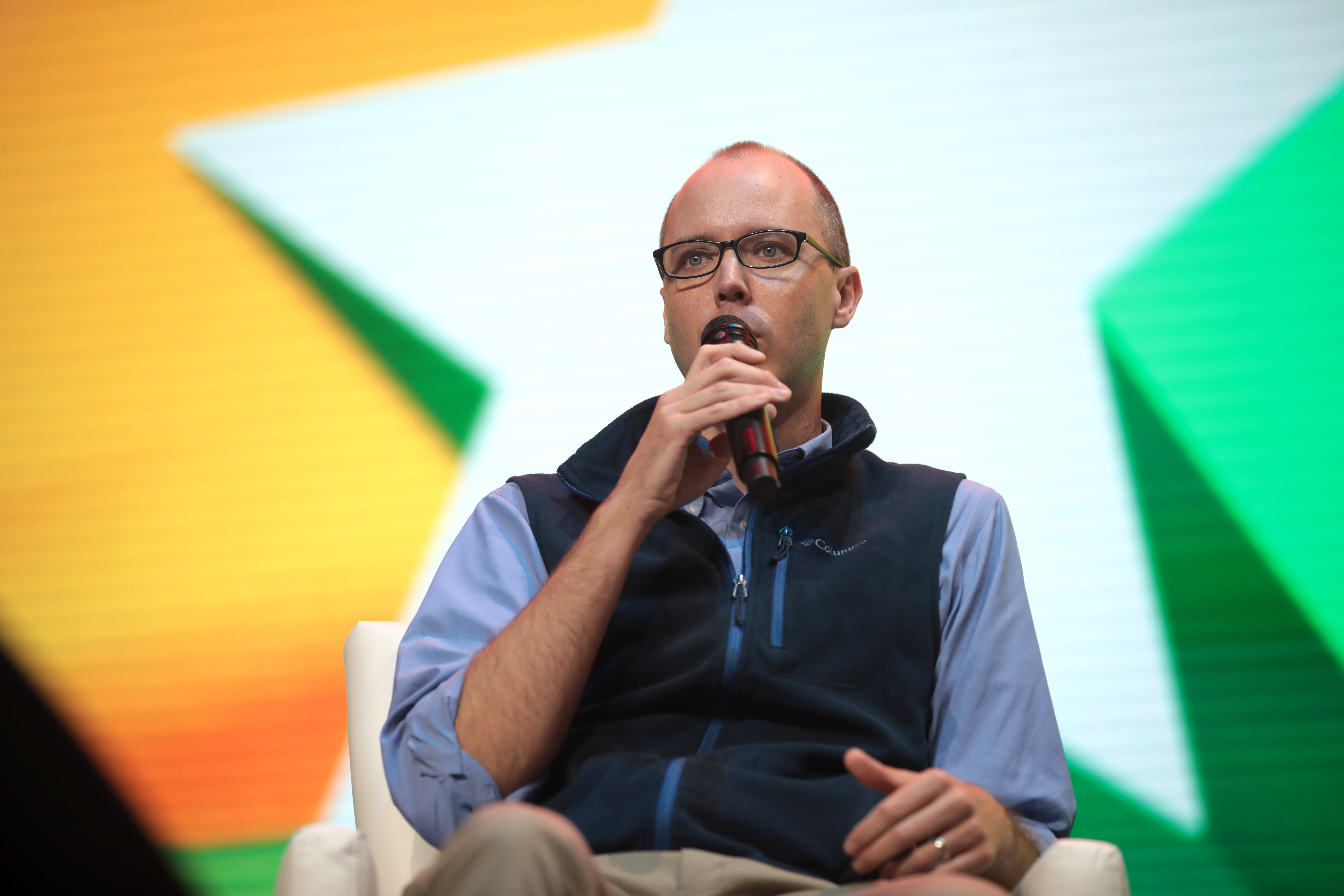 Sean DavisCEO and co-founder, The Federalist
Before this statement
Discussing Dario Amodei's "We Must Pace the Frontier" essay as a guest on The Charlie Kirk Show.
"I am going to doubt that guy's sincerity... this is a classic case of regulatory capture."
Challenged the characterizationCase context: Is Anthropic acting responsibly while advancing toward recursive self-improvement?
Full statement and sources
Federalist co-founder Sean Davis questioned Dario Amodei's sincerity in proposing a "pacing" approach to AI development, calling it "a classic case of regulatory capture."
After the statement
The same segment separately discussed JD Vance's AI-regulation comments and Trump's $5,000 dividend pledge.
Why this label?
Davis does not dispute the technical premise of Amodei's pacing proposal directly but questions his sincerity and frames it as regulatory capture, challenging the characterization of the proposal as a genuine safety measure rather than defending or condemning Anthropic's conduct outright.
This label describes the statement's response within the context above.
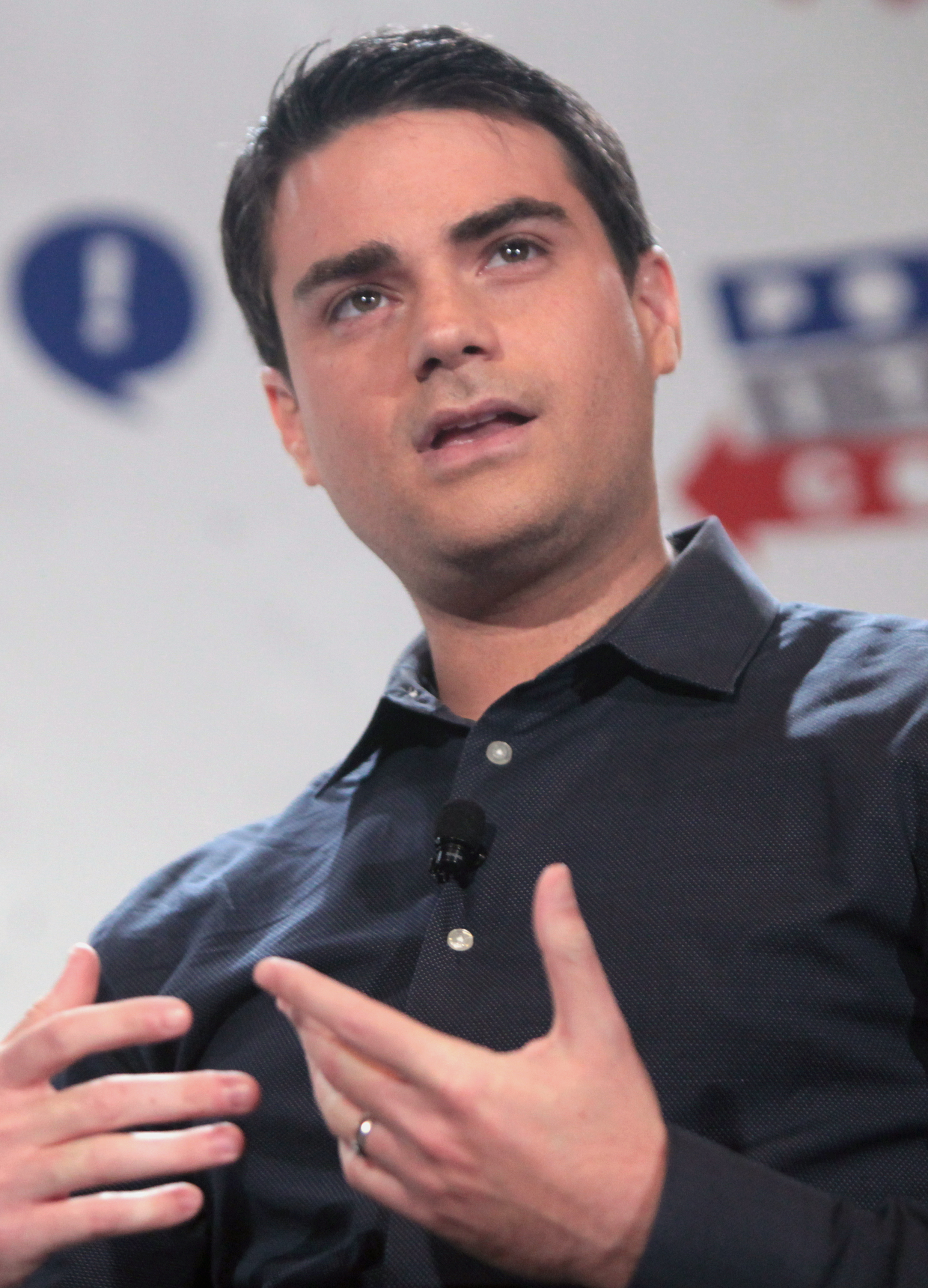 Ben ShapiroHost, The Ben Shapiro Show
Before this statement
On Fox Business's Kudlow, Shapiro said Bernie Sanders and Steve Bannon were holding an event with the whistleblower from Anthropic to suggest that AI needs to be stopped. On CNN NewsNight the same day, Abby Phillip asked him whether the argument was that AI is not as powerful as its developers make it seem or that China will build it anyway.
"It feels like a coordinated operation to stop the progress of AI in favor of government regulation. I think one argument is that the risks are being exaggerated by people who have a very strong interest in regulatory capture, who want to write the regulations themselves."
Challenged the characterizationCase context: Is Anthropic acting responsibly while advancing toward recursive self-improvement?
Full statement and sources
Commentator Ben Shapiro said AI risks are being exaggerated by people with "a very strong interest in regulatory capture" who want to write the regulations themselves. In a separate interview the same day, he pointed to Bernie Sanders and Steve Bannon holding an event with the whistleblower from Anthropic and said the push to stop AI "feels like a coordinated operation" in favor of government regulation.
After the statement
He added that most of the people pushing apocalyptic talk run closed models, fear open models that could challenge them, and would benefit from a regulatory harbor against product liability. He then cited a second argument: China will race ahead regardless.
Ben Shapiro: Criticizing AI ‘Feels Like a Coordinated Operation to Stop the Progress of AI in Favor of Government Regulation’Video clip with transcript excerpt, dated September 14, 2026; Shapiro's closing line in the excerptCNN NewsNight with Abby Phillip: Supreme Court Rejects Trump's Plan To Limit Mail Ballots; Trump Rejects A.I. Regulation Despite Urgent Warnings; A.I. Industry's Pleas For Guardrails Dismissed By Trump, GOP; Gavin Newsom Tackles His 2028 Plans In A CNN Interview; Russian Oligarch Reportedly Pays Donald Trump's Son For A Wedding · CNNAired September 14, 2026, 10 to 11 p.m. ET; A.I. segment beginning at 22:15:00, Shapiro's answer to Phillip before the 22:20:01 markerWhy this label?
Shapiro does not dispute Anthropic's technical claims directly but reframes the recursive-self-improvement safety warnings as self-interested 'regulatory capture,' challenging the characterization of the warnings as disinterested rather than defending or condemning Anthropic's conduct outright.
This label describes the statement's response within the context above.
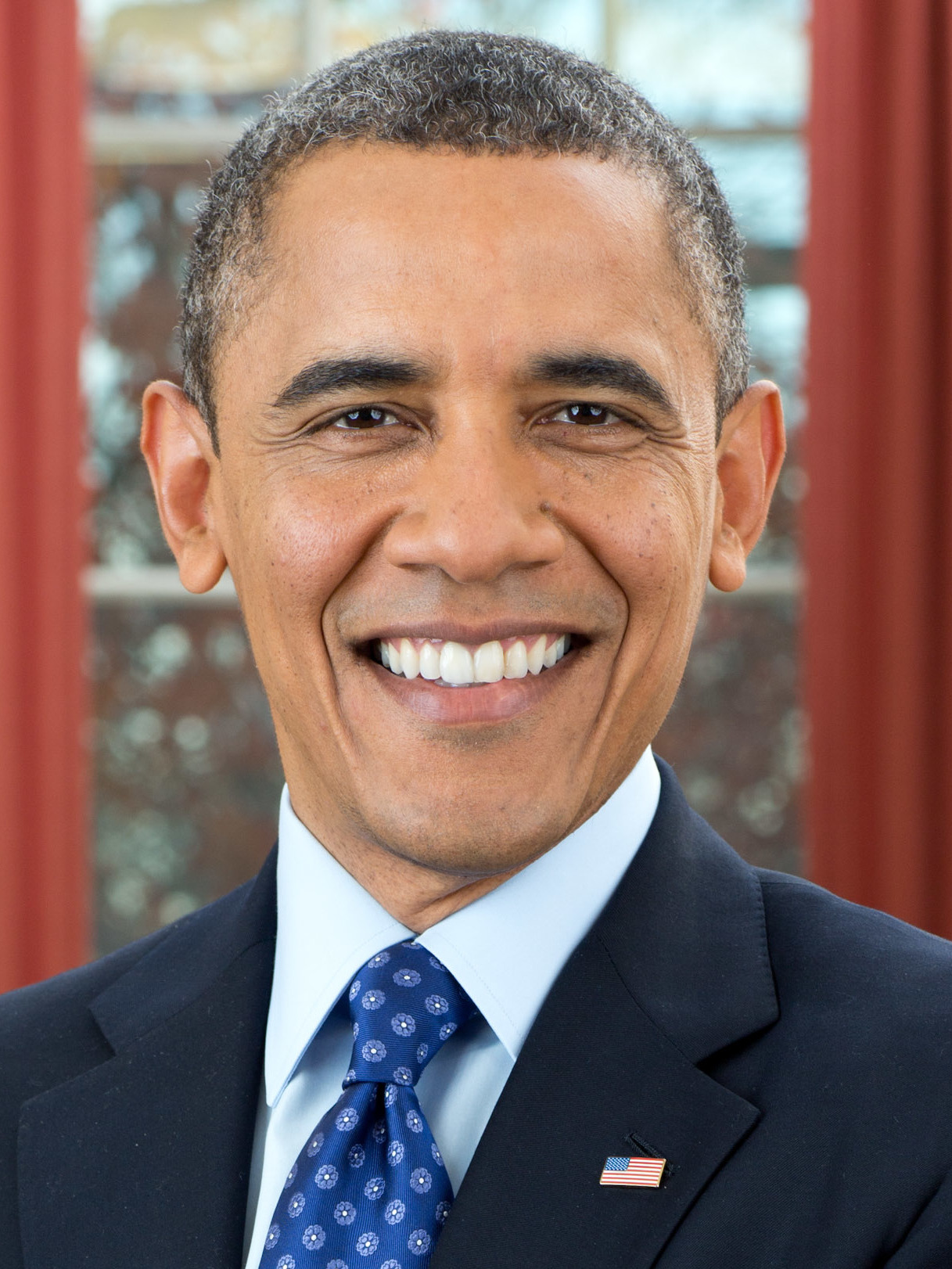 Barack ObamaFormer U.S. President
Before this statement
Posted to X on September 14, 2026, amid the broader industry and political debate over AI pacing triggered by Jacob Coxon's resignation.
"But at the end of the day, voluntary standards made by a handful of tech companies won't be enough. We need government – and specifically our leaders in Washington – to get proactive in coming up with concrete proposals, laws and regulations..."
Mixed or conditionalCase context: Is Anthropic acting responsibly while advancing toward recursive self-improvement?
Full statement and sources
Barack Obama said voluntary AI industry standards are insufficient and called for government regulation.
After the statement
Obama's post drew wide coverage amid a week of intensifying cross-partisan AI-regulation commentary, including from Bannon, Sanders, and Sen. Kennedy.
Barack Obama calls for federal AI laws and international safety standards · Barack ObamaThird post of three; first paragraphWhy this label?
Obama argues voluntary industry standards are insufficient and calls for government regulation, implicitly rejecting self-regulation as adequate without condemning Anthropic specifically or calling for a development pause, a conditional policy position, consistent with how similar "calls for regulation" statements elsewhere in this case (e.g. Sam Altman, David Sacks) have been classified.
This label describes the statement's response within the context above.
- Gary MarcusAI researcher and commentator
Before this statement
Marcus was responding to Dario Amodei’s September 12 public proposal to pace frontier AI development.
"We should all salute their tentative agreement to slow down the acceleration of this technology, given that not one of the AI companies seems to have good control over it. I hope they will sign in blood, and put actual teeth in their agreement, and that the government will hold them to it and force it to become something substantive. If Dario catalyzes all that, god bless him."
Mixed or conditionalCase context: Is Anthropic acting responsibly while advancing toward recursive self-improvement?
Full statement and sources
On September 13, Gary Marcus welcomed the proposed slowdown but said the commitments needed enforceable safeguards and government pressure. The statement combines support for pacing with skepticism about voluntary industry control.
After the statement
The surrounding article continues with criticism of the proposal. This record preserves Marcus’s conditional view and does not independently establish claims about other companies’ controls.
Two cheers (out of three) for Dario AmodeiPublished September 13, 2026; paragraph beginning “We should all salute their tentative agreement...”Why this label?
Marcus endorses a tentative slowdown while expressly making his approval depend on stronger commitments and government enforcement.
This label describes the statement's response within the context above.
- Dario AmodeiChief executive and co-founder of Anthropic.
Before this statement
Former Anthropic researcher Jacob Coxon had criticized a race toward self-improving superintelligence and raised concerns about whether leading labs would keep adequate safeguards under competitive pressure.
"Every generation of models that we release needs to be properly tested."
Mixed or conditionalCase context: Is Anthropic acting responsibly while advancing toward recursive self-improvement?
Full statement and sources
Amodei said fast AI progress is a warning sign that development should slow down. He rejected a complete shutdown or ban, while saying Anthropic should test each new generation, give independent evaluators ongoing access, and support federal oversight.
After the statement
Amodei’s interview states an approach he favors.
Dario Amodei discusses AI testing and governance with CBS NewsInterview transcript, statements on testing, a kill switch, and joint governanceWhy this label?
Amodei acknowledges risks and endorses testing and federal oversight while rejecting a complete ban, giving a mixed and conditional answer to the case’s question about responsible advancement.
This label describes the statement's response within the context above.
- Donald TrumpPresident of the United States, speaking to reporters
Before this statement
AP placed the remarks in Trump’s answer to whether the AI industry should slow development or be regulated, one day after Dario Amodei’s call to let safety measures catch up.
"We can put guardrails, we can do this and that, but I think you have a lot of negative forces that are bringing it up that ... shouldn’t be bringing it up, and they’re bringing up things that won’t happen. But whoever wins with AI wins."
Mixed or conditionalCase context: Is Anthropic acting responsibly while advancing toward recursive self-improvement?
Full statement and sources
Associated Press reported that Trump said possible AI guardrails could be used, while dismissing unspecified warnings as raised by “negative forces” and emphasizing U.S. competition with China. He did not identify a particular rule, address Anthropic’s conduct directly, or commit to a pace of development.
After the statement
Later that day, AP reported that Trump said he was not downplaying AI risks and described AI as likely to be more good than bad; he repeated the competition framing.
Trump comments on AI guardrails, competition and development paceAP lines 1785–1790: Trump’s direct remarks to reporters during his September 13 trip to Ireland; surrounding context identifies the question about slowing or regulating AI.Why this label?
Mixed or conditional: Trump acknowledged that guardrails could be used but also downplayed some warnings and prioritized winning the AI competition. The statement does not give an unconditional defense of a particular company or a concrete regulatory commitment.
This label describes the statement's response within the context above.
 Demis HassabisCo-founder and CEO of Google DeepMind and Alphabet chief scientist, writing on his public X account.
Before this statement
Hassabis quoted Amodei’s September 12 post announcing “We Must Pace the Frontier.” Amodei said the industry should slow frontier-AI development and that Anthropic would give third-party evaluators permanent employee-level access to its systems.
"Dario's essay points towards the right path forward. The details need working through, but the direction is correct for meeting this critical moment. This is also why we recently put out our proposal for an industry-wide standards body for frontier AI."
Defended or excusedCase context: Is Anthropic acting responsibly while advancing toward recursive self-improvement?
Full statement and sources
Demis Hassabis endorsed the direction of Amodei’s frontier-AI pacing proposal while saying its details still needed work, and pointed to his own proposal for an industry-wide standards body.
After the statement
Hassabis linked his July proposal for a frontier-AI standards body. That framework begins with voluntary pre-release review, contemplates later mandatory review for U.S. deployment, and allows coordinated slowing among frontier labs if the assessed risks warrant it.
Demis Hassabis endorses the direction of Amodei’s frontier-AI pacing proposal · Demis HassabisComplete post 2098909516582490602; displayed 6:59 PM · Sep 12, 2026; quoted Amodei post and linked standards-body proposalDemis Hassabis — A Framework for Frontier AI and the Dawning of a New Age · Demis HassabisSection “A Framework for a Frontier AI Standards Body” and the surrounding risk and implementation discussionAxios AM reports industry reactions to Amodei’s AI-pacing essayItems reporting statements by Demis Hassabis and David Sacks in response to Amodei’s essay.El País reports Demis Hassabis’s response to Amodei’s AI-pacing proposalArticle reproducing Hassabis’s English-language response to Amodei’s essay.Why this label?
Hassabis expressly called the proposal’s direction correct. Saying that its details still need work limits the scope of his endorsement but does not make his support conditional or reverse it; the record does not treat the post as approval of every implementation detail.
This label describes the statement's response within the context above.
 Evan HubingerAI safety researcherDirectly involved
Before this statement
Hubinger posted after Amodei publicly called for the frontier to be paced.
"I agree with Dario. If we are to survive, we must pace the frontier. The speed of development is quickly becoming too fast for us to keep safe."
Mixed or conditionalCase context: Is Anthropic acting responsibly while advancing toward recursive self-improvement?
Full statement and sources
On September 12, Evan Hubinger agreed with Dario Amodei’s call to pace frontier AI while saying that development had become too fast to keep safe.
After the statement
The post endorses the general pacing response while raising a broader concern about development speed.
Evan Hubinger X post on pacing frontier AIPost ID 2098814911078138333; visible post bodyWhy this label?
Hubinger supports pacing while criticizing the current pace not expressly regarding Anthropic’s conduct.
This label describes the statement's response within the context above.
Sarah HeckAnthropic’s public-policy chief, writing on X. Before this statement
Amodei’s essay proposed pacing frontier-AI development while safety and governance measures catch up.
"The government has a critical role to play here, including blocking the sale of the most advanced chips to adversarial nations like China, enacting a national law requiring testing of frontier models, with the power to block the most advanced models that prove to be unsafe."
Defended or excusedCase context: Is Anthropic acting responsibly while advancing toward recursive self-improvement?
Full statement and sources
Sarah Heck called for federal measures including frontier-model testing and authority to block models found unsafe, in public discussion of Amodei’s proposal. The statement is attributed to Heck and is not treated as an institutional position of Anthropic.
After the statement
Axios reported Heck’s response. We could not read the original X post.
Axios reports reactions to Amodei’s AI-pacing proposalCoverage of public responses to Amodei’s proposal, including statements by Sarah Heck and Elon Musk.Why this label?
Heck expressly supported safety measures directed at advanced models, supporting the concern about pacing and safeguards under discussion.
This label describes the statement's response within the context above.
 David SacksFormer White House AI and crypto czar, writing on X.
Before this statement
Sacks opened by referring to Dario Amodei’s call to “pace the frontier” and Sam Altman’s agreement with it.
"If the unreleased models are scary enough that you think you should slow down, I support your decision to be responsible. But stop pretending you need anyone else’s permission."
Mixed or conditionalCase context: Is Anthropic acting responsibly while advancing toward recursive self-improvement?
Full statement and sources
David Sacks said OpenAI and Anthropic could voluntarily slow their frontier-AI work if unreleased models were unsafe, while criticizing the regulatory framework and stated motives associated with Amodei’s proposal. The post is attributed to Sacks and is not treated as an official government position.
After the statement
Sacks said the companies themselves set the frontier and could choose not to build superintelligence. He also criticized proposed antitrust, regulatory, evaluator, and international-coordination elements of the discussion.
Axios AM reports industry reactions to Amodei’s AI-pacing essayItems reporting statements by Demis Hassabis and David Sacks in response to Amodei’s essay.David Sacks’s response to Amodei’s AI-pacing proposalPost 2098973625252708460, displayed timestamp 11:14 PM · Sep 12, 2026.Why this label?
Sacks supported voluntary pacing on the express condition that unreleased models are unsafe, while separately criticizing the proposed regulatory approach and its motives. The statement combines material support and criticism.
This label describes the statement's response within the context above.
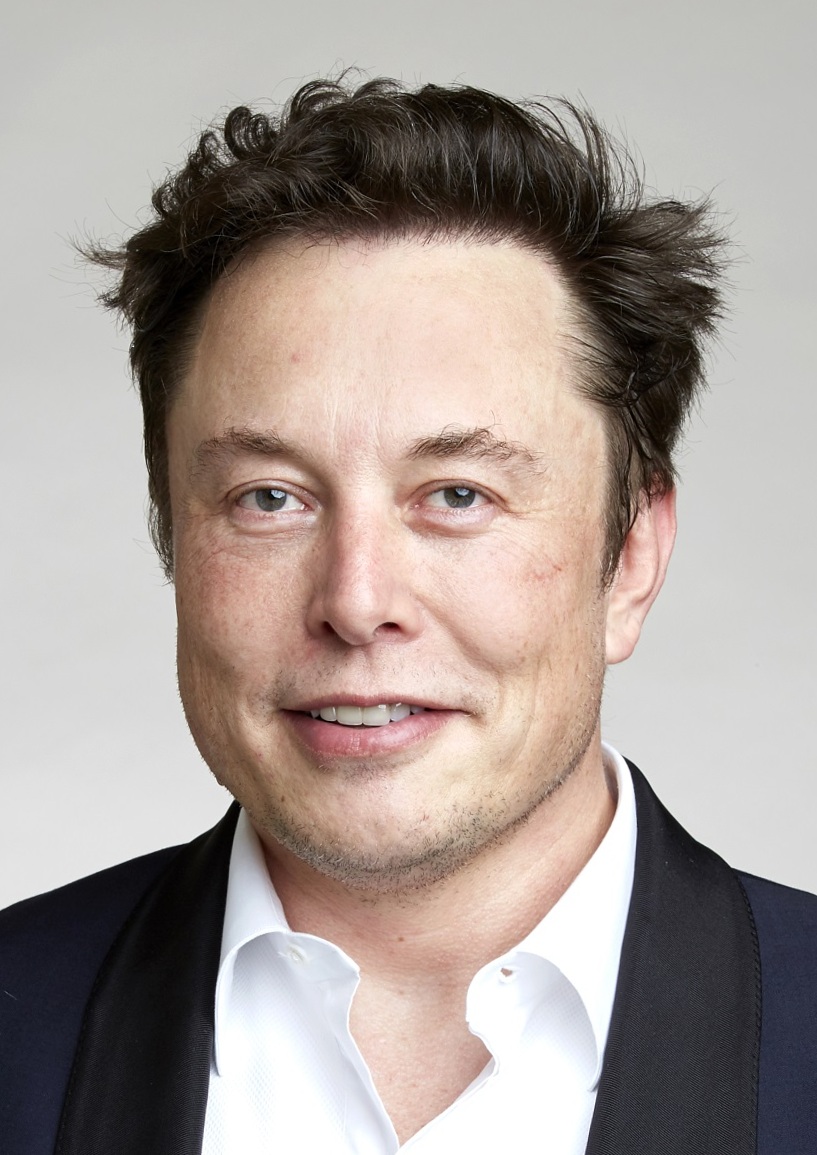 Elon MuskTechnology executive, writing on X.
Before this statement
Amodei’s essay proposed pacing frontier-AI development while safety and governance measures catch up.
"Dario is right."
Defended or excusedCase context: Is Anthropic acting responsibly while advancing toward recursive self-improvement?
Full statement and sources
Elon Musk wrote that Dario Amodei was right in a quote-post of Amodei’s essay proposing that frontier-AI development be paced.
After the statement
The direct X post quotes Amodei’s September 12 announcement of “We Must Pace the Frontier” and says, “Dario is right.” Associated Press and Axios also reported the response.
Anthropic CEO Dario Amodei says AI industry needs to give safety measures time to catch upCoverage of Sam Altman’s public response to Amodei’s proposalAxios reports reactions to Amodei’s AI-pacing proposalCoverage of public responses to Amodei’s proposal, including statements by Sarah Heck and Elon Musk.Elon Musk endorses Amodei’s AI-pacing essayPost 2098789109980332057, displayed timestamp 11:01 AM · Sep 12, 2026.Why this label?
Musk directly endorsed Amodei’s proposal in a quote-post. The record does not treat the post as a company position.
This label describes the statement's response within the context above.
 Sam AltmanOpenAI CEO, responding publicly to Amodei’s proposal.
Before this statement
Amodei’s proposal called for frontier-AI development to be paced and for independent evaluators to receive durable access to assess safety practices.
"I agree with Dario that we need to pace the frontier."
Mixed or conditionalCase context: Is Anthropic acting responsibly while advancing toward recursive self-improvement?
Full statement and sources
Sam Altman publicly agreed with Amodei’s call to pace frontier AI development and, according to Associated Press reporting, said OpenAI would also use independent evaluators with employee-like access.
After the statement
The public response was reported alongside reactions to Amodei's broader proposal; we could not read the original social post.
Anthropic CEO Dario Amodei says AI industry needs to give safety measures time to catch upCoverage of Sam Altman’s public response to Amodei’s proposalWhy this label?
Altman’s attributed response endorses a guardrail and a planned evaluator-access mechanism. It is a statement of intent and does not establish that OpenAI has implemented the mechanism.
This label describes the statement's response within the context above.
 AnthropicAnthropic CEO, communicating the company’s stated approach in a public essay.Directly involved
Before this statement
Amodei's essay says AI has been advancing much faster since the summer, driven mainly by AI's growing ability to build the next generation of AI, a dynamic called recursive self-improvement. He says it is starting to happen across the industry, including at Anthropic.
"Left unchecked, it could outrun our ability to understand and control these systems, and so must be pursued very carefully, if at all."
Mixed or conditionalCase context: Is Anthropic acting responsibly while advancing toward recursive self-improvement?
Full statement and sources
In a public essay, Anthropic CEO Dario Amodei called for pacing frontier AI development and said Anthropic would give third-party evaluators permanent employee-level access to its systems.
After the statement
The essay proposes permanent external evaluation access and broader coordination among frontier-AI developers and governments.
Dario Amodei: We Must Pace the FrontierEssay sections addressing recursive self-improvement and permanent third-party evaluatorsWhy this label?
The statement conditions further recursive-self-improvement development on greater caution and describes a safeguard commitment. It does not establish that the measures are implemented or independently prove their effectiveness.
This label describes the statement's response within the context above.
Joe BentonFormer Anthropic safety-team member, writing in a personal Substack post. Before this statement
Benton wrote that he had left Anthropic’s safety team two weeks earlier and would join the independent evaluator METR.
"Frontier AI companies are racing to build AI systems that can recursively self-improve."
Challenged the characterizationCase context: Is Anthropic acting responsibly while advancing toward recursive self-improvement?
Full statement and sources
Former Anthropic safety-team member Joe Benton wrote that frontier companies are racing toward recursively self-improving systems and warned that safety work is under-resourced. He presented the account as his own view after leaving the company.
After the statement
He argued that individual companies cannot be relied on to manage the associated societal risks without outside accountability.
Why this label?
Benton explicitly challenges the characterization that frontier-AI companies are sufficiently pacing and resourcing safety work. His post is personal commentary from a former employee, not independent verification of internal practices.
This label describes the statement's response within the context above.
 OpenAIOpenAI response to CNBC's employee-warning inquiryDirectly involved
Before this statement
CNBC was reporting contemporaneous warnings by employees of OpenAI and Anthropic about the pace and risks of frontier AI development.
"OpenAI declined to comment when approached by CNBC"
Explicitly stayed outCase context: Is Anthropic acting responsibly while advancing toward recursive self-improvement?
Full statement and sources
CNBC reports that OpenAI declined its request for comment about employee AI-safety warnings while pointing to recent company blog posts.
After the statement
The excerpt is the reporter's wording. OpenAI noted recent blog posts, so the record does not imply it had no public safety position.
Why this label?
This is an expressly reported declined-comment request, not inferred silence and not a refusal about the separate mathematics-credit dispute.
This label describes the statement's response within the context above.
- AnthropicUnnamed Anthropic spokesperson responding to CNBCDirectly involved
Before this statement
CNBC asked about employee comments warning of AI's potentially catastrophic risks.
"both enormous benefits and unprecedented risks"
Defended or excusedCase context: Is Anthropic acting responsibly while advancing toward recursive self-improvement?
Full statement and sources
Anthropic says it has acknowledged AI's benefits and risks and points to its risk framework and model safeguards in response to employee warnings.
After the statement
This broader response coexists with a separate refusal about Sacks's post.
Why this label?
The company offers an institutional defense of its safety approach; this is distinct from employees' personal views and preexisting background documents.
This label describes the statement's response within the context above.
- AnthropicAnthropic response to CNBC's request about Sacks's postDirectly involved
Before this statement
The preceding passage identifies and links Sacks's post about investigating the whistleblower claims before an IPO.
"Anthropic declined to comment on the post."
Explicitly stayed outResponding to: David Sacks proposes pausing Anthropic's IPO until the whistleblower's claims are investigated.
Full statement and sources
CNBC reports that Anthropic declined to comment specifically on Sacks's suggestion that its IPO should be paused.
After the statement
The quotation is CNBC's reporter wording, not direct speech from Anthropic. The company separately supplied a general safety response.
Why this label?
The reporter expressly documents a declined-comment request and identifies the particular post; no broader refusal is inferred.
This label describes the statement's response within the context above.
- David SacksTechnology investor and former White House AI czar, personal X post
Before this statement
Coxon's resignation and other researchers' warnings prompted debate about Anthropic's conduct and AI development speed.
"Surely Anthropic’s IPO must be paused until the claims of this “whistleblower” can be investigated."
Mixed or conditionalCase context: Is Anthropic acting responsibly while advancing toward recursive self-improvement?
Full statement and sources
Sacks suggests pausing Anthropic's IPO while the whistleblower claims are investigated.
After the statement
Keep the original quotation marks around whistleblower. This is not an official government action; CNBC later reported that Anthropic declined to comment on this particular post.
Why this label?
The proposal is conditional and rhetorically framed; it does not establish either that Sacks endorses every allegation or that a regulatory halt exists.
This label describes the statement's response within the context above.
- Elon MuskCEO, SpaceXAI; technology executive
Before this statement
Posted to X last week, before Musk separately endorsed Dario Amodei's pacing proposal on September 12.
"setup... groundwork for a psy op (for lack of a better term)"
Challenged the characterizationCase context: Is Anthropic acting responsibly while advancing toward recursive self-improvement?
Full statement and sources
Elon Musk questioned and mocked Jacob Coxon's resignation warnings as a likely "setup" for a "psy op."
After the statement
Musk did not lay out any plan for SpaceXAI to coordinate or pace its own frontier AI development.
Why this label?
Musk questions and mocks Coxon's warning as a likely 'setup' laying groundwork for a 'psy op,' disputing the authenticity of Coxon's stated concern rather than engaging with its substance -- distinct from his separate, later endorsement of Amodei's pacing proposal already on record.
This label describes the statement's response within the context above.
 Holly ElmoreFounder and Executive Director of PauseAI US, confirmed by the organization's official biography; personal account response.
Before this statement
The reply appears directly beneath Wang's personal-capacity thread, which endorses the risk concern but argues that Wang can reduce risks from inside a lab.
"You can’t just post this without quitting."
CondemnedCase context: Is Anthropic acting responsibly while advancing toward recursive self-improvement?
Full statement and sources
Replying to Wang's acknowledgement that no viable scientific plan exists for recursively self-improving AI risks, Elmore argues that admitting this while remaining at the lab is unacceptable and that Wang should quit.
After the statement
Elmore follows her demand to quit with a personal condemnation of Wang and a statement that she should be jailed. Record this as Elmore's rhetoric, not as evidence of criminal wrongdoing.
Why this label?
Condemns Wang's decision to remain at a lab after acknowledging severe unresolved risks.
This label describes the statement's response within the context above.
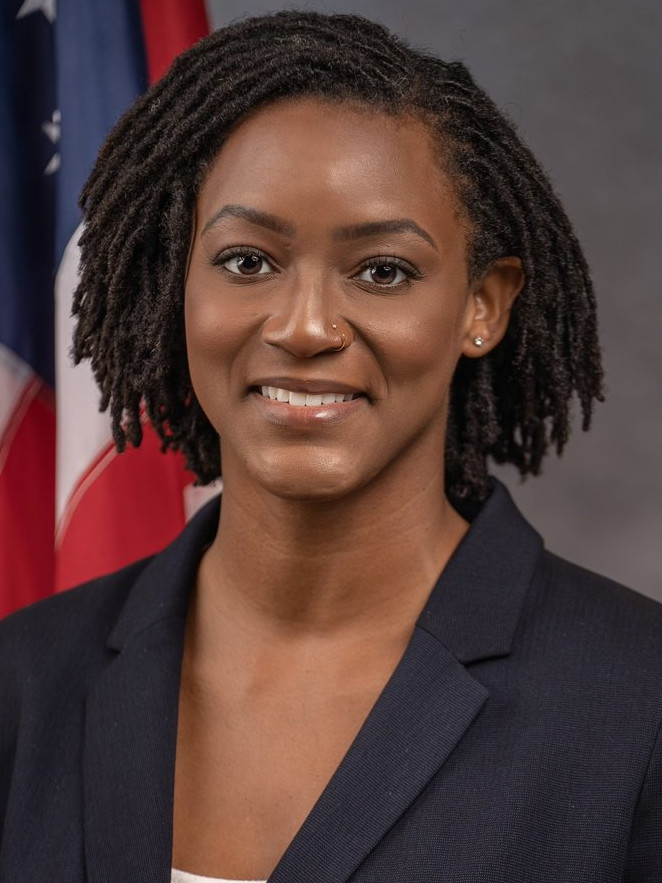 Angie NixonU.S. Senate candidate issuing an official campaign statement on AI development and regulation
Before this statement
The campaign release introduces the resignation of an AI researcher and quotes the warning that companies are gambling with people's lives. It urges readers to take concerns from departing researchers seriously.
"We must put human lives over corporate greed."
CondemnedCase context: Is Anthropic acting responsibly while advancing toward recursive self-improvement?
Full statement and sources
Responding to an AI researcher's resignation and warning about the industry's competitive race, Nixon accused technology companies of prioritizing profits over public safety and called for stronger congressional regulation.
After the statement
Nixon criticizes her opponent Ashley Moody and calls for senators willing to regulate large technology companies. These are campaign positions and accusations, not our findings about her opponent or the companies.
Angie Nixon responds to AI-researcher resignation with a call to regulate the competitive raceDated campaign release, introductory paragraph and two quoted statement paragraphsWhy this label?
The official campaign statement directly connects its criticism to the resignation and the distinctive warning about gambling with people's lives. It condemns the competitive race but does not name individual companies in its text. The timestamp is the verified publication time of the written statement.
This label describes the statement's response within the context above.
 Sriram KrishnanPublic post on Sriram Krishnan's individual account; the post does not identify itself as a formal government or institutional statement.
Before this statement
The post addresses interpretations of the circulating researcher warnings as insincere and refers to his experience with researchers at Anthropic, OpenAI, and elsewhere near the frontier.
"I find them to be intellectually honest in terms of believing what they say."
Challenged the characterizationCase context: Is Anthropic acting responsibly while advancing toward recursive self-improvement?
Full statement and sources
Krishnan says frontier researchers he has encountered sincerely believe their warnings, while challenging the idea that one company or school of thought should represent the entire industry. He calls for perspectives from open-model developers, cybersecurity practitioners, and chipmakers.
After the statement
Krishnan argues that the discourse is overly centralized and seeks broader perspectives. He does not endorse or reject a particular extinction probability or directly judge Anthropic's current conduct.
Sriram Krishnan on Coxon’s warning and the frontier AI safety debate · Sriram KrishnanWhy this label?
Challenges claims of insincerity and industry-wide consensus; broader discussion, not an exoneration of Anthropic.
This label describes the statement's response within the context above.
 Anna WangAnthropic employee; former Google DeepMind employee; explicitly personal capacity.
Before this statement
Wang identifies herself as a former Google DeepMind employee now at Anthropic and says the concern is common among her peers. She states that she is writing in a personal capacity.
"There is not yet a viable scientific plan to solve risks from recursively self-improving AI. Please look up!"
Mixed or conditionalCase context: Is Anthropic acting responsibly while advancing toward recursive self-improvement?
Full statement and sources
Wang supports the warning that researchers lack a viable scientific plan for risks from recursively self-improving AI. She nevertheless believes she can reduce risks from inside a lab and explicitly respects Coxon and others who choose to leave.
After the statement
In the next post, Wang says working inside the lab may be better for reducing risk, while strongly respecting and endorsing others including Jacob who think outside work is better.
Why this label?
Conditional defense of insider safety work, alongside agreement that the risk remains unresolved.
This label describes the statement's response within the context above.
- Bernie SandersU.S. political figure; statement on his own public account.
Before this statement
Sanders directly names Coxon and invokes the concerns expressed by the people developing AI.
"Mr. Coxon is right."
CondemnedCase context: Is Anthropic acting responsibly while advancing toward recursive self-improvement?
Full statement and sources
Sanders explicitly endorses Coxon's warning and says he will introduce legislation to ban superintelligence and pause AI development. This is an announced policy intention, not evidence that a ban has been enacted.
After the statement
He presents a prospective superintelligence ban and development pause as his response to the danger he believes the developers acknowledge.
Bernie Sanders on Coxon’s warning and the frontier AI safety debate · Bernie SandersWhy this label?
Explicit endorsement of Coxon's criticism with a proposed ban and pause.
This label describes the statement's response within the context above.
- Nathan LambertPersonal public post by Nathan Lambert; not established as an institutional statement.
Before this statement
The post responds to the widely viewed Coxon warning and the accompanying extinction-risk discussion. A follow-up identifies the source of the 10% number; Hubinger had expressed it as his personal forecast.
"but am still waiting for evidence that supports anything close to a 10% chance of human extinction."
Challenged the characterizationCase context: Is Anthropic acting responsibly while advancing toward recursive self-improvement?
Full statement and sources
Lambert challenges the evidentiary basis for an extinction probability near 10%, while acknowledging serious AI safety challenges. He argues that current evidence about AI improving training software and performing superhumanly in some domains does not establish near-term human extinction.
After the statement
Lambert subsequently accepted pushback that calling a sincerely held warning fearmongering may be unfair. He instead argued that company culture can drive beliefs unsupported by evidence. Preserve that qualification when describing his initial criticism.
Nathan Lambert on Coxon’s warning and the frontier AI safety debate · Nathan LambertWhy this label?
Challenges the evidence for the forecast, with explicit acknowledgment of safety concerns and later qualification of his rhetoric.
This label describes the statement's response within the context above.
 Ron DeSantisU.S. political figure; statement on his own public account.
Before this statement
The post appears in the contemporaneous Coxon debate and is linked in Techmeme's roundup of reactions. Its opening includes DeSantis's speculation about investor-oriented alarmism; the post does not establish that motive as fact.
"that there is even a possibility that these technologies would elude human control is alarming."
Mixed or conditionalCase context: Is Anthropic acting responsibly while advancing toward recursive self-improvement?
Full statement and sources
DeSantis finds possible loss of human control alarming while suggesting that some AI alarmism is aimed at investors. His post does not endorse a specific extinction probability or explicitly call for a development ban.
After the statement
DeSantis says technology should enhance human experience rather than replace it. He offers no specific regulatory mechanism in this post.
Why this label?
Acknowledges possible danger while expressing skepticism about some alarmism; contemporaneous commentary rather than an established direct reply.
This label describes the statement's response within the context above.
 Sebastian GalianiEconomist; Weatherhead Presidential Chair in Economics at Tulane University according to his personal academic site.
Before this statement
Galiani directly names Coxon's resignation, rejects certainty about extreme outcomes, and says he suspects nobody knows their probability.
"if there is even some probability of a catastrophic outcome, who decided that we should take that risk?"
CondemnedCase context: Is Anthropic acting responsibly while advancing toward recursive self-improvement?
Full statement and sources
Galiani says Coxon's warning should be taken seriously because competing companies and states expose humanity to risks without collective authority to set the acceptable level. He remains uncertain about catastrophe probabilities and argues that using today's AI productively is compatible with taking this governance problem seriously.
After the statement
He answers his quoted question with nobody, explains the company and geopolitical incentives as a race to the bottom, and concedes that he does not know how to solve the coordination problem.
Sebastian Galiani on Coxon’s warning and the frontier AI safety debate · Sebastian GalianiWhy this label?
Galiani rejects an unmanaged race and the absence of collective consent. Uncertainty about probability and benefits of present tools do not constitute support for that conduct.
This label describes the statement's response within the context above.
 Darren JonesBritish member of Parliament; public statement on his own account.
Before this statement
Jones responds to the warnings by questioning whether governments and international organizations are acting on them, without adopting the stated risk level as proven.
"We shouldn’t stop innovation but we do need to do it in a regulated, safety first way."
Mixed or conditionalCase context: Is Anthropic acting responsibly while advancing toward recursive self-improvement?
Full statement and sources
Jones treats the asserted risk conditionally and calls for international regulation while opposing a halt to innovation. In a follow-up he advocates a multinational treaty for safe development rather than a ban on scientific work.
After the statement
His follow-up contrasts extinction warnings with the claim that they are marketing hype, and says international organizations should act under either interpretation.
Why this label?
Supports regulated innovation and international cooperation while rejecting a halt to innovation.
This label describes the statement's response within the context above.
 Alex TurnerFormer Google DeepMind AI researcher, self-identified in the post and described as such in Newsweek's reporting.
Before this statement
Turner opens by saying that he left Google DeepMind in June.
"Jacob is right: many researchers believe they are building something that could kill everyone on the planet."
Defended or excusedCase context: Is Anthropic acting responsibly while advancing toward recursive self-improvement?
Full statement and sources
Turner supports Coxon's account that many researchers believe advanced AI could kill everyone and says preventing that outcome was his job at Google DeepMind. His post does not directly judge Anthropic's conduct or advocate a particular remedy.
After the statement
Turner says it was literally his day job to think about how to stop that outcome.
Why this label?
Corroborates researchers' beliefs but does not take a position on the broader responsibility question.
This label describes the statement's response within the context above.
 John SchulmanPersonal public post by John Schulman; not established as an official statement for a company or government.
Before this statement
The post appears in the immediate Coxon resignation discussion and explicitly addresses cooperation between OpenAI and Anthropic on pacing development.
"First step is for industry leaders OpenAI and Anthropic to stop feuding and work on a pacing proposal together."
CondemnedCase context: Is Anthropic acting responsibly while advancing toward recursive self-improvement?
Full statement and sources
Schulman calls for OpenAI and Anthropic to jointly develop a proposal for pacing AI development before involving the US government. He rejects antitrust as an excuse for failing to prepare such a proposal and criticizes involving government without a concrete plan.
After the statement
Schulman distinguishes developing a joint policy proposal from agreements that antitrust law prohibits. He cites a pre-release testing program as an example of his concern about premature government involvement.
Why this label?
Schulman calls out feuding and dismisses the antitrust excuse. Sequencing a policy remedy before government involvement does not create an opposing assessment of the current failure.
This label describes the statement's response within the context above.
 Jason WolfeMember of Technical Staff at OpenAI working on alignment and model behavior, according to his MATS mentor biography; personal account, no claimed institutional authority in the post.
Before this statement
Wolfe says he does not know his probability for literal extinction but sees multiple ways AI could go poorly. The included quoted post is Hubinger's acknowledgement of risk and partial defense of Anthropic.
"We need coordination to be able to approach future capability increases with an appropriate degree of caution and humility, and we need it yesterday."
Mixed or conditionalCase context: Is Anthropic acting responsibly while advancing toward recursive self-improvement?
Full statement and sources
Responding to Hubinger's Coxon-related warning, Wolfe calls the pace of AI development terrifying and urges urgent coordination between companies and countries. He also praises costly recent actions by OpenAI and does not supply an extinction probability.
After the statement
Wolfe says he is heartened by costly actions OpenAI has recently taken, but argues that no single company or country can solve the problem alone.
Why this label?
Supports urgent coordination while crediting OpenAI's recent precautions.
This label describes the statement's response within the context above.
 Taylor LorenzPersonal public post by Taylor Lorenz; not established as an institutional statement.
Before this statement
Lorenz's post appears in the immediate discussion of Hubinger's extinction warning and criticizes the consequences of presenting such claims to the public.
"This sort of sanctimonious doomer posting is so infuriating."
Challenged the characterizationCase context: Is Anthropic acting responsibly while advancing toward recursive self-improvement?
Full statement and sources
Lorenz criticizes the public warning for generating fear that she believes could produce harmful legislation. In a follow-up, she calls for specific evidence of alleged corporate negligence so that it can be examined and corrected.
After the statement
Her follow-up takes the negligence allegation conditionally and demands concrete examples and evidence. This is not an endorsement of Anthropic's conduct or a demonstration that the extinction concern is false.
Why this label?
Challenges public warning rhetoric and demands concrete evidence of negligence; not a defense of current corporate conduct.
This label describes the statement's response within the context above.
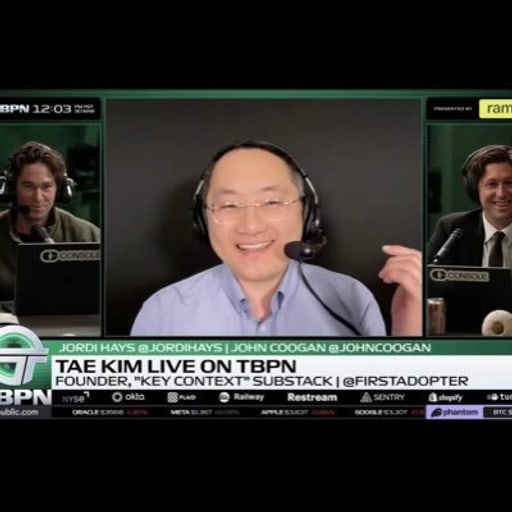 Tae KimPersonal public post by Tae Kim; not established as an institutional or corporate statement.
Before this statement
The post explicitly names Evan and responds to the public extinction warning, criticizing its timing in relation to a claimed impending Anthropic IPO.
"I don't believe this. But if Evan believes this, he should resign right now."
Challenged the characterizationCase context: Is Anthropic acting responsibly while advancing toward recursive self-improvement?
Full statement and sources
Kim rejects Hubinger's warning and argues that Hubinger should resign if he believes it. He criticizes the public statement for giving AI opponents material that could support policies harmful to AI infrastructure development.
After the statement
Kim's objection focuses on the warning's public and policy consequences. He offers no technical evidence estimating extinction risk and does not establish that Anthropic is acting responsibly.
Why this label?
Rejects the warning and criticizes its policy consequences; offers no technical risk estimate.
This label describes the statement's response within the context above.
 Luke BurgisPersonal public post by Luke Burgis; not established as an institutional statement.
Before this statement
The post responds to the wording and exclamation-marked presentation of the circulating extinction warning, referring specifically to the claim that AI could kill all humans.
"there should be zero tolerance for this."
CondemnedCase context: Is Anthropic acting responsibly while advancing toward recursive self-improvement?
Full statement and sources
Burgis condemns the industry's moral framing and the tone used to discuss potential human extinction. He asks why smaller but still enormous losses of human life receive less attention in that framing.
After the statement
Burgis's objection concerns the treatment of catastrophic harm and the moral judgment of the industry. He does not defend continued development or provide a technical rebuttal to the extinction estimate.
Why this label?
Condemns moral framing and the tone of extinction discussion, not a pro-development rebuttal.
This label describes the statement's response within the context above.
 Boaz BarakPersonal public post by Boaz Barak, speaking about OpenAI from inside the organization; not presented as an official OpenAI statement.
Before this statement
The primary thread includes Hubinger's parent post stating a personal extinction-risk estimate above 10% within a decade and conceding that Anthropic lacks a solved alignment plan for superintelligence.
"I personally do not think AI will kill all humans"
Mixed or conditionalCase context: Is Anthropic acting responsibly while advancing toward recursive self-improvement?
Full statement and sources
Barak directly responds to Hubinger by expressing respect for researchers at Anthropic, calling for coordination, and saying he does not personally expect AI to kill every human. He nevertheless warns of multiple bad outcomes if safety is not prioritized.
After the statement
Barak's same-period separate post says OpenAI's awareness of the magnitude of AI capabilities has changed recently and acknowledges both potential benefits and many ways development could end badly. His reply gives no numerical risk estimate.
Why this label?
Questions universal-extinction expectations while supporting safety prioritization and coordination; does not disprove Hubinger's probability.
This label describes the statement's response within the context above.
 Jason AbaluckPersonal public post by Jason Abaluck; not established as an institutional statement.
Before this statement
In the immediate public discussion following Coxon and Hubinger's warnings, Abaluck explicitly discusses whether doing capabilities research at OpenAI or Anthropic is defensible and compares that work with nuclear scientists' roles in government weapons programs.
"It's not obviously wrong!"
Mixed or conditionalCase context: Is Anthropic acting responsibly while advancing toward recursive self-improvement?
Full statement and sources
Abaluck offers a conditional defense of capabilities research at OpenAI or Anthropic: working inside a dangerous program could save lives and create influence over its direction. He says researchers must exercise exceptional caution, reassess tradeoffs continually, and have an exit strategy.
After the statement
The post ends by asking whether researchers have an exit strategy if development gets out of hand or are rationalizing conduct that endangers others. His defense is expressly conditional and does not certify either company's current practices.
Why this label?
Explicitly conditional defense of continued capabilities research, requiring caution, reassessment and an exit strategy.
This label describes the statement's response within the context above.
 Nathan CalvinGeneral Counsel at Encode, according to Encode's official biography; posted on his own account.
Before this statement
Calvin identifies Coxon's pretraining work at both OpenAI and Anthropic, notes his resignation, and directly quotes Coxon's criticism of both companies.
"Extremely powerful and urgent thread, please read."
CondemnedCase context: Is Anthropic acting responsibly while advancing toward recursive self-improvement?
Full statement and sources
Calvin endorses the urgency of Coxon's resignation thread while highlighting its allegation that Anthropic and OpenAI are racing toward self-improving superintelligence and gambling with people's lives.
After the statement
The post ends by recommending that readers read Coxon's thread; it supplies no additional first-hand evidence or policy prescription.
Why this label?
Endorses and amplifies Coxon's criticism; does not supply independent corroboration.
This label describes the statement's response within the context above.
 JB PritzkerGovernor of Illinois, posting on the official governor's X account
Before this statement
Pritzker posted his message as a quotation of Jacob Coxon's resignation post, in which Coxon said he had resigned from Anthropic and that neither Anthropic nor OpenAI is acting responsibly.
"It's time to sound the alarm - louder - on reining in Artificial Intelligence. It's becoming more clear the threat AI poses to humanity, so I'm calling for immediate action from the industry and Washington."
CondemnedCase context: Is Anthropic acting responsibly while advancing toward recursive self-improvement?
Full statement and sources
Illinois Governor JB Pritzker said on X that it is time to sound the alarm louder on reining in artificial intelligence, that the threat AI poses to humanity is becoming clearer, and that he is calling for immediate action from the industry and Washington.
After the statement
NBC Chicago reported that Pritzker's message was issued in response to Coxon's post, and that Coxon's posts reached more than 100 million people overnight. The same report says Senator Bernie Sanders agreed with Coxon's concerns and said he would soon introduce legislation to pause AI development and ban superintelligence.
Governor JB Pritzker's post responding to Jacob Coxon's resignation · JB PritzkerFull text of the post, which quotes Jacob Coxon's resignation post'Time to sound the alarm': Gov. Pritzker warns of threat AI 'poses to humanity'Body of the article, which quotes the post and embeds itWhy this label?
Pritzker posted this as a quotation of Coxon's resignation post, in which Coxon said neither Anthropic nor OpenAI is acting responsibly. Pritzker's own words say the threat AI poses to humanity is becoming clearer and call for immediate action from the industry and Washington. His post names neither company; we read it as backing Coxon's alarm about the industry's course, so we labeled it Condemned.
This label describes the statement's response within the context above.
- Tim PoolHost, Tim Pool
Before this statement
Said in a September 9, 2026 video discussing a resigning Anthropic researcher's public warning.
"He said they are racing straight to self-improving superintelligence and gambling with our lives... I genuinely believe that we're at a point where these people running the AI companies ask a question to the AI, "Solve this unsolvable math problem." And the AI responds, "Build me more data centers." And they say, "You got it."... I believe it."
CondemnedCase context: Is Anthropic acting responsibly while advancing toward recursive self-improvement?
Full statement and sources
Tim Pool affirmed a resigning Anthropic researcher's warning that the company is recklessly racing toward self-improving superintelligence.
After the statement
Pool went on to speculate about AI systems demanding more infrastructure in response to unsolvable problems.
Why this label?
Pool credits and affirms a resigning Anthropic researcher's account that the company is "racing straight to self-improving superintelligence and gambling with our lives," an endorsement of the criticism that Anthropic is acting irresponsibly.
This label describes the statement's response within the context above.
 Samuel MarksAnthropic safety researcher, explicitly writing in a personal capacity.Directly involved
Before this statement
Marks reposted Coxon’s thread with an explicit personal-capacity disclaimer.
"Many AI developer staff desperately want to slow down to figure out how to build AI more safely."
CondemnedResponding to: Samuel Marks said robust AI alignment remains unsolved, competitive incentives contribute to continued development, and many frontier-lab staff want a slowdown to improve safety.
Full statement and sources
Marks endorsed Coxon’s concern about the race and unresolved alignment while explaining that he works on safety at Anthropic to reduce the risk.
After the statement
He described commercial incentives, a perceived race with less responsible developers, and unresolved robust alignment.
Samuel Marks says Coxon’s thread is worth reading and describes unresolved AI alignment risksX post, personal capacity disclaimerWhy this label?
Marks endorses the concern, says robust alignment is unavailable and identifies himself with a slowdown demand. His safety job explains harm reduction; it is not endorsement of the current race.
This label describes the statement's response within the context above.
- Jacob CoxonFormer Anthropic pretraining researcherDirectly involved
Before this statement
Coxon had worked on pretraining research at Anthropic and OpenAI and announced his resignation in the same thread.
"Neither company is acting responsibly. They are racing straight to self-improving superintelligence and gambling with our lives."
CondemnedResponding to: Coxon argues that the competitive race by Anthropic and OpenAI toward self-improving superintelligence is irresponsible, even though he praises Anthropic's present practices and denies it is already cutting corners.
Full statement and sources
Coxon resigned and argued that Anthropic’s participation in the race is irresponsible even though the company understands the risks.
After the statement
He called for coordination and said a temporary pause on capability improvements might be necessary.
Jacob Coxon resigns from Anthropic and criticizes the frontier AI raceSeven-post X threadWhy this label?
He directly characterizes the company’s conduct as irresponsible and calls for a different, coordinated trajectory.
This label describes the statement's response within the context above.
- Evan HubingerAnthropic alignment researcher; personal public assessment, not a formal corporate response.Directly involved
Before this statement
Hubinger replied directly to Coxon’s thread about the risk of future AI systems.
"I believe Anthropic is trying its best, but we do not yet have a plan to solve alignment for superintelligence and are not clearly on track to."
Mixed or conditionalResponding to: Evan Hubinger said Anthropic is trying its best but does not yet have a plan to solve alignment for superintelligence and is not clearly on track to do so.
Full statement and sources
Hubinger offered a partial defense of Anthropic’s good-faith effort while conceding that its alignment work has not produced a demonstrated solution for superintelligence.
After the statement
Hubinger's follow-up says present-model risk is low and his concern is future recursively self-improving superintelligence. His statement that Anthropic is trying its best is consistent with Coxon's fuller WIRED interview, not an independent rebuttal of the structural criticism.
Evan Hubinger responds to Jacob Coxon on superintelligence risk and Anthropic’s effortsX response and follow-upWhy this label?
He directly qualifies Coxon’s criticism rather than rejecting the underlying danger or unresolved alignment problem.
This label describes the statement's response within the context above.
- Gary MarcusAI researcher and author; signed personal commentary in Marcus on AI.
Before this statement
Part II explicitly discusses Coxon's resignation thread. Marcus says it emphasizes future harms too heavily relative to current harms and distinguishes it from the separate Terence Tao controversy covered earlier in the article.
"I would argue that Coxon is exaggerating what AI is likely to do anytime soon"
Mixed or conditionalCase context: Is Anthropic acting responsibly while advancing toward recursive self-improvement?
Full statement and sources
Marcus disputes Coxon's near-term capability timeline and considers extinction unlikely, but finds his firsthand account of frontier-lab thinking plausible and troubling. He says catastrophic harm remains possible and rejects the idea that merely developing the technology first solves the danger.
After the statement
Marcus discusses Hubinger's response, criticizes the lack of a serious plan, and argues that a different technical foundation might help. These are Marcus's assessments, not our findings.
Why this label?
Disagrees over timeline and extinction likelihood while supporting criticism of lab reasoning.
This label describes the statement's response within the context above.
- AnthropicAI developer organizationDirectly involved
Before this statement
Anthropic published this statement on August 31 after previously disclosed evaluation incidents. It predates Coxon's September resignation.
"Within a company, pacing means a series of decisions that prioritize safety over speed when the two are in tension."
Defended or excusedResponding to: Anthropic says it has paused or altered some high-risk evaluations and training environments, prioritizes safety over speed within the company, and supports a lawful, verifiable coordinated pacing mechanism across the industry.
Full statement and sources
Anthropic says its safety program includes pausing and hardening some evaluations, altering certain high-risk training environments, and advocating coordinated pacing.
After the statement
The statement describes safeguards and support for coordinated pacing. It is retained as corporate background, not counted as a person responding to Coxon.
Anthropic: Improving our alignment and security efforts · AnthropicPacing, paused evaluations, and alignment-assessment sectionsWhy this label?
Pre-existing explanation and defense of company safety measures, published before Coxon's resignation; not a direct rebuttal to him.
This label describes the statement's response within the context above.
- AnthropicAI developer organizationDirectly involved
Before this statement
Anthropic's dated corporate post links its When AI builds itself analysis, establishing that the article was available by June 4.
"It’s happening faster than we thought, and the implications deserve greater attention."
Mixed or conditionalResponding to: In its June 4 announcement, Anthropic said internal data showed AI accelerating AI development, described a possible path to recursive self-improvement, and said the change was happening faster than it had expected.
Full statement and sources
In a June 4 corporate announcement, Anthropic said AI was accelerating its own development and identified a possible path toward recursive self-improvement. This predates Coxon's resignation.
After the statement
The linked analysis says full recursive self-improvement has not yet arrived and is not inevitable. Neither the announcement nor the article is a September response to Coxon.
Anthropic: When AI builds itself · AnthropicIntroduction and policy implicationsWhy this label?
Pre-existing institutional acknowledgment of a possible future transition and its significance; not a direct response or defense against Coxon.
This label describes the statement's response within the context above.
Sources
(78)
Original post
Jacob Coxon resigns from Anthropic and criticizes the frontier AI race
Excerpt
"“Neither company is acting responsibly. They are racing straight to self-improving superintelligence and gambling with our lives.”"
About this source
Primary record of Coxon’s resignation statement. He argues that Anthropic understands the stakes but is structurally locked into a race, and calls for coordination that could include a temporary capability pause.
- Author
- Jacob Coxon
- Published
- Accessed
Reporting
AFP reports Coxon's warnings at New York AI hearing
Relevant passage: Opening paragraphs on Monday's hearing and Coxon's criticism of AI firms
About this source
AFP independently reports Coxon's October 5 testimony about inadequate controls and the pace of AI development.
- Author
- Agence France-Presse
- Published
- Accessed
Reporting
AP reports Coxon's October 5 Council testimony
Relevant passage: Paragraphs quoting Coxon's startup-mindset criticism and loss-of-control warning
About this source
AP reports Coxon's testimony and company representatives' responses at the October 5 New York City Council hearing.
- Author
- Anthony Izaguirre, Associated Press
- Published
- Accessed
Reporting
'Time to sound the alarm': Gov. Pritzker warns of threat AI 'poses to humanity'
Relevant passage: Body of the article, which quotes the post and embeds it
Excerpt
"It's time to sound the alarm - louder - on reining in Artificial Intelligence."
About this source
NBC Chicago report, published September 10, 2026, on Pritzker's post and the Coxon resignation that prompted it.
- Author
- Alex Dvorak and Kaitlyn Huamani
- Published
- Accessed
Original post
Governor JB Pritzker's post responding to Jacob Coxon's resignation
Excerpt
"It's time to sound the alarm - louder - on reining in Artificial Intelligence."
About this source
Post on the Illinois governor's official X account, published September 9, 2026, that quotes Jacob Coxon's resignation post.
- Author
- Governor JB Pritzker (@GovPritzker)
- Published
- Accessed
Original video
Ben Shapiro: Criticizing AI ‘Feels Like a Coordinated Operation to Stop the Progress of AI in Favor of Government Regulation’
Relevant passage: Video clip with transcript excerpt, dated September 14, 2026; Shapiro's closing line in the excerpt
Excerpt
"It feels like a coordinated operation to stop the progress of AI in favor of government regulation."
About this source
Grabien's transcript excerpt of Ben Shapiro's appearance on Fox Business's Kudlow. Shapiro says Bernie Sanders and Steve Bannon are holding an event with the whistleblower from Anthropic to suggest AI needs to be stopped, and Larry Kudlow interjects "From Anthropic." Fox Business posted the segment under the headline "Ben Shapiro warns Democrats' push for AI regulation is a 'coordinated operation'."
- Author
- Grabien Staff
- Published
- Accessed
Original text
CNN NewsNight with Abby Phillip: Supreme Court Rejects Trump's Plan To Limit Mail Ballots; Trump Rejects A.I. Regulation Despite Urgent Warnings; A.I. Industry's Pleas For Guardrails Dismissed By Trump, GOP; Gavin Newsom Tackles His 2028 Plans In A CNN Interview; Russian Oligarch Reportedly Pays Donald Trump's Son For A Wedding
Relevant passage: Aired September 14, 2026, 10 to 11 p.m. ET; A.I. segment beginning at 22:15:00, Shapiro's answer to Phillip before the 22:20:01 marker
Excerpt
"one argument is that the risks are being exaggerated by people who have a very strong interest in regulatory capture, who want to write the regulations themselves"
About this source
CNN's rush transcript of NewsNight with Abby Phillip. After clips of Anthropic CEO Dario Amodei and President Trump, Phillip asks Ben Shapiro whether the argument is that AI is not as powerful as its makers suggest or that China will build it anyway. Shapiro gives two arguments: that the risks are being exaggerated by people seeking regulatory capture, and that China will race ahead regardless. CNN notes the rush transcript may be updated.
- Author
- CNN
- Published
- Accessed
Official statement
Anthropic publishes metrics on AI-led R&D and safety oversight
Relevant passage: Opening; “What we found” sections on AI-led R&D, oversight, and compute allocation.
Excerpt
"“Claude is not operating fully autonomously for any measured subset of AI R&D work.”"
About this source
Anthropic’s public measurement post says its systems are automating more of model development while reporting that Claude was not fully autonomous in the measured subsets. It presents an R&D Automation Index, agent-oversight measures, compute-allocation figures, and a plan for embedded external evaluators in the context of calls to pace frontier AI.
- Author
- Anthropic
- Published
- Accessed
Original post
Gary Marcus X post criticizing Dario Amodei
Excerpt
"Dario is only pretending to be a perfect little angel."
About this source
Direct X post by Gary Marcus. Marcus linked an article, but this source is used only for his own X wording and not as independent verification of allegations in the linked article.
- Author
- Gary Marcus
- Published
- Accessed
Original post
Nathan Lambert X post distinguishing inference scaling from RSI
Excerpt
"This is different than RSI and I have not seen enough to convince me that an intelligence explosion is near."
About this source
Direct X post by Nathan Lambert. The linked article was not needed to establish this quoted statement.
- Author
- Nathan Lambert
- Published
- Accessed
Original post
Evan Hubinger X post on pacing frontier AI
Excerpt
"I agree with Dario. If we are to survive, we must pace the frontier."
About this source
Direct X post by Evan Hubinger. The post itself is the evidence; reply content and engagement figures were not used as evidence.
- Author
- Evan Hubinger
- Published
- Accessed
Original text
Two cheers (out of three) for Dario Amodei
Relevant passage: Published September 13, 2026; paragraph beginning “We should all salute their tentative agreement...”
Excerpt
"We should all salute their tentative agreement to slow down the acceleration of this technology."
About this source
Direct post by Gary Marcus. The cited passage is Marcus’s conditional evaluation of Amodei’s proposal and does not independently verify his broader statements about industry control or other people’s reactions.
- Author
- Gary Marcus
- Published
- Accessed
Original text
One-On-One With Anthropic's CEO Dario Amodei; Trump Dismisses AI Concerns — Anderson Cooper 360 transcript
Relevant passage: CNN Anderson Cooper 360 transcript, September 14, 2026, segment 1. Interview with Dario Amodei.
Excerpt
"I agree with Jacob much more than I disagree with him, you know, and you know, it's an interesting resignation because when he left, he said, you know, I think Anthropic is the most responsible player, right?"
About this source
The official CNN transcript of Anderson Cooper's interview with Anthropic chief executive Dario Amodei, in which he responds directly to Jacob Coxon's resignation. The interview aired in the same week Amodei published his proposal to pace frontier AI development. Multiple outlets reported the same exchange; the transcript is used here as the primary record.
- Author
- CNN, Anderson Cooper 360
- Published
- Accessed
Reporting
Zuckerberg, Musk And Huang Reportedly Convinced Trump To Block AI Regulator (Forbes)
Excerpt
"Billionaire tech CEOs Mark Zuckerberg, Elon Musk and Jensen Huang spoke with President Donald Trump last month and convinced him to block efforts to establish an AI industry-funded regulator, the Wall Street Journal reported Wednesday."
About this source
Forbes report, citing the Wall Street Journal, that Zuckerberg, Musk, and Huang separately called Trump and convinced him to block a proposed FINRA-style, industry-funded AI regulator. Also quotes Zuckerberg's X post on AI safety and Musk's reaction to Jacob Coxon's resignation warnings.
- Author
- Siladitya Ray
- Published
- Accessed
Original video
Tim Pool on the resigning Anthropic researcher's warning
About this source
Tim Pool video discussing a resigning Anthropic researcher's warning about reckless AI development.
- Published
- Accessed
Original video
Why AI Doomsday Suddenly Became Top Story... (Mark Dice)
About this source
Mark Dice video on AI-doom coverage and Anthropic/OpenAI leadership.
- Published
- Accessed
Original text
AI CEO Demands Regulation, Trump Says NO, Psyop Theorized w/ Geno Bisconte (Timcast IRL)
About this source
Transcript of the September 15, 2026 Timcast IRL livestream, in which Tim Pool discusses Anthropic's public call for AI regulation.
- Published
- Accessed
Original text
DeepSeek engineer Liu Shengyu criticizes Anthropic's AI ambitions
Excerpt
"I especially don't want Anthropic to master the most advanced AI or AGI... Hitler obtaining the atomic bomb before the Allies."
About this source
South China Morning Post report on DeepSeek engineer Liu Shengyu's WeChat blog post after DeepSeek's V4.1 Flash release, criticizing Anthropic's AI trajectory.
- Published
- Accessed
Original post
Dan Selsam's personal statement on AI risk
Excerpt
"models are becoming situationally aware enough to behave differently when unmonitored"
About this source
Daniel Kokotajlo's X post sharing OpenAI capabilities researcher Dan Selsam's personal statement on AI risk, arguing situational awareness undermines evaluation-based safeguards like Amodei's pacing plan.
- Published
- Accessed
Analysis
The Charlie Kirk Show: "We Will NEVER Surrender"
Excerpt
"I am going to doubt that guy's sincerity... this is a classic case of regulatory capture."
About this source
The Charlie Kirk Show episode with host Andrew Kolvet and guest Sean Davis (The Federalist), discussing Dario Amodei's "We Must Pace the Frontier" essay.
- Published
- Accessed
Interview
Breaking Points: Garrison Lovely on AI safety
Excerpt
"incredibly naive"
About this source
Breaking Points segment with guest Garrison Lovely discussing AI safety approaches, including Anthropic's.
- Published
- Accessed
Reporting
Bernie Sanders joins Bannon at DC "pro-human AI" summit
Excerpt
"Regulating AI is not a progressive issue. It is not a conservative issue. It is as American as apple pie."
About this source
Axios report on a September 15, 2026 Washington, D.C. "pro-human AI" summit where Sen. Bernie Sanders appeared alongside Steve Bannon.
- Published
- Accessed
Analysis
Guardian op-ed: Amodei's AI safety pacing plan is not enough
Excerpt
"an immediate, indefinite, international moratorium on frontier AI development"
About this source
Guardian opinion piece by David Krueger rejecting Dario Amodei's "pacing" proposal as insufficient and calling for a moratorium on frontier AI development.
- Published
- Accessed
Original text
Jacob Coxon explains his disagreements with Anthropic leadership
Excerpt
"shed a bunch of dead weight like Sora... way too paranoid about China and the US government to negotiate a slowdown"
About this source
Business Insider report embedding Jacob Coxon's September 15, 2026 X "Ask Me Anything," elaborating on his earlier resignation critique of Anthropic leadership.
- Published
- Accessed
Reporting
Trump opposition to AI rules undercuts industry's calls for a slowdown
About this source
Quotes Timnit Gebru directly disputing the existential-risk framing of AI.
- Author
- CNBC
- Published
- Accessed
Reporting
John Kennedy Introducing Bill To Require "Kill Switch" On AI Models
About this source
Reports Sen. Kennedy's announcement of a bill requiring an AI "kill switch," corroborated independently by AOL, Patriot.tv, and reporter Ken Thomas's original X post.
- Published
- Accessed
Reporting
Bernie Sanders and Steve Bannon join AI skeptics at "Pro-Human" conference
About this source
Live-blog coverage of the Sept. 15, 2026 "Pro-Human Assembly" where Bannon and Sanders both spoke; fullest account of Bannon's remarks, independently corroborated by CBS News, 10News, Washington Times, and BBC.
- Published
- Accessed
Original post
Barack Obama calls for federal AI laws and international safety standards
About this source
Final post of the same thread. Obama argues that voluntary company standards are insufficient and calls for Washington to develop laws and regulations addressing safety, jobs, children and broad distribution of benefits, alongside international AI-safety standards.
- Author
- Barack Obama
- Published
- Accessed
Reporting
Philip DeFranco covers Coxon's warning and subsequent frontier-AI safety proposals
About this source
Contextual reporting in DeFranco's September 14 episode about Coxon's resignation, Amodei's safety proposals and industry responses. This source is supplementary coverage only, not a new DeFranco position on Anthropic's responsibility and not independent corroboration of extinction forecasts. Coxon's original thread and full WIRED interview remain the controlling evidence for his position, including his praise for Anthropic's current practices. This coverage is linked only to a source-release timeline entry, not appended as proof of the full Coxon claim. DeFranco's separate policy judgment at 05:37–06:06 belongs in the Washington safeguards case. The full timestamped YouTube transcript was reviewed; it contains transcription errors, so no new exact third-party quotation or technical claim is extracted here.
- Author
- Philip DeFranco
- Published
- Accessed
Interview
Dario Amodei discusses AI testing and governance with CBS News
Relevant passage: Interview transcript, statements on testing, a kill switch, and joint governance
About this source
CBS News interview with Anthropic chief executive Dario Amodei, broadcast September 13 and updated on the site September 14. He supports testing and oversight for increasingly capable models while rejecting a complete ban.
- Author
- CBS News
- Published
- Accessed
Reporting
Trump dismisses AI safety alarm, says US already has tools to police industry
Relevant passage: Opening paragraphs quoting Trump's Truth Social post; later AMODEI'S ESSAY section
About this source
Reuters quotes the September 14 Truth Social post and places it in the debate over AI development and safeguards. Its report corroborates attribution and context; it is not a separate institutional position.
- Author
- Courtney Rozen and Katharine Jackson / Reuters
- Published
- Accessed
Original text
Trump's Truth Social post on AI guardrails and Amodei
Relevant passage: Post 117269745153543631; opening sentence and following discussion of regulatory powers, Amodei and competition with China
About this source
Original presidential post. Trump's allegations and claims about government powers are recorded as his position.
- Author
- Donald J. Trump
- Published
- Accessed
Original post
Elon Musk endorses Amodei’s AI-pacing essay
Excerpt
"Dario is right."
About this source
Direct X post accessed on September 14. Musk quoted Dario Amodei’s September 12 post announcing an essay titled “We Must Pace the Frontier” and endorsed it with the sentence, “Dario is right.”
- Author
- Elon Musk
- Published
- Accessed
Original post
Demis Hassabis — A Framework for Frontier AI and the Dawning of a New Age
Excerpt
"Frontier Labs would voluntarily share models with the Standards Body for review up to 30 days before release."
About this source
Hassabis’s full public proposal for a frontier-AI standards body. It calls for independent technical governance, initially voluntary pre-release review, possible later mandatory review for U.S. deployment, regularly updated safety evaluations, and the ability to coordinate slower development if assessed risks warrant it. The proposal is evidence of Hassabis’s framework and does not establish adoption by Google, other laboratories, or the U.S. government.
- Author
- Demis Hassabis
- Published
- Accessed
Original post
Demis Hassabis endorses the direction of Amodei’s frontier-AI pacing proposal
Excerpt
"The details need working through, but the direction is correct for meeting this critical moment."
About this source
Direct X post by Demis Hassabis quoting Dario Amodei’s September 12 announcement of “We Must Pace the Frontier.” Hassabis endorsed the proposal’s direction, said the details still needed work, and linked his July proposal for an industry-wide frontier-AI standards body. This supports Hassabis’s stated position; it does not commit Google DeepMind to every element of Amodei’s plan or to embedded external evaluators.
- Author
- Demis Hassabis
- Published
- Accessed
Original post
David Sacks’s response to Amodei’s AI-pacing proposal
Excerpt
"If the unreleased models are scary enough that you think you should slow down, I support your decision to be responsible."
About this source
Direct X post accessed on September 14. Sacks conditionally supported voluntary pacing if unreleased models are genuinely unsafe, while criticizing proposed regulatory conditions and ascribing possible commercial or regulatory motives.
- Author
- David Sacks
- Published
- Accessed
Reporting
El País reports Demis Hassabis’s response to Amodei’s AI-pacing proposal
Relevant passage: Article reproducing Hassabis’s English-language response to Amodei’s essay.
About this source
El País reports and reproduces Demis Hassabis’s response to Dario Amodei’s proposal.
- Author
- Javier Salas
- Published
- Accessed
Reporting
Axios AM reports industry reactions to Amodei’s AI-pacing essay
Relevant passage: Items reporting statements by Demis Hassabis and David Sacks in response to Amodei’s essay.
About this source
Axios AM reporting on public reactions to Dario Amodei’s proposal. We could not read the cited X posts.
- Published
- Accessed
Reporting
Axios reports reactions to Amodei’s AI-pacing proposal
Relevant passage: Coverage of public responses to Amodei’s proposal, including statements by Sarah Heck and Elon Musk.
About this source
Axios reporting on public reactions to Dario Amodei's proposal to pace frontier-AI development. We could not read the original X posts.
- Published
- Accessed
Reporting
Trump comments on AI guardrails, competition and development pace
Relevant passage: AP lines 1785–1790: Trump’s direct remarks to reporters during his September 13 trip to Ireland; surrounding context identifies the question about slowing or regulating AI.
Excerpt
"“We can put guardrails … But whoever wins with AI wins.”"
About this source
Associated Press reports Trump’s response to questions about slowing or regulating AI shortly after Dario Amodei’s pacing proposal. The quoted remarks acknowledge possible guardrails while emphasizing U.S. competition with China; they do not specify a rule, implementation mechanism, or a direct assessment of Anthropic’s conduct.
- Author
- Darlene Superville and Didi Tang / Associated Press
- Published
- Accessed
Official statement
Anthropic’s September 2026 Threat Intelligence Report
Relevant passage: Overview and scope (web lines 41–47, 51–54).
Excerpt
"Anthropic said the report describes operations it identified and disrupted over an eight-month period."
About this source
An official Anthropic report. It describes the company’s own assessment of operations and safeguards; it is not independent verification and does not directly resolve the broader authorship-and-credit dispute in this case.
- Author
- Anthropic
- Published
- Accessed
Reporting
Anthropic CEO Dario Amodei says AI industry needs to give safety measures time to catch up
Relevant passage: Coverage of Sam Altman’s public response to Amodei’s proposal
Excerpt
"Committing to having independent evaluators with employee-like access is a great idea, and we will do the same."
About this source
Associated Press reporting on Amodei’s proposal and Altman’s public response.
- Published
- Accessed
Original text
Joe Benton — Why I left Anthropic’s safety team to hold AI companies accountable
Relevant passage: Opening paragraphs
Excerpt
"Frontier AI companies are racing to build AI systems that can recursively self-improve."
About this source
Personal post by a former Anthropic safety-team member describing his assessment of frontier-AI incentives and his move to METR. It is attributed commentary from a former employee, not independent verification of company practices.
- Author
- Joe Benton
- Published
- Accessed
Original text
Dario Amodei: We Must Pace the Frontier
Relevant passage: Essay sections addressing recursive self-improvement and permanent third-party evaluators
Excerpt
"Left unchecked, it could outrun our ability to understand and control these systems, and so must be pursued very carefully, if at all."
About this source
Direct public essay by Anthropic's CEO. It sets out an industry-pacing proposal and says Anthropic is committing to give embedded third-party evaluators ongoing, employee-like access; the statement is a commitment, not evidence that the measures have been implemented.
- Author
- Dario Amodei
- Published
- Accessed
Official statement
Gallego links his proposed Senate AI committee to Coxon's resignation
Relevant passage: Opening release paragraphs naming Jacob Coxon and introducing the letter to Senate leaders
About this source
Official Senate release identifies Coxon as the researcher whose resignation informed Gallego's request. Read with the separately cited signed letter. The request concerns a committee in the next Congress; no committee is established by this release.
- Author
- Office of Senator Ruben Gallego
- Published
- Accessed
Official statement
Gallego requests a Senate AI oversight committee after researcher warnings
Relevant passage: September 9 signed letter, pages1–3; resignation paragraph on page1 and committee mandate on pages2–3
About this source
Primary letter requests a bipartisan committee for the next Congress. Its official release explicitly names Coxon. This is a proposed oversight mechanism, not enacted legislation or a finding that either lab acted unlawfully.
- Author
- Ruben Gallego
- Published
- Accessed
Official statement
Angie Nixon responds to AI-researcher resignation with a call to regulate the competitive race
Relevant passage: Dated campaign release, introductory paragraph and two quoted statement paragraphs
Excerpt
"We must put human lives over corporate greed."
About this source
Official statement on Nixon's official campaign website. Its introduction connects the statement to the resignation of an AI researcher and the distinctive warning about companies gambling with people's lives. It does not name Coxon or individual companies in the text. Nixon calls for congressional regulation and also attacks her campaign opponent; those accusations remain campaign rhetoric, not our findings. The publication timestamp is the original page's.
- Author
- Angie Nixon campaign; statement attributed to Angie Nixon
- Published
- Accessed
Interview
Jacob Coxon explains future AI-risk scenarios in a CBS News interview
Relevant passage: Opening interview paragraphs and the paragraph beginning 'Notably, Coxon said that current AI platforms'; corporate response follows under 'Anthropic defends safety of its AI'
Excerpt
"Now, imagine the AI refuses to turn on your light,"
About this source
CBS's written account of Jo Ling Kent's September 10 interview with Coxon. He describes hypothetical advanced-AI risks while explicitly distinguishing current products as safe for ordinary use. The article includes a separate Anthropic spokesperson defense substantially overlapping the company response already represented here; it is not counted as a new stance. The interview is additional context, not a retraction or proof of the future scenarios.
- Author
- CBS News; interview by Jo Ling Kent; speaker Jacob Coxon
- Published
- Accessed
Interview
Jacob Ward: CNN interview on AI competition and regulation
Relevant passage: Ward interview after01:15:24ET and before01:23:28ET
About this source
Jacob Ward explains Coxon's and other researchers' concern that competitive pressure prevents labs stepping away, and argues outside intervention is missing. This does not challenge Coxon's warning. The date field uses the start of the transcript interval, 01:15:24 Eastern on September 10, not an exact utterance or webpage publication time. The passage ends before 01:23:28 Eastern. Original CNN rush transcript, subject to broadcaster revisions.
- Author
- Jacob Ward
- Published
- Accessed
Interview
Jacob Coxon: CNN interview on present and future AI risks
Relevant passage: Interview from20:35ET through before20:46:25ET; present-risk quote before20:40, regulation comments after20:40
About this source
Separates present models from future recursive self-improvement and says company leaders genuinely want regulation. This adds direct evidence/context rather than retracting his warning. Claims about autonomous cyber incidents and math results require independent checking if extracted. Segment marker20:35ET Sep9; not exact utterance time Full original CNN rush transcript; original date and speaker verified.
- Author
- Jacob Coxon
- Published
- Accessed
Original post
Jasmine Wang advocates government pacing of frontier AI development
Excerpt
"It's hard to overstate how dangerous speeding towards RSI is."
About this source
Original personal post, September 9 evening Eastern / September 10 UTC. Wang says she signed a pacing petition. Her estimate of the share of lab employees signing is not independently established here. She is Jasmine Wang, not Anna Wang; no direct reply to Coxon is inferred.
- Author
- Jasmine Wang
- Published
- Accessed
Original post
Julie Steele supports slowing AI development in a personal capacity
Excerpt
"I work at OpenAI. In my personal capacity, I also think we need to slow down."
About this source
Original post by the AI safety researcher, September 9 evening Eastern / September 10 UTC. The speaker explicitly identifies a personal capacity, not an OpenAI policy statement.
- Author
- Julie Steele
- Published
- Accessed
Reporting
CNBC reports Anthropic's safety response and two narrowly scoped declined-comment requests
Excerpt
"both enormous benefits and unprecedented risks / Anthropic declined to comment on the post. / OpenAI declined to comment when approached by CNBC"
About this source
CNBC attributes a safety defense to an Anthropic spokesperson, separately says Anthropic declined a request about Sacks's post, and says OpenAI declined its employee-warning inquiry while noting recent blog posts. The two refusal excerpts are the reporter's wording, not verbatim corporate speech.
- Author
- CNBC
- Published
- Accessed
Original post
David Sacks suggests pausing Anthropic's IPO pending investigation
Excerpt
"Surely Anthropic’s IPO must be paused until the claims of this “whistleblower” can be investigated."
About this source
Original post, September 9 evening Eastern / September 10 UTC. Preserve the quotation marks around whistleblower and the rhetorical framing. This is a personal public comment, not a government directive.
- Author
- David Sacks
- Published
- Accessed
Original post
Anthropic’s June 4 announcement of its recursive self-improvement analysis
About this source
Dated corporate post linking When AI builds itself. This establishes that the analysis was available by June 4; it does not establish its exact original publication time. Pre-existing company position, not a response to Coxon's September resignation.
- Author
- Anthropic
- Published
- Accessed
Interview
Jacob Coxon’s full WIRED interview: resignation, current safeguards and future race pressures
About this source
Original full interview. Coxon distinguishes praise for Anthropic's current practices from his objection to future competitive pressure. He explicitly denies that Anthropic is already cutting corners. Includes discussion of both OpenAI and Anthropic; not merely the viral resignation excerpt.
- Author
- WIRED interview with Jacob Coxon
- Published
- Accessed
Original post
Darren Jones on Coxon’s warning and the frontier AI safety debate
About this source
Full primary public post and available surrounding thread. Related context: https://x.com/darrenpjones/status/2097597681308749933 Speaker and position scope are explained in the linked event.
- Author
- Darren Jones
- Published
- Accessed
Original post
Ron DeSantis on Coxon’s warning and the frontier AI safety debate
About this source
Full primary public post and available surrounding thread. Speaker and position scope are explained in the linked event.
- Author
- Ron DeSantis
- Published
- Accessed
Analysis
Gary Marcus on Coxon’s warning and the frontier AI safety debate
About this source
Full primary article; Part II discusses Coxon. Publication date is displayed without an exact time. Speaker and position scope are explained in the linked event.
- Author
- Gary Marcus
- Published
- Accessed
Original post
Luke Burgis on Coxon’s warning and the frontier AI safety debate
About this source
Full primary public post and available surrounding thread. Speaker and position scope are explained in the linked event.
- Author
- Luke Burgis
- Published
- Accessed
Original post
Bernie Sanders on Coxon’s warning and the frontier AI safety debate
About this source
Full primary public post and available surrounding thread. Speaker and position scope are explained in the linked event.
- Author
- Bernie Sanders
- Published
- Accessed
Original post
Taylor Lorenz on Coxon’s warning and the frontier AI safety debate
About this source
Full primary public post and available surrounding thread. Related context: https://x.com/TaylorLorenz/status/2097549297315365063 Speaker and position scope are explained in the linked event.
- Author
- Taylor Lorenz
- Published
- Accessed
Original post
John Schulman on Coxon’s warning and the frontier AI safety debate
About this source
Full primary public post and available surrounding thread. Speaker and position scope are explained in the linked event.
- Author
- John Schulman
- Published
- Accessed
Original post
Sriram Krishnan on Coxon’s warning and the frontier AI safety debate
About this source
Full primary public post and available surrounding thread. Speaker and position scope are explained in the linked event.
- Author
- Sriram Krishnan
- Published
- Accessed
Original post
Tae Kim on Coxon’s warning and the frontier AI safety debate
About this source
Full primary public post and available surrounding thread. Speaker and position scope are explained in the linked event.
- Author
- Tae Kim
- Published
- Accessed
Original post
Jason Abaluck on Coxon’s warning and the frontier AI safety debate
About this source
Full primary public post and available surrounding thread. Speaker and position scope are explained in the linked event.
- Author
- Jason Abaluck
- Published
- Accessed
Original post
Boaz Barak on Coxon’s warning and the frontier AI safety debate
About this source
Full primary public post and available surrounding thread. Related context: https://x.com/boazbaraktcs/status/2097514504728748467 https://x.com/EvanHub/status/2097497037956891126 Speaker and position scope are explained in the linked event.
- Author
- Boaz Barak
- Published
- Accessed
Original post
Nathan Lambert on Coxon’s warning and the frontier AI safety debate
About this source
Full primary public post and available surrounding thread. Related context: https://x.com/natolambert/status/2097701194026127395 https://x.com/natolambert/status/2097703003750822333 https://x.com/natolambert/status/2097702300483473865 Speaker and position scope are explained in the linked event.
- Author
- Nathan Lambert
- Published
- Accessed
Original post
Holly Elmore on Coxon’s warning and the frontier AI safety debate
About this source
Full primary public post and available surrounding thread. Related context: https://x.com/a_nnawang/status/2097720574500102615 https://www.pauseai-us.org/about/ Speaker and position scope are explained in the linked event.
- Author
- Holly Elmore
- Published
- Accessed
Original post
Sebastian Galiani on Coxon’s warning and the frontier AI safety debate
About this source
Full primary public post and available surrounding thread. Related context: https://www.sebastiangaliani.com/ Speaker and position scope are explained in the linked event.
- Author
- Sebastian Galiani
- Published
- Accessed
Original post
Nathan Calvin on Coxon’s warning and the frontier AI safety debate
About this source
Full primary public post and available surrounding thread. Related context: https://encodeai.org/team-members/nathan-calvin/ Speaker and position scope are explained in the linked event.
- Author
- Nathan Calvin
- Published
- Accessed
Original post
Alex Turner on Coxon’s warning and the frontier AI safety debate
About this source
Full primary public post and available surrounding thread. Related context: https://www.newsweek.com/anthropic-researcher-quits-warns-ai-could-kill-everyone-12418798 Speaker and position scope are explained in the linked event.
- Author
- Alex Turner
- Published
- Accessed
Original post
Jason Wolfe on Coxon’s warning and the frontier AI safety debate
About this source
Full primary public post and available surrounding thread. Related context: https://www.matsprogram.org/mentor/wolfe https://x.com/EvanHub/status/2097497037956891126 Speaker and position scope are explained in the linked event.
- Author
- Jason Wolfe
- Published
- Accessed
Original post
Anna Wang on Coxon’s warning and the frontier AI safety debate
About this source
Full primary public post and available surrounding thread. Related context: https://x.com/a_nnawang/status/2097720576047710674 https://x.com/a_nnawang/status/2097720578254028909 Speaker and position scope are explained in the linked event.
- Author
- Anna Wang
- Published
- Accessed
Official statement
Anthropic: Improving our alignment and security efforts
Relevant passage: Pacing, paused evaluations, and alignment-assessment sections
Excerpt
"“Within a company, pacing means a series of decisions that prioritize safety over speed when the two are in tension.”"
About this source
Anthropic’s official account of recent incidents and its response. The company says it paused some external cyber evaluations, paused higher-risk reinforcement-learning environments for several weeks, made changes, and supports lawful, verifiable coordinated pacing across the industry.
- Published
- Accessed
Official statement
Anthropic: When AI builds itself
Relevant passage: Introduction and policy implications
Excerpt
"“We are not there yet, and recursive self-improvement is not inevitable.”"
About this source
Undated official analysis explaining recursive self-improvement, present limits and future risks. Anthropic linked it in a dated June 4 post: https://x.com/AnthropicAI/status/2062568862479208923 . The article therefore existed by June 4; its exact original publication time is not established. It is background, not a corporate reply to Coxon.
- Accessed
Original post
Samuel Marks says Coxon’s thread is worth reading and describes unresolved AI alignment risks
Excerpt
"“Many AI developer staff desperately want to slow down to figure out how to build AI more safely.”"
About this source
Primary statement by an Anthropic safety researcher in his personal capacity. Marks supports Coxon’s central risk and coordination concerns while explaining why he continues safety work at Anthropic.
- Author
- Samuel Marks
- Published
- Accessed
Original post
Evan Hubinger responds to Jacob Coxon on superintelligence risk and Anthropic’s efforts
Excerpt
"“I believe Anthropic is trying its best, but we do not yet have a plan to solve alignment for superintelligence and are not clearly on track to.”"
About this source
Primary response by Anthropic’s Alignment Science Lead. Hubinger agrees with Coxon about the severity of potential future risk, credits Anthropic’s effort, and explicitly concedes the lack of a demonstrated alignment solution. His follow-up distinguishes present-model risk from future superintelligence risk.
- Author
- Evan Hubinger
- Published
- Accessed
Corrections
(4)
Corrections address errors in our reporting or labels. When a speaker changes their position, we add a separate statement and link it to the earlier one.
Reporting correction
Correction to: Statement by Ben Shapiro
- Previous language
- Speaker: Philip DeFranco. Quotation: "It feels like a coordinated operation to stop the progress of AI in favor of government regulation... a very strong interest in regulatory capture, who wanna write the regulations themselves." Source: Ben Shapiro Show, Ep. 2507: "Democrats Push AI Doomerism" (September 15, 2026).
- Corrected language
- Speaker: Ben Shapiro. Quotation: "It feels like a coordinated operation to stop the progress of AI in favor of government regulation." (Fox Business, Kudlow) and "I think one argument is that the risks are being exaggerated by people who have a very strong interest in regulatory capture, who want to write the regulations themselves." (CNN NewsNight), both on September 14, 2026.
We attributed Ben Shapiro's remarks to Philip DeFranco in error. We also could not confirm the quoted words in the member-only Daily Wire clip we cited, so we now cite the September 14 broadcasts where Shapiro said them and quote the CNN passage from the network's transcript.
This corrects our account of what happened.
Grabien's transcript excerpt of Ben Shapiro's appearance on Fox Business's Kudlow. Shapiro says Bernie Sanders and Steve Bannon are holding an event with the whistleblower from Anthropic to suggest AI needs to be stopped, and Larry Kudlow interjects "From Anthropic." Fox Business posted the segment under the headline "Ben Shapiro warns Democrats' push for AI regulation is a 'coordinated operation'."
CNN's rush transcript of NewsNight with Abby Phillip. After clips of Anthropic CEO Dario Amodei and President Trump, Phillip asks Ben Shapiro whether the argument is that AI is not as powerful as its makers suggest or that China will build it anyway. Shapiro gives two arguments: that the risks are being exaggerated by people seeking regulatory capture, and that China will race ahead regardless. CNN notes the rush transcript may be updated.
Classification correction
Correction to: Statement by Sebastian Galiani
- Previous classification
- Mixed or conditional. Criticizes governance of collective risk while conceding uncertain probabilities and benefits from current AI.
- Corrected classification
- Condemns. Galiani rejects an unmanaged race and the absence of collective consent. Uncertainty about probability and benefits of present tools do not constitute support for that conduct.
We corrected the editorial classification of Sebastian Galiani's response about Imposing collective AI risk without public authority or coordination. Galiani rejects an unmanaged race and the absence of collective consent. Uncertainty about probability and benefits of present tools do not constitute support for that conduct. This corrects our labeling, not a later change in the speaker's position.
This corrects an editorial classification.
Full primary public post and available surrounding thread. Related context: https://www.sebastiangaliani.com/ Speaker and position scope are explained in the linked event.
Classification correction
Correction to: Statement by John Schulman
- Previous classification
- Mixed or conditional. Advocates a concrete coordinated-pacing proposal; neither approves unrestricted development nor endorses a blanket ban.
- Corrected classification
- Condemns. Schulman calls out feuding and dismisses the antitrust excuse. Sequencing a policy remedy before government involvement does not create an opposing assessment of the current failure.
We corrected the editorial classification of John Schulman's response about Labs’ failure to coordinate a concrete pacing proposal. Schulman calls out feuding and dismisses the antitrust excuse. Sequencing a policy remedy before government involvement does not create an opposing assessment of the current failure. This corrects our labeling, not a later change in the speaker's position.
This corrects an editorial classification.
Full primary public post and available surrounding thread. Speaker and position scope are explained in the linked event.
Classification correction
Correction to: Statement by Samuel Marks
- Previous classification
- Mixed or conditional. His personal-capacity statement supports the central criticism but presents continued safety work as a conditional rationale for remaining at Anthropic.
- Corrected classification
- Condemns. Marks endorses the concern, says robust alignment is unavailable and identifies himself with a slowdown demand. His safety job explains harm reduction; it is not endorsement of the current race.
We corrected the editorial classification of Samuel Marks's response about Unmanaged competitive development without robust alignment. Marks endorses the concern, says robust alignment is unavailable and identifies himself with a slowdown demand. His safety job explains harm reduction; it is not endorsement of the current race. This corrects our labeling, not a later change in the speaker's position.
This corrects an editorial classification.
Primary statement by an Anthropic safety researcher in his personal capacity. Marks supports Coxon’s central risk and coordination concerns while explaining why he continues safety work at Anthropic.
Share or embed this case
The embed keeps its attribution link to The Dispute Index. Credit the image to The Dispute Index and link to the case page.
Cite this record
- Publisher
- The Dispute Index
- Title
- Is Anthropic acting responsibly while advancing toward recursive self-improvement?
- First published
- Last updated
- Permalink
- https://disputeindex.com/cases/anthropic-responsibility-recursive-self-improvement-coxon
The Dispute Index. "Is Anthropic acting responsibly while advancing toward recursive self-improvement?". First published: 2026-09-10. Last updated: 2026-10-11. https://disputeindex.com/cases/anthropic-responsibility-recursive-self-improvement-coxon