Public disputes concerning the 2026 U.S. midterm election cycle, including campaigns, candidates, conventions, advertising, endorsements, and election-related policy promises.
Published coverage on this page: 4+ cases · 24+ statements. Statements are ordered newest first.
Topic updates
Follow this topic
Get free email updates about 2026 Midterm Elections. We will email you when we add or correct a case in this topic.
Enable JavaScript to request email updates about this topic.
We will send a confirmation email first. Every update email has a link to stop. How we handle your email.
DOJ seeks conditional restraint on Alaska Senate certification because two candidates share a name. Murkowski and Peltola criticize the intervention; the department argues that alleged voter confusion warrants relief.
Role at the time: Independent volunteer editorial advisory board of legal professionals
Condemned
Statement summary
The Daily Record's independent Editorial Advisory Board criticizes Trump's language as showing disregard for millions of people and calls for his cabinet to remove him.
“His language, his disregard for the lives of millions, is very very distressing.”
Open source (opens in a new tab)Presidential words carry more meaningEditorial Advisory Board opinion; paragraphs on presidential language and removal
What this label refers to
Relative to Trump's remarks about Los Angeles and San Diego, the board expressly criticizes his language and calls for removal from office.
Role at the time: Norfolk Commonwealth's Attorney, debating on Open to Debate
Defended or excused
Statement summary
Fatehi calls for sensible national regulation while rejecting rules that would eliminate the system or require an interim ban.
“we need sensible regulation, we need national sensible regulation, but not regulation that either regulates the system out of existence or that requires a ban in the meantime.”
Role at the time: Musician and independent security researcher, debating on Open to Debate
Mixed or conditional
Statement summary
Jordan argues that the security risks he has investigated justify stopping current camera use until the systems can be deployed securely.
“And to me, just from the stuff that I’ve, I’ve shown on my channel, this is a solid risk-based argument in itself to unplug the cameras until we could figure out how to deploy them securely.”
Role at the time: Executive director of the Democratic Senatorial Campaign Committee
Condemned
Statement summary
Barber condemns the lawsuit as an effort to override Alaska voters.
“filing a sham lawsuit to overturn the will of Alaska voters”
Open source (opens in a new tab)Trump says he ordered DOJ's Alaska lawsuit; Devan Barber condemns itTrump airport comments and Devan Barber statement; updated 10:44 p.m. Eastern
What this label refers to
The case concerns DOJ's requested conditional intervention in certification of Alaska's Senate election. Barber condemns the lawsuit as an effort to override Alaska voters.
Role at the time: University of Notre Dame law professor
Condemned
Statement summary
Muller argues that the statute does not authorize DOJ to block certification of the Alaska Senate result.
“The statute simply doesn’t let the Department of Justice enjoin certification”
Open source (opens in a new tab)Trump says he ordered DOJ's Alaska lawsuit; Devan Barber condemns itTrump airport comments and Devan Barber statement; updated 10:44 p.m. Eastern
What this label refers to
Muller says the statute does not let DOJ enjoin certification. This directly rejects the legal basis for the requested intervention, the action under scrutiny in this case.
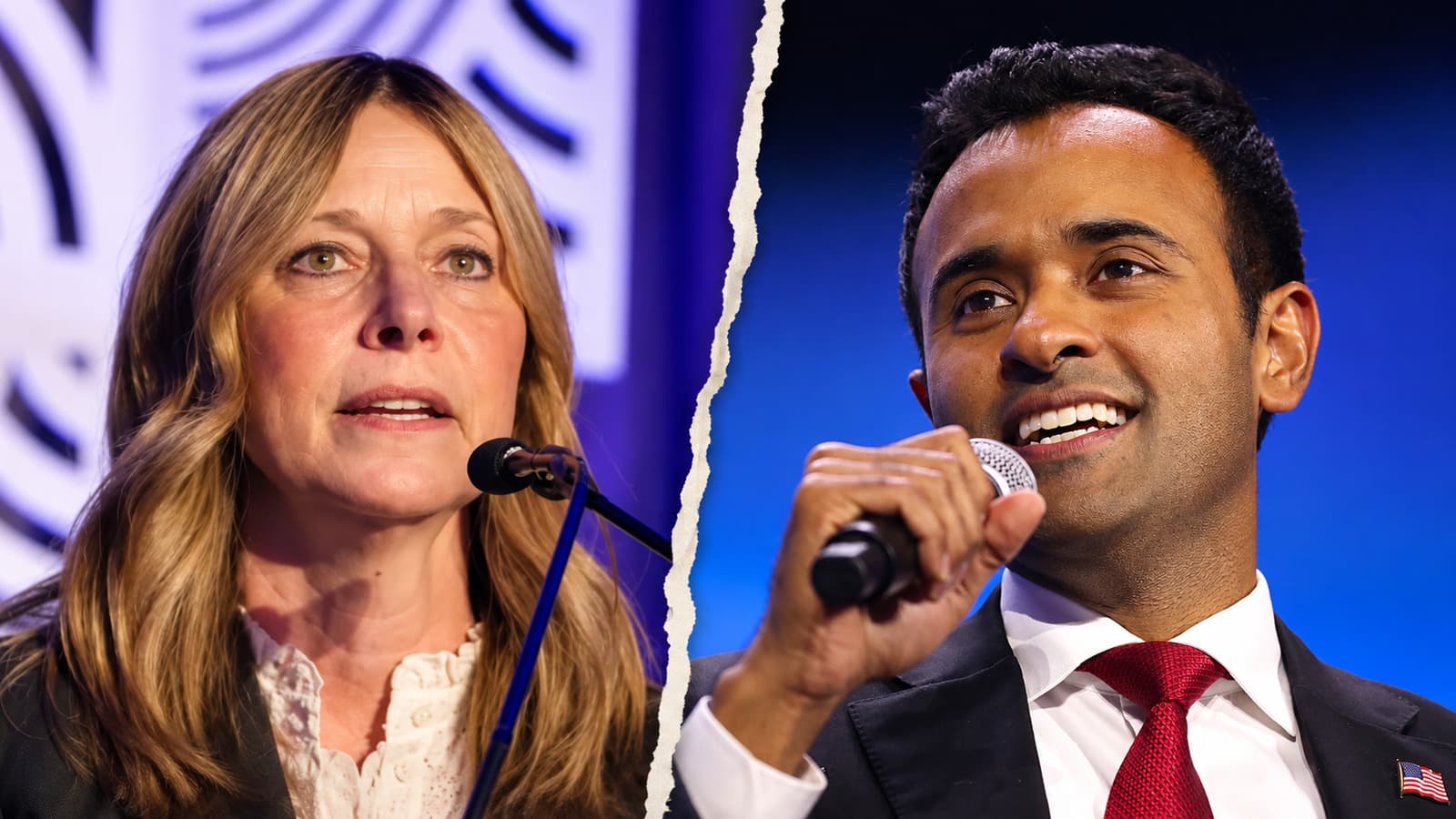
The matter under scrutiny is the campaign's use of Acton's estranged mother in the ad. Ramaswamy defends its purpose and rejects the criticism that it concerns childhood abuse.
Role at the time: Journalist and Morning Kombat co-host, on CNN This Morning
Condemned
Statement summary
Thomas calls the ad strategically poor and expects it to worsen Ramaswamy's already higher negatives relative to Acton.
“But the thing is, it's also just strategically poor. Vivek had much higher negatives relative to Acton before the polling started and when this ad came out. I can only imagine that's going to exacerbate, in a sense.”
Role at the time: Washington Post editorial board member, on CNN This Morning
Condemned
Statement summary
Hajjar says Ohio voters facing tariffs and inflation deserve a substantive policy debate, and calls the race very nasty.
“They deserve a substantive policy debate, not -- I mean, this is the culmination of what has been, actually, a very nasty race in Ohio for a while now.”
The matter under scrutiny is the Ramaswamy campaign's ad using Acton's estranged mother. Carine Hajjar criticizes the ad or the decision to promote it.
Role at the time: Today, Explained co-host and editorial director, on CNN This Morning
Condemned
Statement summary
King criticizes the ad as a departure from the positive image Ramaswamy had presented to voters.
“He has had his enemies. He has also, I think, along the way, convinced a lot of people. And in this instance, I think he is simply -- he's off the rails.”
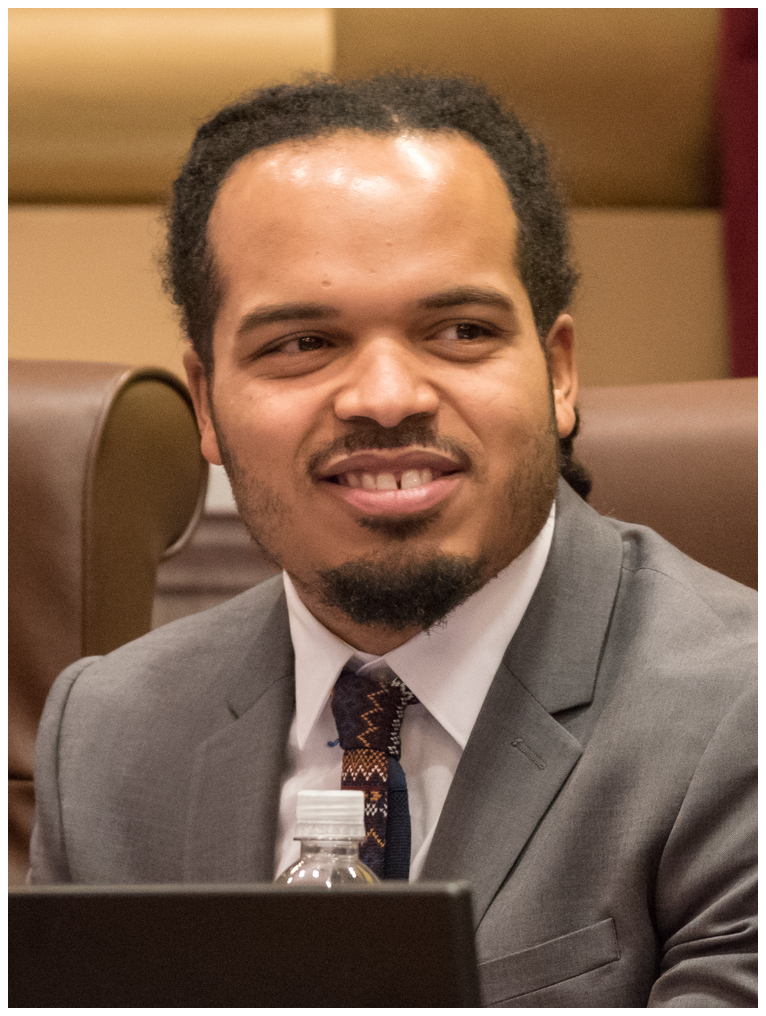
Role at the time: Former Minneapolis City Council member
Minimized
Statement summary
Ellison calls the Piker event a potential non-issue and tells critics they can decline to attend.
Quotation excerpt
“This Piker event had the potential to be a complete non-issue. One fringe-failed statewide candidate said something. Cool. Who cares? Don’t like Hasan? Cool! Don’t attend! But helping Republicans blow up this nothing-burger feels immature…”
Read full quotation
“This Piker event had the potential to be a complete non-issue. One fringe-failed statewide candidate said something. Cool. Who cares? Don’t like Hasan? Cool! Don’t attend! But helping Republicans blow up this nothing-burger feels immature from a party as experienced as the DFL.”
Relative to the invitation to Piker, Ellison minimizes the controversy as a non-issue and criticizes Democrats for amplifying it. He does not address the merits of Piker's disputed remarks.
In a Truth Social post, Trump calls the ad very powerful, says he suggested that Ramaswamy keep it up and describes Acton as dishonest.
“I suggested, on the other hand, that Vivek should keep it up, and let everyone listen to the mother of a defective, dishonest, and incapable Candidate, explain how the daughter is a DISASTER who, uncontrollably, lies, cheats, and steals!”
Trump praises the ad, says he advised Ramaswamy to keep running it and calls DeWine disloyal for urging its removal. That defends the campaign's use of Acton's mother in the ad.
Role at the time: Justice Department lawyers submitting the United States' complaint
Defended or excused
Statement summary
DOJ alleges a substantial likelihood of voter confusion and asks the court to stop certification of an affected result pending investigation.
Quotation excerpt
“To guard against this danger, it is vital that Defendants not certify any
election result that may be impacted by voter confusion. An election result may be
impacted by voter confusion if: (1) Senator Sullivan does not win the election;…”
Read full quotation
“To guard against this danger, it is vital that Defendants not certify any
election result that may be impacted by voter confusion. An election result may be
impacted by voter confusion if: (1) Senator Sullivan does not win the election; and (2) had
all votes cast for Daniel J. Sullivan been cast instead for Senator Sullivan and Alaska’s
rank-choice process played out accordingly, Senator Sullivan would have won the election.”
Read the original text (opens in a new tab)United States v. State of Alaska: complaint over Senate ballot names · United States Department of JusticeComplaint, especially paragraphs 42-45 and prayer for relief
What this label refers to
The disputed action is DOJ's requested restraint on Alaska Senate certification. The complaint expressly argues that this intervention is necessary to guard against alleged voter confusion, supporting the requested action.
Asked on the White House South Lawn why he was defending the ad, Trump says the press would love it if an ad like it were about his own mother.
“I'm defending it because I know that if that ad were about my mother, you would love it. You would love every inch of it.”
Watch the original video (opens in a new tab)President Trump Gaggles with Press Upon Departure from the White House, Oct. 22, 2026 · The White HouseQuestions about the Acton ad and Trump's answers, 0:00-1:59 (audio transcribed by us)
What this label refers to
Trump says he is defending the ad and argues that the press would welcome it if his mother had said such things about him. That defends the campaign's use of Acton's mother in the ad.
Role at the time: Spokesperson for Vivek Ramaswamy's campaign
Defended or excused
Statement summary
Luck says Acton was the first and only candidate in the race to attack her opponent's mother. She adds that the campaign refuses to accept what she calls the media's double standards.
“Governor DeWine is correct that the first and only candidate to attack the mother of her opponent in this race was Amy Acton”
Open source (opens in a new tab)Republican Gov. Mike DeWine denounces Ramaswamy ad featuring Democrat Amy Acton's estranged mother · Associated Press
What this label refers to
Luck answers DeWine's call to pull the ad by pointing to Acton's earlier attack and alleging a media double standard. That excuses the campaign's conduct; it does not deny that the campaign made the ad.
Role at the time: Former U.S. representative from Ohio
Condemned
Statement summary
Renacci urges Republicans to distance themselves from the ad and tells Ramaswamy to stop defending it. He warns that continuing to defend it could harm the campaign.
Quotation excerpt
“And any Republican who fails to distance themselves from this ad risks taking on water as well.
I have to give Jon Husted credit. He said he would not have run the ad. That was the right response. While he stopped short of outright…”
Read full quotation
“And any Republican who fails to distance themselves from this ad risks taking on water as well.
I have to give Jon Husted credit. He said he would not have run the ad. That was the right response. While he stopped short of outright condemning it, he made his position clear.
Vivek Ramaswamy needs to pivot, and quickly. Stop defending the ad and start talking about his policies, his vision for Ohio, and why he believes he is the better candidate.”
Renacci urges Republicans to distance themselves from the ad, calls Husted's statement that he would not have run it the right response and tells Ramaswamy to stop defending it. His objection is mostly about strategy, but it rejects the ad.
Paris criticized Ramaswamy's use of Acton's childhood pain in the ad.
“It takes a very weak man to use a woman's pain to try to make himself feel strong.”
Open the original interview (opens in a new tab)Katie Paris discusses the Acton mother ad in a Statehouse News Bureau interviewInterview paragraphs beginning What we are hearing and It takes a very weak man; published October 21, 11:20 p.m. EDT
What this label refers to
The dispute concerns using Acton's estranged mother and childhood history in an attack ad. Paris expressly criticizes using that pain for the campaign.
Role at the time: Author and former Clinton White House aide
Condemned
Statement summary
Boykin calls it sad that Trump and Vance are doubling down on the ad's message late in the campaign. He rejects a comparison with Robert F. Kennedy Jr.'s relatives speaking out against him.
Quotation excerpt
“How can you compare that to a family squabble among the elite Kennedys? It's just not even close to being comparable. And I think it's sad that Republicans -- I'm so glad that Peter's standing up on this tonight, and I assume that Scott…”
Read full quotation
“How can you compare that to a family squabble among the elite Kennedys? It's just not even close to being comparable. And I think it's sad that Republicans -- I'm so glad that Peter's standing up on this tonight, and I assume that Scott will too. But I just -- I think it's sad that Donald Trump and J.D. Vance are doubling down on this message in the last two weeks of a campaign when people don't care about these divisive issues. They care about jobs and healthcare and gas prices.”
Boykin rejects a comparison offered in the ad's defense and calls it sad that Trump and Vance are doubling down on its message. His criticism reaches the use of the ad itself, beyond the analogy.
Role at the time: Former U.S. representative from Michigan
Condemned
Statement summary
Meijer calls the ad morally wrong and politically unwise, saying he sees no defense of it.
Quotation excerpt
“No, I think it's a gross ad on a moral level and wrong. On a political level, I don't know how you can argue that this was smart. And to have the closing message of your opponent, you know, framed in such a way I just, I don't see a defense…”
Read full quotation
“No, I think it's a gross ad on a moral level and wrong. On a political level, I don't know how you can argue that this was smart. And to have the closing message of your opponent, you know, framed in such a way I just, I don't see a defense of it.”
Role at the time: CNN senior political commentator
Condemned
Statement summary
Jennings says Republican objections to the ad are warnings, not whining, and describes concern about its defensibility and strategy.
Quotation excerpt
“This issue of whining, I took some issue with that today because I don't see people whining about this. I think they are warning about this. There's a heck of a lot of Republicans in Ohio, and elsewhere, who would love to see a Republican…”
Read full quotation
“This issue of whining, I took some issue with that today because I don't see people whining about this. I think they are warning about this. There's a heck of a lot of Republicans in Ohio, and elsewhere, who would love to see a Republican get elected governor of Ohio, who do not believe that this is a defensible ad, nor do they believe it's a good strategy. So, whether you take it from the moral view or you take it just from the political strategy view, there's a lot of concern. That's not whining. That's warning.”
Jennings treats Republican objections to the ad, on moral and strategic grounds, as legitimate warnings and rejects Vance's description of them as whining. He offers no defense of the ad.
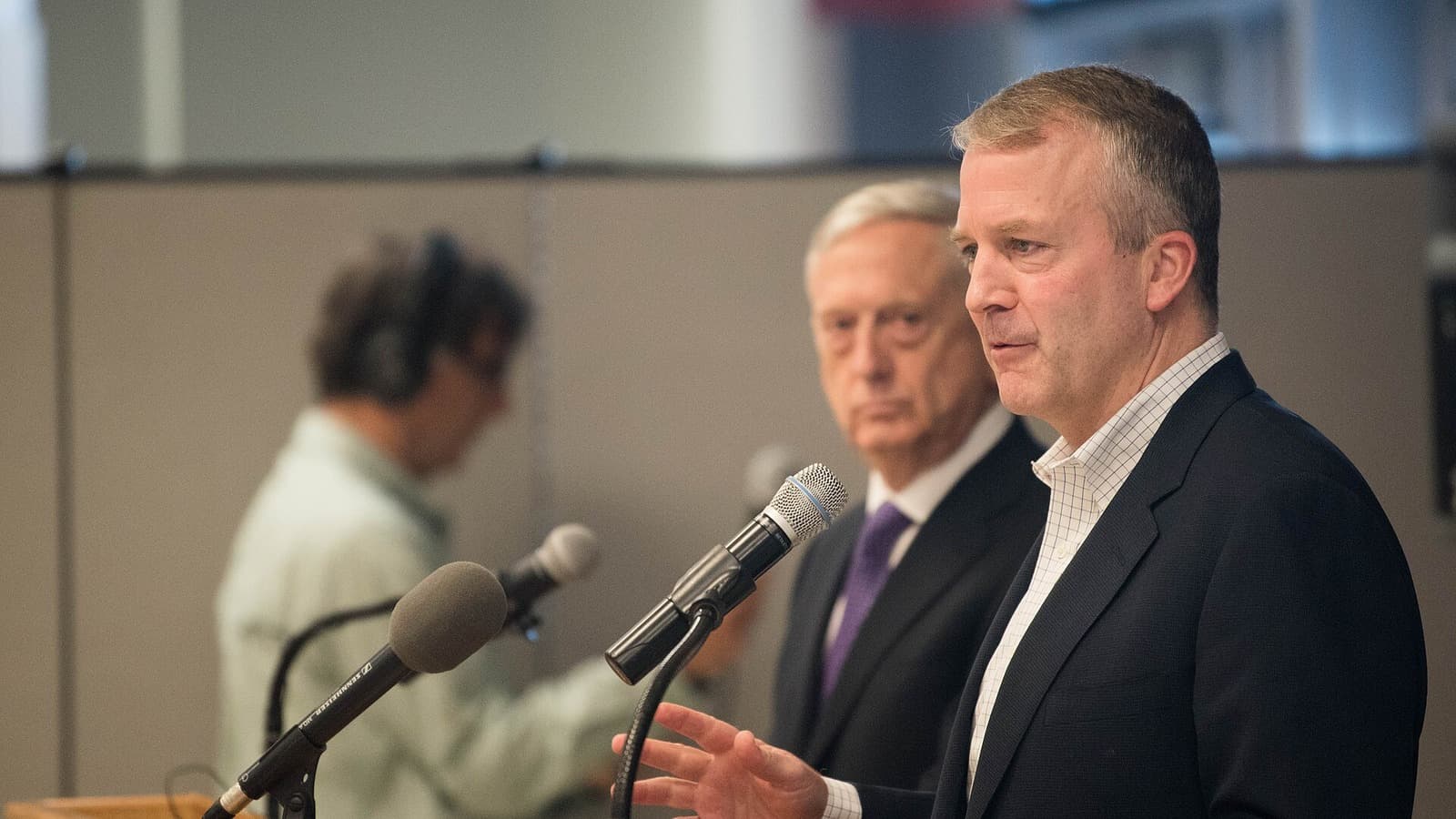
Lisa Murkowski is a Republican U.S. senator from Alaska, in office since December 2002. Before her appointment to the Senate she served in the Alaska House of Representatives from 1999 to 2002.
Benn Jordan is an American musician and video essayist. He releases music as the Flashbulb and publishes commentary on audio engineering, technology and privacy.
Luke Thomas is a journalist and combat sports analyst. He co-hosts Morning Kombat and publishes sports and political commentary on his own channels. He previously hosted The Luke Thomas Show on SiriusXM and worked as an editor and podcaster at MMA Fighting.
Devan Barber is a Democratic campaign strategist and executive director of the Democratic Senatorial Campaign Committee for the 2026 election cycle. She was a senior advisor to the committee in the 2022 and 2024 cycles, its political director in 2018 and its research director in 2016. Barber managed the North Carolina U.S. Senate race in 2020 and worked on Barack Obama's 2012 reelection campaign. She studied at William & Mary.
Derek T. Muller is a professor of law at Notre Dame Law School, where he teaches election law, federal courts, and civil procedure. His research focuses on the role of states in administering federal elections, voting rights, and the Electoral College. He is a contributor to the Election Law Blog, a co-reporter for the American Law Institute's Restatement of the Law, Election Litigation, and a co-author of a Federal Courts casebook. He has testified before Congress on election administration. Before entering teaching, he clerked for Judge Raymond Gruender of the U.S. Court of Appeals for the Eighth Circuit and practiced litigation at Kirkland and Ellis. He previously taught at Pepperdine University and the University of Iowa College of Law before joining Notre Dame in 2023. He also teaches evidence and comparative election law.
Vivek Ramaswamy is an American entrepreneur, author and Republican politician from Cincinnati, Ohio. He founded the biotech company Roivant Sciences in 2014 and co-founded the investment firm Strive Asset Management in 2022, ran in the 2024 Republican presidential primary, and is the Republican nominee for Ohio governor in 2026.
Ramin Fatehi is the commonwealth's attorney for Norfolk, Virginia. He previously worked as a public defender and federal prosecutor. He took office in 2022. He earned a bachelor's degree in history at Yale University and a law degree at Columbia University, then clerked for Virginia Supreme Court Justice Elizabeth B. Lacy. His earlier legal work included positions in Richmond, Chesapeake and Charlottesville. Before his election, he supervised Norfolk prosecutors handling drug offenses, impaired driving and fatal vehicle crashes.
Jeremiah Ellison is an artist, organizer and former Minneapolis City Council member. He represented Ward 5 on the city's North Side and was a 2026 Loeb Fellow at Harvard University.