
DOJ challenges Alaska Senate certification over two Sullivans; Murkowski objects
A judge dismissed DOJ's suit seeking to restrain Alaska's Senate certification over two candidates named Dan Sullivan, and DOJ appealed. After the Nov. 3 vote, Trump said the namesake candidate's votes should go to the senator.
BackgroundWho runs U.S. elections?How are U.S. election results certified?
Case period:
Published by The Dispute Index editorial teamPublished Updated
Overview
DOJ's requested restraint on Explainerelection certificationElection-night numbers are unofficial. Local officials finish the count, check it in a canvass and certify the results, and a state board or official then certifies the statewide result. Several states treat certifying as a required duty, and courts have ordered officials who refused or delayed to certify.How are U.S. election results certified? is the action at issue.
The October 22 complaint alleges a deceptive candidacy and voter confusion. Its requested relief depends on both an incumbent loss and a counterfactual result after attributing namesake votes to the incumbent and recalculating ranked-choice results. The filing does not itself transfer votes or award the seat.
The dispute concerns whether that intervention is justified. Murkowski says the state already distinguishes the candidates; Peltola accuses Sullivan of using Washington allies to preserve his position. Those accusations are attributed positions, not findings about Sullivan's involvement in the suit.
Background: Terms in this case
People in this case
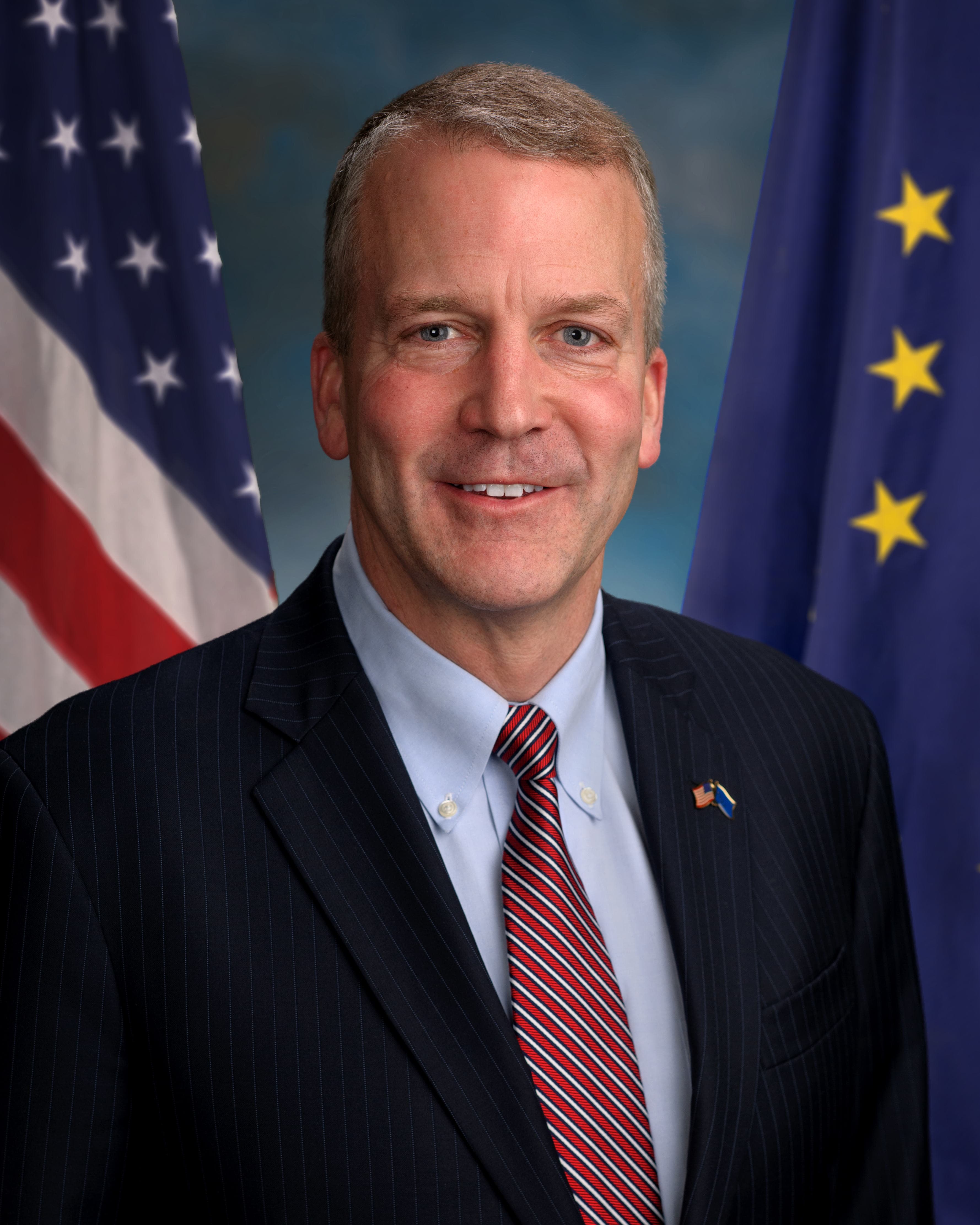 Daniel S. SullivanDirectly involved
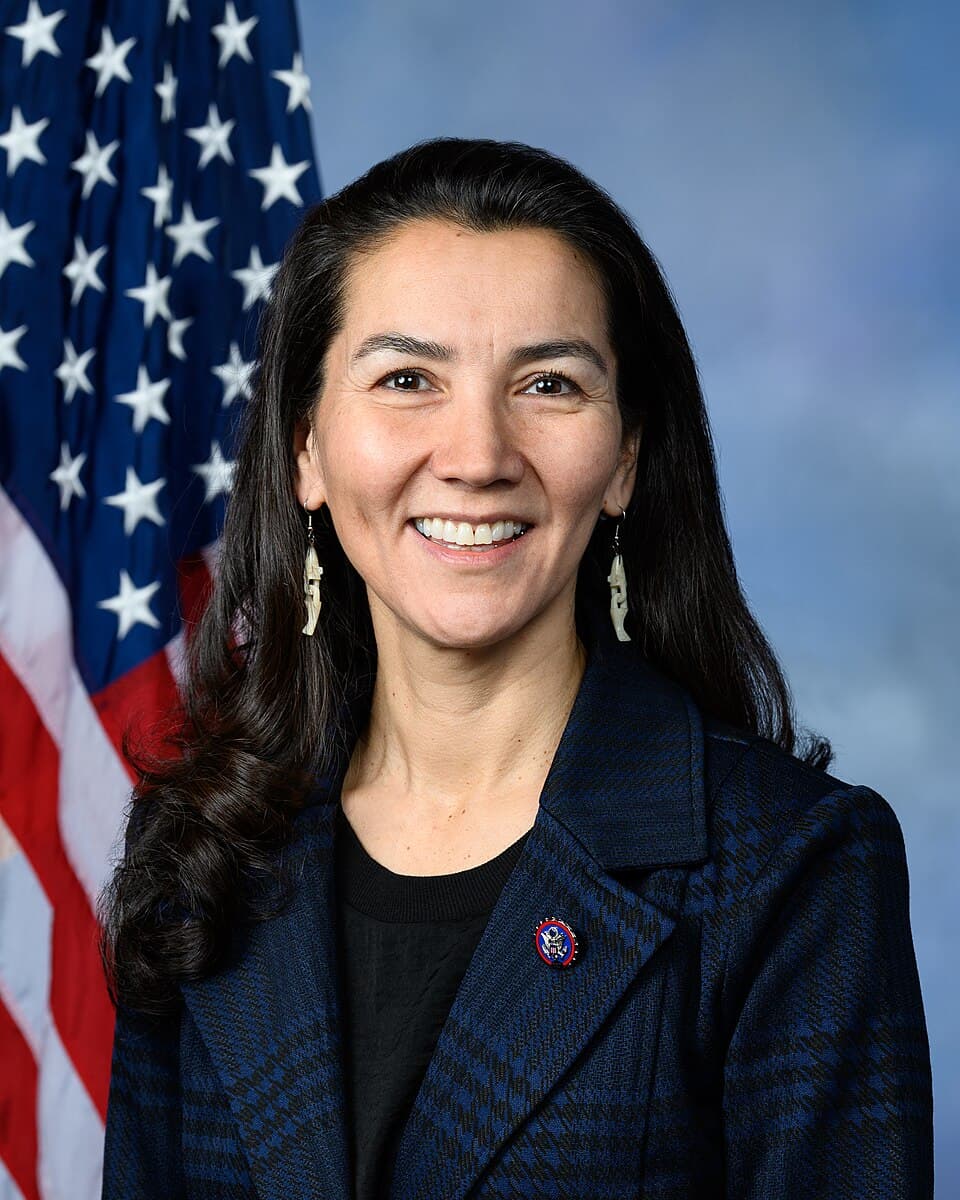 Mary PeltolaDirectly involved
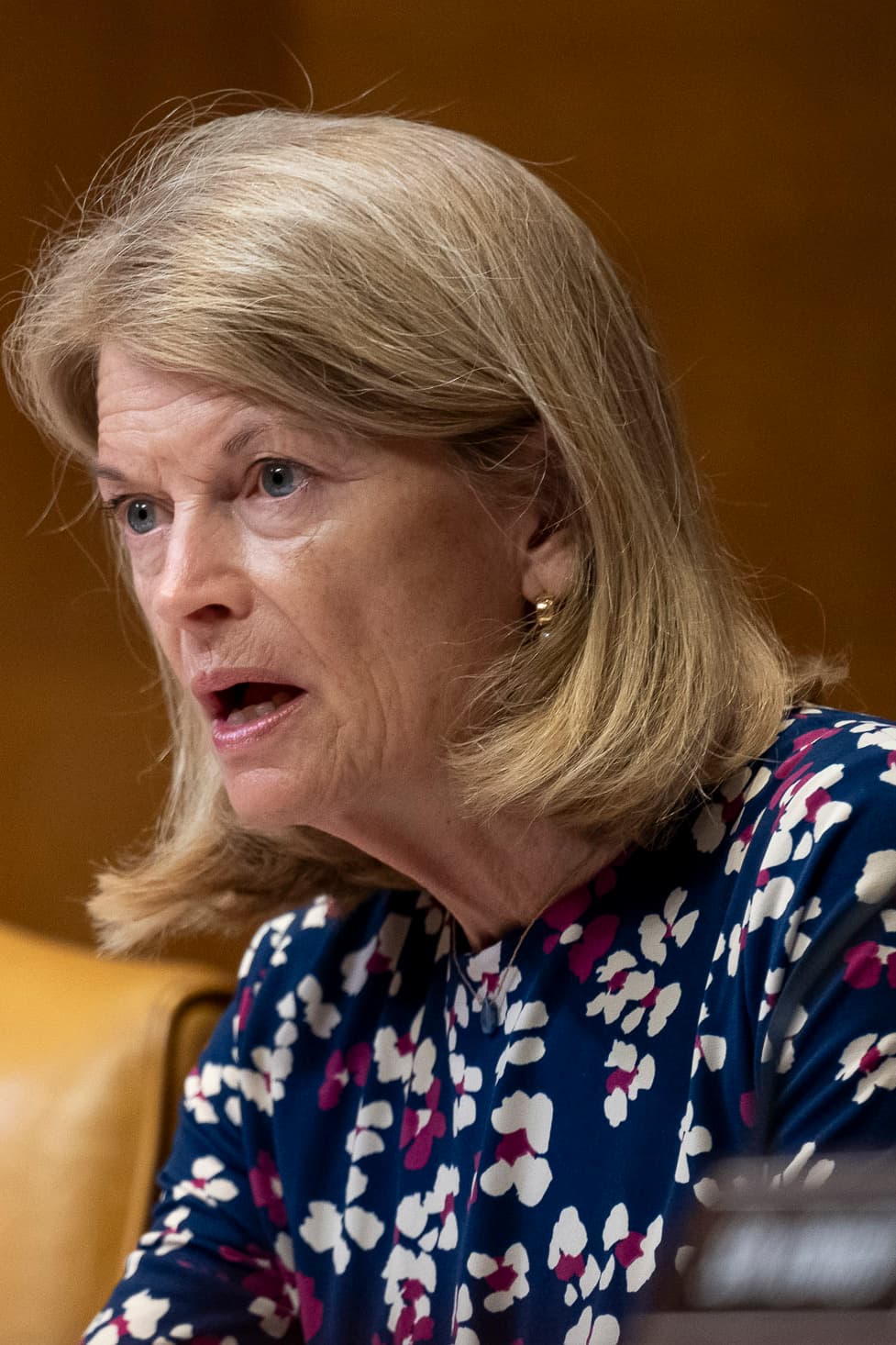 Lisa MurkowskiDirectly involved
 Donald TrumpCommented
Timeline
20 timeline entries on this page. Dates: October 22, 2026 to November 4, 2026
October 2026
DOJ files its Alaska Senate certification complaint
Source release
DOJ seeks conditional restraint on certification based on alleged namesake confusion.
[01]United States Department of Justice
DOJ asks for conditional relief concerning certification. Its allegations of deceptive candidacy remain allegations.
United States v. State of Alaska: complaint over Senate ballot names · United States Department of JusticeComplaint, especially paragraphs 42-45 and prayer for reliefMurkowski objects after Trump acknowledges directing the lawsuit
Reaction
Murkowski criticizes the lawsuit in a public post, joining Peltola's earlier objection. AP also reports Trump's acknowledgment that he directed DOJ to file it.
[02]Lisa Murkowski
Murkowski criticizes the filing and says Alaska has distinguished the two candidates on the ballot.
Lisa Murkowski objects to DOJ's Alaska Senate lawsuit · Lisa MurkowskiPost 2113801082702852173[03]Mary Peltola
Peltola criticizes the lawsuit and accuses Sullivan of putting his interests ahead of voters.
Mary Peltola responds to the Alaska certification lawsuit · Mary PeltolaPost 2113716898559091140[04]Trump says he ordered DOJ's Alaska lawsuit; Devan Barber condemns it
AP attributes Trump's acknowledgment of ordering the suit to remarks to reporters and quotes Barber's criticism. The complaint supplies the precise conditions of the requested relief.
Trump says he ordered DOJ's Alaska lawsuit; Devan Barber condemns itTrump airport comments and Devan Barber statement; updated 10:44 p.m. EasternPeltola's campaign and the DSCC ask the court to dismiss the lawsuit
Source release
Alaskans for Mary, Peltola's campaign committee, and the DSCC file a proposed motion to dismiss and ask the court to set responses for Oct. 27 and rule that week. Reuters reports that the judge had not said when she would rule.
[05]United States v. State of Alaska: Alaskans for Mary and DSCC's proposed motion to dismiss
Source excerpt
In short, DOJ’s Complaint is wholly baseless. The fact that DOJ nonetheless chose to file it raises profound constitutional concerns. The Court should dismiss the Complaint.
Proposed motion to dismiss, filed as an exhibit to a motion for leave by Alaskans for Mary, Peltola's campaign committee, and the DSCC, which asked to intervene on Oct. 23. Its arguments are the filers' positions. The court had not ruled on it as of Oct. 26.
United States v. State of Alaska: Alaskans for Mary and DSCC's proposed motion to dismissDocument 8-1, Introduction, pages 1-3[06]United States v. State of Alaska: Alaskans for Mary and DSCC's emergency motion to expedite
Source excerpt
Proposed Intervenors respectfully request that the Court order DOJ to respond to the Motion to Intervene, the Motion for Leave to File a Motion to Dismiss, and the proposed Motion to Dismiss itself by Tuesday at 5:00 p.m., allow for a reply by Wednesday at 12:00 p.m., and dismiss the case this week.
Asks the court to order responses by 5 p.m. Alaska time on Oct. 27, a reply by noon on Oct. 28 and a ruling that week. These are requested deadlines, not a court order.
[07]Reuters
Reuters reports the filing by lawyers for Peltola's campaign and the DSCC, quotes the motion, and reports that the judge had not said when she would rule. It also reports Attorney General Todd Blanche's Oct. 25 defense of the lawsuit on CNN.
Peltola asks judge to toss DOJ's Alaska certification lawsuit · ReutersReport on the Oct. 25 filingAttorney General Blanche defends the lawsuit on CNN and CBS
Reaction
Blanche says the lawsuit seeks a way for Alaska to address any result shown to be caused by voter confusion, not a federal takeover of the election. He declines to discuss his communications with President Trump about it.
[08]CBS News
CBS News transcript of Margaret Brennan's interview with Attorney General Todd Blanche. Blanche and Brennan dispute how the lawsuit describes the second candidate and what relief it seeks.
Face the Nation transcript, Oct. 25, 2026: Attorney General Todd Blanche · CBS NewsBlanche interview, Alaska lawsuit segment[09]CNN
CNN rush transcript of Dana Bash's interview with Attorney General Todd Blanche. CNN says the transcript may be updated.
State of the Union transcript, Oct. 25, 2026: Attorney General Todd Blanche · CNNBlanche interview, about 9:20 a.m. ETJudge Gleason expedites the motions to intervene and dismiss
U.S. District Judge Sharon Gleason grants the motion to expedite from Peltola's campaign committee and the DSCC, which the League of Women Voters group joined. She orders DOJ to respond to the motions to intervene by 5 p.m. Alaska time on Oct. 27 and says she intends to rule on them by 5 p.m. on Oct. 28. If she grants intervention, DOJ must be ready to answer the proposed motions to dismiss by 5 p.m. on Oct. 29.
[10]United States v. State of Alaska: order on motion to expedite consideration
Source excerpt
The Court intends to issue a ruling by 5:00 p.m. on October 28, 2026.
Order signed Oct. 26 in No. 3:26-cv-00376 (D. Alaska), as mirrored by CourtListener (RECAP). It grants the motion to expedite and the joinder, sets deadlines for responses to the motions to intervene and says when the court intends to rule on them. It does not decide the motions to intervene or to dismiss.
United States v. State of Alaska: order on motion to expedite considerationDocument 15, Order section, page 5[11]CNBC
CNBC report on Judge Sharon Gleason's Oct. 26 order expediting the case and on the motion to dismiss that Alaska election officials filed the same evening. First published Oct. 26 and updated after the order.
Alaska's election officials move to dismiss DOJ's lawsuit
Source release
In the state's first filing in the case, the Alaska Department of Law asks Judge Gleason to dismiss DOJ's complaint with prejudice on behalf of Division of Elections Director Carol Beecher and the state's election and ballot-counting boards. The motion argues that the United States lacks standing, that the National Voter Registration Act governs voter registration rather than ballots or certification, and that the suit violates the Elections Clause. The officials ask for a decision by Nov. 2. On Oct. 27, Gleason grants expedited consideration, orders DOJ to respond by 3 p.m. on Oct. 29 and allows a reply by noon on Oct. 30.
[12]United States v. State of Alaska: Alaska election officials' motion to dismiss
Source excerpt
Delaying certification of Alaska’s election results—but only if a particular candidate does not win—would interfere with state election administration and threaten election integrity.
Motion to dismiss filed Oct. 26 in No. 3:26-cv-00376 (D. Alaska), as mirrored by CourtListener (RECAP). The state's election defendants argue that the United States lacks standing, that the complaint states no claim under the National Voter Registration Act and that the suit violates the Elections Clause, and they ask for dismissal with prejudice.
United States v. State of Alaska: Alaska election officials' motion to dismissDocument 18, pages 10-11[13]United States v. State of Alaska: Alaska election officials' motion for expedited consideration
Source excerpt
The Division asks the Court to consider its motion on an expedited basis and issue a decision dismissing the United States’ meritless complaint by Monday, November 2.
Motion filed Oct. 26 in No. 3:26-cv-00376 (D. Alaska), as mirrored by CourtListener (RECAP). The state's election defendants ask for a decision on their motion to dismiss by Nov. 2, the day before Election Day.
[14]United States v. State of Alaska: order on the state's motion for expedited consideration
Source excerpt
Defendants may file a reply by Friday, October 30, 2026, at 12:00 p.m.
Order signed Oct. 27 in No. 3:26-cv-00376 (D. Alaska), as mirrored by CourtListener (RECAP). It grants the state defendants' motion for expedited consideration, sets DOJ's response to their motion to dismiss for 3 p.m. on Oct. 29 and allows a reply by noon on Oct. 30. It does not decide the motion to dismiss.
[11]CNBC
CNBC report on Judge Sharon Gleason's Oct. 26 order expediting the case and on the motion to dismiss that Alaska election officials filed the same evening. First published Oct. 26 and updated after the order.
DOJ opposes intervention by Alaskans For Mary and the DSCC
Source release
DOJ argues that Alaska adequately represents the proposed intervenors' interests and that their participation would duplicate the state's defense.
[15]DOJ opposes intervention in Alaska certification lawsuit
DOJ argues that the proposed intervenors' interests are adequately represented by Alaska and that their participation would be redundant.
DOJ opposes intervention in Alaska certification lawsuitNo. 3:26-cv-00376-SLG, Document 26; introduction and Rule 24 argumentsJudge allows campaign and voting-group defendants to intervene
Judge Sharon Gleason allowed Alaskans for Mary and the DSCC to intervene as of right, and permitted intervention by the League of Women Voters group. She accepted their dismissal motions and restated earlier deadlines: the U.S. response on October 29 and intervenor replies on October 30. The order did not decide the merits of the certification lawsuit.
[16]Gleason permits campaign and voting-group intervention
The order permits intervention and sets briefing deadlines; it does not decide whether certification may be blocked.
Gleason permits campaign and voting-group interventionDocument 35, October 28; conclusion, pages 7-8Times report ties Peltola campaign members to the second Sullivan's candidacy
Claim
The New York Times reported, citing text messages and interviews with Peltola's former campaign manager, that members of Mary Peltola's campaign discussed recruiting people who share Sen. Dan Sullivan's name, and that DSCC staff were on some of those messages. Peltola's campaign says it has no involvement with either Sullivan campaign, and the DSCC says it is not involved with Daniel J. Sullivan. The same day, DOJ cited the report as it dropped its objection to the two groups joining the case and said it would seek expedited discovery. The recruitment account is reporting and DOJ's allegation, not a court finding.
[17]PBS NewsHour
AP summarizes The New York Times account of text messages about recruiting a second Sullivan, Trump's call for prosecution, and denials from Peltola's campaign and the DSCC. The recruitment account is attributed to the Times.
AP reports Trump's call to prosecute Peltola after the Times recruitment report · PBS NewsHourFull article, October 28, 2026[18]DOJ withdraws its intervention objection, citing the Times report
DOJ withdraws its opposition to intervention by Alaskans for Mary and the DSCC and says it will seek expedited discovery about the reported recruitment. Its description of a conspiracy is DOJ's allegation.
DOJ withdraws its intervention objection, citing the Times reportDocument 33, October 28; full notice, pages 1-2DOJ adds a Supremacy Clause claim to the certification suit
DOJ filed an amended complaint adding an obstacle-preemption claim under the Supremacy Clause and allegations drawn from new recruitment reporting. It continued to seek a certification block under specified circumstances if Senator Sullivan loses. These are DOJ's allegations and requested relief, not court findings.
[19]DOJ adds a Supremacy Clause claim in its amended Alaska complaint
DOJ alleges that certification could obstruct federal objectives. The complaint states allegations and requested relief.
DOJ adds a Supremacy Clause claim in its amended Alaska complaintDocument 43, October 29; count two and requested relief, pages 19-21DOJ argues the pending dismissal motions became moot
In a separate opposition, DOJ asked the court to deny three pending dismissal motions as moot because its amended complaint superseded the original. It argued that the earlier motions did not address the new Supremacy Clause count or recruitment allegations. This was a party request, not a ruling.
[20]DOJ asks the court to deny the earlier dismissal motions as moot
DOJ argues that its amended complaint replaces the pleading challenged by the pending dismissal motions.
DOJ asks the court to deny the earlier dismissal motions as mootDocument 46, October 29; pages 2-3Alaska election officials challenge the amended complaint
Alaska election officials filed a new motion seeking prompt dismissal with prejudice. They argued that the added Supremacy Clause count still depended on an inapplicable voter-registration statute, and renewed standing and Elections Clause objections. The filing did not itself dismiss the case.
[21]Alaska election officials move to dismiss the amended complaint
Election officials argue the new preemption count depends on the same disputed reading of the voter-registration statute.
Alaska election officials move to dismiss the amended complaintDocument 55, October 29; pages 1-2, 13 and 25DOJ asks the court to segregate ballots ranking Daniel J. Sullivan
Source release
DOJ moved for expedited discovery and a preliminary injunction to preserve and segregate ballots it says voter confusion may have affected, including every ballot that ranks Daniel J. Sullivan. At a news conference, U.S. Attorney Michael Heyman confirmed a criminal investigation into the allegations about how Daniel J. Sullivan came to be on the ballot. He did not say what crimes were under review and said he was not assuming that one had been committed. The motion is a request, not a ruling.
[22]DOJ seeks expedited discovery and a preliminary injunction to segregate ballots
DOJ's memorandum asks for expedited discovery and an order preserving and segregating ballots it says voter confusion may have affected. It states DOJ's arguments, not court findings.
DOJ seeks expedited discovery and a preliminary injunction to segregate ballotsDocument 66, October 30; preliminary-injunction argument, pages 13-15[23]CBS News
CBS News reports U.S. Attorney Michael Heyman's October 30 news conference confirming a criminal investigation, and DOJ's request to preserve and segregate ballots ranking Daniel J. Sullivan.
CBS News: U.S. attorney confirms a criminal inquiry as DOJ asks to segregate ballots · CBS NewsFull article, updated October 31, 2026U.S. attorney says federal investigators are examining the second Sullivan's candidacy
Claim
At an Oct. 30 press conference in Anchorage, U.S. Attorney Michael Heyman said the FBI and his office had added resources to an ongoing federal investigation tied to Daniel J. Sullivan's candidacy, citing the New York Times report on his recruitment. He did not name a statute and said he was not assuming a crime had been committed. Alaska Public Media reported that FBI agents visited at least two people who had donated to Daniel J. Sullivan's campaign. State Rep. Rebecca Himschoot, who represents them, called the visits outrageous. No charges had been filed as of Nov. 1.
[24]Judge tosses DOJ lawsuit that sought to block election results if Republican Sen. Dan Sullivan loses
Alaska Public Media reports Gleason's dismissal, DOJ's notice of appeal an hour later, U.S. Attorney Michael Heyman's Oct. 30 remarks on a federal investigation, and FBI visits to donors of Daniel J. Sullivan's campaign.
[25]Court dismisses DOJ lawsuit attempting to delay election certification, separate ballots
Alaska's News Source reports the dismissal, quotes a Peltola spokesperson, and quotes U.S. Attorney Michael Heyman's Oct. 30 remarks on the federal investigation.
Alaska tells the court that segregating ballots is not possible
Source release
In a reply supporting dismissal of the amended complaint, Alaska's election officials said ballots carry no voter names and are commingled to protect ballot secrecy, so the relief DOJ seeks cannot be carried out. They added that the Division of Elections already keeps federal election ballots for 22 months. The filing is a party argument, not a ruling.
[26]Alaska's election officials say segregating ballots is not possible
Alaska's election officials reply in support of dismissing the amended complaint. They say ballots carry no voter names and are commingled, and that the Division already keeps federal election ballots for 22 months.
Alaska's election officials say segregating ballots is not possibleDocument 76, October 31; introduction and relief argument
November 2026
Judge Gleason dismisses DOJ's suit for lack of standing
Source release
U.S. District Judge Sharon Gleason granted all three motions to dismiss. She found that DOJ had not shown that a court order could redress its claimed injury, one of the requirements for standing, because it offered "no workable plan" to segregate and investigate ballots for Daniel J. Sullivan while keeping ballots secret. She added that the requested orders would reach the time, place and manner of Alaska's election, which belong to the state, and that the Purcell principle weighs against late changes to election rules. The dismissal is without prejudice, and Gleason denied leave to amend as futile. The order does not decide whether Daniel J. Sullivan was recruited to confuse voters.
[27]Order dismissing DOJ's Alaska Senate certification suit
Judge Sharon Gleason grants the motions to dismiss filed by Alaska's election officials, Peltola's campaign committee with the DSCC, and the League of Women Voters intervenors. She finds that DOJ has not shown its requested relief could redress its claimed injury while keeping ballots secret, dismisses the amended complaint without prejudice and denies leave to amend.
Order dismissing DOJ's Alaska Senate certification suitDocument 79, November 1; standing analysis, pages 9-17, and conclusion[24]Judge tosses DOJ lawsuit that sought to block election results if Republican Sen. Dan Sullivan loses
Alaska Public Media reports Gleason's dismissal, DOJ's notice of appeal an hour later, U.S. Attorney Michael Heyman's Oct. 30 remarks on a federal investigation, and FBI visits to donors of Daniel J. Sullivan's campaign.
DOJ files a notice of appeal
Source release
DOJ filed a notice that it will appeal the dismissal order and judgment, about an hour after the ruling, according to Alaska Public Media. The appeal goes to the U.S. Court of Appeals for the Ninth Circuit.
[28]United States Department of Justice
DOJ tells the district court it will appeal the order and judgment dismissing the case, docketed at 79 and 80.
DOJ's notice of appeal from the Alaska dismissal · United States Department of JusticeDocument 81, November 1[24]Judge tosses DOJ lawsuit that sought to block election results if Republican Sen. Dan Sullivan loses
Alaska Public Media reports Gleason's dismissal, DOJ's notice of appeal an hour later, U.S. Attorney Michael Heyman's Oct. 30 remarks on a federal investigation, and FBI visits to donors of Daniel J. Sullivan's campaign.
[29]CNBC
CNBC reports the dismissal and quotes statements from a DOJ spokesperson and from Mary Peltola's campaign issued after the ruling.
Judge dismisses Alaska Senate election lawsuit; DOJ vows appeal · CNBCFull article; DOJ and Peltola campaign statementsNinth Circuit schedules DOJ's appeal briefs into December and January
The U.S. Court of Appeals for the Ninth Circuit docketed DOJ's appeal as No. 26-7304 and set the United States' opening brief for Dec. 14. The answering briefs of the State of Alaska, its election officials and the intervenors are due Jan. 11, 2027. Alaska's Senate result is scheduled to be certified on Nov. 25, and new senators are sworn in on Jan. 3.
[30]United States v. State of Alaska, No. 26-7304 (9th Cir.): docketing notice and time schedule order
Court of appeals docket document as mirrored by CourtListener (RECAP), read in full. The clerk dockets DOJ's appeal from the Alaska dismissal as No. 26-7304 and sets the briefing schedule: the United States' opening brief is due December 14, 2026, and the answering briefs of the State of Alaska, its election officials and the intervenors are due January 11, 2027.
United States v. State of Alaska, No. 26-7304 (9th Cir.): docketing notice and time schedule orderDktEntry 2, filed November 1, 2026[31]Trump weighs in on Alaska's tight U.S. Senate race as thousands of ballots are yet to be tallied
The Anchorage Daily News reports Trump's Nov. 5 Truth Social post on the namesake candidate's votes, the Ninth Circuit briefing schedule in DOJ's appeal, the preliminary Senate results, a newsletter comment by Marc Elias and an interview with candidate Gerald Heikes.
DOJ sends target letters in its inquiry into the second Sullivan's candidacy
The Associated Press reported, citing people briefed on the investigation, that the Justice Department sent letters telling attorney Marc Elias and others that they are targets of its criminal inquiry into Daniel J. Sullivan's candidacy. The New York Times reported that about 20 Democrats received letters that said they might be targets or asked them to preserve records. A target letter does not mean a person will be charged. Attorney General Todd Blanche declined to discuss the letters, and Elias called the inquiry a sham investigation.
[32]Associated Press
The Associated Press reports, citing people briefed on the investigation, that the Justice Department sent target letters to attorney Marc Elias and others in its criminal inquiry into Daniel J. Sullivan's candidacy. It quotes Attorney General Todd Blanche's Nov. 3 Fox News Channel remarks and statements from Elias.
Justice Department identifies potential targets as it escalates Alaska Senate criminal probe · Associated PressFull article (AP story as published by KY3)[33]The National News Desk
The National News Desk relays a New York Times report, citing two unnamed sources, that the Justice Department sent letters to about 20 Democrats over the past week telling them they may be targets of its Alaska investigation or asking them to preserve records. It quotes Marc Elias's statement about the letter he received.
DOJ sends target letters to 20 Democrats in Alaska Senate race probe: report · The National News DeskFull articlePreliminary count puts the second Sullivan fourth with 1.7%
The Division of Elections' unofficial results on Nov. 4 showed Mary Peltola with 102,962 first-choice votes and Sen. Dan S. Sullivan with 102,325, a margin of 637, with tens of thousands of ballots still to be counted. Gerald Heikes had 4,846 votes and Daniel J. Sullivan Jr. had 3,600, or 1.7%. In the cast vote record the division released for about 204,000 scanned ballots, about 16% of Daniel J. Sullivan's voters ranked the senator second, about twice as many ranked no one else, and about 70 ballots ranked both Sullivans first, which counts as an overvote. Ranked-choice tabulation is scheduled for Nov. 18 and certification for Nov. 25.
[34]State of Alaska
The Division of Elections' unofficial summary with 400 of 401 precincts reporting and 215,912 ballots cast. In the Senate race it lists Mary Peltola with 102,962 votes (48.02%), Sen. Dan S. Sullivan with 102,325 (47.72%), Gerald L. Heikes with 4,846 (2.26%) and Daniel J. Sullivan Jr. with 3,600 (1.68%). The division replaces this file as it posts new counts.
State of Alaska 2026 General Election Summary Report, unofficial results · State of AlaskaReport dated Nov. 4, 2026, 1:09 p.m., page 1, U.S. Senator[35]4 interesting things we've learned from Alaska ballot data
Alaska Public Media reviews the cast vote record the Division of Elections released on Nov. 4 for about 204,000 scanned ballots, including how voters ranked the two Senate candidates named Dan Sullivan, and quotes MIT political scientist Charles Stewart III on the data.
[31]Trump weighs in on Alaska's tight U.S. Senate race as thousands of ballots are yet to be tallied
The Anchorage Daily News reports Trump's Nov. 5 Truth Social post on the namesake candidate's votes, the Ninth Circuit briefing schedule in DOJ's appeal, the preliminary Senate results, a newsletter comment by Marc Elias and an interview with candidate Gerald Heikes.
Response record
Responses
Choose one response filter, or select All responses to see the full record.
38 responses. First 6 shown initially. Newest first.
Charles Stewart IIIMIT political scientist and director of the MIT Election Data and Science Lab, interviewed by Alaska Public Media Before this statement
Alaska Public Media asked Stewart about the cast vote record the Division of Elections released on Nov. 4 for about 204,000 scanned ballots. He said the data show signs of "a small amount of confusion": about 16% of Daniel J. Sullivan's voters ranked the senator second, and about twice as many ranked only Daniel J. Sullivan.
"Mostly, it looks like supporters for Dan Sullivan Jr. (of Petersburg) are protest voters, one way or the other"
Challenged the characterizationCase context: DOJ challenges Alaska Senate certification over two Sullivans; Murkowski objects
Full statement and sources
Stewart says the ballot data show a small amount of confusion, but that most voters who backed Daniel J. Sullivan Jr. appear to be protest voters.
After the statement
Stewart added that a little over a quarter of those voters ranked Peltola second. The data leave out rural precincts that count ballots by hand and the early and absentee ballots still to be counted.
Why this label?
The case concerns DOJ's requested conditional restraint on certification of Alaska's Senate election, which rests on alleged voter confusion between the two Sullivans. Stewart's reading of the ballot data finds some confusion but describes most of the namesake candidate's support as protest votes, which challenges the premise that those votes reflect confusion.
This label describes the statement's response within the context above.
Joe LancasterReason assistant editor, writing in Reason Before this statement
Lancaster wrote that preliminary ranked-choice data, as analyzed by The New York Times, suggest Peltola is likely to win. He criticized Trump's Nov. 5 post saying the namesake candidate's votes should go to the senator.
"Even in this campaign cycle when he's not on the ballot, Trump's administration has tried to meddle in states' counting processes: Before Election Day, his Department of Justice tried to force Alaska to segregate all ballots that voted for the other Dan Sullivan, in order to conduct some sort of "investigation" into whether each voter actually meant to vote for the incumbent senator."
CondemnedCase context: DOJ challenges Alaska Senate certification over two Sullivans; Murkowski objects
Full statement and sources
Lancaster says Trump's administration tried to meddle in states' vote counting when DOJ sought to force Alaska to set aside ballots for the other Dan Sullivan to investigate what voters intended.
After the statement
He concluded that Peltola appears likely to win because voters preferred her to the senator, not because of wrongdoing. Judge Sharon Gleason dismissed DOJ's suit on Nov. 1, and DOJ has appealed.
Mary Peltola Appears Likely To Defeat Both Dan Sullivans in Alaska's Senate Race · Reason MagazineFull articleWhy this label?
The case concerns DOJ's requested conditional restraint on certification of Alaska's Senate election. Lancaster describes DOJ's request to segregate ballots as meddling in the state's count, a criticism of the action under review.
This label describes the statement's response within the context above.
 Donald TrumpPresident of the United States
Before this statement
Trump posted two days after the Nov. 3 election. In the Division of Elections' preliminary count, Mary Peltola led Sen. Dan Sullivan by 637 first-choice votes, with tens of thousands of ballots still to be counted.
"The vote totals for the Fake Dan Sullivan, plus the other “slug” that the Dems put on the Ballot, should be immediately given to the REAL Dan Sullivan, and the Election is over - He easily wins. There is no other fair solution!"
Defended or excusedCase context: DOJ challenges Alaska Senate certification over two Sullivans; Murkowski objects
Full statement and sources
Trump says the votes for Daniel J. Sullivan and for another candidate he calls a slug should be given to Sen. Dan Sullivan, and that the senator would then win easily.
After the statement
The Anchorage Daily News reported that Trump's word "slug" appeared to refer to Gerald Heikes, a Republican who ran third. Under Alaska's ranked-choice count, the ballots of an eliminated candidate move to the next candidate each voter ranked. Tabulation is scheduled for Nov. 18 and certification for Nov. 25.
Trump's Truth Social post saying the namesake candidate's votes should go to Sen. Sullivan · Donald TrumpFull post, November 5, 2026, 8:40 a.m. ESTWhy this label?
The case concerns DOJ's requested conditional restraint on certification of Alaska's Senate election, which rests on alleged voter confusion over the two Sullivans. Trump treats the namesake candidate's votes as votes meant for the senator and calls for moving them to him, which goes further than the relief DOJ sought.
This label describes the statement's response within the context above.
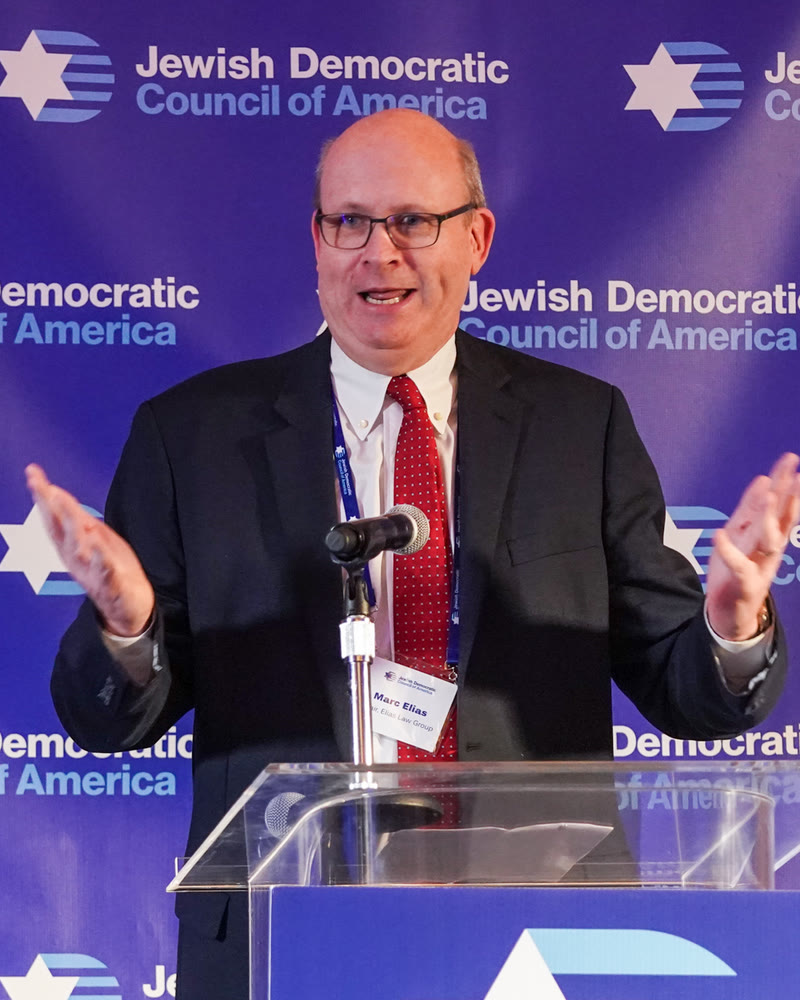 Marc EliasElection lawyer and Democracy Docket founder, in a newsletter to Democracy Docket subscribers
Before this statement
Elias wrote on Nov. 5, the day Trump posted that the namesake candidate's votes should go to Sen. Dan Sullivan.
"In the run-up to the election, Trump directed his Department of Justice to accomplish in court what he is still demanding on social media today. DOJ lost — badly … It filed an appeal to the Ninth Circuit but has taken no steps to seek immediate review or relief."
CondemnedCase context: DOJ challenges Alaska Senate certification over two Sullivans; Murkowski objects
Full statement and sources
Elias says Trump directed DOJ to seek in court what he is now demanding on social media, that DOJ lost, and that the department has not sought quick review of its appeal.
After the statement
Under the Ninth Circuit's schedule, DOJ's opening brief is due Dec. 14. Elias was among the people who received a DOJ target letter in the criminal inquiry into Daniel J. Sullivan's candidacy, according to the Associated Press.
Why this label?
The case concerns DOJ's requested conditional restraint on certification of Alaska's Senate election. Elias describes the lawsuit as a court version of Trump's demand and calls its dismissal a clear loss for DOJ.
This label describes the statement's response within the context above.
 Todd BlancheU.S. attorney general, interviewed on the Fox News Channel
Before this statement
Blanche spoke on Election Day, two days after Judge Sharon Gleason dismissed DOJ's lawsuit and the department appealed. The Associated Press reported his remarks in a story on target letters the department had sent in its criminal inquiry into Daniel J. Sullivan's candidacy.
"Everybody agrees that there is a man running that doesn’t want to run, that doesn’t expect to be senator, that is only running to confuse Alaskan voters … And so that’s why the Department of Justice has been fighting tooth and nail to stop this process."
Defended or excusedCase context: DOJ challenges Alaska Senate certification over two Sullivans; Murkowski objects
Full statement and sources
Blanche says the second Dan Sullivan does not expect to be senator and is running only to confuse Alaska voters, and that this is why DOJ has fought to stop the process.
After the statement
Blanche declined to discuss the target letters. Daniel J. Sullivan has denied running at Democrats' behest, and Peltola has said she did not know about the effort to put him on the ballot.
Justice Department identifies potential targets as it escalates Alaska Senate criminal probe · Associated PressFull article (AP story as published by KY3)Why this label?
The case concerns DOJ's requested conditional restraint on certification of Alaska's Senate election. Blanche defends the department's effort by restating the voter-confusion premise on which the lawsuit rests.
This label describes the statement's response within the context above.
 American Civil Liberties UnionCivil liberties organization representing intervenors in the case, in a statement by Ari Savitzky, senior staff attorney with its Voting Rights Project
Before this statement
Savitzky opens the statement by calling the suit a desperate attempt to disenfranchise Alaska voters and its dismissal a win for democracy.
"The court's get-out-and-don't-come-back ruling makes clear that preemptively blocking election results and running an inquisition into the sincerity of voters' choices would be flatly illegal. Every American should be alarmed that their own Justice Department tried to put voters on trial for how they might vote."
CondemnedCase context: DOJ challenges Alaska Senate certification over two Sullivans; Murkowski objects
Full statement and sources
The ACLU says the ruling shows that blocking election results in advance and investigating the sincerity of voters' choices would be illegal.
After the statement
He adds that this should never happen in the country and that voters should go to the polls with their heads held high. The release also carries statements from the ACLU of Alaska, Common Cause and the League of Women Voters.
Voting Rights Groups Win Case to Protect Alaska's Election Certification · American Civil Liberties UnionFull press release; Ari Savitzky statementWhy this label?
The case concerns DOJ's requested conditional restraint on certification of Alaska's Senate election. The ACLU, which represents intervenors who asked for dismissal, calls the requested relief illegal and says DOJ tried to put voters on trial.
This label describes the statement's response within the context above.
Show fewer responses
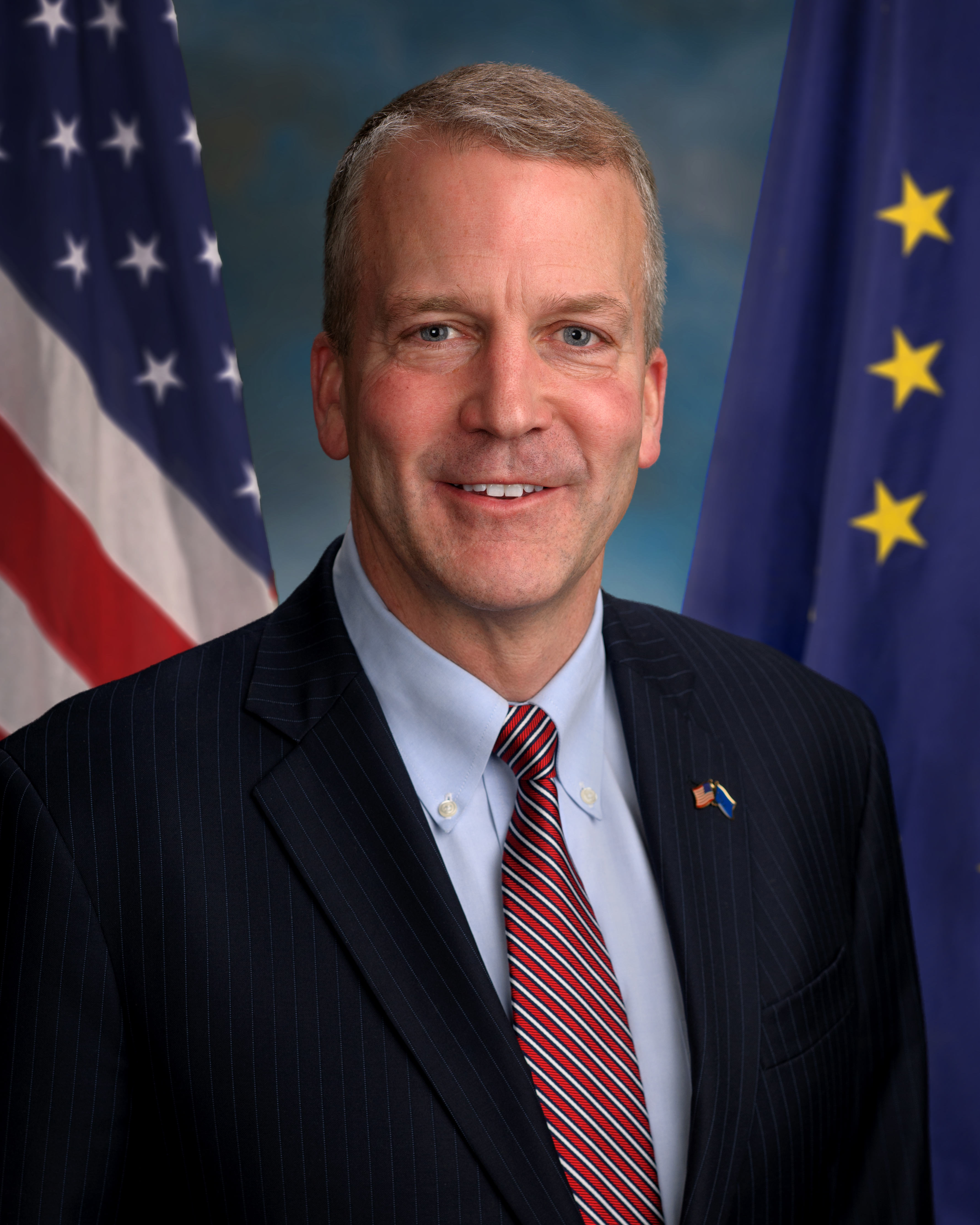 Daniel S. SullivanU.S. senator for Alaska and Republican candidate for reelection, interviewed on CNN's State of the UnionDirectly involved
Before this statement
Asked whether he would join a challenge if Alaska's governor moved to block certification of a Peltola win, Sullivan said many people were discussing legal theories and that he was focused on campaigning. Jake Tapper then asked whether he would accept the results only if he won.
"No, I'm going to accept the election results."
Mixed or conditionalCase context: DOJ challenges Alaska Senate certification over two Sullivans; Murkowski objects
Full statement and sources
Asked whether he would accept the election results only if he won, Sullivan says he will accept them.
After the statement
Tapper ended the interview. Earlier in it, Sullivan said he would let lawyers decide whether a crime was committed and that he expected to lose a lot of votes to what he called trickery. The interview aired before Judge Sharon Gleason ruled.
State of the Union transcript, Nov. 1, 2026: Sen. Dan Sullivan · CNNSullivan interview, 9:00 to 9:10 a.m. ETWhy this label?
The case concerns DOJ's requested conditional restraint on certification of Alaska's Senate election. Sullivan says he will accept the results, which the suit sought to hold back if he lost, but he does not criticize the suit, declines to say whether he would join an effort to block certification and says the second candidacy will cost him votes.
This label describes the statement's response within the context above.
 United States Department of JusticeFederal department that brought the suit, in a spokesperson's statement to reportersDirectly involved
Before this statement
The spokesperson responded after Judge Sharon Gleason dismissed DOJ's amended complaint for lack of standing.
"The court dismissed the case on procedural grounds but did not dispute the argument of the United States that Daniel J. Sullivan (a/k/a Decoy Dan) entered the race as a frivolous candidate to confuse voters."
Defended or excusedCase context: DOJ challenges Alaska Senate certification over two Sullivans; Murkowski objects
Full statement and sources
A DOJ spokesperson says the court dismissed the suit on procedural grounds without disputing DOJ's argument that Daniel J. Sullivan entered the race to confuse voters.
After the statement
The spokesperson added that DOJ plans to file a notice of appeal and that Alaskan voters deserve a fair election, not to be misled in an attempt to rig outcomes. The order rests on standing and does not address how Daniel J. Sullivan came to run.
Judge dismisses Alaska Senate election lawsuit; DOJ vows appeal · CNBCFull article; DOJ and Peltola campaign statementsJudge tosses DOJ's lawsuit over Alaska Senate race · The HillFull article; DOJ spokesperson and DSCC statementsWhy this label?
The case concerns DOJ's requested conditional restraint on certification of Alaska's Senate election. The department keeps its argument that Daniel J. Sullivan entered the race to confuse voters and says it will appeal the dismissal.
This label describes the statement's response within the context above.
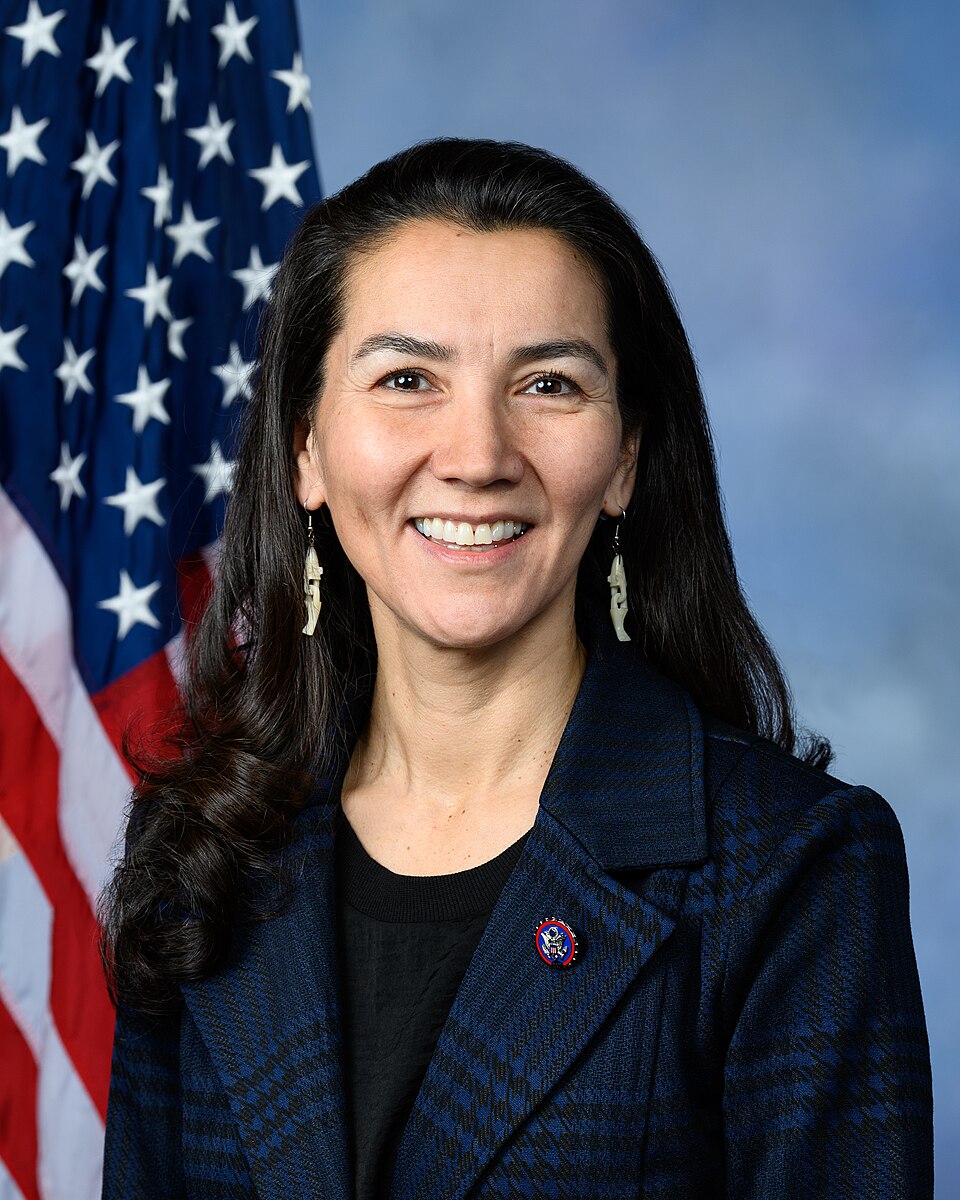 Mary PeltolaDemocratic candidate for U.S. Senate in Alaska, in a statement from her campaignDirectly involved
Before this statement
The campaign issued the statement after Judge Sharon Gleason dismissed DOJ's lawsuit.
"No sham investigation or baseless lawsuit from a weaponized Department of Justice is going to stop Alaskans from electing Mary on November 3rd so she can lower costs for Alaska's working families"
CondemnedCase context: DOJ challenges Alaska Senate certification over two Sullivans; Murkowski objects
Full statement and sources
Peltola's campaign calls DOJ's lawsuit baseless and its investigation a sham, and says neither will stop Alaskans from electing her on Nov. 3.
After the statement
The statement continues that Alaskans will choose their next U.S. senator, not Dan Sullivan or his allies in Washington.
Judge dismisses Alaska Senate election lawsuit; DOJ vows appeal · CNBCFull article; DOJ and Peltola campaign statementsWhy this label?
The case concerns DOJ's requested conditional restraint on certification of Alaska's Senate election. Peltola's campaign calls the lawsuit baseless and the department weaponized.
This label describes the statement's response within the context above.
Devan BarberExecutive director of the Democratic Senatorial Campaign Committee, an intervenor in the case Before this statement
The DSCC released the statement in response to Judge Sharon Gleason's dismissal of the suit.
"Today's ruling is a victory for democracy and a clear message to Donald Trump and Senate Republicans: No one, no matter how powerful, can toss out free and fair elections just because they don't like the result."
CondemnedCase context: DOJ challenges Alaska Senate certification over two Sullivans; Murkowski objects
Full statement and sources
Barber calls the dismissal a victory for democracy and says no one can toss out free and fair elections because they dislike the result.
After the statement
Barber adds that the DSCC will keep fighting what he calls the administration's efforts, through a weaponized Department of Justice, to subvert the Senate race in Alaska, and says he is confident Alaska voters will elect Mary Peltola.
DSCC Statement on Rejection of Department of Justice's Efforts to Subvert the Alaska Election · Democratic Senatorial Campaign CommitteeFull statement by executive director Devan BarberJudge tosses DOJ's lawsuit over Alaska Senate race · The HillFull article; DOJ spokesperson and DSCC statementsWhy this label?
The case concerns DOJ's requested conditional restraint on certification of Alaska's Senate election. Barber welcomes the dismissal and describes the suit as an effort to subvert the Senate race.
This label describes the statement's response within the context above.
 State of AlaskaState election defendants (Division of Elections Director Carol Beecher, the Election Boards and the State Ballot Counting Review Board), through the Alaska Department of Law in a reply on their motion to dismiss
Before this statement
The reply opens by saying DOJ's opposition gives the court no reason to keep the lawsuit going, that the voter-registration claim has no legal basis and that the Supremacy Clause claim falls with it.
"What’s more, the relief demanded is inappropriate and not even possible given Alaskan voters’ vital right to ballot secrecy."
CondemnedCase context: DOJ challenges Alaska Senate certification over two Sullivans; Murkowski objects
Full statement and sources
In a reply supporting dismissal of the amended complaint, Alaska's election officials say the relief DOJ demands, including segregating ballots, is inappropriate and not possible because of Alaska voters' right to a secret ballot.
After the statement
It continues that the issues are matters of state law, that state law put Daniel J. Sullivan on the ballot months ago and that officials designed the ballot to reduce confusion, and asks the court to dismiss the suit with prejudice. It later says ballots carry no voter names and are commingled, and that the Division keeps federal election ballots for 22 months.
Alaska's election officials say segregating ballots is not possibleDocument 76, October 31; introduction and relief argumentWhy this label?
The case concerns DOJ's requested conditional restraint on certification of Alaska's Senate election. The election officials say the relief DOJ seeks is inappropriate and impossible under ballot secrecy, and ask the court to dismiss the suit with prejudice.
This label describes the statement's response within the context above.
- United States Department of JusticePlaintiff in the Alaska certification suit, through Associate Attorney General Stanley E. Woodward Jr. and the U.S. Attorney's Office for the District of AlaskaDirectly involved
Before this statement
The passage comes in the memorandum's obstacle-preemption argument. Just before it, DOJ says Alaska's election officials know that Daniel J. Sullivan's place on the ballot is the result of a conspiracy to undermine the integrity of the electoral process.
"Turning a blind eye to this scheme and refusing to even preserve and segregate ballots that may be impacted would frustrate Congress’s objectives in seeking to protect the integrity of the electoral process."
Defended or excusedCase context: DOJ challenges Alaska Senate certification over two Sullivans; Murkowski objects
Full statement and sources
In a memorandum supporting its motion for expedited discovery and a preliminary injunction, DOJ argues that refusing to preserve and segregate ballots that may have been affected by the alleged scheme would frustrate federal election-integrity objectives.
After the statement
The memorandum next argues that the United States will suffer irreparable harm without precautionary measures. Elsewhere it says the segregation of ballots ranking Daniel J. Sullivan would be a negligible burden because Alaska must already keep ballots for 22 months.
DOJ seeks expedited discovery and a preliminary injunction to segregate ballotsDocument 66, October 30; preliminary-injunction argument, pages 13-15CBS News: U.S. attorney confirms a criminal inquiry as DOJ asks to segregate ballots · CBS NewsFull article, updated October 31, 2026Why this label?
The case concerns DOJ's requested conditional restraint on certification of Alaska's Senate election. In this filing DOJ extends that request, arguing that federal law requires Alaska to preserve and segregate ballots it says voter confusion may have affected.
This label describes the statement's response within the context above.
Derek MullerNotre Dame Law School professor Before this statement
His opening distinguishes earlier reasons for exclusion, ballot features limiting confusion and possible criminal charges over candidate recruitment.
"further investigation is essential to determine whether they should be brought."
Mixed or conditionalCase context: DOJ challenges Alaska Senate certification over two Sullivans; Murkowski objects
Full statement and sources
Muller rejects the amended certification lawsuit, saying the Supremacy Clause theory supplies no missing federal law. He separately urges further investigation of alleged deceptive recruitment, while describing possible criminal theories as tentative and subject to First Amendment defenses and due process.
After the statement
He calls for more evidence before drawing conclusions about criminal liability.
Muller separates the certification claim from possible criminal inquiriesOctober 30 signed analysis; second and third sectionsWhy this label?
Muller supports further investigation while rejecting the civil certification claim. He conditions any criminal conclusion on more evidence and legal protections.
This label describes the statement's response within the context above.
 Democratic Senatorial Campaign CommitteeDemocratic Senate campaign committee, filing with Alaskans for Mary, Mary Peltola's campaign committee, through their lawyers in a motion to dismiss the amended complaint
Before this statement
Just before this passage, the motion says DOJ added allegations based on recent press reports about how Daniel J. Sullivan came to run, and notes DOJ's own statement that the new allegations align with what it had alleged on information and belief.
"And nothing in these new allegations changes DOJ’s utter lack of any legal claim, any legal authority to bring this case, or any entitlement to the relief it seeks."
CondemnedCase context: DOJ challenges Alaska Senate certification over two Sullivans; Murkowski objects
Full statement and sources
In a motion to dismiss DOJ's amended complaint, the DSCC and Alaskans for Mary, Peltola's campaign committee, say the new recruitment allegations do not give DOJ a legal claim, authority to sue, or a right to the relief it seeks.
After the statement
The motion continues that the allegations are a distraction from DOJ's claims and give no basis for blocking certification after a narrow Peltola victory. It later calls DOJ's accusation that the two groups misled the court nonsense.
Peltola's campaign committee and the DSCC move to dismiss the amended complaintDocument 57, October 29; introduction, pages 3-5Why this label?
The case concerns DOJ's requested conditional restraint on certification of Alaska's Senate election. The motion says DOJ still lacks a legal claim, authority to sue and any entitlement to that relief, and asks the court to dismiss the amended complaint.
This label describes the statement's response within the context above.
 Ilya SominGeorge Mason University law professor
Before this statement
His new column responds to reporting about alleged recruitment and to Michael Dorf's analysis.
"But the fact that this scheme is legal doesn't make it right."
Mixed or conditionalCase context: DOJ challenges Alaska Senate certification over two Sullivans; Murkowski objects
Full statement and sources
Somin condemns the reported effort to confuse voters while maintaining that it supplies no legal basis for DOJ's certification lawsuit. He argues that confusion about candidate names is easier to counter, and usually less consequential, than deception about policy.
After the statement
He argues against punishing political lies or censoring misinformation.
Somin condemns deceptive recruitment but rejects the certification lawsuitOctober 29 signed Volokh Conspiracy analysisWhy this label?
Somin rejects the certification lawsuit while expressly condemning the reported tactic.
This label describes the statement's response within the context above.
 Mike DunleavyGovernor of Alaska
Before this statement
Burman asks about the governor's separate certificate after the state elections director certifies the result.
"may, in fact, impact whether somebody is seated in the U.S. Senate."
Mixed or conditionalCase context: DOJ challenges Alaska Senate certification over two Sullivans; Murkowski objects
Full statement and sources
Dunleavy declines to promise that he would send a certificate to the Senate if Peltola wins while the investigation remains unresolved. He says findings of illegal conduct could affect seating, while acknowledging that he does not yet know whether Peltola committed a crime.
After the statement
Dunleavy says he needs enough information before deciding. His remarks do not establish legal authority to withhold certification.
Dunleavy discusses certification during the candidate-recruitment probeBlake Burman interview on The Hill, Thursday October 29; updated report October 30Why this label?
Dunleavy makes possible certification action conditional on investigative findings.
This label describes the statement's response within the context above.
- Donald TrumpPresident of the United States
Before this statement
The post opens by saying it had just been determined that Democrats in Alaska, despite sworn statements to the contrary, put a man named Dan Sullivan on the ballot to confuse the public about Senator Dan Sullivan.
"This is Voter Fraud at the Highest Level, and the Dumocrat Candidate, who was involved in the scheme, Mary Peltola, should be removed from the Ballot and prosecuted — So should the FAKE Dan Sullivan."
Defended or excusedCase context: DOJ challenges Alaska Senate certification over two Sullivans; Murkowski objects
Full statement and sources
Trump says Democrats put a second Dan Sullivan on the ballot to confuse voters, calls it voter fraud, and says Mary Peltola and Daniel J. Sullivan should be removed from the ballot and prosecuted.
After the statement
Trump adds that nothing else will do and that this behavior in elections cannot be allowed to continue. He posted after The New York Times reported on the recruitment of Daniel J. Sullivan; Peltola's campaign says it has no involvement with either Sullivan campaign.
Trump's Truth Social post calling for Peltola's prosecution and removal from the ballot · Donald TrumpFull post, October 28, 2026, 5:08 p.m. EDTAP reports Trump's call to prosecute Peltola after the Times recruitment report · PBS NewsHourFull article, October 28, 2026Why this label?
The case concerns DOJ's requested conditional restraint on certification of Alaska's Senate election, which rests on alleged voter confusion. Trump asserts the confusion scheme that the lawsuit relies on and calls for removing Peltola from the ballot and prosecuting her, which goes further than the relief DOJ seeks.
This label describes the statement's response within the context above.
 National ReviewConservative magazine, in an unsigned editorial by its editors
Before this statement
The editors call the second Sullivan's candidacy a scurrilous dirty trick by Alaska Democrats that is not against the law, and say Republicans are right to object, but that DOJ went further by suing.
"The lawsuit is not, contra some hyperbole in the press, an effort to steal an election. But the suit is meritless for two reasons. First, it is patently premature for a court to issue an order before an election about the certification of results that haven't been tallied yet."
CondemnedCase context: DOJ challenges Alaska Senate certification over two Sullivans; Murkowski objects
Full statement and sources
National Review's editors say DOJ's suit is not an effort to steal the election but is meritless, starting with its being premature before any votes are counted.
After the statement
They add that the suit cites only the preamble of the National Voter Registration Act, which they say Congress never meant as a warrant to stop campaign practices, and close by calling it a dead-end lawsuit.
Democrats' Alaskan Dirty Trick · National ReviewFull editorialWhy this label?
The case concerns DOJ's requested conditional restraint on certification of Alaska's Senate election. The editors reject the suit as meritless and premature, while also calling the second Sullivan's candidacy a dirty trick by Alaska Democrats.
This label describes the statement's response within the context above.
- State of AlaskaState election defendants (Division of Elections Director Carol Beecher, the Election Boards and the State Ballot Counting Review Board), through the Alaska Department of Law in a motion to dismiss
Before this statement
The passage comes in the motion's standing argument. Just before it, the motion says the relief DOJ requests would sow confusion and erode trust in Alaska's election result a week before Election Day, and that neither the declaration nor the injunction DOJ appears to seek would help protect election integrity.
"Delaying certification of Alaska’s election results—but only if a particular candidate does not win—would interfere with state election administration and threaten election integrity."
CondemnedCase context: DOJ challenges Alaska Senate certification over two Sullivans; Murkowski objects
Full statement and sources
In their motion to dismiss, Alaska's election officials say that delaying certification only if a particular candidate does not win would interfere with state election administration and threaten election integrity. They ask the court to dismiss DOJ's complaint with prejudice.
After the statement
The motion goes on to say that the investigation DOJ requests would violate ballot secrecy, because it would require identifying the voters who cast ballots for Daniel J. Sullivan so they could later be questioned about their intent.
United States v. State of Alaska: Alaska election officials' motion to dismissDocument 18, pages 10-11Why this label?
The case concerns DOJ's request to block certification of Alaska's Senate result if Sen. Dan S. Sullivan loses. Alaska's election officials say that this conditional delay would interfere with how the state runs its election and threaten election integrity, and they ask the court to dismiss the suit with prejudice. The passage criticizes the relief DOJ seeks as harmful to the election.
This label describes the statement's response within the context above.
 Thom TillisU.S. senator for North Carolina, interviewed on CBS's Face the Nation
Before this statement
Tillis said it was appropriate to take a look at the race because a candidate shares Sen. Dan Sullivan's name and Alaska uses ranked-choice voting. Asked about Lisa Murkowski's objection, he called the lawsuit suspicious and preemptive and said Democrats had gamed the system by putting a Dan Sullivan on the ballot.
"So, I don't mind looking at it, but I do mind the appearance of filing a lawsuit before we know if the facts that would substantiate a lawsuit actually occur."
Mixed or conditionalCase context: DOJ challenges Alaska Senate certification over two Sullivans; Murkowski objects
Full statement and sources
Tillis says he does not mind scrutiny of the Alaska race but objects to the appearance of filing a lawsuit before the facts that would support one have occurred.
After the statement
Margaret Brennan replied that the other Dan Sullivan says he is not a Democrat, and noted reporting that a Democratic strategist may have helped him.
Face the Nation transcript, Oct. 25, 2026: Sen. Thom Tillis · CBS NewsThom Tillis interview, exchange on the Alaska lawsuitWhy this label?
The case concerns DOJ's requested conditional intervention in certification of Alaska's Senate election. Tillis supports watching the Alaska result for voter confusion but questions filing a lawsuit before facts support one.
This label describes the statement's response within the context above.
- Todd BlancheU.S. attorney general, interviewed on CBS's Face the Nation
Before this statement
Margaret Brennan asked what right the federal government has to tell a state not to certify or how to certify. In his answer, Blanche said DOJ is trying to put guardrails in place so that ballots are kept in a way that shows whether there was confusion.
"It's not saying, don't certify. It's saying, if a court ultimately determines that it was decided because of confusion and not the will of the voters, then we do not think the states should certify, and that's consistent with federal law and consistent with even Alaskan law, if that happens."
Defended or excusedCase context: DOJ challenges Alaska Senate certification over two Sullivans; Murkowski objects
Full statement and sources
Blanche says the lawsuit does not ask Alaska to withhold certification outright, only if a court finds the result was decided by voter confusion rather than the will of the voters.
After the statement
Asked who President Trump was referring to when he said "I'm the one that said do it," Blanche said he had no idea and that even if he did, he would not talk about it.
Face the Nation transcript, Oct. 25, 2026: Attorney General Todd Blanche · CBS NewsBlanche interview, Alaska lawsuit segmentWhy this label?
The case concerns DOJ's requested conditional intervention in certification of Alaska's Senate election. Blanche defends that request as limited and consistent with federal and Alaska law.
This label describes the statement's response within the context above.
- Todd BlancheU.S. attorney general, interviewed on CNN's State of the Union
Before this statement
Dana Bash said the matter had been litigated in the Alaska courts and went all the way up to the Supreme Court. Blanche said the Alaska Supreme Court did not consider federal law, that DOJ is not doing anything improper, and that the process has to play out.
"But I do think it's important for the American people to understand that we are not, President Trump is not trying to take over a state election in any way, shape, or form. What we're trying to do is make it -- make it clear that if it is obvious after the election that confusion led to an improper and illegal result, that the Alaskan system should be able to address that."
Defended or excusedCase context: DOJ challenges Alaska Senate certification over two Sullivans; Murkowski objects
Full statement and sources
Blanche says President Trump is not trying to take over a state election, and that Alaska should be able to address the result if it is obvious after the election that confusion led to an improper and illegal result.
After the statement
Bash ended the interview by saying viewers would be waiting to see how the federal courts rule on the complaint.
State of the Union transcript, Oct. 25, 2026: Attorney General Todd Blanche · CNNBlanche interview, about 9:20 a.m. ETWhy this label?
The case concerns DOJ's requested conditional intervention in certification of Alaska's Senate election. Blanche defends the lawsuit as a way for Alaska to address a confused result, not a federal takeover.
This label describes the statement's response within the context above.
 Adam SchiffU.S. senator for California, interviewed on NBC's Meet the Press
Before this statement
Kristen Welker said Trump says he told the Justice Department to sue to block certification of Alaska's Senate race if Republicans lose, and asked Schiff whether the department has a point.
"No, they don’t have a point. And what’s more, they don’t have standing to bring this kind of a suit. It’s not the federal government’s business to run Alaskan elections. It’s Alaska’s business to do that. And they’ve already adjudicated this question. And the Justice Department knows this. But it just shows how complicit they are now in the Trump campaign to try to subvert the elections."
CondemnedCase context: DOJ challenges Alaska Senate certification over two Sullivans; Murkowski objects
Full statement and sources
Schiff says the Justice Department lacks standing to bring the suit, that Alaska has already decided the question, and that the lawsuit shows the department's complicity in a Trump campaign to subvert the elections.
After the statement
Schiff contrasts Attorney General Todd Blanche with Bill Barr in 2020, says the suit has no chance of succeeding and urges voters to turn out in large numbers so that no race is close.
Meet the Press transcript, Oct. 25, 2026: Sen. Adam Schiff · NBC NewsAdam Schiff interview, exchange on the Alaska lawsuitWhy this label?
The case concerns DOJ's requested conditional intervention in certification of Alaska's Senate election. Schiff rejects the lawsuit and says it shows the department is helping an effort to subvert the elections.
This label describes the statement's response within the context above.
- Democratic Senatorial Campaign CommitteeDemocratic Senate campaign committee, filing with Alaskans for Mary, Mary Peltola's campaign committee, through their lawyers in a proposed motion to dismiss
Before this statement
Just before this passage, the motion argues that DOJ waited until the eve of the election to sue, although Daniel J. Sullivan's place on the ballot was decided in June and finalized in August.
"In short, DOJ’s Complaint is wholly baseless. The fact that DOJ nonetheless chose to file it raises profound constitutional concerns. The Court should dismiss the Complaint."
CondemnedCase context: DOJ challenges Alaska Senate certification over two Sullivans; Murkowski objects
Full statement and sources
In a proposed motion to dismiss, the DSCC and Alaskans for Mary, Peltola's campaign committee, call DOJ's complaint baseless and say the decision to file it raises profound constitutional concerns.
After the statement
The motion's background section then says Peltola launched her campaign committee, Alaskans for Mary, on the day she declared her candidacy, Jan. 12, 2026.
United States v. State of Alaska: Alaskans for Mary and DSCC's proposed motion to dismissDocument 8-1, Introduction, pages 1-3Peltola asks judge to toss DOJ's Alaska certification lawsuit · ReutersReport on the Oct. 25 filingWhy this label?
The case concerns DOJ's requested conditional intervention in certification of Alaska's Senate election. The proposed motion calls that request baseless and asks the court to dismiss it.
This label describes the statement's response within the context above.
- Donald TrumpPresident of the United States
Before this statement
Trump's post responds to Lisa Murkowski, who had said the Justice Department should never have filed the lawsuit. Earlier in the post he calls Alaska's ranked-choice ballot a Democratic scam meant to confuse voters so that Sen. Dan Sullivan loses votes to Daniel J. Sullivan, Jr.
"He is only there because the Democrats want to steal the Election, and Murkowski probably wants that to happen, which is why she is against the DOJ filing a Lawsuit in order to stop this impending crime and tragedy."
Defended or excusedCase context: DOJ challenges Alaska Senate certification over two Sullivans; Murkowski objects
Full statement and sources
Trump says Daniel J. Sullivan, Jr. is on the ballot only because Democrats want to steal the election, and that Murkowski opposes the Justice Department's lawsuit because she probably wants that to happen.
After the statement
Trump goes on to call Murkowski a disgrace to Alaska and the country and urges Alaskans to vote yes on Ballot Measure 2, which he describes as a vote against ranked-choice voting.
Trump's Truth Social post calling Murkowski a disgrace over the Alaska lawsuit · Donald TrumpFull post, October 24, 2026, 11:13 p.m. EDTLisa Murkowski objects to DOJ's Alaska Senate lawsuit · Lisa MurkowskiPost 2113801082702852173Why this label?
The case concerns DOJ's requested conditional intervention in certification of Alaska's Senate election. Trump defends the lawsuit as a way to stop what he calls an impending crime and attacks Murkowski for opposing it.
This label describes the statement's response within the context above.
 Lisa MurkowskiU.S. senator for AlaskaDirectly involved
Before this statement
She says Alaska has distinguished the candidates on its ballot.
"The Department of Justice should never have filed this lawsuit."
CondemnedCase context: DOJ challenges Alaska Senate certification over two Sullivans; Murkowski objects
Full statement and sources
Murkowski rejects DOJ's intervention.
After the statement
Her post links reporting about the lawsuit.
Lisa Murkowski objects to DOJ's Alaska Senate lawsuit · Lisa MurkowskiPost 2113801082702852173Why this label?
The case concerns DOJ's requested conditional intervention in certification of Alaska's Senate election. Murkowski rejects DOJ's intervention.
This label describes the statement's response within the context above.
- Mary PeltolaDemocratic candidate for U.S. Senate in AlaskaDirectly involved
Before this statement
Peltola is running for Alaska's Senate seat.
"This is the corruption AK is fed up with, and it's why I'm in this race."
CondemnedCase context: DOJ challenges Alaska Senate certification over two Sullivans; Murkowski objects
Full statement and sources
Peltola calls the lawsuit corruption.
After the statement
She promises to make sure every Alaskan is heard.
Mary Peltola responds to the Alaska certification lawsuit · Mary PeltolaPost 2113716898559091140Trump says he ordered DOJ's Alaska lawsuit; Devan Barber condemns itTrump airport comments and Devan Barber statement; updated 10:44 p.m. EasternWhy this label?
The case concerns DOJ's requested conditional intervention in certification of Alaska's Senate election. Peltola calls the lawsuit corruption.
This label describes the statement's response within the context above.
David BeckerExecutive director of the Center for Election Innovation & Research, in a statement released by the organization Before this statement
CEIR introduces the statement by noting that the Justice Department filed a lawsuit seeking to block certification of Alaska's Senate results if the Republican candidate loses.
"The Justice Department’s lawsuit in Alaska represents an unprecedented intervention by the federal government. This is purely a matter of state law, and the administration has absolutely no authority to tell Alaska when or how to certify the results of its Senate election."
CondemnedCase context: DOJ challenges Alaska Senate certification over two Sullivans; Murkowski objects
Full statement and sources
In a statement, CEIR executive director David Becker calls DOJ's Alaska suit an unprecedented federal intervention and says the administration has no authority to tell Alaska when or how to certify its Senate results.
After the statement
Becker goes on to say that intervening at this late stage is against department policy, that he cannot recall an administration trying to stop the certification of an election, and that Alaska's courts have already decided the issue.
CEIR responds to DOJ lawsuit over Alaska Senate raceFull statementWhy this label?
The case concerns DOJ's suit seeking to block certification of Alaska's Senate result. Becker says the administration has no authority to direct Alaska's certification, which condemns the action under scrutiny.
This label describes the statement's response within the context above.
 Rick HasenUCLA law professor, writing in Slate
Before this statement
Hasen writes that on the same day Attorney General Todd Blanche said DOJ would stay out of how states certify elections absent a doomsday scenario, DOJ asked a court to block certification of Alaska's Senate winner, arguing the state broke federal law by letting a second Dan Sullivan run.
"DOJ has no power to decide which candidates can appear on the ballot. … That preamble of course gives no power whatsoever to the federal government to do anything. It does not give DOJ the power to determine ballot access or block certification of a federal election."
CondemnedCase context: DOJ challenges Alaska Senate certification over two Sullivans; Murkowski objects
Full statement and sources
In a Slate column, UCLA law professor Rick Hasen says DOJ has no power to decide who appears on the ballot and that the National Voter Registration Act's preamble, the suit's only basis, gives it no power to block certification.
After the statement
Hasen then notes that the Alaska Supreme Court decided the ballot access question in June, and he cites a missing verb in the complaint's prayer for relief as a sign of shoddy work.
Why this label?
The case concerns DOJ's suit seeking to block certification of Alaska's Senate result. Hasen says the law DOJ cites gives it no power to block certification, which condemns the action under scrutiny.
This label describes the statement's response within the context above.
 Aaron FritschnerDeputy chief of staff to U.S. Representative Don Beyer, in a post on his personal X account
Before this statement
A day earlier, the Justice Department had sued to block certification of Alaska's U.S. Senate election if Sen. Dan Sullivan lost and Daniel J. Sullivan, a candidate who shares his name, won a share of the vote, Alaska Public Media reported.
"The Alaska lawsuit is frivolous and they know it. Bigger picture: - Blanche campaigning - Splashy Kash VA indictment presser just before election - Noisy Dhillon “noncitizens voting” stuff in CA, elsewhere 60-day norm be damned, they’re putting DOJ’s thumb on the midterm scales"
CondemnedCase context: DOJ challenges Alaska Senate certification over two Sullivans; Murkowski objects
Full statement and sources
The day after the Justice Department sued over certification of Alaska's Senate result, Fritschner wrote on X that the lawsuit is frivolous and that the department knows it. He listed other Justice Department actions before the election and said the department was putting its thumb on the midterm scales.
After the statement
The quotation is the whole text of the post.
Aaron Fritschner on X: the Alaska lawsuit is frivolous · Aaron FritschnerPost 2113681629860204830KFSK: Alaskans, legal experts condemn federal lawsuit as attempt to invalidate the vote in U.S. Senate raceParagraphs 4-5 (Sullivan campaign spokesperson Nate Adams)Why this label?
Fritschner calls the lawsuit frivolous and says the department is using it and other actions to tip the midterm elections, so we labeled it Condemned.
This label describes the statement's response within the context above.
- Ilya SominLaw professor and author of the analysis
Before this statement
Somin says there is no legal basis for overturning congressional election results based on voter confusion and that any such action would likely violate the First Amendment. He adds that any such federal action would also run afoul of states' primary authority over election procedures.
"Congress has not enacted any statute allowing overturning of election results based on possible "voter confusion.""
CondemnedCase context: DOJ challenges Alaska Senate certification over two Sullivans; Murkowski objects
Full statement and sources
Somin argues that Congress has enacted no statute allowing election results to be overturned over possible voter confusion, and that any such action would likely violate the First Amendment.
After the statement
He argues that treating voter confusion as grounds to overturn an election would imperil many results because candidates commonly exploit voter ignorance.
Ilya Somin challenges DOJ's Alaska voter-confusion lawsuitStatutory-authority and First Amendment argumentsWhy this label?
Relative to DOJ's conditional certification suit, Somin expressly rejects its statutory and constitutional justification.
This label describes the statement's response within the context above.
- Daniel S. SullivanU.S. senator from Alaska and Republican candidate, through campaign spokesperson Nate Adams, in a text message to Alaska Public Media and KFSKDirectly involved
Before this statement
The day after the Justice Department filed its lawsuit, Adams expressed confidence in Sullivan's reelection.
"We’ll let the DOJ complaint run its course."
Mixed or conditionalCase context: DOJ challenges Alaska Senate certification over two Sullivans; Murkowski objects
Full statement and sources
Sen. Dan Sullivan's campaign spokesperson, Nate Adams, tells Alaska Public Media and KFSK by text that the campaign will let the Justice Department's complaint run its course, while saying Alaska voters can tell the two Sullivans apart.
After the statement
Adams added that Alaska voters are smart enough to tell the two Sullivans apart, and said Sen. Sullivan had no prior knowledge of the lawsuit.
KFSK: Alaskans, legal experts condemn federal lawsuit as attempt to invalidate the vote in U.S. Senate raceParagraphs 4-5 (Sullivan campaign spokesperson Nate Adams)TIME: Trump thinks Alaskans could vote for the wrong Sullivan. What can the DOJ do?Sections "Why experts question the DOJ's Alaska election lawsuit" and "How has the federal government used the National Voter Registration Act?"Why this label?
The case concerns DOJ's suit seeking to block certification of Alaska's Senate result. Sullivan's campaign says it will let the complaint run its course, so it does not oppose the suit going forward, but Adams also says voters are smart enough to tell the two Sullivans apart, which rejects the voter confusion the suit rests on. It does not defend the suit, and it is not a refusal to answer, because Adams gave the campaign's view.
This label describes the statement's response within the context above.
Richard PildesNew York University law professor who specializes in election law, speaking to The New York Times Before this statement
The Times reports that election law specialists said the suit, which seeks to block certification of Alaska's Senate result if the Republican incumbent narrowly loses, lacked any legitimate legal basis.
"It is one of the weakest election lawsuits I’ve ever seen … It should have no realistic chance of success in the courts."
CondemnedCase context: DOJ challenges Alaska Senate certification over two Sullivans; Murkowski objects
Full statement and sources
NYU law professor Richard Pildes tells The New York Times that DOJ's Alaska certification suit is one of the weakest election lawsuits he has seen and should have no realistic chance of success in court.
After the statement
The Times then reports that the suit raised alarms because President Trump has sought to undermine confidence in the election while polls point to Republican losses.
The New York Times: Why legal experts see the Justice Department's Alaska election challenge as dubious · The New York TimesParagraphs 3-4Why this label?
The case concerns DOJ's suit seeking to block certification of Alaska's Senate result. Pildes says the suit is one of the weakest he has seen and should not succeed, which condemns the action under scrutiny.
This label describes the statement's response within the context above.
Walter OlsonSenior fellow at the Cato Institute, writing on the Cato at Liberty blog Before this statement
Tangle reports that Olson argued on the Cato at Liberty blog that the suit is abusive in its intentions, then quotes his view that it stretches the National Voter Registration Act beyond recognition by treating its preamble as a source of new federal duties.
"That is not a natural reading of the text, nor is it one that courts have taken. If accepted, it would suddenly federalize many issues of local election administration."
CondemnedCase context: DOJ challenges Alaska Senate certification over two Sullivans; Murkowski objects
Full statement and sources
In a Cato blog post quoted by Tangle, senior fellow Walter Olson says DOJ's reading of the National Voter Registration Act is not a natural one and would federalize many issues of local election administration if accepted.
After the statement
Olson goes on to say the suit invites suspicions of bad faith by not acknowledging that Alaska's printed ballot labels one of the two Sullivans as the incumbent, and that the question was one for the Alaska Supreme Court to decide under Alaska law.
Tangle: The DOJ's Alaska lawsuitWalter Olson passageTIME: Trump thinks Alaskans could vote for the wrong Sullivan. What can the DOJ do?Sections "Why experts question the DOJ's Alaska election lawsuit" and "How has the federal government used the National Voter Registration Act?"Why this label?
The case concerns DOJ's suit seeking to block certification of Alaska's Senate result. Olson says DOJ's reading of the law is not a natural one and would federalize local election administration, which condemns the action under scrutiny.
This label describes the statement's response within the context above.
Derek MullerUniversity of Notre Dame law professor Before this statement
AP quotes Muller analyzing the lawsuit and the conditions under which DOJ seeks relief.
"The statute simply doesn’t let the Department of Justice enjoin certification"
CondemnedCase context: DOJ challenges Alaska Senate certification over two Sullivans; Murkowski objects
Full statement and sources
Muller argues that the statute does not authorize DOJ to block certification of the Alaska Senate result.
After the statement
He says a wide Democratic victory or narrow Republican victory could moot the suit; otherwise, the court would likely dismiss it.
Trump says he ordered DOJ's Alaska lawsuit; Devan Barber condemns itTrump airport comments and Devan Barber statement; updated 10:44 p.m. EasternWhy this label?
Muller says the statute does not let DOJ enjoin certification. This directly rejects the legal basis for the requested intervention, the action under scrutiny in this case.
This label describes the statement's response within the context above.
Devan BarberExecutive director of the Democratic Senatorial Campaign Committee Before this statement
She speaks as executive director of the Democratic Senatorial Campaign Committee.
"filing a sham lawsuit to overturn the will of Alaska voters"
CondemnedCase context: DOJ challenges Alaska Senate certification over two Sullivans; Murkowski objects
Full statement and sources
Barber condemns the lawsuit as an effort to override Alaska voters.
After the statement
Her statement is an accusation about the suit's purpose.
Trump says he ordered DOJ's Alaska lawsuit; Devan Barber condemns itTrump airport comments and Devan Barber statement; updated 10:44 p.m. EasternWhy this label?
The case concerns DOJ's requested conditional intervention in certification of Alaska's Senate election. Barber condemns the lawsuit as an effort to override Alaska voters.
This label describes the statement's response within the context above.
Derek MullerNotre Dame law professor, writing on the Election Law Blog Before this statement
Just before this passage, Muller writes that some may react in a panic that DOJ is trying to deny certification of an election in a state, and he agrees that this is what DOJ is trying to do.
"But the legal claim is so absurdly thin, there’s essentially no likelihood of success. … In short, like many Department letters over the last few years, it is designed to win the press release rather than the litigation."
CondemnedCase context: DOJ challenges Alaska Senate certification over two Sullivans; Murkowski objects
Full statement and sources
Writing on the Election Law Blog, Notre Dame law professor Derek Muller says DOJ's Alaska claim has essentially no likelihood of success and is designed to win the press release rather than the litigation.
After the statement
Muller adds that this one simply takes the form of a complaint. In a closing note, he says the prayer for relief does not actually ask for an injunction because a paragraph of the complaint is missing its verb.
Why this label?
The case concerns DOJ's suit seeking to block certification of Alaska's Senate result. Muller says the legal claim has essentially no chance and that the suit is aimed at publicity, which condemns the action under scrutiny.
This label describes the statement's response within the context above.
- United States Department of JusticeJustice Department lawyers submitting the United States' complaintDirectly involved
Before this statement
DOJ alleges a substantial likelihood of voter confusion.
"To guard against this danger, it is vital that Defendants not certify any election result that may be impacted by voter confusion. An election result may be impacted by voter confusion if: (1) Senator Sullivan does not win the election; and (2) had all votes cast for Daniel J. Sullivan been cast instead for Senator Sullivan and Alaska’s rank-choice process played out accordingly, Senator Sullivan would have won the election."
Defended or excusedCase context: DOJ challenges Alaska Senate certification over two Sullivans; Murkowski objects
Full statement and sources
DOJ alleges a substantial likelihood of voter confusion and asks the court to stop certification of an affected result pending investigation.
After the statement
The United States asks the court to declare that certification of an affected result would violate the NVRA.
United States v. State of Alaska: complaint over Senate ballot names · United States Department of JusticeComplaint, especially paragraphs 42-45 and prayer for reliefWhy this label?
The disputed action is DOJ's requested restraint on Alaska Senate certification. The complaint expressly argues that this intervention is necessary to guard against alleged voter confusion, supporting the requested action.
This label describes the statement's response within the context above.
Sources
(59)
Original text
United States v. State of Alaska: complaint over Senate ballot names
Relevant passage: Complaint, especially paragraphs 42-45 and prayer for relief
About this source
DOJ asks for conditional relief concerning certification. Its allegations of deceptive candidacy remain allegations.
- Published
- Accessed
Original post
Aaron Fritschner on X: the Alaska lawsuit is frivolous
About this source
Fritschner's post the day after the Justice Department sued over Alaska's Senate certification. It lists other department actions in the weeks before the election.
- Author
- Aaron Fritschner
- Published
- Accessed
Reporting
DOJ sends target letters to 20 Democrats in Alaska Senate race probe: report
Relevant passage: Full article
About this source
The National News Desk relays a New York Times report, citing two unnamed sources, that the Justice Department sent letters to about 20 Democrats over the past week telling them they may be targets of its Alaska investigation or asking them to preserve records. It quotes Marc Elias's statement about the letter he received.
- Author
- Natalia Mittelstadt
- Published
- Accessed
Reporting
Justice Department identifies potential targets as it escalates Alaska Senate criminal probe
Relevant passage: Full article (AP story as published by KY3)
About this source
The Associated Press reports, citing people briefed on the investigation, that the Justice Department sent target letters to attorney Marc Elias and others in its criminal inquiry into Daniel J. Sullivan's candidacy. It quotes Attorney General Todd Blanche's Nov. 3 Fox News Channel remarks and statements from Elias.
- Author
- Eric Tucker, Associated Press
- Published
- Accessed
Original text
State of Alaska 2026 General Election Summary Report, unofficial results
Relevant passage: Report dated Nov. 4, 2026, 1:09 p.m., page 1, U.S. Senator
About this source
The Division of Elections' unofficial summary with 400 of 401 precincts reporting and 215,912 ballots cast. In the Senate race it lists Mary Peltola with 102,962 votes (48.02%), Sen. Dan S. Sullivan with 102,325 (47.72%), Gerald L. Heikes with 4,846 (2.26%) and Daniel J. Sullivan Jr. with 3,600 (1.68%). The division replaces this file as it posts new counts.
- Author
- Alaska Division of Elections
- Published
- Accessed
Analysis
Mary Peltola Appears Likely To Defeat Both Dan Sullivans in Alaska's Senate Race
Relevant passage: Full article
About this source
Reason assistant editor Joe Lancaster reviews the preliminary ranked-choice data in the Alaska Senate race, Trump's Nov. 5 post about the namesake candidate's votes, and DOJ's earlier effort to segregate ballots.
- Author
- Joe Lancaster
- Published
- Accessed
Reporting
4 interesting things we've learned from Alaska ballot data
Relevant passage: Full article
About this source
Alaska Public Media reviews the cast vote record the Division of Elections released on Nov. 4 for about 204,000 scanned ballots, including how voters ranked the two Senate candidates named Dan Sullivan, and quotes MIT political scientist Charles Stewart III on the data.
- Author
- Eric Stone
- Published
- Accessed
Original text
Trump's Truth Social post saying the namesake candidate's votes should go to Sen. Sullivan
Relevant passage: Full post, November 5, 2026, 8:40 a.m. EST
About this source
Trump posts two days after the election, while Alaska is still counting ballots in the Senate race. He says the votes for Daniel J. Sullivan and for another candidate he calls a slug should be given to Sen. Dan Sullivan.
- Author
- Donald J. Trump
- Published
- Accessed
Reporting
Trump weighs in on Alaska's tight U.S. Senate race as thousands of ballots are yet to be tallied
Relevant passage: Full article
About this source
The Anchorage Daily News reports Trump's Nov. 5 Truth Social post on the namesake candidate's votes, the Ninth Circuit briefing schedule in DOJ's appeal, the preliminary Senate results, a newsletter comment by Marc Elias and an interview with candidate Gerald Heikes.
- Author
- Alex DeMarban
- Published
- Accessed
Original text
United States v. State of Alaska, No. 26-7304 (9th Cir.): docketing notice and time schedule order
Relevant passage: DktEntry 2, filed November 1, 2026
About this source
Court of appeals docket document as mirrored by CourtListener (RECAP), read in full. The clerk dockets DOJ's appeal from the Alaska dismissal as No. 26-7304 and sets the briefing schedule: the United States' opening brief is due December 14, 2026, and the answering briefs of the State of Alaska, its election officials and the intervenors are due January 11, 2027.
- Author
- U.S. Court of Appeals for the Ninth Circuit, Office of the Clerk
- Published
- Accessed
Original text
Democrats' Alaskan Dirty Trick
Relevant passage: Full editorial
About this source
National Review's editors call the second Sullivan's candidacy a dirty trick that is not illegal, and argue that DOJ's suit is premature and cites no federal law the scheme violates.
- Author
- The Editors
- Published
- Accessed
Official statement
DSCC Statement on Rejection of Department of Justice's Efforts to Subvert the Alaska Election
Relevant passage: Full statement by executive director Devan Barber
About this source
The DSCC, an intervenor in the case with Peltola's campaign committee, releases a statement by its executive director after Judge Sharon Gleason dismissed DOJ's suit.
- Author
- Democratic Senatorial Campaign Committee
- Published
- Accessed
Reporting
Court dismisses DOJ lawsuit attempting to delay election certification, separate ballots
Relevant passage: Full article
About this source
Alaska's News Source reports the dismissal, quotes a Peltola spokesperson, and quotes U.S. Attorney Michael Heyman's Oct. 30 remarks on the federal investigation.
- Author
- Alaska's News Source (KTUU)
- Published
- Accessed
Interview
State of the Union transcript, Nov. 1, 2026: Sen. Dan Sullivan
Sen. Dan Sullivan tells Jake Tapper he will accept the results of the Alaska Senate election, on CNN's "State of the Union," Nov. 1, 2026.
The full clip from CNN's own video page. The CNN transcript cited for this source records the same exchange. DI added its logo in the corner.
Video: CNN. Excerpt used for news reporting and commentary
Watch the full original video (opens in a new tab) (relevant passage: Sullivan interview, 9:00 to 9:10 a.m. ET)
About this source
CNN transcript of Jake Tapper's interview with Sen. Dan Sullivan, aired before the court ruled. Sullivan discusses the New York Times report, says he will let lawyers decide whether a crime occurred and says he will accept the election results.
- Author
- State of the Union with Jake Tapper
- Published
- Accessed
Official statement
Voting Rights Groups Win Case to Protect Alaska's Election Certification
Relevant passage: Full press release; Ari Savitzky statement
About this source
The ACLU, the ACLU of Alaska, Common Cause and the League of Women Voters, whose Alaska members intervened in the case, issue statements after the dismissal.
- Author
- American Civil Liberties Union
- Published
- Accessed
Reporting
Judge tosses DOJ's lawsuit over Alaska Senate race
Relevant passage: Full article; DOJ spokesperson and DSCC statements
About this source
The Hill reports the dismissal and quotes a DOJ spokesperson and DSCC executive director Devan Barber.
- Author
- Zach Schonfeld
- Published
- Accessed
Reporting
Judge dismisses Alaska Senate election lawsuit; DOJ vows appeal
Relevant passage: Full article; DOJ and Peltola campaign statements
About this source
CNBC reports the dismissal and quotes statements from a DOJ spokesperson and from Mary Peltola's campaign issued after the ruling.
- Author
- Dan Mangan
- Published
- Accessed
Reporting
Judge tosses DOJ lawsuit that sought to block election results if Republican Sen. Dan Sullivan loses
Relevant passage: Full article
About this source
Alaska Public Media reports Gleason's dismissal, DOJ's notice of appeal an hour later, U.S. Attorney Michael Heyman's Oct. 30 remarks on a federal investigation, and FBI visits to donors of Daniel J. Sullivan's campaign.
- Author
- Liz Ruskin
- Published
- Accessed
Original text
DOJ's notice of appeal from the Alaska dismissal
Relevant passage: Document 81, November 1
About this source
DOJ tells the district court it will appeal the order and judgment dismissing the case, docketed at 79 and 80.
- Author
- U.S. Department of Justice
- Published
- Accessed
Original text
Order dismissing DOJ's Alaska Senate certification suit
Relevant passage: Document 79, November 1; standing analysis, pages 9-17, and conclusion
About this source
Judge Sharon Gleason grants the motions to dismiss filed by Alaska's election officials, Peltola's campaign committee with the DSCC, and the League of Women Voters intervenors. She finds that DOJ has not shown its requested relief could redress its claimed injury while keeping ballots secret, dismisses the amended complaint without prejudice and denies leave to amend.
- Author
- U.S. District Judge Sharon L. Gleason
- Published
- Accessed
Original text
Alaska's election officials say segregating ballots is not possible
Relevant passage: Document 76, October 31; introduction and relief argument
About this source
Alaska's election officials reply in support of dismissing the amended complaint. They say ballots carry no voter names and are commingled, and that the Division already keeps federal election ballots for 22 months.
- Published
- Accessed
Reporting
CBS News: U.S. attorney confirms a criminal inquiry as DOJ asks to segregate ballots
Relevant passage: Full article, updated October 31, 2026
About this source
CBS News reports U.S. Attorney Michael Heyman's October 30 news conference confirming a criminal investigation, and DOJ's request to preserve and segregate ballots ranking Daniel J. Sullivan.
- Author
- Taurean Small and Caitlin Yilek
- Published
- Accessed
Original text
DOJ seeks expedited discovery and a preliminary injunction to segregate ballots
Relevant passage: Document 66, October 30; preliminary-injunction argument, pages 13-15
About this source
DOJ's memorandum asks for expedited discovery and an order preserving and segregating ballots it says voter confusion may have affected. It states DOJ's arguments, not court findings.
- Published
- Accessed
Original text
Peltola's campaign committee and the DSCC move to dismiss the amended complaint
Relevant passage: Document 57, October 29; introduction, pages 3-5
About this source
Alaskans for Mary and the DSCC argue that the recruitment allegations in DOJ's amended complaint do not supply a legal claim or authority to sue, and reject DOJ's accusation that they misled the court.
- Published
- Accessed
Original text
DOJ withdraws its intervention objection, citing the Times report
Relevant passage: Document 33, October 28; full notice, pages 1-2
About this source
DOJ withdraws its opposition to intervention by Alaskans for Mary and the DSCC and says it will seek expedited discovery about the reported recruitment. Its description of a conspiracy is DOJ's allegation.
- Published
- Accessed
Reporting
AP reports Trump's call to prosecute Peltola after the Times recruitment report
Relevant passage: Full article, October 28, 2026
About this source
AP summarizes The New York Times account of text messages about recruiting a second Sullivan, Trump's call for prosecution, and denials from Peltola's campaign and the DSCC. The recruitment account is attributed to the Times.
- Author
- Becky Bohrer and Nicholas Riccardi, Associated Press
- Published
- Accessed
Original text
Trump's Truth Social post calling for Peltola's prosecution and removal from the ballot
Relevant passage: Full post, October 28, 2026, 5:08 p.m. EDT
About this source
Trump posts after a New York Times report on the recruitment of Daniel J. Sullivan. He calls the candidacy voter fraud and says Peltola and Daniel J. Sullivan should be removed from the ballot and prosecuted.
- Author
- Donald J. Trump
- Published
- Accessed
Original text
Alaska election officials move to dismiss the amended complaint
Relevant passage: Document 55, October 29; pages 1-2, 13 and 25
About this source
Election officials argue the new preemption count depends on the same disputed reading of the voter-registration statute.
- Published
- Accessed
Original text
DOJ asks the court to deny the earlier dismissal motions as moot
Relevant passage: Document 46, October 29; pages 2-3
About this source
DOJ argues that its amended complaint replaces the pleading challenged by the pending dismissal motions.
- Published
- Accessed
Original text
DOJ adds a Supremacy Clause claim in its amended Alaska complaint
Relevant passage: Document 43, October 29; count two and requested relief, pages 19-21
About this source
DOJ alleges that certification could obstruct federal objectives. The complaint states allegations and requested relief.
- Published
- Accessed
Original text
Gleason permits campaign and voting-group intervention
Relevant passage: Document 35, October 28; conclusion, pages 7-8
About this source
The order permits intervention and sets briefing deadlines; it does not decide whether certification may be blocked.
- Published
- Accessed
Interview
Dunleavy discusses certification during the candidate-recruitment probe
Relevant passage: Blake Burman interview on The Hill, Thursday October 29; updated report October 30
About this source
Dunleavy conditions possible action on investigative findings and says he does not yet know whether a crime occurred.
- Published
- Accessed
Analysis
Muller separates the certification claim from possible criminal inquiries
Relevant passage: October 30 signed analysis; second and third sections
About this source
Muller rejects the amended civil claim while tentatively supporting further investigation of alleged recruitment.
- Published
- Accessed
Analysis
Somin condemns deceptive recruitment but rejects the certification lawsuit
Relevant passage: October 29 signed Volokh Conspiracy analysis
About this source
Somin distinguishes moral criticism of the reported tactic from its legal consequences.
- Published
- Accessed
Interview
Face the Nation transcript, Oct. 25, 2026: Sen. Thom Tillis
Sen. Thom Tillis on the Justice Department's Alaska election lawsuit, on CBS News's "Face the Nation," Oct. 25, 2026.
Excerpt from 30:58 to 32:16 of the CBS News "Face the Nation" broadcast video. Cut from the broadcast video on the CBS News transcript page cited for this source. DI added its logo in the corner.
Video: CBS News. Excerpt used for news reporting and commentary
Watch the full original video (opens in a new tab) (relevant passage: Thom Tillis interview, exchange on the Alaska lawsuit)
About this source
CBS News transcript of Margaret Brennan's interview with Sen. Thom Tillis. Brennan asks about the Justice Department's Alaska lawsuit and Lisa Murkowski's objection to it.
- Author
- Face the Nation with Margaret Brennan
- Published
- Accessed
Interview
Meet the Press transcript, Oct. 25, 2026: Sen. Adam Schiff
Sen. Adam Schiff on the Justice Department's Alaska election lawsuit, on NBC News's "Meet the Press," Oct. 25, 2026.
Excerpt from 0:29 to 0:56 of the NBC News "Meet the Press" video. Cut from the NBC News video of the same interview, which the transcript page cited for this source records. DI added its logo in the corner.
Video: NBC News. Excerpt used for news reporting and commentary
Watch the full original video (opens in a new tab) (relevant passage: Adam Schiff interview, exchange on the Alaska lawsuit)
About this source
NBC News transcript of Kristen Welker's interview with Sen. Adam Schiff. Welker asks whether the Justice Department has a point in its Alaska Senate lawsuit.
- Author
- Meet the Press with Kristen Welker
- Published
- Accessed
Original text
Trump's Truth Social post calling Murkowski a disgrace over the Alaska lawsuit
Relevant passage: Full post, October 24, 2026, 11:13 p.m. EDT
About this source
Trump responds to Lisa Murkowski's objection to the Justice Department's Alaska lawsuit, calls the state's ranked-choice ballot a scam and urges a yes vote on Ballot Measure 2.
- Author
- Donald J. Trump
- Published
- Accessed
Analysis
Ilya Somin challenges DOJ's Alaska voter-confusion lawsuit
Relevant passage: Statutory-authority and First Amendment arguments
About this source
Somin argues that potential voter confusion does not authorize blocking certification and raises First Amendment objections.
- Author
- Ilya Somin
- Published
- Accessed
Original text
DOJ opposes intervention in Alaska certification lawsuit
Relevant passage: No. 3:26-cv-00376-SLG, Document 26; introduction and Rule 24 arguments
About this source
DOJ argues that the proposed intervenors' interests are adequately represented by Alaska and that their participation would be redundant.
- Author
- U.S. Department of Justice
- Published
- Accessed
Original text
United States v. State of Alaska: order on the state's motion for expedited consideration
Relevant passage: Document 19, pages 1-2
Excerpt
"Defendants may file a reply by Friday, October 30, 2026, at 12:00 p.m."
About this source
Order signed Oct. 27 in No. 3:26-cv-00376 (D. Alaska), as mirrored by CourtListener (RECAP). It grants the state defendants' motion for expedited consideration, sets DOJ's response to their motion to dismiss for 3 p.m. on Oct. 29 and allows a reply by noon on Oct. 30. It does not decide the motion to dismiss.
- Author
- U.S. District Judge Sharon L. Gleason, District of Alaska
- Published
- Accessed
Original text
United States v. State of Alaska: Alaska election officials' motion for expedited consideration
Relevant passage: Document 16, page 2
Excerpt
"The Division asks the Court to consider its motion on an expedited basis and issue a decision dismissing the United States’ meritless complaint by Monday, November 2."
About this source
Motion filed Oct. 26 in No. 3:26-cv-00376 (D. Alaska), as mirrored by CourtListener (RECAP). The state's election defendants ask for a decision on their motion to dismiss by Nov. 2, the day before Election Day.
- Author
- Alaska Department of Law (Assistant Attorneys General Margaret Paton Walsh and Laura Fox), for Division of Elections Director Carol Beecher, the Election Boards and the State Ballot Counting Review Board
- Published
- Accessed
Original text
United States v. State of Alaska: Alaska election officials' motion to dismiss
Relevant passage: Document 18, pages 10-11
Excerpt
"Delaying certification of Alaska’s election results—but only if a particular candidate does not win—would interfere with state election administration and threaten election integrity."
About this source
Motion to dismiss filed Oct. 26 in No. 3:26-cv-00376 (D. Alaska), as mirrored by CourtListener (RECAP). The state's election defendants argue that the United States lacks standing, that the complaint states no claim under the National Voter Registration Act and that the suit violates the Elections Clause, and they ask for dismissal with prejudice.
- Author
- Alaska Department of Law (Assistant Attorneys General Margaret Paton Walsh and Laura Fox), for Division of Elections Director Carol Beecher, the Election Boards and the State Ballot Counting Review Board
- Published
- Accessed
Reporting
CNBC: Judge fast-tracks DOJ's Alaska Senate lawsuit as Peltola seeks dismissal before Election Day
Relevant passage: Paragraphs 1-6
About this source
CNBC report on Judge Sharon Gleason's Oct. 26 order expediting the case and on the motion to dismiss that Alaska election officials filed the same evening. First published Oct. 26 and updated after the order.
- Author
- Dan Mangan
- Published
- Accessed
Original text
United States v. State of Alaska: order on motion to expedite consideration
Relevant passage: Document 15, Order section, page 5
Excerpt
"The Court intends to issue a ruling by 5:00 p.m. on October 28, 2026."
About this source
Order signed Oct. 26 in No. 3:26-cv-00376 (D. Alaska), as mirrored by CourtListener (RECAP). It grants the motion to expedite and the joinder, sets deadlines for responses to the motions to intervene and says when the court intends to rule on them. It does not decide the motions to intervene or to dismiss.
- Author
- U.S. District Judge Sharon L. Gleason, District of Alaska
- Published
- Accessed
Reporting
KFSK: Alaskans, legal experts condemn federal lawsuit as attempt to invalidate the vote in U.S. Senate race
Relevant passage: Paragraphs 4-5 (Sullivan campaign spokesperson Nate Adams)
Excerpt
"Nate Adams, a spokesperson for Sen. Sullivan's campaign, expressed confidence in his reelection but said by text Friday "we'll let the DOJ complaint run its course.""
About this source
Alaska Public Media report, republished by KFSK in Petersburg with KFSK reporting, on reactions to DOJ's lawsuit the day after it was filed. It quotes Peltola's campaign, Sen. Sullivan's campaign spokesperson Nate Adams, state officials and legal experts including David Becker and Justin Levitt.
- Author
- Eric Stone, Liz Ruskin (Alaska Public Media)
- Published
- Accessed
Reporting
Tangle: The DOJ's Alaska lawsuit
Relevant passage: Walter Olson passage
About this source
Tangle newsletter roundup of arguments from the right and left about DOJ's Alaska Senate certification suit, followed by executive editor Isaac Saul's view. It quotes Cato Institute senior fellow Walter Olson's Cato at Liberty post on the suit.
- Author
- Isaac Saul
- Published
- Accessed
Reporting
TIME: Trump thinks Alaskans could vote for the wrong Sullivan. What can the DOJ do?
Relevant passage: Sections "Why experts question the DOJ's Alaska election lawsuit" and "How has the federal government used the National Voter Registration Act?"
About this source
TIME report on the legal basis for DOJ's Alaska Senate certification suit. It quotes election law experts including Derek Muller, David Becker, Rick Hasen and Walter Olson, and reviews how earlier administrations used the National Voter Registration Act.
- Author
- Rebecca Schneid, T. Michelle Murphy
- Published
- Accessed
Analysis
Slate: Baked Alaska: The DOJ just telegraphed Trump's biggest election target
Relevant passage: Opening section
About this source
Slate column by UCLA law professor Rick Hasen on DOJ's Alaska certification suit and a same-day DOJ filing in a California election case. He argues that the National Voter Registration Act's preamble gives DOJ no power over ballot access or certification.
- Author
- Richard L. Hasen
- Published
- Accessed
Official statement
CEIR responds to DOJ lawsuit over Alaska Senate race
Relevant passage: Full statement
About this source
Press statement from the Center for Election Innovation & Research quoting executive director David Becker on DOJ's suit to block certification of Alaska's Senate results. The statement dates the filing to Oct. 23; DOJ filed its complaint on Oct. 22.
- Author
- Center for Election Innovation & Research
- Published
- Accessed
Analysis
Election Law Blog: Citing preamble to NVRA, DOJ sues to enjoin certification of Alaska's Senate race (it won't go anywhere)
Relevant passage: Full post
About this source
Notre Dame law professor Derek Muller's Election Law Blog post on DOJ's Alaska complaint. He argues that the complaint relies on the National Voter Registration Act's statement of purposes, that the law creates no such duties for states, and that the claim has essentially no chance of success.
- Author
- Derek Muller
- Published
- Accessed
Reporting
The New York Times: Why legal experts see the Justice Department's Alaska election challenge as dubious
Relevant passage: Paragraphs 3-4
About this source
New York Times analysis by Charlie Savage of the legal basis for DOJ's Alaska Senate certification suit. It reports that election law specialists said the suit lacked a legitimate legal basis and quotes NYU law professor Richard Pildes.
- Author
- Charlie Savage
- Published
- Accessed
Interview
State of the Union transcript, Oct. 25, 2026: Attorney General Todd Blanche
Relevant passage: Blanche interview, about 9:20 a.m. ET
About this source
CNN rush transcript of Dana Bash's interview with Attorney General Todd Blanche. CNN says the transcript may be updated.
- Author
- State of the Union with Dana Bash
- Published
- Accessed
Interview
Face the Nation transcript, Oct. 25, 2026: Attorney General Todd Blanche
Attorney General Todd Blanche on the Justice Department's Alaska election lawsuit, on CBS News's "Face the Nation," Oct. 25, 2026.
Excerpt from 8:28 to 9:59 of the CBS News "Face the Nation" broadcast video. Cut from the broadcast video on the CBS News transcript page cited for this source. DI added its logo in the corner.
Video: CBS News. Excerpt used for news reporting and commentary
Watch the full original video (opens in a new tab) (relevant passage: Blanche interview, Alaska lawsuit segment)
About this source
CBS News transcript of Margaret Brennan's interview with Attorney General Todd Blanche. Blanche and Brennan dispute how the lawsuit describes the second candidate and what relief it seeks.
- Author
- Face the Nation with Margaret Brennan
- Published
- Accessed
Reporting
Peltola asks judge to toss DOJ's Alaska certification lawsuit
Relevant passage: Report on the Oct. 25 filing
About this source
Reuters reports the filing by lawyers for Peltola's campaign and the DSCC, quotes the motion, and reports that the judge had not said when she would rule. It also reports Attorney General Todd Blanche's Oct. 25 defense of the lawsuit on CNN.
- Author
- Luc Cohen
- Published
- Accessed
Original text
United States v. State of Alaska: Alaskans for Mary and DSCC's emergency motion to expedite
Relevant passage: Document 9, page 1
Excerpt
"Proposed Intervenors respectfully request that the Court order DOJ to respond to the Motion to Intervene, the Motion for Leave to File a Motion to Dismiss, and the proposed Motion to Dismiss itself by Tuesday at 5:00 p.m., allow for a reply by Wednesday at 12:00 p.m., and dismiss the case this week."
About this source
Asks the court to order responses by 5 p.m. Alaska time on Oct. 27, a reply by noon on Oct. 28 and a ruling that week. These are requested deadlines, not a court order.
- Author
- Elias Law Group and Reeves Amodio, for Alaskans for Mary and DSCC
- Published
- Accessed
Original text
United States v. State of Alaska: Alaskans for Mary and DSCC's proposed motion to dismiss
Relevant passage: Document 8-1, Introduction, pages 1-3
Excerpt
"In short, DOJ’s Complaint is wholly baseless. The fact that DOJ nonetheless chose to file it raises profound constitutional concerns. The Court should dismiss the Complaint."
About this source
Proposed motion to dismiss, filed as an exhibit to a motion for leave by Alaskans for Mary, Peltola's campaign committee, and the DSCC, which asked to intervene on Oct. 23. Its arguments are the filers' positions. The court had not ruled on it as of Oct. 26.
- Author
- Elias Law Group and Reeves Amodio, for Alaskans for Mary and DSCC
- Published
- Accessed
Reporting
Trump says he ordered DOJ's Alaska lawsuit; Devan Barber condemns it
Relevant passage: Trump airport comments and Devan Barber statement; updated 10:44 p.m. Eastern
About this source
AP attributes Trump's acknowledgment of ordering the suit to remarks to reporters and quotes Barber's criticism. The complaint supplies the precise conditions of the requested relief.
- Author
- Nicholas Riccardi
- Published
- Accessed
Original post
Mary Peltola responds to the Alaska certification lawsuit
About this source
Peltola criticizes the lawsuit and accuses Sullivan of putting his interests ahead of voters.
- Published
- Accessed
Original post
Lisa Murkowski objects to DOJ's Alaska Senate lawsuit
About this source
Murkowski criticizes the filing and says Alaska has distinguished the two candidates on the ballot.
- Published
- Accessed
Share or embed this case
The embed keeps its attribution link to The Dispute Index. Credit the image to The Dispute Index and link to the case page.
Cite this record
- Publisher
- The Dispute Index
- Title
- DOJ challenges Alaska Senate certification over two Sullivans; Murkowski objects
- First published
- Last updated
- Permalink
- https://disputeindex.com/cases/alaska-senate-two-dan-sullivans-doj-certification
The Dispute Index. "DOJ challenges Alaska Senate certification over two Sullivans; Murkowski objects". First published: 2026-10-25. Last updated: 2026-11-09. https://disputeindex.com/cases/alaska-senate-two-dan-sullivans-doj-certification