
Did The Front Line Action’s “Family Values” ad use Islamophobic stereotypes against Abdul El-Sayed?
The Front Line Action's AI-generated ad opposing Abdul El-Sayed drew criticism from a political scientist who says its terrorism-related framing evokes anti-Muslim stereotypes. The sponsor's leader asked which imagery was Islamophobic.
Claim in dispute
The Front Line Action’s “Family Values” ad uses terrorism-related imagery and language that plays on anti-Muslim stereotypes about Abdul El-Sayed.
Case period:
Published by The Dispute Index editorial teamPublished Updated
Overview
The 30-second “Family Values” ad (opens in a new tab), uploaded September 11, identifies The Front Line Action as its sponsor and discloses generative-AI use. It depicts Abdul El-Sayed with AI-generated representations of his half-sister Eman Abdelhadi and commentator Hasan Piker. The narration says destruction of Israel and the West is a “mission” for them, says his sister hates America, invokes Piker’s 2019 “America deserved 9/11” remark, and alleges that El-Sayed’s father-in-law “founded a charity tied to the Muslim Brotherhood.” The video does not name that charity. Its “Death to America” and “Celebrate 9/11” cards are elements of the AI-generated ad, not independently authenticated statements by El-Sayed or his relatives.
The Washington Post’s September 19 report (opens in a new tab) describes this specific ad and quotes political scientist Nazita Lajevardi arguing that its terrorism framing goes beyond a dog whistle and evokes a narrative that Muslims make Americans unsafe. Asked by The Lever (opens in a new tab) whether the ad exploited anti-Muslim sentiment, Front Line leader Arielle Klepach asked which imagery was Islamophobic; The Lever reported no further reply. It also reported that El-Sayed’s campaign had not immediately responded to its request for comment on this ad. Neither a full sponsor explanation nor an ad-specific response from El-Sayed, Abdelhadi, or Piker has been verified.
The FEC independent-expenditure notice (opens in a new tab) reports two September 12 expenditures opposing El-Sayed: $80,000 for media and $12,187.50 for production, $92,187.50 total. These are committee-reported expenditures associated with the communication, not a measured audience or proof of the ad’s effect.
Piker did make the quoted 2019 remark. In a full Young Turks interview shortly afterward (opens in a new tab), he rejected the idea that Americans deserved the attack, explained that he had been discussing foreign-policy blowback, called the deaths horrific, and acknowledged that his wording was inappropriate. The Post reports (opens in a new tab) that he later apologized. The ad attributes the remark to Piker, not directly to El-Sayed, but asks voters to draw an adverse inference from their association. This case is distinct from the existing Dispute Index case about Mike Rogers’s earlier misattribution of Piker’s remark to El-Sayed. El-Sayed has condemned the September 11 attacks; that does not settle the separate argument over his choice of campaign allies.
Abdelhadi’s July 2016 Independence Day post (opens in a new tab) says she does not celebrate a transfer of stolen land between colonial powers. Her November 2022 Thanksgiving post (opens in a new tab) worries about a school lesson’s colonial framing but says her niece learned about turkeys; it does not say “Do not celebrate Thanksgiving,” as the ad’s card implies. A November 2024 post (opens in a new tab) criticizes the holiday’s association with genocide while expressly praising its potential as a gathering for gratitude and a meal. These are Abdelhadi’s statements, not El-Sayed’s. A syndicated August 14 New York Post report (opens in a new tab) includes campaign spokesperson Sophie Pollock’s pre-ad statement that El-Sayed loves his sister but disagrees with some of her rhetoric. That August statement is background, not a response to this September ad.
The father-in-law allegation remains unverified as phrased. A July Washington Free Beacon report (opens in a new tab) identifies Jukaku Tayeb as an ISNA “Founders Committee” member and former CAIR-Michigan president; it does not establish that he founded ISNA or identify a charity he founded. ISNA’s own Founders Committee page (opens in a new tab) describes the committee as a fundraising and advisory body established after ISNA’s formation, with an annual-donation requirement. Its Tayeb biography calls him a committee member and HUDA Free Clinic chairman, not the founder of either organization. ISNA’s institutional history (opens in a new tab) describes its earlier formation, and CAIR-Michigan (opens in a new tab) lists Tayeb on its board. The cited Holy Land Foundation litigation also requires care: the Fifth Circuit (opens in a new tab) described the government's unindicted-co-conspirator list as an untested allegation in NAIT's appeal, noted no relevant evidentiary determination had been made, and said broad association language in the district court order went beyond the question before it. The appellate opinion does not address Tayeb or El-Sayed. Neither committee or board membership nor an organization's inclusion on that list establishes that El-Sayed has any Brotherhood tie.
People in this case
 Abdul El-SayedDirectly involved
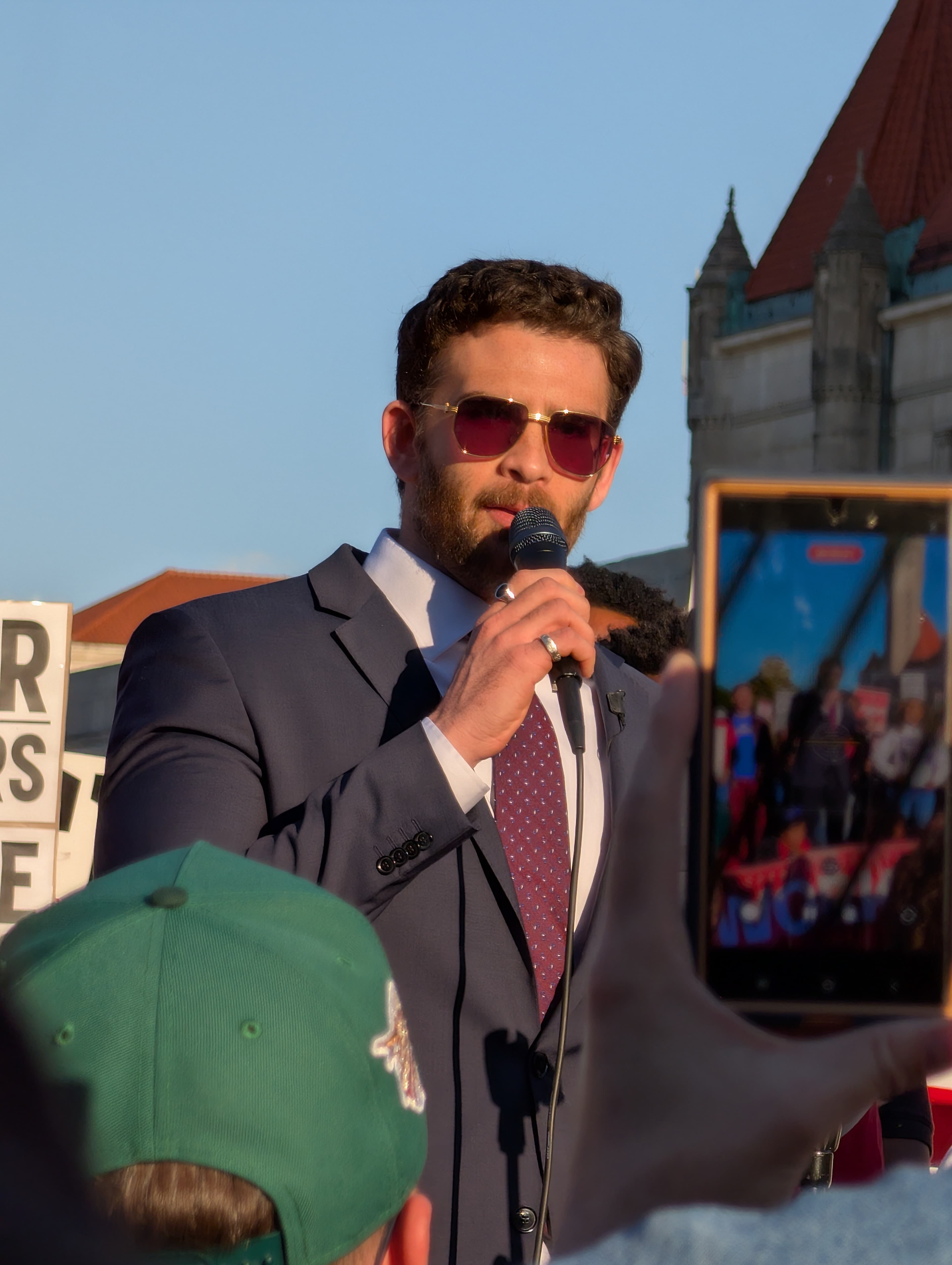 Hasan PikerDirectly involved
Timeline
3 timeline entries on this page. Dates: September 11, 2026 to September 19, 2026
September 2026
3 events
The Front Line Action uploads “Family Values”
Source release
The group’s YouTube account uploaded the 30-second advertisement opposing Abdul El-Sayed. It uses AI-generated depictions and concludes with an AI-use disclosure.
[01]The Front Line Action, “Family Values” ad
Source excerpt
His family values are wrong for Michigan.
Official unlisted YouTube upload by The Front Line Action, dated September 11, 2026. The ad opposes Abdul El-Sayed, uses AI-generated imagery and family/associate references, and closes with an AI-use disclosure. It documents the sponsor’s rhetoric and presentation; it does not independently verify the claims it makes about the people depicted.
The Front Line Action, “Family Values” ad · The Front Line ActionFull 30-second video; narration at 00:00–00:29, cards and AI disclosure on screen.The Lever reports on the ad and the sponsor’s email
Source release
The Lever described the ad and reported that The Front Line leader Arielle Klepach, asked whether it exploited anti-Muslim sentiment, asked which imagery was Islamophobic. The publication said she did not answer further inquiries; it did not date the email separately.
[02]Cruz-Linked PAC Targets El-Sayed In “Death To America” Ad
Source excerpt
Before we comment, please specify which imagery in the advertisement is Islamophobic?
Original reporting on the ad, its sponsor and reported ad spending. The Lever reproduces an email from The Front Line leader Arielle Klepach challenging the description of imagery as Islamophobic and says she did not answer follow-up inquiries. The report says El-Sayed’s campaign did not immediately return its request for comment; this is not an ad-specific public position by the campaign.
Cruz-Linked PAC Targets El-Sayed In “Death To America” Ad · The LeverOpening paragraphs and paragraphs beginning “When The Lever contacted The Front Line” (published September 14, 2026).[01]The Front Line Action, “Family Values” ad
Source excerpt
His family values are wrong for Michigan.
Official unlisted YouTube upload by The Front Line Action, dated September 11, 2026. The ad opposes Abdul El-Sayed, uses AI-generated imagery and family/associate references, and closes with an AI-use disclosure. It documents the sponsor’s rhetoric and presentation; it does not independently verify the claims it makes about the people depicted.
The Front Line Action, “Family Values” ad · The Front Line ActionFull 30-second video; narration at 00:00–00:29, cards and AI disclosure on screen.The Washington Post reports a scholar’s criticism
Source release
The Washington Post described this ad and quoted political scientist Nazita Lajevardi criticizing its terrorism-related framing of El-Sayed.
[03]How anti-Muslim rhetoric is influencing the pivotal Michigan Senate race
Source excerpt
That ad “goes beyond dog whistle politics,”
Washington Post reporting describes this specific ad’s AI-generated imagery and quotes political scientist Nazita Lajevardi’s criticism of its terrorism-related framing. The article also contains broader comments by El-Sayed and a Rogers spokesperson about campaign rhetoric; those are not direct responses from either to this particular ad.
How anti-Muslim rhetoric is influencing the pivotal Michigan Senate race · The Washington PostSection “Focus on Hasan Piker,” paragraphs describing The Front Line Action ad and quoting Nazita Lajevardi (September 19, 2026).[01]The Front Line Action, “Family Values” ad
Source excerpt
His family values are wrong for Michigan.
Official unlisted YouTube upload by The Front Line Action, dated September 11, 2026. The ad opposes Abdul El-Sayed, uses AI-generated imagery and family/associate references, and closes with an AI-use disclosure. It documents the sponsor’s rhetoric and presentation; it does not independently verify the claims it makes about the people depicted.
The Front Line Action, “Family Values” ad · The Front Line ActionFull 30-second video; narration at 00:00–00:29, cards and AI disclosure on screen.
Claims
Claims separate what was said from what is contested. Follow each source for the original wording and context.
What's disputed
Disputed claim
The Front Line Action’s “Family Values” ad uses terrorism-related imagery and language that plays on anti-Muslim stereotypes about Abdul El-Sayed.
Sources (1)
- How anti-Muslim rhetoric is influencing the pivotal Michigan Senate race · The Washington PostSection “Focus on Hasan Piker,” paragraphs describing The Front Line Action ad and quoting Nazita Lajevardi (September 19, 2026).
Disputed claim
Abdul El-Sayed’s father-in-law founded a charity tied to the Muslim Brotherhood.
The Front Line Action
Sources (1)
- The Front Line Action, “Family Values” ad · The Front Line ActionFull 30-second video; narration at 00:00–00:29, cards and AI disclosure on screen.
Disputed claim
Destroying Israel and the West is a shared mission of Abdul El-Sayed and the relatives and associates depicted in The Front Line Action’s ad.
The Front Line Action
Sources (1)
- The Front Line Action, “Family Values” ad · The Front Line ActionFull 30-second video; narration at 00:00–00:29, cards and AI disclosure on screen.
Sources
(3)
Original video
The Front Line Action, “Family Values” ad
Relevant passage: Full 30-second video; narration at 00:00–00:29, cards and AI disclosure on screen.
Excerpt
"His family values are wrong for Michigan."
About this source
Official unlisted YouTube upload by The Front Line Action, dated September 11, 2026. The ad opposes Abdul El-Sayed, uses AI-generated imagery and family/associate references, and closes with an AI-use disclosure. It documents the sponsor’s rhetoric and presentation; it does not independently verify the claims it makes about the people depicted.
- Published
- Accessed
Reporting
Cruz-Linked PAC Targets El-Sayed In “Death To America” Ad
Relevant passage: Opening paragraphs and paragraphs beginning “When The Lever contacted The Front Line” (published September 14, 2026).
Excerpt
"Before we comment, please specify which imagery in the advertisement is Islamophobic?"
About this source
Original reporting on the ad, its sponsor and reported ad spending. The Lever reproduces an email from The Front Line leader Arielle Klepach challenging the description of imagery as Islamophobic and says she did not answer follow-up inquiries. The report says El-Sayed’s campaign did not immediately return its request for comment; this is not an ad-specific public position by the campaign.
- Author
- Katya Schwenk
- Published
- Accessed
Reporting
How anti-Muslim rhetoric is influencing the pivotal Michigan Senate race
Relevant passage: Section “Focus on Hasan Piker,” paragraphs describing The Front Line Action ad and quoting Nazita Lajevardi (September 19, 2026).
Excerpt
"That ad “goes beyond dog whistle politics,”"
About this source
Washington Post reporting describes this specific ad’s AI-generated imagery and quotes political scientist Nazita Lajevardi’s criticism of its terrorism-related framing. The article also contains broader comments by El-Sayed and a Rogers spokesperson about campaign rhetoric; those are not direct responses from either to this particular ad.
- Author
- Laura Beveridge
- Published
- Accessed
Optional assessment
The claim
The Front Line Action’s “Family Values” ad uses terrorism-related imagery and language that plays on anti-Muslim stereotypes about Abdul El-Sayed.
Review the excerpt
His family values are wrong for Michigan.
Location in the source: Full 30-second video; narration at 00:00–00:29, cards and AI disclosure on screen.
Read the source entry