
Did The Front Line Action's “Family Values” ad use Islamophobic stereotypes against Abdul El-Sayed?
The Front Line Action's AI-generated ad opposing Abdul El-Sayed drew criticism from a political scientist who says its terrorism-related framing evokes anti-Muslim stereotypes. The sponsor's leader asked which imagery was Islamophobic.
BackgroundHow are AI deepfakes and AI-generated content regulated?What does a U.S. terrorist designation do?
Case period:
Published by The Dispute Index editorial teamPublished Updated
Where it stands
ActiveAs of
Established
- The Front Line Action uploaded its 30-second "Family Values" ad opposing Abdul El-Sayed in Michigan's U.S. Senate race on September 11, 2026. It ends with a disclosure that it was made in whole or in part with AI.The Front Line Action, “Family Values” ad (opens in a new tab)Cruz-Linked PAC Targets El-Sayed In “Death To America” Ad (opens in a new tab)
- The ad's AI-generated scenes show El-Sayed with messages reading "Death to America" and "Celebrate 9/11" and dancing with relatives and commentator Hasan Piker.Cruz-Linked PAC Targets El-Sayed In “Death To America” Ad (opens in a new tab)AI blurs lines in campaign ads: 'People are seeing things that didn't happen' (opens in a new tab)
- The ad says destroying Israel and the West "isn't just a game for them" and that El-Sayed's father-in-law founded a charity tied to the Muslim Brotherhood.The Front Line Action, “Family Values” ad (opens in a new tab)AI ad blitz distorts US midterms (opens in a new tab)AI blurs lines in campaign ads: 'People are seeing things that didn't happen' (opens in a new tab)
- The Front Line Action's September 14 filing with the Federal Election Commission reports $92,187.50 spent opposing El-Sayed, distributed September 12, the day Detroit News reporter Craig Mauger reported the ad airing on television in Detroit.The Front Line Action’s September 14 FEC independent-expenditure notice (opens in a new tab)Craig Mauger (@CraigDMauger) on X: “A group connected to Texas U.S. Sen. Ted Cruz is now getting involved in TV advertising in Michigan's U.S. Senate race” (opens in a new tab)
Disputed
- Political scientist Nazita Lajevardi told The Washington Post the ad "goes beyond dog whistle politics"; asked by The Lever whether it exploited anti-Muslim sentiment, Front Line leader Arielle Klepach asked which imagery in it "is Islamophobic."How anti-Muslim rhetoric is influencing the pivotal Michigan Senate race (opens in a new tab)Cruz-Linked PAC Targets El-Sayed In “Death To America” Ad (opens in a new tab)See the claim
- El-Sayed campaign spokesman Cole Wozniak said Republicans are resorting to AI ads "filled with falsehoods and bad faith attacks"; a Front Line Action spokesperson said the ad is grounded in El-Sayed's own public statements and in reporting and records about him and people around his campaign.AI blurs lines in campaign ads: 'People are seeing things that didn't happen' (opens in a new tab)
- A Front Line Action spokesperson told CNN the ad complies with Michigan's AI disclosure law; CNN reported that it appears to skirt a second state law, which requires a disclosure throughout a video that falsely represents a depicted person.AI blurs lines in campaign ads: 'People are seeing things that didn't happen' (opens in a new tab)
Not yet known
- Which charity the ad refers to when it says El-Sayed's father-in-law founded one tied to the Muslim Brotherhood.
- Which of El-Sayed's statements and which records The Front Line Action says support the ad's portrayal of him.
- Whether Michigan election officials will review the ad's disclosure under state law.
Overview
On September 11, 2026, The Front Line Action uploaded a 30-second ad opposing Abdul El-Sayed in Michigan's U.S. Senate race. The ExplainerdeepfakeA deepfake is AI-generated or altered audio, video or imagery that makes real people appear to say or do things they did not. No single U.S. law covers them. Many states regulate political deepfakes, federal rules reach AI robocalls and intimate images, and platforms set their own labels.How are AI deepfakes and AI-generated content regulated? video depicts El-Sayed with his half-sister and commentator Hasan Piker, uses anti-American and 9/11-related messages, and alleges troubling views or connections among people close to him. Political scientist Nazita Lajevardi told The Washington Post that the ad's framing drew on a narrative portraying Muslims as a security threat. Asked by The Lever whether the ad exploited anti-Muslim sentiment, Front Line leader Arielle Klepach asked which imagery was Islamophobic; the outlet reported no further response. The case covers the ad's portrayal of El-Sayed. It makes no finding that he endorses the views the ad attributes to others.
Background: Terms in this case
Read the full background
The Front Line Action's 30-second "Family Values" ad (opens in a new tab), uploaded September 11, 2026, depicts Abdul El-Sayed, his half-sister Eman Abdelhadi and commentator Hasan Piker using AI-generated imagery. It alleges that destroying Israel and the West is their mission, portrays Abdelhadi as hating America, invokes Piker's 2019 remarks and accuses El-Sayed's father-in-law of founding a charity with Muslim Brotherhood ties. The ad discloses AI use. Its "Death to America" and "Celebrate 9/11" cards are part of that generated presentation, not authenticated statements by El-Sayed or his relatives.
Political scientist Nazita Lajevardi told The Washington Post (opens in a new tab) that the ad "goes beyond dog whistle politics." Asked whether the ad exploited anti-Muslim sentiment, Front Line leader Arielle Klepach requested clarification about which imagery was Islamophobic; The Lever reported no further reply on September 14 (opens in a new tab). In CNN's October 2 report (opens in a new tab), El-Sayed campaign spokesman Cole Wozniak said Republicans "are so desperate that they are resorting to cheap AI generated ads filled with falsehoods and bad faith attacks." A Front Line Action spokesperson, unnamed by CNN, defended the ad: "The substance of the ad is grounded in El-Sayed's own public statements and documented reporting and records concerning him and individuals associated with or supportive of his campaign."
What Abdelhadi's posts say
Abdelhadi's July 2016 post (opens in a new tab), tagged #July4th, says "Excuse me if I don't celebrate the transfer of stolen land from one colonizer to another." The ad's card reads "Do Not Celebrate Independence Day." Her November 2022 post (opens in a new tab) says she was anxious that her niece had been given "settler colonial propaganda" at school, and that when she asked what the class learned about Thanksgiving, the answer was "turkeys." It does not say "Do not celebrate Thanksgiving," as the ad's card implies. Her November 2024 post (opens in a new tab) says "If it weren't attached to genocide, thanksgiving would be a lovely holiday" and describes "People gathering to declare gratitude and eat a meal." These are her statements, not El-Sayed's.
The unnamed charity
The charity is unnamed. A July 14 Washington Free Beacon report (opens in a new tab) identifies El-Sayed's father-in-law, Tayeb Jukaku, as a member of the ISNA Founders Committee and a former CAIR-Michigan president. ISNA describes that committee (opens in a new tab) as a fundraising and advisory body, with an annual-donation requirement, established after the organization's formation (opens in a new tab). Its biography lists Jukaku as a committee member and chairman of the Huda Free Clinic, and does not call him the founder of either. CAIR-Michigan lists him on its board (opens in a new tab) as "Jukaku Tayeb." These sources do not establish the ad's founding claim.
The Free Beacon notes that federal prosecutors named ISNA as an unindicted co-conspirator in the 2007 Holy Land Foundation trial. The Fifth Circuit's 2010 opinion (opens in a new tab) in that case concerns a different organization, the North American Islamic Trust (NAIT), and does not address Jukaku or El-Sayed. The court described NAIT's inclusion in the government's list of unindicted co-conspirators as an untested allegation, noted that no relevant evidentiary determination had been made for NAIT, and said the district court's broad association language exceeded the question before it. That list and Jukaku's organizational roles do not establish a Muslim Brotherhood tie for El-Sayed.
Piker's remark and explanation
In a Young Turks interview (opens in a new tab) posted August 23, 2019, Piker was asked whether he meant that America deserved 9/11. He answered "No, obviously not," said he was referring to the consequences of U.S. foreign policy in the Middle East, called the attacks "a horrific event" and said "I know that I was inappropriate."
This ad attributes the remark to Piker and attacks El-Sayed through their association. Mike Rogers's earlier assertion that El-Sayed believed America deserved the attacks is tracked in a separate case, and Rogers's campaign has cited El-Sayed's association with Piker. El-Sayed condemned the attacks in a September 11 statement (opens in a new tab): "Nothing can justify the murder of innocent civilians."
Dates, spending and earlier campaign comments
The FEC notice filed September 14 (opens in a new tab) reports $80,000 for media and $12,187.50 for production opposing El-Sayed, totaling $92,187.50. It lists September 11 as the disbursement or obligation date and September 12 as the dissemination date. These are committee-reported expenditures, not measured audience or effects.
A New York Post report of August 14 (opens in a new tab), syndicated by AOL, quotes El-Sayed campaign spokesperson Sophie Pollock: "Abdul loves his sister and also disagrees with her on a number of political positions and the rhetoric she's chosen to use, including on foreign policy." That statement predates this ad. The Lever's September 14 report said the campaign had not immediately responded to its request for comment on the ad.
People in this case
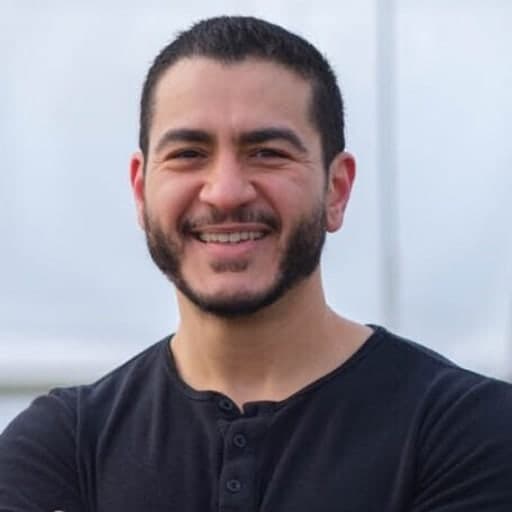 Abdul El-SayedDirectly involved
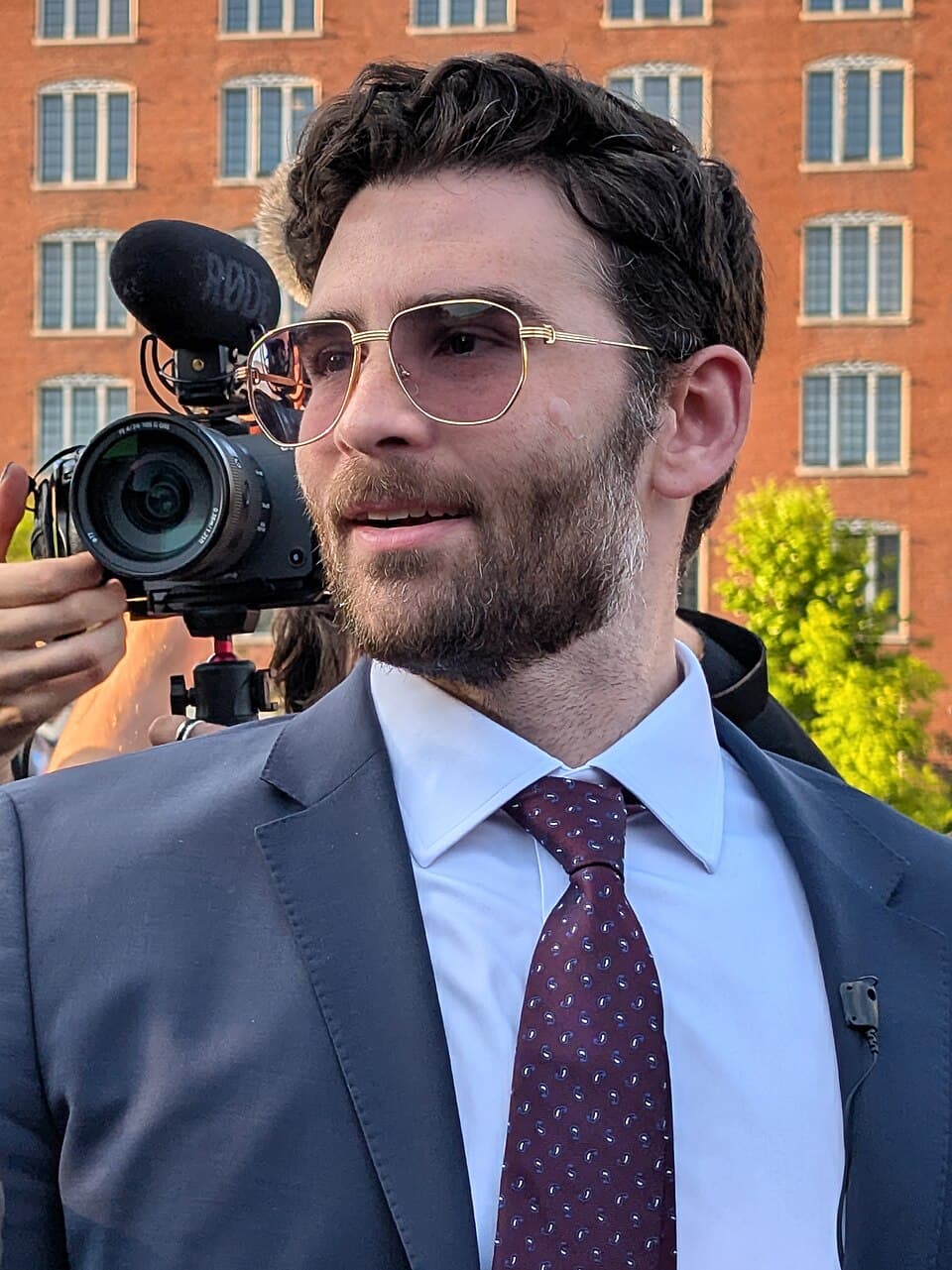 Hasan PikerDirectly involved
Timeline
6 timeline entries on this page. Dates: September 11, 2026 to October 2, 2026
September 2026
The Front Line Action uploads “Family Values”
Source release
The group’s YouTube account uploaded the 30-second advertisement opposing Abdul El-Sayed. It uses AI-generated depictions and concludes with an AI-use disclosure.
The ad airs on television in Detroit
Source release
Craig Mauger of The Detroit News reported on X that a group connected to Sen. Ted Cruz was getting involved in television advertising in Michigan’s U.S. Senate race, airing an AI-generated spot in Detroit that day. The Front Line Action’s later FEC report lists September 12 as the date the ad was publicly distributed.
The Lever reports on the ad and the sponsor’s email
Source release
The Lever described the ad and reported that The Front Line leader Arielle Klepach, asked whether it exploited anti-Muslim sentiment, asked which imagery was Islamophobic. The publication said she did not answer further inquiries; it did not date the email separately.
FEC report lists $92,187.50 in expenditures opposing El-Sayed
Source release
The Front Line Action filed a 48-hour independent-expenditure report with the Federal Election Commission, signed September 14, listing two expenditures opposing Abdul El-Sayed with a public distribution date of September 12: $80,000 for media and $12,187.50 for media production, or $92,187.50 in total.
The Washington Post reports a scholar’s criticism
Source release
The Washington Post described this ad and quoted political scientist Nazita Lajevardi criticizing its terrorism-related framing of El-Sayed.
October 2026
CNN publishes campaign and sponsor responses to the AI ad
Source release
CNN published Wozniak's criticism of falsehoods in the ad and the sponsor's defense of its basis in public statements and records. The article also described a dispute over Michigan disclosure rules. The statement delivery dates were not reported.
Claims
Claims separate what was said from what is contested. Follow each source for the original wording and context.
What's disputed
Disputed claim
Copy link to this disputed claim by Nazita LajevardiThe Front Line Action’s “Family Values” ad uses terrorism-related imagery and language that plays on anti-Muslim stereotypes about Abdul El-Sayed.
Sources (1)
- How anti-Muslim rhetoric is influencing the pivotal Michigan Senate race · The Washington PostSection “Focus on Hasan Piker,” paragraphs describing The Front Line Action ad and quoting Nazita Lajevardi (September 19, 2026).
The Front Line Action
Abdul El-Sayed’s father-in-law founded a charity tied to the Muslim Brotherhood.
Sources (1)
- The Front Line Action, “Family Values” ad · The Front Line ActionFull 30-second video; narration at 00:00–00:29, cards and AI disclosure on screen.
The Front Line Action
Destroying Israel and the West is a shared mission of Abdul El-Sayed and the relatives and associates depicted in The Front Line Action’s ad.
Sources (1)
- The Front Line Action, “Family Values” ad · The Front Line ActionFull 30-second video; narration at 00:00–00:29, cards and AI disclosure on screen.
In their own words
Their own account
Statements from the person or group whose act or claim this case is about. They are listed apart from the responses, and each label says what the speaker did with their own act or claim.
The Front Line ActionSponsor of the Family Values political ad "The substance of the ad is grounded in El-Sayed’s own public statements"
Stood by itCase context: Did The Front Line Action's “Family Values” ad use Islamophobic stereotypes against Abdul El-Sayed?
Full statement and sources
An unnamed Front Line Action spokesperson defended the ad as grounded in El-Sayed's public statements, documented reporting and records concerning him, campaign associates and campaign supporters.
Before the statement
CNN reported that El-Sayed's campaign had sharply criticized the AI-made ad. CNN published the sponsor's response on October 2; the article did not give the statement's delivery date.
After the statement
The sponsor also argued that its disclosure complied with the applicable Michigan provision. CNN reported a disagreement over which law applied, without a ruling.
AI blurs lines in campaign ads: 'People are seeing things that didn't happen' · CNNMichigan ad discussion: Cole Wozniak statement; later Front Line Action spokesperson statement and disclosure-law dispute.Why this label?
A Front Line Action spokesperson says the ad's substance rests on El-Sayed's own public statements, news reporting and records about him and his campaign circle, and concedes nothing about how it portrayed him, so we labeled it Stood by it.
This label describes the statement's response within the context above.
The Front Line ActionLeader of The Front Line, whose independent-expenditure arm sponsored the ad, replying by email to The Lever "Before we comment, please specify which imagery in the advertisement is Islamophobic?"
Checked word for word against a linked source on .
Challenged the characterizationResponding to: The Front Line Action’s “Family Values” ad uses terrorism-related imagery and language that plays on anti-Muslim stereotypes about Abdul El-Sayed.
Full statement and sources
When The Lever asked whether The Front Line believed its advertisement opposing Abdul El-Sayed exploited anti-Muslim sentiment, group leader Arielle Klepach replied by email, "Before we comment, please specify which imagery in the advertisement is Islamophobic?"
Before the statement
The Lever's September 14 report described the ad's AI-generated depiction of El-Sayed with his relatives and Hasan Piker, and said El-Sayed's campaign had not immediately responded to a request for comment on the ad.
After the statement
The Lever reported that Klepach did not respond to its additional inquiries.
Cruz-Linked PAC Targets El-Sayed In “Death To America” Ad · The LeverOpening paragraphs and paragraphs beginning “When The Lever contacted The Front Line” (published September 14, 2026).Why this label?
Asked whether its ad played on anti-Muslim sentiment, the group asks which imagery is Islamophobic, disputing the description without defending or conceding the ad, so we labeled it Challenged the characterization.
This label describes the statement's response within the context above.
Response record
Responses
Choose one response filter, or select All responses to see the full record.
No responses match these filters.
Clear response filtersSources
(11)
Original video
The Front Line Action, “Family Values” ad
Excerpt
"His family values are wrong for Michigan."
About this source
The sponsor's September 11, 2026 upload. The 30-second ad uses AI-generated imagery and ends with an AI-use disclosure.
- Published
- Accessed
Reporting
AI ad blitz distorts US midterms
Relevant passage: Opening section on the ad against Abdul El-Sayed
About this source
Agence France-Presse report, published by France 24, on AI-generated political ads in the 2026 midterms. It describes The Front Line Action's ad against Abdul El-Sayed, including its board-game scene and a fabricated family photo, and gives Wesleyan Media Project figures on AI ad spending and disclosure.
- Author
- AFP
- Published
- Accessed
Analysis
Republicans Went Hunting for Monsters. Voters Found Them
Relevant passage: Passage on the Michigan Senate race
About this source
Carlyn Beccia's post in her Substack newsletter The Grim Historian, published the day after the 2026 midterm elections. It reviews Republican attack ads in several races, describes The Front Line Action's AI ad against Abdul El-Sayed, and recalls George W. Bush's visit to a Washington mosque after the September 11 attacks.
- Author
- Carlyn Beccia
- Published
- Accessed
Analysis
Everywhere You Find a Scummy GOP Ad, You Find a Republican in Trouble
Relevant passage: Paragraph on the Michigan Senate race
About this source
Jacob Weindling's Jezebel column arguing that offensive Republican ads late in the 2026 campaign signaled candidates in trouble. It discusses races in Ohio, Michigan, Kansas, New York and Georgia, including The Front Line Action's AI ad against Abdul El-Sayed.
- Author
- Jacob Weindling
- Published
- Accessed
Analysis
AI Deepfake Ads Are Flooding the Campaign Airwaves. Is This a Problem?
Relevant passage: Passage on the ads against Abdul El-Sayed, and the closing paragraph
About this source
Rick Moran's PJ Media column on AI-generated campaign ads in the 2026 midterms. It covers ads in the Georgia, Michigan, New York, Pennsylvania and Texas races, quotes The Front Line Action's statement to CNN about its ad against Abdul El-Sayed, and ends with Moran's view that a deepfake labeled as AI is acceptable.
- Author
- Rick Moran
- Published
- Accessed
Reporting
AI blurs lines in campaign ads: 'People are seeing things that didn't happen'
Relevant passage: Michigan ad discussion: Cole Wozniak statement; later Front Line Action spokesperson statement and disclosure-law dispute.
About this source
CNN quotes the El-Sayed campaign and the ad's sponsor. These responses were published October 2; their delivery dates are unspecified. The sponsor's defense does not independently establish the accuracy of the ad's portrayal.
- Author
- Casey Tolan, Fredreka Schouten, David Wright, Rhyannon Bartlett-Imadegawa and Sarah Hashemi
- Published
- Accessed
Original post
Craig Mauger (@CraigDMauger) on X: “A group connected to Texas U.S. Sen. Ted Cruz is now getting involved in TV advertising in Michigan's U.S. Senate race”
Excerpt
"A group connected to Texas U.S. Sen. Ted Cruz is now getting involved in TV advertising in Michigan's U.S. Senate race, airing this AI-generated spot today in Detroit"
About this source
Post by Craig Mauger, who covers state government and politics in Michigan for The Detroit News, reporting that the spot was airing in Detroit that day and linking the video.
- Author
- Craig Mauger
- Published
- Accessed
Original text
Fifth Circuit opinion on the Holy Land Foundation unindicted-co-conspirator list
Relevant passage: Pages 2-3 and 9-11, discussion of Attachment A and absence of an evidentiary determination
About this source
The opinion says the list was an untested government allegation made for a possible evidentiary dispute that did not arise. It also says the public naming violated NAIT's Fifth Amendment rights and cautions that a district court's broad association language went beyond the question before it. ISNA joined the underlying motion but was not a party to this appeal. No finding in this opinion concerns Tayeb or El-Sayed.
- Author
- U.S. Court of Appeals for the Fifth Circuit
- Published
- Accessed
Original text
The Front Line Action’s September 14 FEC independent-expenditure notice
Relevant passage: Schedule E, image 202609149904199842, two itemized entries
About this source
Committee filing dated September 14, 2026: $80,000 for media and $12,187.50 for production. It distinguishes September 11 disbursement or obligation dates from September 12 dissemination.
- Published
- Accessed
Reporting
Cruz-Linked PAC Targets El-Sayed In “Death To America” Ad
Relevant passage: Opening paragraphs and paragraphs beginning “When The Lever contacted The Front Line” (published September 14, 2026).
Excerpt
"Before we comment, please specify which imagery in the advertisement is Islamophobic?"
About this source
Original September 14, 2026 reporting on the ad, with Klepach's emailed request for clarification.
- Author
- Katya Schwenk
- Published
- Accessed
Reporting
How anti-Muslim rhetoric is influencing the pivotal Michigan Senate race
Relevant passage: Section “Focus on Hasan Piker,” paragraphs describing The Front Line Action ad and quoting Nazita Lajevardi (September 19, 2026).
Excerpt
"That ad “goes beyond dog whistle politics,”"
About this source
Quotes Lajevardi's criticism. Other campaign comments concern broader rhetoric.
- Author
- Laura Beveridge
- Published
- Accessed
Corrections
(1)
Corrections address errors in our reporting or labels. When a speaker changes their position, we add a separate statement and link it to the earlier one.
Reporting correction
Correction to: Did The Front Line Action's “Family Values” ad use Islamophobic stereotypes against Abdul El-Sayed?
- Previous language
- The FEC independent-expenditure notice reports two September 12 expenditures opposing El-Sayed: $80,000 for media and $12,187.50 for production, $92,187.50 total. These are committee-reported expenditures associated with the communication, not a measured audience or proof of the ad’s effect. The cited Holy Land Foundation litigation also requires care: the Fifth Circuit described the government's unindicted-co-conspirator list as an untested allegation in NAIT's appeal, noted no relevant evidentiary determination had been made, and said broad association language in the district court order went beyond the question before it. The appellate opinion does not address Tayeb or El-Sayed.
- Corrected language
- The FEC notice filed September 14 reports $80,000 for media and $12,187.50 for production opposing El-Sayed, totaling $92,187.50. It lists September 11 as the disbursement or obligation date and September 12 as the dissemination date. These are committee-reported expenditures, not measured audience or effects. The Free Beacon notes that federal prosecutors named ISNA as an unindicted co-conspirator in the 2007 Holy Land Foundation trial. The Fifth Circuit's 2010 opinion in that case concerns a different organization, the North American Islamic Trust (NAIT), and does not address Jukaku or El-Sayed. The court described NAIT's inclusion in the government's list of unindicted co-conspirators as an untested allegation, noted that no relevant evidentiary determination had been made for NAIT, and said the district court's broad association language exceeded the question before it. That list and Jukaku's organizational roles do not establish a Muslim Brotherhood tie for El-Sayed.
The FEC filing distinguishes September 11 disbursement or obligation dates from September 12 public dissemination; the amounts and total are unchanged. The court description has also been narrowed to NAIT's inclusion in the government's list. The Fifth Circuit called that inclusion an untested allegation, rather than making that finding about the entire list. The paragraph now states that the opinion concerns NAIT rather than ISNA, and gives the father-in-law's name as Tayeb Jukaku.
This corrects our account of what happened.
Committee filing dated September 14, 2026: $80,000 for media and $12,187.50 for production. It distinguishes September 11 disbursement or obligation dates from September 12 dissemination.
Archived copy (opens in a new tab)The opinion says the list was an untested government allegation made for a possible evidentiary dispute that did not arise. It also says the public naming violated NAIT's Fifth Amendment rights and cautions that a district court's broad association language went beyond the question before it. ISNA joined the underlying motion but was not a party to this appeal. No finding in this opinion concerns Tayeb or El-Sayed.
Archived copy (opens in a new tab)Optional assessment
The claim
The Front Line Action’s “Family Values” ad uses terrorism-related imagery and language that plays on anti-Muslim stereotypes about Abdul El-Sayed.
Review the excerpt
His family values are wrong for Michigan.
Location in the source: Full 30-second video; narration at 00:00–00:29, cards and AI disclosure on screen.
Read the source entryShare or embed this case
The embed keeps its attribution link to The Dispute Index. Credit the image to The Dispute Index and link to the case page.
Cite this record
- Publisher
- The Dispute Index
- Title
- Did The Front Line Action's “Family Values” ad use Islamophobic stereotypes against Abdul El-Sayed?
- First published
- Last updated
- Permalink
- https://disputeindex.com/cases/front-line-action-family-values-ad-islamophobic-stereotypes-abdul-el-sayed
The Dispute Index. "Did The Front Line Action's “Family Values” ad use Islamophobic stereotypes against Abdul El-Sayed?". First published: 2026-09-21. Last updated: 2026-11-21. https://disputeindex.com/cases/front-line-action-family-values-ad-islamophobic-stereotypes-abdul-el-sayed