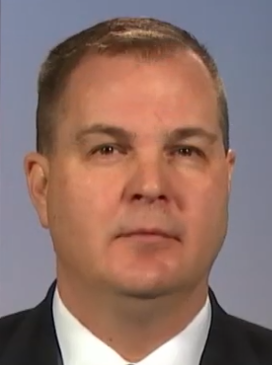
Josh Turek's Senate ad says he opposes 'males competing in female sports' and 'taxpayers paying for sex changes.' One Iowa Action condemns the ad and what it calls a policy shift. Hinson says Turek is misrepresenting his record; Turek defends his position.
Role at the time: Democratic U.S. Senate nominee, speaking to reporters after a Fort Dodge campaign event
Defended or excused
Statement summary
Turek says angering people on both sides of the aisle probably means he is in the right place.
“Honestly, I think if you got some folks angry with you on both sides of the aisle, you're probably in the right place”
Open source (opens in a new tab)Turek under fire from both sides for ad opposing transgender women playing in women's sportsOctober 29, 12:19 p.m. CDT entry: Turek under fire from both sides
What this label refers to
Relative to the ad's policy positions under scrutiny, Turek answers the bipartisan criticism by saying that angering people on both sides suggests he is in the right place.
Role at the time: Republican U.S. representative and Senate nominee, at a Coralville rally
Challenged the characterization
Statement summary
Hinson says Turek is trying to act like a Republican and run away from his liberal record.
“He is trying to act like a Republican to win this election here in Iowa, and he has to run away from his liberal record”
Open source (opens in a new tab)Josh Turek ad on transgender issues draws bipartisan criticismAd text, organizational statement and Hinson's Coralville remarks
What this label refers to
Relative to the ad, Hinson disputes its presentation of Turek's record, rather than rejecting the restrictions it advocates.
Role at the time: Civic organization, letter by Janet Lenart and Phillippa Kassover
Condemned
Statement summary
League representatives sign a letter urging a no vote on three initiatives, including I-638. Their I-638 argument is that requiring doctors to certify girl athletes' sex, without a similar requirement for boy athletes, violates privacy and equal protection.
“IL26-638 is likely unconstitutional because it violates Washingtonians' rights to privacy and equal protection by requiring doctors to certify a girl's sex while it has no similar requirements for boy athletes.”
Flores-Rodarte calls the sex verification the measure requires extremely invasive and unnecessary, and says it is discriminatory because it applies only to girls. He warns that families who cannot afford hormone or genetic testing could face genital exams.
“extremely invasive and unnecessary”
Open source (opens in a new tab)Washington candidates and clinicians discuss I-638Original interviews and reported October 16 Braun appearance
What this label refers to
The statement criticizes the proposed sports-eligibility requirement.
Role at the time: State professional association of family physicians
Condemned
Statement summary
The campaign release reports that the Washington Academy of Family Physicians adopted opposition to I-638. The position recorded here is the academy's documented decision.
“Action: Adopted opposition to Initiative IL26-638.”
Role at the time: State senator and congressional candidate
Defended or excused
Statement summary
OPB reports that Braun urges support for I-638. Speaking on Fox News on October 16, he describes the sports issue as one of common sense, fairness and safety and says it is simple biology.
“It's a common sense issue, it's a fairness issue, it's a safety issue”
Open source (opens in a new tab)Washington candidates and clinicians discuss I-638Original interviews and reported October 16 Braun appearance
What this label refers to
The reference point is I-638's sex-verification requirement for girls' sports. Braun backs the measure and describes the issue it addresses as one of fairness and safety.
Role at the time: Labor union, statement by president Faye Guenther
Condemned
Statement summary
UFCW 3000 says its executive board voted unanimously to oppose I-638 and I-001. It cites medical testing, costs to families and access to school sports.
“Nobody should have to submit their daughter to an invasive exam just to join them.”
Role at the time: Western University psychology researcher, co-author with Jamie Hong Chow and Noah Eliot Vanderhoeven
Condemned
Statement summary
The authors say the ad captures two troubling trends: routine sexualization of women's bodies in digital media and gambling companies' use of sexual appeal to target young men.
“The ad captures two troubling trends: how routinely women’s bodies are sexualized in digital media and how gambling companies use sexual appeal, and the implied promise of romantic or sexual reward, to target young men.”
Open source (opens in a new tab)Advertising like Sydney Sweeney's Novig campaign teach women to see themselves as objectsOpening argument and discussion of objectification
What this label refers to
The matter under scrutiny is Novig's sexualized sports campaign. The co-authors criticize its use of women's bodies and its appeal to young men.
Role at the time: Family physician and co-author of the signed opinion
Condemned
Statement summary
Loft and Manriquez argue that I-638 would require invasive or expensive verification and discourage girls' participation. They urge a no vote.
“a medically unnecessary invasive genital exam or costly genetic testing”
Open source (opens in a new tab)Libby Loft and Luis Manriquez oppose I-638's verification requirementOpening paragraphs and discussion of medical examinations
What this label refers to
The reference is the initiative's verification requirement. The physicians expressly reject it as medically unnecessary and harmful.
Role at the time: Novig co-founder, speaking in a CNBC interview
Defended or excused
Statement summary
Fortinsky says Novig has no reason to apologize and remains proud of the ad. He says its purpose was to explain the platform rather than represent women athletes.
“Ultimately, I think we have nothing to apologize for and are very proud of the work that we did,”
Open the original interview (opens in a new tab)Novig credits Sydney Sweeney campaign for growthOctober 3 article, Backlash against Just Sports ad section and Fortinsky's before-and-after platform figures.
What this label refers to
He explicitly defends the disputed advertising campaign against the criticism that it harmed women's sport.
Role at the time: Sports columnist, writing for OutKick
Defended or excused
Statement summary
Calkins says the ad used sex appeal to reach a mostly male market and rejects its description as a kick in the face to female athletes.
“It was an ad that used sex appeal to catch the eye of a mostly-male market — not a "kick in the face" to female athletes, as four-time Olympic swimming gold medalist Ariarne Titmus suggested.”
Open source (opens in a new tab)Matt Calkins defends Sydney Sweeney's Novig sports adArgument distinguishing sex appeal from an attack on female athletes
What this label refers to
The matter under scrutiny is Novig's sexualized sports campaign. Calkins defends that approach and rejects the claim that it insults female athletes.
Role at the time: MS NOW television host and political commentator
Condemned
Statement summary
Jen Psaki said the message of Novig’s Sydney Sweeney ad was the problem and said it reinforced what she described as misogynistic sexualization of women’s sports.
“But the problem is the message an ad like this sends about women in sports.”
Watch the original video (opens in a new tab)Jen Psaki comments on Novig’s Sydney Sweeney sports adMS NOW video, 13:58–14:41. The video was uploaded September 17, 2026, to MS NOW’s official YouTube channel.
What this label refers to
Case 39 concerns the criticism that the ad sexualizes women’s sport. Psaki explicitly calls the ad’s message a problem and says it reinforces misogynistic sexualization of women’s sports. That is a substantive criticism of the ad rather than a challenge to its characterization.
Role at the time: WNBA player for the Indiana Fever, speaking on her podcast “No Hesitation”
Mixed or conditional
Statement summary
WNBA player Sophie Cunningham said on her podcast that she did not understand why the advertisement had angered women, that its combination of men, sports and nudity was obviously going to draw attention, and that Sweeney should carry on. She also said she did not really like the ad, called Sweeney’s involvement inauthentic and found it “morally… a little weird,” and said the ad was not directed at women’s sports.
“Why are girls mad? That is literally what she does… Men, sports, naked women. Of course that’s gonna draw attention… Go do your thing sis”
Open source (opens in a new tab)The Sporting News: Sophie Cunningham on the Sydney Sweeney Novig adSection carrying Cunningham’s remarks from her podcast.
What this label refers to
On whether the advertisement sexualizes women’s sport, Cunningham takes materially different positions in the same segment. She criticizes the ad, saying she does not really like it, calling Sweeney’s involvement inauthentic and calling it morally odd, while also questioning the backlash, asking why women were angry and saying the ad was not directed at women’s sports. That combination is “Mixed or conditional” rather than “Minimized,” because her criticism is a substantive objection, not only a qualification on a dismissal.
Tim Pool dismissed the backlash against the Novig ad as driven by jealousy.
Quotation excerpt
“Sydney Sweeney is going massively viral again because she put up a commercial of herself and she's just basically naked... I've seen all of these viral trending Instagram and TikTok videos [where] women are complaining... And I, you know,…”
Read full quotation
“Sydney Sweeney is going massively viral again because she put up a commercial of herself and she's just basically naked... I've seen all of these viral trending Instagram and TikTok videos [where] women are complaining... And I, you know, jealous, I guess, whatever.”
Pool dismisses the athlete-led backlash as jealousy rather than a substantive objection to the ad, implicitly defending the ad against the criticism it drew.
Townhall managing editor Matt Vespa defended Sydney Sweeney's appearance in the Novig ad, writing "it's her body, her choice" and dismissing critics as jealous.
“It's her body, her choice... Is it me, or are women just jealous of Sweeney?”
Vespa explicitly defends Sweeney's choice to appear in the ad and dismisses the backlash as hypocritical jealousy, a direct defense of the ad against the criticism it drew.
Role at the time: Founder and CEO, Magnolia Tribune
Defended or excused
Statement summary
Magnolia Tribune founder Russ Latino defended Sweeney's appearance in the ad, arguing that if body positivity is celebrated for other campaigns, "that principle has to include women whose bodies other people happen to find attractive."
“If women are supposed to be proud of their bodies, that principle has to include women whose bodies other people happen to find attractive.”
Latino explicitly defends Sweeney's choice to appear in the ad, arguing the backlash reveals a hypocritical double standard relative to other body-positivity campaigns.
Role at the time: British sprinter; four-time European champion
Mixed or conditional
Statement summary
Amy Hunt said on Good Morning Britain that her concern about the Novig ad was not personal against Sydney Sweeney, and that "the reaction has almost outweighed the moment," while maintaining the ad risks becoming a barrier to girls in sport.
“It's not anything personal against that actress... the reaction has almost outweighed the moment.”
Hunt maintains her substantive concern that the ad risks becoming a barrier to girls in sport, while explicitly softening her framing to say it isn't personal against Sweeney and that the reaction has 'almost outweighed the moment' -- a materially different, more conditional statement than her earlier condemnation.
Novig CEO Jacob Fortinsky said Sydney Sweeney "was driving a lot of the visuals and the messaging" in the ad, shifting creative responsibility for its content toward her.
“It really was Sydney who was driving a lot of the visuals and the messaging.”
Fortinsky shifts creative responsibility for the ad's content onto Sweeney rather than defending or condemning the ad's substance outright -- a distinct claim from his earlier 'never intended to portray female sports' statement, reframing the dispute over who is responsible without resolving whether the ad itself was appropriate.
Josh Turek is an Iowa state representative, former professional wheelchair-basketball player and Democratic candidate for the U.S. Senate. He competed for the United States in four Paralympic Games and won two gold medals. He graduated from Southwest Minnesota State University in 2002 and later earned an MBA. His work has included youth adaptive-sports programs and mobility equipment.
Jose Flores-Rodarte is a family physician at HealthPoint SeaTac in Washington. His professional interests include refugee and Latino health, LGBTQ+ health, public health and medical education.
Samantha Jones is a psychology researcher at Western University in Canada. Her research examines social media, mood and well-being. She earned her doctorate in social developmental psychology at Western.
Matt Calkins is a sports journalist and columnist for OutKick who also publishes on Substack. He previously wrote for The Seattle Times and the San Diego Union-Tribune and covered the Portland Trail Blazers for The Columbian. He began his newspaper career at the Riverside Press-Enterprise in 2004.
Laura Norton-Cruz is an Alaska-based social worker, public health professional and writer. Her work includes health equity, violence prevention and family well-being.