
Should Canada become an associate member of the European Union?
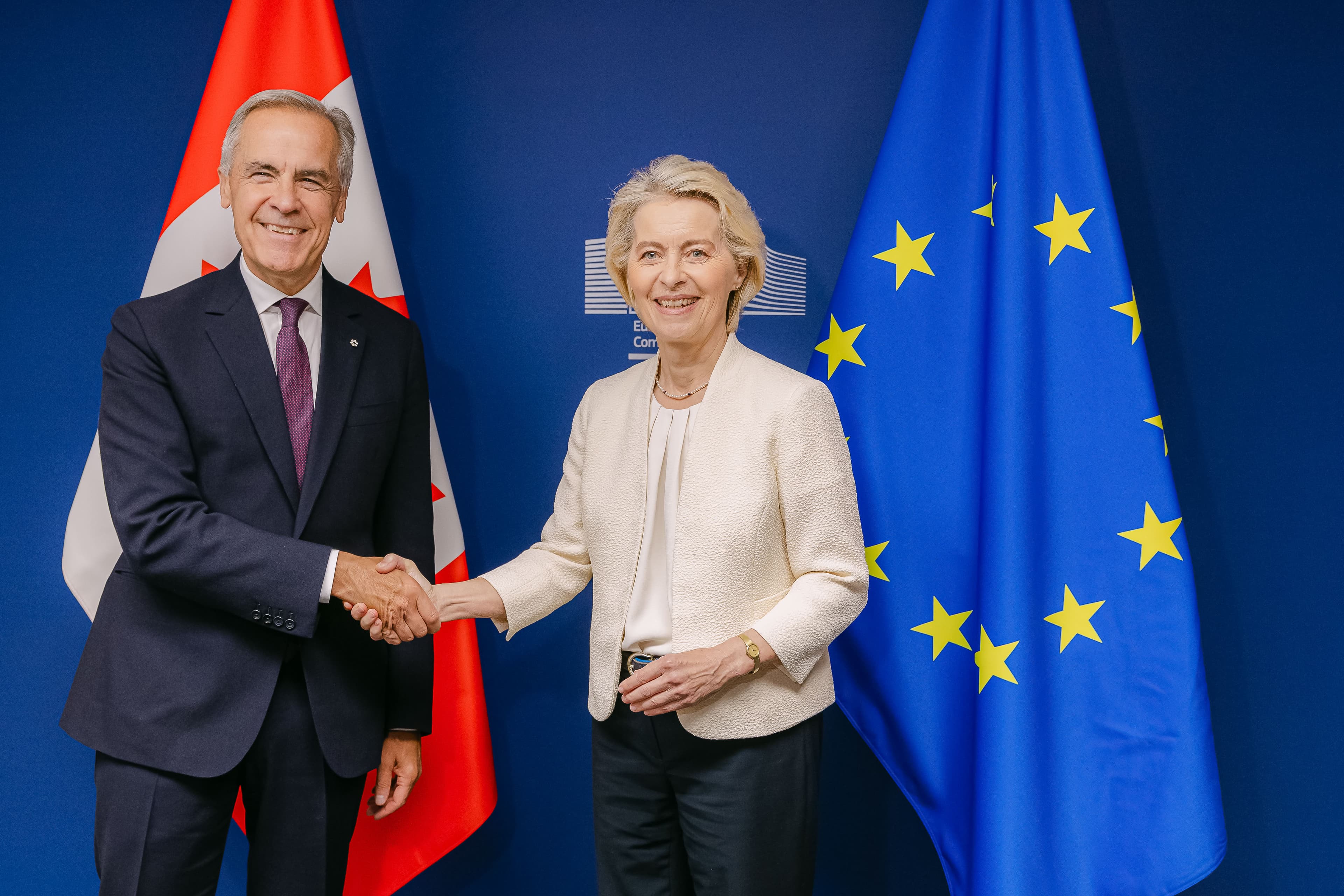
The European Commission president offered to open the door for Canada to become the European Union's first associate member. Mark Carney welcomed the ambition, Pierre Poilievre set red lines, and Donald Trump threatened tariffs. Nobody has defined what the status would mean.
Case period:
Published by The Dispute Index editorial teamPublished Updated
Overview
In her State of the European Union address on 16 September 2026, European Commission President Ursula von der Leyen said she would like to work with Prime Minister Mark Carney on opening the door for Canada to be the first associate member of the European Union, as part of moving beyond the existing CETA trade agreement to what she called an Alliance for the Future. Carney, present as an invited guest, told the European Parliament the following day that Canada welcomes the ambition, while attributing the associate-member phrase to von der Leyen rather than adopting it, and promised debates and a vote in the Canadian Parliament on the final structure. Conservative leader Pierre Poilievre set red lines against Canadians paying taxes to Brussels, following European laws they did not vote on, or adopting European immigration policy. United States President Donald Trump said that if he judged the arrangement a hostile act he would impose heavy tariffs on Europe or curtail trade. No agreement has been signed, and associate membership is not a status defined in the European Union's treaties.
Read the full background
The proposal originates in von der Leyen's State of the European Union address (opens in a new tab) of 16 September 2026, reference SPEECH/26/1868, delivered in Strasbourg with Carney present. Her words were an offer to "work with you on opening the door for Canada to be the first associate member of the EU", not an announcement of any granted status, and the Commission's accompanying Letter of Intent for the 2026 address does not mention Canada or associate membership at all.
The status itself is undefined. A European Parliament study of association agreements records that association under Article 217 of the Treaty on the Functioning of the European Union "is not to be confused with associate membership", that "internal association (i.e. observer or associate membership status) is not foreseen in EU law", and that an associated country "cannot be granted decision-making powers within the EU institutions". What Canada would actually be offered has not been published.
What exists today is CETA, in force provisionally and still unratified by roughly ten member states; a Canada-European Union Strategic Partnership Agreement agreed in June 2026; and Canada's participation in SAFE as its first non-European member. An EU-Canada summit is scheduled for Montreal on 29 and 30 October 2026, and officials have suggested some form of agreement could emerge there.
The dispute began before the address. Poilievre's first public objection, on 13 September, responded to a Wall Street Journal report of talks rather than to von der Leyen. Carney has promised debates and a vote in the Canadian Parliament on the final structure of the alliance, but no motion, text or date exists, and he described the process as "the start of a road". Several widely circulated quotations in coverage of this dispute differ from the primary transcripts; each source record here notes where.
People in this case
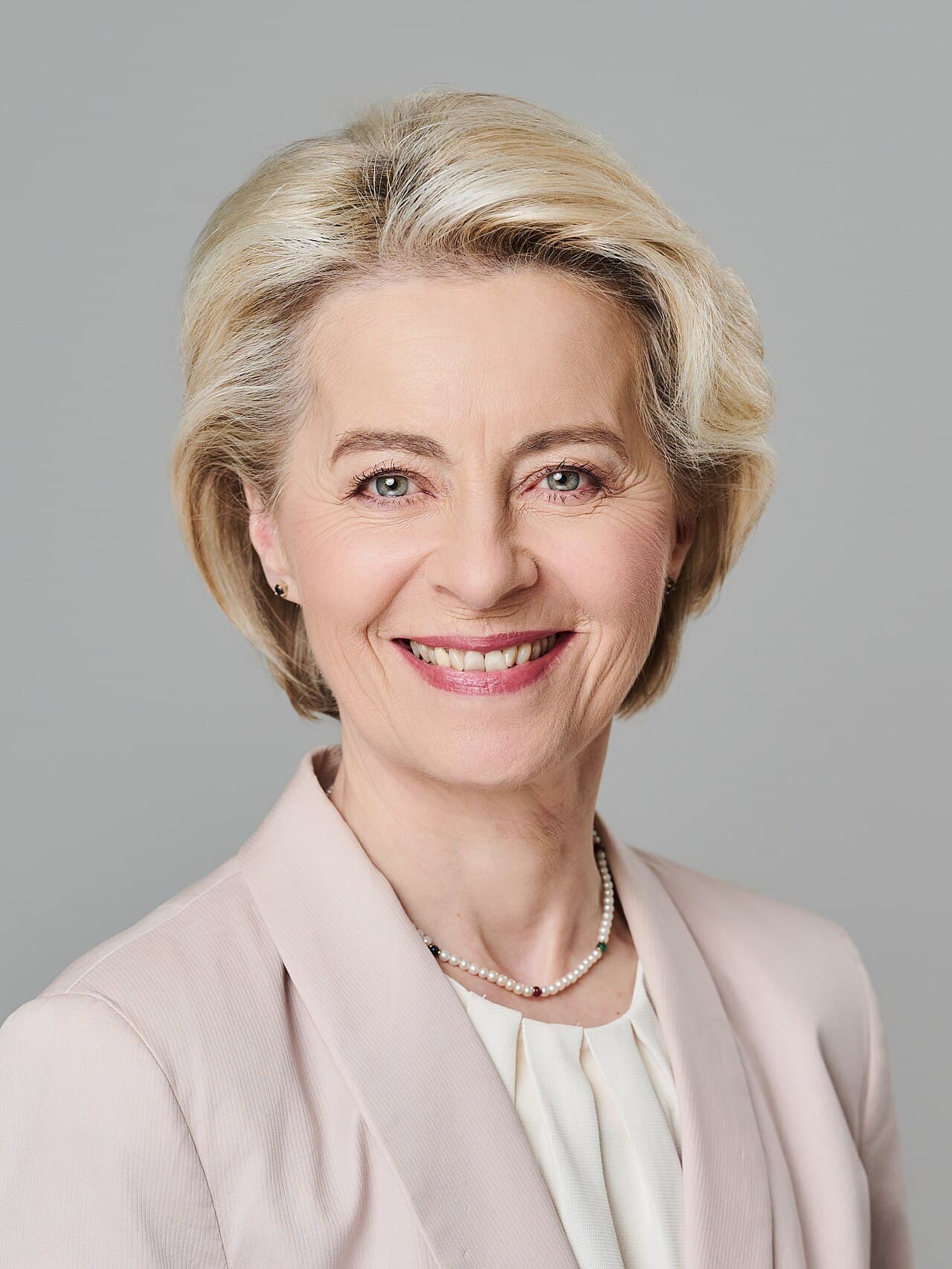 Ursula von der LeyenDirectly involved
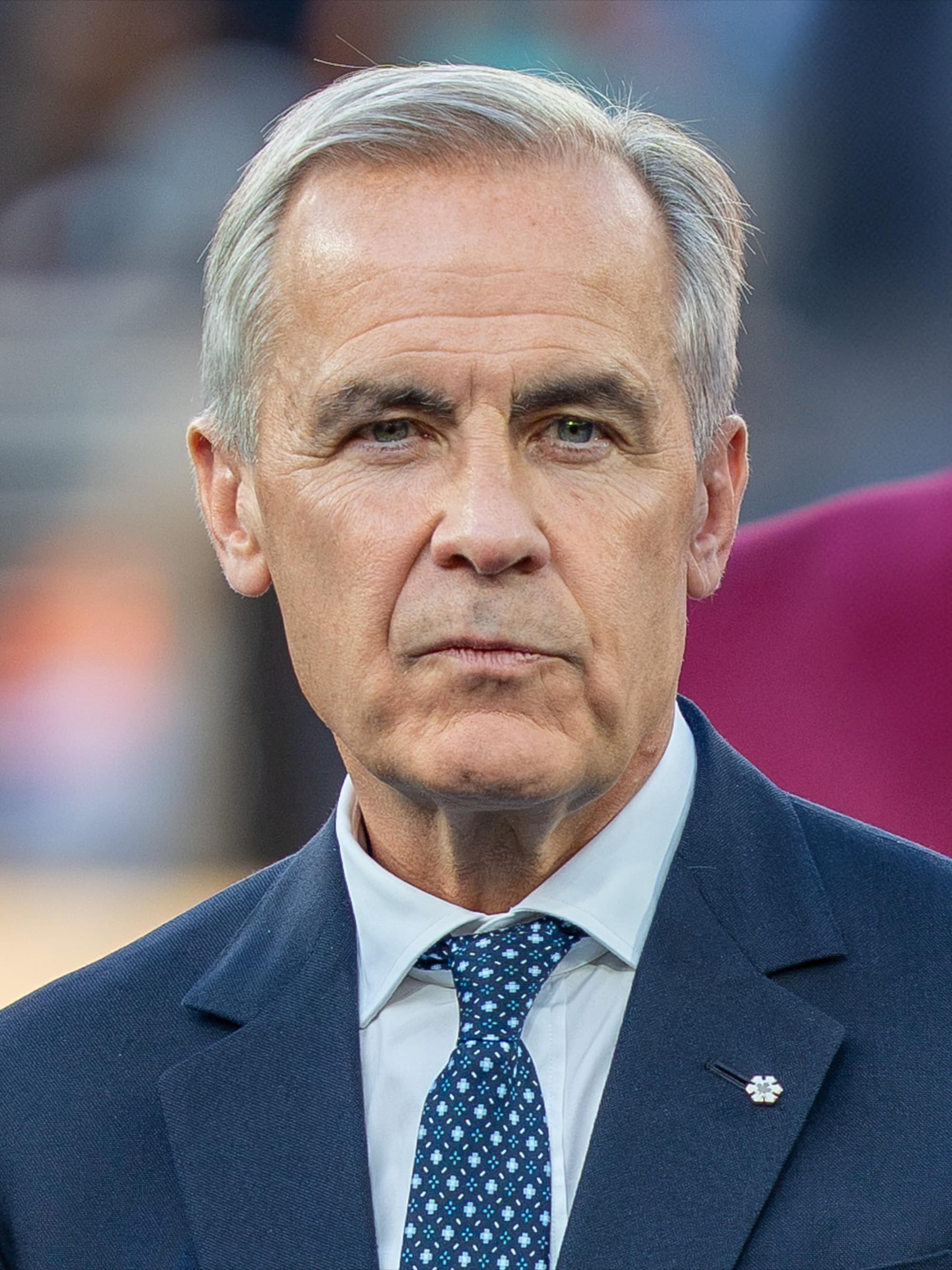 Mark CarneyDirectly involved
Timeline
14 timeline entries on this page. Dates: September 14, 2026 to October 30, 2026
September 2026
Abacus Data publishes survey on closer Canada–EU integration
Source release
Abacus Data published a survey of 1,479 Canadian adults conducted September 4–9. It reported that 81% supported closer Canada–EU integration while Canada remained outside the EU, while 49% supported full EU membership. The survey predates the European Commission’s later associate-membership proposal and does not measure support for a finalized arrangement.
[01]Abacus Data survey on Canadian support for closer integration with the European Union
Source excerpt
“Eighty-one percent support closer integration between Canada and the EU while Canada remains outside the European Union.”
Abacus Data’s own survey report says 1,479 Canadian adults were surveyed September 4–9, 2026 through partner panels and weighted to census demographics. It reports 81% support closer Canada–EU integration while Canada remains outside the EU, and distinguishes that question from full membership, which 49% supported. The survey predates the European Commission’s September 16 associate-membership proposal, so it measures views of closer integration rather than a finalized associate-membership arrangement.
Abacus Data survey on Canadian support for closer integration with the European UnionOpening findings; “Four in Five Support Closer Canada-EU Integration”; and “Methodology” section.Von der Leyen offers to open the door to Canadian associate membership
Incident
In her State of the European Union address in Strasbourg, reference SPEECH/26/1868, European Commission President Ursula von der Leyen said she would like to work with Prime Minister Mark Carney on opening the door for Canada to become the first associate member of the European Union, as part of moving beyond CETA to what she called an Alliance for the Future. Carney was present as an invited guest. Her words were an offer to work towards the status, not an announcement that it had been granted, and the Commission's accompanying Letter of Intent does not mention Canada or associate membership. Associate membership is not a status defined in the EU treaties.
[02]2026 State of the Union Address by President von der Leyen
Source excerpt
I would like to work with you on opening the door for Canada to be the first associate member of the EU.
The European Commission's own published text of the State of the European Union address, delivered to the European Parliament plenary in Strasbourg on 16 September 2026 with Mark Carney present as an invited guest. Reference SPEECH/26/1868. This is the origin of the associate-member proposal. The text is an offer to work on opening the door, not an announcement that Canada has been granted any status, and wire copy that renders the line as "for Canada being the first associate member" does not match the Commission's own wording.
2026 State of the Union Address by President von der LeyenCanada passage: "Alliance for the Future" and "opening the door for Canada to be the first associate member of the EU"Ottawa says it is not seeking membership as Poilievre sets red lines
Reaction
Canada's ambassador to the European Union, Jonathan Wilkinson, said Ottawa is not seeking membership of any kind, and Conservative leader Pierre Poilievre set out red lines against Canadians paying taxes to Brussels, following European laws they did not vote on, or adopting European immigration policy, while the terms of any arrangement remained unpublished. Conservative MP Andrew Scheer rejected associate membership outright as a question of sovereignty. The government's preferred term throughout was alliance rather than membership.
[03]How Canada-EU 'associate member' proposal raises questions for Carney's critics
Source excerpt
We are not looking to be a member of the European Union, because that is a sovereignty issue and people give up certain portions of their sovereignty (to be part of the bloc).
Global News report carrying Canada's ambassador to the European Union directly on what Ottawa is and is not seeking, alongside quotations from Poilievre and von der Leyen. The Wilkinson remarks are corroborated by a France 24 liveblog the following day. The same article compresses Poilievre's conditional objections into assertions, which is why his own record on this case cites his interview rather than this piece.
How Canada-EU 'associate member' proposal raises questions for Carney's criticsWilkinson on sovereignty and on not seeking membership[04]EU Commission 'opens the door' for Canada to join the EU
Source excerpt
if he’s talking about forcing Canadians to pay taxes to Brussels bureaucrats or to follow European Union laws that we never voted on, or God forbid, to bring European policies for immigration, that would be a disaster for Canada
Juno News report by Clayton DeMaine, published September 16, 2026, on Pierre Poilievre's interview with Marc Patrone, which Juno News released the same day. Poilievre's objections are stated as conditions on terms that have not been published, not as assertions about an agreed deal. Reporting that renders them as warnings that Canadians would fund the EU budget, follow Brussels regulation and cede immigration control compresses conditional questions into claims. His earlier post of 13 September reacted to a Wall Street Journal report and predates von der Leyen's address. The quotations follow the wording this report prints, which differs slightly from the transcript posted with the interview.
EU Commission 'opens the door' for Canada to join the EUPoilievre's red lines on taxes, laws and immigration, and on the absence of published terms[05]Andrew Scheer post: "Never 51. Never 28."
Source excerpt
Never 51. Never 28. Pierre standing up for Canadian sovereignty!
Andrew Scheer's own post on X, opposing associate membership by pairing it with Donald Trump's talk of Canada as a 51st state. "Never 28" refers to Canada becoming a twenty-eighth member alongside the Union's twenty-seven.
Trump threatens tariffs if he judges the arrangement a hostile act
Reaction
United States President Donald Trump said that if he judged a Canada–European Union arrangement to be a hostile act he would impose heavy tariffs on Europe or curtail trade. No agreement had been signed and no terms had been published at the time of the remarks.
[06]President Trump gaggles with press upon arrival at Charlotte, North Carolina
Source excerpt
If they do that, if I think it's at all a hostile act, I will put very serious tariffs or stop trading with Europe on many things.
The White House's own recording of President Trump's press gaggle on arrival at Charlotte Douglas International Airport on 16 September 2026, the day of von der Leyen's address. His remarks on the proposal were made here, not on Truth Social, and were conditional on his own judgement of the European Union's intent. No official transcript of the gaggle has been published, so the wording rests on outlet transcription corroborated by the Associated Press and CNBC rather than on our own transcription of the tape.
President Trump gaggles with press upon arrival at Charlotte, North CarolinaExchange on the EU-Canada associate-member proposal and tariff threatCarney tells the European Parliament Canada welcomes the ambition, without adopting the label
Claim
Addressing the European Parliament the day after the offer, Prime Minister Mark Carney said Canada welcomes the ambition while attributing the associate-member phrase to von der Leyen rather than adopting it, and promised debates and a vote in the Canadian Parliament on the final structure. Responding to Trump, Carney said the alliance is a positive process rather than an action directed against anyone.
[07]Prime Minister Carney delivers address to the European Parliament
Source excerpt
Canada welcomes this ambition – polling shows an overwhelming majority of Canadians support much closer ties with Europe.
The Prime Minister's Office transcript of Mark Carney's address to the European Parliament in Strasbourg on 17 September 2026, the day after von der Leyen's proposal. Carney attributes the associate-member phrase to von der Leyen rather than adopting it, and the separate PMO readout of their meeting avoids the term entirely. Wire copy rendering his sovereignty passage as "no country could control Canada's markets" does not match this transcript, which reads "no one" and "our", and omits his references to territorial integrity, democracies and the rule of law.
Prime Minister Carney delivers address to the European ParliamentPassages on welcoming the ambition, on what is not being proposed, and on pursuing resilience[08]Canada welcomes EU proposal to become 'associate member' (BBC)
Source excerpt
This alliance is a positive process, that's my response to the American president.
BBC report on Carney's European Parliament address and his press-conference response to Trump's tariff threat.
Member states say they were not told in advance; Germany questions the label
Reaction
Politico reports that four European diplomats said their governments were not informed of the associate-membership proposal before the address, one calling the secrecy “dangerous” and “unwise.” The German government’s spokesperson says Germany is open to new models of partnership but that the label warrants further thought. Reuters separately reports three diplomats saying they were surprised. Any such arrangement would require unanimity in the Council.
[09]Politico Europe: von der Leyen’s associate-member pitch caught member states by surprise
Source excerpt
“Canada is an especially close partner for Europe. That is why we are open to discussing new models of partnership,” government spokesperson Stefan Kornelius said. But on the “associate member” label, he added: “I think we should give that some more thought.”
Reports that four European diplomats said their governments were not informed before the announcement, and carries the German government’s first public response. The article carries a correction note dated September 17. Any arrangement of this kind would require unanimity in the Council, which makes a single member state’s reservation material.
Politico Europe: von der Leyen’s associate-member pitch caught member states by surpriseClosing paragraphs carrying the German government spokesperson’s remarks.Commission briefing leaves association details for further talks
Reaction
Commission spokespersons say the proposal's parameters will be developed with Canada and EU member states, with the October summit providing a political discussion point. Journalists ask about legal status, movement of people and financial services.
[10]European Commission briefing on proposed Canadian associate membership
The recording contains Commission answers about the proposal's scope and negotiations. Europe Echo says it removed repetition and reordered some questions by topic.
European Commission briefing on proposed Canadian associate membership00:00-16:15 Canada discussion; edited Europe Echo uploadMacron and Carney discuss a Canada–EU alliance for the future
Reaction
At a joint press conference in Saint-Pierre-et-Miquelon, French President Emmanuel Macron said France supported a future Canada–EU alliance that he described using the associate-member formulation. The Canadian government said Macron and Prime Minister Mark Carney discussed an alliance focused on collective resilience, sovereignty and prosperity; no agreement text or associate-member status was announced.
[11]Carney and Macron joint press conference in Saint-Pierre-et-Miquelon
Source excerpt
Canada et l'Union européenne. C'est pourquoi nous soutenons ... cet agenda de rapprochement dans cette alliance du futur que vous avez nommé en tant que état associé.
Full joint press conference in Saint-Pierre-et-Miquelon. Macron described France's support for a Canada–EU alliance for the future and referred to its associate-member formulation.
Carney and Macron joint press conference in Saint-Pierre-et-MiquelonOpening remarks by Emmanuel Macron; transcript lines 94–102 in the linked YouTube transcript.[12]Prime Minister Carney meets President Macron
Official Canadian government readout of Carney's September 20 meeting with Macron. It says the leaders discussed a Canada–EU alliance for the future focused on collective resilience, sovereignty and prosperity.
Prime Minister Carney meets President MacronParagraph beginning “The leaders discussed the opportunities associated with an alliance for the future between Canada and the European Union (EU)…”[13]France's Macron and Canada's Carney announce plans to build stronger ties
Source excerpt
That is why we support this future alliance, that you named as an associate member of the EU.
Reuters reporting carried by Al Jazeera on the Carney–Macron press conference. It provides an English rendering of Macron's statement supporting the proposed Canada–EU alliance.
France's Macron and Canada's Carney announce plans to build stronger tiesParagraphs 38–48; quote in paragraph 42.Leger survey finds 70% support for associate membership, with less support if laws change
Source release
A Leger survey released September 24 found 70% of respondents supported Canada becoming an associate member of the EU, 13% opposed it and 18% were unsure. Asked whether changing some Canadian laws or regulations to align with the EU would affect their support, 25% said it would make them more supportive and 30% less supportive. The online poll surveyed 1,533 Canadians between September 19 and 21, as summarized by The Deep Dive from a Canadian Press report.
[14]Canadians Back EU Associate Membership, Until Laws Have To Be Changed
Source excerpt
A Leger survey released Thursday found 70% of respondents supported associate membership, compared with 13% who opposed it and 18% who were unsure.
The Deep Dive's summary of a Leger survey released Sept. 24, 2026 and first reported by The Canadian Press, which the article links. It gives the results on associate membership and on aligning Canadian laws with the EU, and says the online poll surveyed 1,533 Canadians between Sept. 19 and 21. We read this summary; we could not load the Canadian Press original.
Canadians Back EU Associate Membership, Until Laws Have To Be ChangedParagraphs describing the Leger survey results and methodology
October 2026
European Parliament debates the EU-Canada alliance before the Montreal summit
A week before the Montreal summit, Commissioner Jozef Síkela tells the European Parliament that negotiations are still under way and that he cannot prejudge the outcome. Kathleen Van Brempt, for the S&D group, backs a deeper partnership but says its new names must produce results. Rihards Kols of the ECR group says Europe does not need a 28th quasi-member state, and Christine Anderson of the ESN group urges Carney to reject the offer.
[15]Deepening the EU-Canada alliance - preparation of the EU-Canada summit (debate)
European Parliament verbatim report of the plenary debate held a week before the Montreal summit. Speeches appear in the language in which they were given.
Deepening the EU-Canada alliance - preparation of the EU-Canada summit (debate)Opening statement by Commissioner Jozef Síkela and group speakersPOLITICO reports EU-government objections to the association label
Source release
Citing diplomats and EU officials, POLITICO reports that Germany, France and other governments object to using associate membership before its meaning is defined. The report says their objections concern the label rather than closer ties themselves.
[16]Germany leads push against EU's associate membership label for Canada
POLITICO cites diplomats and EU officials describing objections to the label during negotiations.
Germany leads push against EU's associate membership label for CanadaReport on the draft declaration, national objections and Bernd Lange's commentsEU governments drop "associate member" from the draft Montreal summit statement
Source release
POLITICO and Euronews report that the latest draft of the joint statement for the EU-Canada summit in Montreal on October 29 and 30 no longer mentions associate membership. Citing EU diplomats, they report that Germany, France and Greece objected to the term, with Germany the most vocal. The revised draft instead commits the two sides to define, by the 2027 EU-Canada summit, an "ever closer association" of Canada to the EU short of full membership. An earlier draft failed to pass on October 27 after Germany, France, Italy and Greece raised objections under the silence procedure. Both outlets say the new text still needed final approval from member states.
[17]Politico
Draft summit statement reported by POLITICO, citing EU diplomats, as dropping the associate-membership term after objections from Germany, France and Greece.
EU scraps 'associate member' offer for Canada · PoliticoArticle, paragraphs on the revised draft joint statement[18]EU removes mention of 'associate membership' from Canada declaration
Euronews report that the EU removed associate membership from the draft summit declaration after German objections and replaced it with a commitment to ever closer association.
EU removes mention of 'associate membership' from Canada declarationArticle, full text[19]Von der Leyen's Canada 'associate membership' spurs battle of words with EU capitals
Euronews report on objections by Germany, Italy, France and Greece to a draft summit declaration that cited the associate-membership offer.
Von der Leyen's Canada 'associate membership' spurs battle of words with EU capitalsArticle, paragraphs on the silence procedureVon der Leyen and Costa keep the associate-member idea on the table
The day after EU governments removed the term from the draft summit statement, von der Leyen told the C.D. Howe Institute on October 29 that the EU is discussing the idea of Canada becoming its first associate member, which she described as association without accession. Speaking to the Montreal Council on Foreign Relations the same day, European Council President António Costa said he shared her ambition, whatever term is used, and that the two sides would launch an Alliance for the Future at the summit.
[20]European Commission
Text of Ursula von der Leyen's October 29, 2026 keynote on EU-Canada relations at the C.D. Howe Institute, published by the European Commission as SPEECH/26/2288. It covers trade, security, the Arctic and the proposal for Canadian associate membership.
Keynote speech by President von der Leyen on EU-Canada relations at the C.D. Howe Institute · European CommissionPassage on associate membership[21]Discours du président António Costa au Conseil des relations internationales de Montréal
French text of European Council President António Costa's October 29, 2026 speech to the Montreal Council on Foreign Relations on the eve of the EU-Canada summit, published by the Council of the European Union.
Discours du président António Costa au Conseil des relations internationales de MontréalClosing passage on the Alliance for the FutureSummit statement commits to define an "ever-closer association" by 2027
The joint statement issued at the close of the Montreal summit on October 30 launches the Alliance for the Future and commits Canada and the EU to define, by the 2027 EU-Canada summit, "an ever-closer association of Canada to the EU, short of full membership". It does not use the term associate member. A news release from Carney's office the same day says the two sides are working toward Canada becoming the EU's first associate member and will determine "the substance, scale, and scope of this form of membership" over the coming months. Euronews reports that Carney set June 2027 as his target for concluding the negotiations, while Council President António Costa kept to the statement's wording.
[22]Joint Statement: Canada and the European Union building together an Alliance for the Future
Joint statement issued by Prime Minister Mark Carney, European Council President António Costa and European Commission President Ursula von der Leyen at the close of the 21st EU-Canada summit in Montreal on October 30, 2026, as published by the Prime Minister's Office. It launches the Alliance for the Future and, in its conclusion, commits the two sides to define an ever-closer association of Canada to the EU by the 2027 summit.
[23]Canada and the European Union announce new Alliance for the Future to create greater affordability, opportunity, and sovereignty
News release from the Prime Minister's Office on the October 30, 2026 Canada-EU summit in Montreal. It lists the measures announced at the summit and says Canada and the EU are working toward Canada becoming the European Union's first associate member, with the substance of that status to be set in the coming months.
[24]Canada aims to become EU's first 'associate member' by June 2027, Carney says
Euronews report on the closing news conference of the EU-Canada summit in Montreal on October 30, 2026, quoting Mark Carney, Ursula von der Leyen and António Costa on associate membership and reporting Carney's June 2027 target for concluding negotiations.
Canada aims to become EU's first 'associate member' by June 2027, Carney saysClosing press conference remarks
Claims
Claims separate what was said from what is contested. Follow each source for the original wording and context.
What's disputed
Disputed claim
Canada should become the European Union’s first associate member, moving the relationship beyond CETA to an “Alliance for the Future.”
Sources (1)
- 2026 State of the Union Address by President von der LeyenCanada passage: "Alliance for the Future" and "opening the door for Canada to be the first associate member of the EU"
Disputed claim
Canada is not seeking membership of the European Union, because membership would require giving up portions of its sovereignty.
Sources (1)
- How Canada-EU 'associate member' proposal raises questions for Carney's criticsWilkinson on sovereignty and on not seeking membership
Disputed claim
Canada already has free trade with Europe, and 99 per cent of Canadian products and services can enter the European market tariff-free.
Sources (1)
- EU Commission 'opens the door' for Canada to join the EUPoilievre's red lines on taxes, laws and immigration, and on the absence of published terms
Disputed claim
Von der Leyen’s associate-member offer was a “friendly exaggeration” rather than a proposal Canada is being asked to accept.
Sources (1)
- CBC Power & Politics: "Would EU 'associate member' status fly in Canada?"00:53–09:17: Stéphane Dion interview; 01:26–02:10: "friendly exaggeration" passage; 05:25–06:00: sovereignty and CETA trade share; 08:27–09:05: expectations for the October EU–Canada summit. 09:19–10:40: Carney clip; 10:40–11:06: Poilievre clip; 11:06 onward: Power Panel.
Disputed claim
Polling shows an overwhelming majority of Canadians support much closer ties with Europe.
Sources (1)
- Prime Minister Carney delivers address to the European ParliamentPassages on welcoming the ambition, on what is not being proposed, and on pursuing resilience
Show fewer disputed claims
Disputed claim
If the Canada-EU arrangement is a hostile act, the United States will impose very serious tariffs on Europe or stop trading with it on many things.
Sources (1)
- President Trump gaggles with press upon arrival at Charlotte, North CarolinaExchange on the EU-Canada associate-member proposal and tariff threat
Response record
Responses
Choose one response filter, or select All responses to see the full record.
7 matching responses. First 6 shown initially. Newest first.
 Mark CarneyPrime Minister of Canada, closing news conference of the EU-Canada summit in MontrealDirectly involved
Before this statement
Carney spoke alongside von der Leyen and Costa after the summit's joint statement committed the two sides to define, by the 2027 EU-Canada summit, an ever-closer association of Canada to the EU short of full membership. The statement does not use the associate-member term, which Germany opposed.
"We are working towards the deepest possible partnership short of accession, because of our geography, with Canada becoming the European Union's first associate member"
Defended or excusedCase context: Should Canada become an associate member of the European Union?
Full statement and sources
At the summit's closing news conference, Carney said Canada is working toward becoming the EU's first associate member, a status short of accession. He said the two sides would set its substance, scale and scope in the coming months.
After the statement
He added that the two sides would determine the full substance, scale and scope of the new form of membership in the coming months. Euronews reports that he set June 2027 as his target for concluding the negotiations.
Canada aims to become EU's first 'associate member' by June 2027, Carney saysClosing press conference remarksWhy this label?
Relative to whether Canada should become an associate member of the European Union, Carney now uses the associate-member term himself and says Canada is working toward that status. That is support for the proposal, and a step past his October 27 remark that the name did not matter.
This label describes the statement's response within the context above.
 Ursula von der LeyenPresident of the European Commission, closing news conference of the EU-Canada summit in MontrealDirectly involved
Before this statement
Speaking alongside Carney after the summit, von der Leyen listed benefits she said Canada would gain at once, including full participation in the Horizon and Erasmus programmes.
"The concept of an associate member is uncharted territory, but we have the ambition, trust and creativity to shape it together"
Defended or excusedCase context: Should Canada become an associate member of the European Union?
Full statement and sources
At the summit's closing news conference, von der Leyen called associate membership uncharted territory that the EU and Canada can shape together. She said full membership is impossible under the EU treaties.
After the statement
She said the partnership is not directed against anyone else. Asked about Germany's opposition to the term, she said there was broad support among member states for bringing Canada closer, and that the EU would have liked to discuss full membership but the treaties make it impossible.
Canada aims to become EU's first 'associate member' by June 2027, Carney saysClosing press conference remarksWhy this label?
Relative to whether Canada should become an associate member of the European Union, von der Leyen keeps arguing for the status after the joint statement left the term out. Calling it uncharted territory describes how undefined it is, not a doubt about pursuing it.
This label describes the statement's response within the context above.
- Ursula von der LeyenPresident of the European Commission, keynote speech at the C.D. Howe InstituteDirectly involved
Before this statement
Von der Leyen describes Canada and the European Union as two complementary systems and says there is much more they can do together bilaterally.
"Of course, Canada cannot become a full-fledged member of the EU because of geography, but we both want to bring our relationship to the highest level possible. This is why we are discussing the idea of Canada becoming the first associate member of the European Union."
Defended or excusedCase context: Should Canada become an associate member of the European Union?
Full statement and sources
Von der Leyen says the EU is discussing making Canada its first associate member, a day after member states removed the term from the draft summit statement.
After the statement
She describes the idea as association without accession and lists closer alignment on policies, on governance and in each other's programmes as its parts.
Keynote speech by President von der Leyen on EU-Canada relations at the C.D. Howe Institute · European CommissionPassage on associate membershipWhy this label?
Relative to whether Canada should become an associate member of the European Union, von der Leyen argues for the idea and says the EU is discussing it. Her remark that Canada cannot become a full member describes the limit of the status, not a condition on her support.
This label describes the statement's response within the context above.
- Mark CarneyPrime Minister of Canada, speaking to reporters on Parliament HillDirectly involved
Before this statement
Speaking to reporters on his way into a cabinet meeting two days before the EU-Canada summit in Montreal, Carney said a lot of work had gone into the summit and that it would launch formal discussions and negotiations over the following year.
"The good news is it doesn't matter about specific names or nomenclature"
Defended or excusedCase context: Should Canada become an associate member of the European Union?
Full statement and sources
Two days before the Montreal summit, Carney said the name given to Canada's closer relationship with the EU matters less than what it delivers for Canadians. He described the summit as the start of a year of formal negotiations.
After the statement
The same day, EU officials briefing reporters said the arrangement's details would be worked out before the 2027 EU-Canada summit, and several EU governments objected to the associate-membership term in the draft summit statement.
Canada-EU: Aim to solidify 'associate membership' in a yearArticle, paragraphs quoting Carney and Ambassador LuttenbergCanada's new relationship with EU will be 'closer to membership' than ever, senior officials sayArticle, section 'Carney says summit launches year of talks'Why this label?
Relative to whether Canada should become an associate member of the European Union, Carney backs pursuing the arrangement and describes the summit as the launch of negotiations on it, while treating the label itself as unimportant. That supports the proposal in substance, as in his September 17 address. The closest competing label is mixed or conditional, because he does not adopt the associate-member name.
This label describes the statement's response within the context above.
- Mark CarneyPrime Minister of CanadaDirectly involved
Before this statement
Said at a press conference following Carney's September 17, 2026 address to the European Parliament, responding directly to Trump's tariff threat made the previous day.
"This alliance is a positive process, that's my response to the American president. Canadians are united that nobody is going to tell us what language we speak, no-one is going to dictate our culture, or with whom we can strike agreements internationally."
Defended or excusedCase context: Should Canada become an associate member of the European Union?
Full statement and sources
Carney directly responded to Trump's tariff threat, calling the alliance a positive process and rejecting outside dictation of Canadian sovereignty.
After the statement
Carney separately reiterated at the same appearance that Canada was "not in a position, nor seeking, to become a full member of the European Union."
Why this label?
Carney directly frames the alliance as "a positive process" in response to Trump's tariff threat, matching the case's convention for statements defending the arrangement.
This label describes the statement's response within the context above.
- Mark CarneyPrime Minister of Canada, addressing the European ParliamentDirectly involved
Before this statement
Von der Leyen had made the proposal the previous day with Carney present as her invited guest. Canada and the European Union already trade under CETA and agreed a Strategic Partnership Agreement in June 2026.
"Yesterday, President von der Leyen spoke of moving beyond CETA to an alliance for the future – opening the door to Canada becoming the European Union’s first associate member. Canada welcomes this ambition – polling shows an overwhelming majority of Canadians support much closer ties with Europe.” … “I want to be precise about what I am not proposing. I am not proposing a third bloc in order to become a great-power rival – only with better manners.” … “We are pursuing resilience so that no one can control our open markets, impair our sovereignty, threaten our territorial integrity, or undermine our freedoms, our democracies, our rule of law."
Defended or excusedCase context: Should Canada become an associate member of the European Union?
Full statement and sources
Addressing the European Parliament the day after the proposal, Carney said Canada welcomes the ambition and cited polling showing majority Canadian support for closer ties with Europe. He attributed the associate-member phrase to von der Leyen rather than using it of his own position, said he was not proposing a rival power bloc, and framed the aim as resilience against outside control of markets, sovereignty and territorial integrity.
After the statement
At a news conference the same day Carney said there would be debates and a vote in the Canadian Parliament on the final structure of the alliance, and that the process was at the start of a road. No motion, text or date exists. An EU-Canada summit follows in Montreal on 29 and 30 October 2026.
Prime Minister Carney delivers address to the European ParliamentPassages on welcoming the ambition, on what is not being proposed, and on pursuing resilienceWhy this label?
Relative to whether Canada should become an associate member of the European Union, Carney welcomes the proposal and commits his government to pursuing it, which supports the proposition. The closest competing label is “Mixed or conditional”, and it is a genuine question here, because he welcomes von der Leyen's “ambition” rather than the label itself, his office's readout of their meeting avoids the term, and he has promised a parliamentary vote on the final structure. Those are qualifications about scope and process rather than conditions on his own support, which is why this stays a defence. An editor may reasonably disagree.
This label describes the statement's response within the context above.
Show fewer responses
- Ursula von der LeyenPresident of the European Commission, addressing the European ParliamentDirectly involved
Before this statement
Canada and the European Union already trade under CETA, in force provisionally and still unratified by roughly ten member states, and agreed a Strategic Partnership Agreement in June 2026. Von der Leyen had invited Carney to attend the address as a guest.
"We are joining forces voluntarily. We will move from CETA to an Alliance for the Future to create a common prosperity and economic security space.” … “In short, we want to bring the relationship with Canada to the highest level possible.” … “I would like to work with you on opening the door for Canada to be the first associate member of the EU."
Defended or excusedCase context: Should Canada become an associate member of the European Union?
Full statement and sources
In her State of the European Union address, von der Leyen proposed moving beyond the CETA trade agreement to what she called an Alliance for the Future, listing joint work on manufacturing, technology, defence industry, the Arctic, energy, critical minerals and artificial intelligence, and said she would like to work with Carney on opening the door for Canada to be the first associate member of the European Union.
After the statement
The Commission's accompanying Letter of Intent for the 2026 address does not mention Canada or associate membership. Associate membership is not a status defined in the Union's treaties, and nothing has been signed.
2026 State of the Union Address by President von der LeyenCanada passage: "Alliance for the Future" and "opening the door for Canada to be the first associate member of the EU"Why this label?
Relative to whether Canada should become an associate member of the European Union, von der Leyen is the source of the proposition and argues for it, framing it as bringing the relationship to the highest level possible. The closest competing label is “Mixed or conditional”, which loses because the only qualification in her words is procedural: she offers to work on opening the door rather than claiming the door is open. That describes the stage the proposal has reached, not a condition on her support for it.
This label describes the statement's response within the context above.
Sources
(63)
Official statement
2026 State of the Union Address by President von der Leyen
Relevant passage: Canada passage: "Alliance for the Future" and "opening the door for Canada to be the first associate member of the EU"
Excerpt
"I would like to work with you on opening the door for Canada to be the first associate member of the EU."
About this source
The European Commission's own published text of the State of the European Union address, delivered to the European Parliament plenary in Strasbourg on 16 September 2026 with Mark Carney present as an invited guest. Reference SPEECH/26/1868. This is the origin of the associate-member proposal. The text is an offer to work on opening the door, not an announcement that Canada has been granted any status, and wire copy that renders the line as "for Canada being the first associate member" does not match the Commission's own wording.
- Author
- Ursula von der Leyen
- Published
- Accessed
Original text
Deepening the EU-Canada alliance - preparation of the EU-Canada summit (debate)
Relevant passage: Speech by Kathleen Van Brempt for the S&D group
About this source
European Parliament verbatim report of the plenary debate. Van Brempt spoke in English.
- Author
- European Parliament
- Published
- Accessed
Original text
Deepening the EU-Canada alliance - preparation of the EU-Canada summit (debate)
Relevant passage: Speech by Rihards Kols for the ECR group
About this source
European Parliament verbatim report of the plenary debate. Kols spoke in English.
- Author
- European Parliament
- Published
- Accessed
Original text
Deepening the EU-Canada alliance - preparation of the EU-Canada summit (debate)
Relevant passage: Speech by Christine Anderson for the ESN group
About this source
European Parliament verbatim report of the plenary debate. Anderson spoke in English.
- Author
- European Parliament
- Published
- Accessed
Original text
Deepening the EU-Canada alliance - preparation of the EU-Canada summit (debate)
Relevant passage: Opening statement by Commissioner Jozef Síkela and group speakers
About this source
European Parliament verbatim report of the plenary debate held a week before the Montreal summit. Speeches appear in the language in which they were given.
- Author
- European Parliament
- Published
- Accessed
Reporting
'Associate' EU membership for Canada not a 'short-term' project: expert
Relevant passage: Passages quoting Achim Hurrelmann
About this source
The Canadian Press report, published by CityNews Toronto on October 31, 2026, on Carney's timeline for negotiating a new partnership with the European Union, with comments from Carleton University's Achim Hurrelmann.
- Author
- The Canadian Press
- Published
- Accessed
Reporting
'Entering a new era': Canada, EU pledge closer ties in 'unprecedented' summit as leaders double down on associate membership
Relevant passage: Passage quoting Ambassador Lüttenberg
About this source
The Hill Times report on the close of the EU-Canada summit in Montreal on October 30, 2026, covering the joint statement, an interview with German Ambassador Matthias Lüttenberg and statements from the Bloc Québécois and Conservative MPs.
- Author
- Neil Moss
- Published
- Accessed
Reporting
Canada, European Union close Montreal summit with 'alliance for the future' pact
Relevant passage: Passage on opposition reaction
About this source
The Canadian Press report on the close of the EU-Canada summit in Montreal on October 30, 2026, covering the launch of the Alliance for the Future, a planned June meeting of the European Council with Carney, and reaction from the Conservatives and the Bloc Québécois.
- Author
- The Canadian Press
- Published
- Accessed
Original post
Pierre Poilievre on X: "In the real world, Canadians can't afford anything."
About this source
Post by Conservative leader Pierre Poilievre on his X account on October 30, 2026, after the EU-Canada summit in Montreal closed, criticizing the summit's results and talk of aligning Canada with European policies.
- Author
- Pierre Poilievre
- Published
- Accessed
Reporting
Carney says Canada is working to become an 'associate member' as he hosts EU leaders in Montreal
Relevant passage: Passage on opposition reaction
About this source
CBC News report on the opening day of the EU-Canada summit in Montreal on October 29, 2026, covering Carney's remarks on associate membership, the state of the draft joint statement and Conservative leader Pierre Poilievre's social-media criticism of the summit.
- Author
- Catharine Tunney
- Published
- Accessed
Original post
Pierre Poilievre on X: "How long will this theatre go on?"
About this source
Post by Conservative leader Pierre Poilievre on his X account on October 29, 2026, the opening day of the EU-Canada summit in Montreal, criticizing the summit and the associate-membership proposal and calling for ratification of CETA, access for Canadian beef and cancellation of the EU's planned carbon tariff.
- Author
- Pierre Poilievre
- Published
- Accessed
Interview
[Interview] 'I don't care' about the associate membership label row: Lead MEP Javier Moreno Sánchez on upcoming EU-Canada summit
Relevant passage: Answer on whether the announcement was a mistake
About this source
EUobserver interview with Javier Moreno Sánchez, chair of the European Parliament's delegation for relations with Canada, published October 28, 2026, the day before the EU-Canada summit in Montreal. He discusses the dispute over the associate-membership label and what the status could mean.
- Author
- Fred Byrne
- Published
- Accessed
Reporting
Canada aims to become EU's first 'associate member' by June 2027, Carney says
Relevant passage: Closing press conference remarks
About this source
Euronews report on the closing news conference of the EU-Canada summit in Montreal on October 30, 2026, quoting Mark Carney, Ursula von der Leyen and António Costa on associate membership and reporting Carney's June 2027 target for concluding negotiations.
- Author
- Jorge Liboreiro
- Published
- Accessed
Official statement
Canada and the European Union announce new Alliance for the Future to create greater affordability, opportunity, and sovereignty
Relevant passage: Opening paragraphs
About this source
News release from the Prime Minister's Office on the October 30, 2026 Canada-EU summit in Montreal. It lists the measures announced at the summit and says Canada and the EU are working toward Canada becoming the European Union's first associate member, with the substance of that status to be set in the coming months.
- Author
- Prime Minister of Canada
- Published
- Accessed
Original text
Joint Statement: Canada and the European Union building together an Alliance for the Future
Relevant passage: Conclusion
About this source
Joint statement issued by Prime Minister Mark Carney, European Council President António Costa and European Commission President Ursula von der Leyen at the close of the 21st EU-Canada summit in Montreal on October 30, 2026, as published by the Prime Minister's Office. It launches the Alliance for the Future and, in its conclusion, commits the two sides to define an ever-closer association of Canada to the EU by the 2027 summit.
- Author
- Prime Minister of Canada
- Published
- Accessed
Original text
Discours du président António Costa au Conseil des relations internationales de Montréal
Relevant passage: Closing passage on the Alliance for the Future
About this source
French text of European Council President António Costa's October 29, 2026 speech to the Montreal Council on Foreign Relations on the eve of the EU-Canada summit, published by the Council of the European Union.
- Author
- European Council
- Published
- Accessed
Original text
Keynote speech by President von der Leyen on EU-Canada relations at the C.D. Howe Institute
Relevant passage: Passage on associate membership
About this source
Text of Ursula von der Leyen's October 29, 2026 keynote on EU-Canada relations at the C.D. Howe Institute, published by the European Commission as SPEECH/26/2288. It covers trade, security, the Arctic and the proposal for Canadian associate membership.
- Author
- European Commission
- Published
- Accessed
Reporting
Canada needs concrete results from EU summit this week, former envoy says
Relevant passage: Article, section 'A new kind of partnership'
About this source
CBC News report on former EU special envoy Stephane Dion's interview on Rosemary Barton Live before the Montreal summit.
- Author
- David Cummings
- Published
- Accessed
Reporting
Canada's new relationship with EU will be 'closer to membership' than ever, senior officials say
Relevant passage: Article, section 'Carney says summit launches year of talks'
About this source
CBC News report on the EU officials' briefing before the Montreal summit and Prime Minister Mark Carney's remarks to reporters in Ottawa on October 27.
- Author
- Marina von Stackelberg
- Published
- Accessed
Reporting
Canada-EU: Aim to solidify 'associate membership' in a year
Relevant passage: Article, paragraphs quoting Carney and Ambassador Luttenberg
About this source
CTV News report on the EU officials' briefing before the Montreal summit, including remarks by Prime Minister Mark Carney to reporters on Parliament Hill and by German Ambassador Matthias Luttenberg on Power Play.
- Author
- CTV News
- Published
- Accessed
Reporting
Von der Leyen's Canada 'associate membership' spurs battle of words with EU capitals
Relevant passage: Article, paragraphs on the silence procedure
About this source
Euronews report on objections by Germany, Italy, France and Greece to a draft summit declaration that cited the associate-membership offer.
- Author
- Luca Bertuzzi
- Published
- Accessed
Reporting
EU removes mention of 'associate membership' from Canada declaration
Relevant passage: Article, full text
About this source
Euronews report that the EU removed associate membership from the draft summit declaration after German objections and replaced it with a commitment to ever closer association.
- Author
- Luca Bertuzzi
- Published
- Accessed
Reporting
EU scraps 'associate member' offer for Canada
Relevant passage: Article, paragraphs on the revised draft joint statement
About this source
Draft summit statement reported by POLITICO, citing EU diplomats, as dropping the associate-membership term after objections from Germany, France and Greece.
- Author
- Nicholas Vinocur, Sebastian Starcevic and Camille Gijs
- Published
- Accessed
Reporting
Germany leads push against EU's associate membership label for Canada
Relevant passage: Report on the draft declaration, national objections and Bernd Lange's comments
About this source
POLITICO cites diplomats and EU officials describing objections to the label during negotiations.
- Author
- Zoya Sheftalovich and Camille Gijs
- Published
- Accessed
Original video
European Commission briefing on proposed Canadian associate membership
About this source
The recording contains Commission answers about the proposal's scope and negotiations. Europe Echo says it removed repetition and reordered some questions by topic.
- Author
- European Commission spokespersons; edited by Europe Echo
- Published
- Accessed
Analysis
EU Has the Snare Prepared for the Syrupeans
Relevant passage: Welborn's own commentary following the Christine Anderson excerpt
About this source
Welborn opposes the proposed relationship and portrays it as a risk to Canadian sovereignty.
- Author
- Beege Welborn
- Published
- Accessed
Original post
Justice Centre asks Ottawa to explain the draft EU-Canada partnership
About this source
The organization raises questions about the draft and calls for Canadians to retain control over domestic rules.
- Author
- Justice Centre for Constitutional Freedoms
- Published
- Accessed
Analysis
Can the EU and Canada forge a new partnership?
Relevant passage: Joint essay by Cecilia Malmstrom and Inu Manak, sections on CETA and next steps
About this source
The authors argue for concrete cooperation while describing regulatory and ratification obstacles to deeper integration.
- Author
- Cecilia Malmstrom and Inu Manak
- Published
- Accessed
Analysis
Why an EU “associate membership” is the wrong Canada story
Relevant passage: Opening argument and discussion of the Alliance for the Future
About this source
Damjanovic argues that the practical economic-security partnership matters more than the associate-member label.
- Author
- Ivana Damjanovic
- Published
- Accessed
Analysis
Canada's suggested 'associate membership' could become a new ...
Relevant passage: Concluding section, A new model for like-minded partners
About this source
Akhvlediani supports a structured association with Canada and calls for clear rights and obligations.
- Author
- Tinatin Akhvlediani
- Published
- Accessed
Original text
El País endorses pursuing Canada's closer EU association
Relevant passage: Editorial board endorsement in the final paragraph
About this source
The author or editorial board presents an assessment of the disputed conduct or proposal.
- Author
- El País editorial board
- Published
- Accessed
Analysis
Chopin's argument for stronger EU-Canada ties
Relevant passage: Bylined essay's concluding paragraphs
About this source
The author or editorial board presents an assessment of the disputed conduct or proposal.
- Author
- Thierry Chopin
- Published
- Accessed
Official statement
McPherson's conditions for an EU-Canada agreement
Relevant passage: Full attributed NDP foreign-affairs critic statement
About this source
The issuing person or organization explains its position and the actions it took.
- Author
- Heather McPherson
- Published
- Accessed
Analysis
Atlantic Council experts assess closer EU ties for Canada
Relevant passage: Confusion over membership, but clarity on motivation; Is this the Carney Doctrine in action?
About this source
The author or editorial board presents an assessment of the disputed conduct or proposal.
- Author
- Jörn Fleck; Imran Bayoumi
- Published
- Accessed
Reporting
Australia, New Zealand could follow Canada into associated EU membership: European Parliament president
Relevant passage: Fourth and fifth paragraphs: Metsola's quoted remarks from her Euronews interview
Excerpt
""I don't doubt that it will include other countries, and others will come knocking at our door,” she said. “In such times of uncertainty, having friends matters.""
About this source
Anadolu Agency report from Brussels on Metsola's interview with Euronews about associate membership for Canada and other countries.
- Author
- Melike Pala
- Published
- Accessed
Official statement
Associate Member status for Canada - Statement by the D-CA Chair
Relevant passage: Statement text under the introductory paragraph on the page, dated 18-09-2026
Excerpt
""The announcement of a possible associate membership for Canada is politically and symbolically significant. It sends a strong message about the European Union’s willingness to deepen its relationship with Canada and to build an even closer partnership based on shared values and common interests."
About this source
Statement published on the European Parliament's website by the chair of its Delegation for relations with Canada, reacting to the associate-membership announcement in the State of the Union address.
- Published
- Accessed
Reporting
Republican senator warns Carney against tightening Canada's links to European Union
Relevant passage: Third paragraph: Collins's remarks to CBC News correspondent Katie Simpson at the U.S. Capitol
Excerpt
""That doesn't help rebuild the good relationship that we once had and that I want us to have again," Collins told CBC News correspondent Katie Simpson at the U.S. Capitol on Wednesday."
About this source
CBC News report from Washington on Sen. Susan Collins's reaction to Canada's moves toward closer ties with the European Union, with remarks from other U.S. senators on the U.S.-Canada trade dispute.
- Author
- Mike Crawley, Katie Simpson
- Published
- Accessed
Reporting
Le Bloc québécois prêt à épauler Mark Carney dans son virage européen
Relevant passage: Highlighted quotation attributed to Yves-François Blanchet, set off after the paragraph in which he says Quebec's interests should be carried into the conversation
Excerpt
"Je dis à M. Carney : rapprochez-vous de l’Europe. Si vous faites ça, le Bloc risque d’être un très, très bon collaborateur. Et si le gouvernement fédéral a l’appui du Bloc, il peut faire pas mal ce qu’il veut."
About this source
La Presse's French-language report, published September 17, 2026, on an interview with Bloc Québécois leader Yves-François Blanchet about his party's stance on the proposed closer relationship between Canada and the European Union.
- Author
- Joël-Denis Bellavance
- Published
- Accessed
Reporting
EU chief calls for Canada to become bloc’s first ‘associate member’
Relevant passage: Paragraphs on the NDP reaction, quoting press secretary Sam Hersh's statement
Excerpt
"“New Democrats support stronger economic ties with Europe, but the place to have that debate is here in Canada, on the floor of the House of Commons.”"
About this source
The Globe and Mail's report on von der Leyen's September 16, 2026 address to the European Parliament, with reaction from Canadian opposition parties, Canada's ambassador-designate to the EU and members of the European Parliament.
- Author
- Paul Waldie, Steven Chase and Campbell Clark
- Published
- Accessed
Reporting
EU wants ‘closest possible’ relationship with Canada, Costa tells POLITICO
Relevant passage: Paragraph beginning 'Costa told POLITICO that the EU wants to develop', which carries his answer to a request to define associate membership
Excerpt
"When asked to define “associate membership,” Costa said: “This concept means basically that we want to do more and act as much as possible with Canada,”"
About this source
POLITICO's report on an interview with European Council President António Costa in Dublin, published September 20, 2026. It carries his answer when asked to define associate membership and his remarks on defence, technology and democracy as areas for cooperation with Canada.
- Author
- Gregorio Sorgi
- Published
- Accessed
Reporting
Canadians Back EU Associate Membership, Until Laws Have To Be Changed
Relevant passage: Paragraphs describing the Leger survey results and methodology
Excerpt
"A Leger survey released Thursday found 70% of respondents supported associate membership, compared with 13% who opposed it and 18% who were unsure."
About this source
The Deep Dive's summary of a Leger survey released Sept. 24, 2026 and first reported by The Canadian Press, which the article links. It gives the results on associate membership and on aligning Canadian laws with the EU, and says the online poll surveyed 1,533 Canadians between Sept. 19 and 21. We read this summary; we could not load the Canadian Press original.
- Author
- ER Velasco
- Published
- Accessed
Interview
EXCLUSIVE: Poilievre sounds alarm on Carney's EU alliance
Relevant passage: Video and posted transcript, about 1:25 to 2:45 (Poilievre's answer on the EU alliance)
Excerpt
"Nobody knows because he won't say. We already have free trade with Europe."
About this source
Episode of Straight Up with Marc Patrone released on September 16, 2026, the fullest spoken account of Pierre Poilievre's position. Poilievre answers the host's opening question about the proposed Canada-EU alliance in the passage cited here. Juno News' written report of the interview, cited alongside it, prints the same passages with slightly different wording.
- Author
- Marc Patrone
- Published
- Accessed
Reporting
UK should 'team up' with Canada in new Europe alliance, Canadian minister tells BBC
Relevant passage: Opening paragraphs quoting Champagne and the paragraph beginning “We need to look at partnership in a different way”
Excerpt
"This is all about the substance, to build an alliance of the future."
About this source
The BBC's report of its interview with Canadian Finance Minister François-Philippe Champagne, by economics editor Faisal Islam. The article does not give the date of the interview. It says the detail of the EU's offer to negotiate associate membership for Canada is yet to be formalised.
- Author
- Faisal Islam
- Published
- Accessed
Reporting
Poilievre says Canada will never be '28th state' of EU at Ontario rally (Global News)
Relevant passage: Full article
Excerpt
"Poilievre says Canada will never be '28th state' of EU at Ontario rally"
About this source
Global News's report of the same rally, which appears to carry the same Canadian Press text.
- Published
- Accessed
Reporting
Poilievre says Canada will never be the '28th state' of the European Union (Toronto Star, Canadian Press)
Relevant passage: Full article
Excerpt
"the Opposition Conservative leader said Canada will “never be the 28th state” of the EU."
About this source
The Canadian Press's report of Poilievre's remarks at a rally in Brantford, Ont., on Sunday, September 20, 2026, as carried by the Toronto Star. We could not locate a recording of the speech.
- Author
- Kathryn Mannie, The Canadian Press
- Published
- Accessed
Reporting
Macron backs Canada as EU associate member as Carney turns toward Europe
Relevant passage: Paragraph quoting Macron: “We are very much in favor of that agenda of closer ties with the European Union”
Excerpt
"Macron said in French while standing alongside Carney."
About this source
The Canadian Press's report of the leaders' remarks, as carried by the Lewiston-area newspaper Reflector. It says Macron spoke in French; the English quotation is the wire service's translation.
- Author
- The Canadian Press
- Published
- Accessed
Original video
Statement by President Emmanuel Macron and Prime Minister Mark Carney, Saint-Pierre-et-Miquelon (Élysée video)
Excerpt
"cet agenda de rapprochement dans cette alliance du futur"
About this source
The Elysée's 16:39 video of the joint statement delivered on September 20, 2026 on Saint-Pierre-et-Miquelon. Macron speaks in French. The English wording of this passage carried by the Canadian Press differs from the French: its “full-fledged member of the European community” renders “membre à part entière d'une communauté politique européenne.”
- Author
- Élysée
- Published
- Accessed
Reporting
France's Macron and Canada's Carney announce plans to build stronger ties
Relevant passage: Paragraphs 38–48; quote in paragraph 42.
Excerpt
"That is why we support this future alliance, that you named as an associate member of the EU."
About this source
Reuters reporting carried by Al Jazeera on the Carney–Macron press conference. It provides an English rendering of Macron's statement supporting the proposed Canada–EU alliance.
- Published
- Accessed
Official statement
Prime Minister Carney meets President Macron
Relevant passage: Paragraph beginning “The leaders discussed the opportunities associated with an alliance for the future between Canada and the European Union (EU)…”
About this source
Official Canadian government readout of Carney's September 20 meeting with Macron. It says the leaders discussed a Canada–EU alliance for the future focused on collective resilience, sovereignty and prosperity.
- Published
- Accessed
Original video
Carney and Macron joint press conference in Saint-Pierre-et-Miquelon
Relevant passage: Opening remarks by Emmanuel Macron; transcript lines 94–102 in the linked YouTube transcript.
Excerpt
"Canada et l'Union européenne. C'est pourquoi nous soutenons ... cet agenda de rapprochement dans cette alliance du futur que vous avez nommé en tant que état associé."
About this source
Full joint press conference in Saint-Pierre-et-Miquelon. Macron described France's support for a Canada–EU alliance for the future and referred to its associate-member formulation.
- Published
- Accessed
Original text
Abacus Data survey on Canadian support for closer integration with the European Union
Relevant passage: Opening findings; “Four in Five Support Closer Canada-EU Integration”; and “Methodology” section.
Excerpt
"“Eighty-one percent support closer integration between Canada and the EU while Canada remains outside the European Union.”"
About this source
Abacus Data’s own survey report says 1,479 Canadian adults were surveyed September 4–9, 2026 through partner panels and weighted to census demographics. It reports 81% support closer Canada–EU integration while Canada remains outside the EU, and distinguishes that question from full membership, which 49% supported. The survey predates the European Commission’s September 16 associate-membership proposal, so it measures views of closer integration rather than a finalized associate-membership arrangement.
- Published
- Accessed
Analysis
Chatham House: “Coupling without fusion: Canada and Europe test a new kind of alliance”
Relevant passage: Section headed “The law has yet to catch up with the politics.”
Excerpt
"at this stage the ‘associate member’ status remains a political expression rather than a legal category. Article 49 of the Treaty on European Union says that any European state may apply for EU membership. Canada does not meet that geographical requirement. … There is, however, an easier route. Article 217 of the Treaty on the Functioning of the EU does permit agreements with third countries establishing an association … Brussels and Ottawa could therefore deliver most of what Carney envisages without embarking on the long and painstaking journey of treaty revision."
About this source
Sets out both halves of the legal question: that associate membership is not a category in the treaties and that Canada fails Article 49’s geographical test, but that Article 217 association agreements could deliver most of the substance without treaty change. It is the most specified counter-proposition to the claim that the proposal is legally impossible.
- Author
- Grégoire Roos
- Published
- Accessed
Reporting
Politico Europe: von der Leyen’s associate-member pitch caught member states by surprise
Relevant passage: Closing paragraphs carrying the German government spokesperson’s remarks.
Excerpt
"“Canada is an especially close partner for Europe. That is why we are open to discussing new models of partnership,” government spokesperson Stefan Kornelius said. But on the “associate member” label, he added: “I think we should give that some more thought.”"
About this source
Reports that four European diplomats said their governments were not informed before the announcement, and carries the German government’s first public response. The article carries a correction note dated September 17. Any arrangement of this kind would require unanimity in the Council, which makes a single member state’s reservation material.
- Author
- Politico Europe
- Published
- Accessed
Original post
Christine Fréchette on X: Quebec formally asks for special status in the Canada-EU alliance
Excerpt
"Aujourd’hui, je demande formellement à Mark Carney que le Québec obtienne un statut particulier dans cette alliance : une place formelle à la table et une participation directe aux discussions qui touchent nos compétences propres ainsi que nos intérêts. … Le Québec ne peut pas être un simple spectateur de cette nouvelle alliance. Nous sommes une nation distincte."
About this source
Posted in French. Fréchette supports the initiative while demanding a formal seat for Quebec in negotiations touching provincial jurisdiction, citing Quebec’s distinct status at the OIF and UNESCO. This is the first provincial intervention recorded in this case and interlocks with the separate argument that Ottawa cannot implement treaty commitments in fields the constitution assigns to the provinces.
- Author
- Christine Fréchette
- Published
- Accessed
Analysis
The Elevate Report: "EU Opens Up 'Associate' Membership to Canada | Diplomats Push Back!"
Excerpt
"Sure, I think deeper trade EU is great. If we can expand trade with them, awesome."
About this source
Episode of The Elevate Report, a Canadian politics podcast and Substack, published to its YouTube channel on the morning of September 16, 2026, running 46:52. Host Josh Udall, identified as the publication's author on elevatereport.ca, opens with an extended sarcastic passage treating the associate-membership offer as another empty announcement from Mark Carney before setting out his own view. Much of the episode consists of him reading and reacting to other material, including a Financial Times report, a Sam Cooper post and Pierre Poilievre's statement of red lines; those passages are the other speakers' words, not Udall's. The quoted wording is our transcription of the audio.
- Author
- Josh Udall
- Published
- Accessed
Interview
CBC Power & Politics: "Would EU 'associate member' status fly in Canada?"
Excerpt
"Madame von der Leyen did what we may call a friendly exaggeration."
About this source
Episode of CBC's Power & Politics published to the CBC News YouTube channel on September 16, 2026, running 22:19. Host David Cochrane interviews Stéphane Dion, former Canadian ambassador to Germany and to France and former special envoy to the European Union, now diplomat in residence at the Université de Montréal, on Ursula von der Leyen's associate-membership offer. The episode also carries clips of Mark Carney and Pierre Poilievre and a subsequent Power Panel discussion. The quoted wording is our transcription of the episode audio.
- Author
- CBC News
- Published
- Accessed
Reporting
Canada welcomes EU proposal to become 'associate member' (BBC)
Excerpt
"This alliance is a positive process, that's my response to the American president."
About this source
BBC report on Carney's European Parliament address and his press-conference response to Trump's tariff threat.
- Author
- Jessica Rawnsley
- Published
- Accessed
Original video
HasanAbi Twitch stream, September 16, 2026
Relevant passage: ~4:11:47
Excerpt
"I mean on the one hand I think this is good for middle powers, on the other hand I feel like this is purely symbolic and I also despise the European Union."
About this source
Hasan Piker's own live commentary on his Twitch stream, reacting to the Canada-EU associate membership proposal during a segment on the topic.
- Author
- Hasan Piker
- Published
- Accessed
Original post
Andrew Scheer post: "Never 51. Never 28."
Excerpt
"Never 51. Never 28. Pierre standing up for Canadian sovereignty!"
About this source
Andrew Scheer's own post on X, opposing associate membership by pairing it with Donald Trump's talk of Canada as a 51st state. "Never 28" refers to Canada becoming a twenty-eighth member alongside the Union's twenty-seven.
- Author
- Andrew Scheer
- Published
- Accessed
Reporting
How Canada-EU 'associate member' proposal raises questions for Carney's critics
Relevant passage: Wilkinson on sovereignty and on not seeking membership
Excerpt
"We are not looking to be a member of the European Union, because that is a sovereignty issue and people give up certain portions of their sovereignty (to be part of the bloc)."
About this source
Global News report carrying Canada's ambassador to the European Union directly on what Ottawa is and is not seeking, alongside quotations from Poilievre and von der Leyen. The Wilkinson remarks are corroborated by a France 24 liveblog the following day. The same article compresses Poilievre's conditional objections into assertions, which is why his own record on this case cites his interview rather than this piece.
- Author
- Alex Boutilier
- Published
- Accessed
Reporting
EU Commission 'opens the door' for Canada to join the EU
Relevant passage: Poilievre's red lines on taxes, laws and immigration, and on the absence of published terms
Excerpt
"if he’s talking about forcing Canadians to pay taxes to Brussels bureaucrats or to follow European Union laws that we never voted on, or God forbid, to bring European policies for immigration, that would be a disaster for Canada"
About this source
Juno News report by Clayton DeMaine, published September 16, 2026, on Pierre Poilievre's interview with Marc Patrone, which Juno News released the same day. Poilievre's objections are stated as conditions on terms that have not been published, not as assertions about an agreed deal. Reporting that renders them as warnings that Canadians would fund the EU budget, follow Brussels regulation and cede immigration control compresses conditional questions into claims. His earlier post of 13 September reacted to a Wall Street Journal report and predates von der Leyen's address. The quotations follow the wording this report prints, which differs slightly from the transcript posted with the interview.
- Author
- Clayton DeMaine
- Published
- Accessed
Original video
President Trump gaggles with press upon arrival at Charlotte, North Carolina
President Trump answers a question about Canada becoming an associate member of the European Union, on arrival in Charlotte, N.C., Sept. 16, 2026.
Excerpt from 4:07 to 4:41 of the White House video. DI added its logo in the corner.
Video: The White House. Public domain (U.S. government work) (opens in a new tab)
Watch the full original video (opens in a new tab) (relevant passage: Exchange on the EU-Canada associate-member proposal and tariff threat)
Excerpt
"If they do that, if I think it's at all a hostile act, I will put very serious tariffs or stop trading with Europe on many things."
About this source
The White House's own recording of President Trump's press gaggle on arrival at Charlotte Douglas International Airport on 16 September 2026, the day of von der Leyen's address. His remarks on the proposal were made here, not on Truth Social, and were conditional on his own judgement of the European Union's intent. No official transcript of the gaggle has been published, so the wording rests on outlet transcription corroborated by the Associated Press and CNBC rather than on our own transcription of the tape.
- Author
- The White House
- Published
- Accessed
Official statement
Prime Minister Carney delivers address to the European Parliament
Relevant passage: Passages on welcoming the ambition, on what is not being proposed, and on pursuing resilience
Excerpt
"Canada welcomes this ambition – polling shows an overwhelming majority of Canadians support much closer ties with Europe."
About this source
The Prime Minister's Office transcript of Mark Carney's address to the European Parliament in Strasbourg on 17 September 2026, the day after von der Leyen's proposal. Carney attributes the associate-member phrase to von der Leyen rather than adopting it, and the separate PMO readout of their meeting avoids the term entirely. Wire copy rendering his sovereignty passage as "no country could control Canada's markets" does not match this transcript, which reads "no one" and "our", and omits his references to territorial integrity, democracies and the rule of law.
- Author
- Mark Carney
- Published
- Accessed
Corrections
(1)
Corrections address errors in our reporting or labels. When a speaker changes their position, we add a separate statement and link it to the earlier one.
Reporting correction
Correction to: Statement by Stefan Kornelius
- Previous language
- This statement was dated September 17, 2026.
- Corrected language
- This statement is dated September 16, 2026.
We dated the remarks of German government spokesperson Stefan Kornelius to September 17. The Politico Europe report we cite was published on September 16 and says he spoke at a press conference on Wednesday, which was September 16. We corrected the date of the statement and the publication date of the cited report. The quoted words and the classification are unchanged.
This corrects our account of what happened.
Reports that four European diplomats said their governments were not informed before the announcement, and carries the German government’s first public response. The article carries a correction note dated September 17. Any arrangement of this kind would require unanimity in the Council, which makes a single member state’s reservation material.
Archived copy (opens in a new tab)Share or embed this case
The embed keeps its attribution link to The Dispute Index. Credit the image to The Dispute Index and link to the case page.
Cite this record
- Publisher
- The Dispute Index
- Title
- Should Canada become an associate member of the European Union?
- First published
- Last updated
- Permalink
- https://disputeindex.com/cases/canada-eu-associate-membership
The Dispute Index. "Should Canada become an associate member of the European Union?". First published: 2026-09-17. Last updated: 2026-09-17. https://disputeindex.com/cases/canada-eu-associate-membership