
Von der Leyen offers to open the door to Canadian associate membership
President of the European Commission, addressing the European Parliament
“We are joining forces voluntarily. We will move from CETA to an Alliance for the Future to create a common prosperity and economic security space.” … “In short, we want to bring the relationship with Canada to the highest level possible.” … “I would like to work with you on opening the door for Canada to be the first associate member of the EU.”
Source and context
Official statement
About this source
The European Commission's own published text of the State of the European Union address, delivered to the European Parliament plenary in Strasbourg on 16 September 2026 with Mark Carney present as an invited guest. Reference SPEECH/26/1868. This is the origin of the associate-member proposal. The text is an offer to work on opening the door, not an announcement that Canada has been granted any status, and wire copy that renders the line as "for Canada being the first associate member" does not match the Commission's own wording.
Before the quotation
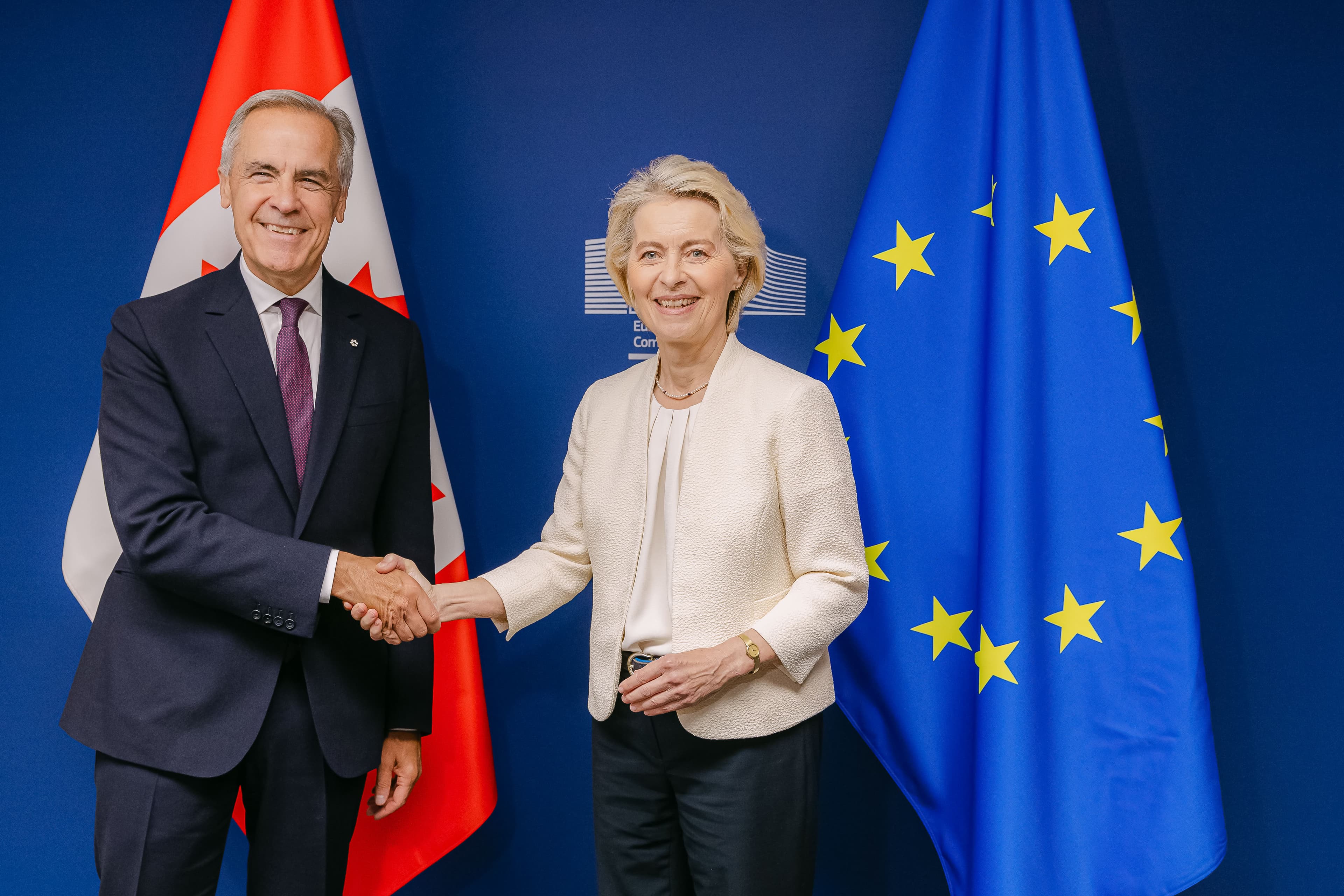
Canada and the European Union already trade under CETA, in force provisionally and still unratified by roughly ten member states, and agreed a Strategic Partnership Agreement in June 2026. Von der Leyen had invited Carney to attend the address as a guest.
After the quotation
The Commission's accompanying Letter of Intent for the 2026 address does not mention Canada or associate membership. Associate membership is not a status defined in the Union's treaties, and nothing has been signed.
How this statement is classified
Case context: Should Canada become an associate member of the European Union?
The label describes this statement’s response within the context above.
Why this label?
Relative to whether Canada should become an associate member of the European Union, von der Leyen is the source of the proposition and argues for it, framing it as bringing the relationship to the highest level possible. The closest competing label is mixed_or_conditional, which loses because the only qualification in her words is procedural: she offers to work on opening the door rather than claiming the door is open. That describes the stage the proposal has reached, not a condition on her support for it.
- Recorded on
- Published here
Should Canada become an associate member of the European Union?
Explore the case context, sources and public responses.
More from this case
Read the full case“This alliance is a positive process, that's my response to the American president. Canadians are united that nobody is going to tell us what language we speak, no-one is going to dictate our culture, or with whom we can strike agreements internationally.”Read statement
“Yesterday, President von der Leyen spoke of moving beyond CETA to an alliance for the future – opening the door to Canada becoming the European Union’s first associate member. Canada welcomes this ambition – polling shows an overwhelming majority of Canadians support much closer ties with Europe.” … “I want to be precise about what I am not proposing. I am not proposing a third bloc in order to become a great-power rival – only with better manners.” … “We are pursuing resilience so that no one can control our open markets, impair our sovereignty, threaten our territorial integrity, or undermine our freedoms, our democracies, our rule of law.”Read statement
“Madame von der Leyen did what we may call a friendly exaggeration. … So it's an exaggeration, but it's a friendly one, because it shows how much she's willing to have close links with us. … Canada doesn't want to transfer sovereignty, whether federal or provincial, to Brussels. That's something that will not happen. And the EU cannot give to Canada all the advantages of the EU without the constraints, because the EU members would say it's unfair for us. … Maybe she did not choose the right words, but it's a good wake-up call for everyone.”Read statement