
Should Canada become an associate member of the European Union?
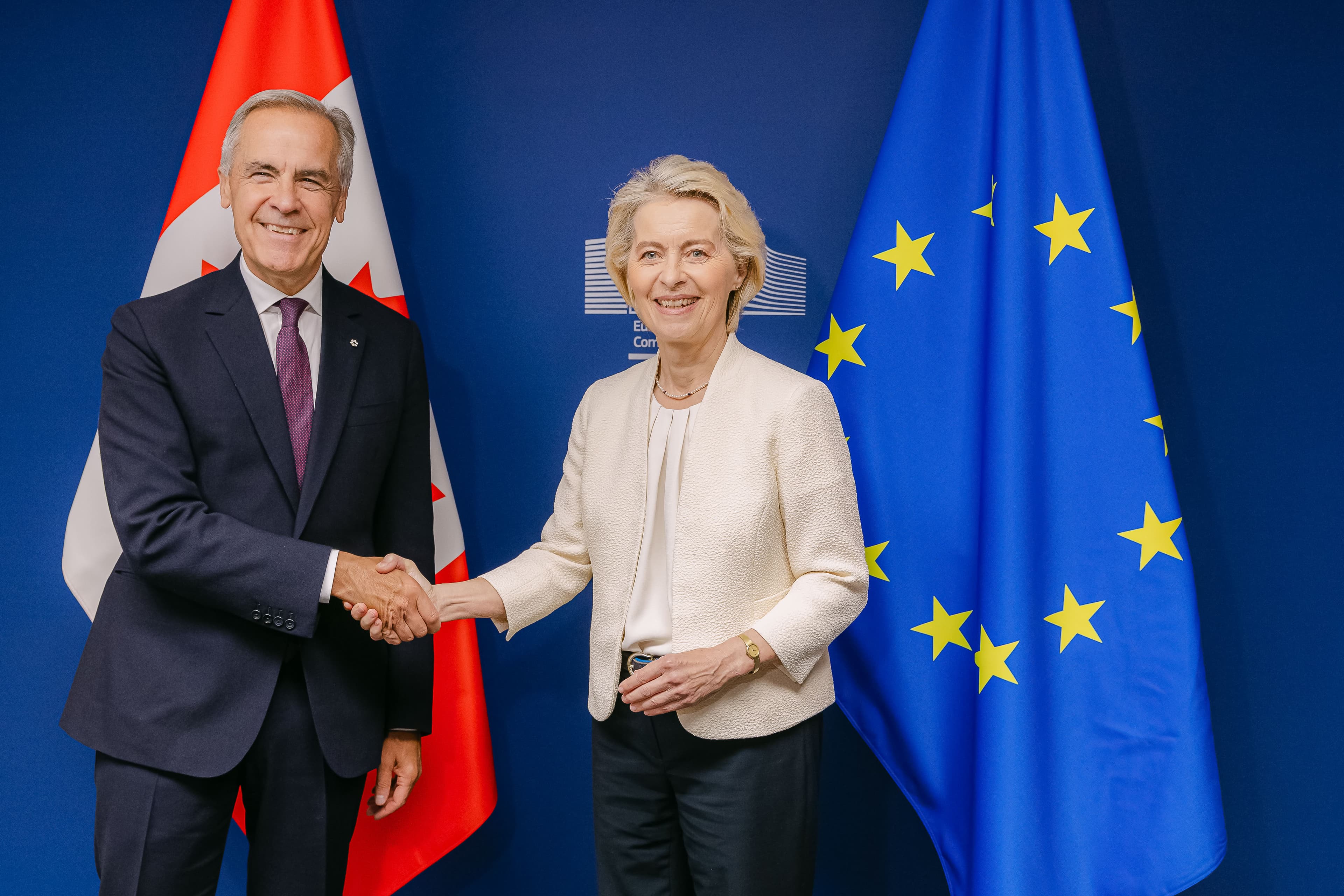
The European Commission president offered to open the door for Canada to become the European Union's first associate member. Mark Carney welcomed the ambition, Pierre Poilievre set red lines, and Donald Trump threatened tariffs. Nobody has defined what the status would mean.
Case period:
Published by The Dispute Index editorial teamPublished Updated
Overview
The proposal originates in von der Leyen's State of the European Union address (opens in a new tab) of 16 September 2026, reference SPEECH/26/1868, delivered in Strasbourg with Carney present. Her words were an offer to "work with you on opening the door for Canada to be the first associate member of the EU", not an announcement of any granted status, and the Commission's accompanying Letter of Intent for the 2026 address does not mention Canada or associate membership at all.
The status itself is undefined. A European Parliament study of association agreements records that association under Article 217 of the Treaty on the Functioning of the European Union "is not to be confused with associate membership", that "internal association (i.e. observer or associate membership status) is not foreseen in EU law", and that an associated country "cannot be granted decision-making powers within the EU institutions". What Canada would actually be offered has not been published.
What exists today is CETA, in force provisionally and still unratified by roughly ten member states; a Canada-European Union Strategic Partnership Agreement agreed in June 2026; and Canada's participation in SAFE as its first non-European member. An EU-Canada summit is scheduled for Montreal on 29 and 30 October 2026, and officials have suggested some form of agreement could emerge there.
The dispute began before the address. Poilievre's first public objection, on 13 September, responded to a Wall Street Journal report of talks rather than to von der Leyen. Carney has promised debates and a vote in the Canadian Parliament on the final structure of the alliance, but no motion, text or date exists, and he described the process as "the start of a road". Several widely circulated quotations in coverage of this dispute differ from the primary transcripts; each source record here notes where.
People in this case
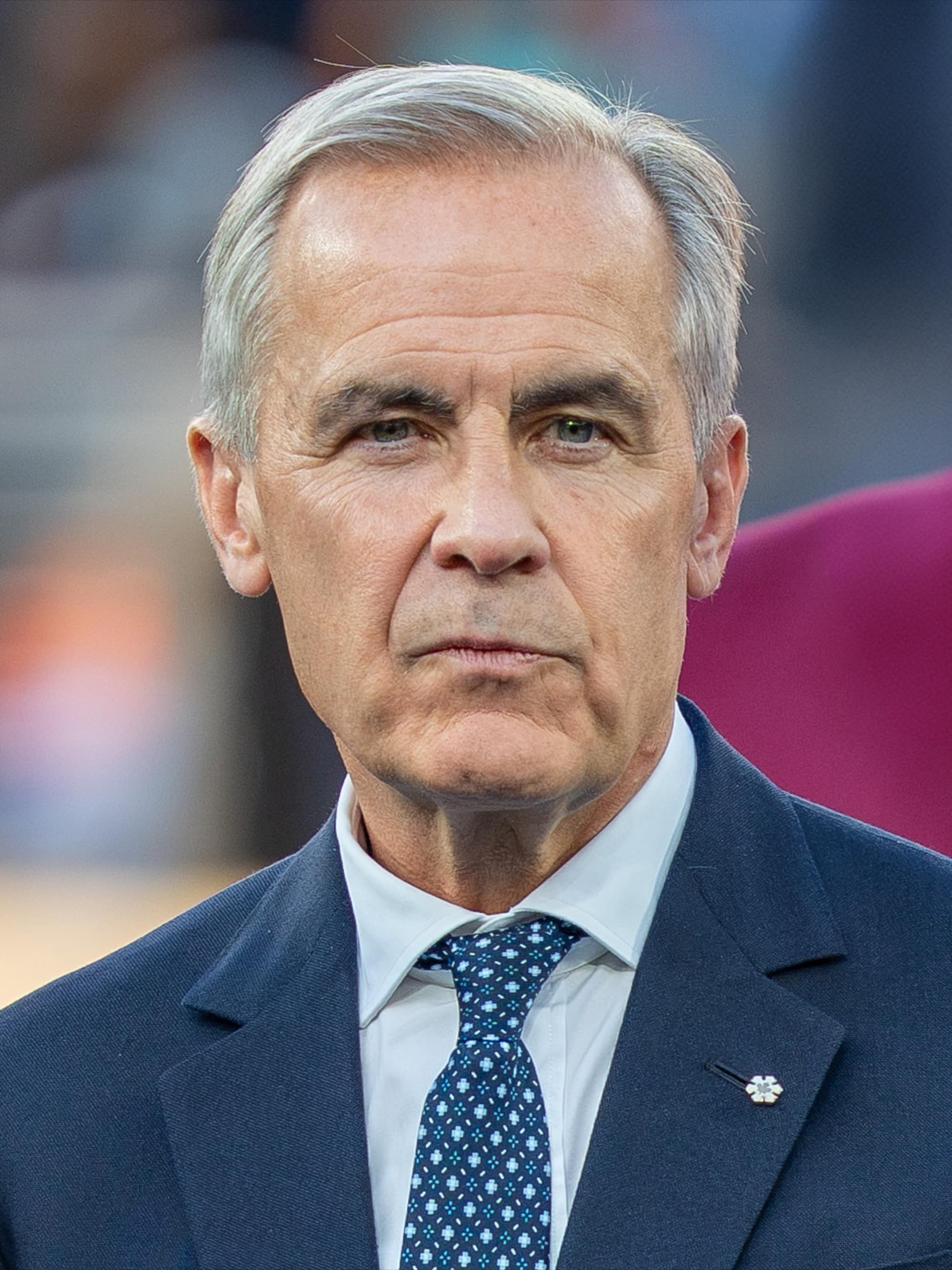 Mark CarneyDirectly involved
 Donald TrumpCommented
Response record
Responses
Latest recorded positions: 8. Dates: September 16, 2026 to September 17, 2026
Choose one response filter, or select All responses to see the full record.
2 responses on this page
Andrew Scheer "Never 51. Never 28. Pierre standing up for Canadian sovereignty!"
Read the original post (opens in a new tab)Andrew Scheer post: "Never 51. Never 28."Full postCondemnedCase context: Should Canada become an associate member of the European Union?
Why this label?
Relative to whether Canada should become an associate member of the European Union, Scheer rejects it flatly and without condition, which separates him from Poilievre's conditional red lines even though he is endorsing Poilievre's stand. The closest competing label is challenges_characterization, which loses because he is not disputing what the arrangement would be called or involve; he is refusing the outcome itself. Equating the proposal with American annexation is rhetorical framing rather than a separate claim, and the record does not treat the two as equivalent.
This label describes the statement’s response within the context above.
Read context and background
Posting on X, Scheer rejected associate membership outright, pairing it with Donald Trump's talk of Canada as a 51st American state. The reference to 28 is to Canada joining the European Union's twenty-seven members as a twenty-eighth, and he framed his party leader's objections as a defence of Canadian sovereignty.
Role at the time: Conservative member of Parliament and House Leader of the Official Opposition
Before the statement
Von der Leyen had offered to open the door to associate membership and Poilievre had set out conditions he said would make it a disaster for Canada. Trump had spent months describing Canada as a potential 51st state.
After the statement
Carney told the European Parliament he was not proposing a rival power bloc and promised a parliamentary vote on the final structure. Canada's ambassador to the European Union said Ottawa is not seeking membership.
 Donald Trump
"If they do that, if I think it’s at all a hostile act, I will put very serious tariffs or stop trading with Europe on many things.” … “If it’s a good intention, that’s fine. If it’s a bad intention, we’ll put very heavy tariffs on Europe.” … “I think it’s laughable … Canada has been a terrible trade partner."
Watch the original video (opens in a new tab)President Trump gaggles with press upon arrival at Charlotte, North CarolinaExchange on the EU-Canada associate-member proposal and tariff threatCondemnedCase context: Should Canada become an associate member of the European Union?
Why this label?
Relative to whether Canada should become an associate member of the European Union, Trump is against it and attaches a penalty to it, which is a substantive criticism of the proposal rather than of how it has been described. The conditional wording does not make this mixed: the condition attaches to his own reading of European intent and to what he would do about it, not to whether he supports the arrangement, and he separately calls the idea laughable. The closest competing label is minimizes, which loses because he treats the proposal as consequential enough to threaten trade over.
This label describes the statement’s response within the context above.
Read context and background
Asked about the proposal on the day it was made, Trump said that if he judged it a hostile act he would impose very serious tariffs on Europe or curtail trade in many goods, and that heavy tariffs would follow if he read the intention as bad. He called the idea laughable and described Canada as a terrible trade partner.
Role at the time: President of the United States, speaking to reporters on arrival in Charlotte, North Carolina
Before the statement
Von der Leyen had made the proposal that morning in Strasbourg. Trump's administration had been in a tariff dispute with Canada, which Carney cited as part of the reason for seeking other partners.
After the statement
European figures responded that the proposal was not directed against any third country. Carney said the alliance was a positive process and that a stronger, more sovereign Canada would be a more effective partner with the United States. No official transcript of the gaggle has been published.
President Trump gaggles with press upon arrival at Charlotte, North CarolinaExchange on the EU-Canada associate-member proposal and tariff threat
Sources
(9)
Official statement
2026 State of the Union Address by President von der Leyen
Relevant passage: Canada passage: "Alliance for the Future" and "opening the door for Canada to be the first associate member of the EU"
Excerpt
"I would like to work with you on opening the door for Canada to be the first associate member of the EU."
About this source
The European Commission's own published text of the State of the European Union address, delivered to the European Parliament plenary in Strasbourg on 16 September 2026 with Mark Carney present as an invited guest. Reference SPEECH/26/1868. This is the origin of the associate-member proposal. The text is an offer to work on opening the door, not an announcement that Canada has been granted any status, and wire copy that renders the line as "for Canada being the first associate member" does not match the Commission's own wording.
- Author
- Ursula von der Leyen
- Published
- Accessed
Interview
CBC Power & Politics: "Would EU 'associate member' status fly in Canada?"
Relevant passage: 00:53–09:17: Stéphane Dion interview; 01:26–02:10: "friendly exaggeration" passage; 05:25–06:00: sovereignty and CETA trade share; 08:27–09:05: expectations for the October EU–Canada summit. 09:19–10:40: Carney clip; 10:40–11:06: Poilievre clip; 11:06 onward: Power Panel.
Excerpt
"Madame von der Leyen did what we may call a friendly exaggeration."
About this source
Episode of CBC's Power & Politics published to the CBC News YouTube channel on September 16, 2026, running 22:19. Host David Cochrane interviews Stéphane Dion, former Canadian ambassador to Germany and to France and former special envoy to the European Union, now diplomat in residence at the Université de Montréal, on Ursula von der Leyen's associate-membership offer. The episode also carries clips of Mark Carney and Pierre Poilievre and a subsequent Power Panel discussion. Dion's quotations were transcribed from the episode audio; note that YouTube's auto-captions and an independent transcription disagree on one word in the "friendly exaggeration" passage, rendering it as "label" and "level" respectively, so that sentence is not quoted.
- Author
- CBC News
- Published
- Accessed
Reporting
Canada welcomes EU proposal to become 'associate member' (BBC)
Excerpt
"This alliance is a positive process, that's my response to the American president."
About this source
BBC report on Carney's European Parliament address and his press-conference response to Trump's tariff threat.
- Author
- Jessica Rawnsley
- Published
- Accessed
Original video
HasanAbi Twitch stream, September 16, 2026
Relevant passage: ~4:11:47
Excerpt
"I mean on the one hand I think this is good for middle powers, on the other hand I feel like this is purely symbolic and I also despise the European Union."
About this source
Hasan Piker's own live commentary on his Twitch stream, reacting to the Canada-EU associate membership proposal during a segment on the topic.
- Author
- Hasan Piker
- Published
- Accessed
Original post
Andrew Scheer post: "Never 51. Never 28."
Excerpt
"Never 51. Never 28. Pierre standing up for Canadian sovereignty!"
About this source
Andrew Scheer's own post on X, opposing associate membership by pairing it with Donald Trump's talk of Canada as a 51st state. "Never 28" refers to Canada becoming a twenty-eighth member alongside the Union's twenty-seven. X blocks automated retrieval of post pages, so authorship, date and text were confirmed through X's own embed endpoint rather than by reading the page directly; an editor should open the post before publication.
- Author
- Andrew Scheer
- Published
- Accessed
Reporting
How Canada-EU 'associate member' proposal raises questions for Carney's critics
Relevant passage: Wilkinson on sovereignty and on not seeking membership
Excerpt
"We are not looking to be a member of the European Union, because that is a sovereignty issue and people give up certain portions of their sovereignty (to be part of the bloc)."
About this source
Global News report carrying Canada's ambassador to the European Union directly on what Ottawa is and is not seeking, alongside quotations from Poilievre and von der Leyen. The Wilkinson remarks are corroborated by a France 24 liveblog the following day. The same article compresses Poilievre's conditional objections into assertions, which is why his own record on this case cites his interview rather than this piece.
- Author
- Alex Boutilier
- Published
- Accessed
Interview
Poilievre interview on the EU associate-member proposal
Relevant passage: Poilievre's red lines on taxes, laws and immigration, and on the absence of published terms
Excerpt
"if he’s talking about forcing Canadians to pay taxes to Brussels bureaucrats or to follow European Union laws that we never voted on, or God forbid, to bring European policies for immigration, that would be a disaster for Canada"
About this source
Juno News interview released on 16 September 2026, the fullest spoken account of Pierre Poilievre's position. His objections are stated as conditions on terms that have not been published, not as assertions about an agreed deal. Reporting that renders them as warnings that Canadians would fund the EU budget, follow Brussels regulation and cede immigration control compresses conditional questions into claims. His earlier post of 13 September reacted to a Wall Street Journal report and predates von der Leyen's address.
- Author
- Marc Patrone
- Published
- Accessed
Original video
President Trump gaggles with press upon arrival at Charlotte, North Carolina
Relevant passage: Exchange on the EU-Canada associate-member proposal and tariff threat
Excerpt
"If they do that, if I think it's at all a hostile act, I will put very serious tariffs or stop trading with Europe on many things."
About this source
The White House's own recording of President Trump's press gaggle on arrival at Charlotte Douglas International Airport on 16 September 2026, the day of von der Leyen's address. His remarks on the proposal were made here, not on Truth Social, and were conditional on his own judgement of the European Union's intent. No official transcript of the gaggle has been published, so the wording rests on outlet transcription corroborated by the Associated Press and CNBC rather than on the Dispute Index's own transcription of the tape.
- Author
- The White House
- Published
- Accessed
Official statement
Prime Minister Carney delivers address to the European Parliament
Relevant passage: Passages on welcoming the ambition, on what is not being proposed, and on pursuing resilience
Excerpt
"Canada welcomes this ambition – polling shows an overwhelming majority of Canadians support much closer ties with Europe."
About this source
The Prime Minister's Office transcript of Mark Carney's address to the European Parliament in Strasbourg on 17 September 2026, the day after von der Leyen's proposal. Carney attributes the associate-member phrase to von der Leyen rather than adopting it, and the separate PMO readout of their meeting avoids the term entirely. Wire copy rendering his sovereignty passage as "no country could control Canada's markets" does not match this transcript, which reads "no one" and "our", and omits his references to territorial integrity, democracies and the rule of law.
- Author
- Mark Carney
- Published
- Accessed
Corrections
(0)
Corrections address errors in our reporting or labels. When a speaker changes their position, we add a separate statement and link it to the earlier one.
No corrections on this page.