Public disputes concerning the January 6, 2021 attack on the U.S. Capitol, subsequent prosecutions, pardons, compensation proposals, and official responses.
Published coverage on this page: 4+ cases · 24+ statements. Statements are ordered newest first.
Topic updates
Follow this topic
Get free email updates about January 6 Attack. We will email you when we add or correct a case in this topic.
Enable JavaScript to request email updates about this topic.
We will send a confirmation email first. Every update email has a link to stop. How we handle your email.
Vic Mellor defends his January 6 participation as peaceful protest; Seth Magaziner condemns it. Read Mellor's campaign account and compare the candidates' remarks at their September 10 confrontation in Providence.
Lee joins the argument that discipline for disputed legal advocacy infringes speech rights.
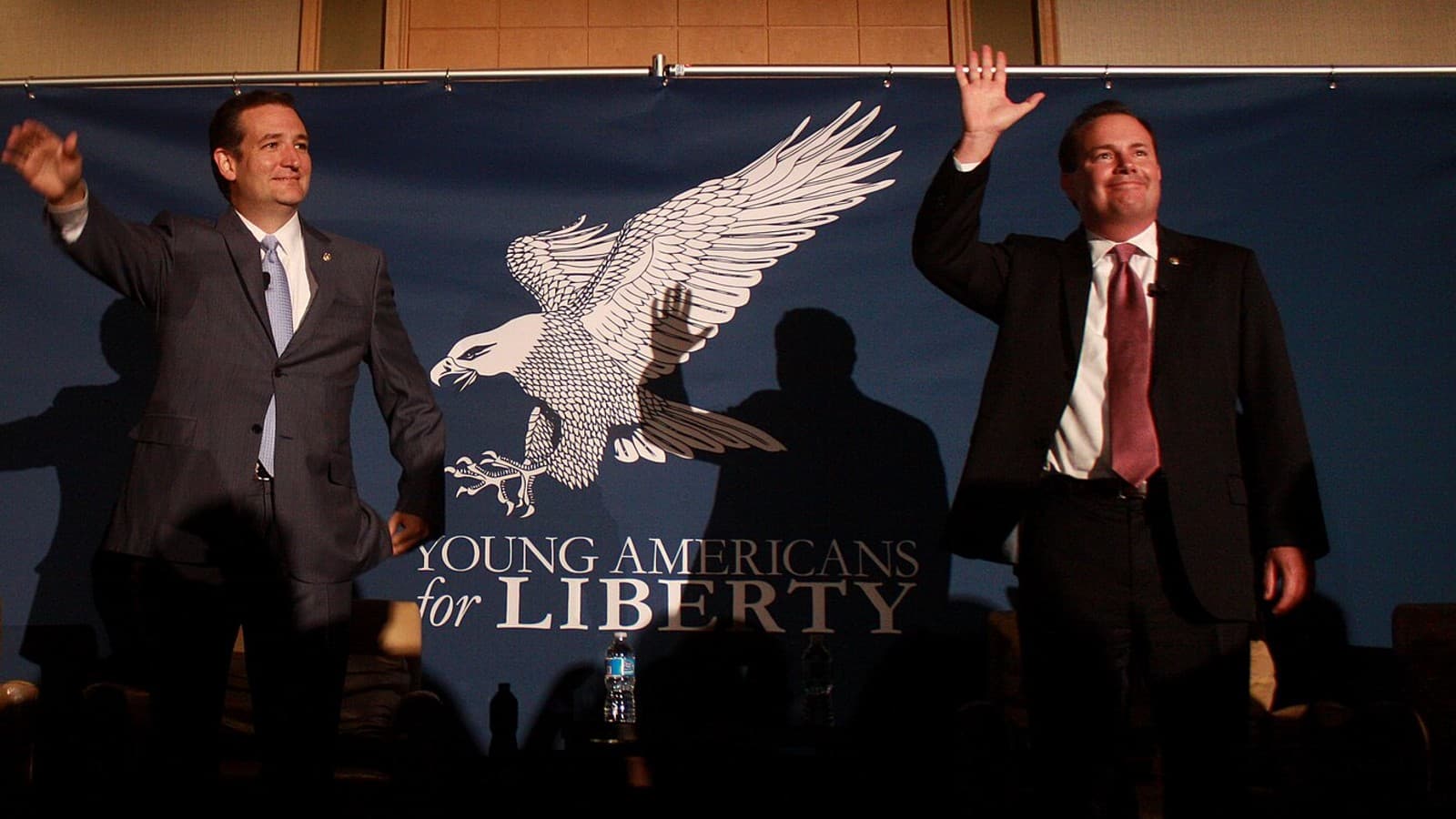
“Action: Submitted a joint amicus brief with Ted Cruz urging Supreme Court review of John Eastman's California disbarment.”
Read the original text (opens in a new tab)Brief for U.S. Senators Ted Cruz and Mike Lee as Amici Curiae in Support of PetitionerNo. 26-336; Interest of Amici Curiae and Summary of the Argument
What this label refers to
Relative to Eastman's disbarment, the brief Lee joined argues that the sanction punishes protected legal advocacy and fails strict scrutiny. That criticizes the disbarment itself rather than how it is described.
Eastman's disbarment infringes protected attorney advocacy and threatens clients' access to independent counsel.
“Action: Submitted a joint amicus brief with Mike Lee urging Supreme Court review of John Eastman's California disbarment.”
Read the original text (opens in a new tab)Brief for U.S. Senators Ted Cruz and Mike Lee as Amici Curiae in Support of PetitionerNo. 26-336; Interest of Amici Curiae and Summary of the Argument
Why we used this label
Relative to Eastman's disbarment, the brief Cruz joined argues that the sanction punishes protected legal advocacy and fails strict scrutiny. That criticizes the disbarment itself rather than how it is described.
Role at the time: Senate Judiciary Committee chairman
Condemned
Statement summary
Grassley calls Smith's actions unlawful and unconstitutional and criticizes secretly obtaining committee members' phone data. Those judgments are Grassley's assertions.
“the major embarrassment of the hearing was Democrats
falling over themselves defending unlawful and unconstitutional actions by Jack Smith.”
Read the official statement (opens in a new tab)Grassley replies to Senate Judiciary Democrats about Jack Smith evidencePage 1, paragraph beginning Contrary to your misguided statement; page 2, opening paragraph on phone data; pages 3-4, access to records.
What this label refers to
Grassley condemns Smith's investigative conduct. The next page connects his criticism to the collection of members' phone data.
Role at the time: U.S. senator from Georgia, speaking in a Senate debate
Condemned
Response to this claim
Collins’s answer at the Savannah event amounted to support for taxpayer-funded payouts to violent January 6 participants.
“he wants to give your tax dollars to the violent thugs and criminals who sacked the U.S. Capitol on January 6th.”
Read the original text (opens in a new tab)Ossoff and Collins October 8 Senate debate transcriptOssoff response to the voter-ID question; passage beginning: he wants to give your tax dollars
Why we used this label
He explicitly condemns the alleged compensation policy.
The reference point is the investigators' collection of congressional communications records. Chenoweth condemns what he describes as deliberate concealment from the judge in obtaining a nondisclosure order.
Role at the time: U.S. senator from New Jersey and member of the Senate Judiciary Committee, listed by the Justice Department among members whose texts with White House personnel were obtained
Challenged the characterization
Statement summary
During his questioning of Smith, Sen. Cory Booker said Republicans were trying to say the investigation was partisan, and said his own records and text messages, and those of Karen Bass, were also swept up.
“And they're trying to say this is partisanship. My records were swept up. My text messages were part of it. Karen Bass's text messages were a part of it.”
Watch the original video (opens in a new tab)Oversight of Jack Smith's Abuse of Authority and the Targeting of Republicans and Related Matters (hearing video) · Senate Committee on the JudiciarySen. Cory Booker's remarks to Smith, about 3:29:56 to 3:30:45 on the archived video timeline
What this label refers to
The case asks whether the collection of members' records was proper. Booker did not address the Speech or Debate or nondisclosure-order arguments. He disputed the idea that the collection was partisan by saying his own records and text messages, and Karen Bass's, were also included. That challenges a characterization without addressing the collection's legality, so we labeled it Challenged the characterization.
Role at the time: U.S. Representative for Kentucky's 4th congressional district
Condemned
Response to this claim
The FBI knew who planted the January 2021 pipe bombs but concealed that information.
“All of the people who took credit at the podium upon the arrest of Brian Cole Jr. are complicit, either through negligence or malfeasance. Mr. Cole is not the J5/J6 pipe bomber, and the identity of the actual perpetrator is being obscured.”
Reference point: the accusation that FBI officials knew the bomber's identity and concealed it. Massie asserts that the real perpetrator's identity is being obscured and that the officials who announced the arrest, including FBI leaders, are complicit. That advances the concealment allegation, which this case labels Condemned, as with Bongino's January 2025 remark. We did not use Mixed or conditional because the words "negligence or malfeasance" leave the officials' motive open but not his conclusion that the identity is being hidden. Evidence: primary, Massie's own post on X.
Role at the time: Former U.S. Capitol Police officer who defended the Capitol on January 6, 2021, speaking at a Magaziner campaign press conference
Condemned
Response to this claim
Magaziner argues that Mellor's January 6 participation supported an attempt to overturn the election and disqualifies him from representing Rhode Island in Congress.
“For anybody, any human being to call that day a great day should absolutely be ashamed of themselves.”
Relative to Mellor's January 6 participation, Dunn says Mellor should have been arrested because the Capitol was closed and says anyone who calls the day a great day should be ashamed. That is an express condemnation, not just a dispute over a label.
Role at the time: D.C. Metropolitan Police officer who defended the Capitol on January 6, 2021, speaking at a Magaziner campaign press conference
Condemned
Response to this claim
Magaziner argues that Mellor's January 6 participation supported an attempt to overturn the election and disqualifies him from representing Rhode Island in Congress.
“Victor Mellor was, at best, supporting the terrorists that wanted to install an unelected dictator against the will of the people of the United States.”
Hodges expressly denounces Mellor's January 6 participation as support for those who wanted to install an unelected dictator. That is a substantive condemnation, not merely a dispute over terminology.
Role at the time: U.S. representative for Rhode Island's 2nd Congressional District and Democratic nominee, speaking at a State House press conference
Condemned
Response to this claim
Magaziner argues that Mellor's January 6 participation supported an attempt to overturn the election and disqualifies him from representing Rhode Island in Congress.
“No one who tried to attack our democracy on January 6th deserves to represent Rhode Island in Congress.”
Open source (opens in a new tab)WJAR interviews with Magaziner and Mellor about January 6Body paragraphs quoting Magaziner on democratic representation, followed by Mellor on violence, regret and police
Why we used this label
Relative to Mellor's January 6 participation, Magaziner expressly rejects the conduct and argues it is disqualifying. This substantive condemnation is stronger than a dispute over terminology. The label records Magaziner's evaluation, not a finding that Mellor personally assaulted an officer.
Role at the time: Republican nominee for Rhode Island's 2nd Congressional District, speaking to reporters outside the State House
Defended or excused
Response to this claim
Mellor maintains that his January 6 participation was legitimate political protest and that he did nothing wrong.
“I didn’t do anything wrong, so no, I don’t apologize for anything either.”
Open source (opens in a new tab)Rhode Island Current coverage of the Magaziner-Mellor confrontation in ProvidenceOpening account of the State House press conference and the subsequent questions to Mellor about regret, violence and apology
Why we used this label
Relative to Mellor's own January 6 participation, he says his conduct was acceptable and requires no apology. This is a substantive defense, beyond disputing a label. His rejection of violence by others does not make his defense of his own conduct mixed.
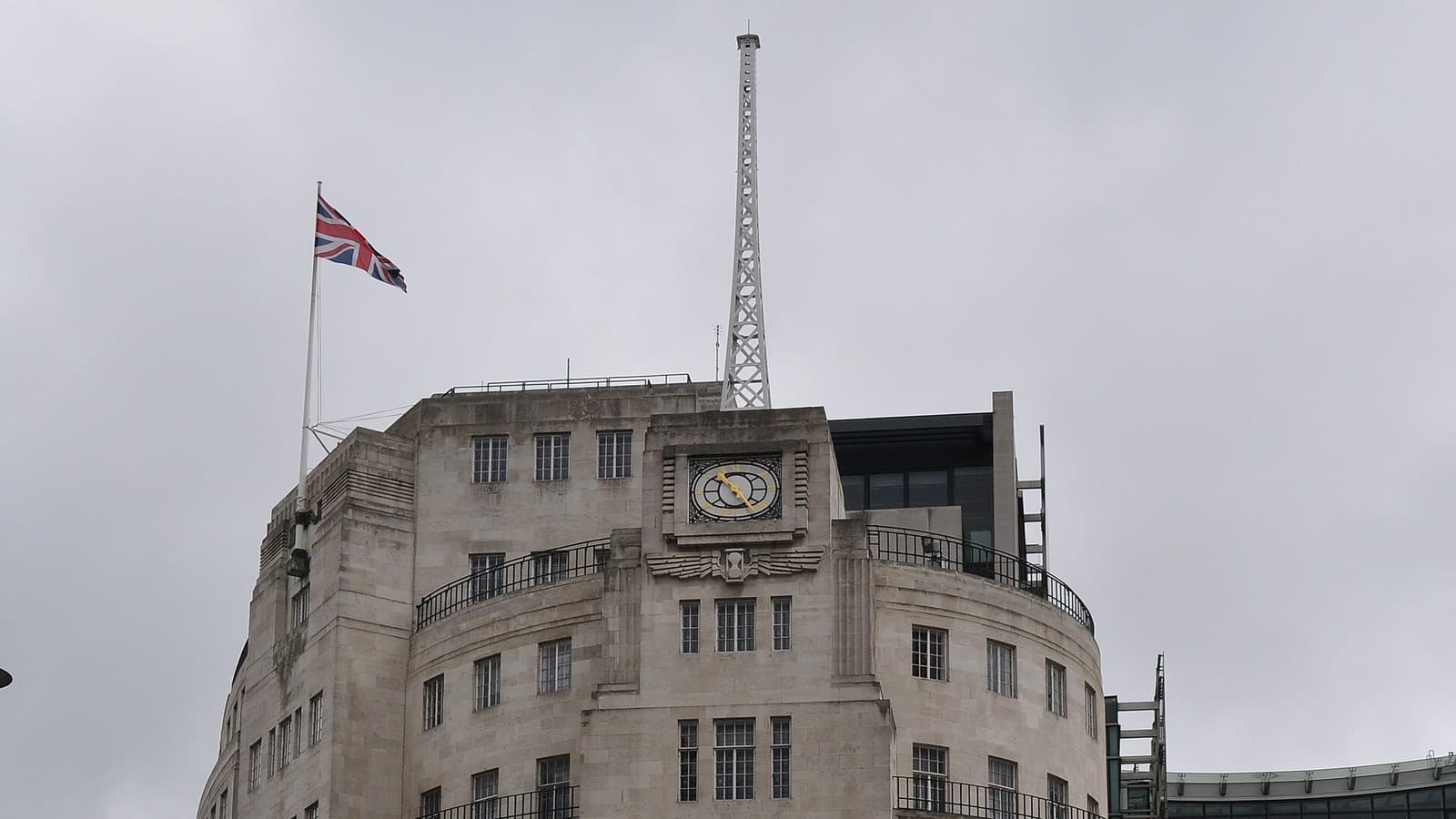
The reference point is the BBC's edit. Its filing disputes that the edit supports a viable legal claim while recording its earlier apology and retraction.
Role at the time: U.S. senator from Georgia and Democratic candidate for reelection, at a campaign rally
Condemned
Response to this claim
Collins’s answer at the Savannah event amounted to support for taxpayer-funded payouts to violent January 6 participants.
“And at that Savannah breakfast last week, Mike told Mr. Box he wants to pay those violent criminals with your tax dollars.”
Watch the original video (opens in a new tab)C-SPAN: Ossoff Rips Mike Collins for Backing Compensation for January 6th RiotersC-SPAN clip of Ossoff's Atlanta campaign rally, August 16, 2026; about 0:30 to 1:51; quoted line at about 1:40
Why we used this label
The reference point is whether Collins's answer in Savannah amounted to support for taxpayer-funded compensation for January 6 defendants. Ossoff says Collins told Box he wants to pay violent criminals with tax dollars and presents it as a reason to oppose Collins. We used Condemned. Challenged the characterization loses because Ossoff asserts the critical reading rather than disputing one. We checked the quote against the audio of C-SPAN's clip.
Role at the time: Former Washington, D.C., Metropolitan Police officer injured defending the Capitol on January 6
Condemned
Response to this claim
Collins’s answer at the Savannah event amounted to support for taxpayer-funded payouts to violent January 6 participants.
“Mike Collins is a liar. The question was crystal clear. His response was automatic. And you know why? Because that’s what he truly believes.”
Open source (opens in a new tab)A Jan. 6 exchange gives Georgia Sen. Jon Ossoff a new line of attack on challenger Mike CollinsParagraphs quoting Ossoff's interview and Michael Fanone's response to the Collins campaign's clarification
Why we used this label
The reference point is whether Collins's answer in Savannah amounted to support for taxpayer-funded compensation for January 6 defendants. Fanone says the answer showed exactly that and calls Collins a liar for walking it back, which criticizes the conduct under scrutiny. We used Condemned. Challenged the characterization loses because Fanone accepts the critical reading and attacks Collins for it. The quote is from the Atlanta Journal-Constitution's report.
Role at the time: Mike Collins U.S. Senate campaign, through spokesperson Meyer Siegfried
Challenged the characterization
Statement summary
A Collins campaign spokesperson rejected the claim that Collins had committed to pay January 6 defendants, while maintaining support for a process through which people wronged by the government could seek relief.
Quotation excerpt
“Mike Collins fully supports holding the government accountable when federal agencies abuse their power and believes Americans who’ve been wronged by their government ought to have a path to seek justice. He does not support a blank-check…”
Read full quotation
“Mike Collins fully supports holding the government accountable when federal agencies abuse their power and believes Americans who’ve been wronged by their government ought to have a path to seek justice. He does not support a blank-check fund or automatic taxpayer-funded payouts to anyone simply because they were prosecuted for January 6.”
Open source (opens in a new tab)Georgia Recorder report on Mike Collins’s January 6 compensation remarksSavannah breakfast Q&A; Collins campaign clarification
What this label refers to
The campaign expressly disputes Ossoff’s characterization of Collins’s answer as support for taxpayer-funded payouts to January 6 defendants.
Role at the time: U.S. senator from Georgia and Democratic candidate for reelection, in a newspaper interview
Condemned
Response to this claim
Collins’s answer at the Savannah event amounted to support for taxpayer-funded payouts to violent January 6 participants.
“Mike must recant his support for taxpayer-funded payouts to January 6 violent traitors, and Mike Collins must recant his 2020 election denial.”
Open source (opens in a new tab)A Jan. 6 exchange gives Georgia Sen. Jon Ossoff a new line of attack on challenger Mike CollinsParagraphs quoting Ossoff's interview and Michael Fanone's response to the Collins campaign's clarification
Why we used this label
The reference point is whether Collins's answer in Savannah amounted to support for taxpayer-funded compensation for January 6 defendants. Ossoff treats the answer as support for payouts and demands that Collins recant it, which rejects the conduct. We used Condemned. Challenged the characterization does not fit because Ossoff adopts the critical reading rather than disputing a description. The quote is from the AJC's report of his interview.
Role at the time: Republican nominee for U.S. Senate in Georgia
Mixed or conditional
Statement summary
In answer to a question about an anti-weaponization compensation fund and relief for people the questioner said had been harmed by a weaponized political system, Collins said the government has liability when it harms someone.
“A lot of things have been politicized and weaponized. And when the federal government harms you, then yes, they have a liability to you. That’s easy, yes sir.”
Open source (opens in a new tab)Georgia Recorder report on Mike Collins’s January 6 compensation remarksSavannah breakfast Q&A; Collins campaign clarification
What this label refers to
Collins’s answer is conditional on government harm and responds to a question broader than January 6 defendants, but the question was posed by a pardoned January 6 defendant who explicitly included January 6 participants.
L. Margaret Harker is senior litigation counsel at the New Civil Liberties Alliance. She previously worked as a federal prosecutor and trial attorney and as counsel for congressional investigations. She earned her undergraduate degree at Santa Clara University and her law degree at the University of Richmond. She clerked for U.S. District Judge Henry E. Hudson and Virginia Court of Appeals Judge Randolph A. Beales.
Mark Chenoweth is president and chief legal officer of the New Civil Liberties Alliance. His legal career includes positions in federal agencies, Congress and the Washington Legal Foundation. He graduated from Yale College and the University of Chicago Law School. He was the first chief of staff to U.S. Representative Mike Pompeo. He previously worked as in-house counsel for Koch Industries and as a regulatory associate at Wilmer, Cutler & Pickering. He clerked for U.S. Court of Appeals Judge Danny J. Boggs.
Margot Cleveland is an attorney, legal commentator and senior legal correspondent for The Federalist. She is of counsel at the New Civil Liberties Alliance and previously served as a federal appellate law clerk. She received the Hoynes Prize at Notre Dame Law School and taught at Notre Dame for more than a decade.
Caitlin M. Moyna is senior litigation counsel at the New Civil Liberties Alliance. She has represented plaintiffs and defendants in commercial litigation, including securities, antitrust and contract cases. She graduated from Dartmouth College and Northwestern University School of Law. She began her legal career at Cravath, Swaine & Moore and later was a partner at Grant & Eisenhofer.
Marsha Blackburn is a Republican politician in Tennessee and a candidate for governor. She represents Tennessee in the U.S. Senate. She previously held office in the U.S. House and Tennessee Senate.
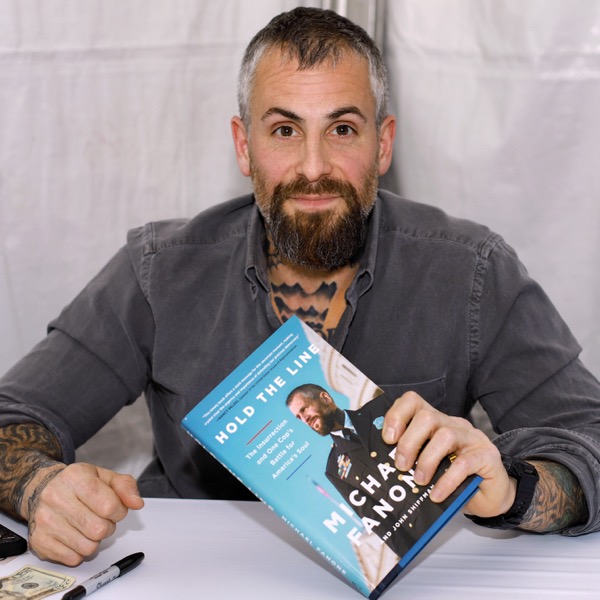
Author and former U.S. Capitol Police officer who served from 2009 to 2023. He testified before the House select committee on the January 6 attack, later ran for Congress in Maryland as a Democrat, and speaks publicly about policing and democracy.