
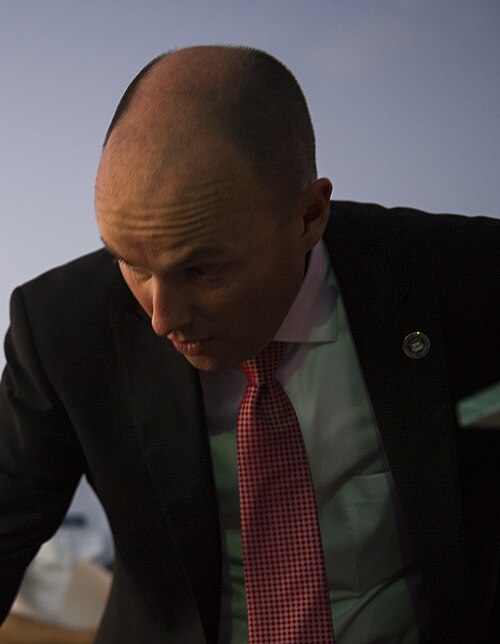
Spencer Cox

Portrait of Spencer Cox
U.S. Navy photo by Petty Officer 2nd Class Somers SteelmanSourcePublic domainWikimedia Commons image size; no additional edits.

Spencer Cox is the Republican governor of Utah, in office since January 2021. He previously held office as lieutenant governor after work in local government and the state legislature, including as mayor of Fairview. Cox studied at Snow College, Utah State University and Washington and Lee University School of Law. He clerked for federal judge Ted Stewart before working at a Salt Lake City law firm and later joined CentraCom as vice president and general counsel. He was chair of the National Governors Association from 2023 to 2024.

What we have documented

We have documented 2 statements by Spencer Cox, in 2 cases. Each statement below gives the quotation, its original source and a link to the full case.

Case updates

Keep up with who wants to ban, limit or keep Flock cameras

Get an email if a candidate or official takes a new position on plate-reader networks, or if a city, legislature or court acts on them.

Important updates only. Free. Confirm your email to start. Unsubscribe anytime. How we handle your email.

Statements by Spencer Cox

Portrait of Spencer Cox

Spencer Cox

Role at the time: Utah governor

Mixed or conditional

Statement summary

Cox ordered a review of ALPR rules and said he would support legislation if the review found gaps in privacy protections.

“If there are some gaps, then yes, I would absolutely support legislation”
Open the original interview (opens in a new tab)Cox orders review of Flock camera privacy rulesAugust 20 news conference; New legislation needed section
Why we used this label

Relative to networked ALPR surveillance, Cox supports use subject to privacy protections and a review of their adequacy. His proposed remedy is oversight and possible legislation.

Portrait of Spencer Cox

Spencer Cox

Role at the time: Governor of Utah, in a State of Utah press release

Defended or excused

Statement summary

Cox says the historic landmarks remain under federal protection and that the smaller monuments let agencies direct limited resources to specific sites rather than millions of surrounding acres.

“The question has never been whether to protect them, but how to protect them best. The historic landmarks and other nationally significant resources remain under federal protection, while allowing agencies to direct limited resources toward caring for these specific sites rather than millions of surrounding acres.”
Read the official statement (opens in a new tab)The State of Utah Applauds National Monuments ModificationsFull release
Why we used this label

Cox says the key sites remain protected and that the smaller monuments let agencies focus limited resources on them, a defense of the cuts, so we labeled it Defended or excused.

A participant is a subject of the case. A speaker has a statement documented in it. A commentator has an opinion or editorial documented in it.

Case

Five tribes sue to undo Trump's cuts to Bears Ears and Grand Staircase-Escalante, saying only Congress can revoke a monument; Utah leaders say the cuts follow the Antiquities Act's size limit

Relationship to this case: Speaker

Five tribes sued over President Trump's July proclamations cutting Bears Ears and Grand Staircase-Escalante by about 90 percent, saying only Congress can revoke a monument. Utah's governor, attorney general and Sen. Mike Lee say the cuts respect the Antiquities Act.

Public LandsTribal SovereigntyPublished

Topics in this coverage