All topics

Tribal Sovereignty

Disputes over the governing authority of Native nations in the United States, including how far federal, state and local governments may regulate tribal land, businesses and members, and how federal trust and restricted-fee land is acquired.

Published coverage on this page: 1 case · 5 statements. Statements are ordered newest first.

Topic updates

Follow this topic

Get free email updates about Tribal Sovereignty. We will email you when we add or correct a case in this topic.

Enable JavaScript to request email updates about this topic.

We will send a confirmation email first. Every update email has a link to stop. How we handle your email.

Related cases

Statements

Filter by response label

Labels describe a response to the linked claim or the action explained in the statement summary. Choose one or more.

5 matching statements

J. Conrad Seneca

Role at the time: President of the Seneca Nation of Indians

Defended or excused

Response to this claim

The 5 Miami Street site is sovereign Seneca Nation land, and the City of Buffalo has no authority to stop construction there.

Quotation excerpt

“Our nearly four-acre site is sovereign land and was placed in Restricted Fee status by the Department of Interior three years ago, something that the City acknowledged in writing in 2023. Despite meeting with Sean Ryan and other City…”
Read full quotation
“Our nearly four-acre site is sovereign land and was placed in Restricted Fee status by the Department of Interior three years ago, something that the City acknowledged in writing in 2023. Despite meeting with Sean Ryan and other City officials in person in early September to open dialogue between our governments, the City instead chose to fight the Nation over our sovereign rights on our land. I have made it clear that the proposed Seneca One Stop project will move forward and that the Seneca Nation will always fight to defend our sovereignty, our treaties, and our rights to create economic opportunity on our lands in the way we best see fit for the benefit of our people.”
Read the official statement (opens in a new tab)A message from President J.C. Seneca · Seneca Nation of IndiansParagraphs on the Seneca One Stop project
Why we used this label

The reference point is the Seneca Nation's construction of a fuel station at 5 Miami Street on land it holds in restricted fee, without the city permits and reviews Buffalo says are required. Seneca defends the construction as development on sovereign land with federal restricted-fee status, blames the city for choosing a fight, and says the project will move forward.

Logo of City of Buffalo

City of Buffalo

Role at the time: Plaintiff, in its complaint in the U.S. District Court for the Western District of New York

Condemned

Response to this claim

The Seneca Nation's acquisition of 5 Miami Street does not qualify for restricted-fee status under the Seneca Nation Settlement Act because the land was not bought with the Act's settlement money.

“The City of Buffalo brings this action under the Administrative Procedure Act to annul an arbitrary, capricious, and facially defective decision by the Department of the Interior”
Read the original text (opens in a new tab)City of Buffalo v. U.S. Department of the Interior, No. 1:26-cv-02275 (W.D.N.Y.), complaint (Dkt. 1) · City of BuffaloComplaint, paragraphs 1-33
Why we used this label

The reference point is the Seneca Nation's construction of a fuel station at 5 Miami Street on land it holds in restricted fee, without the city permits and reviews Buffalo says are required. The city's complaint attacks the federal decision on which the Nation bases its claim that the site is outside city control, and asks the court to declare the site under city jurisdiction.

J. Conrad Seneca

Role at the time: President of the Seneca Nation of Indians

Defended or excused

Response to this claim

The 5 Miami Street site is sovereign Seneca Nation land, and the City of Buffalo has no authority to stop construction there.

“While Sean Ryan continues his act, we will continue developing our land for the benefit of our people and creating local jobs, just as we have done with our other developments on our other sovereign lands within the city of Buffalo.”
Open source (opens in a new tab)City of Buffalo files lawsuit to stop proposed Seneca One Stop gas station · Spectrum NewsFull article
Why we used this label

The reference point is the Seneca Nation's construction of a fuel station at 5 Miami Street on land it holds in restricted fee, without the city permits and reviews Buffalo says are required. Seneca defends the construction as the Nation's sovereign right on its own land and says work will continue despite the lawsuit.

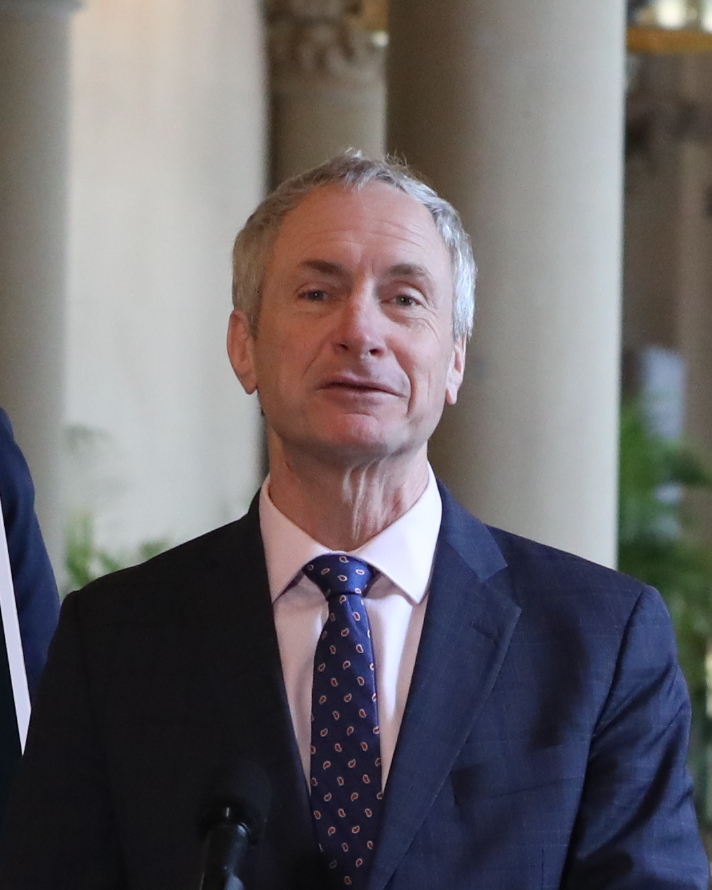
Portrait of Sean Ryan

Sean Ryan

Role at the time: Mayor of Buffalo

Condemned

Statement summary

Announcing the city's state-court lawsuit, Ryan says the project would have a major impact on the neighborhood and the Buffalo River and that any entity developing in Buffalo must account for that impact and be a good neighbor.

Quotation excerpt

“We have a responsibility to protect those investments and the people who live, work, and spend time here. It is incumbent on us to make sure that any entity developing a project in Buffalo understands the impact it will have on the…”
Read full quotation
“We have a responsibility to protect those investments and the people who live, work, and spend time here. It is incumbent on us to make sure that any entity developing a project in Buffalo understands the impact it will have on the surrounding community and does its part to be a good neighbor.”
Read the official statement (opens in a new tab)Mayor Ryan Announces Lawsuit to Stop Proposed Miami Street Truck Stop · City of BuffaloFull release

What this label refers to

The reference point is the Seneca Nation's construction of a fuel station at 5 Miami Street on land it holds in restricted fee, without the city permits and reviews Buffalo says are required. Ryan announces a lawsuit to stop the construction and says the developer must answer for the project's impact on the community.

Portrait of Sean Ryan

Sean Ryan

Role at the time: Mayor of Buffalo

Condemned

Statement summary

Ryan says the planned fuel depot does not fit the Old First Ward and runs against more than a decade of the city's plans for the Ohio Street corridor, as the city demands that the Seneca Nation stop work at the site.

“This is not a good fit for this neighborhood, and it runs counter to the vision we have been building for this corridor for more than a decade”
Read the official statement (opens in a new tab)Mayor Ryan Demands Seneca Nation Halt Construction Activity at Miami Street Site · City of BuffaloFull release

What this label refers to

The reference point is the Seneca Nation's construction of a fuel station at 5 Miami Street on land it holds in restricted fee, without the city permits and reviews Buffalo says are required. Ryan opposes the project, saying it does not fit the neighborhood, in a release announcing the city's demand that work stop.

People in this topic

J. Conrad Seneca

J. Conrad Seneca, of the Cattaraugus Territory, has been president of the Seneca Nation of Indians since November 2024. A business owner, he was first elected to the Seneca Nation Council in 1990 and has also served as the Nation's treasurer. His father, William Seneca, was president of the Nation in 1968.

1 case and 2 statements

Sean Ryan

Sean Ryan is a Democrat who has been mayor of Buffalo, New York, since January 1, 2026. An attorney who grew up in Lackawanna, he graduated from the State University of New York at Fredonia and Brooklyn Law School. He represented parts of Erie County in the New York State Assembly from 2011 to 2020 and in the State Senate from 2021 to 2025, where he chaired the Commerce, Economic Development and Small Business Committee.

1 case and 2 statements