
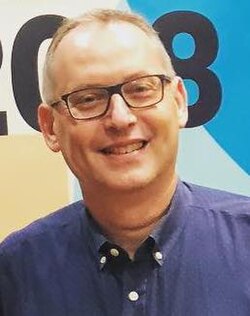
Rick Hasen

Portrait of Rick Hasen
Terri Sewell or staffSourcePublic domainExisting portrait crop retained; resized only.

Richard L. Hasen is a professor of law and political science at UCLA, where he directs the Safeguarding Democracy Project. He is a leading scholar of American election law and writes the Election Law Blog.

What DI has documented

DI has documented statements by Rick Hasen on 2026 Midterm Elections, Election Security, and Government Spending, among other topics. Read the quotations, original sources and related cases below.

Topics in this coverage

Statements by Rick Hasen

Portrait of Rick Hasen

Rick Hasen

Role at the time: Professor of law and political science at UCLA and director of the Safeguarding Democracy Project, posting on his own Bluesky account

Challenged the characterization

Statement summary

Responding to press inquiries the day after Trump's announcement, UCLA election law professor Rick Hasen said the Supreme Court has held that generalised campaign promises are protected by the First Amendment, so the pledge does not amount to illegal vote buying, and linked to the authority he relied on. He added a parenthetical questioning why anyone would believe the promise would be kept. The word "slouch" in his post appears to be a typing error for "such."

“For all the reporters asking me if this is illegal vote buying, the Supreme Court has said slouch generalized campaign promises are First Amendment protected”
Read the original post (opens in a new tab)Rick Hasen on whether Trump's $5,000 pledge is illegal vote buying · Rick HasenBluesky post by @rickhasen.bsky.social, 2026-09-10 02:39 UTC, linking to a Supreme Court opinion.
Why we used this label

Hasen disputes the legal characterisation directly, holding that the conduct falls within protected campaign speech rather than unlawful inducement, without endorsing or condemning the pledge itself. The closest competing label is “Defended or excused”, since concluding the conduct is lawful could be read as excusing it. That loses because he offers no view that the pledge is proper or desirable and in the same post doubts it will be honoured; he is answering a legal question, not defending the policy.

Portrait of Rick Hasen

Rick Hasen

Role at the time: Election law scholar; professor at UCLA School of Law and director of its Safeguarding Democracy Project

Condemned

Statement summary

Election law scholar Rick Hasen wrote that, as to the Proposition 50 election, the warrants cite only claims that have been "completely discredited", and that if ballots were about to be destroyed the proper remedy was an order to retain them, not seizing them and placing them "outside the chain of custody".

“As to the Prop. 50 election, the warrants cite only claims, that have been completely discredited, of a so-called “election integrity” group that claimed fraud based upon misunderstanding the Riverside County election office’s reporting of ballot counts. … If that was the case, then the proper remedy would be an order to retain the ballots, not to have them seized rendering them outside the chain of custody and unreliable for any further investigation.”
Open source (opens in a new tab)Just Released Riverside County Warrants Relied on Bogus Evidence of Likely Felony to Seize Ballots; Links to Warrants · Rick HasenElection Law Blog post published 2026-04-08 23:15 UTC
Why we used this label

The reference point is the sheriff's seizure and handling of the ballots. Hasen says the warrants relied on discredited claims and that, if ballots were about to be destroyed, the proper remedy was an order to retain them rather than seizure, which expressly rejects the seizure.

A participant is a subject of the case. A speaker has a statement documented in it. A commentator has an opinion or editorial documented in it.