
Rick Hasen says the warrants rested on discredited claims and that a retention order, not seizure, was the proper remedy
Rick HasenElection law scholar; professor at UCLA School of Law and director of its Safeguarding Democracy Project
Election law scholar Rick Hasen wrote that, as to the Proposition 50 election, the warrants cite only claims that have been "completely discredited", and that if ballots were about to be destroyed the proper remedy was an order to retain them, not seizing them and placing them "outside the chain of custody".
“As to the Prop. 50 election, the warrants cite only claims, that have been completely discredited, of a so-called “election integrity” group that claimed fraud based upon misunderstanding the Riverside County election office’s reporting of ballot counts. … If that was the case, then the proper remedy would be an order to retain the ballots, not to have them seized rendering them outside the chain of custody and unreliable for any further investigation.”
Analysis
Where this statement fits
Was Riverside County Sheriff Chad Bianco's seizure of about 650,000 ballots lawful?
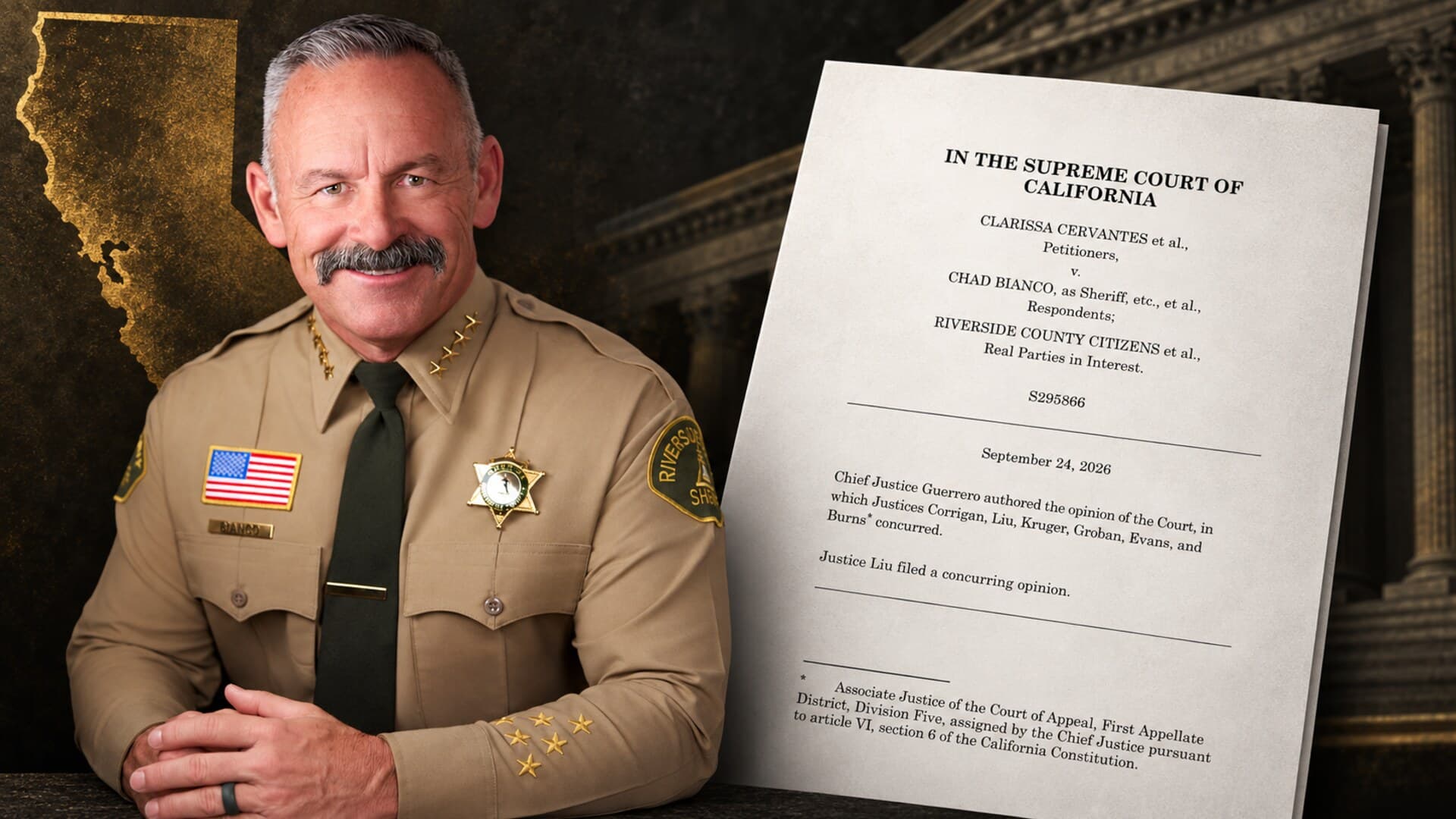
Riverside County Sheriff Chad Bianco's department obtained search warrants in February and March 2026 and, on February 26, seized about 650,000 ballots from the November 2025 Proposition 50 special election from the county registrar of voters. Bianco said he was investigating a discrepancy of 45,896 ballots reported by a citizens' group; Registrar Art Tinoco said the reported gap reflected a misreading of preliminary records and that the actual variance was 103 ballots. Attorney General Rob Bonta directed Bianco on February 26 to preserve the materials and pause the investigation, and sued after Bianco said on March 20 that it would continue despite the Attorney General's attempts to stop it. On September 24, 2026, the California Supreme Court unanimously held in Cervantes v. Bianco that the seizure violated Elections Code section 15551(d) and ordered the ballots returned, and held in Bonta v. Bianco that the Attorney General may give a sheriff binding directions about an investigation. Bianco says the investigation was lawful and that he disagrees with the rulings, but has said he will obey the court's writs; the court did not resolve whether the claimed discrepancy exists.
Source and context
Analysis
About this source
Election law scholar Rick Hasen's post on the day the three Riverside County search warrants were made public, with links to the warrants.
Before the quotation
Hasen posted the analysis on the day the three warrants were made public, after the California Supreme Court paused the sheriff's investigation.
After the quotation
He added that judges would need a lot of education before November about the dangers of allowing ballots to be seized.
How this statement is classified
The label describes this statement's response within the context above.
Why this label?
The reference point is the sheriff's seizure and handling of the ballots. Hasen says the warrants relied on discredited claims and that, if ballots were about to be destroyed, the proper remedy was an order to retain them rather than seizure, which expressly rejects the seizure.
- Recorded on
- Published here
- People and groups discussed
- Chad Bianco
More from this case
Read the full caseXavier Becerra opposes Bianco's ballot seizure
“a great victory”Read statement
Oscar Ortiz opposes Bianco's ballot seizure
“political advantage”Read statement
Nathan P. Kempe opposes Bianco's ballot seizure
“reject similar attacks”Read statement
Share or embed this statement
The embed keeps its attribution link to The Dispute Index. Credit the image to The Dispute Index and link to the statement page.
Cite this record
- Publisher
- The Dispute Index
- Title
- Rick Hasen says the warrants rested on discredited claims and that a retention order, not seizure, was the proper remedy
- First published
- Last updated
- Permalink
- https://disputeindex.com/events/2429-election-law-scholar-rick-hasen-wrote-that-as
Last updated marks the most recent saved version of this published statement.
The Dispute Index. "Rick Hasen says the warrants rested on discredited claims and that a retention order, not seizure, was the proper remedy". First published: 2026-09-25. Last updated: 2026-09-25. https://disputeindex.com/events/2429-election-law-scholar-rick-hasen-wrote-that-as