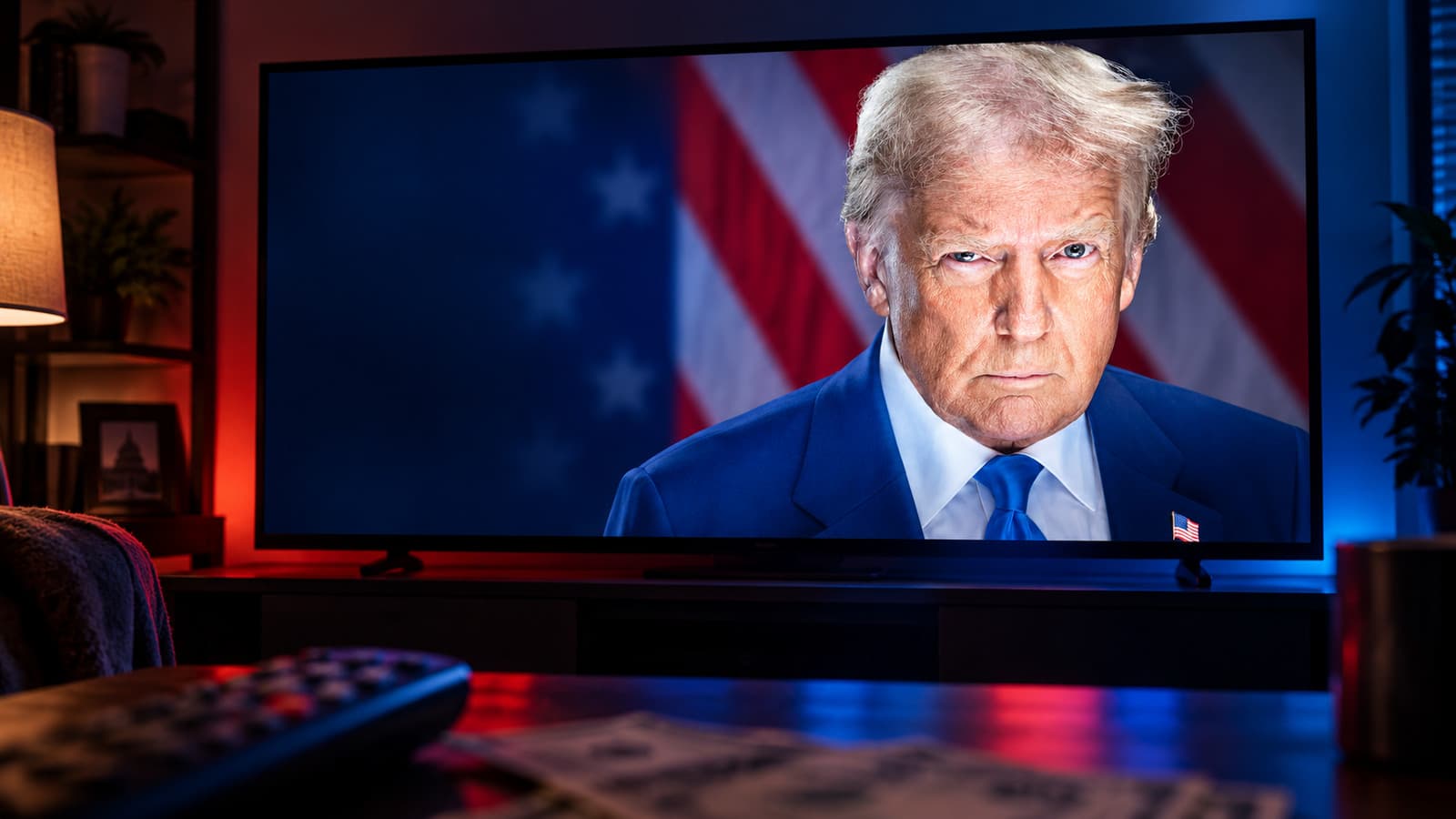
The White House calls its Trump-featuring television spots public service announcements and paid for them with taxpayer money. Critics in both parties object, and on October 5 Trump said he would pay with his own and MAGA Inc. money.
At a Kansas rally, Trump said voters would get $5,000 if they elected a Republican House and Senate on November 3, and nothing if Republicans lost.
“If you elect a Republican House and a Republican Senate on November 3, you get $5,000,” … “And if you lose, you get nothing.”
Open source (opens in a new tab)Can President Donald Trump promise $5,000 to voters? What the law saysKansas City Star article, October 21, 2026; opening paragraphs and the section on the law.
What this label refers to
Trump restates the election-linked $5,000 pledge under scrutiny and makes the payment depend on the election result, a defense of the pledge.
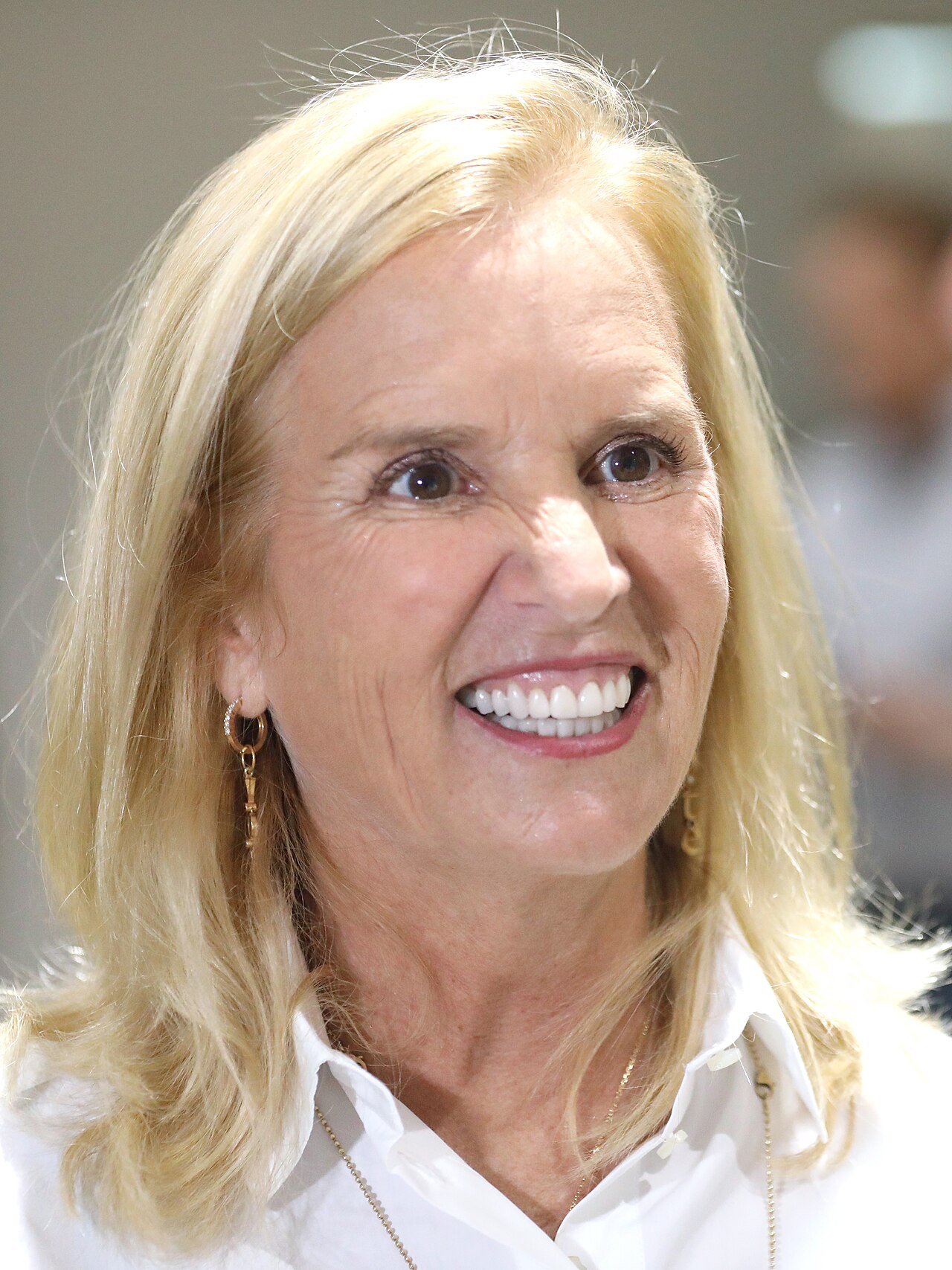
Role at the time: President of the Robert & Ethel Kennedy Human Rights Center and author of a biography of her mother, Ethel Kennedy, interviewed on CNN's The Amanpour Hour
Condemned
Statement summary
On CNN's The Amanpour Hour, Kerry Kennedy compared putting Trump's name on the Kennedy Center to renaming the Washington Monument or the Lincoln Memorial for him. She said the argument that there is no money for the center is "just not true" because Congress passed $246 million to restore it, and told Trump to focus on Americans' costs rather than the center.
Quotation excerpt
“this is the memorial created by the United States Congress to a slain president. So, putting Trump's name on it would be like renaming the Washington Monument the Trump Washington Monument or the Trump Lincoln Memorial or the Trump Tomb of…”
Read full quotation
“this is the memorial created by the United States Congress to a slain president. So, putting Trump's name on it would be like renaming the Washington Monument the Trump Washington Monument or the Trump Lincoln Memorial or the Trump Tomb of the Unknown Soldier. ... And their argument is they're not -- there is not money for it. But in the Big Beautiful Bill, they -- the Congress passed $246 million in order to restore the Kennedy Center. So that's just not true. ... So President Trump, do your job. Focus on the people's pain and the work that you're supposed to do in the -- in the Oval Office and not on the Kennedy Center. That's not your job.”
Open the original interview (opens in a new tab)The Amanpour Hour: Interview with "Ethel Kennedy" author Kerry Kennedy · CNNThe Amanpour Hour, October 17, 2026, 11 a.m. ET; Kerry Kennedy interview between the 11:14:50 and 11:21:41 markers
What this label refers to
The reference point is Trump's linking of the Kennedy Center's renovation to recognition for his administration. Kennedy rejects putting his name on the building, disputes the funding argument for it by pointing to the $246 million Congress passed, and tells Trump the center is "not your job." We use Condemned because she rejects both the recognition and the reason given for it. Challenged the characterization is the closest competing label; it loses because she goes beyond disputing the funding claim and criticizes Trump's involvement itself.
Role at the time: U.S. senator from Maine and Republican candidate for reelection
Denied
Statement summary
Asked about the Senate ethics complaint, Collins says the allegations are completely false and were rejected by the Justice Department, the FBI and the Federal Election Commission. She says a photo shows Kao met her months before he made any contribution and that he revived the story hoping for leniency.
Quotation excerpt
“The allegations are completely false ... We have a picture of his meeting with me and with other people in my office that is many months before he ever made a single contribution ... He spun this story up again in the hopes that the judge…”
Read full quotation
“The allegations are completely false ... We have a picture of his meeting with me and with other people in my office that is many months before he ever made a single contribution ... He spun this story up again in the hopes that the judge would be lenient, or the prosecutor would be.”
Open source (opens in a new tab)Republican Susan Collins dismisses allegations of corruption as 'completely false' · The Guardian
What this label refers to
The case asks whether Collins traded support for Navatek's federal contracts for campaign donations. Collins rejects the allegation outright and disputes the account's timeline, so we used the denies label.
Relative to the FCC's review of whether to limit or end E-Rate, ALA argues that the support has no substitute and that losing it would cut library connectivity or services. That is direct criticism of the proposed cuts.
Role at the time: Editorial board of The Philadelphia Inquirer, in an unsigned institutional editorial
Condemned
Statement summary
The Philadelphia Inquirer's editorial board called Trump's $5,000 pledge his "most preposterous promise to pay off voters" and described his pre-election payments as an attempt to buy off voters.
Quotation excerpt
“Trump has also been reiterating his most preposterous promise to pay off voters, claiming during recent campaign stops that his administration will give every American adult $5,000 if Republicans retain control of the House and Senate next…”
Read full quotation
“Trump has also been reiterating his most preposterous promise to pay off voters, claiming during recent campaign stops that his administration will give every American adult $5,000 if Republicans retain control of the House and Senate next month.”
Read the original text (opens in a new tab)President Trump's desperate campaign to buy off voters | Editorial · The Philadelphia InquirerUnsigned Philadelphia Inquirer editorial, October 13, 2026; fifth paragraph.
What this label refers to
The board calls the pledge a promise to pay off voters and the payments a bid to buy off voters, condemning the pledge under scrutiny.
Role at the time: Letitia James, New York attorney general and signatory to the coalition comments
Condemned
Statement summary
New York Attorney General Letitia James joined coalition comments urging the FCC to preserve E-Rate and reject proposed restrictions on eligibility, services and funding.
“Action: Signed the state attorneys general comment letter urging the FCC to preserve E-Rate.”
Read the original text (opens in a new tab)State attorneys general comments opposing E-Rate restrictionsIntroduction, conclusion and signature pages, including Letitia James on page 16
What this label refers to
James signed comments expressly opposing the proposed E-Rate restrictions.
Role at the time: Rob Bonta, California attorney general
Condemned
Statement summary
California Attorney General Rob Bonta urged the FCC to abandon proposals to dismantle or restructure E-Rate and joined coalition comments opposing the changes.
“I urge the FCC to abandon its proposals regarding dismantling or restructuring this crucial E-Rate program.”
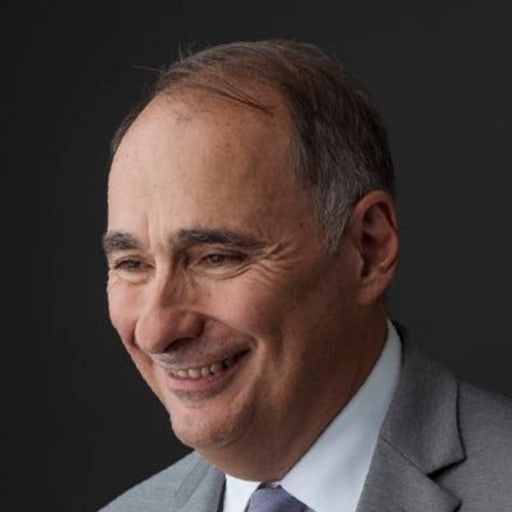
Role at the time: Political commentator and former senior adviser to President Barack Obama
Condemned
Statement summary
David Axelrod compared Trump's $5,000 video to selling Trump University on cable TV and said the promise was about as reliable.
“Like selling Trump U on cable TV. And about as reliable.”
Read the original post (opens in a new tab)David Axelrod on X: Trump's $5,000 video is "like selling Trump U on cable TV"Post on the verified @davidaxelrod X account, October 12, 2026, 2:12 PM Eastern, quoting Trump's video post.
What this label refers to
Axelrod compares the pledge to Trump University and questions whether it will be kept, criticizing the pledge under scrutiny as an unreliable sales pitch.
Role at the time: Cryptocurrency commentator and host
Condemned
Statement summary
Scott Melker said nobody would receive $5,000, called buying votes illegal and said the pledge would require money printing.
“First of all, nobody's giving you $5,000. Second of all, buying votes is literally illegal.”
Read the original post (opens in a new tab)Scott Melker on X: Trump's $5,000 pledge "might be the best Bitcoin ad yet"Post on the verified @scottmelker X account, October 12, 2026, 12:35 PM Eastern; post text with a video clip.
What this label refers to
Melker rejects the pledge as undeliverable and describes it as vote buying, condemning the pledge under scrutiny.
In a video on X, Trump said a Democratic win would bring an economic depression and a Republican win would put $5,000 in each voter's pocket.
“If the Democrats win, you will have an economic depression. If the Republicans win, you will each have $5,000 in your pocket”
Read the original post (opens in a new tab)Donald Trump video on X promising $5,000 if Republicans win, October 12, 2026 · Donald Trump33-second video on the verified @realDonaldTrump X account, October 12, 2026, 11:40 AM Eastern; full clip.
What this label refers to
Trump promotes the election-linked $5,000 payment under scrutiny in this case and ties the money to a Republican win, which defends the pledge.
Role at the time: U.S. senator; joint report author with Richard Blumenthal and Chris Van Hollen
Condemned
Response to this claim
Google should cover the full costs of shared grid upgrades triggered by its data centers rather than leave part of those costs with other customers.
Quotation excerpt
“But data center developers have refused to commit to shouldering the full costs of wider network upgrades incurred due to their data centers. Put another way, the companies commit to paying for infrastructure that solely benefits them, but…”
Read full quotation
“But data center developers have refused to commit to shouldering the full costs of wider network upgrades incurred due to their data centers. Put another way, the companies commit to paying for infrastructure that solely benefits them, but dispute how much they should pay for shared infrastructure that is paid for by all ratepayers but was only built to accommodate the data center.”
Read the original text (opens in a new tab)Senators report on AI data-center cost allocation and electricity bills · Elizabeth Warren27-page report; exclusive versus shared infrastructure and Google testimony
Why we used this label
The case asks whether Google should pay the full cost of the shared grid upgrades its data centers trigger, rather than leaving part of that cost with other customers. The October 2026 report by Warren, Richard Blumenthal and Chris Van Hollen says the companies, Google among them, commit to paying for infrastructure that serves only their facilities but "dispute how much they should pay for shared infrastructure", and that they opposed standards requiring them to pay the full cost of upgrades their facilities trigger. That argues the companies leave part of the cost of shared upgrades with other customers, so we labeled it Condemned. The closest competing label is Challenged the characterization, since the report disputes how the companies describe their commitments; it loses because the report goes beyond disputing that description and argues that the companies are not paying their fair share of the shared costs.
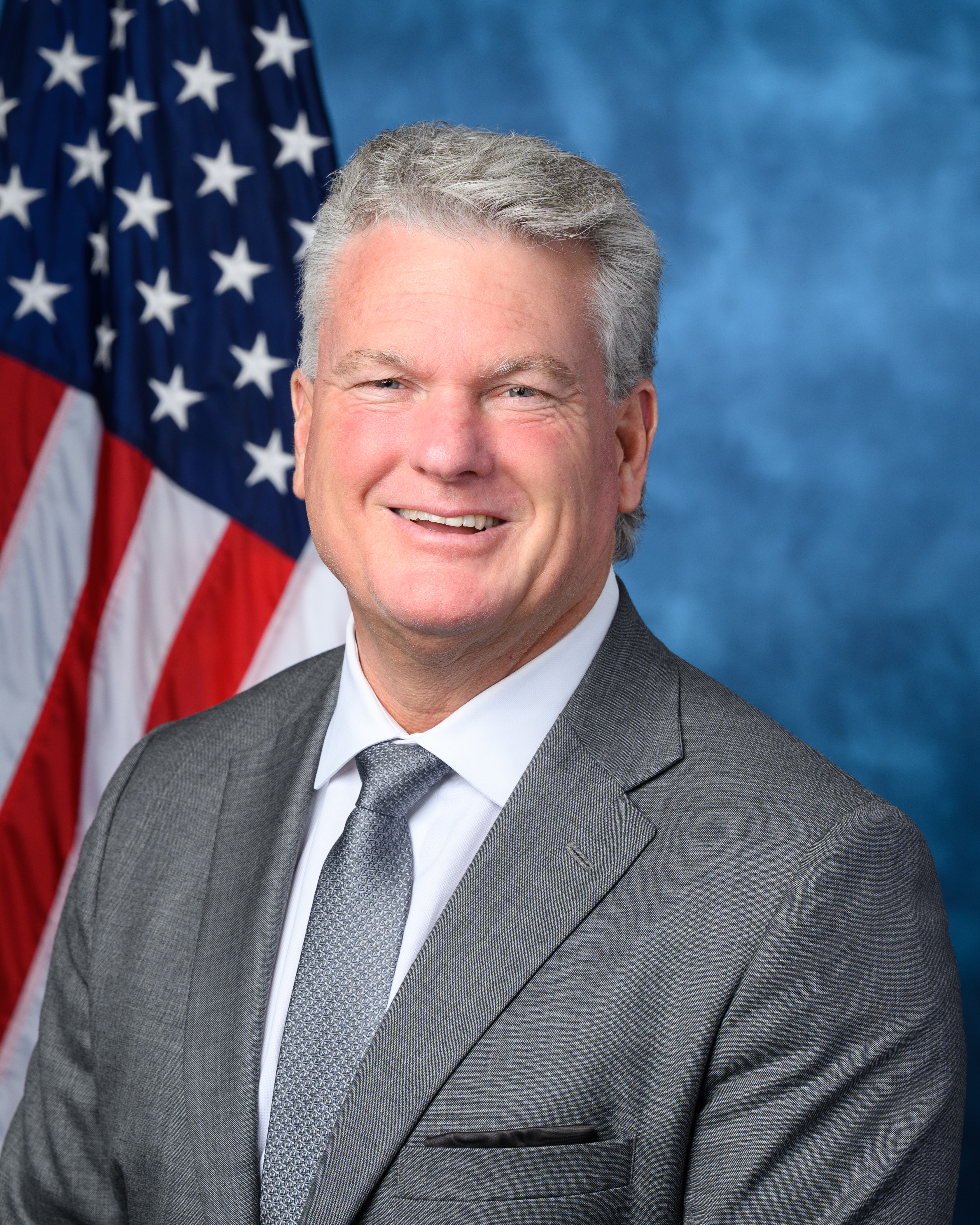
Role at the time: U.S. representative and Republican Senate candidate from Georgia, speaking at the debate
Denied
Response to this claim
Collins improperly used public money to pay his staffer's girlfriend.
“That ethics complaint is bogus.”
Read the original text (opens in a new tab)Atlanta News First transcript of the Ossoff-Collins Senate debateFirst-segment stewardship-of-tax-dollars exchange; second-segment federal privacy question
Why we used this label
Collins denies the allegation by rejecting the complaint as bogus. His later description of it as a nothing burger also minimizes it, but the explicit denial is the clearer response to the alleged misuse.
Role at the time: U.S. senator from Georgia and Democratic Senate candidate, speaking at the debate
Condemned
Response to this claim
Collins improperly used public money to pay his staffer's girlfriend.
“illegal misuse of tax dollars”
Read the original text (opens in a new tab)Atlanta News First transcript of the Ossoff-Collins Senate debateFirst-segment stewardship-of-tax-dollars exchange; second-segment federal privacy question
Why we used this label
The matter under scrutiny is the intern compensation. Ossoff calls the payments illegal misuse, expressly criticizing the conduct. The accusation is his, not a finding by DI.
Role at the time: Government accountability organization, through its president and CEO
Condemned
Statement summary
Common Cause, through President Virginia Kase Solomon, rejected taxpayer spending on the ads and announced litigation to stop it.
“Taxpayer dollars belong to the American people, not to any president’s personal PR machine”
Read the official statement (opens in a new tab)Common Cause coalition announces suit challenging taxpayer-funded Trump adsOpening description of Common Cause et al. v. DHS et al.; Virginia Kase Solomon quotation
What this label refers to
The organization expressly objects to the use of taxpayer money for the president's promotion.
Role at the time: U.S. senator from Georgia, speaking in a Senate debate
Condemned
Response to this claim
Collins’s answer at the Savannah event amounted to support for taxpayer-funded payouts to violent January 6 participants.
“he wants to give your tax dollars to the violent thugs and criminals who sacked the U.S. Capitol on January 6th.”
Read the original text (opens in a new tab)Ossoff and Collins October 8 Senate debate transcriptOssoff response to the voter-ID question; passage beginning: he wants to give your tax dollars
Why we used this label
He explicitly condemns the alleged compensation policy.
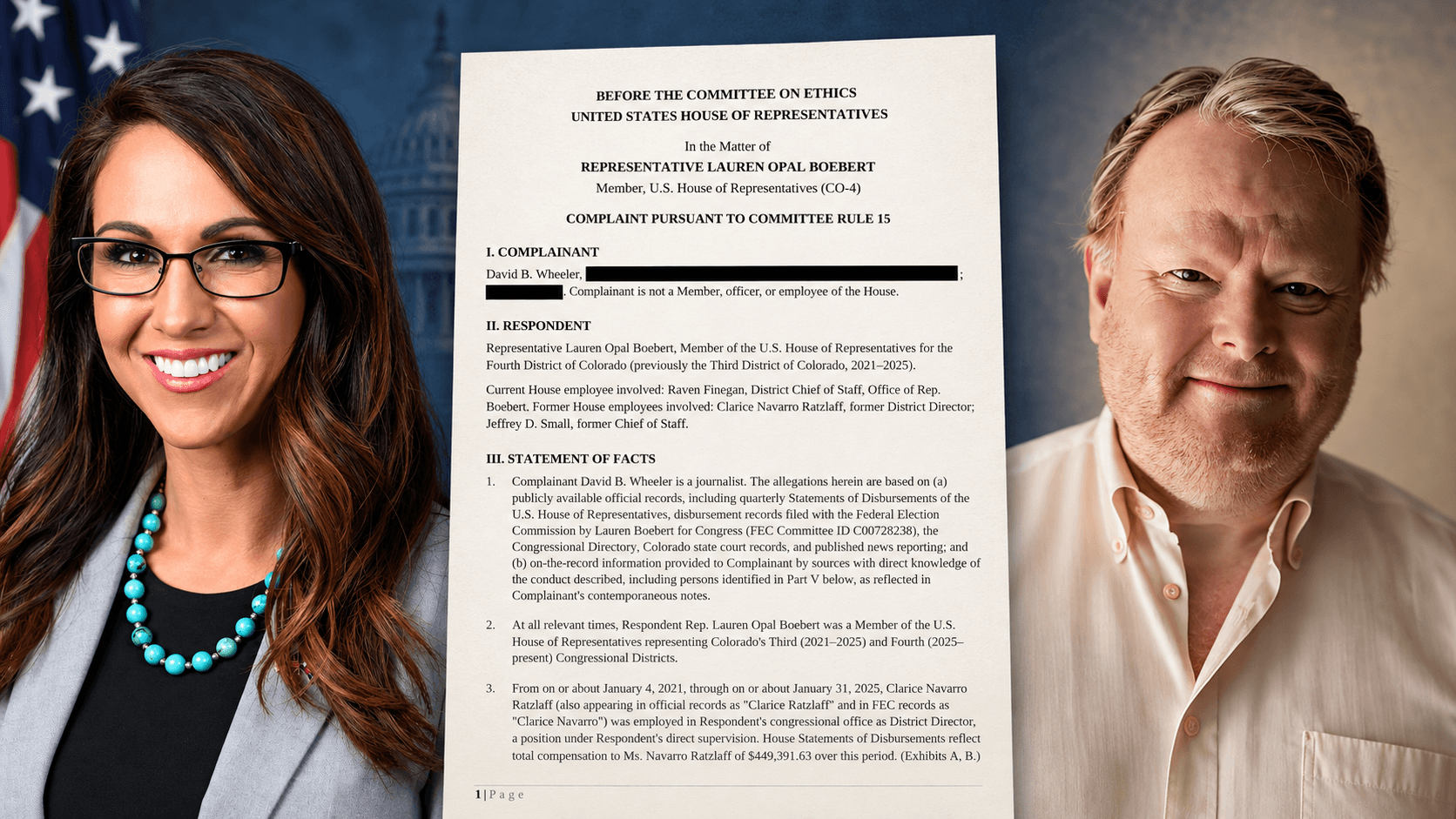
Role at the time: Ethics complainant and American Muckrakers co-founder
Mixed or conditional
Statement summary
Wheeler said Higgs's pay would violate the House rule if it reflected a family relationship rather than her duties. He asked the committee to determine her marital status and the basis for her raises.
“If that pay is tied to a family relationship rather than to the duties, it violates the House rule”
Read the original text (opens in a new tab)David B. Wheeler explains additions to the Boebert ethics complaint · David B. WheelerOctober 7, 2026 article, Addition 1: Jasmine B. Higgs and the family payroll; Additions 2 and 3
What this label refers to
The quoted statement alleges a violation only if pay was tied to a family relationship instead of work. It raises a condition for inquiry rather than establishing improper payments.
Role at the time: Federal executive department, in an emailed reply to Dispute Index from its media inquiry office
Explicitly stayed out
Statement summary
Asked by Dispute Index on October 6, 2026 about the contract and funding for the television ads, the Department of Homeland Security's media inquiry office replied, "We refer you to the White House," and attributed to a DHS spokesperson the line, "DHS responds to official correspondence through official channels."
“We refer you to the White House.”
Read the full email
We refer you to the White House.
DHS SPOX:
DHS responds to official correspondence through official channels.
Emailed reply from the Department of Homeland Security to Dispute Index on the Trump adsEmailed reply from the DHS media inquiry office, October 6, 2026 (UTC).
What this label refers to
The reference point is public payment for the ads. DHS answered questions about the contract and its funding by referring them to the White House and saying it responds to official correspondence through official channels, so we labeled it Explicitly stayed out. The closest competing label is Defended or excused, which fits the department's September 30 statement that its contracting follows applicable rules; this reply makes no claim about the spending itself. Evidence: the department's emailed reply to Dispute Index.
Role at the time: Campaign manager for Susan Collins
Denied
Statement summary
Collins campaign manager Steve Abbott points to a photo of Collins meeting Kao in her office months before any donation and says it shows that ProPublica's account, that Kao had to donate before he could see Collins, is not true.
“ProPublica has the theory that Martin Kao, based on Martin Kao's word, had to make a donation before he could get in to see Susan Collins. As you can see from that picture, it's not true”
The case asks whether Collins traded support for Navatek's federal contracts for campaign donations. Abbott rejects a central part of that account, that Kao had to donate before meeting Collins, so we used the denies label.
Role at the time: Republican U.S. representative and candidate for Florida governor
Defended or excused
Statement summary
Donalds supported Amendment 3, said public safety would be funded first, and proposed a funding formula for fiscally constrained counties.
“Local governments have to live within their means”
Open the original interview (opens in a new tab)Donalds vs. Jolly: Where Florida's governor candidates stand on AI, data centers and Amendment 3Amendment 3 section: JOLLY and DONALDS paragraphs.
What this label refers to
Donalds defends tax relief and explains how he proposes to protect services.
Role at the time: Democratic candidate for Florida governor
Condemned
Statement summary
Jolly said Amendment 3 would defund law enforcement and critical services. He anticipated voting against it and said it lacked a sufficient funding backstop.
“It’s gonna defund law enforcement along with critical services that communities need”
Open the original interview (opens in a new tab)Donalds vs. Jolly: Where Florida's governor candidates stand on AI, data centers and Amendment 3Amendment 3 section: JOLLY and DONALDS paragraphs.
What this label refers to
Jolly opposes the related tax-relief measure on the service-funding question tracked by this case.
Trump called the ads a positive promotion for the country and paying for them with public money a standard practice, then said he had decided to do the Patriotic Ads, among others, and pay for them himself and with money he raised for MAGA, Inc.
Quotation excerpt
“which I consider to be a positive promotion for our Great U.S.A., and paying for them with U.S.A. money. This is a rather standard thing to do but, rather than doing that, although nothing will make them happy, I have decided to do the…”
Read full quotation
“which I consider to be a positive promotion for our Great U.S.A., and paying for them with U.S.A. money. This is a rather standard thing to do but, rather than doing that, although nothing will make them happy, I have decided to do the Patriotic Ads, among others, and pay for them myself, and with money I raised for MAGA, Inc.”
The conduct under scrutiny is federal payment for Trump-promoting ads. He defends public payment as standard while announcing that the Patriotic Ads, among others, will be paid for another way, so the label is Mixed or conditional. The closest competing label is Defended or excused; it does not fit because he announces that public money will not be used for them.
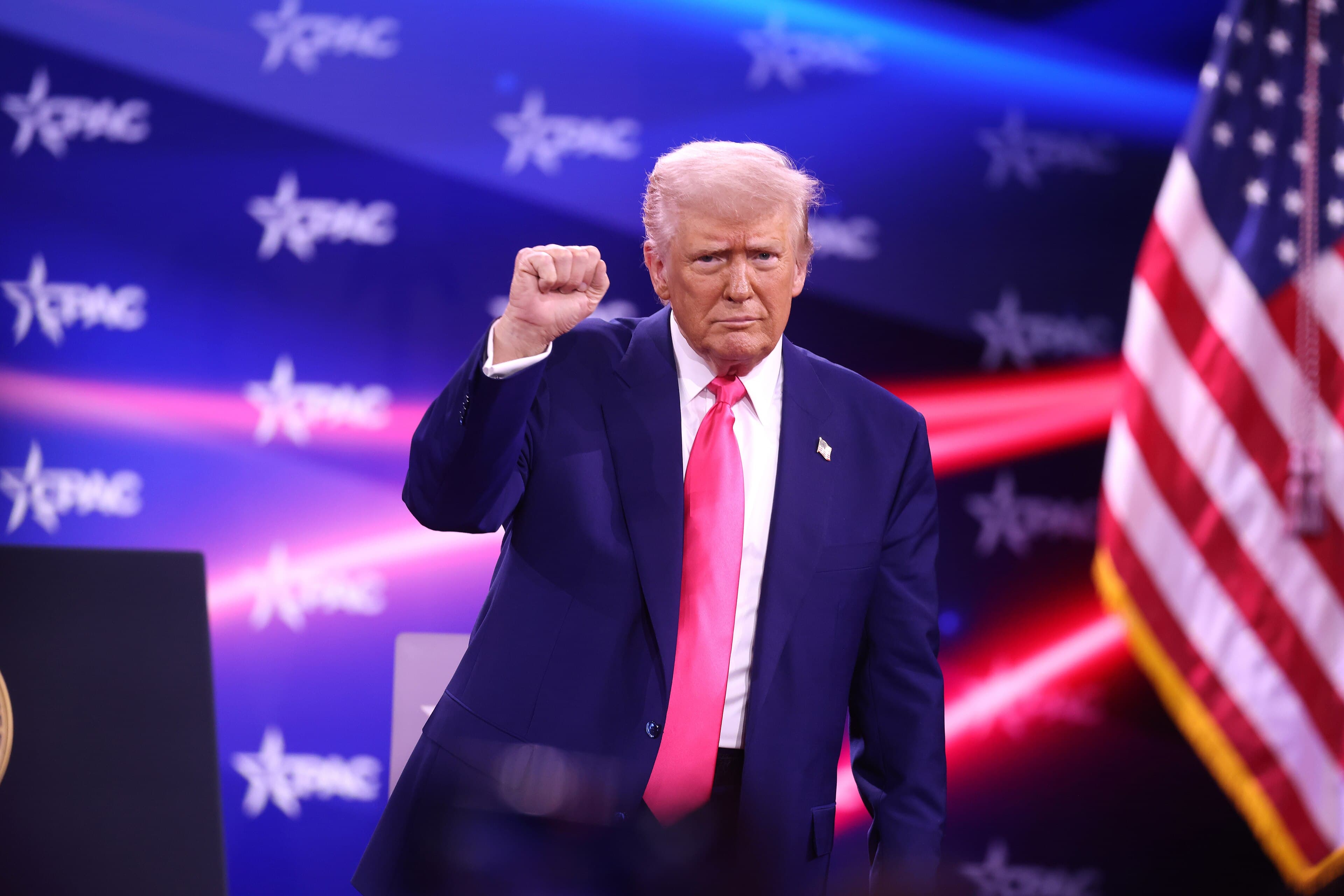
Donald Trump is the 45th and 47th president of the United States. Before entering national politics, he worked in real estate development and entertainment.
Kerry Kennedy is president of the Robert & Ethel Kennedy Human Rights Center, a human rights lawyer and activist, and a daughter of Robert F. Kennedy and a niece of President John F. Kennedy.
Elizabeth Warren is a Democratic U.S. senator representing Massachusetts, serving in the Senate since 2013. Before entering the Senate, she was a law professor and helped establish the Consumer Financial Protection Bureau.
Mike Collins is a Republican U.S. representative from Georgia's 10th Congressional District and the Republican nominee for the 2026 United States Senate election in Georgia.