
All topics

Voting Rights

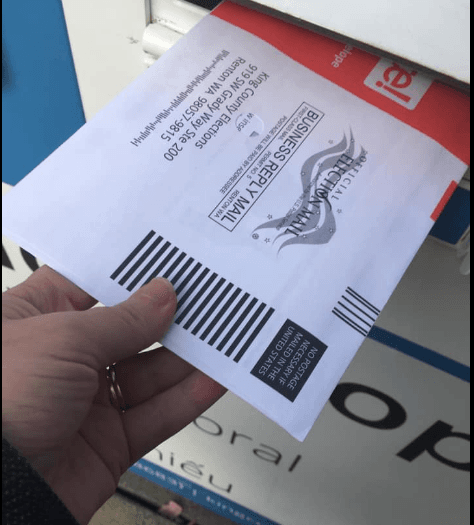
Voting rights concern access to electoral participation, ballot casting and the rules governing who can vote and how votes are administered.

Published coverage on this page: 1 case · 4 statements. Statements are ordered newest first.

Related cases

Statements

Filter by response label (1 selected)

Labels describe a response to the linked claim or the action explained in the statement summary. Choose one or more.

4 matching statements

Donald Trump

Role at the time: President of the United States

Defended or excused

Statement summary

Trump criticizes the Court’s refusal to allow the ballot-mail rule to take effect for the 2026 midterms and presents the rule as a response to what he calls mail-in voting problems.

Republicans just got another bad decision from the United States Supreme Court ... It is a big loss for Republicans, and America itself.
Read the original text (opens in a new tab)Donald Trump calls the Supreme Court mail-voting decision a loss for Republicans and AmericaTruth Social post ID 117275286602582454, published 2026-09-15 13:27:40 UTC

What this label refers to

Relative to whether the new ballot-mail restrictions should apply in 2026, Trump describes the block as a loss and portrays enforcement as the needed response to alleged mail-in voting problems.

Clarence Thomas

Role at the time: Supreme Court associate justice, joining the dissent

Defended or excused

Statement summary

Thomas joins the position that enforcement should be allowed during the appeal.

Recorded action: Thomas expressly joined Alito’s dissent in favor of granting the government’s stay request.
Read the original text (opens in a new tab)Supreme Court stay denial, Kavanaugh concurrence and Alito dissent: USPS v. California · Supreme Court of the United StatesPDF p.1: concurrence; pp.2–9: dissent and Thomas’s express joinder

What this label refers to

Defends enforcement through an express joinder.

Samuel Alito

Role at the time: Supreme Court associate justice, dissenting

Defended or excused

Statement summary

Alito would allow enforcement while the injunction is appealed.

I would grant the Government’s application
Read the original text (opens in a new tab)Supreme Court stay denial, Kavanaugh concurrence and Alito dissent: USPS v. California · Supreme Court of the United StatesPDF p.1: concurrence; pp.2–9: dissent and Thomas’s express joinder

What this label refers to

Defends 2026 enforcement by supporting a stay.

D. John Sauer

Role at the time: U.S. solicitor general, representing the government

Defended or excused

Response to this claim

Mandatory USPS ballot-mail requirements are lawful postal controls and should be enforced for the November 2026 election.

an important federal policy to protect the mails from being used to commit voter fraud
Read the original text (opens in a new tab)USPS v. California: Government application for a stay, No. 26A305 · United States Postal ServicePrinted p.13 (PDF p.18); application’s argument and requested relief
Why we used this label

Defends 2026 enforcement through the government’s stay application.

People in this topic

Donald Trump

Donald Trump is the 45th and 47th president of the United States. Before entering national politics, he worked in real estate development and entertainment.

1 case and 1 statement

Rob Bonta

Rob Bonta is California’s attorney general.

1 case and 1 statement

Shirley Weber

Shirley Weber is California’s secretary of state.

1 case and 1 statement

Jeff Merkley

Jeff Merkley is a Democratic United States senator representing Oregon.

1 case and 1 statement

Ron Wyden

Ron Wyden is a Democratic United States senator representing Oregon.

1 case and 1 statement

Clarence Thomas

Clarence Thomas is an associate justice of the Supreme Court of the United States.

1 case and 1 statement

Samuel Alito

Samuel Alito is an associate justice of the Supreme Court of the United States.

1 case and 1 statement

Gavin Newsom

Governor of California and former mayor of San Francisco.

1 case and 1 statement

D. John Sauer

D. John Sauer is the solicitor general of the United States, representing the federal government before the Supreme Court.

1 case and 1 statement