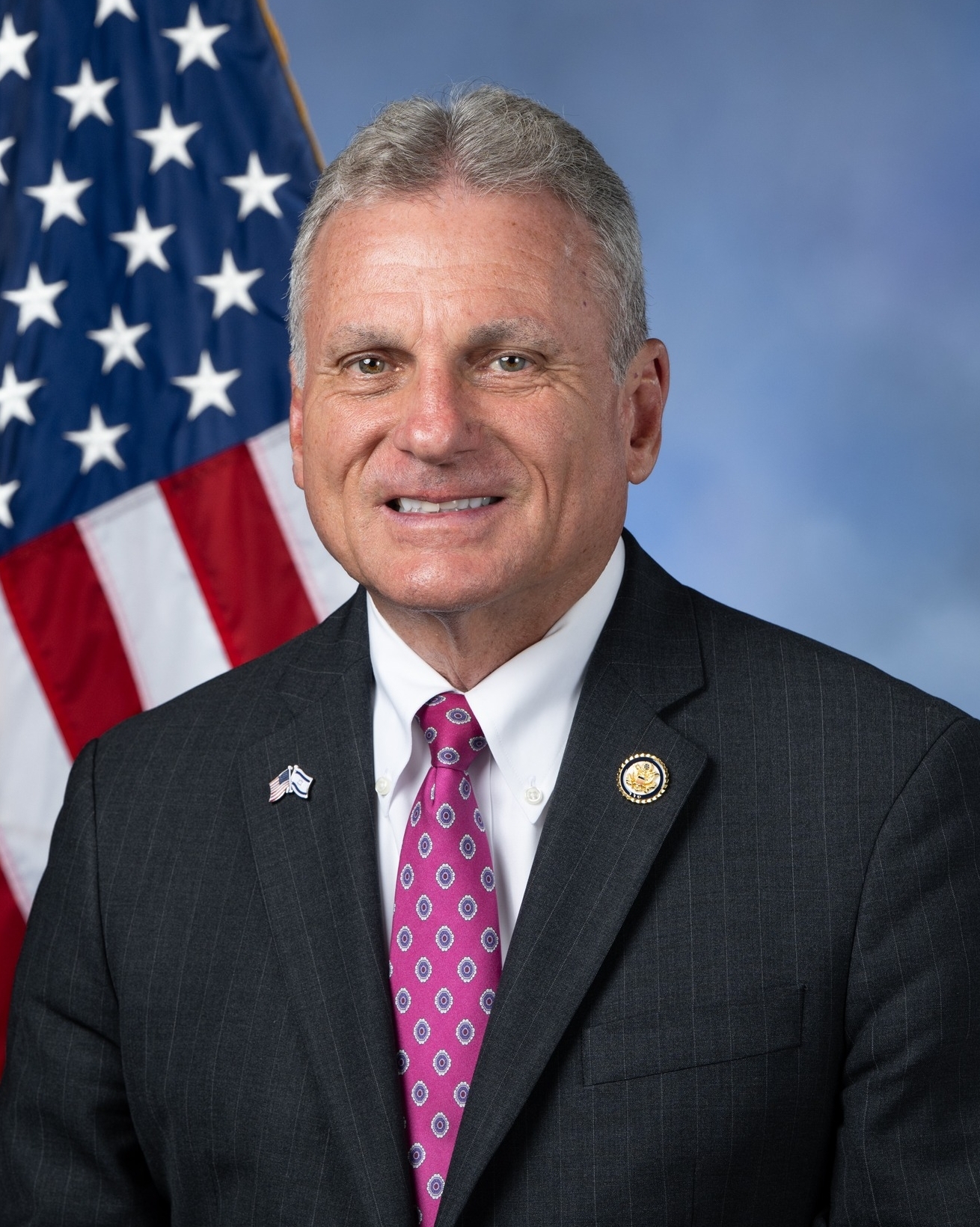
Earl L. "Buddy" Carter is a Republican who has represented Georgia's 1st congressional district in the U.S. House since 2015. A pharmacist who opened his own pharmacy in Pooler, he served as the city's mayor and then in the Georgia House and Georgia Senate before Congress. He gave up his House seat to seek the Republican nomination for U.S. Senate in 2026 and finished third in the May 19 primary. His House term ends in January 2027.
We have documented 4 statements by Earl L. "Buddy" Carter, in 3 cases. Each statement below gives the quotation, its original source and a link to the full case.
Case updates
Hear if a candidate's Iran war stance changes
Get an email if Congress votes again on war powers, or if a member of Congress or a candidate takes a new public position on the Iran war.
Important updates only. Free. Confirm your email to start. Unsubscribe anytime. How we handle your email.
Role at the time: U.S. representative for Georgia's 1st district, in an emailed statement from his office
Mixed or conditional
Statement summary
Rep. Buddy Carter of Georgia said in a statement sent by his office that license plate recognition cameras such as Flock's "can provide valuable investigative tools" but have "raised important questions about privacy and government oversight." He said that as the systems spread, it is important to balance public safety with "appropriate safeguards that protect individual privacy."
“Technologies like license plate recognition cameras can provide valuable investigative tools, but they have also raised important questions about privacy and government oversight. As these systems become more common, it is important to balance public safety with appropriate safeguards that protect individual privacy.”
Read the full email
Flock Safety cameras are license plate recognition cameras used by state and local law enforcement agencies to assist in criminal investigations. Unlike traditional traffic cameras, these systems capture license plate information, along with a vehicle's make, model, color, and the time and location where it was observed. Many communities use this technology to help locate stolen vehicles, identify suspects, and investigate serious crimes.
In Georgia's First Congressional District, law enforcement agencies work hard every day to keep our communities safe. Technologies like license plate recognition cameras can provide valuable investigative tools, but they have also raised important questions about privacy and government oversight. As these systems become more common, it is important to balance public safety with appropriate safeguards that protect individual privacy.
Emailed statement from Rep. Buddy Carter's office to Dispute Index on license plate readers · Earl L. "Buddy" CarterEmailed statement attributed to Rep. Buddy Carter, sent by Communications Director Preston McGee, October 27, 2026.
Why we used this label
Carter credits license plate recognition cameras with providing "valuable investigative tools" while saying they have "raised important questions about privacy and government oversight". He says public safety should be balanced against "appropriate safeguards that protect individual privacy". He pairs support for the technology with general safeguards, which makes his position mixed.
Role at the time: U.S. Representative, Georgia 1st district
Defended or excused
Statement summary
Earl L. "Buddy" Carter voted Nay on H.Con.Res. 93, the House resolution directing the President to remove U.S. Armed Forces from hostilities with Iran.
“On Agreeing to the Resolution: Directing the President, pursuant to section 5(c) of the War Powers Resolution, to remove United States Armed Forces from hostilities with Iran.”
A nay vote opposed the resolution directing the removal of U.S. Armed Forces from hostilities with Iran, allowing U.S. military operations in the war to continue.
Buddy Carter signed a letter urging nationwide NFA non-enforcement to avoid unequal treatment and requesting that DOJ decline an appeal and begin rulemaking.
“Action: Signed an August 11 letter urging DOJ to apply the NFA ruling nationwide, decline an appeal and begin rulemaking.”
Earl L. Carter was one of the signers of an August 11 letter asking DOJ not to appeal the NFA ruling, to apply it nationwide and to begin rulemaking. A request like this from Earl L. Carter supports the policy rather than questioning it.
Role at the time: United States Representative, Georgia's 1st district
Defended or excused
Statement summary
Quoted by WABE, Rep. Buddy Carter said President Trump acted squarely within his constitutional authority to strike Iran, calling Iran the world's leading state sponsor of terrorism responsible for the oppression and murder of thousands of its own people.
“President Trump acted squarely within his constitutional authority to strike Iran, the world's leading state sponsor of terrorism, responsible for the oppression and murder of thousands of its own people.”
ATF stopped enforcing specified NFA registration and approval requirements nationwide on October 9. Gun-rights groups welcome the policy as a constitutional victory; Everytown warns that it puts community safety at risk.
Networked automated license-plate cameras can assemble searchable records of vehicle movements. Candidates and officials disagree over whether to ban the systems, keep them with limits, or defend them as investigative tools. This tracker separates outright bans from narrower restrictions.
Where members of Congress and 2026 midterm candidates stand on the Iran war, which Congress has not formally authorized, based on their votes on war-powers resolutions, campaign statements and public remarks.