
Explainer
How are U.S. election results certified?
Election-night numbers are unofficial. Local officials finish the count, check it in a canvass and certify the results, and a state board or official then certifies the statewide result. Several states treat certifying as a required duty, and courts have ordered officials who refused or delayed to certify.
From election night to official results
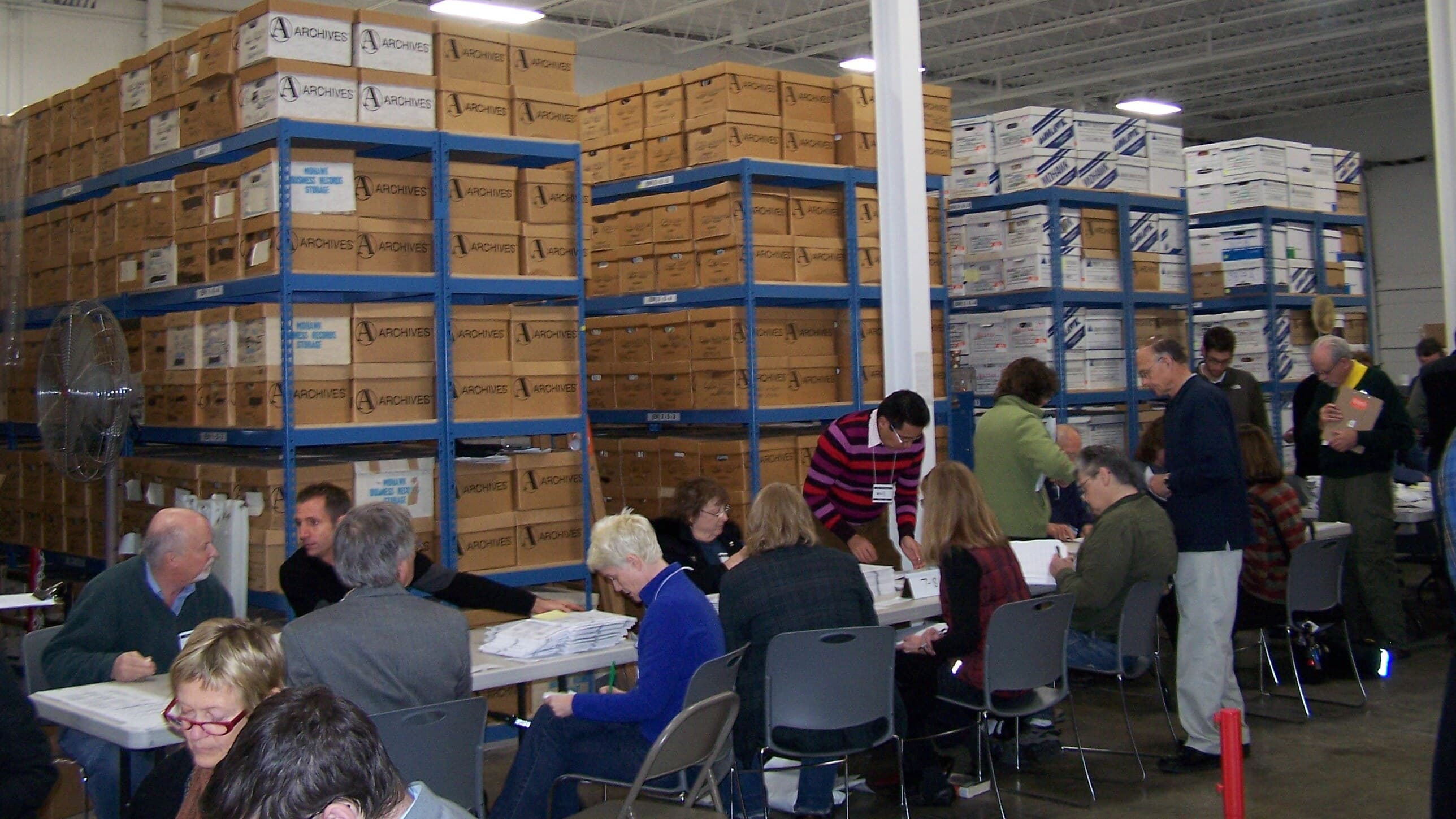
Results reported on election night are unofficial and preliminary. The Congressional Research Service (CRS) says federal results are never official until after Election Day, and that it is normal and expected for final totals to differ from election-night totals.1 The U.S. Election Assistance Commission (EAC) defines certification as election officials attesting that the tabulation and canvass are complete and accurate and that the results account for all votes cast.2 CRS describes two main steps between the vote and an official result, the canvass and certification, with procedures that vary by state.1
Ballots are tabulated where they are cast, at central election offices or both, and may be tabulated more than once to check the count. Many states let officials begin processing mail or early ballots before Election Day, while some prohibit counting until the polls close.1 Which officials run elections in each state is covered in our explainer on who runs U.S. elections (opens in a new tab).
The canvass
In the canvass, officials reconcile the number of ballots cast with the number of voters and make sure the final results include every valid vote, the EAC says.2 CRS lists the work involved: deciding whether to count provisional ballots, resolving marking errors and questions of voter intent, duplicating damaged ballots that scanners cannot read, and reconciling ballots with the number of in-person voters. When a mail ballot's signature is missing or does not match, some states may contact the voter and let the voter correct it, a process called signature curing. Depending on the jurisdiction, professional election officials, appointed canvassing boards or both conduct the canvass.1
Local and state certification
Who certifies local results varies: a single official such as a town clerk or county auditor, a canvassing or election board, or in some states a court. The EAC says the local authority can certify only after all eligible votes are counted and all post-election verification is complete.2 The National Conference of State Legislatures (NCSL) reports local canvass deadlines from the day after the election in Alaska to 30 days after the election in California, and state deadlines from the Friday after the election in Oklahoma to the second Tuesday in December in Missouri, for offices other than presidential electors. In six states, NCSL finds the law's language on completing the state canvass or certification vague or absent.3
At the state level, the certifying authority collects the final local results, compiles them and signs a certificate of election.2 In some places certification is the last step of the canvass; in others the governor or chief state election official issues certified results based on the canvassing authority's report. CRS says state certification comes after the canvass and, in most states, after audits.1
When officials refuse to certify
Michigan's constitution, as amended by a voter-initiated measure approved in November 2022, makes certification by a board of canvassers a ministerial, clerical and nondiscretionary duty of the board and each member. It names the Board of State Canvassers as the only body that certifies statewide and federal results, and makes a state certification final subject only to a recount or court order after certification.4
Courts have ordered officials to certify when they refused or delayed. In June 2022, New Mexico's Otero County Commission refused to certify its primary results, citing claims about Dominion voting machines that NBC News describes as debunked. After the secretary of state went to court, the New Mexico Supreme Court ordered the commission to certify, and it did so in a 2 to 1 vote later that week.5 In Arizona that November, two Cochise County supervisors twice voted to postpone certifying the general election. A superior court ordered the board to canvass the election on December 1, 2022, and state officials certified Arizona's results three days later.6 Supervisor Peggy Judd later pleaded guilty to a misdemeanor of failing to perform her duty as an election officer.7 In the criminal case against Supervisor Tom Crosby, the Arizona Court of Appeals held in December 2024 that canvassing an election is an administrative responsibility and that the board's duty to canvass was not discretionary.6
In Pennsylvania, the Commonwealth Court in August 2022 directed Berks, Fayette and Lancaster counties to certify primary results that included timely, signed mail ballots they had left out because they lacked a handwritten date.8 In Georgia, a Fulton County judge ruled in October 2024 that county election officials have a mandatory duty to certify results, and the Georgia Court of Appeals upheld that ruling in July 2025, saying concerns about errors are not a basis for refusing to certify by the deadline.9 In June 2025 the Georgia Supreme Court held that 2024 State Election Board rules requiring county boards to make a reasonable inquiry before certifying, and letting board members examine all election-related documentation, were not authorized by statute.10
Recounts, audits and election contests
A recount retabulates ballots to check that the count was accurate, by rescanning them or counting them by hand depending on the circumstances and state requirements, and some recounts happen before certification.1 NCSL reports that 26 states and Washington, D.C. recount automatically when results fall within a set margin, with thresholds ranging from a 1 percent margin to a tie and 0.5 percent the most common, and that 41 states and D.C. allow a recount to be requested.11 The EAC notes there is no uniform federal timeline for recounts, but any recount must finish before the deadlines for taking office.2
In states with no recount process, a losing candidate's remedy is to contest the result in court, where a recount may be ordered.11 Election contests focus on how the election was conducted and are generally resolved through litigation under state law.1
Audits are different. A post-election tabulation audit checks that the equipment and procedures used to count votes worked properly, and audits are conducted regardless of the margin. All 50 states and Washington, D.C. conduct some type of post-election audit, according to NCSL, which lists seven states that require a risk-limiting audit by statute, a method designed to give strong statistical evidence that the reported outcome is correct.12 Some states require audits before certification and others after.2
Congress and presidential elections
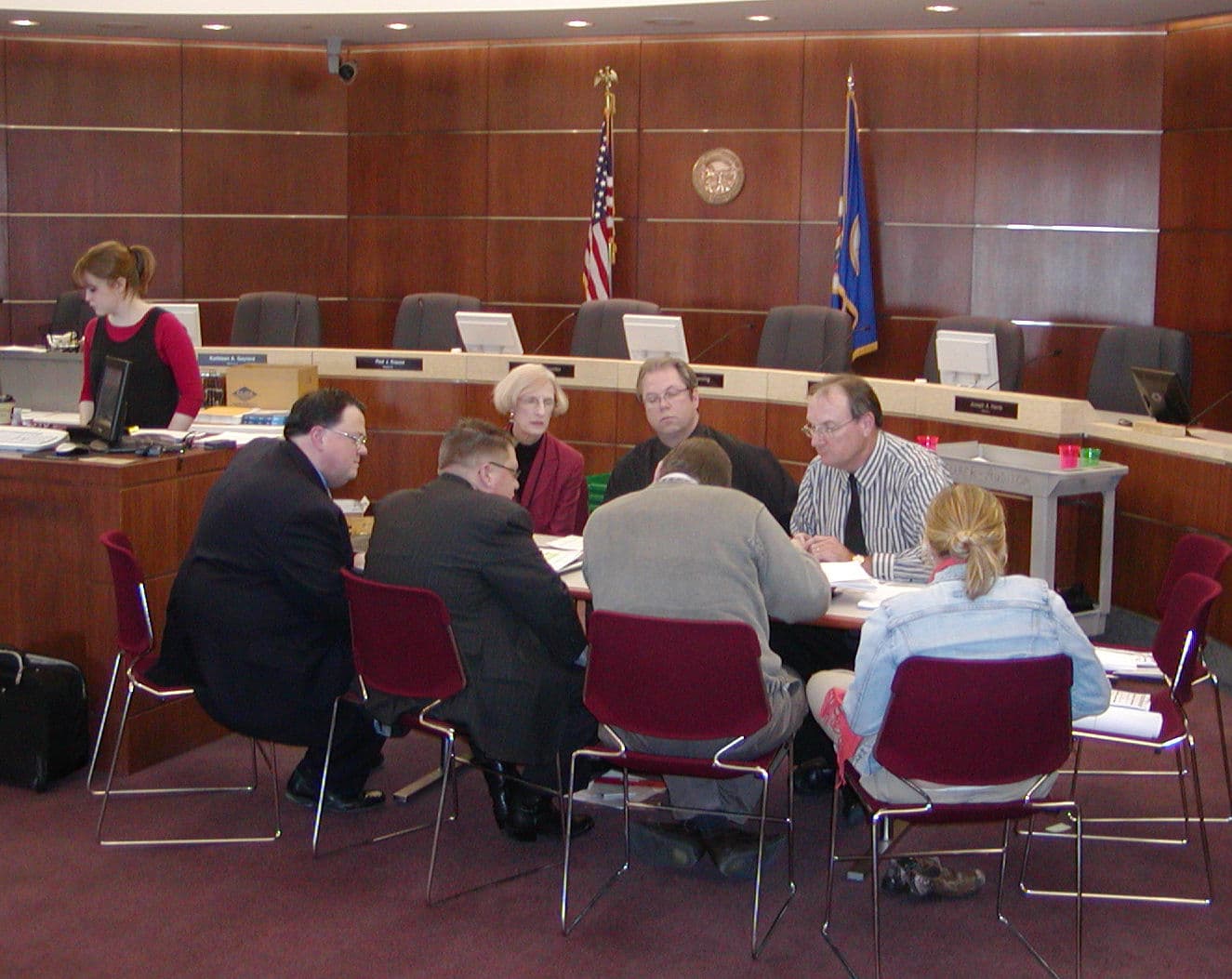
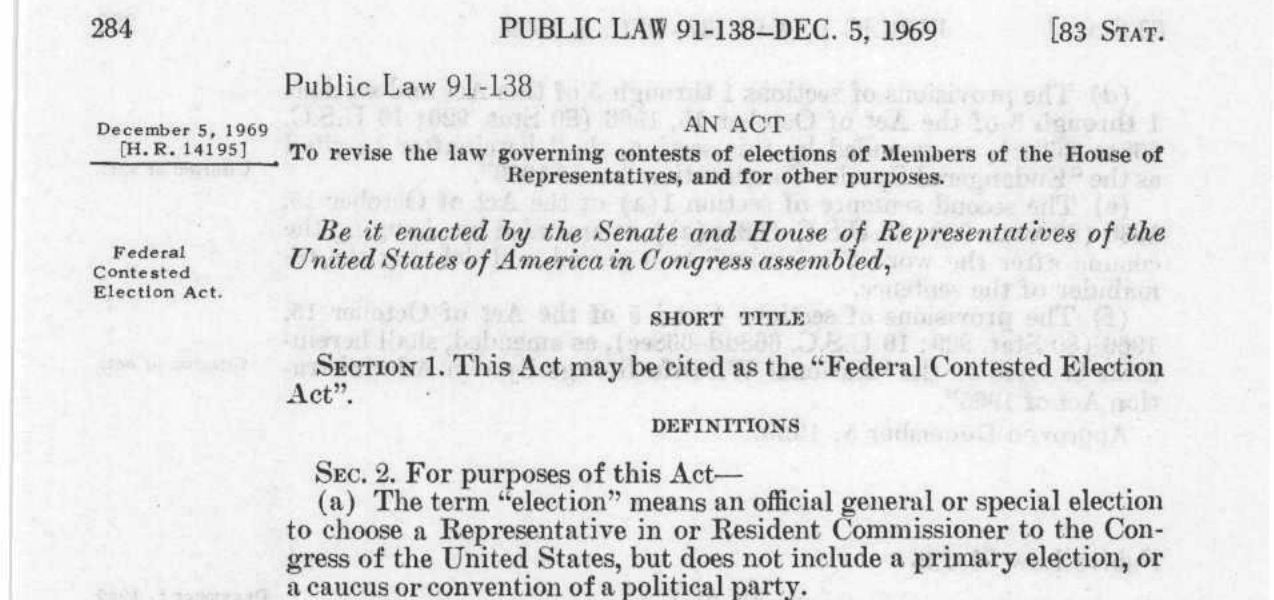
For congressional races, the Constitution makes each chamber the judge of the elections, returns and qualifications of its own members.13 Federal law directs the governor of a state that elects a senator to certify the election, under the state seal, to the President of the Senate.14 Before each new Congress, the clerk of the House makes a roll of members-elect, listing those whose credentials show they were regularly elected.15 A losing House candidate may contest the result under the Federal Contested Election Act by filing notice with the clerk within 30 days after the result is declared.16 CRS says the House generally treats a state-issued election certificate as prima facie evidence of an election's regularity and results, and that such contests rarely change results because that typically requires the House to overturn a state-certified result. The House dismissed five contests in the 119th Congress.17
For presidential elections, the Electoral Count Reform Act of 2022 requires each governor to issue a certificate of ascertainment naming the state's electors at least six days before the electors meet.1819 A presidential candidate's federal suit over that certificate goes to a three-judge district court, whose final judgment may be reviewed directly by the Supreme Court on an expedited basis.19 The law limits the role of the President of the Senate, ordinarily the vice president, to ministerial duties when presiding over the joint session of Congress, and an objection to a state's electoral votes must be signed by at least one-fifth of the senators and one-fifth of the House members.20
The federal government's role after the vote
CRS says federal law typically has relatively little effect on how results are counted and finalized.1 The Justice Department's Voting Section enforces the civil provisions of federal voting laws, including the Voting Rights Act, the National Voter Registration Act and the Help America Vote Act.21 Federal observers may watch polling places and sites where ballots are counted; the department says it now uses them only where a federal court order under the Voting Rights Act authorizes them, and elsewhere sends its own attorneys and staff to monitor elections.22 The Civil Rights Act of 1960 requires every officer of election to keep records from federal elections for 22 months, and lets the attorney general demand in writing to inspect and copy them, stating the basis and purpose of the demand.2324 The Associated Press reported in May 2026 that the department had sued at least 30 states and D.C. to obtain detailed voter registration data and that judges had rejected several of those demands; a federal judge in Wisconsin ruled that the state's voter list is not a record that can be requested under that law.25
The department's own guidance has long counseled restraint while results are pending. Its 2017 manual on election offenses said the states have primary authority to make sure the candidate with the most valid votes is certified and that the department has no role in deciding who won. It said overt investigative steps into how votes were cast or counted should generally wait until results are certified and recounts and contests are over, and warned that seizing election documents could deprive state officials of materials needed for recounts and certification.26 The Justice Manual, in a section added in August 2022, says the department should generally avoid interfering or appearing to interfere with tabulation, validation or certification, with exceptions approved by its Public Integrity Section.27 In a June 11, 2026 letter to Todd Blanche, then the acting attorney general, Sen. Michael Bennet and other senators said the department had removed the 2017 manual from its website without explanation and asked whether it would restore it.28
Whether the federal government can stop or delay a state's certification is disputed. In October 2026, Attorney General Todd Blanche said it was not the department's intention to improperly interfere with certification but declined to say there were no circumstances in which it would act, while Lauren Miller Karalunas of the Brennan Center for Justice said any federal role in state certification would be inherently improper.29 On November 1, 2026, a federal judge dismissed a Justice Department suit that sought to delay certification of Alaska's Senate election if Sen. Dan Sullivan lost, finding the department had not established standing; the department said it would appeal.30
History
- May 6, 1960
The Civil Rights Act of 1960 requires election officers to keep records of federal elections for 22 months.23
- December 5, 1969
- December 2017
The Justice Department publishes the eighth edition of its manual on prosecuting election offenses, which counsels against overt investigative steps before results are certified.26
- June 2022
Under a New Mexico Supreme Court order, the Otero County Commission certifies its primary results in a 2 to 1 vote.5
- August 2022
The Justice Manual adds a section telling the department to generally avoid interfering with tabulation, validation or certification.27
- August 19, 2022
Pennsylvania's Commonwealth Court directs three counties to certify primary results that include timely, signed but undated mail ballots.8
- November 8, 2022
- December 1, 2022
An Arizona court orders the Cochise County board to canvass the general election, after two supervisors voted to postpone it.6
- December 29, 2022
- October 2024
Cochise County Supervisor Peggy Judd pleads guilty to a misdemeanor of failing to perform her duty as an election officer.7
- December 31, 2024
The Arizona Court of Appeals holds that canvassing an election is an administrative responsibility, in Supervisor Tom Crosby's criminal case.6
- June 10, 2025
The Georgia Supreme Court holds that State Election Board rules on a reasonable inquiry and document examination before certification were not authorized by statute.10
- July 2025
The Georgia Court of Appeals upholds a ruling that county election officials have a mandatory duty to certify results.9
- June 11, 2026
Senators ask the Justice Department why it removed its election offenses manual from its website.28
- October 22, 2026
- November 1, 2026
A federal judge dismisses the Justice Department's suit seeking to delay certification of Alaska's Senate election if Sen. Dan Sullivan lost; the department says it will appeal.30
What is disputed
Whether any circumstance would give the Justice Department a lawful role in stopping or delaying a state's certification of election results.
See the case: Todd Blanche won't rule out DOJ action to stop a state from certifying its election; Democrats and voting rights advocates objectWhether the plan Tina Peters' lawyer described, taking control of ballots once machines count them and recounting them by hand before certification, could lawfully be carried out.
See the case: Tina Peters' lawyer says her midterm plan would seize counted ballots for a hand recount; Colorado Democrats objectWhether a federal court may delay a state's certification of a U.S. Senate result because a candidate's name may have confused voters, as the Justice Department asked in its Alaska suit.
See the case: DOJ challenges Alaska Senate certification over two Sullivans; Murkowski objectsWhether Washington election officials should set aside the ballots of registered voters whom federal prosecutors identify as noncitizens until their citizenship is confirmed.
See the case: DOJ seeks to segregate Washington ballots; Hobbs's office disputes its evidenceWhether the federal executive branch has authority to direct states to set aside or not count ballots, or whether its letters are requests that states may decline.
See the case: Democratic leaders sue to stop federal demands on state voter rolls and ballots; DOJ says its letters to states have no legal effectWhether the Justice Department's warnings that election workers could face prosecution over ballots of suspected noncitizens describe federal criminal law accurately or, as unions and civil-rights groups argue, intimidate election workers.
See the case: DOJ warns election workers of prosecution; unions and civil-rights groups challenge the warnings as intimidation
Cases on the Dispute Index
Trump questions whether the midterm election was honest, pointing to early-vote counts and machines; Schumer and Megyn Kelly push back
Six days after the 2026 midterms, Trump asked on Truth Social whether anybody believed the election was honest, citing the polls, early-vote "dumps" and machines. He had said on election night that he was absolutely willing to accept the results.
Peltola's campaign sues Alaska for rejected absentee ballot records; the state says the data is confidential, and Sullivan's campaign moves to intervene
Mary Peltola's campaign sued Alaska's Division of Elections for records showing whose absentee ballots were rejected and why. The state says the preliminary data is confidential, and Sen. Dan Sullivan's campaign asked to join the case.
Hyde-Smith's lawyers demand that Mississippi counties separate and preserve affidavit ballots in her Senate race; Colom's lawyers call the demand unlawful
Cindy Hyde-Smith's lawyers told Mississippi's 82 counties to keep affidavit ballots separate and preserved in her close Senate race against Scott Colom. Colom's lawyers say the demand has no legal basis and threatens ballot secrecy.
Raffensperger says Seminole County's failure to upload a memory card reversed a Georgia House race; county says no card was missing
Georgia's secretary of state says Seminole County failed to upload a memory card holding about 388 Election Day votes, reversing the unofficial lead in House District 154. The county's elections supervisor says no card was missing.
Boebert campaign says it is investigating 'very unusual voting patterns' as Laubacher leads Colorado's 4th District count
Rep. Lauren Boebert's campaign says it is investigating 'very unusual voting patterns' and expects a recount as Democrat Eileen Laubacher leads Colorado's 4th District count. The statement names no county or data, and Laubacher's lead remains above the automatic recount margin.
Trump says Brazil's same-day election results show U.S. vote counting is corrupt; PolitiFact rates the claim Pants on Fire
After Brazil's first-round vote on October 4, 2026, Trump posted that its same-day results contrast with weeks-long counts in Detroit, Philadelphia and California and that voting in America is corrupt. PolitiFact rated the claim Pants on Fire.
Democratic leaders sue to stop federal demands on state voter rolls and ballots; DOJ says its letters to states have no legal effect
Democratic committees and congressional leaders ask a federal judge to bar the administration from directing states to remove voters, withhold ballots or set ballots aside. DOJ says its letters to states are non-binding and that the plaintiffs lack standing.
DOJ warns election workers of prosecution; unions and civil-rights groups challenge the warnings as intimidation
DOJ argues that election officials who knowingly facilitate noncitizen voting face criminal exposure. Unions and civil-rights groups say its warnings seek to intimidate workers following lawful election procedures. An October 30 temporary order restricts the challenged demands and threats.
Tina Peters' lawyer says her midterm plan would seize counted ballots for a hand recount; Colorado Democrats object
Tina Peters' lawyer says her plan for the midterms is to take control of ballots after machines count them and recount them by hand. Polis says any talk of seizing ballot boxes, if it happened, is dangerous, and other Colorado Democrats criticize Peters.
Todd Blanche won't rule out DOJ action to stop a state from certifying its election; Democrats and voting rights advocates object
Attorney General Todd Blanche told reporters there are hypothetical doomsday scenarios in which the Justice Department could act on a state's certification. Chuck Schumer and voting rights advocates objected, and the Brennan Center says the federal government has no proper role.
DOJ seeks to segregate Washington ballots; Hobbs's office disputes its evidence
DOJ asks Washington to segregate ballots from people it identifies as noncitizens. Steve Hobbs questions the matching process and timing, invoking voter privacy and protections against removing eligible voters shortly before an election.
DOJ challenges Alaska Senate certification over two Sullivans; Murkowski objects
A judge dismissed DOJ's suit seeking to restrain Alaska's Senate certification over two candidates named Dan Sullivan, and DOJ appealed. After the Nov. 3 vote, Trump said the namesake candidate's votes should go to the senator.
Sources
- Federal Election Results: Frequently Asked Questions (CRS Report R46565, updated October 19, 2026) (opens in a new tab) · Saved copy (opens in a new tab)
- Guide to Election Certification (February 2022) (opens in a new tab) · Saved copy (opens in a new tab)
- Canvass Deadlines (opens in a new tab) · Saved copy (opens in a new tab)
- Constitution of Michigan of 1963, Article II, Section 7: Boards of canvassers, certification of election results (opens in a new tab) · Saved copy (opens in a new tab)
- Under court order, GOP officials in New Mexico county certify election results (opens in a new tab)
- Crosby v. Hon. Fish/State, No. 1 CA-SA 24-0206 (Ariz. Ct. App. Div. 1, Dec. 31, 2024), opinion (opens in a new tab) · Saved copy (opens in a new tab)
- Arizona official who delayed 2022 election certification pleads guilty (opens in a new tab) · Saved copy (opens in a new tab)
- Chapman v. Berks County Board of Elections, No. 355 M.D. 2022 (Pa. Commw. Ct. Aug. 19, 2022), memorandum opinion and order (opens in a new tab) · Saved copy (opens in a new tab)
- Georgia appeals court agrees: Local election officials must certify results (opens in a new tab) · Saved copy (opens in a new tab)
- Republican National Committee v. Eternal Vigilance Action, Inc., 321 Ga. 771 (Ga. June 10, 2025), Nos. S25A0362, S25A0490 (opens in a new tab) · Saved copy (opens in a new tab)
- Election Recounts (opens in a new tab) · Saved copy (opens in a new tab)
- Post-Election Audits (opens in a new tab) · Saved copy (opens in a new tab)
- The Constitution of the United States: A Transcription (National Archives), Article I, Section 5 (opens in a new tab) · Saved copy (opens in a new tab)
- 2 U.S. Code § 1a - Election to be certified by governor (opens in a new tab) · Saved copy (opens in a new tab)
- 2 U.S. Code § 26 - Roll of Representatives-elect (opens in a new tab) · Saved copy (opens in a new tab)
- 2 U.S. Code § 382 - Notice of contest (Federal Contested Elections Act) (opens in a new tab) · Saved copy (opens in a new tab)
- The Federal Contested Election Act: Overview and Recent Contests in the House of Representatives (CRS In Focus IF11734, updated October 30, 2026) (opens in a new tab) · Saved copy (opens in a new tab)
- 3 U.S. Code § 1 - Time of appointing electors (with short-title notes for the Electoral Count Reform Act of 2022) (opens in a new tab) · Saved copy (opens in a new tab)
- 3 U.S. Code § 5 - Certificate of ascertainment of appointment of electors (opens in a new tab) · Saved copy (opens in a new tab)
- 3 U.S. Code § 15 - Counting electoral votes in Congress (opens in a new tab) · Saved copy (opens in a new tab)
- Civil Rights Division: Voting Section (opens in a new tab) · Saved copy (opens in a new tab)
- DOJ: About federal observers and election monitoring (opens in a new tab) · Saved copy (opens in a new tab)
- 52 U.S. Code § 20701 - Retention and preservation of records and papers by officers of elections (opens in a new tab) · Saved copy (opens in a new tab)
- 52 U.S. Code § 20703 - Demand for records or papers by Attorney General or representative (opens in a new tab) · Saved copy (opens in a new tab)
- Judges in Maine and Wisconsin dismiss Justice Department's attempts to force turnover of voter rolls (opens in a new tab)
- Federal Prosecution of Election Offenses, Eighth Edition (December 2017) (opens in a new tab)
- Justice Manual 9-85.300: Non-Interference in Elections When Conducting Federal Criminal Investigations Involving Ballot Fraud (opens in a new tab) · Saved copy (opens in a new tab)
- Senators call out DOJ's quiet removal of long-standing election prosecution manual ahead of 2026 midterms (opens in a new tab)
- 'Let's Be Clear,' Expert Says, There Is 'No Role' for DOJ or Todd Blanche in Election Certification (opens in a new tab) · Saved copy (opens in a new tab)
- Judge dismisses Alaska Senate election lawsuit; DOJ vows appeal (opens in a new tab) · Saved copy (opens in a new tab)
- Michigan's boards of canvassers didn't derail election certification this year (opens in a new tab) · Saved copy (opens in a new tab)
- Aaron Rupar post with video of Attorney General Todd Blanche answering a question on state certification (opens in a new tab)
Last reviewed November 3, 2026. We review this explainer when a case that uses it changes. Report an error