
Explainer
Who runs U.S. elections?
Under the Constitution, state legislatures set the rules for congressional elections and Congress can change them. State and local officials, usually in counties, run the voting. Federal law adds some national rules, including limits on armed federal agents at polling places.
What the Constitution says
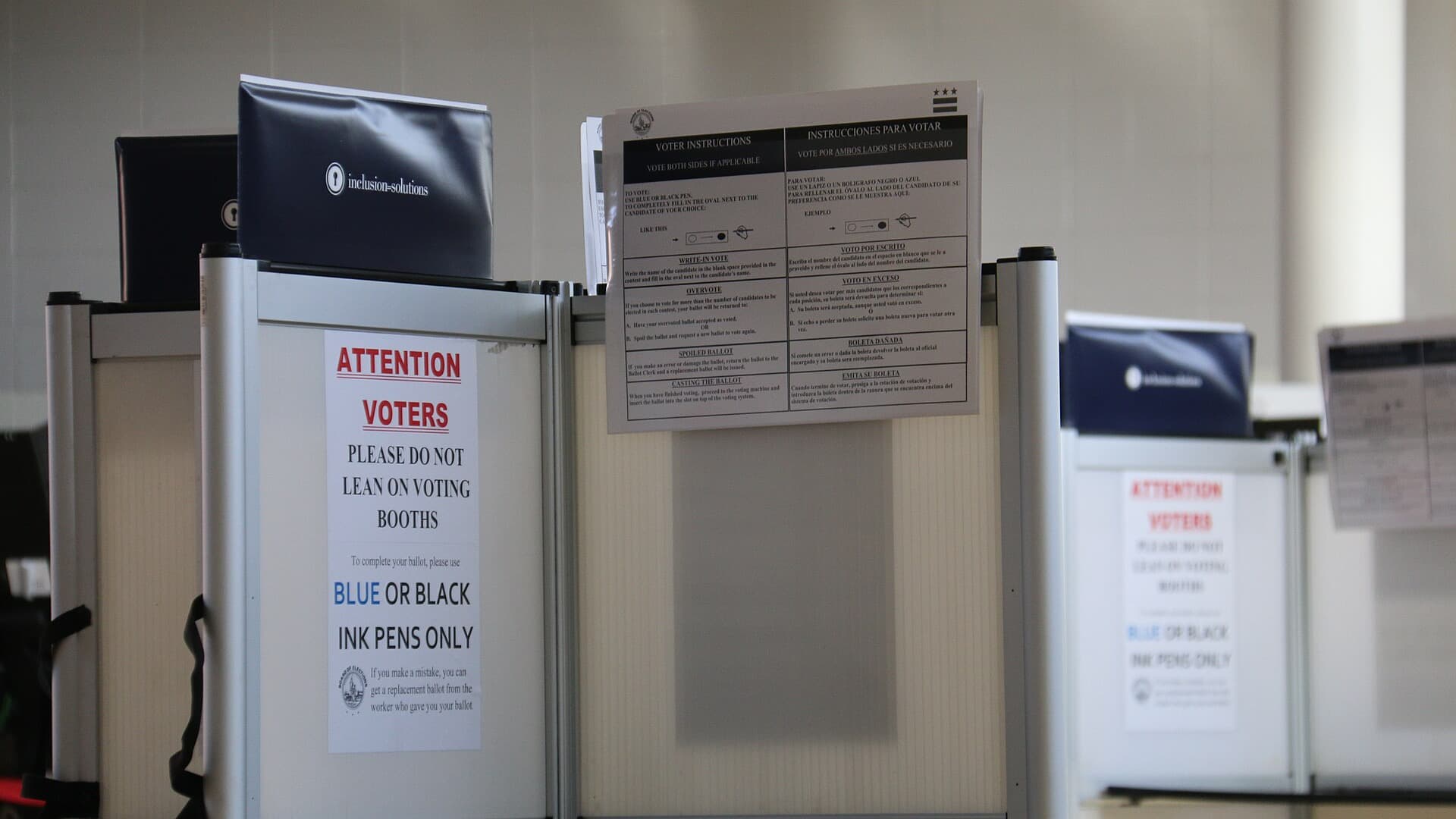
The Constitution leaves most decisions about elections to the states. The Elections Clause, in Article I, Section 4, provides: "The Times, Places and Manner of holding Elections for Senators and Representatives, shall be prescribed in each State by the Legislature thereof; but the Congress may at any time by Law make or alter such Regulations, except as to the Places of chusing Senators."1
The clause gives power over congressional elections to two bodies: state legislatures, which set the rules, and Congress, which can change them by passing a law. The president is not mentioned in it. The Congressional Research Service describes the Constitution as recognizing "states' primary roles in election administration" while also giving the federal government specific powers and responsibilities.2
Who does the work
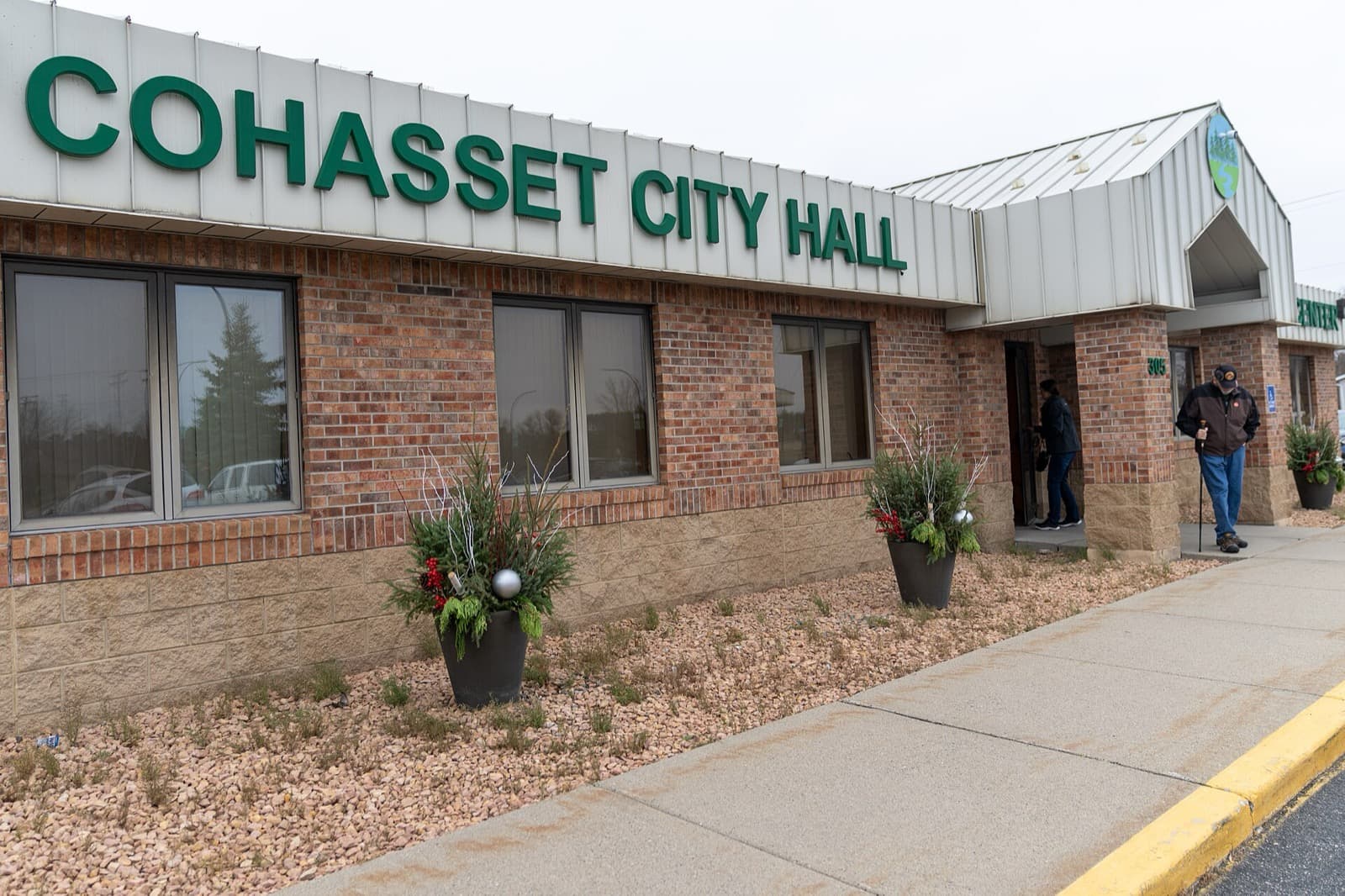
Elections in the United States are run by "thousands of state and local systems rather than a single, unified national system," according to the Congressional Research Service. States usually make the rules, and localities, usually counties and in New England often towns, carry them out. Federal law requires each state to designate a chief election official.3
Local officials do most of the hands-on work. In the research service's description, they "add eligible voters to the voter rolls; design and print ballots; recruit and train poll workers; select and prepare polling places; store and transport voting equipment; and count, canvass, and report election results."3 Those choices can become disputes of their own. In September 2026, commissioners in Tarrant County, Texas, voted 3 to 2 to approve 224 Election Day polling sites, down from 316 in the 2022 midterms, while the county's elections administrator said several earlier sites could not be used.4
What Congress has added
Congress has also set some national rules. The Congressional Research Service lists the main ones. The National Voter Registration Act of 1993 requires states to offer voter registration at motor vehicle and social service agencies and regulates how they remove names from the rolls. The Help America Vote Act of 2002 requires statewide voter registration databases and provisional ballots for voters whose eligibility is unclear. The Uniformed and Overseas Citizens Absentee Voting Act protects absentee voting by service members and overseas citizens, and the Voting Rights Act bars discrimination in voting based on race, color or language.2
Even so, "states, territories, and local election jurisdictions (often counties) do most of the work of administering federal elections," the research service says, and they "also retain most authority over how those elections are conducted." The federal government mainly supports them and makes sure they follow federal law. Among federal agencies, the Election Assistance Commission distributes federal funding and information to the states, and the FBI investigates election crimes.2
Where the president fits
Recent court fights over a presidential election order have turned on what Congress has authorized. On March 31, 2026, President Trump signed Executive Order 14399. It directed the Department of Homeland Security, working with the Social Security Administration, to send each state's chief election official a list of confirmed U.S. citizens, and it directed the Postmaster General to begin a rulemaking on mail ballots.5 The Postal Service's final rule, published August 26, requires election officials to use ballot envelopes that meet postal standards, enroll voters through a federal portal and submit outgoing ballot mail for verification.6
Two federal judges blocked the rule. Judge Indira Talwani in Massachusetts barred its mandatory provisions for elections on or before November 3, 2026.7 In a separate case, Judge Carl J. Nichols in Washington wrote that "The key portions of the Rule exceed any conception of the outer bounds of these authorities," referring to the Postal Service's powers under federal law.8 On September 14, the Supreme Court refused to pause Judge Talwani's order. Justice Brett Kavanaugh wrote that applying the rule in 2026 would be arbitrary "because state and local election officials do not have sufficient time to reasonably implement the rule before the elections." Justice Samuel Alito, joined by Justice Clarence Thomas, dissented, writing that even if the rule regulates elections, "Congress may create such rules under the Elections Clause" and may authorize the Postal Service to issue them.9
Agents and police at the polls
Federal criminal law limits armed federal agents at voting sites. Under 18 U.S.C. 592, any federal military or civil officer who "orders, brings, keeps, or has under his authority or control any troops or armed men at any place where a general or special election is held, unless such force be necessary to repel armed enemies of the United States," faces a fine and up to five years in prison.10 Federal law also bars intimidating, threatening or coercing voters.2
How those laws apply to immigration agents is disputed. The Brennan Center for Justice argues that "sending ICE or any other armed federal agents to the polls is illegal."11 Homeland Security Secretary Markwayne Mullin said on September 1, 2026, that ICE would be at a polling place only "if there is a threat to that polling place or we're serving a warrant on someone that we have been actively tracking down."12 LULAC and other groups sued the department on September 10, asking a federal court to rule that the administration's position violates the statute.13
State law governs local officials and police. On September 24, 2026, the California Supreme Court ruled that the Riverside County sheriff's seizure of about 650,000 ballots from the county registrar was unlawful, because state law provides that "[i]n no event" shall voted ballots "be taken from the custody of the elections official."14
History
- September 17, 1787
Delegates sign the Constitution, with the Elections Clause in Article I, Section 4.1
- 1865
Congress passes the ban on troops and armed men at polling places that survives as 18 U.S.C. 592.11
- 1993
Congress passes the National Voter Registration Act.2
- 2002
Congress passes the Help America Vote Act, which requires statewide voter registration databases.2
- March 31, 2026
President Trump signs Executive Order 14399 on citizenship verification and mail ballots.5
- August 26, 2026
The Postal Service publishes its final rule on federal ballot mail.6
- September 4, 2026
A federal judge in Massachusetts blocks the rule's mandatory provisions for the 2026 elections.7
- September 10, 2026
LULAC and other groups sue to keep armed ICE officers out of polling places.13
- September 14, 2026
The Supreme Court leaves the block on the ballot-mail rule in place.9
- September 24, 2026
The California Supreme Court orders a sheriff to return about 650,000 seized ballots to the Riverside County registrar.14
What is disputed
Whether the Postal Service may require election officials to meet federal ballot-mail standards, or whether that intrudes on the states' power to run elections.
See the case: Should Trump’s new mail-in voting restrictions apply to the 2026 midterms?Whether federal officials' statements about ICE near polling places violate 18 U.S.C. 592 or the Voting Rights Act's ban on intimidating voters.
See the case: Should ICE and other armed federal agents be allowed at or near polling places in the 2026 election?What role the FBI will play at or near polling places in the 2026 election.
See the case: Patel questioned on FBI presence at Michigan polling places after John James claimWhen local law enforcement may take ballots or election records from election officials to investigate claims of fraud.
See the case: Was Riverside County Sheriff Chad Bianco's seizure of about 650,000 ballots lawful?Whether federal officers may search state voter-record portals that are restricted to voters and their authorized representatives.
See the case: Did DHS direct officers to misrepresent themselves to search state voter records?How far county officials may cut polling places, and whether Tarrant County's cuts were meant to affect the election's outcome.
See the case: Were Tarrant County's 2026 polling-site cuts an attempt to skew the election?
Cases on the Dispute Index
Did DHS direct officers to misrepresent themselves to search state voter records?
A whistleblower alleges DHS officers were told to misrepresent themselves on state voter portals. Released training permits searches but does not show that instruction. Secretary Mullin denies it.
Should ICE and other armed federal agents be allowed at or near polling places in the 2026 election?
Homeland Security Secretary Markwayne Mullin says ICE would go to polling places only for a threat or a warrant, and DHS says ICE is not planning operations targeting them but arrests could follow a threat. Three lawsuits allege that position violates federal law.
Was Riverside County Sheriff Chad Bianco's seizure of about 650,000 ballots lawful?
Riverside County Sheriff Chad Bianco seized about 650,000 ballots in early 2026 under search warrants, citing a disputed vote discrepancy. The California Supreme Court held the seizure unlawful; Bianco says his investigation was lawful and disagrees with the ruling.
Were Tarrant County's 2026 polling-site cuts an attempt to skew the election?
Tarrant County approved 92 fewer Election Day polling sites for 2026 than in 2022. Compare Richardson's election-rigging accusation with Wren's account of the county's rationale and countywide vote-center rules.
Patel questioned on FBI presence at Michigan polling places after John James claim
Michigan gubernatorial candidate John James said FBI Director Kash Patel privately told him the FBI would have a presence in Michigan before Election Day. Questioned at a Senate hearing, Patel neither confirmed nor denied it.
Should Trump’s new mail-in voting restrictions apply to the 2026 midterms?
Trump's administration defends new USPS ballot-mail requirements as anti-fraud controls. Read the rule, challenges to its authority and the Supreme Court's September 14 decision leaving a temporary block in place.
Sources
- The Constitution of the United States: A Transcription (National Archives), Article I, Section 4 (opens in a new tab)
- Federal Role in U.S. Campaigns and Elections: An Overview, CRS Report R45302 (updated December 19, 2025) (opens in a new tab)
- The State and Local Role in Election Administration: Duties and Structures, CRS Report R45549 (March 4, 2019) (opens in a new tab)
- Tarrant County removes 92 polling sites (opens in a new tab) · Saved copy (opens in a new tab)
- Executive Order 14399: Ensuring Citizenship Verification and Integrity in Federal Elections (opens in a new tab)
- USPS final rule: Ballot Mail for Federal Elections (opens in a new tab)
- District-court preliminary injunction against mandatory USPS ballot-mail provisions (opens in a new tab)
- DSCC v. Trump: memorandum opinion granting preliminary injunctions against the USPS ballot-mail rule (opens in a new tab)
- Supreme Court stay denial, Kavanaugh concurrence and Alito dissent: USPS v. California (opens in a new tab)
- 18 U.S. Code § 592: Troops at polls (Legal Information Institute) (opens in a new tab)
- Sending ICE to Polling Places Is Illegal (opens in a new tab) · Saved copy (opens in a new tab)
- Homeland Security Secretary Mullin on ICE Enforcement Operations in New York (C-SPAN video) (opens in a new tab) · Saved copy (opens in a new tab)
- LULAC Sues Department of Homeland Security To Keep Armed ICE Officers Out Of America's Polling Places (opens in a new tab)
- Cervantes v. Bianco (S295866), opinion of the Court and concurring opinion of Justice Liu (opens in a new tab) · Saved copy (opens in a new tab)
Last reviewed October 7, 2026. We review this explainer when a case that uses it changes. Report an error