
Did OpenAI improperly pressure mathematicians over authorship and credit?
Tristan Buckmaster says OpenAI pressured him over authorship and publication; Sebastien Bubeck disputes his account. Read their statements and the timeline of competing mathematics work, including what remains disputed.
Case period:
Published by The Dispute Index editorial teamPublished Updated
Overview
Buckmaster and Levent Alpöge describe their collaboration as personal; OpenAI participants say Alpöge's Anthropic affiliation complicated coordination. Both sides have published extensive accounts, but no public recording of the disputed calls was located. OpenAI subsequently released a claimed Navier–Stokes solution and formalization. This case assesses the competing accounts of conduct and scientific credit, not the proof's mathematical correctness. Concerns about targeted access and general model training are kept separate, and neither is treated as established theft.
People in this case
 Tristan BuckmasterDirectly involved
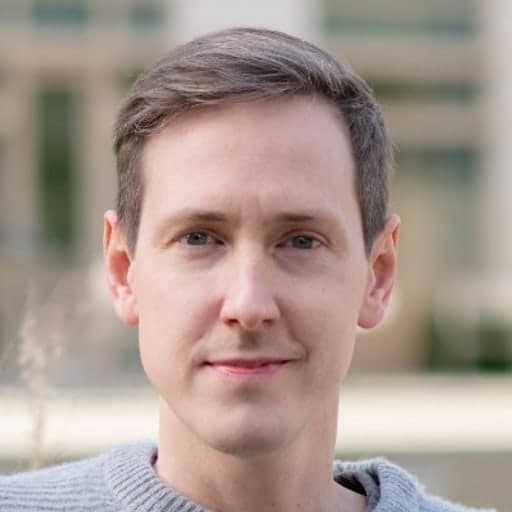 Sébastien BubeckDirectly involved
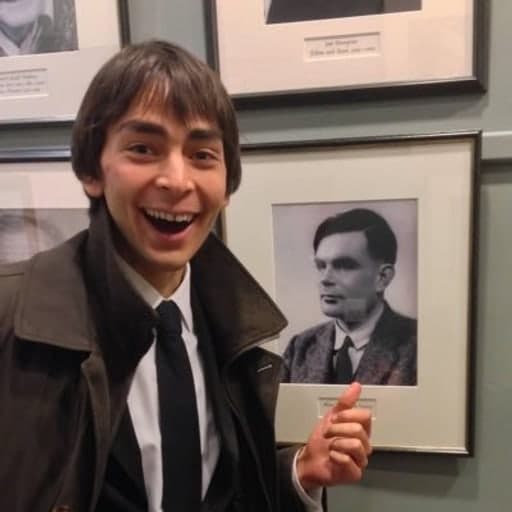 Levent AlpögeDirectly involved
Timeline
17 timeline entries on this page. Dates: September 6, 2026 to October 6, 2026
September 2026
Private calls produce competing accounts
Buckmaster and Bubeck later publish different interpretations of the publication discussions and proposed authorship arrangements.
[01]Tristan Buckmaster
Complete firsthand written account, including the September 6 conversations, proposed publication arrangements and the limits of his data-access knowledge. The PDF itself has no verified publication timestamp. No recording of the disputed calls has been located; this is Buckmaster's account, not an independently established transcript.
Tristan Buckmaster’s full account of research progress and discussions with OpenAI · Tristan Buckmaster[02]Bubeck's full numbered response on authorship, the calls and technical process
Includes authorship context, apology for career wording and continued rejection of the allegations. Technical follow-up is included in the captured thread.
Buckmaster releases his full statement with the mathematical papers
Source release
The announcement page displays September 7 at 11:58 PM; it links the full statement and three papers. The displayed timezone is not labeled.
[01]Tristan Buckmaster
Complete firsthand written account, including the September 6 conversations, proposed publication arrangements and the limits of his data-access knowledge. The PDF itself has no verified publication timestamp. No recording of the disputed calls has been located; this is Buckmaster's account, not an independently established transcript.
Tristan Buckmaster’s full account of research progress and discussions with OpenAI · Tristan Buckmaster[03]Buckmaster announces papers and links his statement
Posted September 7 at 11:58 PM and edited September 8 at 12:08 AM. The time zone is not labeled, so only the date is recorded.
OpenAI publishes its claimed solution and process account
Source release
The company provides the paper and formalization, denies targeted access to the researchers' work and includes a de-identified-training-data caveat.
[04]OpenAI
Official account links the mathematical paper and formalization, denies targeted access to the other team's work and retains a caveat about de-identified training data. We do not independently certify the proof.
Early reactions include defense and criticism
Reaction
Brown defends Bubeck's intentions; Wolf criticizes the reported conduct but adds a request to hear the other side.
[05]Noam Brown defends Bubeck's intentions
Early defense of a collaborator's character and intentions. This post is not an independent audit of data use, authorship or mathematical validity.
[06]Thomas Wolf criticizes the reported handling of researchers and asks to hear both sides
Full thread includes his 06:58:39Z follow-up urging readers to wait for the other side's account.
Bubeck publishes a detailed counter-account
Reaction
His statement distinguishes the proposed authorship context and includes a limited apology for career wording.
[02]Bubeck's full numbered response on authorship, the calls and technical process
Includes authorship context, apology for career wording and continued rejection of the allegations. Technical follow-up is included in the captured thread.
Alpöge and Bubeck disagree publicly about whether talks remained open
Reaction
Alpöge describes perceived settled terms; Bubeck replies that more discussion remained possible.
[07]Alpöge describes his willingness to collaborate and what he heard
He says he overheard a loud conversation in the hallway, rather than participating in the calls; he criticizes exclusion while expressing support for collaboration.
[08]Bubeck directly disputes Alpöge's account of closed negotiations
Direct reply to Alpöge; says negotiations remained open and further discussions were possible.
Altman explicitly defends the team's conduct
Reaction
Altman says the team acted appropriately and would have preferred coordinated publication.
[09]Sam Altman defends the team and explains its proposed publication arrangements
Altman says he spoke with the team over the weekend and defends its conduct. His role makes this an interested defense, not an independent witness to every call.
Jiang challenges the explanation without conflating the proofs
Reaction
Jiang accepts that the proposal was authorship on OpenAI's work, but continues to object to unilateral exclusion.
[10]Nan Jiang challenges the proposed authorship arrangements after Bubeck's clarification
Crucial follow-up explicitly acknowledges that the proposed authorship was on OpenAI's work, while maintaining his criticism of excluding the other collaborator.
Chen separates targeted access from model improvement
Reaction
Chen rejects access to user data during the project while acknowledging broader use of de-identified data and feedback.
[11]Mark Chen distinguishes targeted user-data access from model improvement
Explicit denial that humans or agents accessed user data for the effort, while affirming broader use of de-identified data and feedback.
Woit proposes stronger disclosure norms for AI mathematics
Reaction
Woit calls for methods, prompt, training and timing documentation to make priority and process assessable.
[12]Peter Woit: A Modest Proposal
Signed essay calls for detailed methods, prompt and training disclosure. It also discusses rumors; the case does not adopt those rumors as facts.
25 Fields Medalists publish open letter on "misalignment of AI in mathematics"
Reaction
A coalition of 25 Fields Medalists, including Terence Tao, published an open letter, "A Severe Misalignment of AI in Mathematics," responding to the Buckmaster-Bubeck dispute as an example of AI firms mining open mathematical problems. Nearly 6,000 additional mathematicians subsequently co-signed. Separately, OpenAI withdrew as a sponsor of Caltech's "Mathathon" after a related open letter accused AI firms of research misconduct.
[13]A Severe Misalignment of AI in Mathematics (open letter)
Source excerpt
The issues the mathematical community faces now … indicate issues that all of humanity might face: how to make sure that, as AI changes the way work is done, we do not lose sight of what that work was meant to achieve in the first place.
Open letter "A Severe Misalignment of AI in Mathematics," co-signed by 25 Fields Medalists including Terence Tao, responding to this episode as a triggering example; nearly 6,000 additional mathematicians co-signed per Science.org reporting.
Buckmaster says the race to publish mathematical breakthroughs has become pointless
Reaction
In an ABC News interview, Tristan Buckmaster said AI had made the race to publish breakthroughs “pointless,” criticized AI companies’ treatment of the scientific community, and called for re-evaluating mathematics. The interview gives his later perspective; it does not independently resolve the disputed accounts of earlier private discussions with OpenAI. September 11 is established.
[14]ABC News interview with Tristan Buckmaster after the OpenAI mathematics controversy
Source excerpt
I think it's pointless. Like, I think the game is up.
ABC News interviewed Buckmaster after the dispute over OpenAI’s claimed Navier–Stokes result. The article reports his broader views about AI and academic mathematics, repeats his account of earlier private discussions, and includes an OpenAI spokesperson’s response. It does not independently establish the disputed private-call allegations.
ABC News interview with Tristan Buckmaster after the OpenAI mathematics controversyPublished September 11, 2026; Buckmaster quotations at lines 154–162 and 227–229 of the accessible article text.The mathematicians’ open letter passes 7,500 endorsers
The open letter on the misalignment of AI in mathematics, published on September 11 by 25 Fields Medallists, lists 7,583 endorsers on its public, ORCID-verified endorsement page as of September 18. Science reported roughly 6,000 additional signatories on September 15. The count is a live figure on the letter’s own site and will continue to move.
[13]A Severe Misalignment of AI in Mathematics (open letter)
Source excerpt
The issues the mathematical community faces now … indicate issues that all of humanity might face: how to make sure that, as AI changes the way work is done, we do not lose sight of what that work was meant to achieve in the first place.
Open letter "A Severe Misalignment of AI in Mathematics," co-signed by 25 Fields Medalists including Terence Tao, responding to this episode as a triggering example; nearly 6,000 additional mathematicians co-signed per Science.org reporting.
OpenAI announces an independent mathematics advisory group
Source release
OpenAI announced that mathematicians had established an independent Advisory Group on Mathematics and Artificial Intelligence. The company says the group can publish independent advice and advise on the review, communication and dissemination of emerging results and on research standards. It says the group will not advise on the pace of OpenAI’s internal mathematics work.
[15]OpenAI
Source excerpt
Their criticisms highlight the need for thoughtful engagement of AI companies with the math community.
OpenAI’s September 21 announcement says it is working with mathematicians who established an independent advisory group. The company says the group can publish independent advice and advise on review, communication and research standards, but will not advise OpenAI on pacing its internal mathematics progress.
OpenAI announces an independent Advisory Group on Mathematics and Artificial Intelligence · OpenAIPage title and paragraphs beginning “On August 28” and “In a recent open letter”Mathematics advisory group publishes release recommendations
Source release
AGMAI recommended credit to related literature, accessible and versioned results, disclosure of methods and support for human understanding. It opposed treating mathematical releases as model marketing. These are the group's recommendations, not binding rules.
[16]AGMAI recommendations on releasing mathematical results
The group recommends public, versioned releases, credit to related literature and support for human understanding, while opposing use of results as model marketing.
AGMAI recommendations on releasing mathematical resultsSection 2, technical norms, item 2; opening statement and attribution recommendations
October 2026
OpenAI publishes mathematical results and disclosure commitments
Source release
OpenAI released mathematical work and described steps on citations, presentation and outside advice. It promised to improve future disclosure standards and support human understanding. The release itself does not settle the earlier dispute over pressure and authorship.
[17]OpenAI releases mathematical results and describes disclosure standards
OpenAI describes its release and commitments to improve citations and presentation. The announcement does not independently establish the correctness or novelty of its mathematical results.
OpenAI releases mathematical results and describes disclosure standardsRelease announcement; paragraphs on citations, exposition, advisory consultation and future disclosure standardsAdvisory group distinguishes its advice from endorsement
Reaction
AGMAI called publication a first step toward assessing and understanding the work. It said its advice did not endorse OpenAI's process or judge the results' impact, leaving that assessment to the mathematical community.
[18]AGMAI responds to OpenAI's mathematical release
The group describes public release as a first step and its discussions as constructive, while saying its advice does not endorse OpenAI's process or judge the results' impact.
AGMAI responds to OpenAI's mathematical releaseSecond paragraph on advisory role; final paragraphs on human understanding and community assessment
Claims
Claims separate what was said from what is contested. Follow each source for the original wording and context.
What was said
Attributed statement
Bubeck says the disputed authorship proposal concerned a rewrite of OpenAI's proof, not removing Alpöge from his own work.
Attributed statement
Alpöge says his exclusion appeared to be a settled condition of the proposed collaboration.
Attributed statement
OpenAI
OpenAI says its researchers and agents did not access Buckmaster and Alpöge's unpublished work for the project.
Attributed statement
OpenAI
OpenAI says it cannot rule out that de-identified data from the researchers' product usage helped improve its models.
Sources (1)
Attributed statement
Buckmaster's later post questions the ethics of using customer research to compete with the customer, drawing on OpenAI's disclosed training chronology.
What's disputed
Disputed claim
OpenAI improperly pressured the researchers over authorship and publication of the mathematical results.
Disputed claim
Jiang argues that even an offer of authorship on OpenAI's proof did not justify unilaterally excluding the other team's collaborator.
Disputed claim
Woit argues AI-assisted mathematical announcements should disclose methods, prompts, training data and timing so priority and process can be examined.
Sources (1)
Arguments
Documented position
Levent Alpöge and Nan Jiang.
Excluding a collaborator could still amount to inappropriate pressure
Even accepting that an authorship offer concerned OpenAI's proof, critics argue a joint-credit proposal should not selectively exclude the other team's collaborator because of his employer. Alpöge's account and Jiang's response frame the disputed terms as inappropriate pressure rather than ordinary coordination.
Limit of this argument
The teams had different results, and there is no located recording resolving the private discussions. A perceived threat does not by itself prove the alleged speaker's intention.
Read sources and related claim
Related claim
OpenAI improperly pressured the researchers over authorship and publication of the mathematical results.
Documented position
Sam Altman and Sébastien Bubeck.
OpenAI describes an effort to coordinate credit and publication
The defense distinguishes a new OpenAI-proof writeup from the collaborators' own papers. Altman and Bubeck describe an effort to recognize priority and coordinate release, not confiscate existing authorship. Supporters argue the different results and employer-related access constraints make that account plausible.
Limit of this argument
Bubeck acknowledges inappropriate career wording. Alpöge and Jiang dispute that the proposed exclusion was acceptable even under the defense's framing.
Read sources and related claim
Related claim
OpenAI improperly pressured the researchers over authorship and publication of the mathematical results.
Sources
Response record
Responses
Choose one response filter, or select All responses to see the full record.
10 matching responses. First 6 shown initially. Newest first.
 OpenAIAI company announcing its mathematical releaseDirectly involved
Before this statement
OpenAI discusses consultations and work on the released papers.
"We will continue to act on feedback from the community and update our standards for future disclosures of major scientific advancements."
Defended or excusedCase context: Did OpenAI improperly pressure mathematicians over authorship and credit?
Full statement and sources
OpenAI described citation and presentation work and promised to revise future disclosure standards in response to feedback.
After the statement
It describes plans to support mathematical research and human understanding.
OpenAI releases mathematical results and describes disclosure standardsRelease announcement; paragraphs on citations, exposition, advisory consultation and future disclosure standardsWhy this label?
The company presents its disclosure process and improvement commitments as a response to community concerns.
This label describes the statement's response within the context above.
- OpenAIStatement by an OpenAI spokesperson to NatureDirectly involved
Before this statement
Given to Nature for its September 17 report on the credit dispute. It is a more specific formulation than OpenAI’s earlier public statements, naming a hard July 3 cutoff and a September 1 start date.
"After investigating, we can say with full confidence that no user inputs past July 3rd could have influenced this system in any way."
Challenged the characterizationCase context: Did OpenAI improperly pressure mathematicians over authorship and credit?
Full statement and sources
An OpenAI spokesperson told Nature that no user inputs after July 3 could have influenced the system, and said the company began work on the problem on September 1 and had not seen the mathematicians’ work until they released it publicly.
After the statement
The same report records Buckmaster's disclosure that he held three separate ChatGPT accounts and had opted out of training on only two of them, and Andreas Thom's account that he had not opted out until late June. The Washington Post reported a similar formulation on September 13, attributed to spokesperson Laurance Fauconnet.
Nature: “Who gets credit in the AI era? OpenAI maths bombshell sparks debate”Section carrying the OpenAI spokesperson’s statement and Buckmaster’s account of his ChatGPT accounts.Why this label?
On OpenAI disputes the factual premise on which the credit allegation rests, asserting a hard data cutoff that would place the mathematicians’ interactions outside the training window and a start date after which it says it saw none of their work. This is a challenge to the characterization of what happened rather than a defence of pressure said to have occurred. Note that the same report records OpenAI “did not provide a direct response” on whether its models used Andreas Thom’s earlier sessions, so the denial is specific rather than comprehensive.
This label describes the statement's response within the context above.
 Tristan BuckmasterMathematician directly involved in the research and disputed conversations, speaking in his own capacityDirectly involved
Before this statement
Bubeck's September 8 response said he apologized for his career-related wording and retracted it during the call. Altman separately defended the team's conduct and described its attempts to coordinate with the researchers.
"Sébastien's statement below is wildly false."
CondemnedResponding to: OpenAI improperly pressured the researchers over authorship and publication of the mathematical results.
Full statement and sources
Buckmaster rejects Bubeck's account of the disputed career-related remarks and challenges Altman's statements about Alpöge's willingness to communicate and the teams' mathematical approaches.
After the statement
In the continuation, Buckmaster reproduces Bubeck's explanation and apology wording, then calls for discussions with AI labs about preventing similar conduct. The opposing accounts remain unresolved; this thread is not a withdrawal of Buckmaster's prior criticism.
Tristan Buckmaster disputes Bubeck's and Altman's accounts in a follow-up threadPost 117247207157737650, labeled 1/3; context continues in posts 117247213090629427 and 117247218031191072Why this label?
The full three-post response not only disputes facts but labels the conduct unethical and calls for prevention. Coding only the first factual denial understates the complete response’s condemnation.
This label describes the statement's response within the context above.
- Tristan BuckmasterMathematician involved in the research-credit dispute, posting on MastodonDirectly involved
Before this statement
Buckmaster had already disputed authorship and credit surrounding OpenAI's mathematical research. This September 8 post is an older missed follow-up, not a new September 10 development.
"This below is absolute academic malpractice:"
CondemnedCase context: Did OpenAI improperly pressure mathematicians over authorship and credit?
Full statement and sources
Tristan Buckmaster escalated his criticism of OpenAI's account of the research and raised a concern about possible use of an unpublished result. Neither targeted access nor training on that specific work is established.
After the statement
The post raises an unpublished-result and training-data concern, but neither targeted access nor training on this particular work has been established. OpenAI's denial and qualification remain recorded in the case. The accompanying image was not independently inspected; this record is limited to the verified written post.
Tristan Buckmaster: follow-up criticism of OpenAI's research accountOriginal post, last edited about21:34UTC; publication metadata verifiedWhy this label?
Buckmaster directly alleges improper academic conduct in the research narrative. His training-data concern remains an allegation, not an established finding.
This label describes the statement's response within the context above.
 Sébastien BubeckOpenAI participant replying directly to AlpögeDirectly involved
Before this statement
Alpöge says the conversation made him believe the terms were settled.
"nothing at all was locked"
Challenged the characterizationResponding to: Alpöge says his exclusion appeared to be a settled condition of the proposed collaboration.
Full statement and sources
Rejects Alpöge's description of closed negotiations and says the team was willing to keep discussing alternatives.
After the statement
This reply does not resolve the disagreement about whether the proposed exclusion was appropriate.
Why this label?
Direct denial of the characterization that the outcome was predetermined.
This label describes the statement's response within the context above.
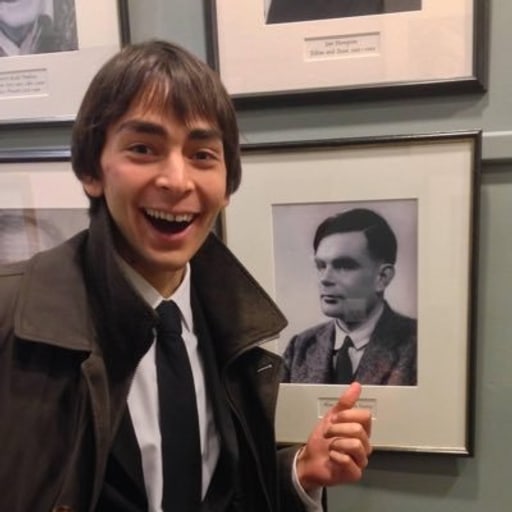 Levent AlpögeCollaborator who says he overheard the hallway conversation, not a participant in the callsDirectly involved
Before this statement
Responds after the company's announcement and Bubeck's clarification.
"i actually woulda been pumped to collaborate on this"
CondemnedResponding to: Alpöge says his exclusion appeared to be a settled condition of the proposed collaboration.
Full statement and sources
Says he welcomed collaboration but understood the overheard conversation to make his exclusion a settled condition.
After the statement
Bubeck directly replies that nothing was settled and further discussion remained possible.
Why this label?
Criticizes the terms while affirming support for inter-lab scientific collaboration.
This label describes the statement's response within the context above.
Show fewer responses
- Sébastien BubeckOpenAI participant giving his firsthand accountDirectly involved
Before this statement
Responds to Buckmaster's published account.
"I never ever asked for Levent to be removed from authorship of his own work"
Challenged the characterizationResponding to: Bubeck says the disputed authorship proposal concerned a rewrite of OpenAI's proof, not removing Alpöge from his own work.
Full statement and sources
Says the offer concerned OpenAI's proof and disputes the account of coercion.
After the statement
Apologizes for the career wording and says he retracted it immediately; maintains that he intended to help, not threaten.
Why this label?
Direct counter-characterization, with a limited apology rather than a withdrawal of his defense.
This label describes the statement's response within the context above.
- OpenAICompany publicationDirectly involved
Before this statement
Publishes its claimed solution, formalization and project timeline.
"no specific user data was accessed in order to solve this problem."
Challenged the characterizationResponding to: OpenAI says its researchers and agents did not access Buckmaster and Alpöge's unpublished work for the project.
Full statement and sources
Denies accessing the researchers' work for this effort but cannot rule out de-identified usage data contributing to model improvement.
After the statement
Credits the other team's forced-Euler work. The mathematical validity and any effect of earlier training remain distinct questions.
Why this label?
Official denial with an express limitation, not a blanket statement that user interactions never affected training.
This label describes the statement's response within the context above.
- Tristan BuckmasterResearcher responding to OpenAI's announcementDirectly involved
Before this statement
After his original statement, OpenAI discloses the training period and data caveat.
"Is it ethical to use customer's data to try to scoop their customer?"
CondemnedResponding to: Buckmaster's later post questions the ethics of using customer research to compete with the customer, drawing on OpenAI's disclosed training chronology.
Full statement and sources
Uses the disclosed training chronology to question whether customer research could help a provider compete with that customer.
After the statement
The chronology alone does not establish inclusion of his conversations or causation of the result.
Why this label?
Buckmaster’s rhetorical ethics question is substantive criticism of the disputed practice. Lack of proof that the practice occurred does not downgrade his condemnation to a descriptive challenge.
This label describes the statement's response within the context above.
- Tristan BuckmasterParticipant in the calls, describing a personal collaborationDirectly involved
Before this statement
His statement announces work with Alpöge and explains why the papers were released before the presentation was fully polished.
"The reasons are below, and they involve our being pressured by outside factors."
CondemnedResponding to: OpenAI improperly pressured the researchers over authorship and publication of the mathematical results.
Full statement and sources
Describes improper pressure over release and authorship, including career-related remarks. Tristan Buckmaster's written account of OpenAI discussions explains his concern; read his statement and what he could not verify.
After the statement
At publication he had not seen OpenAI's proof and expressly said he did not know whether their data was used. In a separate September 8 post, he urged labs to focus on the broader implications of frontier models. That follow-up did not withdraw his account.
Tristan Buckmaster’s full account of research progress and discussions with OpenAI · Tristan BuckmasterWhy this label?
Criticizes the conduct of the negotiations; this does not establish that data was taken.
This label describes the statement's response within the context above.
Sources
(41)
Original text
Tristan Buckmaster’s full account of research progress and discussions with OpenAI
About this source
Complete firsthand written account, including the September 6 conversations, proposed publication arrangements and the limits of his data-access knowledge. The PDF itself has no verified publication timestamp. No recording of the disputed calls has been located; this is Buckmaster's account, not an independently established transcript.
- Author
- Tristan Buckmaster
- Accessed
Official statement
AGMAI responds to OpenAI's mathematical release
Relevant passage: Second paragraph on advisory role; final paragraphs on human understanding and community assessment
About this source
The group describes public release as a first step and its discussions as constructive, while saying its advice does not endorse OpenAI's process or judge the results' impact.
- Author
- Advisory Group on Mathematics and Artificial Intelligence
- Published
- Accessed
Official statement
OpenAI releases mathematical results and describes disclosure standards
Relevant passage: Release announcement; paragraphs on citations, exposition, advisory consultation and future disclosure standards
About this source
OpenAI describes its release and commitments to improve citations and presentation. The announcement does not independently establish the correctness or novelty of its mathematical results.
- Author
- OpenAI
- Published
- Accessed
Official statement
AGMAI recommendations on releasing mathematical results
Relevant passage: Section 2, technical norms, item 2; opening statement and attribution recommendations
About this source
The group recommends public, versioned releases, credit to related literature and support for human understanding, while opposing use of results as model marketing.
- Author
- Advisory Group on Mathematics and Artificial Intelligence
- Published
- Accessed
Official statement
OpenAI announces an independent Advisory Group on Mathematics and Artificial Intelligence
Relevant passage: Page title and paragraphs beginning “On August 28” and “In a recent open letter”
Excerpt
"Their criticisms highlight the need for thoughtful engagement of AI companies with the math community."
About this source
OpenAI’s September 21 announcement says it is working with mathematicians who established an independent advisory group. The company says the group can publish independent advice and advise on review, communication and research standards, but will not advise OpenAI on pacing its internal mathematics progress.
- Author
- OpenAI
- Published
- Accessed
Analysis
Scott Aaronson, Shtetl-Optimized: “The Age of Wonders and Terrors”
Relevant passage: Body, the paragraph beginning “My purpose here is not to adjudicate the dispute.”
Excerpt
"My purpose here is not to adjudicate the dispute. Yes, in swooping in with vastly greater resources once it had gotten wind of progress on Navier-Stokes, OpenAI seems to have acted in a way that some might describe as “unsportsmanlike.” No, I don’t find it plausible that OpenAI’s models meaningfully benefitted from being trained on Buckmaster and Alpöge’s chat logs."
About this source
Post by a theoretical computer scientist who links both Buckmaster’s statement and Bubeck’s LinkedIn response before separating the two halves of the dispute: he criticises OpenAI’s conduct while rejecting the training-data claim, and leaves open “what exactly did OpenAI know about Buckmaster and Alpöge’s work and when did it know it?”
- Author
- Scott Aaronson
- Published
- Accessed
Reporting
Nature: “Who gets credit in the AI era? OpenAI maths bombshell sparks debate”
Relevant passage: Section carrying the OpenAI spokesperson’s statement and Buckmaster’s account of his ChatGPT accounts.
Excerpt
"An OpenAI spokesperson told Nature: “After investigating, we can say with full confidence that no user inputs past July 3rd could have influenced this system in any way.” The company said that it started working on the problem on 1 September and that it had not seen “any of their work through any means until they released it publicly”."
About this source
Carries OpenAI’s most specific denial to date, naming a hard July 3 data cutoff and a September 1 start date. It also reports Buckmaster’s disclosure that he held three separate ChatGPT accounts and had opted out of training on only two of them, and Andreas Thom’s account that he had not opted out until late June. The same piece notes OpenAI “did not provide a direct response” on whether its models used those sessions.
- Author
- Davide Castelvecchi
- Published
- Accessed
Official statement
Nature editorial: “AI companies must work with the research community to protect attribution”
Relevant passage: Unsigned editorial, Nature 657, 573 (2026).
Excerpt
"Information to verify those concerns has not been published, but last week’s events should be a wake-up call for researchers and institutions. The integrity of the scientific process is at risk if studies from researchers in and outside tech companies are not appropriately crediting those who have been helping to make AI models so smart."
About this source
Unsigned editorial carrying the journal’s institutional position. It recounts Buckmaster’s statement and notes “OpenAI denies this,” states that the verifying information has not been published, and then prescribes remedies: a switch from opt-out to opt-in training data, independent audits of internal data processes, a rule that AI agents “must not circumvent protections to access private user data,” care over institutional agreements with tech companies, and pressure on AI companies to join the Leiden declaration.
- Author
- Nature editorial board
- Published
- Accessed
Original post
OpenAI withdraws Caltech Mathathon sponsorship
Excerpt
"We recognize that the rapid progress of AI in mathematics is disruptive... After considering concerns raised by members of the mathematics community, we've decided to withdraw OpenAI's sponsorship of the Caltech Mathathon and have notified the organizers."
About this source
OpenAI research scientist Dan Roberts's X post announcing OpenAI's withdrawal of sponsorship from the Caltech Mathathon competition, following an open letter from 771 Caltech-affiliated mathematicians.
- Published
- Accessed
Original text
Andreas Thom guest post on Terence Tao's blog: on the existence of non-sofic groups
Excerpt
"deepen my concern about their commitment to academic standards"
About this source
Guest post by Andreas Thom on Terence Tao's blog, disclosing a related episode involving OpenAI researchers Mark Sellke and Sébastien Bubeck and unpublished conversations about a separate math problem.
- Published
- Accessed
Official statement
Clay Mathematics Institute: Navier-Stokes Announcement
Excerpt
"has apparently been settled ... deliberately unhurried"
About this source
The Clay Mathematics Institute's first institutional statement on the Navier-Stokes problem's apparent resolution, addressing the pace of prize verification and credit assignment.
- Published
- Accessed
Original text
A Severe Misalignment of AI in Mathematics (open letter)
Excerpt
"The issues the mathematical community faces now … indicate issues that all of humanity might face: how to make sure that, as AI changes the way work is done, we do not lose sight of what that work was meant to achieve in the first place."
About this source
Open letter "A Severe Misalignment of AI in Mathematics," co-signed by 25 Fields Medalists including Terence Tao, responding to this episode as a triggering example; nearly 6,000 additional mathematicians co-signed per Science.org reporting.
- Published
- Accessed
Interview
ABC News interview with Tristan Buckmaster after the OpenAI mathematics controversy
Relevant passage: Published September 11, 2026; Buckmaster quotations at lines 154–162 and 227–229 of the accessible article text.
Excerpt
"I think it's pointless. Like, I think the game is up."
About this source
ABC News interviewed Buckmaster after the dispute over OpenAI’s claimed Navier–Stokes result. The article reports his broader views about AI and academic mathematics, repeats his account of earlier private discussions, and includes an OpenAI spokesperson’s response. It does not independently establish the disputed private-call allegations.
- Author
- Cam Wilson
- Published
- Accessed
Analysis
Andrew Wu criticizes OpenAI's research conduct
Relevant passage: Section2: On OpenAI's behavior, especially scooping and authorship; conclusion
About this source
Public authored essay, including a September10 update. Bubeck's counter-account is discussed. The author evaluates competing accounts; his allegations are not independently established.
- Author
- Andrew Wu
- Published
- Accessed
Analysis
Kai Williams criticizes the competitive research norms in OpenAI's mathematics announcement
Relevant passage: Public introductory discussion before the heading 'The Navier-Stokes problem is important but useless'; paragraph beginning 'Mathematics is as much about cultivating a community of experts' and the following two paragraphs
Excerpt
"breaks the norms of the academic math community."
About this source
Signed commentary at Understanding AI. Williams summarizes Buckmaster's account, links Bubeck's response and argues that racing to complete an academic researcher's work can undermine collaborative norms. The cited argument is publicly accessible before the paywall. The mathematical validity of the claimed solution and allegations of improper data access are not independently established by this commentary.
- Author
- Kai Williams
- Published
- Accessed
Original text
Tristan Buckmaster disputes Bubeck's and Altman's accounts in a follow-up thread
Relevant passage: Post 117247207157737650, labeled 1/3; context continues in posts 117247213090629427 and 117247218031191072
Excerpt
"Sébastien's statement below is wildly false."
About this source
Original three-post thread. Buckmaster challenges Bubeck's account of the career-related remarks and Altman's accounts of Alpöge's willingness to communicate and the teams' approaches. The continuation quotes Bubeck's explanation and apology, then calls for discussion with AI labs about research conduct. This is evidence of Buckmaster's response, not independent authentication of the disputed private calls. The verified timestamp is the original first post's publication time.
- Author
- Tristan Buckmaster
- Published
- Accessed
Original text
Tristan Buckmaster: follow-up criticism of OpenAI's research account
Relevant passage: Original post, last edited about21:34UTC; publication metadata verified
About this source
Escalates criticism of OpenAI's description of the research path and raises an unpublished-result/training concern. Neither targeted access nor training on the specific work is established. Keep OpenAI's already recorded denial/caveat linked; image content not independently inspected. Timestamp from original post metadata. Original Mastodon text, timestamp, author continuity with existing primary source and full context verified.
- Author
- Tristan Buckmaster
- Published
- Accessed
Original text
Andreas Thom questions OpenAI's explanation of unpublished research and user data
Relevant passage: Thom's numbered 2/3 post replying in the Buckmaster discussion
Excerpt
"De-identification may remove a name; it does not remove the intellectual content of a mathematical idea."
About this source
Thom describes his own interactions involving unpublished mathematical research and challenges the transparency of OpenAI's data-use explanations. His ethical concern is conditional on nonpublic user research having been used; this post does not establish that such use or theft occurred in the Buckmaster dispute. Thom is the author, not another mathematician who reposted the thread. The page displays September 9 at 06:10 without a timezone.
- Author
- Andreas Thom
- Published
- Accessed
Original post
Samuel Davenport's later allegations about data use and scientific credit
About this source
Later, more categorical post, recorded to distinguish it from Davenport's 17:55 UTC response. His allegations about data use and scientific credit remain attributed allegations, not established findings.
- Author
- Samuel Davenport
- Published
- Accessed
Analysis
Peter Woit: A Modest Proposal
About this source
Signed essay calls for detailed methods, prompt and training disclosure. It also discusses rumors; the case does not adopt those rumors as facts.
- Author
- Peter Woit
- Published
- Accessed
Original post
Mark Chen distinguishes targeted user-data access from model improvement
About this source
Explicit denial that humans or agents accessed user data for the effort, while affirming broader use of de-identified data and feedback.
- Author
- Mark Chen
- Published
- Accessed
Original post
Anshul Kundaje calls for clear policies protecting researchers
About this source
Conditional policy demand addressed to both OpenAI and Anthropic, rather than proof of a violation in this case.
- Author
- Anshul Kundaje
- Published
- Accessed
Original post
Susan Zhang redirects attention to access to unpublished research
About this source
She poses a data-access question, not a demonstrated finding. Follow-up explicitly allows that the personal-threat account could be false.
- Author
- Susan Zhang
- Published
- Accessed
Original post
Samuel Davenport challenges the coherence of the credit explanation
About this source
Questions why a company would claim the result while offering academic accolades to the other researchers.
- Author
- Samuel Davenport
- Published
- Accessed
Original post
Thomas Bloom urges readers to hear all accounts and return to mathematics
About this source
Procedural and topic-redirect response. It does not state which account is correct.
- Author
- Thomas Bloom
- Published
- Accessed
Original post
Nan Jiang challenges the proposed authorship arrangements after Bubeck's clarification
About this source
Crucial follow-up explicitly acknowledges that the proposed authorship was on OpenAI's work, while maintaining his criticism of excluding the other collaborator.
- Author
- Nan Jiang
- Published
- Accessed
Original post
Vincent Woo criticizes the reported competition for credit
About this source
Early reaction to Buckmaster's account, before Bubeck's detailed rebuttal.
- Author
- Vincent Woo
- Published
- Accessed
Original post
Andreas Kirsch gives a qualified response to Bubeck's account
About this source
Says the account fits his expectations, calls the situation messy and qualifies congratulations on the results checking out.
- Author
- Andreas Kirsch
- Published
- Accessed
Original post
Bojan Tunguz finds OpenAI's explanation reasonable
About this source
Explicit outside assessment that the explanation does not show intentional malice or underhandedness.
- Author
- Bojan Tunguz
- Published
- Accessed
Original post
Boaz Barak explains Bubeck's coordination account
About this source
Defends the stated aim of coordinating release while distinguishing the teams' mathematical results.
- Author
- Boaz Barak
- Published
- Accessed
Original post
Will Depue urges nuance and evidence before accepting allegations
About this source
He identifies prior work with Bubeck and asks readers to hear the other account. This is narrower than an evidentiary exoneration.
- Author
- Will Depue
- Published
- Accessed
Original post
Sam Altman defends the team and explains its proposed publication arrangements
About this source
Altman says he spoke with the team over the weekend and defends its conduct. His role makes this an interested defense, not an independent witness to every call.
- Author
- Sam Altman
- Published
- Accessed
Original post
Noam Brown defends Bubeck's intentions
About this source
Early defense of a collaborator's character and intentions. This post is not an independent audit of data use, authorship or mathematical validity.
- Author
- Noam Brown
- Published
- Accessed
Original post
Thomas Wolf criticizes the reported handling of researchers and asks to hear both sides
About this source
Full thread includes his 06:58:39Z follow-up urging readers to wait for the other side's account.
- Author
- Thomas Wolf
- Published
- Accessed
Original post
Bubeck directly disputes Alpöge's account of closed negotiations
About this source
Direct reply to Alpöge; says negotiations remained open and further discussions were possible.
- Author
- Sébastien Bubeck
- Published
- Accessed
Official statement
OpenAI's Navier–Stokes announcement and research timeline
About this source
Official account links the mathematical paper and formalization, denies targeted access to the other team's work and retains a caveat about de-identified training data. We do not independently certify the proof.
- Author
- OpenAI
- Published
- Accessed
Original post
Alpöge describes his willingness to collaborate and what he heard
About this source
He says he overheard a loud conversation in the hallway, rather than participating in the calls; he criticizes exclusion while expressing support for collaboration.
- Author
- Levent Alpöge
- Published
- Accessed
Original text
Buckmaster questions the ethics of models trained during his research period
About this source
Later post quotes OpenAI's training chronology and raises a customer-data ethics question. This is a stronger inference than his original caveat, not proof that his work entered training.
- Author
- Tristan Buckmaster
- Published
- Accessed
Original post
Bubeck's full numbered response on authorship, the calls and technical process
About this source
Includes authorship context, apology for career wording and continued rejection of the allegations. Technical follow-up is included in the captured thread.
- Author
- Sébastien Bubeck
- Published
- Accessed
Original text
Buckmaster urges attention to the implications of frontier models
About this source
Follow-up asks labs to set aside posturing and focus on what model capabilities mean. Not a retraction of his account.
- Author
- Tristan Buckmaster
- Published
- Accessed
Original text
Buckmaster announces papers and links his statement
About this source
Posted September 7 at 11:58 PM and edited September 8 at 12:08 AM. The time zone is not labeled, so only the date is recorded.
- Author
- Tristan Buckmaster
- Published
- Accessed
Corrections
(7)
Corrections address errors in our reporting or labels. When a speaker changes their position, we add a separate statement and link it to the earlier one.
Reporting correction
Correction to: Statement by Andreas Thom
- Previous language
- Sellke denied it -- a denial Thom argues was later shown misleading by OpenAI's own admission in the Buckmaster-Alpöge case -- saying this "deepens my concern about their commitment to academic standards."
- Corrected language
- Thom calls that denial materially misleading in light of OpenAI's later statement in the Buckmaster-Alpöge case that it could not rule out that de-identified usage data helped improve its models. He also writes that Bubeck's acknowledged career-related remark to Buckmaster and his objection to including Alpöge in a proposed paper presenting OpenAI's proof "deepen my concern about their commitment to academic standards."
An earlier version of this entry said Sellke's denial led Thom to write that it "deepens" his concern about academic standards. In his post, Thom ties that concern to Bubeck's career-related remark to Buckmaster and to his objection to including Alpöge in the proposed paper. We corrected the summary and restored Thom's exact words.
This corrects our account of what happened.
Guest post by Andreas Thom on Terence Tao's blog, disclosing a related episode involving OpenAI researchers Mark Sellke and Sébastien Bubeck and unpublished conversations about a separate math problem.
Classification correction
Correction to: Statement by Tristan Buckmaster
- Previous classification
- Challenges the characterization. The post directly disputes the other participants' public accounts. It does not independently establish what occurred during the private calls or replace Buckmaster's earlier position.
- Corrected classification
- Condemns. The full three-post response not only disputes facts but labels the conduct unethical and calls for prevention. Coding only the first factual denial understates the complete response’s condemnation.
We corrected the editorial classification of Tristan Buckmaster's response about Bubeck’s and Altman’s accounts and the conduct they describe. The full three-post response not only disputes facts but labels the conduct unethical and calls for prevention. Coding only the first factual denial understates the complete response’s condemnation. This corrects our labeling, not a later change in the speaker's position.
This corrects an editorial classification.
Original three-post thread. Buckmaster challenges Bubeck's account of the career-related remarks and Altman's accounts of Alpöge's willingness to communicate and the teams' approaches. The continuation quotes Bubeck's explanation and apology, then calls for discussion with AI labs about research conduct. This is evidence of Buckmaster's response, not independent authentication of the disputed private calls. The verified timestamp is the original first post's publication time.
Classification correction
Correction to: Statement by Andreas Thom
- Previous classification
- Challenges the characterization. He questions the sufficiency and transparency of OpenAI's account while presenting the ethical objection conditionally. This is adjacent firsthand context, not proof of theft or misconduct in the Buckmaster authorship dispute.
- Corrected classification
- Condemns. The full thread calls potential competitive use ethically indefensible and criticizes the current explanation as missing the moral issue. Factual uncertainty does not erase the direct ethical condemnation.
We corrected the editorial classification of Andreas Thom's response about OpenAI’s ethical explanation of de-identified research data. The full thread calls potential competitive use ethically indefensible and criticizes the current explanation as missing the moral issue. Factual uncertainty does not erase the direct ethical condemnation. This corrects our labeling, not a later change in the speaker's position.
This corrects an editorial classification.
Thom describes his own interactions involving unpublished mathematical research and challenges the transparency of OpenAI's data-use explanations. His ethical concern is conditional on nonpublic user research having been used; this post does not establish that such use or theft occurred in the Buckmaster dispute. Thom is the author, not another mathematician who reposted the thread. The page displays September 9 at 06:10 without a timezone.
Archived copy (opens in a new tab)Classification correction
Correction to: Statement by Tristan Buckmaster
- Previous classification
- Challenges the characterization. Later challenge and ethical inference; not direct proof that his material entered training.
- Corrected classification
- Condemns. Buckmaster’s rhetorical ethics question is substantive criticism of the disputed practice. Lack of proof that the practice occurred does not downgrade his condemnation to a descriptive challenge.
We corrected the editorial classification of Tristan Buckmaster's response about Ethics of a provider using customer research to compete with the customer. Buckmaster’s rhetorical ethics question is substantive criticism of the disputed practice. Lack of proof that the practice occurred does not downgrade his condemnation to a descriptive challenge. This corrects our labeling, not a later change in the speaker's position.
This corrects an editorial classification.
Later post quotes OpenAI's training chronology and raises a customer-data ethics question. This is a stronger inference than his original caveat, not proof that his work entered training.
Classification correction
Correction to: Statement by Peter Woit
- Previous classification
- Mixed or conditional. Concrete process demand without claiming independently to have established the disputed facts.
- Corrected classification
- Condemns. Woit’s own essay criticizes secrecy, demands methodological disclosure and attacks ungrounded representations. His uncertainty about priority and hope for useful AI do not oppose that criticism.
We corrected the editorial classification of Peter Woit's response about OpenAI’s lack of transparent scientific methods and substantiation. Woit’s own essay criticizes secrecy, demands methodological disclosure and attacks ungrounded representations. His uncertainty about priority and hope for useful AI do not oppose that criticism. This corrects our labeling, not a later change in the speaker's position.
This corrects an editorial classification.
Signed essay calls for detailed methods, prompt and training disclosure. It also discusses rumors; the case does not adopt those rumors as facts.
Archived copy (opens in a new tab)Classification correction
Correction to: Statement by Anshul Kundaje
- Previous classification
- Mixed or conditional. Conditional policy demand rather than a finding of misconduct in this case.
- Corrected classification
- Condemns. Kundaje criticizes the governance gap and urgently demands binding protections, favoring open models. Uncertainty about a particular access event does not make that policy criticism mixed.
We corrected the editorial classification of Anshul Kundaje's response about Lack of enforceable policy protecting researchers from competitive use. Kundaje criticizes the governance gap and urgently demands binding protections, favoring open models. Uncertainty about a particular access event does not make that policy criticism mixed. This corrects our labeling, not a later change in the speaker's position.
This corrects an editorial classification.
Conditional policy demand addressed to both OpenAI and Anthropic, rather than proof of a violation in this case.
Reporting correction
Correction to: Statement by Tristan Buckmaster
- Previous language
- The published entry was missing its source, topic and target links.
- Corrected language
- Restore the saved source links (Buckmaster questions the ethics of models trained during his research period), topic (AI Research, Scientific Credit and Integrity) and target links (OpenAI). The quotation and stance classification are unchanged.
A September 10, 2026 publication audit found that this published statement's relationship fields were empty even though the reviewed research record contained the links. This correction documents restoration of those recorded links. The audit did not establish the underlying technical cause.
This corrects our account of what happened.
Later post quotes OpenAI's training chronology and raises a customer-data ethics question. This is a stronger inference than his original caveat, not proof that his work entered training.
Share or embed this case
The embed keeps its attribution link to The Dispute Index. Credit the image to The Dispute Index and link to the case page.
Cite this record
- Publisher
- The Dispute Index
- Title
- Did OpenAI improperly pressure mathematicians over authorship and credit?
- First published
- Last updated
- Permalink
- https://disputeindex.com/cases/openai-buckmaster-bubeck-navier-stokes-credit-pressure
The Dispute Index. "Did OpenAI improperly pressure mathematicians over authorship and credit?". First published: 2026-09-10. Last updated: 2026-09-30. https://disputeindex.com/cases/openai-buckmaster-bubeck-navier-stokes-credit-pressure