
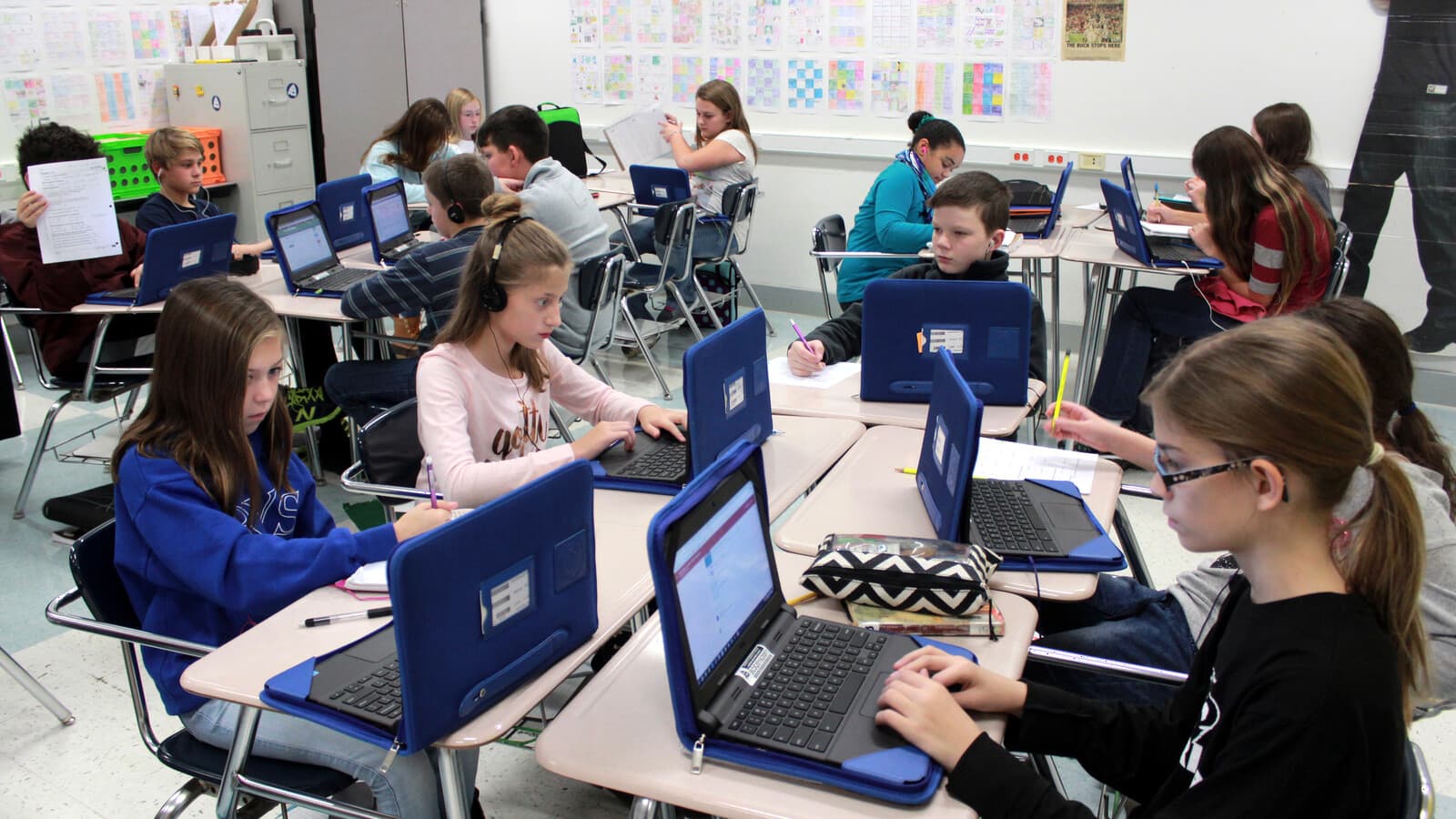
Should Google bear responsibility for harmful content children access on school-issued Chromebooks?
A school-safety letter criticizes Google's approach to risks on student devices and urges districts to restrict YouTube and Gemini. Google's earlier filings defend its products and dispute liability for content and administrator choices.
Case period:
Published by The Dispute Index editorial teamPublished Updated
Overview
An October 5 open letter asks school districts to disable YouTube and Gemini and reassess student internet access. It criticizes Google's approach to safety and responsibility. Google's earlier court filings defend its products and dispute liability for third-party content and school configuration choices.
Read the full background
Two individuals and eleven organizations signed an October 5, 2026 letter asking large school districts to disable YouTube and Gemini and investigate student internet use on school-issued devices. The signers, including Fairplay and Emily Cherkin, criticize Google's safety approach and argue that districts face legal risks. Cherkin published her own request to Seattle school leaders the following day.
The letter cites Chromebook litigation over alleged harmful content and inadequate safeguards. In the M.C. case, Google argued that school policy and administrators' access decisions were central and raised defenses under Section 230. In Z.G., Google disputed product defect, causation and warning duties. These are Google's litigation positions, and both filings predate the October letter.
Danai Nhando argued in April that companies should be accountable for their own design choices and safety representations, even where third-party content is involved. That argument distinguishes responsibility for product design from responsibility for everything a user encounters online.
The M.C. plaintiffs voluntarily dismissed their case without prejudice on July 13, 2026. That did not decide the merits. As of October 7, 2026, we could not verify Z.G.'s current court status.
The letter says Google may argue that districts agreed to indemnify it. Google's published education terms replace the general customer indemnity clause for U.S. public educational institutions with narrower language covering a customer's infringement of third-party intellectual property. A particular district's obligations depend on its applicable agreement and service terms. The wider safety dispute remains separate from whether any individual lawsuit or contract imposes liability.
Timeline
6 timeline entries on this page. Dates: October 24, 2025 to October 6, 2026
October 2025
Google files its Z.G. demurrer
Source release
In Santa Clara County Superior Court, Google demurred to all five claims in the Z.G. complaint, arguing that Section 230 bars them and that the complaint does not allege a design defect or proximate cause. The demurrer was noticed for hearing on April 29, 2026.
November 2025
M.C. plaintiffs file an amended complaint
Source release
The Roe plaintiffs allege harmful content exposure and inadequate Chromebook safety design and controls. Their allegations are not findings.
January 2026
Google seeks dismissal of the M.C. complaint
Source release
Google argues that the complaint concerns district choices and education policy and raises Section 230 and other defenses.
July 2026
M.C. plaintiffs voluntarily dismiss without prejudice
The plaintiffs file a notice dismissing the case without prejudice. The dismissal does not decide the merits of the safety allegations or Google's defenses.
October 2026
Joint letter asks districts to restrict school-device services
Source release
Two individuals and eleven organizations ask districts to disable YouTube and Gemini, investigate student internet use and revise policies. The letter criticizes Google's safety approach and allocation of risk.
Cherkin publishes her own request to Seattle school leaders
Reaction
Cherkin explains her participation in the joint letter and publishes a message asking Seattle school officials for changes to student-device access and policy.
Claims
Claims separate what was said from what is contested. Follow each source for the original wording and context.
What's disputed
Disputed claim
Copy link to this disputed claim by FairplayFairplay
Google's safety approach and legal defenses leave school districts with risks that warrant disabling YouTube and Gemini on student devices and auditing internet access.
Sources (1)
- October 5 open letter asking school districts to disable YouTube and GeminiComplete letter; sections I.d and I.e, requested actions and signatory list
Disputed claim
Copy link to this disputed claim by Google LLCGoogle LLC
Facilitating internet access does not itself make a Chromebook defectively designed, and the Z.G. complaint fails to establish Google's liability for the alleged harm.
Sources (1)
- Google's October 24, 2025 demurrer in Z.G. v. Google · Google LLCMemorandum PDF pages 10-12, printed pages 1-3; Section 230 discussion at printed pages 5-10
In their own words
Their own account
Statements from the person or group whose act or claim this case is about. They are listed apart from the responses, and each label says what the speaker did with their own act or claim.
 Google LLCCompany, through counsel in the M.C./Roe case
"This lawsuit is a misuse of California tort law in an attempt to undermine educators' decision to use Google's technology as part of their schools' curricula. ... all of which seek to hold Google liable for the third-party content that M.C. encountered while using his school-issued Chromebook"
Stood by itCase context: Should Google bear responsibility for harmful content children access on school-issued Chromebooks?
Full statement and sources
Google argues that the M.C. complaint concerns education policy and district choices, and seeks dismissal under Section 230 and other defenses.
Before the statement
The amended complaint alleges harmful content access and inadequate safeguards on a school-issued Chromebook.
After the statement
Google cites administrator controls and legal defenses. The plaintiffs later dismissed the case without prejudice, without a decision on those arguments.
Google's January 12 motion to strike and dismiss the M.C. complaint · Google LLCDocument 24, filed January 12, 2026; PDF pages 13-16 and 20-24, printed pages 1-4 and 8-12Why this label?
Google asks a court to dismiss the M.C. lawsuit, calling it a misuse of tort law aimed at schools' choice of its technology and an attempt to hold it liable for third-party content, so we labeled it Stood by it.
This label describes the statement's response within the context above.
- Google LLCCompany, through counsel in Z.G. v. Google
"simply facilitating internet access is not a product defect."
Stood by itResponding to: Facilitating internet access does not itself make a Chromebook defectively designed, and the Z.G. complaint fails to establish Google's liability for the alleged harm.
Full statement and sources
Google disputes the Z.G. complaint's product-defect and causation theories and points to third-party conduct and school access settings.
Before the statement
The Z.G. complaint alleges harm after a student accessed Discord through a school-issued Chromebook.
After the statement
Google invokes legal defenses and describes the district's configuration choices. These are litigation arguments, not court findings.
Google's October 24, 2025 demurrer in Z.G. v. Google · Google LLCMemorandum PDF pages 10-12, printed pages 1-3; Section 230 discussion at printed pages 5-10Why this label?
Google argues in court that simply facilitating internet access is not a product defect and that the Z.G. complaint does not show its products caused the harm, so we labeled it Stood by it.
This label describes the statement's response within the context above.
Response record
Responses
Choose one response filter, or select All responses to see the full record.
4 responses. Newest first.
Emily CherkinAuthor, education-technology advocate and former teacherDirectly involved "companies like Google will shift the legal risks of its products to school districts ... technology companies need children to be profitable"
CondemnedCase context: Should Google bear responsibility for harmful content children access on school-issued Chromebooks?
Full statement and sources
Cherkin criticizes Google's approach to school-device risks and asks Seattle school leaders to disable YouTube and Gemini and reassess education technology.
Before the statement
Cherkin explains why she joined the October 5 letter and sent it to her local district.
After the statement
She requests changes to district policy and forecasts legal risks. Those forecasts are her argument, not a ruling about Seattle's obligations.
Emily Cherkin asks school leaders to disable YouTube and Gemini · Emily CherkinComplete October 6 post, introductory note and message to Seattle district leadersWhy this label?
Cherkin writes that "companies like Google will shift the legal risks of its products to school districts" and that "technology companies need children to be profitable", and asks Seattle school leaders to disable YouTube and Gemini. In this message of her own, separate from the joint letter she signed, she faults Google's approach to school-device risks, so we labeled it Condemned.
This label describes the statement's response within the context above.
Keena McAvoyCo-founder of DMV Unplugged and organizer of the school-safety letter "For years, large tech companies have pushed their products into classrooms, seeking to capture our children’s attention. When students have allegedly been harmed by those products, the same companies claim they cannot be held legally responsible. Instead, they blame school districts."
CondemnedCase context: Should Google bear responsibility for harmful content children access on school-issued Chromebooks?
Full statement and sources
Keena McAvoy criticizes technology companies for promoting classroom products and then blaming school districts when students are allegedly harmed.
Before the statement
Fairplay's October 5, 2026 release announces an open letter from thirteen organizations and experts asking the 150 largest U.S. school districts to disable YouTube and Gemini on school-issued devices. Just before McAvoy's comment, the release says the letter describes how Google has sought to "shift the legal risks of its products to school districts", including by arguing that Section 230 shields it from liability when students are allegedly harmed by Google products on those devices. The release identifies McAvoy as a co-founder of DMV Unplugged who helped organize the letter.
After the statement
The release then quotes Liza Schalch, another co-founder of DMV Unplugged, who says the organizers hope to empower districts "to act quickly to protect students and the districts themselves".
Fairplay release on disabling YouTube and Gemini in schoolsParagraph beginning "Keena McAvoy, co-founder of DMV Unplugged"Why this label?
McAvoy says large tech companies pushed their products into classrooms and, when students were "allegedly" harmed, "the same companies claim they cannot be held legally responsible" and blame school districts instead. That opposes shifting responsibility for the harm onto districts, as the release says Google has sought to do. Her word "allegedly" covers the harm, not her objection to the companies disclaiming responsibility, so we labeled it Condemned.
This label describes the statement's response within the context above.
 FairplayChild-advocacy organization and joint signatoryDirectly involved
"Google is looking out for its own interests."
CondemnedResponding to: Google's safety approach and legal defenses leave school districts with risks that warrant disabling YouTube and Gemini on student devices and auditing internet access.
Full statement and sources
Fairplay joins a letter criticizing Google's safety approach and asking districts to disable YouTube and Gemini and audit student internet access.
Before the statement
The letter cites litigation allegations, prior reporting and Google's defenses concerning student-device harms.
After the statement
It requests three district actions: disabling YouTube, disabling Gemini AI and reviewing student internet use.
October 5 open letter asking school districts to disable YouTube and GeminiComplete letter; sections I.d and I.e, requested actions and signatory listWhy this label?
Fairplay signed a joint letter that says "Google is looking out for its own interests" and asks districts to disable YouTube and Gemini and audit student internet access. Its signature is part of that one document rather than a separate statement, and by joining it Fairplay adopts the letter's criticism of Google's approach to safety, so we labeled it Condemned.
This label describes the statement's response within the context above.
Danai NhandoHuman rights lawyer and public-interest technologist "It should not immunize platforms for what they themselves say, nor for the design decisions they themselves make. ... A company that markets Chromebooks as simple, powerful, and secure for US schoolchildren may have built that technology without adequate child safety as any part of the design equation as a calculation, not an oversight."
CondemnedCase context: Should Google bear responsibility for harmful content children access on school-issued Chromebooks?
Full statement and sources
Nhando criticizes Google's Chromebook safety approach and argues that first-party design and safety representations should remain subject to accountability.
Before the statement
Nhando discusses other technology verdicts and compares their first-party-conduct theories with the Chromebook complaints.
After the statement
She argues that those theories support accountability in education technology. The article predates M.C.'s July dismissal.
Danai Nhando argues for accountability for Chromebook designApril 16 commentary; Section 230 discussion and application to M.C. and Z.G. Chromebook allegationsWhy this label?
Nhando argues that Section 230 should not immunize platforms "for what they themselves say, nor for the design decisions they themselves make", and writes that a company marketing Chromebooks as secure for schoolchildren "may have built that technology without adequate child safety" as "a calculation, not an oversight." Her commentary is not a finding that any particular claim succeeds, and she hedges with "may have," but she faults Google's design and safety approach, so we labeled it Condemned.
This label describes the statement's response within the context above.
Sources
(8)
Original text
October 5 open letter asking school districts to disable YouTube and Gemini
Relevant passage: Complete letter; sections I.d and I.e, requested actions and signatory list
About this source
The letter presents joint advocacy by two individuals and eleven organizations, including Fairplay. Its legal-risk claims are the signers' interpretation and require comparison with filings, court status and applicable contracts.
- Published
- Accessed
Official statement
Fairplay release on disabling YouTube and Gemini in schools
Relevant passage: Paragraph beginning "Keena McAvoy, co-founder of DMV Unplugged"
About this source
The original release records statements from organizers of the school-safety letter, including Keena McAvoy and Liza Schalch.
- Published
- Accessed
Original text
Roe plaintiffs voluntarily dismiss the M.C. case without prejudice
Relevant passage: Document 65, notice of voluntary dismissal filed July 13, 2026; Text tab and docket termination entry
About this source
The notice dismisses the M.C., John Roe and Jane Roe case against Google without prejudice. It is not a judgment on Google's defenses or the plaintiffs' allegations.
- Published
- Accessed
Original text
Google's October 24, 2025 demurrer in Z.G. v. Google
Relevant passage: Memorandum PDF pages 10-12, printed pages 1-3; Section 230 discussion at printed pages 5-10
About this source
Google disputes defect, causation and warning duties and invokes Section 230. The demurrer was noticed for hearing on April 29, 2026.
- Published
- Accessed
Original text
Google's January 12 motion to strike and dismiss the M.C. complaint
Relevant passage: Document 24, filed January 12, 2026; PDF pages 13-16 and 20-24, printed pages 1-4 and 8-12
About this source
Google argues that the claims concern school policy, administrators' choices and third-party content, and raises Section 230 defenses. These are pleaded defenses, not a ruling or a response to the October letter.
- Published
- Accessed
Original text
M.C. and the Roe plaintiffs' amended complaint against Google
Relevant passage: Document 11, filed November 10, 2025; PDF page 8, printed page 5, paragraphs 29-30
About this source
The complaint alleges inadequate Chromebook safety design and controls. Allegations are not findings; the plaintiffs later voluntarily dismissed this case without prejudice.
- Published
- Accessed
Analysis
Danai Nhando argues for accountability for Chromebook design
Relevant passage: April 16 commentary; Section 230 discussion and application to M.C. and Z.G. Chromebook allegations
About this source
Nhando argues that first-party design and representations deserve scrutiny. Her predictions are analysis; the article predates M.C.'s voluntary dismissal and must not establish its current status.
- Author
- Danai Nhando
- Published
- Accessed
Original text
Emily Cherkin asks school leaders to disable YouTube and Gemini
Relevant passage: Complete October 6 post, introductory note and message to Seattle district leaders
About this source
Cherkin explains her participation in the joint letter and publishes her own request to Seattle school leaders. Her prediction about legal risk is advocacy, not a determination of district liability.
- Author
- Emily Cherkin
- Published
- Accessed
Share or embed this case
The embed keeps its attribution link to The Dispute Index. Credit the image to The Dispute Index and link to the case page.
Cite this record
- Publisher
- The Dispute Index
- Title
- Should Google bear responsibility for harmful content children access on school-issued Chromebooks?
- First published
- Last updated
- Permalink
- https://disputeindex.com/cases/google-school-chromebooks-child-safety-responsibility
The Dispute Index. "Should Google bear responsibility for harmful content children access on school-issued Chromebooks?". First published: 2026-10-07. Last updated: 2026-10-07. https://disputeindex.com/cases/google-school-chromebooks-child-safety-responsibility