
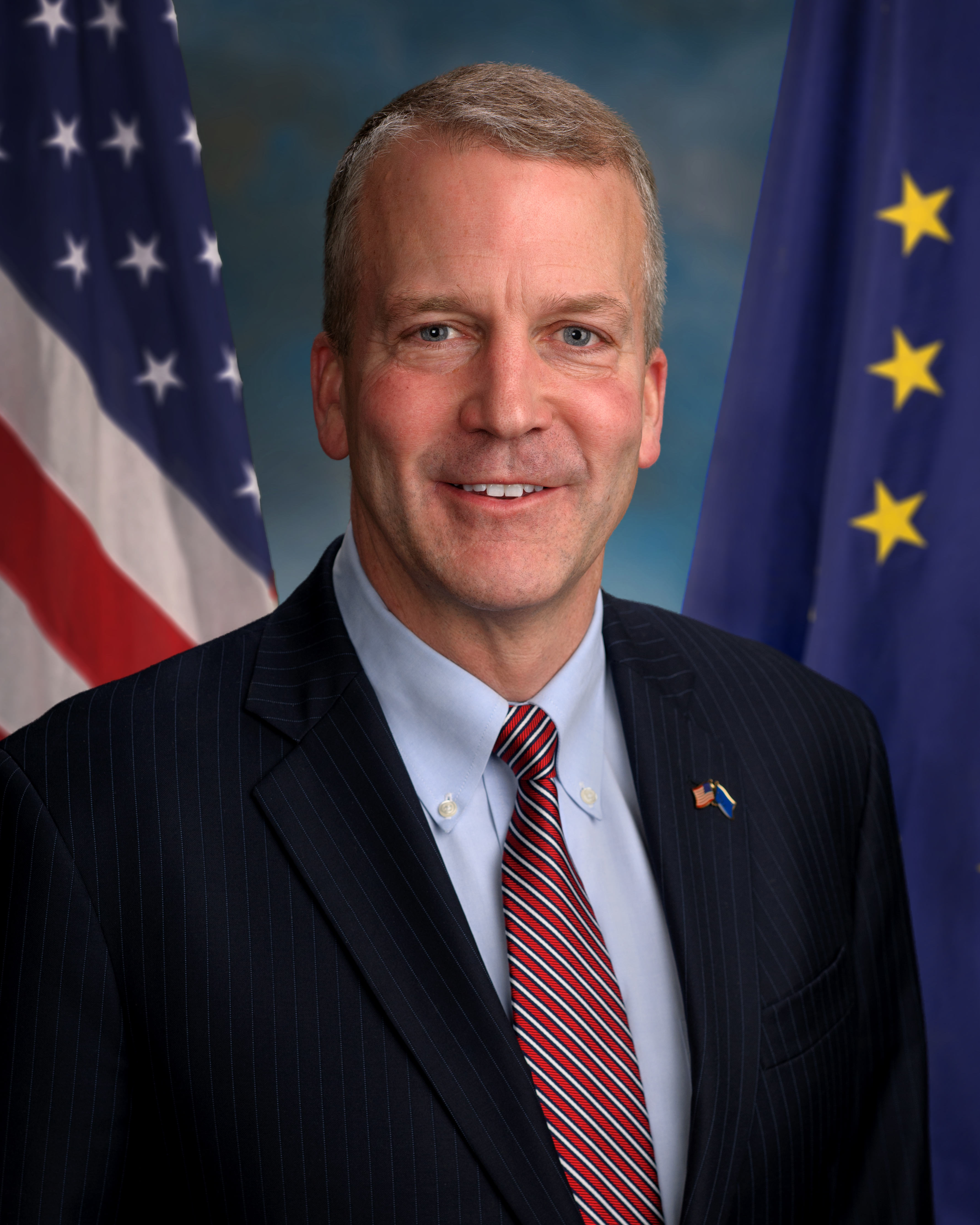
Daniel S. Sullivan

Portrait of Daniel S. Sullivan
United States Senate

United States Senator and Republican candidate for U.S. Senate in Alaska.

What DI has documented

DI has documented statements by Daniel S. Sullivan on 2026 Midterm Elections, Health Care, and Iran War, among other topics. Read the quotations, original sources and related cases below.

Topics in this coverage

Statements by Daniel S. Sullivan

Portrait of Daniel S. Sullivan

Daniel S. Sullivan

Role at the time: U.S. senator from Alaska and Republican candidate, in an emailed statement from his campaign spokesperson, Nate Adams

Denied

Response to this claim

Dan Sullivan voted to raise Alaskans' healthcare costs by $1,800 and on that same day voted to give himself a $500,000 taxpayer-funded payout.

“Senator Sullivan voted to reopen the federal government, not to pay himself”
Read the original text (opens in a new tab)Alaska Ad Criticizing Sullivan's Votes Leaves Out Context, Makes False Suggestion · FactCheck.orgFull article
Why we used this label

The reference point is WinSenate's ad claim that Sullivan voted to raise Alaskans' health care costs by $1,800 and to give himself a $500,000 taxpayer-funded payout. The campaign says his vote was to reopen the government and not to pay himself, which denies the payout claim.

Portrait of Daniel S. Sullivan

Daniel S. Sullivan

Role at the time: U.S. Senator, Alaska

Defended or excused

Statement summary

Daniel S. Sullivan voted nay on H.Con.Res. 89, a vote against directing the removal of U.S. forces from unauthorized hostilities with Iran.

“On the Concurrent Resolution H.Con.Res. 89: A concurrent resolution directing the President, pursuant to section 5(c) of the War Powers Resolution, to remove United States Armed Forces from hostilities with Iran.”
Read the official statement (opens in a new tab)U.S. Senate Roll Call Vote 244: H.Con.Res. 89, Iran War Powers Resolution (rejected, 49-50)
Why we used this label

Voted against directing the removal of U.S. forces from unauthorized hostilities with Iran, a vote to let U.S. involvement continue without congressional authorization.

Portrait of Daniel S. Sullivan

Daniel S. Sullivan

Role at the time: U.S. Senator, Alaska

Defended or excused

Statement summary

Dan Sullivan voted Nay on H.Con.Res. 86, the Senate resolution directing the President to remove U.S. Armed Forces from hostilities with Iran.

“On the Concurrent Resolution H.Con.Res. 86: Directing the President, pursuant to section 5(c) of the War Powers Resolution, to remove United States Armed Forces from hostilities with Iran.”
Read the official statement (opens in a new tab)U.S. Senate Roll Call Vote 184: H.Con.Res. 86, Iran War Powers Resolution (agreed to, 50-48)
Why we used this label

A nay vote opposed the resolution directing the removal of U.S. Armed Forces from hostilities with Iran, allowing U.S. military operations in the war to continue.

Portrait of Daniel S. Sullivan

Daniel S. Sullivan

Role at the time: U.S. senator from Alaska

Defended or excused

Statement summary

Sen. Dan Sullivan told reporters he would not generally support taking out world leaders but called Iran's leaders terrorists, and in a congressional hearing days later said Iran has been at war with the United States for almost a half century and has killed and wounded thousands of Americans.

“This country's been at war with us for almost a half century, and they've killed thousands and wounded thousands of our best and brightest.”
Open source (opens in a new tab)Alaska's congressional delegation votes to support American-Israeli war with Iran
Why we used this label

Sullivan framed the strikes as a response to decades of Iranian attacks on Americans, a supportive position.

A participant is a subject of the case. A speaker has a statement documented in it. A commentator has an opinion or editorial documented in it.

Case

Do they support the war in Iran?

Relationship to this case: Speaker

An issue tracker recording where members of Congress and 2026 midterm candidates stand on the unauthorized Iran war, based on their votes on war-powers resolutions, campaign statements, and public remarks.

Iran WarU.S. PoliticsUpdated