Public disputes concerning cultural institutions, their programming, funding, governance, naming and physical facilities, and the artists and audiences who rely on them.
Published coverage on this page: 4+ cases · 24+ statements. Statements are ordered newest first.
Topic updates
Follow this topic
Get free email updates about Arts and Culture. We will email you when we add or correct a case in this topic.
Enable JavaScript to request email updates about this topic.
We will send a confirmation email first. Every update email has a link to stop. How we handle your email.
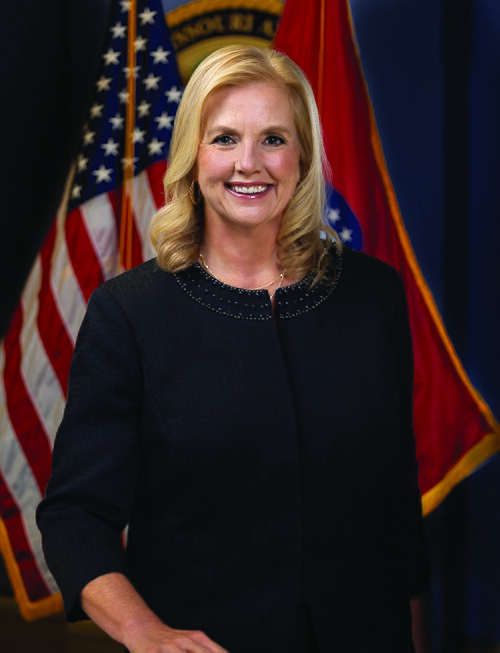
Catherine Hanaway questions the notice and process for placing Witness outside Rung for Women. The organization and Gateway Foundation defend the selection, citing its artistic value and relevance to women's lives and work.
Role at the time: U.S. senator from Rhode Island and ex officio member of the Kennedy Center board of trustees
Condemned
Statement summary
Sen. Sheldon Whitehouse shared a Washington Post report on Rep. Joyce Beatty's court brief, which says foundation money for the Kennedy Center depends on Trump's name staying on it, and wrote that it was not easy to see how the conduct of Trump appointees comports with the board's fiduciary duty to the center.
“Not easy to see how any of this behavior of Trump appointees comports with the board’s fiduciary duty to the Center.”
Read the original post (opens in a new tab)Sheldon Whitehouse on Kennedy Center trustees and fiduciary dutyComplete Bluesky post 3mzb5yvmzas2j with its linked Washington Post article
What this label refers to
The reference point is Trump tying the Kennedy Center's renovation and support to recognition for his administration. Whitehouse questioned whether the conduct described in Beatty's brief, including funding that depends on Trump's name, is consistent with the trustees' duty to the center, which criticizes that link. Challenges the characterization loses because he does not dispute how the conduct is described.
Role at the time: Vietnam Veterans of America, through national president Tom Burke
Mixed or conditional
Statement summary
VVA acknowledges that the amicus brief it joined expressly supported construction. It says its participation was meant to support honoring veterans and oppose claims to speak for all veterans. It does not endorse the design or campaign to build the arch. The organization distinguishes its national position from positions its chapters may adopt.
“some of the language in the brief went further than we intended.”
Singh argues that publishers risk losing willing authors if they continue using AI without transparency. Her analysis draws on WIRED's reporting about workplace tools and authors' objections. It does not establish that authors have already left in response.
“if publishers continue using AI tools brazenly and without transparency, they may end up with fewer authors willing to work with them.”
Open source (opens in a new tab)Olivia Singh argues AI use could drive authors away from publishersSigned A.V. Club analysis, October 28
What this label refers to
Singh criticizes opaque publisher AI use and predicts damage to author relationships.
Role at the time: Lawyers Defending American Democracy volunteer, writing commentary
Condemned
Statement summary
Saranteas opposes the proposed arch and argues that the administration needs congressional authorization and compliance with other legal requirements. He also objects to its effects on the memorial site and views. His assertions that the project is unconstitutional or could involve criminal misuse of funds are his legal arguments, rather than court findings.
“The project is unconstitutional, illegal, and patently un-American.”
Open source (opens in a new tab)James Saranteas argues against the proposed archSigned commentary; congressional authorization and separation of powers
What this label refers to
He expressly opposes the project and argues that proceeding would violate legal requirements.
Role at the time: Missouri Attorney General, speaking on KFTK
Condemned
Statement summary
Catherine Hanaway criticizes the sculpture on KFTK, linking it to abortion. She says her office is asking whether its placement is appropriate.
“It is this weird statue that's coming to St. Louis. It's come to other places and it does, like, celebrate abortion.”
Open source (opens in a new tab)Controversy over what AG calls 'demonic' sculpture in Fox Park NeighborhoodHanaway KFTK remarks and Alisha Sonnier response in the article body
What this label refers to
The reference is the planned placement of Witness at Rung. Hanaway expresses a negative judgment about the work and questions the placement's appropriateness.
Role at the time: U.S. district judge, memorandum opinion
Condemned
Statement summary
Reyes concludes that the tree management plan is one part of the Washington National Plan, that Interior should have treated it as such, and that Interior likely segmented its environmental review in violation of NEPA.
“The TMP is one part of the Washington National Plan, and DOI should have treated it as such.”
Read the original text (opens in a new tab)Reyes grants preliminary injunction in East Potomac redevelopment caseNo. 1:26-cv-00477-ACR, Document 103; pages 1-4, 61-62 and 70
What this label refers to
Relative to proceeding without review of the combined environmental effects, Reyes expressly rejects treating the tree plan separately from the broader redevelopment.
Role at the time: Plaintiff, through counsel in an October 25 court notice
Condemned
Statement summary
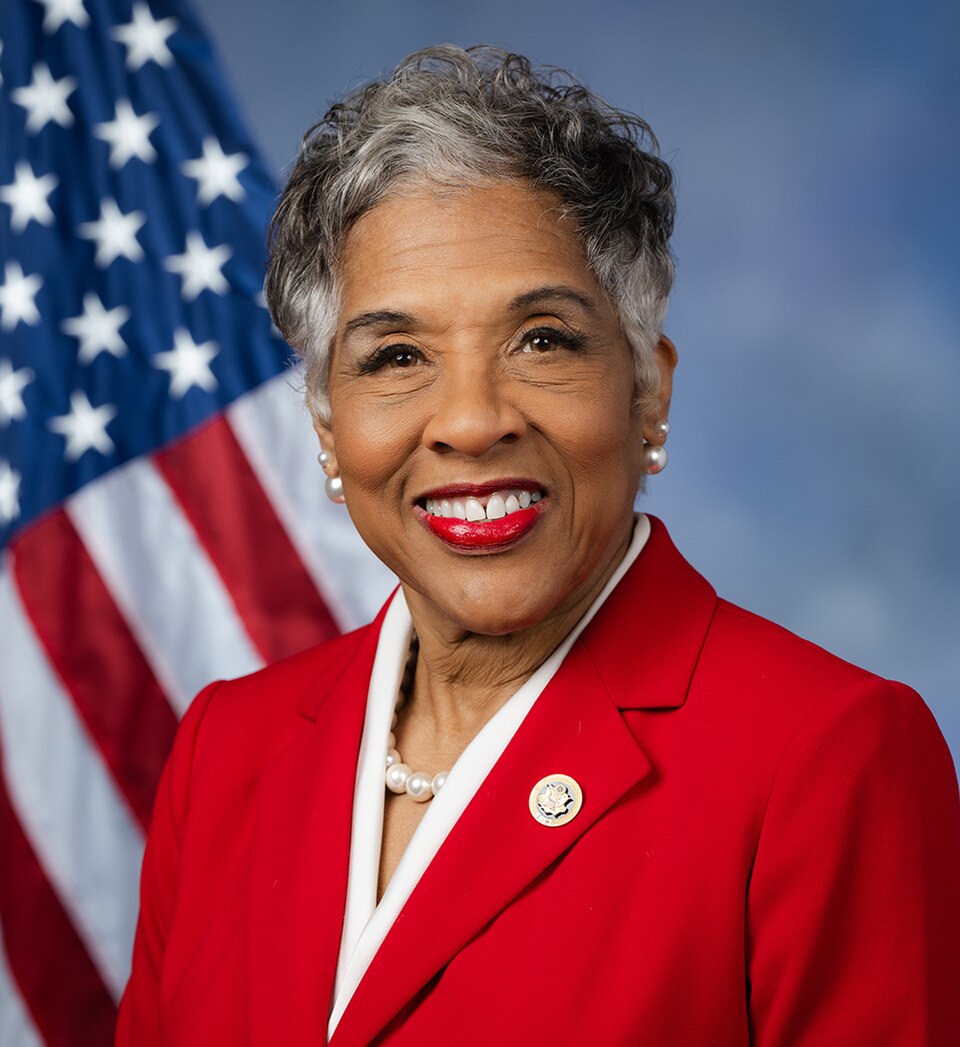
Through her lawyers, Beatty says the late privilege log suggests gamesmanship and argues that withheld communications are needed to understand the defendants' actions.
“It should not have taken Defendants this long to produce a privilege log, and their delay
unfortunately suggests gamesmanship.”
The reference point is withholding Kennedy Center discovery under executive privilege. Beatty expressly criticizes the delay and alleged overbreadth of that withholding.
Role at the time: Gateway Foundation, through a spokesperson
Defended or excused
Statement summary
The foundation says it selected Witness for artistic merit and for its treatment of women's autonomy, belonging and representation. It considers the work a fit for Rung.
“foremost for its artistic merit and beauty”
Open source (opens in a new tab)Rung for Women and Gateway Foundation defend the placement of WitnessStatements supplied by Rung for Women and Gateway Foundation
What this label refers to
The reference is the sculpture's placement at Rung. The foundation supplies an affirmative artistic and institutional justification for the selection.
Role at the time: Rung for Women, through a spokesperson
Defended or excused
Statement summary
Rung says the sculpture fits the women who use its career-development services and welcomes the planned installation.
“perfectly reflects the strength, resilience, and determination of the women who walk through our doors”
Open source (opens in a new tab)Rung for Women and Gateway Foundation defend the placement of WitnessStatements supplied by Rung for Women and Gateway Foundation
What this label refers to
The reference is placement outside Rung's building. The organization defends that choice by connecting the work to its mission.
The case concerns constructing the proposed Memorial Circle arch without new congressional authorization. Public Citizen argues construction cannot proceed without Congress.
Role at the time: Founder and editor of Talking Points Memo, writing on its Editors' Blog
Mixed or conditional
Statement summary
Talking Points Memo founder Josh Marshall writes that Grenell apparently argues the British spelling of 'centre' shows the text is fake, and calls that a thin argument, while noting that the texts could be fake and that Habba's account of the donation has shifted.
“It’s true that I certainly wouldn’t expect an American to use that spelling. But that seems like a pretty thin argument for Grenell to rest his whole case on.”
The case concerns the accusation that Grenell failed to deposit Mildon's Kennedy Center donation and the text he allegedly sent offering access to Trump. Marshall doubts Grenell's main defense against the text but also says the texts may be fake and that Habba's account changed, so his assessment is mixed.
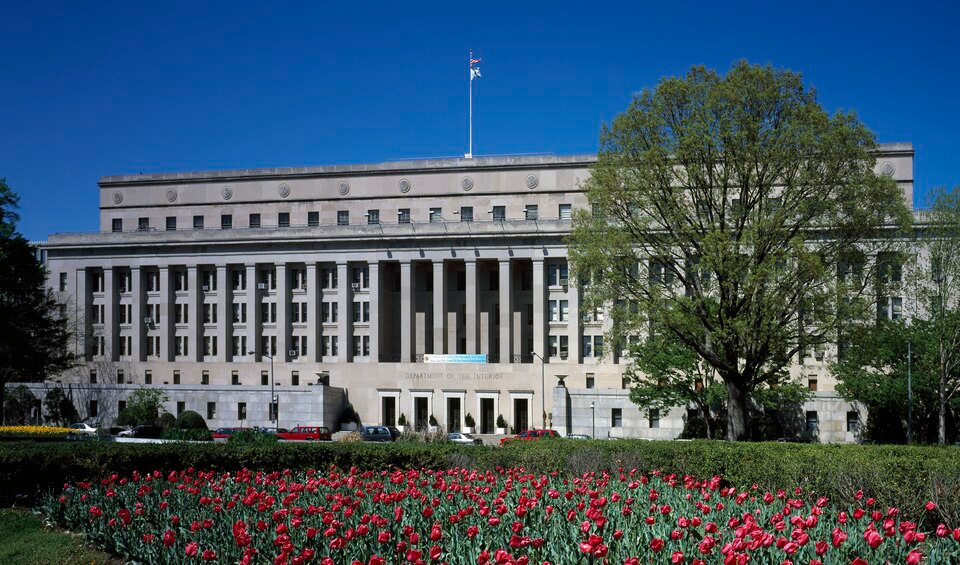
The Park Service's tree removal at East Potomac Golf Course is a step in the administration's plan to rebuild the course and was carried out without the environmental review the National Environmental Policy Act requires.
Quotation excerpt
“The United States Department of Interior wants to take a terrible and very unsafe golf course, and make it into a great, safe, and prestigious golf course. They have an absolute right to do so. It’s as simple as that! The judge on the case…”
Read full quotation
“The United States Department of Interior wants to take a terrible and very unsafe golf course, and make it into a great, safe, and prestigious golf course. They have an absolute right to do so. It’s as simple as that! The judge on the case is a crazed lunatic whose courthouse tapes will reveal, may be insane?”
Read the original text (opens in a new tab)Donald Trump's Truth Social post on the East Potomac golf course lawsuit and Judge Ana Reyes · Donald TrumpFull post, October 19, 2026, 6:08 a.m. EDT
Why we used this label
The reference point is the Interior Department's October 2026 removal of trees at East Potomac Golf Course and its plans to rebuild the course. Trump says the department has "an absolute right to do so" and does not need an approval, so we labeled it Defended or excused. The closest competing label is Challenged the characterization; it loses because he endorses the work itself rather than disputing how it has been described.
Role at the time: U.S. district judge for the District of Columbia, presiding over the case
Challenged the characterization
Response to this claim
Judge Ana Reyes cannot impartially decide the East Potomac case and must be disqualified.
“So what happened? Not sudden onset bias. Instead, the Government decided to remove over 500 healthy, non-invasive trees from East Potomac Golf Course.”
Read the original text (opens in a new tab)DC Preservation League v. Department of the Interior, No. 1:26-cv-00477 (D.D.C.), memorandum opinion and order denying the motion to disqualify (Dkt. 95) · United States District Court for the District of ColumbiaMemorandum opinion, pages 1-3 and 8
Why we used this label
The reference point is the Interior Department's October 2026 removal of trees at East Potomac Golf Course and its plans to rebuild the course. Reyes disputes the government's account that her handling of the case reflects bias and attributes the conflict to the government's decision to remove the trees, so we labeled it Challenged the characterization. The closest competing label is Condemned; it loses because in this passage she describes the decision without expressly judging the removal.
Role at the time: Plaintiff, through a filing by its attorneys
Condemned
Response to this claim
Judge Ana Reyes cannot impartially decide the East Potomac case and must be disqualified.
“But, on October 10, Defendants did exactly what they said they would not do: they razed hundreds of trees on the golf course before Plaintiffs had an opportunity to challenge Defendants’ actions.”
Read the original text (opens in a new tab)DC Preservation League v. Department of the Interior, No. 1:26-cv-00477 (D.D.C.), plaintiffs' opposition to the motion to disqualify Judge Ana C. Reyes (Dkt. 90)Introduction, pages 1-2
Why we used this label
The reference point is the Interior Department's October 2026 removal of trees at East Potomac Golf Course and its plans to rebuild the course. The plaintiffs say the government "did exactly what they said they would not do" and razed the trees before they could object, so we labeled it Condemned. The closest competing label is Challenged the characterization; it loses because the filing criticizes the removal itself.
Role at the time: Epic Games founder and CEO, replying on X
Defended or excused
Statement summary
Sweeney acknowledges problems in earlier code experiments but says current tools work better with documentation and architectural context.
“now it's WAY better, and we're learning to organize code, documentation, and .md file architecture descriptions to provide way more context and architectural stability.”
The case concerns Epic's AI development pivot. Sweeney defends present tools by distinguishing them from weaker earlier experiments and explaining how Epic supplies context.
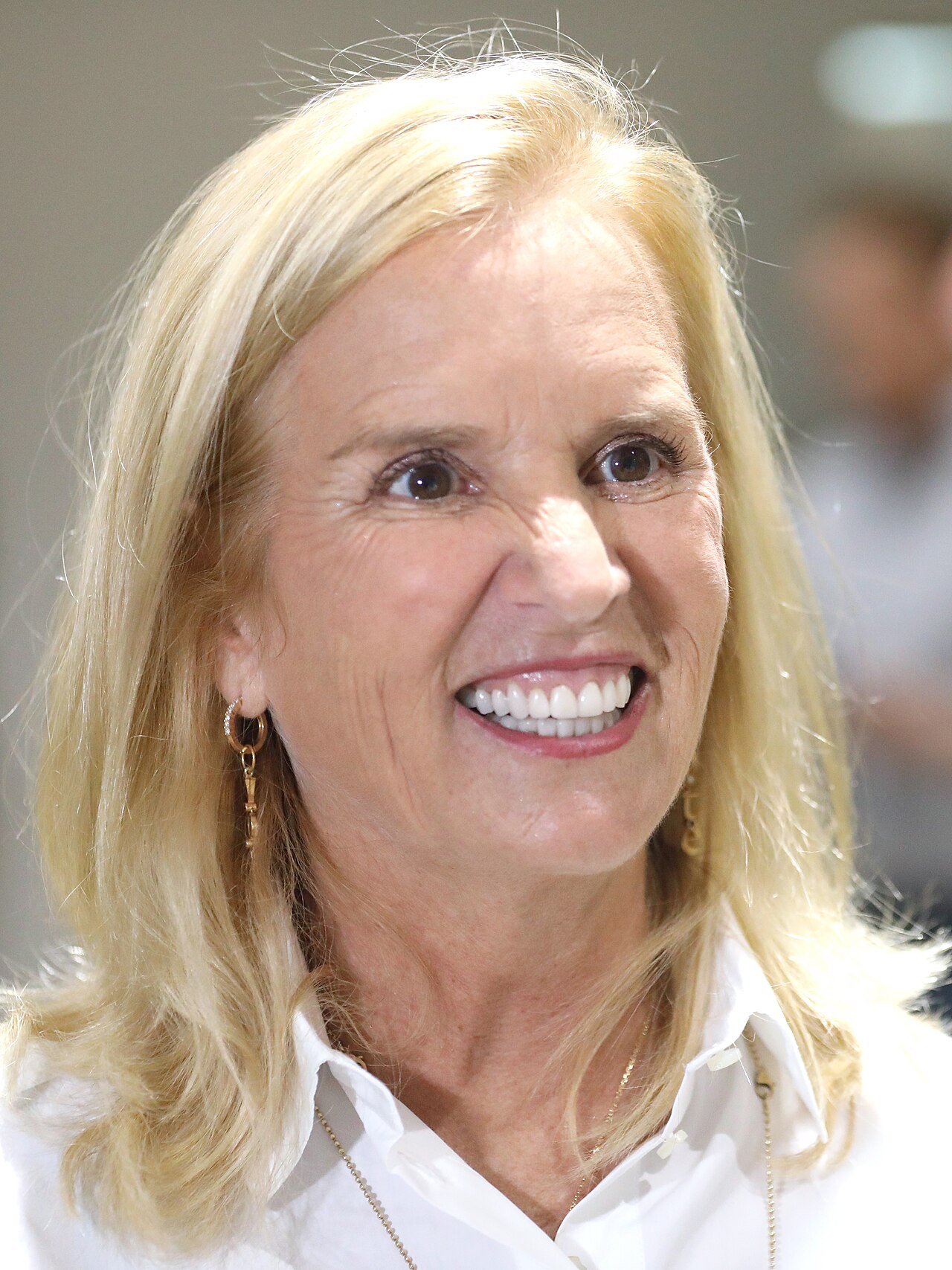
Role at the time: President of the Robert & Ethel Kennedy Human Rights Center and author of a biography of her mother, Ethel Kennedy, interviewed on CNN's The Amanpour Hour
Condemned
Statement summary
On CNN's The Amanpour Hour, Kerry Kennedy compared putting Trump's name on the Kennedy Center to renaming the Washington Monument or the Lincoln Memorial for him. She said the argument that there is no money for the center is "just not true" because Congress passed $246 million to restore it, and told Trump to focus on Americans' costs rather than the center.
Quotation excerpt
“this is the memorial created by the United States Congress to a slain president. So, putting Trump's name on it would be like renaming the Washington Monument the Trump Washington Monument or the Trump Lincoln Memorial or the Trump Tomb of…”
Read full quotation
“this is the memorial created by the United States Congress to a slain president. So, putting Trump's name on it would be like renaming the Washington Monument the Trump Washington Monument or the Trump Lincoln Memorial or the Trump Tomb of the Unknown Soldier. ... And their argument is they're not -- there is not money for it. But in the Big Beautiful Bill, they -- the Congress passed $246 million in order to restore the Kennedy Center. So that's just not true. ... So President Trump, do your job. Focus on the people's pain and the work that you're supposed to do in the -- in the Oval Office and not on the Kennedy Center. That's not your job.”
Open the original interview (opens in a new tab)The Amanpour Hour: Interview with "Ethel Kennedy" author Kerry Kennedy · CNNThe Amanpour Hour, October 17, 2026, 11 a.m. ET; Kerry Kennedy interview between the 11:14:50 and 11:21:41 markers
What this label refers to
The reference point is Trump's linking of the Kennedy Center's renovation to recognition for his administration. Kennedy rejects putting his name on the building, disputes the funding argument for it by pointing to the $246 million Congress passed, and tells Trump the center is "not your job." We use Condemned because she rejects both the recognition and the reason given for it. Challenged the characterization is the closest competing label; it loses because she goes beyond disputing the funding claim and criticizes Trump's involvement itself.
Role at the time: Political commentator and host of The John Doyle Show, on YouTube
Defended or excused
Statement summary
Doyle says Gillis is under fire for accurately describing female behavior, and that women are proving his point by advertising themselves and their bodies on social media. Later in the segment he calls the joke directionally correct but a bit overstated.
“Comedian Shane Gillis is under fire for accurately describing female behavior, which is, of course, the highest blasphemy one can commit in 2026 America.”
The reference point is Shane Gillis's joke in his October 10, 2026 Saturday Night Live monologue that women at the gym now dress like whores. Doyle calls the joke an accurate description of women's behavior and treats the criticism as unwarranted, so we labeled it Defended or excused. The closest competing label is Mixed or conditional, because he later says the joke is a bit overstated; it loses because he still calls it directionally correct and defends its premise.
Role at the time: Defendant, through a motion signed by Associate Attorney General Stanley Woodward Jr.
Defended or excused
Response to this claim
Judge Ana Reyes cannot impartially decide the East Potomac case and must be disqualified.
“Notably, all of this concerned the government’s performance of authorized tree maintenance in East Potomac Park.”
Read the original text (opens in a new tab)DC Preservation League v. Department of the Interior, No. 1:26-cv-00477 (D.D.C.), defendants' motion to disqualify Judge Ana C. Reyes and to authorize release of hearing audio (Dkt. 86)Motion, pages 1-4
Why we used this label
The reference point is the Interior Department's October 2026 removal of trees at East Potomac Golf Course and its plans to rebuild the course. The motion calls the work "authorized tree maintenance" and says the judge has hamstrung the government's "legitimate attempts to maintain East Potomac Park", so we labeled it Defended or excused. The closest competing label is Challenged the characterization; it loses because the motion presents the work as authorized and legitimate rather than disputing a label.
Role at the time: Writer of Don't Worry About the Vase
Defended or excused
Statement summary
Mowshowitz supports some use of AI for rejection letters and says AI-written back-cover copy makes sense if it sells books more effectively. He advises authors against contractual bans on processing manuscripts with AI, predicting that such restrictions could make editors reject their work.
“Rejection letters seem like a good place to sometimes use AI.”
Open source (opens in a new tab)Mowshowitz evaluates AI use in book-publisher workflowsOctober 15 newsletter; book-publisher discussion in Deepfaketown and Botpocalypse Soon
What this label refers to
Mowshowitz expressly supports specific publisher uses of AI and advises against blanket contractual restrictions.
Jay Jones is an American attorney and Democratic politician serving as Virginia's attorney general since January 2026. He represented Norfolk in the Virginia House of Delegates from 2018 to 2022 and previously worked in the District of Columbia attorney general's consumer protection office. Jones earned a bachelor's degree at the College of William and Mary and a law degree at the University of Virginia.
Olivia Singh is an entertainment journalist who writes for The A.V. Club. Her coverage includes film and television news, with reporting on performers, filmmakers and the entertainment business. She previously was a senior entertainment reporter at Business Insider and has worked on interviews and coverage of streaming television. She graduated from Hunter College with a degree in media and a concentration in journalism and earlier interned at Us Weekly and Tiger Beat.
James Saranteas is a civil litigation attorney and political and legal commentator for The Fulcrum. His legal career includes trial and appellate work, teaching appellate advocacy at Loyola University Chicago and volunteer coaching with Duke Law's Moot Court Board. He volunteers with Lawyers Defending American Democracy's Meeting the Moment program. He holds a law degree from Loyola University Chicago and a bachelor's degree in economics and business administration from Knox College.
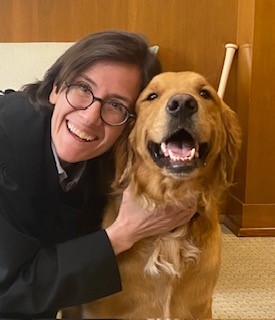
Ana C. Reyes is a United States district judge for the District of Columbia. She was nominated by President Joe Biden and has served on the court since 2023. Born in Uruguay, she is the first Latina and the first openly LGBTQ person to serve as a district judge in Washington, D.C. Before joining the bench she was a partner at the Washington law firm Williams & Connolly, where she focused on cross-border disputes and international arbitration.
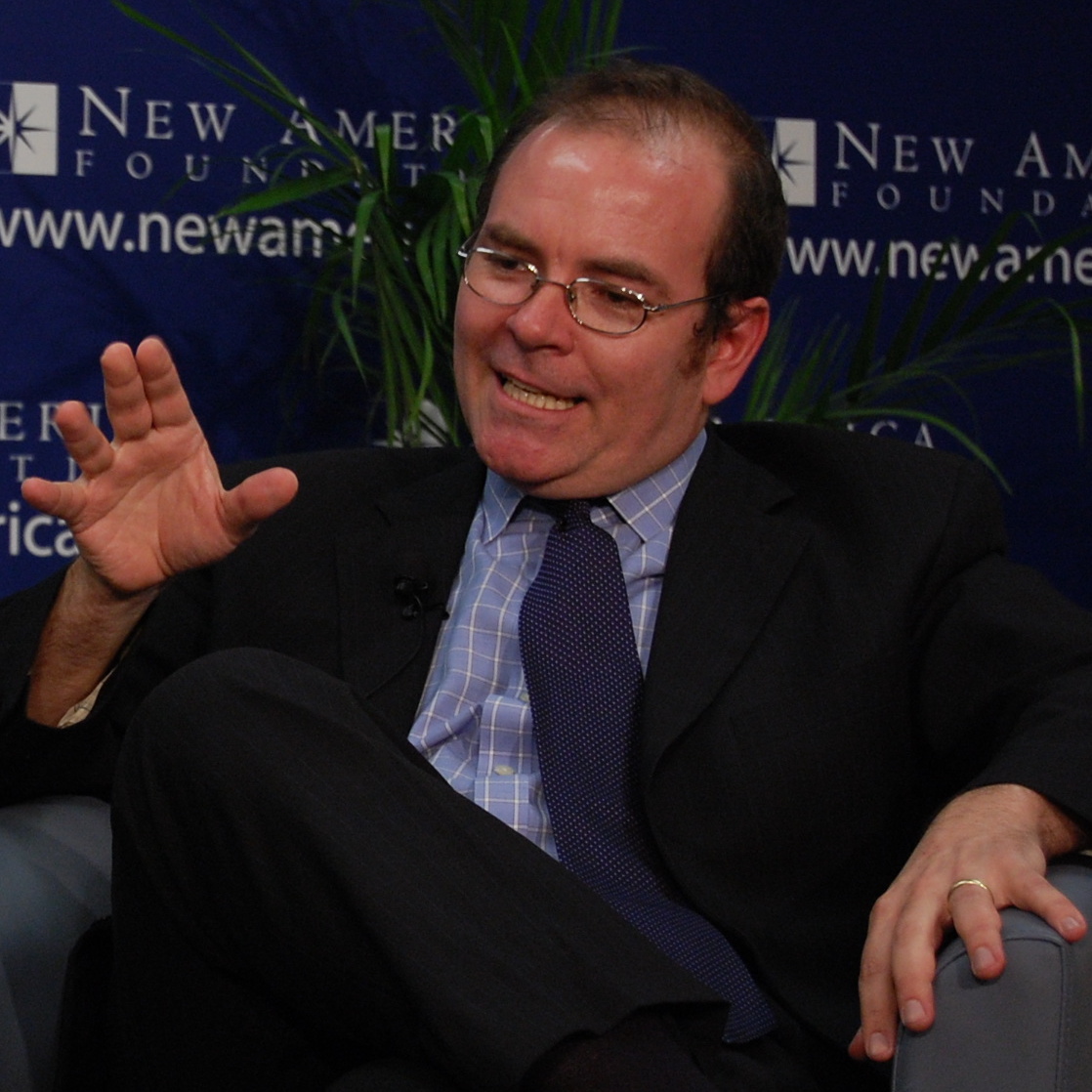
Josh Marshall is an American journalist who founded Talking Points Memo, a political news and commentary site, where he writes analysis for its Editors' Blog.
Donald Trump is the 45th and 47th president of the United States. Before entering national politics, he worked in real estate development and entertainment.
Tim Sweeney is an American video game programmer and executive who founded Epic Games, the company behind Fortnite and the Unreal Engine, and has led it as chief executive since the early 1990s. He wrote much of the original Unreal Engine and has argued publicly for open app stores and platforms, including in Epic's antitrust lawsuits against Apple and Google.