
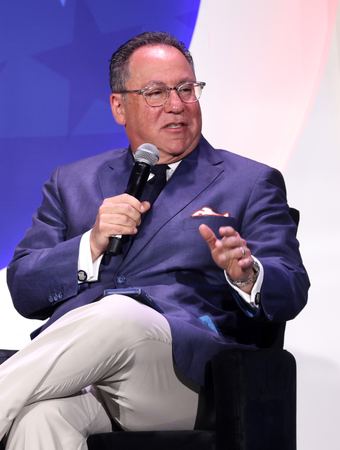
Matt Brooks

Portrait of Matt Brooks
Gage Skidmore / CC BY-SA 4.0SourceCC BY-SA 4.0Cropped to Matt Brooks on the right and converted to PNG.

Matt Brooks is chief executive officer of the Republican Jewish Coalition and of the Jewish Policy Center, and is the RJC's principal spokesman. He joined the RJC as political director in 1988 and was appointed its executive director in 1990.

What DI has documented

DI has documented statements by Matt Brooks on 2026 Midterm Elections and Antisemitism. Read the quotations, original sources and related cases below.

Topics in this coverage

Statements by Matt Brooks

Portrait of Matt Brooks

Matt Brooks

Role at the time: Chief executive officer of the Republican Jewish Coalition, in a statement the coalition released in his name

Condemned

Statement summary

Republican Jewish Coalition CEO Matt Brooks said in a statement on El-Sayed's Senate nomination that El-Sayed's explanation of why the Temple Israel attack happened placed the blame away from the attacker and on the Jews of West Bloomfield. Brooks also said El-Sayed later told supporters that saying it was a "risk," and that "It wasn't a risk, but it was a clear revelation."

“Michigan's Jewish community does not need this explained to them. They lived it. They watched the smoke rise over Walnut Lake Road in March. Then they watched Abdul El-Sayed reach for a microphone and offer his rationale for why the attack happened: not to blame the terrorist, but to place the blame 6,000 miles away and the burden on the Jews of West Bloomfield. Their own rabbi called it what it was: offensive. El-Sayed later told his own supporters that saying it was a 'risk.' It wasn't a risk, but it was a clear revelation.”
Read the official statement (opens in a new tab)Michigan Democrats Just Nominated the Most Antisemitic US Senate Candidate in America · Republican Jewish CoalitionThird paragraph of the statement (the paragraph beginning 'Michigan's Jewish community does not need this explained to them')
Why we used this label

The case asks about El-Sayed's cycle-of-violence framing after the Temple Israel attack. Brooks says El-Sayed offered a rationale for why the attack happened that placed the blame away from the attacker and on the Jews of West Bloomfield, and that El-Sayed later told supporters that saying it was a "risk," which Brooks called "a clear revelation." That criticizes the framing itself, so we labeled it Condemned.

A participant is a subject of the case. A speaker has a statement documented in it. A commentator has an opinion or editorial documented in it.

Case

Abdul El-Sayed's cycle of violence framing after the Temple Israel attack

Relationship to this case: Speaker

After the Temple Israel attack, Abdul El-Sayed condemned antisemitism but linked the assailant’s actions to an Israeli airstrike that killed relatives, describing violence as a cycle. Critics said it rationalized the attack or shifted responsibility; El-Sayed denied justification and later apologized for adding context.

AntisemitismIsraelUpdated