
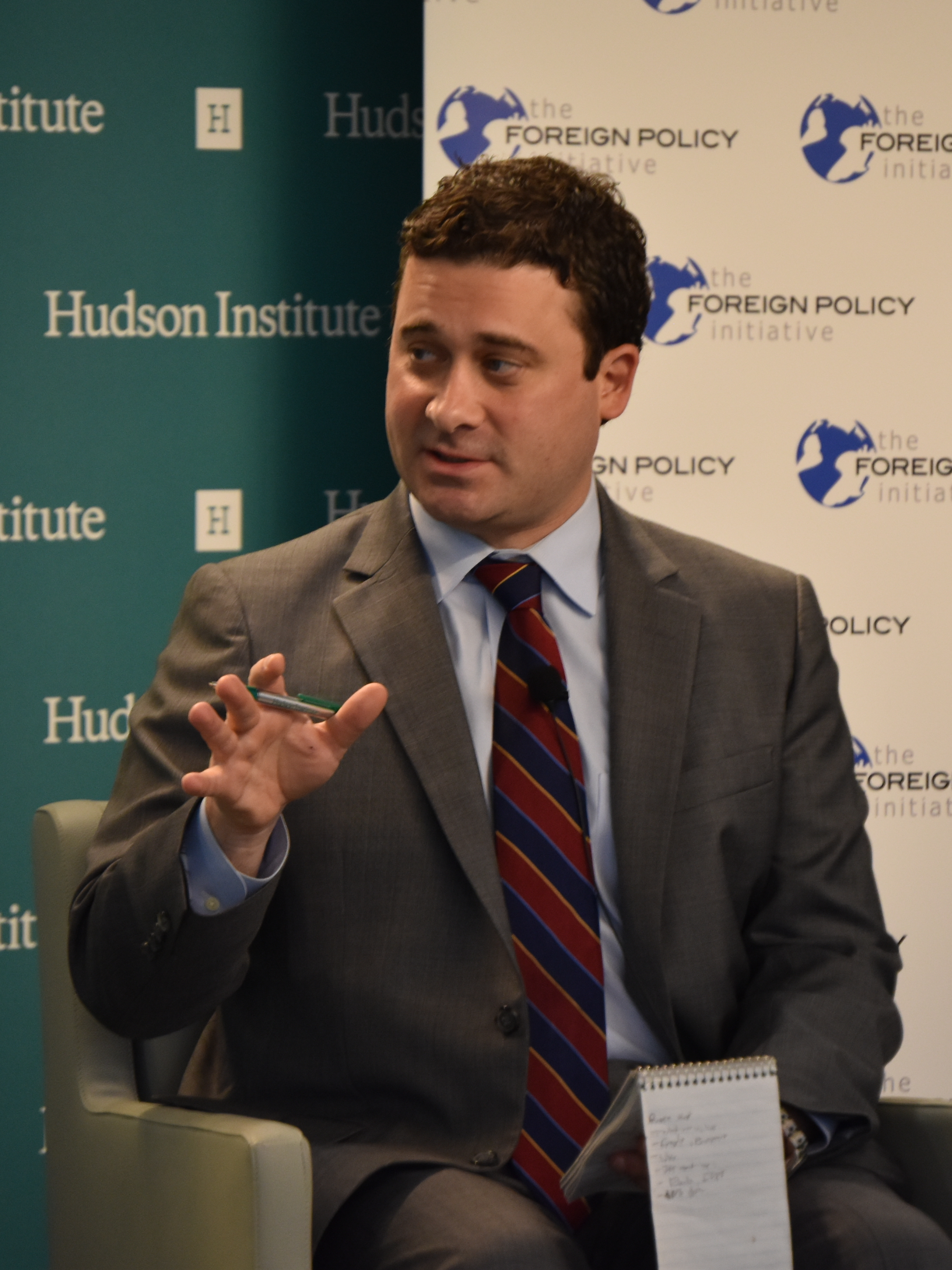
Josh Rogin

Portrait of Josh Rogin
Hudson Institute

Lead Global Security Analyst, The Washington Post; author of "Chaos Under Heaven: Trump, Xi & the Battle for the 21st Century."

What we have documented

We have documented 2 statements by Josh Rogin, in 2 cases. Each statement below gives the quotation, its original source and a link to the full case.

Case updates

Will Washington add new safeguards for frontier AI?

Get an email if Congress moves on the Sanders-Casar, FRONTIER or Bennet-Welch bills, if Trump names the AI czar he described, or when AI leaders take new positions.

Important updates only. Free. Confirm your email to start. Unsubscribe anytime. How we handle your email.

Statements by Josh Rogin

Portrait of Josh Rogin

Josh Rogin

Role at the time: Lead Global Security Analyst, The Washington Post

Condemned

Statement summary

Josh Rogin argued that China's own extensive AI regulation disproves the claim that U.S. regulation would let China win the AI race, calling that argument self-serving, while distinguishing Chinese AI regulation (aimed at protecting the Communist Party) from the privacy- and democracy-focused regulation he says the U.S. needs.

“This idea that if we regulate AI, that China will win, is not true. And the way that we know that is because China regulates AI. They have the most regulation of their AI than any country in the world... So the tech bros in the U.S. that say if we regulate AI, the Chinese going to win - that's a self-serving argument. That isn't true.”
Read the original post (opens in a new tab)Josh Rogin on X: "This idea that if we regulate AI, that China will win, is not true"
Why we used this label

The reference point is Washington's current approach to frontier-AI safety, which relies on company self-regulation, voluntary commitments and existing federal powers. Rogin calls the argument that U.S. regulation would let China win self-serving and untrue, noting China's own AI rules, and says the United States needs regulation that protects privacy, data and democracy. He rejects the main argument offered for the current approach, so we labeled it Condemned. The closest competing label is Challenged the characterization; it loses because he goes beyond disputing the argument to call for regulation.

Portrait of Josh Rogin

Josh Rogin

Role at the time: Lead global security analyst at Washington Post Intelligence, as identified by CNN, on CNN NewsNight with Abby Phillip

Condemned

Response to this claim

Vice President JD Vance said he would not call the U.S. fight with Iran a war, saying there is no active shooting right now and that major combat operations lasted about six weeks.

“Of course it's a war, and Vance saying that it's not a war will come as a surprise to the families of the 18 U.S. service members who have perished in this war. It'll come as a surprise to the 750-plus U.S. troops who have been injured in this war. ... So, to gaslight the American people and say this is not a war is not going to work. People are not going to buy it. It seems callous. It seems to ignore the reality that America is in a war, even if it's just a blockade.”
Open the original interview (opens in a new tab)CNN NewsNight with Abby Phillip: Josh Rogin (CNN rush transcript, September 3, 2026) · CNNJosh Rogin's answer to Abby Phillip beginning "Of course it's a war"
Why we used this label

The reference point is Vance's statement that he would not call the fighting a war. Rogin says "Of course it's a war," calls saying otherwise an attempt "to gaslight the American people", and says it "seems callous." He denounces the statement rather than only offering a different label, so condemns fits better than challenges the characterization.

A participant is a subject of the case. A speaker has a statement documented in it. A commentator has an opinion or editorial documented in it.

Topics in this coverage