
Explainer
What is fair use?
Fair use is a defense in U.S. copyright law that permits some unlicensed uses of protected works, such as criticism, news reporting, teaching and research. Courts decide it case by case, weighing factors set out in the Copyright Act, including the purpose of the use and its effect on the market for the original.
What the law says
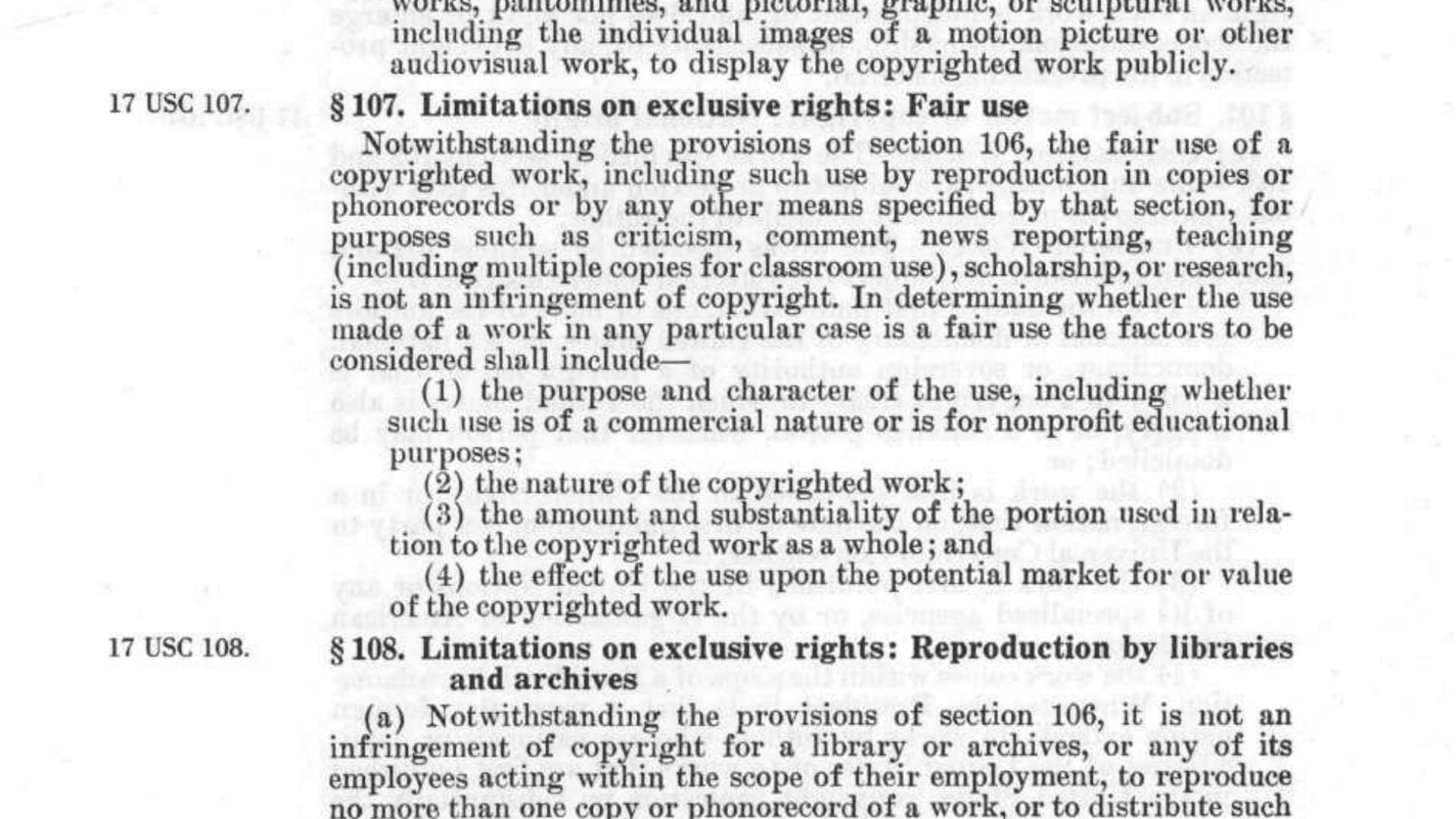
Section 107 of the Copyright Act says that a fair use of a copyrighted work, for purposes such as criticism, comment, news reporting, teaching, scholarship or research, is not an infringement of copyright. The factors courts consider include the purpose and character of the use, including whether it is commercial or for nonprofit educational purposes; the nature of the copyrighted work; the amount and substantiality of the portion used; and the effect of the use on the potential market for or value of the work. A work's being unpublished does not by itself bar a finding of fair use. The House report on the 1976 law said fair use had been a judicial doctrine that section 107 recognized in the statute for the first time, and that no general definition of it was possible.1
Fair use is an affirmative defense, so the party claiming it carries the burden of showing it, and the Supreme Court has said the statute calls for case-by-case analysis rather than bright-line rules.2 The U.S. Copyright Office says there is no formula guaranteeing that a set percentage or number of words may be used without permission, and describes transformative uses as those that add something new and do not substitute for the original. It says courts may consider factors beyond the four in the statute.3
Home recording, memoirs and parody
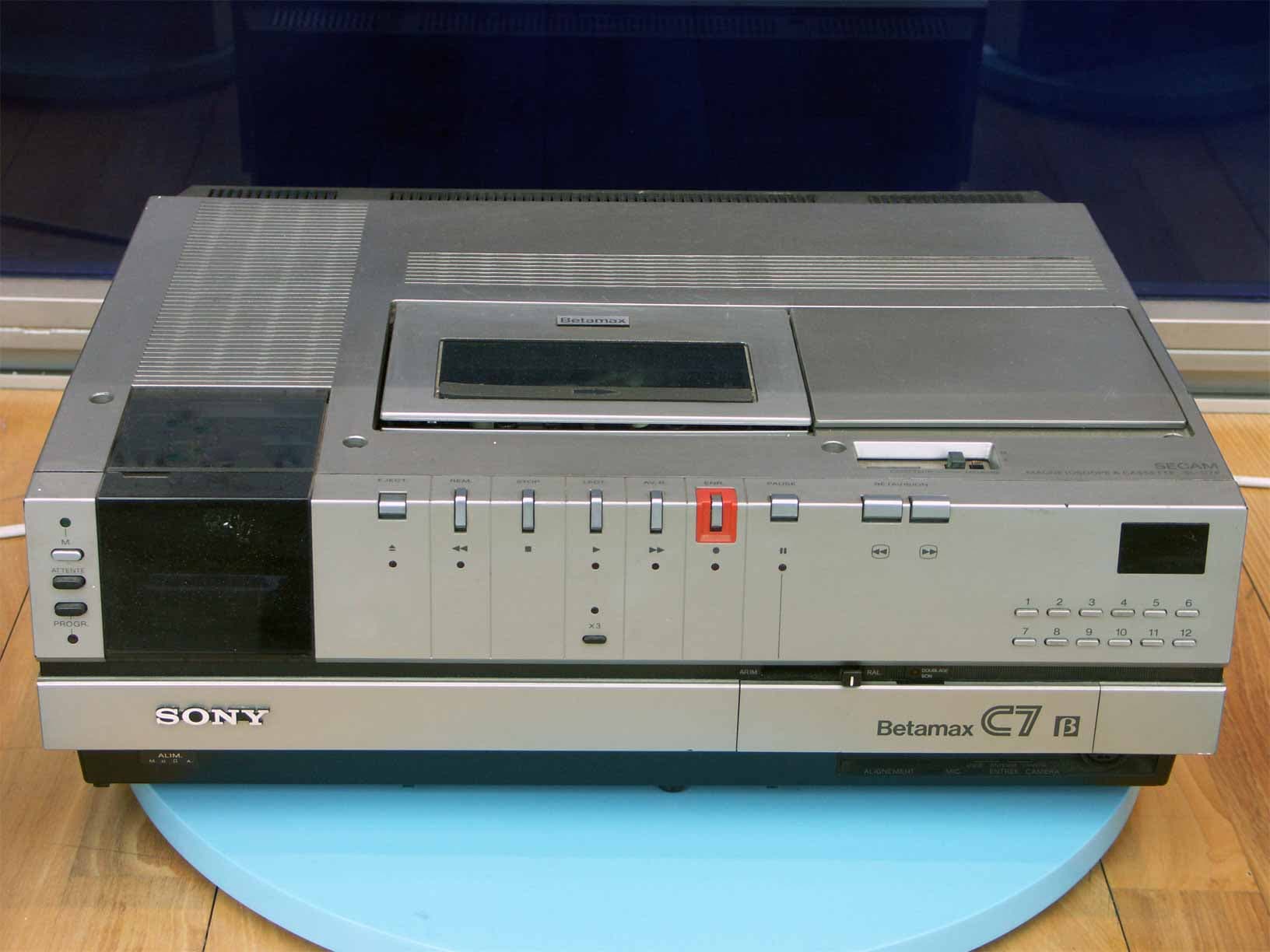
In Sony v. Universal in 1984, the Supreme Court held that selling home video recorders to the public was not contributory copyright infringement, because the sale of copying equipment is not contributory infringement if the product is capable of substantial noninfringing uses.4 The vote was 5 to 4: Justice John Paul Stevens wrote for the majority, and Justice Harry Blackmun for the four dissenters.5 The majority concluded that the trial record supported treating home time-shifting, recording a broadcast to watch later, as fair use. Blackmun argued that fair use was meant to protect productive uses, not purely consumptive copying such as time-shifting.4
In Harper & Row v. Nation Enterprises in 1985, the Court held that The Nation's article quoting Gerald Ford's unpublished memoir was not a fair use, and treated a work's unpublished status as a key, though not necessarily decisive, factor against fair use.6 In Campbell v. Acuff-Rose Music in 1994, a unanimous Court held that 2 Live Crew's commercial parody of "Oh, Pretty Woman" may be a fair use. Justice David Souter's opinion asked whether a new work merely supersedes the original or is transformative, adding new expression, meaning or message, and said the more transformative the new work, the less other factors such as commercialism weigh against fair use.2
Software and art
In Google v. Oracle in 2021, the Court held 6 to 2 that Google's copying of the Java SE API lines that programmers needed to put their skills to work in a new program was fair use as a matter of law. Justice Stephen Breyer wrote for the majority. Justice Clarence Thomas, joined by Justice Samuel Alito, argued in dissent that Oracle's code was copyrightable, that Google's use of it was not fair and that Google ruined Oracle's potential market. Justice Amy Coney Barrett did not take part.7
In Andy Warhol Foundation v. Goldsmith in 2023, the Court held 7 to 2 that the first factor did not favor the foundation's commercial licensing to Condé Nast of Orange Prince, a Warhol work that used Lynn Goldsmith's photograph of Prince. Justice Sonia Sotomayor's majority found that the photograph and the magazine license shared substantially the same purpose and that the use was commercial, and said it expressed no opinion on the creation, display or sale of Warhol's original Prince Series works. Justice Elena Kagan, joined by Chief Justice John Roberts, argued in dissent that the majority had made a marketing decision, the licensing to a magazine, decisive under the first factor.8
Library lending and game preservation
In Hachette v. Internet Archive in 2024, the Second Circuit held that the Internet Archive's scanning of print books and lending of the digital copies was not fair use. The Archive lent one digital copy for each print copy it or a partner library owned, except for a period in 2020. The court found the use noncommercial, disagreeing with the trial court on that point, but not transformative, and said its analysis would not be substantially different if limited to books the Archive owned.9
Fair use also shapes the temporary exemptions the Librarian of Congress may adopt every three years, on the Register of Copyrights' recommendation, from the law against circumventing access controls on copyrighted works. The Register's recommendation notes that the House Commerce Committee called the rulemaking a "failsafe" mechanism, out of concern that the ban could undermine fair use. In 2024 the Register considered a proposal to allow remote access to preserved video games. Opponents argued that widespread remote access would present a serious risk to an important market, and the Register found that the fourth factor did not support fair use for the proposed class.10 The final rule kept the exemption's requirement that preserved games be used on the institution's premises.11
AI training in court
Courts have reached different outcomes on training AI with copyrighted works. In Bartz v. Anthropic in June 2025, Judge William Alsup granted Anthropic summary judgment that using books to train its models was fair use, calling the use transformative, "spectacularly so," and held that scanning print books Anthropic had bought into digital copies was fair use for a different reason. He held that Anthropic had no right to use pirated copies for its central library.12 The court approved a $1.5 billion class settlement, estimated at about $3,000 per work, and dismissed the case in July 2026.13
Two days after the Bartz ruling, Judge Vince Chhabria granted Meta partial summary judgment on 13 authors' claim that training its models on their books infringed their copyrights, citing the state of the record. He wrote that the ruling did not establish that Meta's training was lawful and pointed to market dilution, competition from a flood of similar AI-generated works, as the potentially winning argument the authors had not developed. The case was not a class action, so the ruling covered only those 13 authors.14
Thomson Reuters v. Ross Intelligence concerned AI that does not generate new text. In February 2025, Judge Stephanos Bibas, a Third Circuit judge sitting in Delaware's federal trial court, rejected Ross's fair-use defense for using Westlaw headnotes to build a legal research tool.15 In September 2026 the Third Circuit affirmed, holding the headnotes copyrightable and Ross's use not fair, and distinguished Ross's platform from the generative models at issue in Bartz and the OpenAI litigation.16
The arguments over AI training
The Copyright Office's report on generative AI training, released in a pre-publication version in May 2025, expects that some training uses will be fair use and some will not. It says noncommercial research or analysis that does not let portions of works be reproduced in outputs is likely to be fair, while commercial use of vast numbers of works to produce expressive content that competes with them, especially through illegal access, goes beyond established fair use boundaries.1718
In authors' consolidated cases against OpenAI in New York, OpenAI argues that pretraining on their books was highly transformative, displayed no meaningful portion of the books to ChatGPT users and caused no cognizable harm, because it derived unprotectable statistical patterns of language rather than reproducing protected expression.19 The class authors argue that fair use cannot excuse what they call catastrophic threats to the incentive to create, and that each instance of copying, analyzed separately, usurps the market for their books.20 In a September 2026 statement of interest, the United States called training language models on copies extraordinarily transformative and argued that the Kadrey court's market-dilution theory overlooks substantial similarity.21 Publishing and licensing groups argue in an amicus brief that AI uses producing substitutes for written works are neither transformative nor fair use.22 Summary-judgment replies are due November 20, 2026.23
Music publishers led by Concord have asked a federal court in California to rule that Anthropic's copying of their works for training and in outputs is not fair use, and Anthropic argues that training Claude on the lyrics is transformative fair use.2425 In October 2026, owners of rights in songs recorded by Elvis Presley sued Anthropic over 274 compositions, quoting the Bartz order's statement that the Copyright Act has no carveout for AI companies.26
History
- 1976
The Copyright Act recognizes fair use in the statute, in section 107, for the first time.1
- January 17, 1984
The Supreme Court holds in Sony v. Universal that selling home video recorders is not contributory infringement.4
- May 20, 1985
Harper & Row v. Nation Enterprises: quoting Gerald Ford's unpublished memoir was not fair use.6
- March 7, 1994
Campbell v. Acuff-Rose Music sets out the transformative-use inquiry.2
- April 5, 2021
Google v. Oracle: copying Java API lines to build Android was fair use.7
- May 18, 2023
Warhol v. Goldsmith: the first factor did not favor licensing Orange Prince to a magazine.8
- September 4, 2024
The Second Circuit rules against the Internet Archive's digital lending.9
- October 28, 2024
The 2024 section 1201 exemptions keep the on-premises limit for preserved video games.11
- February 11, 2025
A Delaware federal court rejects Ross Intelligence's fair-use defense.15
- May 9, 2025
The Copyright Office releases a pre-publication report on generative AI training.18
- June 23, 2025
Bartz v. Anthropic: training on books is fair use, but pirated copies for a central library are not covered.12
- June 25, 2025
Kadrey v. Meta: Meta wins partial summary judgment on 13 authors' training claim, on the record presented.14
- July 20, 2026
The Bartz class settlement of $1.5 billion receives final approval.13
- September 1, 2026
The United States files a statement of interest in the OpenAI litigation supporting fair use for training.21
- September 29, 2026
The Third Circuit holds that Ross Intelligence's use of Westlaw headnotes was not fair.16
What is disputed
Whether OpenAI's copying of authors' books, including copies downloaded from pirate sites, to pretrain its models is fair use.
See the case: OpenAI says pretraining on authors' books is fair use; authors and publishers urge the court to reject itWhether recording broadcasts at home to watch later was fair use, as the Sony majority held, or unproductive copying, as Justice Blackmun argued.
See the case: Sony v. Universal: Stevens and Blackmun split over home recordingWhether Google's copying of Java API declaring code for Android was fair use, as Justice Breyer's majority held, or displaced Oracle's licensing market, as Justice Thomas argued.
See the case: Google v. Oracle: Breyer and Thomas split over Java API fair useWhether the first factor favored the Warhol Foundation's magazine license of Orange Prince, as Justice Kagan argued, or Goldsmith, as Justice Sotomayor's majority held.
See the case: Warhol's Prince image: Sotomayor and Kagan split over fair useWhether remote access to preserved video games for research and teaching would be fair use or would harm the market for older games.
See the case: Copyright Office rejects a remote research-access exemption for preserved video gamesWhether training AI on lawfully acquired books is fair use, as Judge Alsup held and Anthropic maintains, or whether that ruling gave too little weight to authors' licensing markets, as the Authors Guild argues.
See the case: Authors Guild disputes fair-use ruling on Anthropic's book trainingWhether lending a scan of an owned print book to one reader at a time is fair use, as the Internet Archive argued, or a substitute for the publishers' print and ebook editions, as the Second Circuit held.
See the case: Should the Internet Archive need publishers' permission to lend scans of in-copyright books it owns?
Cases on the Dispute Index
Campbell v. Acuff-Rose: 2 Live Crew claims fair use; the publisher alleges infringement
2 Live Crew defended its commercial Pretty Woman parody as fair use; Acuff-Rose alleged infringement. The Supreme Court rejected categorical presumptions about commercial parody and remanded, leaving some questions about musical borrowing and market harm for further analysis.
OpenAI says pretraining on authors' books is fair use; authors and publishers urge the court to reject it
OpenAI argues that training its models on authors' books is transformative fair use that causes no legally cognizable harm. The authors and publishing trade groups counter that the copying helps produce substitutes for books and undercuts a market for training licenses.
Sony v. Universal: Stevens and Blackmun split over home recording
Stevens's majority protects Sony's Betamax sales because the device has substantial noninfringing uses. Blackmun's dissent disputes the treatment of home copying as fair use and argues that market harm deserves greater weight.
Google v. Oracle: Breyer and Thomas split over Java API fair use
Stephen Breyer's majority treated Google's particular reuse of Java API declaring code as fair use. Clarence Thomas dissented, arguing it undermined copyright protection and Oracle's market. Oracle also publicly criticized the ruling.
Warhol's Prince image: Sotomayor and Kagan split over fair use
Sotomayor's Supreme Court majority and Kagan's dissent disagree over the first fair-use factor for the Foundation's 2016 magazine license of Orange Prince. Their arguments concern that commercial use, rather than every use of Warhol's artwork.
Copyright Office rejects a remote research-access exemption for preserved video games
Preservation advocates sought screened remote access to out-of-print games for research. ESA opposed the expansion. The Copyright Office rejected it in 2024, finding the proposed safeguards insufficient to establish likely noninfringing use.
Authors Guild disputes fair-use ruling on Anthropic's book training
A June 2025 ruling treated Anthropic's training use of books as fair use but rejected its defense of a pirated library. Anthropic welcomes the training ruling; the Authors Guild disputes it. A later settlement addressed separate piracy claims.
Should the Internet Archive need publishers' permission to lend scans of in-copyright books it owns?
Internet Archive argued that owning a print book should permit controlled digital lending. Publishers said digital copies require permission. The appeals court rejected fair use in 2024, and Archive ended the litigation while continuing to advocate for library rights.
Sources
- 17 U.S. Code § 107 - Limitations on exclusive rights: Fair use (opens in a new tab) · Saved copy (opens in a new tab)
- Campbell v. Acuff-Rose Music, Inc., 510 U.S. 569 (1994) (opens in a new tab) · Saved copy (opens in a new tab)
- U.S. Copyright Office Fair Use Index (opens in a new tab) · Saved copy (opens in a new tab)
- Sony v. Universal: Supreme Court majority and dissent (opens in a new tab) · Saved copy (opens in a new tab)
- Sony Corp. of America v. Universal City Studios, Inc., 464 U.S. 417 (United States Reports) (opens in a new tab) · Saved copy (opens in a new tab)
- Harper & Row, Publishers, Inc. v. Nation Enterprises, 471 U.S. 539 (1985) (opens in a new tab) · Saved copy (opens in a new tab)
- Google LLC v. Oracle America: Supreme Court majority and dissent (opens in a new tab) · Saved copy (opens in a new tab)
- Supreme Court opinions in Andy Warhol Foundation v. Goldsmith (opens in a new tab) · Saved copy (opens in a new tab)
- Second Circuit rejects Internet Archive's fair-use defense for controlled digital lending (opens in a new tab) · Saved copy (opens in a new tab)
- Register's 2024 recommendation on software and video-game preservation (opens in a new tab) · Saved copy (opens in a new tab)
- Exemption to Prohibition on Circumvention of Copyright Protection Systems for Access Control Technologies (final rule) (opens in a new tab) · Saved copy (opens in a new tab)
- Bartz v Anthropic: Order on fair use (opens in a new tab) · Saved copy (opens in a new tab)
- Bartz v Anthropic: Final settlement approval (opens in a new tab)
- Kadrey v. Meta Platforms, Inc., Order Denying the Plaintiffs' Motion for Partial Summary Judgment and Granting Meta's Cross-Motion, No. 3:23-cv-03417 (N.D. Cal. June 25, 2025), Dkt. 598 (opens in a new tab) · Saved copy (opens in a new tab)
- Thomson Reuters Enterprise Centre GmbH v. Ross Intelligence Inc., Memorandum Opinion, No. 1:20-cv-613 (D. Del. Feb. 11, 2025), Dkt. 770 (opens in a new tab) · Saved copy (opens in a new tab)
- Thomson Reuters Enterprise Centre GmbH v. Ross Intelligence Inc., No. 25-2153 (3d Cir. Sept. 29, 2026) (opens in a new tab) · Saved copy (opens in a new tab)
- Copyright and Artificial Intelligence, Part 3: Generative AI Training (Pre-Publication Version) (opens in a new tab) · Saved copy (opens in a new tab)
- Copyright and Artificial Intelligence (opens in a new tab) · Saved copy (opens in a new tab)
- OpenAI's motion for summary judgment in the Authors Guild action (opens in a new tab) · Saved copy (opens in a new tab)
- Class plaintiffs' memorandum for partial summary judgment in the OpenAI copyright litigation (opens in a new tab) · Saved copy (opens in a new tab)
- Statement of Interest of the United States, In re OpenAI, Inc. Copyright Infringement Litigation, No. 25-md-3143 (S.D.N.Y. Sept. 1, 2026) (opens in a new tab) · Saved copy (opens in a new tab)
- AAP, CCC, IBPA and STM amicus brief in OpenAI copyright litigation (opens in a new tab) · Saved copy (opens in a new tab)
- Order extending summary-judgment briefing in the OpenAI copyright litigation (opens in a new tab) · Saved copy (opens in a new tab)
- Concord Music Group, Inc. v. Anthropic PBC, Plaintiffs' Notice of Motion and Motion for Partial Summary Judgment, No. 5:24-cv-03811, Dkt. 594 (opens in a new tab) · Saved copy (opens in a new tab)
- Concord Music Group, Inc. v. Anthropic PBC, Anthropic PBC's Motion for Summary Judgment and Opposition to Publishers' Motion for Partial Summary Judgment, Dkt. 686 (opens in a new tab) · Saved copy (opens in a new tab)
- ABG EPE IP LLC et al. v. Anthropic: Complaint for Direct Copyright Infringement, Circumvention of Protection Measures, and Removal or Alteration of CMI (opens in a new tab) · Saved copy (opens in a new tab)
Last reviewed October 30, 2026. We review this explainer when a case that uses it changes. Report an error