
Should schools pause student-facing AI despite Microsoft’s new privacy safeguards?
Microsoft and teachers’ unions promote enforceable school-AI safeguards. Fairplay’s Josh Golin wants a five-year pause, while New York City permits restricted high-school pilots. Critics of those pilots say they should wait for evidence and assessment criteria.
Claim in dispute
Schools should pause generative AI for five years while safety and educational benefits are assessed.
Case period:
Published by The Dispute Index editorial teamPublished Updated
Overview
The conduct examined is permitting student-facing generative AI under privacy protections and teacher oversight, including limited pilots, rather than imposing a schoolwide pause. Privacy protection, educational benefit and permission to deploy are separate issues. The agreement was signed September 7 and announced September 9. It covers defined education AI products and provides customer remedies when districts incorporate protections into their contracts; general-purpose tools and narrow safety-processing exceptions have separate treatment. NYC’s policy and the Gonzalez–De La Rosa criticism were issued September 2, one week before the agreement’s announcement.
People in this case
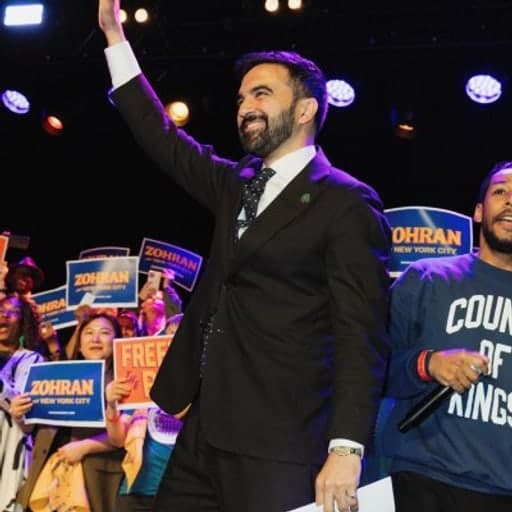 Zohran MamdaniCommented
Timeline
3 timeline entries on this page. Dates: September 2, 2026 to September 9, 2026
September 2026
3 events
NYC announces younger-grade pause and restricted high-school pilots
Source release
The city announces a one-year pause on most direct student use through eighth grade, restricted high-school pilots under teacher supervision, and designated accessibility, multilingual and career-readiness exceptions.
[01]Mamdani and Samuels announce New York City’s student-facing AI policy
NYC announces a one-year pause on most direct student use through eighth grade, alongside restricted high-school pilots and designated exceptions. This policy predates Microsoft’s September 9 announcement.
Mamdani and Samuels announce New York City’s student-facing AI policyMamdani and Samuels quotation blocks; moratorium, high-school pilots and exceptionsMicrosoft and the Academy sign school-AI safeguards
Brad Smith signs for Microsoft and Randi Weingarten signs for the National Academy for AI Instruction. The agreement addresses defined education AI products, privacy protections, oversight and district contractual remedies.
[02]Signed National AI Safety & Privacy Standard for Schools
31-page agreement signed September 7 by Weingarten for the Academy and Smith for Microsoft and announced September 9. It covers defined education AI products; districts obtain customer remedies through incorporation into their contracts. General-purpose tools and narrowly limited safety processing have separate treatment.
Signed National AI Safety & Privacy Standard for Schools · American Federation of TeachersDefinitions pp.1–3; safety exception pp.3–5; oversight pp.8–9; district remedies pp.10–12; signatures p.19Microsoft, AFT and UFT announce national standards
Source release
The organizations announce the school-AI safety and privacy standard and its national availability. District adoption and incorporation into customer contracts remain separate from this announcement.
[02]Signed National AI Safety & Privacy Standard for Schools
31-page agreement signed September 7 by Weingarten for the Academy and Smith for Microsoft and announced September 9. It covers defined education AI products; districts obtain customer remedies through incorporation into their contracts. General-purpose tools and narrowly limited safety processing have separate treatment.
Signed National AI Safety & Privacy Standard for Schools · American Federation of TeachersDefinitions pp.1–3; safety exception pp.3–5; oversight pp.8–9; district remedies pp.10–12; signatures p.19[03]AFT, UFT and Microsoft announce national school-AI safety and privacy standards
Joint announcement of contractual privacy and safety protections. Weingarten also welcomes New York City’s younger-grade restrictions; the announcement does not establish uniform student deployment or educational effectiveness.
AFT, UFT and Microsoft announce national school-AI safety and privacy standards · MicrosoftWeingarten, Smith and Mulgrew quotation blocks; agreement link
Claims
Claims separate what was said from what is contested. Follow each source for the original wording and context.
What's disputed
Disputed claim
Schools should pause generative AI for five years while safety and educational benefits are assessed.
Sources
- Josh Golin: Fairplay statement on the AFT/UFT deal with Microsoft · FairplayThreshold question on student-facing use; five-year pause and enforcement criticism
Disputed claim
A younger-grade pause alongside restricted, teacher-supervised high-school AI pilots is an appropriate approach to student-facing AI.
Sources
- Mamdani and Samuels announce New York City’s student-facing AI policyMamdani and Samuels quotation blocks; moratorium, high-school pilots and exceptions
Disputed claim
New York City should postpone its current high-school AI pilots until the tools can be assessed against clear criteria.
Sources
- Gonzalez and De La Rosa: NYC AI guidance falls short of responsible use · Kristen GonzalezJoint quotation; paragraph urging postponement of high-school pilots
Response record
Responses
Latest recorded positions: 6. Dates: September 2, 2026 to September 9, 2026
Choose any combination. Selected filters stay active until you remove them or choose All responses.
6 responses on this page
Josh Golin "Should student-facing AI products be used in schools at all?"
Read the official statement (opens in a new tab)Josh Golin: Fairplay statement on the AFT/UFT deal with Microsoft · FairplayThreshold question on student-facing use; five-year pause and enforcement criticismCondemnedResponding to: Schools should pause generative AI for five years while safety and educational benefits are assessed.
Why this label?
Opposes student-facing deployment. Praise for privacy improvements does not alter the pause demand.
This label describes the statement’s response within the context above.
Read context and background
Golin credits privacy improvements but calls for a five-year pause on generative AI in schools.
Role at the time: Fairplay executive director
Before the statement
Golin responds to the Microsoft–AFT/UFT announcement.
After the statement
He argues learning benefits, developmental risks and school-level enforcement remain unresolved.
Josh Golin: Fairplay statement on the AFT/UFT deal with Microsoft · FairplayThreshold question on student-facing use; five-year pause and enforcement criticismRandi Weingarten "anything less than legally enforceable provisions is simply a wish list"
Read the official statement (opens in a new tab)AFT, UFT and Microsoft announce national school-AI safety and privacy standards · MicrosoftWeingarten, Smith and Mulgrew quotation blocks; agreement linkRead the original text (opens in a new tab)Signed National AI Safety & Privacy Standard for Schools · American Federation of TeachersDefinitions pp.1–3; safety exception pp.3–5; oversight pp.8–9; district remedies pp.10–12; signatures p.19Mixed or conditionalCase context: Should schools pause student-facing AI despite Microsoft’s new privacy safeguards?
Why this label?
Supports a constrained approach to student use, combining safeguards with younger-grade restrictions.
This label describes the statement’s response within the context above.
Read context and background
Weingarten supports enforceable AI protections while backing restrictions on direct use by younger students.
Role at the time: AFT president and Academy agreement representative
Before the statement
The organizations announce the signed privacy and safety standard.
After the statement
Weingarten also welcomes NYC’s younger-grade ban and emphasizes school control and parental transparency.
AFT, UFT and Microsoft announce national school-AI safety and privacy standards · MicrosoftWeingarten, Smith and Mulgrew quotation blocks; agreement linkSigned National AI Safety & Privacy Standard for Schools · American Federation of TeachersDefinitions pp.1–3; safety exception pp.3–5; oversight pp.8–9; district remedies pp.10–12; signatures p.19Kristen Gonzalez "Chancellor Samuels should postpone these pilots until the tools can be properly assessed."
Read the official statement (opens in a new tab)Gonzalez and De La Rosa: NYC AI guidance falls short of responsible use · Kristen GonzalezJoint quotation; paragraph urging postponement of high-school pilotsCondemnedResponding to: New York City should postpone its current high-school AI pilots until the tools can be assessed against clear criteria.
Why this label?
Rejects proceeding with the current pilots; possible later assessed use does not change the present objection.
This label describes the statement’s response within the context above.
Read context and background
Gonzalez and De La Rosa support the younger-grade ban but urge delaying current high-school pilots until clear assessment criteria exist.
Role at the time: New York state senator and Internet and Technology Committee chair
Before the statement
Gonzalez jointly responds with De La Rosa to NYC’s policy.
After the statement
Their statement also calls the planned AI-literacy provision insufficient.
Gonzalez and De La Rosa: NYC AI guidance falls short of responsible use · Kristen GonzalezJoint quotation; paragraph urging postponement of high-school pilotsKamar H. Samuels "innovation does not mean more technology"
Read the official statement (opens in a new tab)Mamdani and Samuels announce New York City’s student-facing AI policyMamdani and Samuels quotation blocks; moratorium, high-school pilots and exceptionsMixed or conditionalResponding to: A younger-grade pause alongside restricted, teacher-supervised high-school AI pilots is an appropriate approach to student-facing AI.
Why this label?
Permits limited student use under conditions rather than unrestricted deployment or a schoolwide pause.
This label describes the statement’s response within the context above.
Read context and background
Samuels supports a younger-grade pause and restricted pilots, emphasizing evidence and human learning.
Role at the time: New York City Public Schools chancellor
Before the statement
The city announces the policy jointly with its schools chancellor.
After the statement
Teacher supervision and designated exceptions accompany the grade-specific restrictions.
Mamdani and Samuels announce New York City’s student-facing AI policyMamdani and Samuels quotation blocks; moratorium, high-school pilots and exceptionsCarmen De La Rosa "Recorded action: De La Rosa co-authored the September 2 statement urging postponement of NYC’s high-school AI pilots."
Read the official statement (opens in a new tab)Gonzalez and De La Rosa: NYC AI guidance falls short of responsible use · Kristen GonzalezJoint quotation; paragraph urging postponement of high-school pilotsCondemnedResponding to: New York City should postpone its current high-school AI pilots until the tools can be assessed against clear criteria.
Why this label?
Rejects the current rollout. The co-authored statement is shared with Gonzalez’s record, not a second independent comment.
This label describes the statement’s response within the context above.
Read context and background
De La Rosa joins Gonzalez in demanding assessment before the current pilots proceed, while supporting the younger-grade ban.
Role at the time: New York City Council member and Technology Committee chair
Before the statement
De La Rosa jointly issues the statement with Gonzalez.
After the statement
Both authors call for assessment criteria and stronger AI-literacy provision.
Gonzalez and De La Rosa: NYC AI guidance falls short of responsible use · Kristen GonzalezJoint quotation; paragraph urging postponement of high-school pilots Zohran Mamdani
"Children need teachers and human connection in order to learn and grow."
Read the official statement (opens in a new tab)Mamdani and Samuels announce New York City’s student-facing AI policyMamdani and Samuels quotation blocks; moratorium, high-school pilots and exceptionsMixed or conditionalResponding to: A younger-grade pause alongside restricted, teacher-supervised high-school AI pilots is an appropriate approach to student-facing AI.
Why this label?
Combines a younger-grade pause with conditional older-student deployment.
This label describes the statement’s response within the context above.
Read context and background
Mamdani backs a one-year younger-grade pause alongside restricted, supervised high-school AI pilots.
Role at the time: New York City mayor
Before the statement
His administration announces a grade-specific student-AI policy.
After the statement
The younger-grade moratorium accompanies limited high-school pilots and designated exceptions.
Mamdani and Samuels announce New York City’s student-facing AI policyMamdani and Samuels quotation blocks; moratorium, high-school pilots and exceptions
Sources
(5)
Original text
Signed National AI Safety & Privacy Standard for Schools
Relevant passage: Definitions pp.1–3; safety exception pp.3–5; oversight pp.8–9; district remedies pp.10–12; signatures p.19
About this source
31-page agreement signed September 7 by Weingarten for the Academy and Smith for Microsoft and announced September 9. It covers defined education AI products; districts obtain customer remedies through incorporation into their contracts. General-purpose tools and narrowly limited safety processing have separate treatment.
- Author
- National Academy for AI Instruction and Microsoft
- Published
- Accessed
Official statement
Gonzalez and De La Rosa: NYC AI guidance falls short of responsible use
Relevant passage: Joint quotation; paragraph urging postponement of high-school pilots
About this source
Jointly authored criticism of NYC’s September 2 policy. They support the younger-grade ban but want current high-school pilots postponed pending assessment. This is one joint statement with two authors, not a response to the later Microsoft announcement.
- Author
- Kristen Gonzalez and Carmen De La Rosa
- Published
- Accessed
Official statement
Mamdani and Samuels announce New York City’s student-facing AI policy
Relevant passage: Mamdani and Samuels quotation blocks; moratorium, high-school pilots and exceptions
About this source
NYC announces a one-year pause on most direct student use through eighth grade, alongside restricted high-school pilots and designated exceptions. This policy predates Microsoft’s September 9 announcement.
- Author
- New York City Mayor’s Office; Zohran Mamdani and Kamar H. Samuels
- Published
- Accessed
Official statement
Josh Golin: Fairplay statement on the AFT/UFT deal with Microsoft
Relevant passage: Threshold question on student-facing use; five-year pause and enforcement criticism
About this source
Golin credits privacy improvements but calls for a five-year pause on generative AI in schools, arguing that learning benefits, developmental risks and enforcement remain unresolved.
- Author
- Josh Golin
- Published
- Accessed
Official statement
AFT, UFT and Microsoft announce national school-AI safety and privacy standards
Relevant passage: Weingarten, Smith and Mulgrew quotation blocks; agreement link
About this source
Joint announcement of contractual privacy and safety protections. Weingarten also welcomes New York City’s younger-grade restrictions; the announcement does not establish uniform student deployment or educational effectiveness.
- Author
- AFT, UFT and Microsoft
- Published
- Accessed
Corrections
(0)
Corrections address errors in our reporting or labels. When a speaker changes their position, we add a separate statement and link it to the earlier one.
No corrections on this page.