
Trump threatens tariffs if he judges the Canada arrangement a hostile act
Donald TrumpPresident of the United States, speaking to reporters on arrival in Charlotte, North Carolina
President Trump answers a question about Canada becoming an associate member of the European Union, on arrival in Charlotte, N.C., Sept. 16, 2026.
Excerpt from 4:07 to 4:41 of the White House video. DI added its logo in the corner.
Video: The White House. Public domain (U.S. government work) (opens in a new tab)
Watch the full original video (opens in a new tab) (relevant passage: Exchange on the EU-Canada associate-member proposal and tariff threat)
Asked about the proposal on the day it was made, Trump said that if he judged it a hostile act he would impose very serious tariffs on Europe or curtail trade in many goods, and that heavy tariffs would follow if he read the intention as bad. He called the idea laughable and described Canada as a terrible trade partner.
“If they do that, if I think it’s at all a hostile act, I will put very serious tariffs or stop trading with Europe on many things.” … “If it’s a good intention, that’s fine. If it’s a bad intention, we’ll put very heavy tariffs on Europe.” … “I think it’s laughable … Canada has been a terrible trade partner.”
Original video
Where this statement fits
Should Canada become an associate member of the European Union?
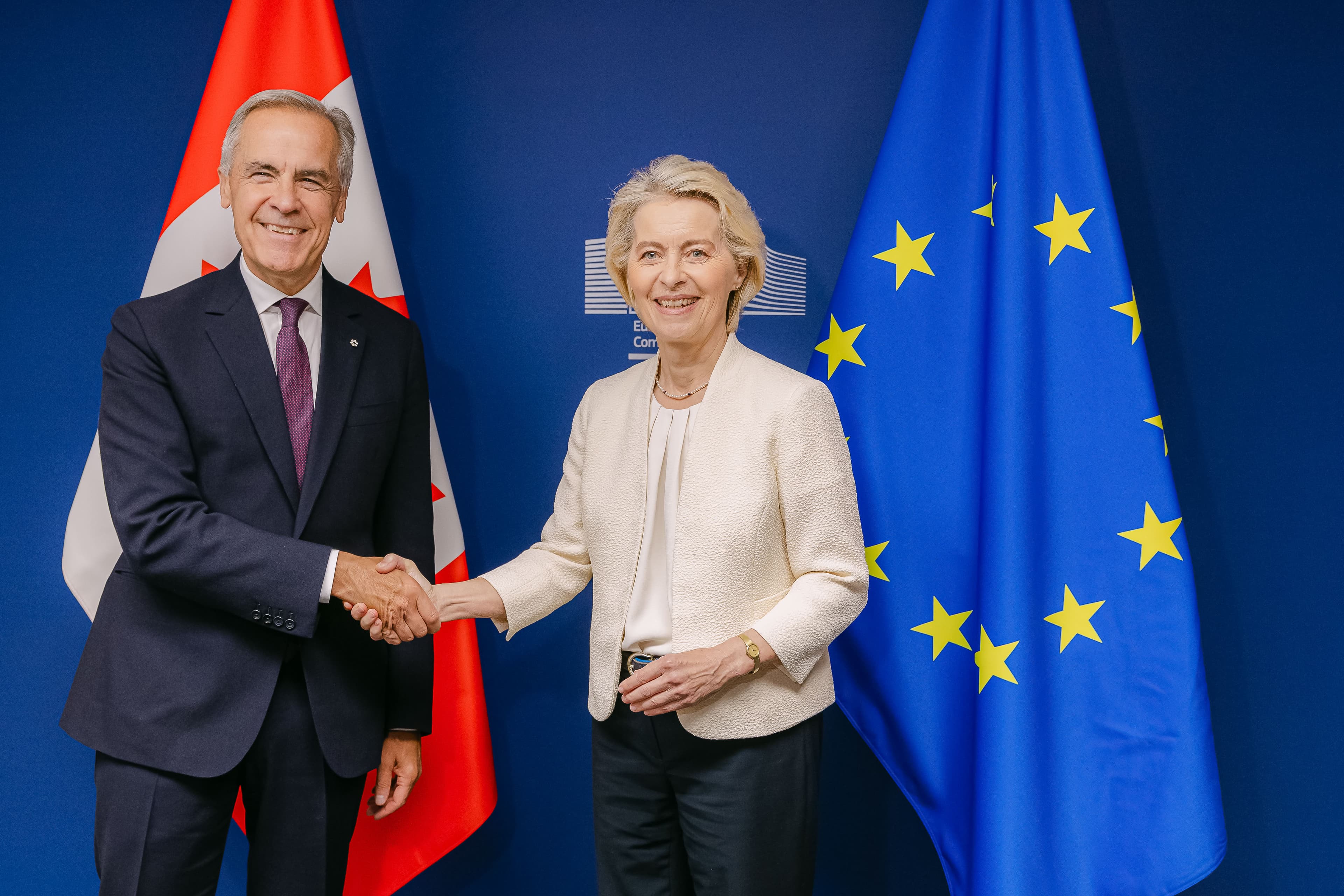
In her State of the European Union address on 16 September 2026, European Commission President Ursula von der Leyen said she would like to work with Prime Minister Mark Carney on opening the door for Canada to be the first associate member of the European Union, as part of moving beyond the existing CETA trade agreement to what she called an Alliance for the Future. Carney, present as an invited guest, told the European Parliament the following day that Canada welcomes the ambition, while attributing the associate-member phrase to von der Leyen rather than adopting it, and promised debates and a vote in the Canadian Parliament on the final structure. Conservative leader Pierre Poilievre set red lines against Canadians paying taxes to Brussels, following European laws they did not vote on, or adopting European immigration policy. United States President Donald Trump said that if he judged the arrangement a hostile act he would impose heavy tariffs on Europe or curtail trade. No agreement has been signed, and associate membership is not a status defined in the European Union's treaties.
Source and context
Original video
About this source
The White House's own recording of President Trump's press gaggle on arrival at Charlotte Douglas International Airport on 16 September 2026, the day of von der Leyen's address. His remarks on the proposal were made here, not on Truth Social, and were conditional on his own judgement of the European Union's intent. No official transcript of the gaggle has been published, so the wording rests on outlet transcription corroborated by the Associated Press and CNBC rather than on our own transcription of the tape.
Watch the clip from this source at the top of the page.
Before the quotation
Von der Leyen had made the proposal that morning in Strasbourg. Trump's administration had been in a tariff dispute with Canada, which Carney cited as part of the reason for seeking other partners.
After the quotation
European figures responded that the proposal was not directed against any third country. Carney said the alliance was a positive process and that a stronger, more sovereign Canada would be a more effective partner with the United States. No official transcript of the gaggle has been published.
How this statement is classified
The label describes this statement's response within the context above.
Why this label?
Relative to whether Canada should become an associate member of the European Union, Trump is against it and attaches a penalty to it, which is a substantive criticism of the proposal rather than of how it has been described. The conditional wording does not make this mixed: the condition attaches to his own reading of European intent and to what he would do about it, not to whether he supports the arrangement, and he separately calls the idea laughable. The closest competing label is minimizes, which loses because he treats the proposal as consequential enough to threaten trade over.
- Recorded on
- Published here
- People and groups discussed
- European Commission
More from this case
Read the full caseCarleton's Achim Hurrelmann doubts an associate-member status for Canada can be set up soon
“I'm not sure if a status with that name can be established for Canada any time soon”Read statement
Poilievre says the summit cut no tariffs and warns against aligning Canada with European policies
“Worse, there was lots of talk at the summit about aligning Canada with the insane European taxes, debt, immigration and anti-oil and gas policies that have left parts of Europe bankrupt and burning.”Read statement
German ambassador says the two sides should give the associate-member label real content
“The president of the commission and the prime minister are using the term associated membership, so let's fill that name with life and see what it can be about. I think we should not be distracted by the label in question from the important content that has been agreed today”Read statement
Share or embed this statement
The embed keeps its attribution link to The Dispute Index. Credit the image to The Dispute Index and link to the statement page.
Cite this record
- Publisher
- The Dispute Index
- Title
- Trump threatens tariffs if he judges the Canada arrangement a hostile act
- First published
- Last updated
- Permalink
- https://disputeindex.com/events/946-asked-about-the-proposal-on-the-day-it
Last updated marks the most recent saved version of this published statement.
The Dispute Index. "Trump threatens tariffs if he judges the Canada arrangement a hostile act". First published: 2026-09-17. Last updated: 2026-09-17. https://disputeindex.com/events/946-asked-about-the-proposal-on-the-day-it