
Can California ban ICE and other federal agents from using electric shock gloves, as AB 2760 does?
California's AB 2760 bars all law enforcement, including federal agents, from using electric shock gloves. Newsom and the author defend the ban. DHS and a federal prosecutor reject California's authority over federal agents. As of October 1, 2026, no court has ruled.
Claim in dispute
Gov. Gavin Newsom's office said on September 29, 2026 that California cannot dictate federal immigration policy but that, where federal immigration enforcement operates in California, the state can establish and enforce requirements governing law-enforcement practices, and it listed AB 2760's ban on shock gloves among the standards it set.
Case period:
Published by The Dispute Index editorial teamPublished Updated
Overview
This case asks whether California can ban federal agents, including ICE officers, from using electric shock gloves, as AB 2760 does. Each statement is labeled against one reference point: California's ban, in AB 2760, on the use of electric shock gloves by law enforcement officers, as applied to federal officers including ICE. Defended or excused means the speaker defended the ban and its application to federal agents as lawful, authorized or justified. Condemned means the speaker rejected it as unlawful, unenforceable, beyond California's authority or unwise. Mixed or conditional means the speaker took hedged positions, and the rationale explains the condition. Two questions run through the record, and a speaker can answer one without the other: whether California has the legal power to bind federal officers, and whether the gloves are safe or appropriate to use at all. Each statement's rationale says which question the speaker addressed. DI does not decide either question and states neither as fact. Everything here is current as of October 1, 2026. As of that date no court had ruled on AB 2760.
What AB 2760 says. The chaptered text of AB 2760 (Chapter 749, Statutes of 2026 (opens in a new tab)) adds section 7286.1 to the Government Code. It says a law enforcement agency "shall not use a wearable electroshock device within the State of California." It defines law enforcement agency to include state agencies, local agencies and "any federal law enforcement agency," and defines the device as a weapon designed to temporarily incapacitate a person through a controlled electric shock and "designed to be worn as a glove." Tasers, stun guns and similar weapons held like a pistol are excluded. The law also bars state funds from being used to buy the devices and requires agencies to update their use-of-force policies to prohibit them. The Division of Law Enforcement in the state Department of Justice must study the devices' safety and community impacts, consult stakeholders including immigrants' rights advocates, law enforcement and technology experts, and report to the Legislature by January 1, 2029. The section is repealed on January 1, 2030. The text names no penalty, no enforcement mechanism and no exceptions beyond the excluded device types. It was not an urgency bill, and the Associated Press (opens in a new tab) and Mother Jones (opens in a new tab) report that the ban takes effect in 2027.
How it came about. On August 10, 2026 the Department of Homeland Security posted a procurement forecast (opens in a new tab) for the G.L.O.V.E. (Generated Low Output Voltage Emitter), made by Compliant Technologies, with an estimated range of $10 million to $20 million. AB 2760 was introduced on February 20 as a bill making nonsubstantive changes to an Education Code section on the Office of Civil Rights. On March 19 it was amended to concern county inspectors general, and it passed the Assembly 51 to 7 on May 26 in that form. On August 21 the Senate replaced its contents with the shock-glove text. The Senate Public Safety Committee approved it 5 to 1 on August 26 and Senate Appropriations 4 to 2 on August 27. USAspending (opens in a new tab) shows ICE signed a $16,700,640 contract with Compliant Technologies on August 26, with one offer received. ICE's sole-source justification (opens in a new tab), posted August 27 with parts redacted, lists 6,000 units of one G.L.O.V.E. model, 650 of a second model and support items, and describes the glove as a "non-lethal, de-escalation device." News reports describe the purchase as 6,000 pairs. Amendments on August 28 added the study and the 2030 repeal. The Senate passed the bill 29 to 9 and the Assembly agreed to the Senate changes 55 to 16 on August 31, and Newsom signed it on September 29.
The case for the ban. Sharp-Collins, the author, said in a statement, "Public safety technology must be proven safe and accountable before it is used, not after someone is seriously injured or killed." The Senate Public Safety analysis (opens in a new tab) records her statement that the gloves are largely untested and that a man died after being repeatedly shocked in custody, and La Defensa's argument that the gloves hide where a shock is delivered, which it says complicates review of use-of-force incidents. The death she cites is alleged in a pending Kentucky lawsuit, whose complaint (opens in a new tab) says Jonathan Mansfield was shocked 13 times with Tasers and 27 times with a G.L.O.V.E. and died in October 2024, and says a jail's internal investigation found he suffered cardiac arrest after the exposures. Those are allegations, and the case has not been decided. On the power question, the Governor's office (opens in a new tab) said California cannot dictate federal immigration policy but can set requirements for law-enforcement practices and equipment where federal enforcement operates in the state. The enacted text covers state agencies as well as local and federal ones. The Senate Public Safety analysis of the August 21 version, which left state agencies out, said the bill would need to apply equally to federal and state agencies to withstand a court challenge, and the author planned amendments to do that.
The case against applying it to federal officers. The Supremacy Clause makes federal law the supreme law of the land, and under the related doctrine of intergovernmental immunity courts have held that a state may not regulate the federal government directly or discriminate against it. First Assistant U.S. Attorney Bill Essayli wrote that California has "no jurisdiction" over federal agents and that he advised DHS to disregard the bill, and a DHS statement says the department "will not abide by unconstitutional bans." UC Davis law professor Kevin Johnson told the AP that courts are likely to hold that California cannot bar federal officers from wearing the gloves, and professor Vikram Amar told CalMatters that states cannot regulate how federal officers do their jobs. Sheriff Cooper, a Democrat, and the California State Sheriffs' Association made the same prediction in their own words while also opposing the ban as unwise for local officers. The Senate analysis states the other side's reading too: generally applicable state laws can apply to federal entities, and the outcome could turn on whether the devices are so essential to federal law enforcement that a ban interferes with federal functions. The safety dispute is separate. ICE's justification calls the glove a non-lethal tool that reduces reliance on higher levels of force, Compliant Technologies' chief executive calls it the "safest, most humane" option, and Sheriff Cooper calls it a valuable compliance and de-escalation tool. The Senate floor analysis, citing the manufacturer's product guide, says the maker's own guide warns of risks that grow with longer exposure.
The mask-ban precedent. In November 2025 the United States sued over two 2025 California laws: SB 627, which barred officers, including federal officers, from wearing face coverings, and SB 805, which required visible identification. On February 9, 2026 Judge Christina A. Snyder of the Central District of California barred California (opens in a new tab) from enforcing the face-covering ban against federal officers because the law exempted California state officers, and she found the United States had not shown that either law directly regulates the federal government. She declined to block the identification law. On April 22, 2026 a Ninth Circuit panel ruled (opens in a new tab), on a request for an injunction pending appeal, that the identification requirement is likely to violate the Supremacy Clause because it "attempts to directly regulate the United States in its performance of governmental functions," and it kept the requirement blocked as to federal officers. The panel wrote that a state law that directly regulates federal conduct is "void irrespective of whether the regulated activities are essential to federal functions or operations" and that the Supremacy Clause bars such a law "even if the law regulates state operations in the same manner." That opinion does not address the face-covering law, and California did not appeal the injunction against it. The Legislature then passed SB 1004 (opens in a new tab), signed September 29, 2026, which extends the face-covering ban to state officers. The Ninth Circuit heard argument on the merits of the identification appeal on August 25, 2026, and the docket copy (opens in a new tab) we found, last updated August 27, shows no decision. Several outlets say the Ninth Circuit struck down the mask ban. Its opinion concerned the identification requirement, and the mask ban was blocked by the district court. No court has applied either ruling to AB 2760.
Who has spoken. On the record for the ban: Newsom, Sharp-Collins, Sens. Scott Wiener and Jesse Arreguín, and the California Immigrant Policy Center. Against it: Essayli, DHS in an unsigned statement, Sheriff Cooper, the California State Sheriffs' Association, Sen. Kelly Seyarto, Compliant Technologies chief executive Jeff Niklaus, and, on the power question, professors Johnson and Amar. California law-enforcement groups were not uniformly opposed at the end. The Peace Officers Research Association of California and the California Police Chiefs Association testified against the bill in committee on August 26, and on August 31 Arreguín, Sharp-Collins and other legislators said those two groups and the California Association of Highway Patrolmen had moved to neutral after the study and the 2030 repeal were added. We found no first-hand announcement from those groups. Other senators and Assembly members spoke on the floor on both sides, and their remarks are on the legislative video. The on-record voices are not evenly matched on the power question: we did not locate a legal scholar or government lawyer who has defended applying the ban to federal officers beyond the Governor's office statement, and the author said that some things "we probably cannot obviously regulate." We did not find a statement from Attorney General Rob Bonta on AB 2760 as of October 1, 2026.
What no court has decided, and the limits of this record. No court has ruled on whether California may bar federal officers from using shock gloves, and as of October 1, 2026 we found no lawsuit, motion or injunction against AB 2760. The only federal actions on the record are Essayli's statement that he advised DHS to disregard it and DHS's statement that it will not abide by it. No court has decided whether the gloves are safe. The Kentucky case is pending, and the state study is not due until January 1, 2029. The ban does not take effect until 2027, and ICE's contract runs from August 28, 2026 to February 27, 2027. We found no sign that the contract has been canceled or changed. Three people filed amended complaints on September 29, 2026 under a different new state law, SB 747, which lets people sue federal officers in California courts for constitutional violations. Those damages suits concern 2025 arrests and do not challenge AB 2760. The DHS statement quoted here was reported by several outlets from an unnamed spokesperson, and its first sentence was first reported on August 27 as a reaction to critics of the purchase.
People in this case
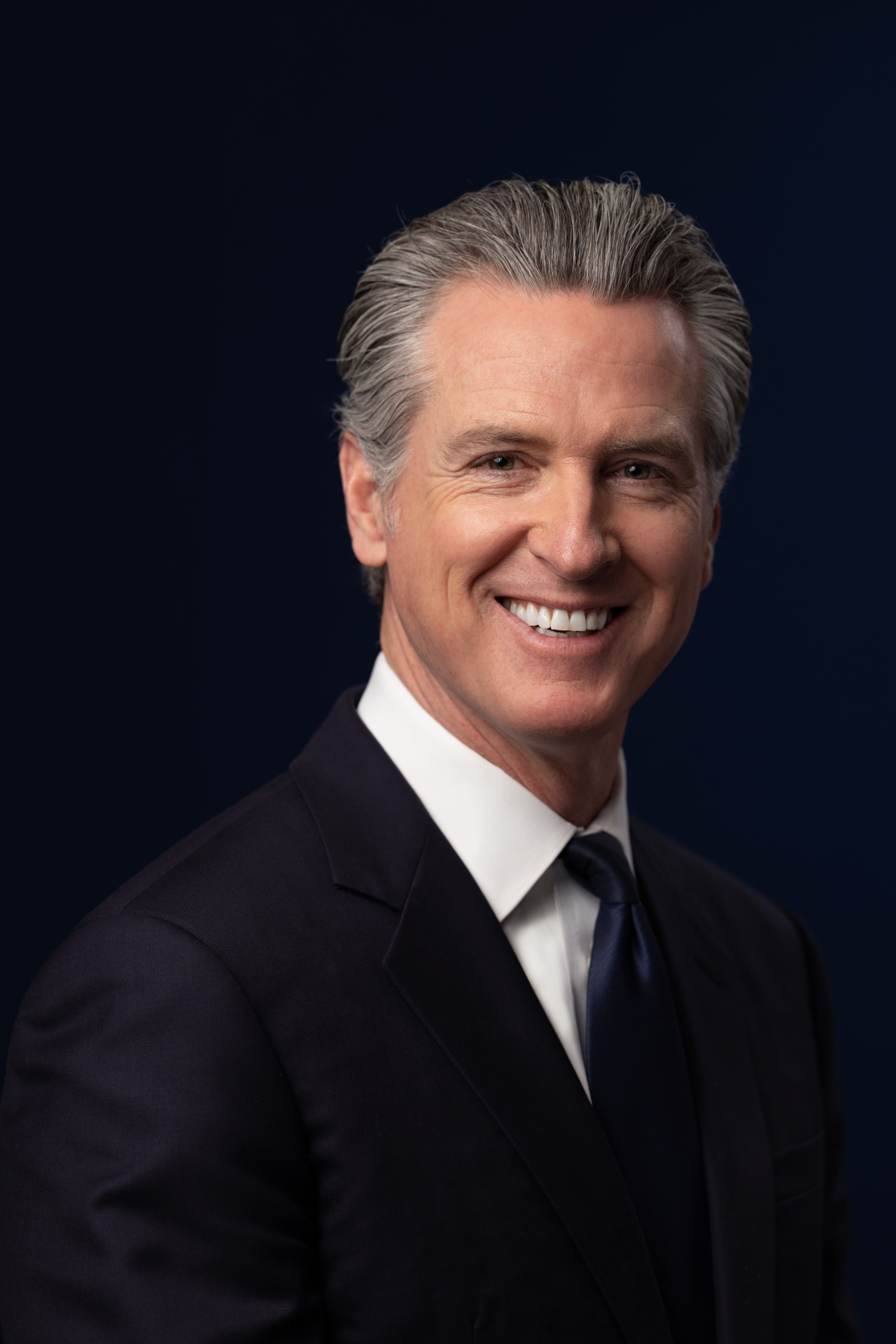 Gavin NewsomDirectly involved
Timeline
11 timeline entries on this page. Dates: February 9, 2026 to September 29, 2026
February 2026
1 event
A federal judge blocks California's mask ban for federal officers because it exempted state officers
In United States v. California, Judge Christina A. Snyder of the Central District of California ruled on the Justice Department's challenge to two 2025 California laws: SB 627, which barred officers, including federal officers, from wearing face coverings, and SB 805, which required visible identification. She barred California from enforcing the face-covering ban against federal officers because the law exempted California state officers, which she found treated federal officers worse than state officers. She found the United States had not shown that either law directly regulates the federal government, writing that "federal officers can perform their federal functions without wearing masks," and she declined to block the identification law. She stayed the order until noon on February 19, 2026.
[01]United States v. State of California, No. 2:25-cv-10999-CAS-AJRx (C.D. Cal.), order on motion for preliminary injunction, Document 63
Source excerpt
California may not enforce the facial covering prohibition of the No Secret Police Act, SB 627 § 3, against federal law enforcement officers.
The February 9, 2026 order on the United States' challenge to California's SB 627 (face coverings) and SB 805 (visible identification). It enjoined the face-covering ban as applied to federal officers because the law exempted California state officers, found the United States had not shown the laws directly regulate the federal government, and declined to enjoin the identification law. The order stayed itself until noon on February 19, 2026. Its text is an image-only PDF.
United States v. State of California, No. 2:25-cv-10999-CAS-AJRx (C.D. Cal.), order on motion for preliminary injunction, Document 63Page 20 (direct regulation), pages 21 to 22 (discrimination) and page 30 (conclusion)
72 days between recorded events
April 2026
1 event
The Ninth Circuit keeps California's identification requirement blocked for federal officers
A three-judge Ninth Circuit panel granted the United States' request for an injunction pending appeal against the identification requirement in SB 805. It held that the United States is likely to succeed because the requirement "attempts to directly regulate the United States in its performance of governmental functions." It rejected the district court's focus on how much the law interfered with federal operations, writing that a state law that directly regulates the conduct of the United States is "void irrespective of whether the regulated activities are essential to federal functions or operations." The opinion does not address the face-covering law, which California did not appeal. The ruling came on a request for an injunction while the appeal continues. The panel heard argument on the merits on August 25, 2026, and the docket copy we found, updated August 27, shows no decision.
[02]United States v. State of California, No. 26-926 (9th Cir. Apr. 22, 2026), opinion granting an injunction pending appeal
Source excerpt
We conclude that § 10 of the No Vigilantes Act attempts to directly regulate the United States in its performance of governmental functions.
The Ninth Circuit's published opinion on the identification requirement in California's SB 805. It holds that the United States is likely to succeed in showing the requirement directly regulates federal officers and keeps it enjoined against federal agencies and officers while the appeal proceeds. It does not address SB 627, the face-covering law, and notes that California did not appeal the district court's injunction on that law. It is a ruling on a request for an injunction pending appeal, not a final judgment.
United States v. State of California, No. 26-926 (9th Cir. Apr. 22, 2026), opinion granting an injunction pending appealSlip opinion pages 4, 10 to 14 and 16 (Supremacy Clause analysis of section 10 of SB 805 and disposition)[03]United States of America v. State of California, et al., 26-926 (9th Cir.), docket
Source excerpt
ARGUED AND SUBMITTED to Jacqueline H. NGUYEN, Mark J. BENNETT, Daniel P. COLLINS.
A public copy of the Ninth Circuit docket for the appeal over California's SB 805 and SB 627. It shows argument and submission to the same panel on August 25, 2026. The copy was last updated on August 27, 2026, and we did not find a later ruling in other searches as of October 1, 2026.
United States of America v. State of California, et al., 26-926 (9th Cir.), docketDocket entry of 08/25/2026 (argued and submitted) and the absence of later opinion entries as of the August 27, 2026 update
110 days between recorded events
August 2026
7 events
DHS posts a forecast for up to $20 million of G.L.O.V.E. shock gloves for ICE
Source release
On August 10, 2026 the Department of Homeland Security's Acquisition Planning Forecast System published a record for ICE's planned purchase of the CTG-5 G.L.O.V.E. (Generated Low Output Voltage Emitter), which it describes as a "Conductive Distraction and De-escalation Device" to be issued to Homeland Security Investigations and Enforcement and Removal Operations officers and agents. The record gives an estimated range of $10 million to $20 million and a completion date of March 31, 2027. The gloves are made by Compliant Technologies of Kentucky. The live page no longer loads, and an archived copy preserves the record.
[04]DHS Acquisition Planning Forecast System, record F2026074524: CTG-5 G.L.O.V.E (Generated Low Output Voltage Emitter)
Source excerpt
Immigration and Customs Enforcement (ICE) has a requirement to purchase the CTG-5 G.L.O.V.E (Generated Low Output Voltage Emitter) a Conductive Distraction and De-escalation Device which will be issued to Homeland Security Investigations (H.S.I.) and Enforcement Removal Operations (ERO) officers and agents.
The Department of Homeland Security's procurement forecast for the gloves, published on August 10, 2026. It lists an estimated range of $10 million to $20 million, a firm fixed price contract, and delivery of the devices to Homeland Security Investigations and Enforcement and Removal Operations officers and agents. The live page no longer loads, and the archived copy is a capture from August 12, 2026.
DHS Acquisition Planning Forecast System, record F2026074524: CTG-5 G.L.O.V.E (Generated Low Output Voltage Emitter) · U.S. Department of Homeland SecurityForecast record F2026074524: description and estimated dollar range, published August 10, 2026, 10:51 a.m.The Senate rewrites AB 2760, a county inspector general bill, into the shock-glove ban
AB 2760 was introduced on February 20, 2026 and passed the Assembly 51 to 7 on May 26 as a bill authorizing counties to create offices of inspector general for animal control and probation. On August 21, with days left in the session, Senate amendments deleted that text and inserted a ban on wearable electroshock devices by law enforcement agencies. The August 21 version defined agencies to include local agencies and federal agencies and, as the Senate Public Safety analysis noted, left out California state agencies. CalMatters described the change as a gut-and-amend.
[05]AB 2760 bill history (amendments, votes and signing, February 20 to September 29, 2026)
Source excerpt
Chaptered by Secretary of State - Chapter 749, Statutes of 2026.
The Legislature's history of AB 2760. The bill was introduced on February 20, 2026 and amended in the Assembly on March 19. It passed the Assembly on May 26 and was sent to the Senate. The Senate rewrote it on August 21, 2026, and it then moved through Senate Public Safety (August 26), Senate Appropriations (August 27), the Senate floor (August 31) and Assembly concurrence (August 31). It was presented to the Governor on September 15 and approved on September 29.
AB 2760 bill history (amendments, votes and signing, February 20 to September 29, 2026)Entries dated 02/20/26, 03/19/26, 05/26/26, 08/21/26, 08/24/26, 08/26/26, 08/27/26, 08/28/26, 08/31/26, 09/15/26 and 09/29/26[06]Senate Floor Analyses of AB 2760 (third reading, as amended August 28, 2026)
Source excerpt
Senate Floor Amendments of 8/21/26 delete the prior version of the bill and insert a new bill.
The Senate floor analysis for the third-reading vote. It records that the August 21 Senate amendments deleted the earlier bill and inserted the shock-glove text, and it lists the organizations that supported and opposed the bill as of August 28, including ACLU California Action, the California Immigrant Policy Center and La Defensa in support and the California Police Chiefs Association, the California State Sheriffs' Association, the Peace Officers Research Association of California and Sacramento County Sheriff Jim Cooper in opposition. The linked archive copy is the Legislature's analysis index page, which does not contain the analysis text.
Senate Floor Analyses of AB 2760 (third reading, as amended August 28, 2026)Senate Floor Analyses dated 08/30/26 (listed on the Legislature's Bill Analysis tab and opened as a PDF): digest, background, and the verified lists of supporters and opponents[07]Senate Committee on Public Safety analysis of AB 2760 (hearing date August 26, 2026; version of August 21, 2026)
Source excerpt
The provisions of this bill seeking to regulate federal agencies and their agents will undoubtedly be subject legal challenge under the doctrines of intergovernmental immunity and conflict preemption.
The committee staff analysis of the August 21 version of AB 2760. Comment 5 sets out the Supremacy Clause, intergovernmental immunity and conflict preemption arguments, quotes the February 9, 2026 district court ruling on California's mask and identification laws, and says the bill would need to apply equally to federal and state agencies to survive a constitutional challenge. The August 21 version excluded state agencies, and the enacted text includes them. The analysis also records the author's statement, a statement of support from La Defensa and a statement of opposition from the California Police Chiefs Association. It cites the district court's February 9 ruling and does not discuss the Ninth Circuit's April 22 opinion.
Senate Committee on Public Safety analysis of AB 2760 (hearing date August 26, 2026; version of August 21, 2026)Senate Committee on Public Safety analysis dated 08/25/26: comment 1 (author's statement), comment 4 (definition of law enforcement agency excludes California state agencies), comment 5 (Supremacy Clause), comments 7 and 8 (arguments in support and opposition)[08]California Democrats race to ban electric shock gloves before ICE buys them
Source excerpt
States simply can't regulate how federal officers do their jobs, even if we don't like how they do their jobs. That's up to the federal government,
CalMatters report published while the bill was moving through the Senate. It describes the August 21 rewrite of AB 2760, the DHS notice of up to $20 million, and quotes law professor Vikram Amar on the legal obstacles to applying the ban to federal officers.
California Democrats race to ban electric shock gloves before ICE buys them · CalMattersParagraphs quoting UC Davis law professor Vikram Amar; paragraphs on the gut-and-amend and the ICE noticeSenate Public Safety Committee approves AB 2760 5 to 1; staff analysis raises Supremacy Clause questions
The committee voted 5 to 1 to pass the bill and send it to Appropriations, with Sen. Kelly Seyarto voting no. Its staff analysis said the bill's provisions regulating federal agencies and their agents would undoubtedly face a legal challenge under the doctrines of intergovernmental immunity and conflict preemption, that the outcome was unclear and depended on several factors, and that the bill would need to apply equally to federal and state agencies to withstand a challenge. The author said she would take amendments in Appropriations. The California Immigrant Policy Center and others testified in support, and the California State Sheriffs' Association and the California Police Chiefs Association testified in opposition.
[07]Senate Committee on Public Safety analysis of AB 2760 (hearing date August 26, 2026; version of August 21, 2026)
Source excerpt
The provisions of this bill seeking to regulate federal agencies and their agents will undoubtedly be subject legal challenge under the doctrines of intergovernmental immunity and conflict preemption.
The committee staff analysis of the August 21 version of AB 2760. Comment 5 sets out the Supremacy Clause, intergovernmental immunity and conflict preemption arguments, quotes the February 9, 2026 district court ruling on California's mask and identification laws, and says the bill would need to apply equally to federal and state agencies to survive a constitutional challenge. The August 21 version excluded state agencies, and the enacted text includes them. The analysis also records the author's statement, a statement of support from La Defensa and a statement of opposition from the California Police Chiefs Association. It cites the district court's February 9 ruling and does not discuss the Ninth Circuit's April 22 opinion.
Senate Committee on Public Safety analysis of AB 2760 (hearing date August 26, 2026; version of August 21, 2026)Senate Committee on Public Safety analysis dated 08/25/26: comment 1 (author's statement), comment 4 (definition of law enforcement agency excludes California state agencies), comment 5 (Supremacy Clause), comments 7 and 8 (arguments in support and opposition)[09]AB 2760 vote record (committee and floor roll calls, April 14 to August 31, 2026)
Source excerpt
AB 2760 Sharp-Collins Concurrence in Senate Amendments
Roll calls for AB 2760. On the rewritten bill, Senate Public Safety voted 5-1 on August 26, Senate Appropriations 4-2 on August 27, the Senate floor 29-9 on August 31 and the Assembly concurred 55-16 on August 31. The earlier votes on the bill, including the Assembly's 51-7 vote on May 26, were on a different version about county inspectors general.
AB 2760 vote record (committee and floor roll calls, April 14 to August 31, 2026)Votes of 08/26/26 (Senate Public Safety), 08/27/26 (Senate Appropriations), 08/31/26 (Senate floor and Assembly concurrence)[10]Senate Committee on Public Safety hearing, August 26, 2026: AB 2760, testimony in support by Anallely Martin of the California Immigrant Policy Center
Source excerpt
Excessive use of force, such as taser gloves or electroshock gloves by any law enforcement agency, makes Californians less safe.
The Senate Public Safety Committee's August 26, 2026 hearing on AB 2760 as archived by CalMatters Digital Democracy. The segment is Anallely Martin's two-minute statement for the California Immigrant Policy Center, a witness for the author. The bill passed the committee 5 to 1 at this hearing.
Senate Committee on Public Safety hearing, August 26, 2026: AB 2760, testimony in support by Anallely Martin of the California Immigrant Policy Center · CalMattersAB 2760 item, video file 776f67398bb7df923fcea1627f67ed04, from 1,661 to 1,749 seconds (about 27:41 to 29:09)ICE signs a sole-source contract with Compliant Technologies for $16,700,640
Source release
Federal spending records show ICE signed contract 70CMSW26C00000012 with Compliant Technologies LLC on August 26, 2026, with one offer received and no competition. ICE's sole-source justification, posted August 27 with parts redacted, lists 6,000 units of one G.L.O.V.E. model at $2,495 each, 650 of a second model and support items, for a total of $16,700,640, with work running from August 28, 2026 to February 27, 2027. It says the gloves are meant as a "non-lethal, de-escalation device" and cites the "Only one responsible source" authority for skipping competition. News reports described the purchase as 6,000 pairs. DHS reacted to critics of the purchase on August 27.
[11]USAspending.gov award 70CMSW26C00000012: Compliant Technologies LLC, U.S. Immigration and Customs Enforcement
Source excerpt
THIS AWARD IS TO PURCHASE CONDUCTIVE ENERGY AND DE-ESCALATION DEVICES TO SUPPORT LAW ENFORCEMENT AGENTS FOR THE OFFICE OF FIREARMS AND TRAINING PROGRAM
The federal spending record for the ICE contract with Compliant Technologies LLC of Nicholasville, Kentucky. It shows $16,700,640 obligated, a signing date of August 26, 2026, one offer received, and a sole-source procedure.
USAspending.gov award 70CMSW26C00000012: Compliant Technologies LLC, U.S. Immigration and Customs EnforcementAward summary: description, obligated amount $16,700,640, date signed August 26, 2026, period of performance August 28, 2026 to February 27, 2027[12]ICE Justification for Other Than Full and Open Competition J&A-26-0252 (G.L.O.V.E., SAM.gov notice 70CMSW26RGLOVE)
Source excerpt
ICE requires a non-lethal, de-escalation device intended to diffuse situations of high-stress environments where physical altercations are likely, such as field domestic disputes or inmate transport in jails.
ICE's own justification for buying 6,000 G.L.O.V.E. units from Compliant Technologies without competition, posted to SAM.gov on August 27, 2026 with parts redacted. It gives an estimated total value of $16,700,640 for six months, says the gloves are meant to support de-escalation and reduce reliance on higher levels of force 'when used in accordance with approved policy, training, and accountability standards', and cites the 'only one responsible source' authority for skipping competition.
ICE Justification for Other Than Full and Open Competition J&A-26-0252 (G.L.O.V.E., SAM.gov notice 70CMSW26RGLOVE) · U.S. Immigration and Customs EnforcementAttached justification document, J&A-26-0252 (redacted): items 2 (nature of the action), 3 (description of supplies) and 4 (statutory authority)[13]ICE awards $16.7M contract to buy 6,000 pairs of gloves that deliver electric shocks
Source excerpt
reacted defiantly Thursday to critics of the purchase
Associated Press report of August 27, 2026 on ICE's contract with Compliant Technologies, as published by Oregon Public Broadcasting. It quotes a Department of Homeland Security statement calling efforts to ban federal law enforcement from safety equipment 'despicable' and describes it as a reaction to critics of the purchase.
ICE awards $16.7M contract to buy 6,000 pairs of gloves that deliver electric shocks · Associated PressParagraphs on the no-bid award and the Department of Homeland Security statement; AP report as published by OPBSharp-Collins announces the bill at a news conference; Senate Appropriations approves it 4 to 2
At a Capitol news conference on Thursday, August 27, Assemblymember LaShae Sharp-Collins announced AB 2760 with other lawmakers and advocates. The Senate Appropriations Committee approved the bill 4 to 2 that day. Sacramento County Sheriff Jim Cooper said the same day, according to ABC 10News, that the gloves are necessary and lifesaving. First Assistant U.S. Attorney Bill Essayli posted that the bill is "DOA" and that California does not have authority to dictate what tools federal law enforcement can use.
[14]Assemblymember Dr. Sharp-Collins and State Leaders Call for Ban on Electric Shock Gloves (California Assembly Democrats video of the August 27, 2026 news conference)
Source excerpt
will be in the hands of our least trained and most lawless law enforcement
The Assembly Democratic Caucus's video of the Capitol news conference at which Assemblymember LaShae Sharp-Collins announced AB 2760 with other lawmakers on Thursday, August 27, 2026. The video is about 33 minutes long.
Assemblymember Dr. Sharp-Collins and State Leaders Call for Ban on Electric Shock Gloves (California Assembly Democrats video of the August 27, 2026 news conference)Sharp-Collins's opening remarks, from about 1:37 to 2:03[09]AB 2760 vote record (committee and floor roll calls, April 14 to August 31, 2026)
Source excerpt
AB 2760 Sharp-Collins Concurrence in Senate Amendments
Roll calls for AB 2760. On the rewritten bill, Senate Public Safety voted 5-1 on August 26, Senate Appropriations 4-2 on August 27, the Senate floor 29-9 on August 31 and the Assembly concurred 55-16 on August 31. The earlier votes on the bill, including the Assembly's 51-7 vote on May 26, were on a different version about county inspectors general.
AB 2760 vote record (committee and floor roll calls, April 14 to August 31, 2026)Votes of 08/26/26 (Senate Public Safety), 08/27/26 (Senate Appropriations), 08/31/26 (Senate floor and Assembly concurrence)[15]Bill Essayli (@USAttyEssayli) on X, August 27, 2026: 'This bill is DOA, just like their mask ban.'
Source excerpt
California does not have authority to dictate what tools federal law enforcement can and cannot use.
A post from the official account of First Assistant U.S. Attorney Bill Essayli quoting a post about Assemblymember Sharp-Collins's August 27 news conference introducing the shock-glove ban.
Bill Essayli (@USAttyEssayli) on X, August 27, 2026: 'This bill is DOA, just like their mask ban.' · Bill EssayliPost of August 27, 2026, 22:31 UTC, quoting a post about Sharp-Collins's news conference announcing the bill[16]ICE awards $16.7 million contract for electric gloves amid California push to ban the devices
Source excerpt
In a statement to ABC 10News, a Department of Homeland Security spokesperson said:
ABC 10News (San Diego) report of August 28, 2026, the earliest report we found of the DHS statement on the California bill. It also reports ICE's posting of the contract notice on Thursday, August 27, and Sharp-Collins's remark that the bill had been changed to a three-year ban with a Justice Department study.
ICE awards $16.7 million contract for electric gloves amid California push to ban the devicesParagraphs on the ICE notice, Sharp-Collins's remarks, and the DHS statement to ABC 10NewsAmendments add a Justice Department study and a 2030 repeal; DHS says it will not abide by the ban
On August 28 the Senate amended AB 2760 to add a requirement that the Division of Law Enforcement in the California Department of Justice study the devices' safety and community impacts and report by January 1, 2029, and to repeal the section on January 1, 2030. The August 28 version, which became law, covers state, local and federal agencies. ABC 10News reported the same day a statement from a DHS spokesperson saying "we will not abide by unconstitutional bans." ABC 10News also reported Sharp-Collins saying the bill had been changed to a three-year ban while the Department of Justice studies the gloves.
[06]Senate Floor Analyses of AB 2760 (third reading, as amended August 28, 2026)
Source excerpt
Senate Floor Amendments of 8/21/26 delete the prior version of the bill and insert a new bill.
The Senate floor analysis for the third-reading vote. It records that the August 21 Senate amendments deleted the earlier bill and inserted the shock-glove text, and it lists the organizations that supported and opposed the bill as of August 28, including ACLU California Action, the California Immigrant Policy Center and La Defensa in support and the California Police Chiefs Association, the California State Sheriffs' Association, the Peace Officers Research Association of California and Sacramento County Sheriff Jim Cooper in opposition. The linked archive copy is the Legislature's analysis index page, which does not contain the analysis text.
Senate Floor Analyses of AB 2760 (third reading, as amended August 28, 2026)Senate Floor Analyses dated 08/30/26 (listed on the Legislature's Bill Analysis tab and opened as a PDF): digest, background, and the verified lists of supporters and opponents[17]AB 2760 (Sharp-Collins), Chapter 749, Statutes of 2026: Law enforcement: wearable electroshock devices (chaptered text)
Source excerpt
A law enforcement agency shall not use a wearable electroshock device within the State of California.
The chaptered text of AB 2760, approved by the Governor and filed with the Secretary of State on September 29, 2026. It adds Government Code section 7286.1, which bars a law enforcement agency from using a wearable electroshock device in California, bars state funds from being used to buy one, and requires agencies to update their use-of-force policies. It defines law enforcement agency to include state, local and federal agencies. It directs the Division of Law Enforcement in the Department of Justice to study the devices and report to the Legislature by January 1, 2029, and it repeals the section on January 1, 2030. The text names no penalty and no enforcement mechanism.
AB 2760 (Sharp-Collins), Chapter 749, Statutes of 2026: Law enforcement: wearable electroshock devices (chaptered text)Section 1, adding Government Code section 7286.1, subdivisions (a) to (f); Section 2[16]ICE awards $16.7 million contract for electric gloves amid California push to ban the devices
Source excerpt
In a statement to ABC 10News, a Department of Homeland Security spokesperson said:
ABC 10News (San Diego) report of August 28, 2026, the earliest report we found of the DHS statement on the California bill. It also reports ICE's posting of the contract notice on Thursday, August 27, and Sharp-Collins's remark that the bill had been changed to a three-year ban with a Justice Department study.
ICE awards $16.7 million contract for electric gloves amid California push to ban the devicesParagraphs on the ICE notice, Sharp-Collins's remarks, and the DHS statement to ABC 10NewsThe Senate passes AB 2760 29 to 9 and the Assembly agrees to the Senate changes 55 to 16
The Senate passed AB 2760 29 to 9 after a floor debate in which Sens. Scott Wiener and Jesse Arreguín, among others, spoke in support and Sens. Tony Strickland, Kelly Seyarto and Suzette Martinez Valladares spoke against it. Arreguín and other supporters said the Peace Officers Research Association of California, the California Police Chiefs Association and the California Association of Highway Patrolmen had announced neutrality after the author added the study and the 2030 repeal. The Assembly then agreed to the Senate amendments 55 to 16. The California State Sheriffs' Association stayed opposed, in a letter read into the record on the Senate floor.
[09]AB 2760 vote record (committee and floor roll calls, April 14 to August 31, 2026)
Source excerpt
AB 2760 Sharp-Collins Concurrence in Senate Amendments
Roll calls for AB 2760. On the rewritten bill, Senate Public Safety voted 5-1 on August 26, Senate Appropriations 4-2 on August 27, the Senate floor 29-9 on August 31 and the Assembly concurred 55-16 on August 31. The earlier votes on the bill, including the Assembly's 51-7 vote on May 26, were on a different version about county inspectors general.
AB 2760 vote record (committee and floor roll calls, April 14 to August 31, 2026)Votes of 08/26/26 (Senate Public Safety), 08/27/26 (Senate Appropriations), 08/31/26 (Senate floor and Assembly concurrence)[18]Senate floor session, August 31, 2026: AB 2760, closing remarks by Sen. Jesse Arreguin
Source excerpt
while this bill is principally focused on local law enforcement
The Senate floor debate on AB 2760 on August 31, 2026. The segment is the closing remarks of Senator Jesse Arreguin, chair of the Public Safety Committee, who presented the bill for the author. In his opening presentation (about 3:02 into the video file) he also says the Peace Officers Research Association of California, the California Police Chiefs Association and the California Association of Highway Patrolmen had announced neutrality after amendments adding a sunset and a study.
Senate floor session, August 31, 2026: AB 2760, closing remarks by Sen. Jesse Arreguin · CalMattersAB 2760 debate, video file df0a658fb9cbebd37649424dee68ae27, from 1,511 to 1,612 seconds (about 25:11 to 26:52)[19]Senate floor session, August 31, 2026: AB 2760, remarks in opposition by Sen. Kelly Seyarto
Source excerpt
it's just one less than lethal tool for our officers to be able to use
The Senate floor debate on AB 2760 on August 31, 2026. The segment is Senator Kelly Seyarto's remarks in opposition.
Senate floor session, August 31, 2026: AB 2760, remarks in opposition by Sen. Kelly Seyarto · CalMattersAB 2760 debate, video file df0a658fb9cbebd37649424dee68ae27, from 547 to 792 seconds (about 9:07 to 13:12)[20]Senate floor session, August 31, 2026: AB 2760, remarks in opposition by Sen. Suzette Martinez Valladares
Source excerpt
What this is doing is not going to impact federal agents.
The Senate floor debate on AB 2760 on August 31, 2026. The segment is Senator Suzette Martinez Valladares's remarks in opposition, in which she reads aloud passages from a letter by Sacramento County Sheriff Jim Cooper dated August 24 and a letter from the California State Sheriffs' Association dated August 31.
Senate floor session, August 31, 2026: AB 2760, remarks in opposition by Sen. Suzette Martinez Valladares · CalMattersAB 2760 debate, video file df0a658fb9cbebd37649424dee68ae27, from 1,095 to 1,280 seconds (about 18:15 to 21:20)[21]Assembly floor analysis of AB 2760, concurrence in Senate amendments (version of August 28, 2026)
Source excerpt
Prohibits any California law enforcement agency and any federal law enforcement agency from using a wearable electroshock device, as defined, within California.
The Assembly's analysis of the Senate amendments to AB 2760, as amended August 28, 2026. It summarizes the enacted provisions and records the author's statement, a statement of support from La Defensa and a statement of opposition from the California State Sheriffs' Association, which says the bill is aimed at federal immigration authorities and that courts have removed the federal application of other bills enacted this session. The linked archive copy is the Legislature's analysis index page, which does not contain the analysis text.
Assembly floor analysis of AB 2760, concurrence in Senate amendments (version of August 28, 2026)Assembly floor analysis dated 08/31/26 (listed on the Legislature's Bill Analysis tab and opened as a PDF): summary, comments (according to the author), arguments in support, arguments in opposition
29 days between recorded events
September 2026
2 events
Newsom signs AB 2760 and SB 1004; Essayli says he advised DHS to disregard the ban
Newsom signed AB 2760 (Chapter 749) and 20 other bills on September 29, 2026, including SB 1004 (Chapter 757), which extends California's face-covering ban for officers to state officers. The Governor's release lists "Ban on shock gloves" among the new standards for law-enforcement practices. Essayli posted that California has "no jurisdiction" over federal agents and that he had advised DHS to disregard the bill. DHS told CBS News Sacramento that "Enforcing federal immigration laws is a clear federal responsibility." As of October 1, 2026, no court had ruled on AB 2760.
[17]AB 2760 (Sharp-Collins), Chapter 749, Statutes of 2026: Law enforcement: wearable electroshock devices (chaptered text)
Source excerpt
A law enforcement agency shall not use a wearable electroshock device within the State of California.
The chaptered text of AB 2760, approved by the Governor and filed with the Secretary of State on September 29, 2026. It adds Government Code section 7286.1, which bars a law enforcement agency from using a wearable electroshock device in California, bars state funds from being used to buy one, and requires agencies to update their use-of-force policies. It defines law enforcement agency to include state, local and federal agencies. It directs the Division of Law Enforcement in the Department of Justice to study the devices and report to the Legislature by January 1, 2029, and it repeals the section on January 1, 2030. The text names no penalty and no enforcement mechanism.
AB 2760 (Sharp-Collins), Chapter 749, Statutes of 2026: Law enforcement: wearable electroshock devices (chaptered text)Section 1, adding Government Code section 7286.1, subdivisions (a) to (f); Section 2[05]AB 2760 bill history (amendments, votes and signing, February 20 to September 29, 2026)
Source excerpt
Chaptered by Secretary of State - Chapter 749, Statutes of 2026.
The Legislature's history of AB 2760. The bill was introduced on February 20, 2026 and amended in the Assembly on March 19. It passed the Assembly on May 26 and was sent to the Senate. The Senate rewrote it on August 21, 2026, and it then moved through Senate Public Safety (August 26), Senate Appropriations (August 27), the Senate floor (August 31) and Assembly concurrence (August 31). It was presented to the Governor on September 15 and approved on September 29.
AB 2760 bill history (amendments, votes and signing, February 20 to September 29, 2026)Entries dated 02/20/26, 03/19/26, 05/26/26, 08/21/26, 08/24/26, 08/26/26, 08/27/26, 08/28/26, 08/31/26, 09/15/26 and 09/29/26[22]Governor Newsom signs bills to push back on Trump's Orwellian immigration tactics to protect immigrant communities
Source excerpt
California cannot dictate federal immigration policy.
The Governor's September 29, 2026 release announcing 21 signed bills. It lists a ban on shock gloves under 'Establish stronger standards for law-enforcement practices' and names AB 2760 by Assemblymember Dr. LaShae Sharp-Collins. It quotes Newsom's statement and says the state can set requirements for law-enforcement practices and equipment used within California, including where they intersect with immigration enforcement.
Governor Newsom signs bills to push back on Trump's Orwellian immigration tactics to protect immigrant communities · Gavin NewsomGovernor's news release of September 29, 2026: Newsom statement, 'California cannot dictate federal immigration policy' paragraph, and 'Establish stronger standards for law-enforcement practices' list[23]SB 1004 (Wiener), Chapter 757, Statutes of 2026: Law enforcement: masks (chaptered text)
Source excerpt
This bill would add peace officers employed by a state agency to the definition of law enforcement officers, thereby making those law enforcement officers subject to those criminal penalties.
The chaptered text of SB 1004, approved September 29, 2026. It extends California's face-covering restrictions to peace officers employed by state agencies, in addition to local and federal officers already covered, which responds to the February 9, 2026 district court finding that the earlier law discriminated against federal officers by exempting state officers.
SB 1004 (Wiener), Chapter 757, Statutes of 2026: Law enforcement: masks (chaptered text)Legislative Counsel's Digest and amended Penal Code section 185.5 and Government Code section 7289[24]Bill Essayli (@USAttyEssayli) on X, September 29, 2026: 'Governor, we've been through this already.'
Source excerpt
If you want to regulate federal agents, you have to win a federal election. Until then, you have no jurisdiction.
A post from the official account of First Assistant U.S. Attorney Bill Essayli, written as a response to the Governor's press office announcement that Newsom had signed 21 bills including the shock-glove ban. The text reads, in full, 'Governor, we've been through this already. If you want to regulate federal agents, you have to win a federal election. Until then, you have no jurisdiction.' and, in a second paragraph, 'Accordingly, I have advised DHS to disregard your bill attempting to ban safe and effective less-lethal tools that agents need to escalate dangerous situations.'
Bill Essayli (@USAttyEssayli) on X, September 29, 2026: 'Governor, we've been through this already.' · Bill EssayliPost of September 29, 2026, 20:51 UTC, quoting the Governor's press office post announcing the signed bills[25]Newsom signs California ban on electric shock gloves for law enforcement
Source excerpt
Enforcing federal immigration laws is a clear federal responsibility
CBS News Sacramento report on the signing. It quotes a statement from the Department of Homeland Security that enforcing federal immigration laws is a federal responsibility, and says DHS defended ICE's use of new technology and said ICE officers receive ongoing training in de-escalation and use of force.
Newsom signs California ban on electric shock gloves for law enforcement · CBS NewsParagraphs on the Department of Homeland Security statementThree people amend suits against federal officers to add claims under SB 747, the No Kings Act
Cary Lopez, Javier Ramirez and Angel Piña, who had earlier sued the federal government over their arrests in 2025, filed amended complaints in federal court in California on September 29, 2026 adding claims under SB 747, the "No Kings Act," which Newsom also signed that day and which lets people sue federal officers in California courts for constitutional violations. The San Francisco Chronicle reported on September 30 that they were the first suits under the law. The suits seek damages for the plaintiffs' arrests. They do not challenge AB 2760 or any other California law, and they do not concern shock gloves.
[26]Lopez v. United States, No. 2:26-cv-05628 (C.D. Cal.), First Amended Complaint (Docket 17), adding claims under California Civil Code section 53.8
Source excerpt
FIRST AMENDED COMPLAINT
One of three amended complaints entered on September 29, 2026 in damages suits by people who say federal immigration officers used excessive force during arrests in 2025. The amendments add claims under SB 747, the 'No Kings Act', which lets people sue federal officers in California courts for constitutional violations. These suits do not challenge AB 2760 or any other California statute.
Lopez v. United States, No. 2:26-cv-05628 (C.D. Cal.), First Amended Complaint (Docket 17), adding claims under California Civil Code section 53.8Caption and fourth claim, 'Violation of Civil Rights California Civil Code § 53.8'[27]3 Californians sue ICE officers hours after Newsom signs bill greenlighting lawsuits
Source excerpt
Three U.S. citizens arrested and detained by immigration agents are the first Californians to sue federal officers under the No Kings Act, hours after it was signed by Gov. Gavin Newsom on Tuesday.
San Francisco Chronicle report on the first suits under SB 747, the 'No Kings Act'. It says the three plaintiffs had earlier lawsuits against the federal government and amended them to add claims under the new law.
Claims
Claims separate what was said from what is contested. Follow each source for the original wording and context.
What's disputed
Disputed claim
Gov. Gavin Newsom's office said on September 29, 2026 that California cannot dictate federal immigration policy but that, where federal immigration enforcement operates in California, the state can establish and enforce requirements governing law-enforcement practices, and it listed AB 2760's ban on shock gloves among the standards it set.
Sources (2)
- Governor Newsom signs bills to push back on Trump's Orwellian immigration tactics to protect immigrant communities · Gavin NewsomGovernor's news release of September 29, 2026: Newsom statement, 'California cannot dictate federal immigration policy' paragraph, and 'Establish stronger standards for law-enforcement practices' list
- AB 2760 (Sharp-Collins), Chapter 749, Statutes of 2026: Law enforcement: wearable electroshock devices (chaptered text)Section 1, adding Government Code section 7286.1, subdivisions (a) to (f); Section 2
Disputed claim
First Assistant U.S. Attorney Bill Essayli said on September 29, 2026 that California has no jurisdiction to regulate federal agents and that he had advised the Department of Homeland Security to disregard AB 2760.
Sources (2)
- Bill Essayli (@USAttyEssayli) on X, September 29, 2026: 'Governor, we've been through this already.' · Bill EssayliPost of September 29, 2026, 20:51 UTC, quoting the Governor's press office post announcing the signed bills
- Bill Essayli (@USAttyEssayli) on X, August 27, 2026: 'This bill is DOA, just like their mask ban.' · Bill EssayliPost of August 27, 2026, 22:31 UTC, quoting a post about Sharp-Collins's news conference announcing the bill
Disputed claim
Assemblymember LaShae Sharp-Collins said the gloves are largely untested in real-world encounters, that a man died after being repeatedly shocked with them while in custody, and that public safety technology must be proven safe before it is deployed.
Sources (3)
- Senate Committee on Public Safety analysis of AB 2760 (hearing date August 26, 2026; version of August 21, 2026)Senate Committee on Public Safety analysis dated 08/25/26: comment 1 (author's statement), comment 4 (definition of law enforcement agency excludes California state agencies), comment 5 (Supremacy Clause), comments 7 and 8 (arguments in support and opposition)
- State leaders agree: Governor Newsom's signature on federal immigration enforcement bills protects Californians · Gavin NewsomRelease of September 29, 2026: statements by Assemblymember Dr. LaShae Sharp-Collins and Senator Scott Wiener
- Mansfield v. Madison County Fiscal Court et al., No. 25-CI-00956 (Madison Cir. Ct., Ky.), complaintIntroduction, paragraph 1 (page 3 of the filing)
Disputed claim
ICE said in its August 2026 sole-source justification that the G.L.O.V.E. is a non-lethal, de-escalation device meant to reduce reliance on higher levels of force, and that ICE has no empty-hand use-of-force device to give its officers.
U.S. Immigration and Customs Enforcement
Sources (3)
- ICE Justification for Other Than Full and Open Competition J&A-26-0252 (G.L.O.V.E., SAM.gov notice 70CMSW26RGLOVE) · U.S. Immigration and Customs EnforcementAttached justification document, J&A-26-0252 (redacted): items 2 (nature of the action), 3 (description of supplies) and 4 (statutory authority)
- DHS Acquisition Planning Forecast System, record F2026074524: CTG-5 G.L.O.V.E (Generated Low Output Voltage Emitter) · U.S. Department of Homeland SecurityForecast record F2026074524: description and estimated dollar range, published August 10, 2026, 10:51 a.m.
- USAspending.gov award 70CMSW26C00000012: Compliant Technologies LLC, U.S. Immigration and Customs EnforcementAward summary: description, obligated amount $16,700,640, date signed August 26, 2026, period of performance August 28, 2026 to February 27, 2027
Response record
Responses
Latest recorded positions: 15. Dates: August 26, 2026 to September 29, 2026
Choose one response filter, or select All responses to see the full record.
1 response on this page
LaShae Sharp-CollinsDirectly involved "And we know that some things we probably cannot obviously regulate, but we have to start somewhere."
Mixed or conditionalResponding to: First Assistant U.S. Attorney Bill Essayli said on September 29, 2026 that California has no jurisdiction to regulate federal agents and that he had advised the Department of Homeland Security to disregard AB 2760.
Read more
Asked at the August 27, 2026 news conference whether she was concerned about legal challenges like those facing other immigration-related bills, Sharp-Collins said she had been in contact with Legislative Counsel and the Attorney General's office about the legal question, that there were potential concerns, and that "we know that some things we probably cannot obviously regulate." She added, "we have to start somewhere."
Role at the time: Assemblymember (D-San Diego) and author of AB 2760, answering a reporter's question at a Capitol news conference
Before the statement
The question asked whether she was concerned about legal challenges, like a lot of the other immigration and ICE-related bills the Legislature had advanced that year. The Senate Public Safety analysis, published the day before, had said the bill's provisions regulating federal agencies would undoubtedly face a legal challenge.
After the statement
That evening First Assistant U.S. Attorney Bill Essayli posted that the bill is "DOA, just like their mask ban." The Legislature amended the bill on August 28 and passed it on August 31. As of October 1, 2026, no court had ruled on AB 2760.
Assemblymember Dr. Sharp-Collins and State Leaders Call for Ban on Electric Shock Gloves (California Assembly Democrats video of the August 27, 2026 news conference), question and answerQuestion about legal challenges and Sharp-Collins's answer, from about 31:43 to 32:38Senate Committee on Public Safety analysis of AB 2760 (hearing date August 26, 2026; version of August 21, 2026)Senate Committee on Public Safety analysis dated 08/25/26: comment 1 (author's statement), comment 4 (definition of law enforcement agency excludes California state agencies), comment 5 (Supremacy Clause), comments 7 and 8 (arguments in support and opposition)Bill Essayli (@USAttyEssayli) on X, August 27, 2026: 'This bill is DOA, just like their mask ban.' · Bill EssayliPost of August 27, 2026, 22:31 UTC, quoting a post about Sharp-Collins's news conference announcing the billWhy this label?
Relative to the ban as applied to federal officers, Sharp-Collins keeps backing the bill while conceding that the state probably cannot regulate some things, in answer to a question about legal challenges. She does not say which parts of the bill she has in mind. The answer addresses the question of state power, not safety. We used Mixed or conditional because she combines support for going ahead with an acknowledgment that some of what the state tries to regulate may be out of reach. The closest competing label is Defended or excused, because she does not withdraw the bill's application to federal officers and says the state has to start somewhere.
This label describes the statement's response within the context above.
Sources
(38)
Original text
AB 2760 (Sharp-Collins), Chapter 749, Statutes of 2026: Law enforcement: wearable electroshock devices (chaptered text)
Relevant passage: Section 1, adding Government Code section 7286.1, subdivisions (a) to (f); Section 2
Excerpt
"A law enforcement agency shall not use a wearable electroshock device within the State of California."
About this source
The chaptered text of AB 2760, approved by the Governor and filed with the Secretary of State on September 29, 2026. It adds Government Code section 7286.1, which bars a law enforcement agency from using a wearable electroshock device in California, bars state funds from being used to buy one, and requires agencies to update their use-of-force policies. It defines law enforcement agency to include state, local and federal agencies. It directs the Division of Law Enforcement in the Department of Justice to study the devices and report to the Legislature by January 1, 2029, and it repeals the section on January 1, 2030. The text names no penalty and no enforcement mechanism.
- Author
- California Legislature
- Published
- Accessed
Analysis
One Step Forward and Two Steps Back: The California Legislature's Passage of the "No Kings" Act, the "Get the Feds Out" Act, and the "Shock Gloves" Measure (Verdict, September 3, 2026)
Relevant passage: Paragraphs beginning "As disappointing as the title of the 'No Kings' Act is", "These bills are purely performative" and "Because no one is arguing that ICE's use of shock gloves"
Excerpt
"These bills are purely performative and will never be implemented."
About this source
A column on Justia's Verdict site by UC Davis law professor Vikram David Amar and University of Illinois law professor Jason Mazzone, published September 3, 2026, three days after the Legislature passed AB 2760. It discusses three California measures, including the shock-glove ban, and argues that the ban and a second bill cannot be implemented against federal officers. The column does not discuss whether shock gloves are safe.
- Author
- Vikram David Amar and Jason Mazzone
- Published
- Accessed
Original video
Senate Committee on Public Safety hearing, August 26, 2026: AB 2760, remarks by Sen. Kelly Seyarto
Relevant passage: AB 2760 item, video file 776f67398bb7df923fcea1627f67ed04, from 2,267 to 2,414 seconds (about 37:47 to 40:14)
Excerpt
"from a federal immigration standpoint, it makes zero difference in what they're doing whatsoever, because we do not have that jurisdiction"
About this source
The Senate Public Safety Committee's August 26, 2026 hearing on AB 2760 as archived by CalMatters Digital Democracy. The segment is the committee's vice chair, Senator Kelly Seyarto, speaking before the committee voted. He cast the only no vote when the committee passed the bill 5 to 1.
- Author
- California Senate Committee on Public Safety (video hosted by CalMatters Digital Democracy)
- Published
- Accessed
Original video
Assemblymember Dr. Sharp-Collins and State Leaders Call for Ban on Electric Shock Gloves (California Assembly Democrats video of the August 27, 2026 news conference), question and answer
Excerpt
"And we know that some things we probably cannot obviously regulate"
About this source
The Assembly Democratic Caucus's video of the August 27, 2026 news conference. In the question-and-answer period a reporter asks whether Assemblymember Sharp-Collins is concerned about legal challenges like those facing other immigration-related bills, and she answers.
- Author
- California Assembly Democrats
- Published
- Accessed
Reporting
Newsom signs California ban on electric shock gloves for law enforcement
Relevant passage: Paragraphs on the Department of Homeland Security statement
Excerpt
"Enforcing federal immigration laws is a clear federal responsibility"
About this source
CBS News Sacramento report on the signing. It quotes a statement from the Department of Homeland Security that enforcing federal immigration laws is a federal responsibility, and says DHS defended ICE's use of new technology and said ICE officers receive ongoing training in de-escalation and use of force.
- Author
- Cecilio Padilla, CBS News Sacramento
- Published
- Accessed
Reporting
ICE awards $16.7M contract to buy 6,000 pairs of gloves that deliver electric shocks
Relevant passage: Paragraphs on the no-bid award and the Department of Homeland Security statement; AP report as published by OPB
Excerpt
"reacted defiantly Thursday to critics of the purchase"
About this source
Associated Press report of August 27, 2026 on ICE's contract with Compliant Technologies, as published by Oregon Public Broadcasting. It quotes a Department of Homeland Security statement calling efforts to ban federal law enforcement from safety equipment 'despicable' and describes it as a reaction to critics of the purchase.
- Author
- Ryan J. Foley, Associated Press
- Published
- Accessed
Original video
Senate floor session, August 31, 2026: AB 2760, remarks in opposition by Sen. Suzette Martinez Valladares
Relevant passage: AB 2760 debate, video file df0a658fb9cbebd37649424dee68ae27, from 1,095 to 1,280 seconds (about 18:15 to 21:20)
Excerpt
"What this is doing is not going to impact federal agents."
About this source
The Senate floor debate on AB 2760 on August 31, 2026. The segment is Senator Suzette Martinez Valladares's remarks in opposition, in which she reads aloud passages from a letter by Sacramento County Sheriff Jim Cooper dated August 24 and a letter from the California State Sheriffs' Association dated August 31.
- Author
- California State Senate (video hosted by CalMatters Digital Democracy)
- Published
- Accessed
Original video
Senate floor session, August 31, 2026: AB 2760, remarks in opposition by Sen. Kelly Seyarto
Relevant passage: AB 2760 debate, video file df0a658fb9cbebd37649424dee68ae27, from 547 to 792 seconds (about 9:07 to 13:12)
Excerpt
"it's just one less than lethal tool for our officers to be able to use"
About this source
The Senate floor debate on AB 2760 on August 31, 2026. The segment is Senator Kelly Seyarto's remarks in opposition.
- Author
- California State Senate (video hosted by CalMatters Digital Democracy)
- Published
- Accessed
Original video
Senate floor session, August 31, 2026: AB 2760, closing remarks by Sen. Jesse Arreguin
Relevant passage: AB 2760 debate, video file df0a658fb9cbebd37649424dee68ae27, from 1,511 to 1,612 seconds (about 25:11 to 26:52)
Excerpt
"while this bill is principally focused on local law enforcement"
About this source
The Senate floor debate on AB 2760 on August 31, 2026. The segment is the closing remarks of Senator Jesse Arreguin, chair of the Public Safety Committee, who presented the bill for the author. In his opening presentation (about 3:02 into the video file) he also says the Peace Officers Research Association of California, the California Police Chiefs Association and the California Association of Highway Patrolmen had announced neutrality after amendments adding a sunset and a study.
- Author
- California State Senate (video hosted by CalMatters Digital Democracy)
- Published
- Accessed
Original video
Senate floor session, August 31, 2026: AB 2760, remarks by Sen. Scott Wiener
Relevant passage: AB 2760 debate, video file df0a658fb9cbebd37649424dee68ae27, from 1,427 to 1,507 seconds (about 23:47 to 25:07)
Excerpt
"I have to be honest, the idea of wearing these gloves that you touch people and you shock the heck out of them, that is super creepy."
About this source
The Senate floor debate on AB 2760 on August 31, 2026 as archived by CalMatters Digital Democracy. The segment is Senator Scott Wiener's remarks in support. The Senate passed the bill 29 to 9 at the end of the debate.
- Author
- California State Senate (video hosted by CalMatters Digital Democracy)
- Published
- Accessed
Original video
Senate Committee on Public Safety hearing, August 26, 2026: AB 2760, testimony in support by Anallely Martin of the California Immigrant Policy Center
Relevant passage: AB 2760 item, video file 776f67398bb7df923fcea1627f67ed04, from 1,661 to 1,749 seconds (about 27:41 to 29:09)
Excerpt
"Excessive use of force, such as taser gloves or electroshock gloves by any law enforcement agency, makes Californians less safe."
About this source
The Senate Public Safety Committee's August 26, 2026 hearing on AB 2760 as archived by CalMatters Digital Democracy. The segment is Anallely Martin's two-minute statement for the California Immigrant Policy Center, a witness for the author. The bill passed the committee 5 to 1 at this hearing.
- Author
- California Senate Committee on Public Safety (video hosted by CalMatters Digital Democracy)
- Published
- Accessed
Original video
Assemblymember Dr. Sharp-Collins and State Leaders Call for Ban on Electric Shock Gloves (California Assembly Democrats video of the August 27, 2026 news conference)
Excerpt
"will be in the hands of our least trained and most lawless law enforcement"
About this source
The Assembly Democratic Caucus's video of the Capitol news conference at which Assemblymember LaShae Sharp-Collins announced AB 2760 with other lawmakers on Thursday, August 27, 2026. The video is about 33 minutes long.
- Author
- California Assembly Democrats
- Published
- Accessed
Original video
Compliant Technologies Q&A (YouTube video, September 22, 2026)
Excerpt
"we were never contacted by any legislator or agency within California"
About this source
A question-and-answer video posted to the Compliant Technologies YouTube channel on September 22, 2026, in which the company's founder and chief executive describes the company's products and answers a question about California's ban. The video is about 25 minutes long.
- Author
- Jeff Niklaus, Compliant Technologies
- Published
- Accessed
Original post
Sheriff Jim Cooper (@SheriffJCooper) on X, September 1, 2026, on the bill banning shock gloves
Excerpt
"California cannot dictate the tools and tactics used by Federal law enforcement."
About this source
A post from Sacramento County Sheriff Jim Cooper's account the day after the Legislature passed AB 2760. It links to an ABC10 article about the bill.
- Author
- Jim Cooper
- Published
- Accessed
Original post
Bill Essayli (@USAttyEssayli) on X, August 27, 2026: 'This bill is DOA, just like their mask ban.'
Excerpt
"California does not have authority to dictate what tools federal law enforcement can and cannot use."
About this source
A post from the official account of First Assistant U.S. Attorney Bill Essayli quoting a post about Assemblymember Sharp-Collins's August 27 news conference introducing the shock-glove ban.
- Author
- Bill Essayli
- Published
- Accessed
Original post
Bill Essayli (@USAttyEssayli) on X, September 29, 2026: 'Governor, we've been through this already.'
Excerpt
"If you want to regulate federal agents, you have to win a federal election. Until then, you have no jurisdiction."
About this source
A post from the official account of First Assistant U.S. Attorney Bill Essayli, written as a response to the Governor's press office announcement that Newsom had signed 21 bills including the shock-glove ban. The text reads, in full, 'Governor, we've been through this already. If you want to regulate federal agents, you have to win a federal election. Until then, you have no jurisdiction.' and, in a second paragraph, 'Accordingly, I have advised DHS to disregard your bill attempting to ban safe and effective less-lethal tools that agents need to escalate dangerous situations.'
- Author
- Bill Essayli
- Published
- Accessed
Original text
Mansfield v. Madison County Fiscal Court et al., No. 25-CI-00956 (Madison Cir. Ct., Ky.), complaint
Relevant passage: Introduction, paragraph 1 (page 3 of the filing)
Excerpt
"tased approximately forty (40) times"
About this source
The wrongful-death complaint filed October 27, 2025 on behalf of the estate of Johnathon Mansfield, the spelling used in the complaint. It alleges he died on October 10, 2024 after being shocked 13 times with Tasers and 27 times with a G.L.O.V.E. at the Madison County Detention Center in Kentucky, and says a jail internal investigation found he suffered cardiac arrest after the exposures. These are allegations in a pending lawsuit.
- Author
- Plaintiffs' counsel in Mansfield v. Madison County Fiscal Court (copy posted by The Guardian)
- Published
- Accessed
Reporting
ICE awards $16.7 million contract for electric gloves amid California push to ban the devices
Relevant passage: Paragraphs on the ICE notice, Sharp-Collins's remarks, and the DHS statement to ABC 10News
Excerpt
"In a statement to ABC 10News, a Department of Homeland Security spokesperson said:"
About this source
ABC 10News (San Diego) report of August 28, 2026, the earliest report we found of the DHS statement on the California bill. It also reports ICE's posting of the contract notice on Thursday, August 27, and Sharp-Collins's remark that the bill had been changed to a three-year ban with a Justice Department study.
- Author
- Laura Acevedo, ABC 10News (KGTV, San Diego)
- Published
- Accessed
Reporting
California moves to ban 'shock gloves' ICE plans to use
Relevant passage: Paragraphs quoting the Department of Homeland Security statement and Sheriff Jim Cooper
Excerpt
"To be crystal clear: we will not abide by unconstitutional bans. The Supremacy Clause makes it clear that California's sanctuary politicians do not control federal law enforcement."
About this source
New York Post (California Post) report on the Legislature's passage of AB 2760. It gives the full text of a DHS statement attributed to the Department of Homeland Security and describes Sacramento County's purchase of 10 gloves for about $35,000.
- Author
- Titus Wu
- Published
- Accessed
Reporting
California Democrats race to ban electric shock gloves before ICE buys them
Relevant passage: Paragraphs quoting UC Davis law professor Vikram Amar; paragraphs on the gut-and-amend and the ICE notice
Excerpt
"States simply can't regulate how federal officers do their jobs, even if we don't like how they do their jobs. That's up to the federal government,"
About this source
CalMatters report published while the bill was moving through the Senate. It describes the August 21 rewrite of AB 2760, the DHS notice of up to $20 million, and quotes law professor Vikram Amar on the legal obstacles to applying the ban to federal officers.
- Author
- Nadia Lathan
- Published
- Accessed
Reporting
California Bans ICE's Favorite Shock Gloves
Relevant passage: Paragraphs quoting a DHS spokesperson and Compliant Technologies chief executive Jeff Niklaus
Excerpt
"we will not abide by unconstitutional bans. The Supremacy Clause makes it clear that California's sanctuary politicians do not control federal law enforcement."
About this source
Mother Jones report on the signing. It quotes a Department of Homeland Security spokesperson saying the department will not abide by unconstitutional bans, summarizes lawsuits over the gloves, and cites a September 22 video by the manufacturer's chief executive.
- Author
- Sophie Hurwitz
- Published
- Accessed
Reporting
Newsom signs California law banning officers from using gloves that deliver electric shocks
Relevant passage: Paragraphs quoting Kevin Johnson, Jim Cooper and LaShae Sharp-Collins; AP report as published by PBS News
Excerpt
"The state has very limited, if any, powers in dictating to the federal government how its officers are armed"
About this source
Associated Press report on the signing, as published by PBS News. It gives the law's dates, the Justice Department study requirement, comments by Sharp-Collins, Sacramento County Sheriff Jim Cooper and UC Davis professor emeritus Kevin Johnson, and the earlier court ruling on California's mask law.
- Author
- Sophie Austin, Associated Press
- Published
- Accessed
Reporting
3 Californians sue ICE officers hours after Newsom signs bill greenlighting lawsuits
Relevant passage: Opening paragraphs
Excerpt
"Three U.S. citizens arrested and detained by immigration agents are the first Californians to sue federal officers under the No Kings Act, hours after it was signed by Gov. Gavin Newsom on Tuesday."
About this source
San Francisco Chronicle report on the first suits under SB 747, the 'No Kings Act'. It says the three plaintiffs had earlier lawsuits against the federal government and amended them to add claims under the new law.
- Author
- Sara DiNatale
- Published
- Accessed
Original text
Lopez v. United States, No. 2:26-cv-05628 (C.D. Cal.), First Amended Complaint (Docket 17), adding claims under California Civil Code section 53.8
Relevant passage: Caption and fourth claim, 'Violation of Civil Rights California Civil Code § 53.8'
Excerpt
"FIRST AMENDED COMPLAINT"
About this source
One of three amended complaints entered on September 29, 2026 in damages suits by people who say federal immigration officers used excessive force during arrests in 2025. The amendments add claims under SB 747, the 'No Kings Act', which lets people sue federal officers in California courts for constitutional violations. These suits do not challenge AB 2760 or any other California statute.
- Author
- Carrillo Law Firm (counsel for plaintiff Cary Lopez)
- Published
- Accessed
Original text
SB 1004 (Wiener), Chapter 757, Statutes of 2026: Law enforcement: masks (chaptered text)
Relevant passage: Legislative Counsel's Digest and amended Penal Code section 185.5 and Government Code section 7289
Excerpt
"This bill would add peace officers employed by a state agency to the definition of law enforcement officers, thereby making those law enforcement officers subject to those criminal penalties."
About this source
The chaptered text of SB 1004, approved September 29, 2026. It extends California's face-covering restrictions to peace officers employed by state agencies, in addition to local and federal officers already covered, which responds to the February 9, 2026 district court finding that the earlier law discriminated against federal officers by exempting state officers.
- Author
- California Legislature
- Published
- Accessed
Original text
United States of America v. State of California, et al., 26-926 (9th Cir.), docket
Relevant passage: Docket entry of 08/25/2026 (argued and submitted) and the absence of later opinion entries as of the August 27, 2026 update
Excerpt
"ARGUED AND SUBMITTED to Jacqueline H. NGUYEN, Mark J. BENNETT, Daniel P. COLLINS."
About this source
A public copy of the Ninth Circuit docket for the appeal over California's SB 805 and SB 627. It shows argument and submission to the same panel on August 25, 2026. The copy was last updated on August 27, 2026, and we did not find a later ruling in other searches as of October 1, 2026.
- Author
- CourtListener (RECAP copy of the Ninth Circuit docket)
- Published
- Accessed
Original text
United States v. State of California, No. 26-926 (9th Cir. Apr. 22, 2026), opinion granting an injunction pending appeal
Relevant passage: Slip opinion pages 4, 10 to 14 and 16 (Supremacy Clause analysis of section 10 of SB 805 and disposition)
Excerpt
"We conclude that § 10 of the No Vigilantes Act attempts to directly regulate the United States in its performance of governmental functions."
About this source
The Ninth Circuit's published opinion on the identification requirement in California's SB 805. It holds that the United States is likely to succeed in showing the requirement directly regulates federal officers and keeps it enjoined against federal agencies and officers while the appeal proceeds. It does not address SB 627, the face-covering law, and notes that California did not appeal the district court's injunction on that law. It is a ruling on a request for an injunction pending appeal, not a final judgment.
- Author
- U.S. Court of Appeals for the Ninth Circuit (Judge Mark J. Bennett, with Judges Jacqueline H. Nguyen and Daniel P. Collins)
- Published
- Accessed
Original text
United States v. State of California, No. 2:25-cv-10999-CAS-AJRx (C.D. Cal.), order on motion for preliminary injunction, Document 63
Relevant passage: Page 20 (direct regulation), pages 21 to 22 (discrimination) and page 30 (conclusion)
Excerpt
"California may not enforce the facial covering prohibition of the No Secret Police Act, SB 627 § 3, against federal law enforcement officers."
About this source
The February 9, 2026 order on the United States' challenge to California's SB 627 (face coverings) and SB 805 (visible identification). It enjoined the face-covering ban as applied to federal officers because the law exempted California state officers, found the United States had not shown the laws directly regulate the federal government, and declined to enjoin the identification law. The order stayed itself until noon on February 19, 2026. Its text is an image-only PDF.
- Author
- U.S. District Court for the Central District of California (Judge Christina A. Snyder)
- Published
- Accessed
Original text
USAspending.gov award 70CMSW26C00000012: Compliant Technologies LLC, U.S. Immigration and Customs Enforcement
Relevant passage: Award summary: description, obligated amount $16,700,640, date signed August 26, 2026, period of performance August 28, 2026 to February 27, 2027
Excerpt
"THIS AWARD IS TO PURCHASE CONDUCTIVE ENERGY AND DE-ESCALATION DEVICES TO SUPPORT LAW ENFORCEMENT AGENTS FOR THE OFFICE OF FIREARMS AND TRAINING PROGRAM"
About this source
The federal spending record for the ICE contract with Compliant Technologies LLC of Nicholasville, Kentucky. It shows $16,700,640 obligated, a signing date of August 26, 2026, one offer received, and a sole-source procedure.
- Author
- U.S. Department of the Treasury, Bureau of the Fiscal Service (USAspending.gov)
- Published
- Accessed
Original text
ICE Justification for Other Than Full and Open Competition J&A-26-0252 (G.L.O.V.E., SAM.gov notice 70CMSW26RGLOVE)
Relevant passage: Attached justification document, J&A-26-0252 (redacted): items 2 (nature of the action), 3 (description of supplies) and 4 (statutory authority)
Excerpt
"ICE requires a non-lethal, de-escalation device intended to diffuse situations of high-stress environments where physical altercations are likely, such as field domestic disputes or inmate transport in jails."
About this source
ICE's own justification for buying 6,000 G.L.O.V.E. units from Compliant Technologies without competition, posted to SAM.gov on August 27, 2026 with parts redacted. It gives an estimated total value of $16,700,640 for six months, says the gloves are meant to support de-escalation and reduce reliance on higher levels of force 'when used in accordance with approved policy, training, and accountability standards', and cites the 'only one responsible source' authority for skipping competition.
- Author
- ICE Office of Acquisition Management
- Published
- Accessed
Original text
DHS Acquisition Planning Forecast System, record F2026074524: CTG-5 G.L.O.V.E (Generated Low Output Voltage Emitter)
Relevant passage: Forecast record F2026074524: description and estimated dollar range, published August 10, 2026, 10:51 a.m.
Excerpt
"Immigration and Customs Enforcement (ICE) has a requirement to purchase the CTG-5 G.L.O.V.E (Generated Low Output Voltage Emitter) a Conductive Distraction and De-escalation Device which will be issued to Homeland Security Investigations (H.S.I.) and Enforcement Removal Operations (ERO) officers and agents."
About this source
The Department of Homeland Security's procurement forecast for the gloves, published on August 10, 2026. It lists an estimated range of $10 million to $20 million, a firm fixed price contract, and delivery of the devices to Homeland Security Investigations and Enforcement and Removal Operations officers and agents. The live page no longer loads, and the archived copy is a capture from August 12, 2026.
- Author
- ICE Office of Firearms and Tactical Programs (forecast submitter)
- Published
- Accessed
Official statement
State leaders agree: Governor Newsom's signature on federal immigration enforcement bills protects Californians
Relevant passage: Release of September 29, 2026: statements by Assemblymember Dr. LaShae Sharp-Collins and Senator Scott Wiener
Excerpt
"California should not wait for a tragedy before we act."
About this source
A second Governor's office release of September 29, 2026 collecting statements from legislators who authored the signed bills. It includes Assemblymember Dr. LaShae Sharp-Collins's statement on AB 2760 and Senator Scott Wiener's statement on SB 1004 (the expanded face-covering ban) and SB 747.
- Author
- Office of Governor Gavin Newsom
- Published
- Accessed
Official statement
Governor Newsom signs bills to push back on Trump's Orwellian immigration tactics to protect immigrant communities
Relevant passage: Governor's news release of September 29, 2026: Newsom statement, 'California cannot dictate federal immigration policy' paragraph, and 'Establish stronger standards for law-enforcement practices' list
Excerpt
"California cannot dictate federal immigration policy."
About this source
The Governor's September 29, 2026 release announcing 21 signed bills. It lists a ban on shock gloves under 'Establish stronger standards for law-enforcement practices' and names AB 2760 by Assemblymember Dr. LaShae Sharp-Collins. It quotes Newsom's statement and says the state can set requirements for law-enforcement practices and equipment used within California, including where they intersect with immigration enforcement.
- Author
- Office of Governor Gavin Newsom
- Published
- Accessed
Original text
Senate Floor Analyses of AB 2760 (third reading, as amended August 28, 2026)
Relevant passage: Senate Floor Analyses dated 08/30/26 (listed on the Legislature's Bill Analysis tab and opened as a PDF): digest, background, and the verified lists of supporters and opponents
Excerpt
"Senate Floor Amendments of 8/21/26 delete the prior version of the bill and insert a new bill."
About this source
The Senate floor analysis for the third-reading vote. It records that the August 21 Senate amendments deleted the earlier bill and inserted the shock-glove text, and it lists the organizations that supported and opposed the bill as of August 28, including ACLU California Action, the California Immigrant Policy Center and La Defensa in support and the California Police Chiefs Association, the California State Sheriffs' Association, the Peace Officers Research Association of California and Sacramento County Sheriff Jim Cooper in opposition. The linked archive copy is the Legislature's analysis index page, which does not contain the analysis text.
- Author
- Senate Rules Committee, Office of Senate Floor Analyses
- Published
- Accessed
Original text
Assembly floor analysis of AB 2760, concurrence in Senate amendments (version of August 28, 2026)
Relevant passage: Assembly floor analysis dated 08/31/26 (listed on the Legislature's Bill Analysis tab and opened as a PDF): summary, comments (according to the author), arguments in support, arguments in opposition
Excerpt
"Prohibits any California law enforcement agency and any federal law enforcement agency from using a wearable electroshock device, as defined, within California."
About this source
The Assembly's analysis of the Senate amendments to AB 2760, as amended August 28, 2026. It summarizes the enacted provisions and records the author's statement, a statement of support from La Defensa and a statement of opposition from the California State Sheriffs' Association, which says the bill is aimed at federal immigration authorities and that courts have removed the federal application of other bills enacted this session. The linked archive copy is the Legislature's analysis index page, which does not contain the analysis text.
- Author
- Assembly Committee on Public Safety staff
- Published
- Accessed
Original text
Senate Committee on Public Safety analysis of AB 2760 (hearing date August 26, 2026; version of August 21, 2026)
Relevant passage: Senate Committee on Public Safety analysis dated 08/25/26: comment 1 (author's statement), comment 4 (definition of law enforcement agency excludes California state agencies), comment 5 (Supremacy Clause), comments 7 and 8 (arguments in support and opposition)
Excerpt
"The provisions of this bill seeking to regulate federal agencies and their agents will undoubtedly be subject legal challenge under the doctrines of intergovernmental immunity and conflict preemption."
About this source
The committee staff analysis of the August 21 version of AB 2760. Comment 5 sets out the Supremacy Clause, intergovernmental immunity and conflict preemption arguments, quotes the February 9, 2026 district court ruling on California's mask and identification laws, and says the bill would need to apply equally to federal and state agencies to survive a constitutional challenge. The August 21 version excluded state agencies, and the enacted text includes them. The analysis also records the author's statement, a statement of support from La Defensa and a statement of opposition from the California Police Chiefs Association. It cites the district court's February 9 ruling and does not discuss the Ninth Circuit's April 22 opinion.
- Author
- Senate Committee on Public Safety
- Published
- Accessed
Original text
AB 2760 vote record (committee and floor roll calls, April 14 to August 31, 2026)
Relevant passage: Votes of 08/26/26 (Senate Public Safety), 08/27/26 (Senate Appropriations), 08/31/26 (Senate floor and Assembly concurrence)
Excerpt
"AB 2760 Sharp-Collins Concurrence in Senate Amendments"
About this source
Roll calls for AB 2760. On the rewritten bill, Senate Public Safety voted 5-1 on August 26, Senate Appropriations 4-2 on August 27, the Senate floor 29-9 on August 31 and the Assembly concurred 55-16 on August 31. The earlier votes on the bill, including the Assembly's 51-7 vote on May 26, were on a different version about county inspectors general.
- Author
- California Legislature
- Published
- Accessed
Original text
AB 2760 bill history (amendments, votes and signing, February 20 to September 29, 2026)
Relevant passage: Entries dated 02/20/26, 03/19/26, 05/26/26, 08/21/26, 08/24/26, 08/26/26, 08/27/26, 08/28/26, 08/31/26, 09/15/26 and 09/29/26
Excerpt
"Chaptered by Secretary of State - Chapter 749, Statutes of 2026."
About this source
The Legislature's history of AB 2760. The bill was introduced on February 20, 2026 and amended in the Assembly on March 19. It passed the Assembly on May 26 and was sent to the Senate. The Senate rewrote it on August 21, 2026, and it then moved through Senate Public Safety (August 26), Senate Appropriations (August 27), the Senate floor (August 31) and Assembly concurrence (August 31). It was presented to the Governor on September 15 and approved on September 29.
- Author
- California Legislature
- Published
- Accessed
Cite this record
- Publisher
- The Dispute Index
- Title
- Can California ban ICE and other federal agents from using electric shock gloves, as AB 2760 does?
- First published
- Last updated
- Permalink
- https://disputeindex.com/cases/can-california-ban-ice-and-other-federal-agents-from-using-electric-shock-gloves-as-ab-2760-does
The Dispute Index. "Can California ban ICE and other federal agents from using electric shock gloves, as AB 2760 does?". First published: 2026-10-01. Last updated: 2026-10-01. https://disputeindex.com/cases/can-california-ban-ice-and-other-federal-agents-from-using-electric-shock-gloves-as-ab-2760-does