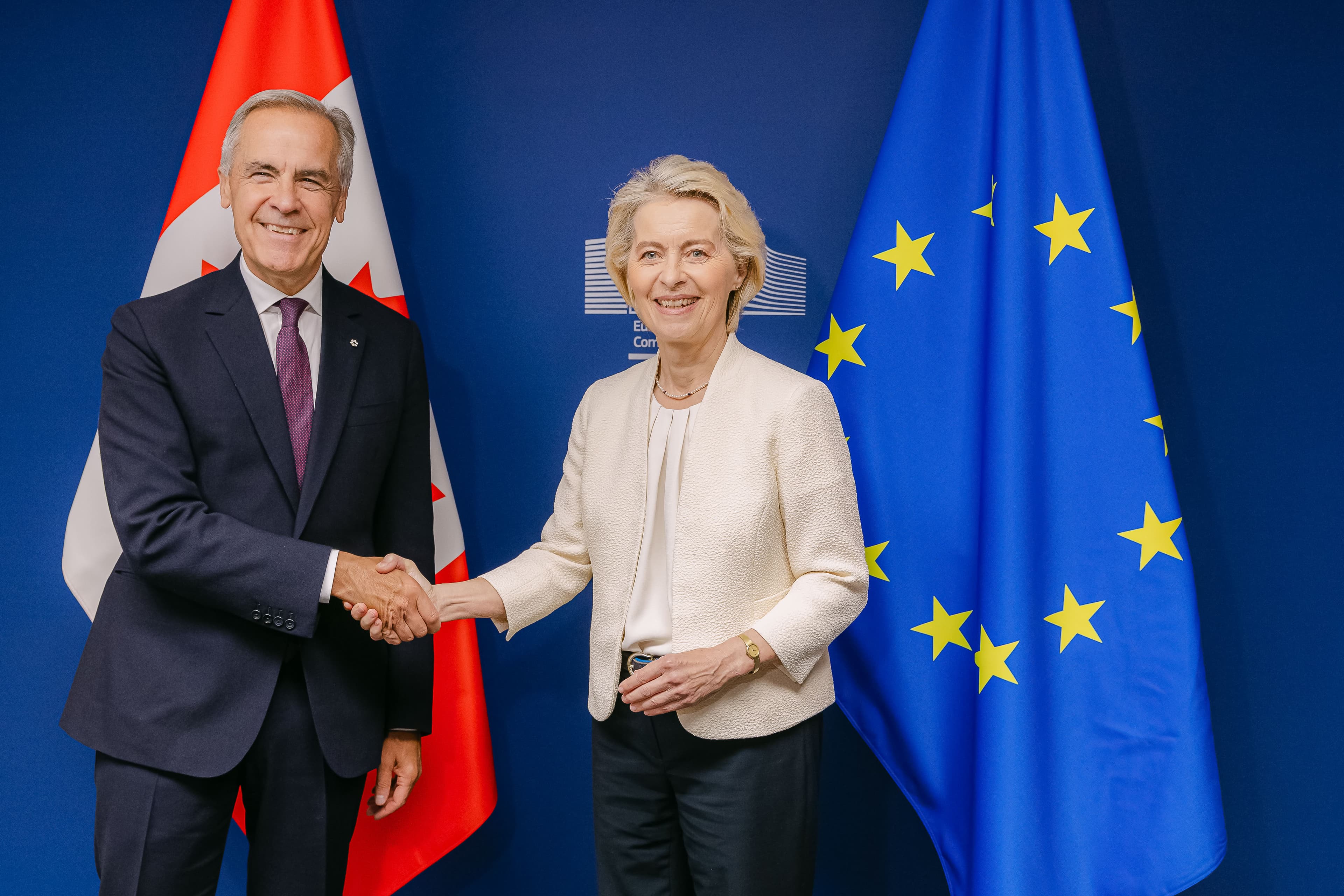
Interviewed on CBC's Power & Politics, former Canadian ambassador and EU special envoy Stéphane Dion described Ursula von der Leyen's associate-membership offer as a "friendly exaggeration": an overstatement because the term is not clear and, in his account, not one Canada or the member-state leaders were ready to endorse, but friendly because it signalled how closely she wants to work with Canada. He said Canada will not transfer federal or provincial sovereignty to Brussels and that the EU cannot extend its advantages without its constraints, and argued the substance should instead be concrete results — trade beyond the current 8 per cent share, investment in critical minerals, and scientific and military cooperation — ahead of the EU–Canada summit at the end of October. Dion's account of what member-state leaders were prepared to endorse is his own.
What this label refers to
This dossier's fixed reference point is the proposition that Canada should become an associate member of the European Union. Dion does not endorse or reject it; he disputes the label itself, calling it an exaggeration that was not clear and not ready to be endorsed, and saying von der Leyen "did not choose the right words." He redirects to what he regards as the real substance, concrete deliverables before the October summit. That is a challenge to the characterisation, matching how Canada's EU ambassador Jonathan Wilkinson (949) is classified for saying Ottawa is not seeking membership. The closest competing label is mixed_or_conditional, which is used here for Poilievre (945) and Piker (953); it loses because Dion states no condition and takes no position for or against the underlying arrangement, only against the word used to describe it.