
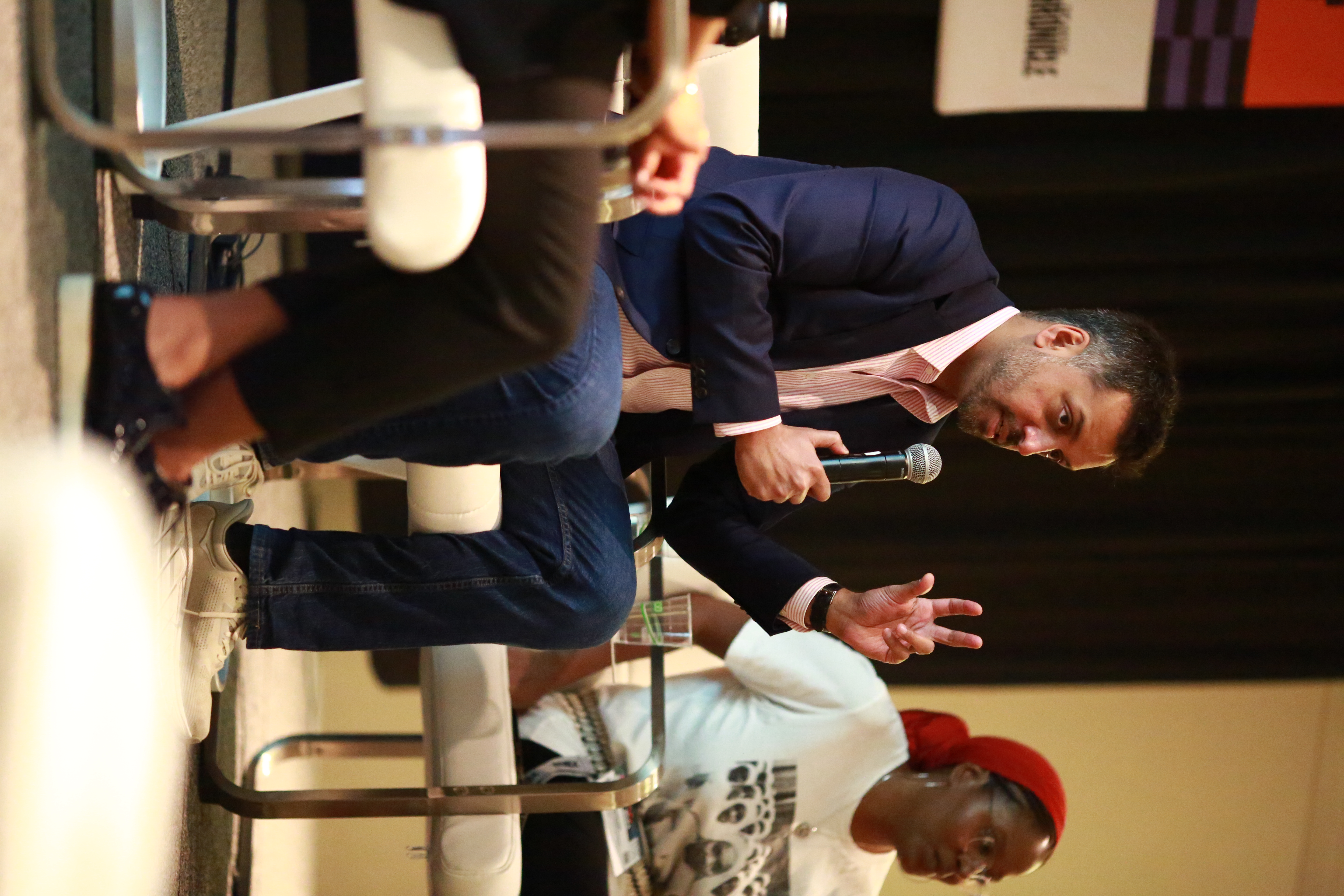
Wajahat Ali

Portrait of Wajahat Ali
Photo by Fuzheado

Writer, political commentator, and host of The Left Hook.

What DI has documented

DI has documented statements by Wajahat Ali on Israel, Media, and Music, among other topics. Read the quotations, original sources and related cases below.

Topics in this coverage

Show all 8 topics

Statements by Wajahat Ali

Portrait of Wajahat Ali

Wajahat Ali

Role at the time: Writer and political commentator, host of The Left Hook, appearing as a panel guest on Piers Morgan Uncensored

Defended or excused

Statement summary

On the September 16 episode of Piers Morgan Uncensored, writer and commentator Wajahat Ali argued that removing Macklemore from Ed Sheeran's tour was a "generational fumble" by Israel, Robert Kraft and pro-Israel figures generally. He compared the reaction to the global turn against South African apartheid in the 1980s, said Israel had "lost the youth" and "lost the culture," attributed that shift to people watching what he called a genocide on their phones over two and a half years, and argued that pressure would amplify rather than suppress Macklemore's message — renaming the Streisand effect the "Sheeran effect." Morgan replied that Israel's popularity had been "consistently plunging" and that a significant majority in America now held a negative opinion of Israel. Ali's characterisations of Israel's conduct, of Kraft's coordination and of public opinion are his own.

“This is a generational fumble by Israel and Robert Kraft and anyone who's pro-Israel. What you're witnessing in real time, Piers, this is fascinating. What you and I are witnessing is what happened in the '80s with the global turn against South African apartheid. Israel has lost the plot. They've lost the youth. They've lost the culture. It's done. No matter how many pro-Israel apologists come on the show, I want you all to know it's over. You've lost the youth. People have become radicalized because they've seen a genocide on their phone for the past two and a half years. And no matter how much, if you will, power you exercise against them to crush them, what's going to happen from here on out now, Piers, is you're going to see more and more people wake up, which is what happened right now. The Streisand effect should be called the Sheeran effect.”
Watch the original video (opens in a new tab)Piers Morgan Uncensored: "Ed Sheeran Is a COWARD" — Macklemore Dropped From Tour Over 'Free Palestine' Speech23:30–26:12: Wajahat Ali's uninterrupted turn; 25:29–26:12: quoted passage on a generational and cultural turn against Israel; 26:14–26:36: Piers Morgan's reply. Episode chapter marker "Israel's declining popularity in America" is set at 26:22, within Morgan's reply.
Why we used this label

Ali affirmatively defends the speech before making the argument quoted here: he rebuts the antisemitism charge by citing the Anti-Defamation League's acceptance of Macklemore's apology for a costume incident twelve years earlier, says the MetLife crowd applauded rather than booed, and says Ed Sheeran should have refused to drop him. He then condemns Robert Kraft's role in the removal. That combination places him with Tucker Carlson (853) and Alexandria Ocasio-Cortez (802), who likewise defend the speech while condemning the removal, rather than with speakers such as Mehdi Hasan (587) who criticise the removal without assessing the merits of the speech. The closest competing label is “Mixed or conditional”; it loses because Ali attaches no condition, concedes nothing to the critics' characterisation, and expresses a single consistent evaluation across the turn.

Portrait of Wajahat Ali

Wajahat Ali

Role at the time: Host of The Left Hook, replying on X

Condemned

Statement summary

Two days after the episode, Wajahat Ali, the host of The Left Hook, wrote on X that using the word "monkey," "regardless of intention or a slip of tongue," is terrible because of its racist history, and said the program had addressed it with the audience.

“I agree that using the word monkey, regardless of intention or a slip of tongue, is terrible due to its racist history. That's why we addressed it with the audience.”
Read the original post (opens in a new tab)Wajahat Ali replies on X about the word used on The Left HookPost 2095937492515983408
Why we used this label

The reference point is whether Jebreal's remarks about Jeffries were racist. In this reply Ali says the word is terrible because of its racist history whatever the speaker's intent, which rejects the language Jebreal used, so we labeled it Condemned. Mixed or conditional loses here: unlike his on-air response of September 2, which weighed her stated intent, this post sets intent aside. Defended or excused loses because his defense of how the show handled the moment is not a defense of the remark. Evidence level: the speaker's own reply on X.

Portrait of Wajahat Ali

Wajahat Ali

Role at the time: Host of The Left Hook

Mixed or conditional

Response to this claim

Jebreal’s use of “monkey” and “errand boy” to describe Jeffries was racist anti-Black language regardless of her stated intent.

“Using monkey to anyone Black, it has terrible racial connotations. But I think you caught yourself and said you didn't mean it with any racial animosity.”
Watch the original video (opens in a new tab)When Will America Finally Quit Israel & AIPAC? | Rula JebrealSegment discussing Hakeem Jeffries; cross-check the complete exchange against the embedded excerpt in the Fox News report.
Why we used this label

The response both challenges the language and gives weight to the speaker’s stated intent, so it is conditional rather than a categorical defense or condemnation.

A participant is a subject of the case. A speaker has a statement documented in it. A commentator has an opinion or editorial documented in it.

Case

Were Rula Jebreal’s remarks about Hakeem Jeffries racist?

Relationship to this case: Commentator

Rula Jebreal called Hakeem Jeffries a "bought and paid by AIPAC monkey" and an "errand boy" while denying racial intent, then apologized. The Congressional Black Caucus called the words racist; Wajahat Ali and Joy-Ann Reid stressed context but criticized the language.

RacismU.S. PoliticsUpdated