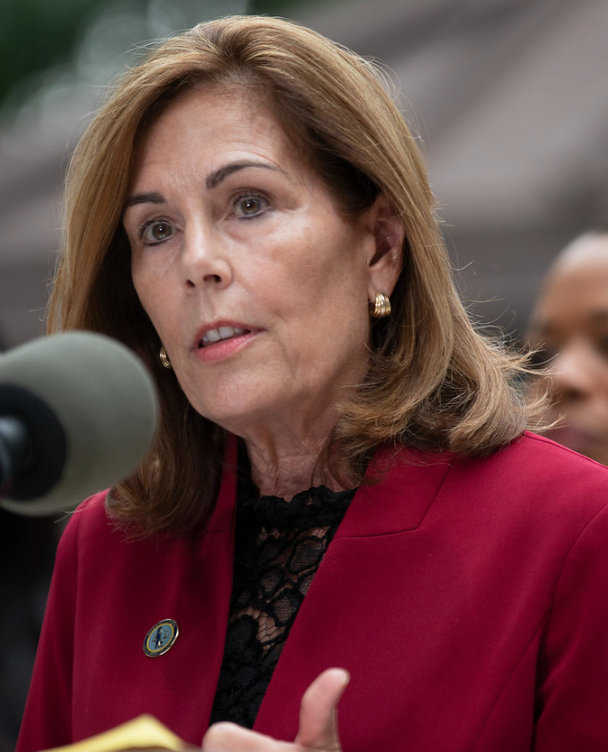
Kathy Jennings is Delaware's attorney general, an office she has held since January 2019. She previously worked as Delaware's state prosecutor and chief deputy attorney general, practiced law with Charles Oberly, and was chief administrative officer of New Castle County. She graduated from the University of Delaware and Villanova University Law School.
We have documented 2 statements by Kathy Jennings, in 2 cases. Each statement below gives the quotation, its original source and a link to the full case.
Case updates
Want the next important update?
Follow "GM says its terms allowed driver-data sharing; consumers dispute consent." and get an email when an important development changes the record.
Important updates only. Free. Confirm your email to start. Unsubscribe anytime. How we handle your email.
Role at the time: Delaware attorney general, speaking in an official release
Condemned
Statement summary
Jennings criticizes deceptive data practices and links the settlement to Delaware's strengthened privacy law. She says the law will help stop sales of sensitive data.
“Today’s settlement ensures that GM won’t deceive consumers about its data practices in the future.”
Delaware Attorney General Kathy Jennings rejected the new tariffs as illegal, economically harmful and costly for families buying necessities. She criticized the administration's repeated attempts to impose them and vowed to fight them at every turn.
“This is bad policy, bad economics, and an insult to the hardworking people of this country”
Relative to the new Section 301 tariffs, Jennings rejects their legality and justification. Her own quotation establishes a position beyond her participation in the lawsuit.
Businesses and 25 states say Trump's 10% and 12.5% Section 301 tariffs on 60 economies are a pretext to revive struck-down global tariffs. The administration says they lawfully answer forced-labor import failures. As of September 30, 2026, no court has ruled.
GM invokes its user terms to defend driver-data sharing. Consumers dispute the scope of consent, while a separate $220 million state settlement sets new requirements without resolving a nationwide private class action.