
Jonathan Turley

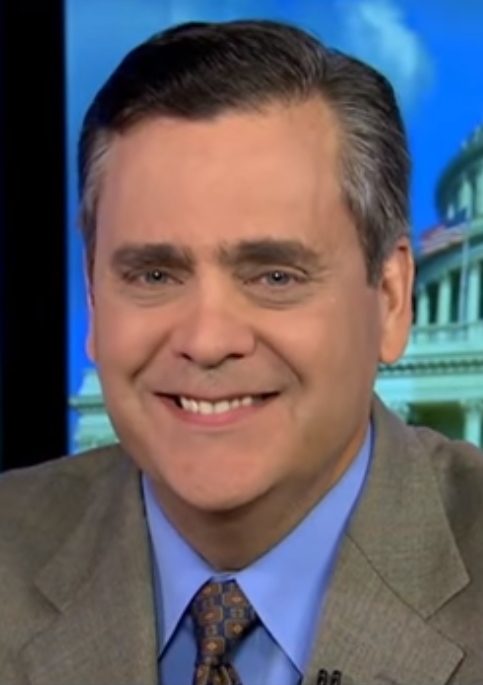
Portrait of Jonathan Turley
MSNBC

Jonathan Turley is a law professor at George Washington University Law School, a columnist and a legal analyst who writes frequently on prosecutorial conduct and constitutional law.

What we have documented

We have documented 5 statements by Jonathan Turley, in 5 cases. Each statement below gives the quotation, its original source and a link to the full case.

Case updates

Want the next important update?

Follow "Columbia's CODA cancels a press-freedom panel after Sundial's Cornell 7 essay; critics object" and get an email when an important development changes the record.

Important updates only. Free. Confirm your email to start. Unsubscribe anytime. How we handle your email.

Statements by Jonathan Turley

Portrait of Jonathan Turley

Jonathan Turley

Role at the time: Law professor writing in his own name

Condemned

Statement summary

Turley criticizes canceling a press-freedom event after publication of contested opinions.

“Universities are supposed to be places where such questions can be discussed openly and freely.”
Open source (opens in a new tab)Turley criticizes cancellation of the Columbia press-freedom panel · Jonathan TurleyOpening discussion of the cancellation and campus debate
Why we used this label

The case concerns cancellation. Turley criticizes that decision and argues that universities should allow discussion of difficult questions.

Portrait of Jonathan Turley

Jonathan Turley

Role at the time: Law professor at George Washington University Law School and Fox News contributor, on his personal X account

Condemned

Statement summary

Fox News contributor and law professor Jonathan Turley wrote in an X thread, reacting to Trump's reaffirmation of his intention to exclude CNN, Politico and MS NOW from the White House, that he has often joined criticism of the outlets' bias but considers barring disfavored media a terrible precedent and practice. He said such a move would be an attack on long-standing free-press principles and, in a second post, that it would raise serious constitutional questions.

“barring disfavored media from the White House is a terrible precedent and practice”
Read the original post (opens in a new tab)Post by Jonathan Turley (@JonathanTurley) on X, September 18, 2026 (first post of a thread) · Jonathan TurleyComplete first post of the thread (2101041961499058481), 4:13 PM EDT (20:13 UTC); clause after 'but' in the third sentence
Why we used this label

Turley, reacting to Trump's reaffirmation of the announcement, writes that "barring disfavored media from the White House is a terrible precedent and practice," and in the same thread that such a move would be an assault on free-press principles and would raise serious constitutional questions, which criticizes the exclusion itself on principle and on legal grounds. The closest competing label is “Mixed or conditional”, because he says he has often joined criticism of the outlets' bias and uses conditional phrasing ("would") for the announced move. That loses because the bias remark concerns coverage, which is outside the conduct under scrutiny, and his evaluation of the exclusion does not depend on its scope or on any unresolved condition.

Portrait of Jonathan Turley

Jonathan Turley

Role at the time: Law professor at George Washington University Law School and legal commentator, writing on his personal site

Condemned

Statement summary

Law professor Jonathan Turley wrote that Judge Diamond had reluctantly concluded Krasner and his assistant may have violated the law, summarised the findings on a pressure campaign against staff who raised concerns and on potential perjury, obstruction, false statements and conspiracy, and argued that Krasner had exhausted the patience of courts and the loyalty of his own staff. He framed the referral as the consequence of Krasner using the office to advance ideology.

“For a man who ran on the slogan "F around and find out," Larry Krasner may soon find out.”
Open source (opens in a new tab)"F— Around and Find Out": Krasner Referred to U.S. Attorney for Criminal Investigation · Jonathan TurleyPost on Jonathan Turley's personal site, September 17, 2026.
Why we used this label

Turley accepts the judge's account and criticises Krasner's conduct and its motive. The closest competing label is “Challenged the characterization”, because much of the post restates the court's findings rather than arguing independently. That loses because Turley adds his own evaluation, that Krasner has exhausted judicial patience and staff loyalty and used the office ideologically, which goes beyond summarising the ruling.

Portrait of Jonathan Turley

Jonathan Turley

Role at the time: Law professor at George Washington University and legal commentator, writing on X

Challenged the characterization

Statement summary

In an X thread, law professor Jonathan Turley wrote that there was “a surprising development regarding long-standing but unproven allegations” against Rep. Ilhan Omar. He wrote that “it is unclear what evidence Mullen gathered to allegedly establish this fact” and that “there is still no indication of a referral to the Justice Department in the case,” while noting that “there would be more than the mere possibility of illegal activity if someone married her brother and falsely filled out marriage or immigration papers.” Turley spells the Secretary’s name “Mullen.”

“There would be more than the mere possibility of illegal activity if someone married her brother and falsely filled out marriage or immigration papers. It is unclear what evidence Mullen gathered to allegedly establish this fact.” … “Again, it is not clear what, if any, new evidence is being referenced by Mullen. However, we have not previously had an official, let alone a cabinet member, make this claim and refer to expected actions. There is still no indication of a referral to the Justice Department in the case so we have to wait to see if Mullen’s statement signals an actual major change in the investigation.”
Read the original post (opens in a new tab)Jonathan Turley’s X thread on Mullin’s claim about Rep. Ilhan Omar (first post) · Jonathan TurleyPost text.
Why we used this label

Turley neither endorses nor condemns the accusation. He calls the allegations “unproven” and says it is “unclear what evidence” supports Mullin’s statement, while noting that the alleged conduct, if it occurred, would go beyond a “mere possibility of illegal activity.” That challenges the presentation of the claim as known fact. The closest competing label is “Mixed or conditional”, because he says the alleged conduct would be significant if it occurred; it loses because he takes no position on whether the accusation or the investigation should be pursued.

Portrait of Jonathan Turley

Jonathan Turley

Role at the time: George Washington University law professor publishing his commentary on defamation law

Mixed or conditional

Statement summary

Turley defends the democratic rationale for giving criticism of government officials breathing space. He questions applying the same actual-malice burden to other public figures and argues that the courts should reconsider that extension.

“What we really need is an airing out – not of the constitutional standard but of its application to non-public officials.”
Open source (opens in a new tab)Palin and Public Figures: Is it Time to Reconsider New York Times v. Sullivan and the Actual Malice Standard?Author introduction and closing discussion of public figures and public officials
Why we used this label

The case concerns retaining the actual-malice rule for public officials and public figures. Turley supports its protection for criticism of officials while questioning the broader application to public figures.

A participant is a subject of the case. A speaker has a statement documented in it. A commentator has an opinion or editorial documented in it.

Topics in this coverage