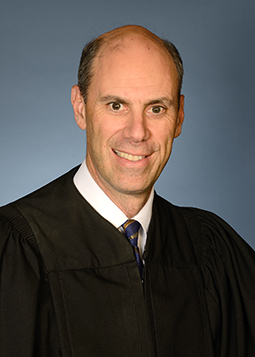
James E. Boasberg is a judge of the U.S. District Court for the District of Columbia, commissioned in March 2011, and has been its chief judge since 2023. He previously was a judge of the Superior Court of the District of Columbia from 2002 to 2011 and an assistant U.S. attorney in the District of Columbia. He served on the Foreign Intelligence Surveillance Court from 2014 to 2021, the last two years as its presiding judge. He graduated from Yale College and Yale Law School and holds a master's degree from the University of Oxford.
We have documented 1 statement by James E. Boasberg, in 1 case. Each statement below gives the quotation, its original source and a link to the full case.
Case updates
Want the next important update?
Follow "Democratic leaders sue to stop federal demands on state voter rolls and ballots; DOJ says its letters to states have no legal effect" and get an email when an important development changes the record.
Important updates only. Free. Confirm your email to start. Unsubscribe anytime. How we handle your email.
Role at the time: Chief judge of the U.S. District Court for the District of Columbia, in the memorandum opinion denying the plaintiffs' motion
Mixed or conditional
Response to this claim
The executive branch has no authority to direct states to remove registered voters from their rolls, to withhold ballots from registered voters, or to set aside or refuse to count the ballots they cast.
“The demand letters issued to the state elections officials may indeed be unlawful. ... Had state officials capitulated in the face of the Administration’s browbeating, this may well have been a different case. At this stage in the litigation, however, Plaintiffs present no evidence demonstrating that any state has acquiesced and removed a voter from the rolls or segregated her ballot based on the Government’s letters.”
Read the original text (opens in a new tab)Memorandum opinion denying the motion for a temporary restraining order and preliminary injunction, DSCC v. Trump, No. 1:26-cv-03674 (D.D.C. Nov. 2, 2026), ECF 34 · United States District Court for the District of ColumbiaDocument 34, pages 1-2 and 24-25
Why we used this label
Boasberg says the letters may be unlawful and calls them browbeating, but he leaves their lawfulness undecided and denies relief because no state has acted on them, so we labeled it Mixed or conditional.
Democratic committees and congressional leaders ask a federal judge to bar the administration from directing states to remove voters, withhold ballots or set ballots aside. DOJ says its letters to states are non-binding and that the plaintiffs lack standing.