
USTR proposes Section 301 tariffs on 14 economies over what it calls structural excess capacity; China and the EU reject the premise
USTR determined that 14 economies' practices relating to structural excess capacity in manufacturing burden U.S. commerce and proposed new tariffs on their goods, open for comment until January 5. China and the European Commission reject the premise.
Case period:
Published by The Dispute Index editorial teamPublished Updated
Where it stands
ActiveAs of
Established
- On November 25, 2026, USTR determined that the practices of 14 economies relating to structural excess capacity in manufacturing are unreasonable and burden or restrict U.S. commerce, and proposed tariffs on each.USTR Makes Determinations and Proposes Actions in 14 Section 301 Investigations Relating to Structural Excess Capacity and Production in Manufacturing Sectors (opens in a new tab)
- The proposed tariffs are not in force. Written comments are due January 5, 2027, and USTR's hearings on the proposals begin January 25, 2027.USTR Makes Determinations and Proposes Actions in 14 Section 301 Investigations Relating to Structural Excess Capacity and Production in Manufacturing Sectors (opens in a new tab)
- For China, USTR proposes up to 20 percent, net of the forced-labor Section 301 tariff, and up to 40 percent on all goods if it finds engagement with China inadequate.Notice of Determination and Request for Comments Concerning Proposed Action in the Section 301 Investigation of Acts, Policies, and Practices of China Relating to Structural Excess Capacity and Production in Manufacturing Sectors (opens in a new tab)
Disputed
- Whether the 14 economies' practices create structural excess capacity that burdens U.S. commerce: USTR says they do, China's Foreign Ministry says the issue does not really exist, and the European Commission rejects that Europe is a source.USTR Makes Determinations and Proposes Actions in 14 Section 301 Investigations Relating to Structural Excess Capacity and Production in Manufacturing Sectors (opens in a new tab)Foreign Ministry Spokesperson Guo Jiakun's Regular Press Conference on November 25, 2026 (opens in a new tab)US proposes new tariffs on 14 major trading partners, the EU included (opens in a new tab)See the claim
Not yet known
- Whether USTR will put the proposed tariffs into effect after the comments and hearings, and at what rates.
- What USTR will determine in its investigations of Mexico and Norway.
Overview
USTR opened the investigations into 16 economies on March 11, 2026. It received more than 1,070 written comments and heard nearly 140 witnesses at public hearings on May 5-8 (USTR notice (opens in a new tab)). Greer told CNBC that the report on Mexico would take a little more time (NBC News (opens in a new tab)).
The administration has relied more on Section 301 since the Supreme Court ruled in February that the emergency powers law Trump had invoked did not authorize his earlier tariffs (Euronews (opens in a new tab)). USTR says China's proposed rate accounts for the 20 percent tariff rate announced under the Kuala Lumpur Joint Arrangement that Trump and Xi Jinping reached on October 30, 2025, and that the EU's accounts for the 2025 framework agreement between the United States and the EU (USTR (opens in a new tab)). Greer said the overall rate for each trading partner would not exceed levels agreed in earlier bilateral framework deals (NBC News (opens in a new tab)).
China's proposed rate is net of the duty from a separate Section 301 action over China's failure to enforce a prohibition on imports made with forced labor (USTR notice (opens in a new tab)).
People in this case
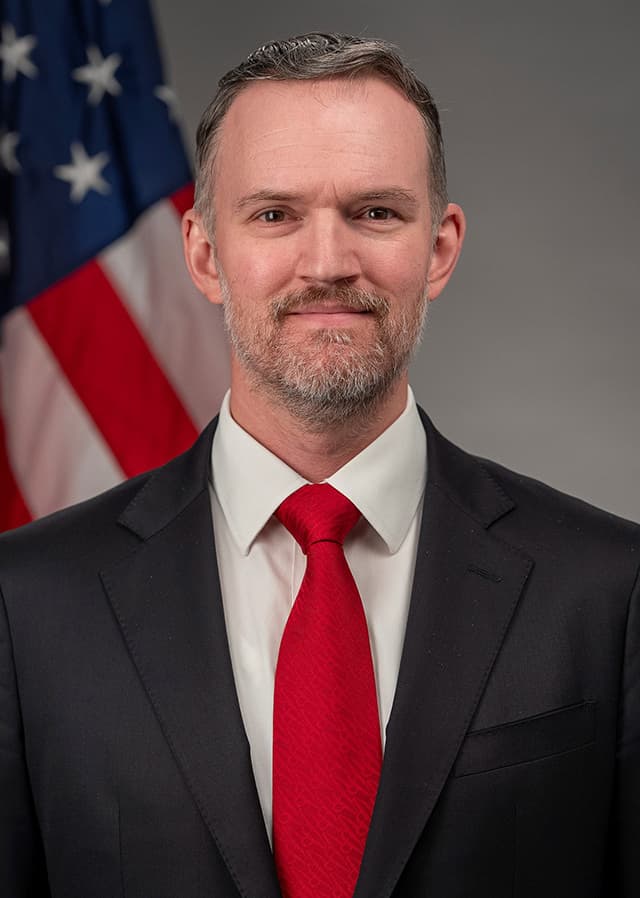 Jamieson GreerDirectly involved
Timeline
3 timeline entries on this page. Dates: March 11, 2026 to November 25, 2026
March 2026
USTR opens Section 301 investigations into structural excess capacity in 16 economies
USTR initiates Section 301 investigations into the acts, policies and practices of 16 economies relating to structural excess capacity and production in manufacturing sectors: China, the European Union, Singapore, Switzerland, Norway, Indonesia, Malaysia, Cambodia, Thailand, South Korea, Vietnam, Taiwan, Bangladesh, Mexico, Japan and India.
May 2026
USTR holds public hearings in the excess capacity investigations
USTR and the Section 301 Committee hold public hearings from May 5 to 8, at which nearly 140 witnesses testify. Interested persons file more than 1,070 written comments covering all 16 economies.
November 2026
USTR finds the practices of 14 economies actionable and proposes tariffs on their goods
Greer determines that the practices of 14 of the 16 economies relating to structural excess capacity are unreasonable and burden or restrict U.S. commerce, and proposes additional tariffs for public comment, ranging from up to 15 percent for Japan, South Korea, Taiwan and Switzerland and 15 percent for the EU to up to 35 percent for Vietnam. For China he proposes up to 20 percent, or up to 40 percent on all goods if USTR finds engagement with China inadequate. USTR makes no determination for Mexico or Norway and sets January 5, 2027 for written comments and January 25 for hearings.
Claims
Claims separate what was said from what is contested. Follow each source for the original wording and context.
What's disputed
Office of the United States Trade Representative
The acts, policies and practices of China, the European Union, Singapore, Switzerland, Indonesia, Malaysia, Cambodia, Thailand, South Korea, Vietnam, Taiwan, Bangladesh, Japan and India relating to structural excess capacity and production in manufacturing sectors are unreasonable and burden or restrict U.S. commerce.
What is disputed
USTR says the practices, which it lists for each economy, reduce commercial opportunities for U.S. producers, contribute to lost production, exports, jobs and investment in U.S. manufacturing and increase U.S. economic security risks. China's Foreign Ministry says the so-called issue of industrial overcapacity does not really exist, and the European Commission rejects the premise that Europe is a source of structural overcapacity. The determinations are USTR's own under Section 301; the proposed tariffs are open for comment.
Sources (3)
- USTR Makes Determinations and Proposes Actions in 14 Section 301 Investigations Relating to Structural Excess Capacity and Production in Manufacturing Sectors · Office of the United States Trade RepresentativeFull press release
- Foreign Ministry Spokesperson Guo Jiakun's Regular Press Conference on November 25, 2026 · Ministry of Foreign Affairs of the People's Republic of ChinaTranscript, answer to Bloomberg's question on U.S. tariffs
- US proposes new tariffs on 14 major trading partners, the EU includedFull article, as updated November 25
Disputed claim
Copy link to this disputed claim by European CommissionEuropean Commission
Europe is not a source of structural overcapacity and is among those most exposed to overcapacity.
What is disputed
USTR's determination lists EU practices, including industrial plans to expand manufacturing, high volumes of export credit, sustained market access barriers and preferential lending through centralized investment banks, as unreasonable acts that burden U.S. commerce. The European Commission says it shares U.S. concerns about overcapacity and regrets the lack of joint action with the United States.
Sources (3)
- US proposes new tariffs on 14 major trading partners, the EU includedFull article, as updated November 25
- Trump proposes a new wave of tariffs on China, E.U. and other trade partners · NBC NewsFull article, as updated November 25
- USTR Makes Determinations and Proposes Actions in 14 Section 301 Investigations Relating to Structural Excess Capacity and Production in Manufacturing Sectors · Office of the United States Trade RepresentativeFull press release
In their own words
Their own account
Statements from the person or group whose act or claim this case is about. They are listed apart from the responses, and each label says what the speaker did with their own act or claim.
 Jamieson GreerU.S. Trade Representative, in a CNBC interview quoted by NBC News
"When it all nets out, it really will just top up a few percentage points ... So what we're proposing today are actually a set of targeted tariffs to respond to this problem of excess capacity"
Checked word for word against a linked source on .
ExplainedResponding to: The acts, policies and practices of China, the European Union, Singapore, Switzerland, Indonesia, Malaysia, Cambodia, Thailand, South Korea, Vietnam, Taiwan, Bangladesh, Japan and India relating to structural excess capacity and production in manufacturing sectors are unreasonable and burden or restrict U.S. commerce.
Full statement and sources
Greer tells CNBC that, when it all nets out, the new tariffs would just top up rates by a few percentage points, and calls them targeted tariffs to respond to the problem of excess capacity.
Before the statement
Greer said the overall rates applied to each trading partner would not surpass levels previously agreed as part of bilateral framework trade deals.
After the statement
Greer reiterated the 15 percent cap on tariffs on EU imports that Trump agreed to as part of a deal reached in 2025.
Trump proposes a new wave of tariffs on China, E.U. and other trade partners · NBC NewsFull article, as updated November 25Why this label?
Greer describes the size and purpose of the tariffs his office proposed.
This label describes the statement's response within the context above.
- Jamieson GreerU.S. Trade Representative, in USTR's press release
"For decades, many of our trading partners have adopted industrial strategies built on targeting manufacturing, wage and labor suppression, financial and other support, non-market economy inputs, and other market distorting practices that tilt the trade balance in their favor while eroding America's manufacturing base ... President Trump is proposing to take action to bring about the elimination of these unfair acts, policies, and practices. In doing so, we can level the playing field for American workers and chart a new, more sustainable course for the world economy."
Checked word for word against a linked source on .
Stood by itResponding to: The acts, policies and practices of China, the European Union, Singapore, Switzerland, Indonesia, Malaysia, Cambodia, Thailand, South Korea, Vietnam, Taiwan, Bangladesh, Japan and India relating to structural excess capacity and production in manufacturing sectors are unreasonable and burden or restrict U.S. commerce.
Full statement and sources
Greer says many trading partners have adopted industrial strategies built on targeting manufacturing, wage and labor suppression, financial and other support, non-market economy inputs and other market distorting practices that tilt the trade balance in their favor while eroding America's manufacturing base, and that by acting to eliminate those practices the United States can level the playing field for American workers.
Before the statement
The release announces that Greer has determined that the practices of 14 economies relating to structural excess capacity and production in manufacturing sectors are unreasonable and burden or restrict U.S. commerce.
After the statement
The release says that, for each of the 14 economies, USTR determined that practices which create, sustain or contribute to structural excess capacity and production are unreasonable and burden or restrict U.S. commerce.
USTR Makes Determinations and Proposes Actions in 14 Section 301 Investigations Relating to Structural Excess Capacity and Production in Manufacturing Sectors · Office of the United States Trade RepresentativeFull press releaseWhy this label?
Greer, whose office made the determinations, defends the proposed tariffs as a response to trading partners' unfair practices.
This label describes the statement's response within the context above.
Response record
Responses
Choose one response filter, or select All responses to see the full record.
2 responses. Newest first.
 European CommissionEuropean Commission deputy chief spokesperson Olof Gill, quoted by EuronewsDirectly involved
"We strongly reject the premise that Europe is a source of structural overcapacity. To the contrary, Europe is among those most exposed to overcapacity."
Checked word for word against a linked source on .
DeniedResponding to: Europe is not a source of structural overcapacity and is among those most exposed to overcapacity.
Full statement and sources
European Commission deputy chief spokesperson Olof Gill says the EU strongly rejects the premise that Europe is a source of structural overcapacity and says Europe is instead among those most exposed to overcapacity.
Before the statement
Gill said the EU takes note of the preliminary finding of the investigation.
After the statement
Gill said the bloc shares the Trump administration's concerns about overcapacity and regrets the lack of joint action with the United States to address the problem.
US proposes new tariffs on 14 major trading partners, the EU includedFull article, as updated November 25Trump proposes a new wave of tariffs on China, E.U. and other trade partners · NBC NewsFull article, as updated November 25Why this label?
The Commission rejects USTR's finding as it applies to Europe, saying Europe is among those most exposed to overcapacity rather than a source of it.
This label describes the statement's response within the context above.
 Ministry of Foreign Affairs of the People's Republic of ChinaForeign Ministry spokesperson Guo Jiakun, at the ministry's regular press conferenceDirectly involved
"Tariff wars and trade wars serve no one's interests. Relevant issues should be resolved through consultation on the basis of equality, mutual respect and mutual benefit. The so-called issue of “industrial overcapacity” does not really exist and should not be used as a pretext for political manipulation."
Checked word for word against a linked source on .
DeniedResponding to: The acts, policies and practices of China, the European Union, Singapore, Switzerland, Indonesia, Malaysia, Cambodia, Thailand, South Korea, Vietnam, Taiwan, Bangladesh, Japan and India relating to structural excess capacity and production in manufacturing sectors are unreasonable and burden or restrict U.S. commerce.
Full statement and sources
Foreign Ministry spokesperson Guo Jiakun says tariff wars and trade wars serve no one's interests, that the issues should be resolved through consultation, and that the so-called issue of industrial overcapacity does not really exist and should not be used as a pretext for political manipulation.
Before the statement
Bloomberg asked for China's comment on possible U.S. tariffs on goods from China and some other countries, which it said would not lead to an overall rate above levels agreed in earlier trade talks.
After the statement
Guo says China and the United States need to jointly deliver on the important common understandings between the two presidents and maintain the steady growth momentum of their economic and trade ties.
Foreign Ministry Spokesperson Guo Jiakun's Regular Press Conference on November 25, 2026 · Ministry of Foreign Affairs of the People's Republic of ChinaTranscript, answer to Bloomberg's question on U.S. tariffsWhy this label?
China's Foreign Ministry says the so-called issue of industrial overcapacity does not really exist and should not be used as a pretext for political manipulation.
This label describes the statement's response within the context above.
Sources
(5)
Official statement
USTR Makes Determinations and Proposes Actions in 14 Section 301 Investigations Relating to Structural Excess Capacity and Production in Manufacturing Sectors
Relevant passage: Full press release
About this source
USTR announces that Trade Representative Jamieson Greer has determined that the acts, policies and practices of 14 economies relating to structural excess capacity and production in manufacturing sectors are unreasonable and burden or restrict U.S. commerce, lists the proposed tariff for each, and sets January 5, 2027 for comments and January 25, 2027 for hearings.
- Author
- Office of the United States Trade Representative
- Published
- Accessed
Reporting
US proposes new tariffs on 14 major trading partners, the EU included
Relevant passage: Full article, as updated November 25
About this source
Euronews reports the proposed tariffs and timetable, the European Commission's response from deputy chief spokesperson Olof Gill, and the China and EU rate options in USTR's draft notices.
- Author
- Doloresz Katanich
- Published
- Accessed
Official statement
Foreign Ministry Spokesperson Guo Jiakun's Regular Press Conference on November 25, 2026
Relevant passage: Transcript, answer to Bloomberg's question on U.S. tariffs
About this source
Asked by Bloomberg about expected U.S. tariffs on goods from China and other countries, spokesperson Guo Jiakun says tariff wars serve no one's interests and that the so-called issue of industrial overcapacity does not really exist and should not be used as a pretext for political manipulation.
- Author
- Ministry of Foreign Affairs of the People's Republic of China
- Published
- Accessed
Reporting
Trump proposes a new wave of tariffs on China, E.U. and other trade partners
Relevant passage: Full article, as updated November 25
About this source
NBC News reports Greer's CNBC remarks that the new duties would top up rates by a few percentage points and would not take effect for a couple of months, China's Commerce Ministry's rejection of the overcapacity premise and the European Commission's response.
- Author
- Steve Kopack
- Published
- Accessed
Original text
Notice of Determination and Request for Comments Concerning Proposed Action in the Section 301 Investigation of Acts, Policies, and Practices of China Relating to Structural Excess Capacity and Production in Manufacturing Sectors
Relevant passage: Pre-publication Federal Register notice, Docket Nos. USTR-2026-0741 and USTR-2026-0278, Section V (Proposed Actions)
About this source
USTR's notice for China proposes tariffs of up to 20 percent, net of the separate forced-labor Section 301 tariff, and, if USTR finds that engagement with China inadequately addresses its concerns, up to 40 percent on all goods of China. It also records over 1,070 written comments and public hearings on May 5-8, 2026.
- Author
- Office of the United States Trade Representative
- Published
- Accessed
Share or embed this case
The embed keeps its attribution link to The Dispute Index. Credit the image to The Dispute Index and link to the case page.
Cite this record
- Publisher
- The Dispute Index
- Title
- USTR proposes Section 301 tariffs on 14 economies over what it calls structural excess capacity; China and the EU reject the premise
- First published
- Last updated
- Permalink
- https://disputeindex.com/cases/ustr-proposes-section-301-tariffs-on-14-economies-over-what-it-calls-structural-excess-capacity-china-and-the-eu-reject-the-premise
The Dispute Index. "USTR proposes Section 301 tariffs on 14 economies over what it calls structural excess capacity; China and the EU reject the premise". First published: 2026-11-26. Last updated: 2026-11-26. https://disputeindex.com/cases/ustr-proposes-section-301-tariffs-on-14-economies-over-what-it-calls-structural-excess-capacity-china-and-the-eu-reject-the-premise