
Judge dismisses challenge to San Jose police's warrantless queries of Flock camera data
A Santa Clara County judge dismissed a lawsuit by SIREN and CAIR California seeking to require a warrant before San Jose police query the city's stored Flock plate data. He found no reasonable expectation of privacy. EFF says it will appeal.
Case period:
Published by The Dispute Index editorial teamPublished Updated
Overview
On October 2, 2026, Santa Clara County Superior Court Judge Jeffrey El-Hajj dismissed a lawsuit by SIREN and CAIR California that sought to require San Jose police to get a warrant before querying the city's stored license plate reader data. The plaintiffs, represented by the Electronic Frontier Foundation and the ACLU of Northern California, argued that the warrantless searches violate the California Constitution's protections against unreasonable searches and its right to privacy. The city argued that images of vehicles taken on public streets carry no protected privacy interest. Applying a 2024 state appeals court decision on San Diego streetlight cameras, the judge found no reasonable expectation of privacy in the plate data or in later queries of it, and he denied leave to amend. EFF says it will appeal.
Read the full background
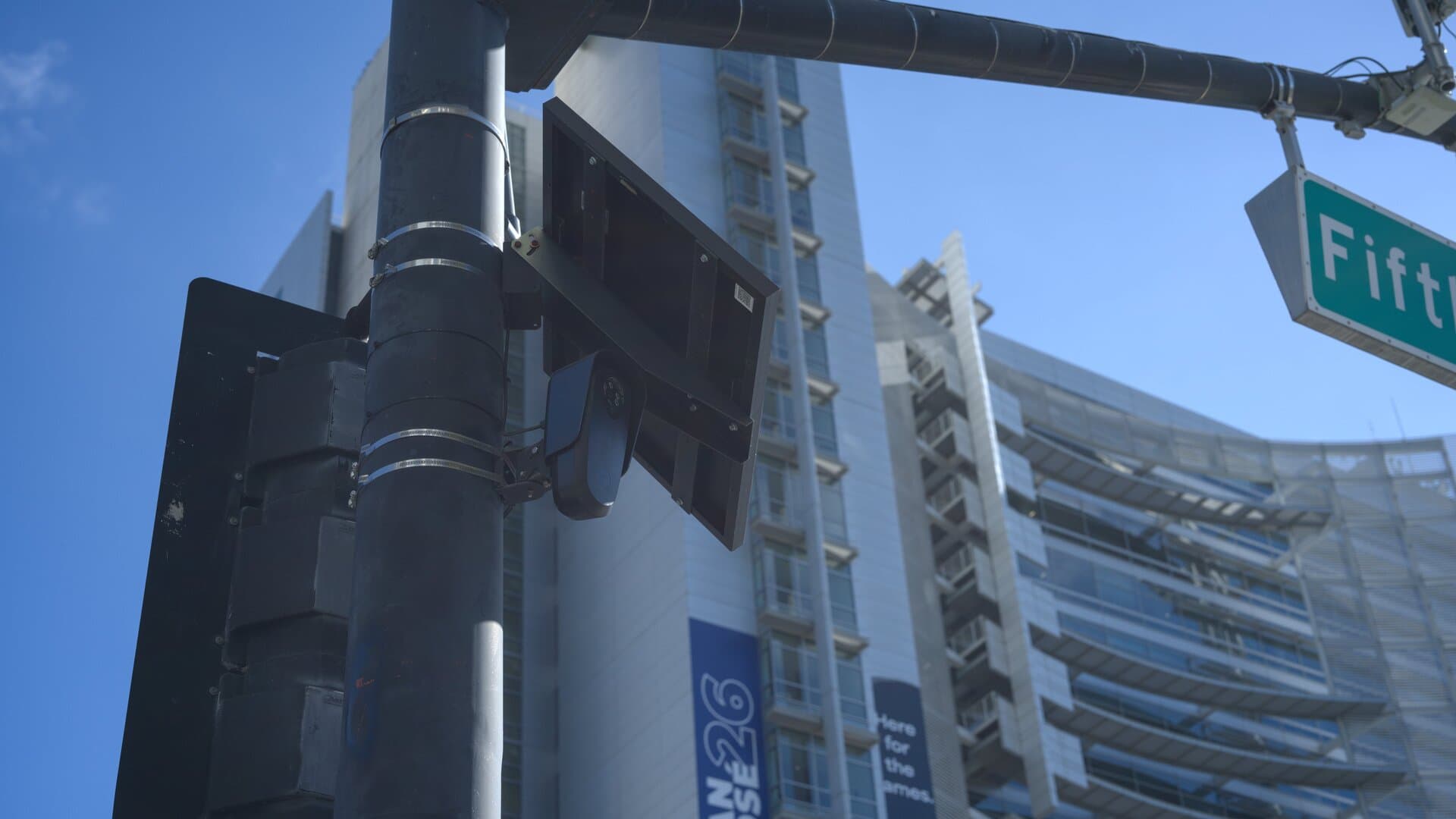
San Jose's police department runs a network of 474 Flock Safety license plate reader cameras, according to the city's court brief (opens in a new tab) and KQED (opens in a new tab). The cameras photograph passing vehicles and add each plate and vehicle image to a searchable database. San Jose officers can search that history, and so can officers from other California agencies that San Jose gives access. The plaintiffs' complaint (opens in a new tab) cites city audit records showing 261,711 searches by San Jose police between June 5, 2024 and June 17, 2025, when the city kept the data for a year.
In November 2025, the Electronic Frontier Foundation and the ACLU of Northern California sued the city, Mayor Matt Mahan and Police Chief Paul Joseph on behalf of SIREN, an immigrant services nonprofit, and CAIR California. The complaint does not challenge the real-time matching of plates against hotlists, the plaintiffs' lawyers told KQED (opens in a new tab). It targets later searches of the stored data without a warrant, which it says violate the California Constitution's ban on unreasonable searches and its right to privacy, and it asks the court to require a warrant first.
The city asked the court to dismiss the case in January 2026. Its brief (opens in a new tab) argues that cameras on public streets record only license plates and vehicle exteriors that anyone can see, so drivers have no protected privacy interest in the images. On March 10, 2026, the City Council voted unanimously to cut the default retention period from one year to 30 days, bar cameras near reproductive health facilities and places of worship, and add documentation and authentication requirements for agencies requesting data (KQED (opens in a new tab)). The plaintiff groups said in a joint statement (opens in a new tab) that the changes left warrantless searches in place.
Judge Jeffrey El-Hajj issued a tentative ruling for the city before an August 6, 2026 hearing (KTVU (opens in a new tab)) and then ordered more briefing. His October 2 order (opens in a new tab) says he is bound by People v. Cartwright, a 2024 California Court of Appeal decision holding that police review of San Diego streetlight camera footage of a man on a public street did not require a warrant. He acknowledged that San Jose's system is broader than the cameras in Cartwright but found the difference too small to set that decision aside. He also wrote that fixed plate cameras are less invasive than the cell phone location records in Carpenter v. United States or the Baltimore aerial surveillance program at issue in Leaders of a Beautiful Struggle, and he cited federal trial court decisions that reached similar results. He dismissed all three claims without leave to amend.
City Attorney Susana Alcala Wood said the ruling showed the city's system meets constitutional standards (The Mercury News, via Officer.com (opens in a new tab)). The Electronic Frontier Foundation said on October 13 that it will appeal (opens in a new tab). The ruling came a day after a federal judge in Oklahoma held in United States v. Kyle that a deputy's warrantless Flock query was a Fourth Amendment search, a decision covered in a separate DI case. The two rulings reached opposite results under different constitutions.
San Jose also faces a separate federal lawsuit, filed in April 2026 by three residents represented by the Institute for Justice, which argues that the camera network violates the Fourth Amendment (KQED (opens in a new tab)). In September 2026, city officials disclosed that a police officer had been fired for using the network to help a relative track a woman who had accused the relative of domestic violence (KQED (opens in a new tab)).
People in this case
 Matt MahanDirectly involved
Timeline
5 timeline entries on this page. Dates: November 18, 2025 to October 2, 2026
November 2025
SIREN and CAIR California sue San Jose, seeking a warrant requirement for police searches of stored plate reader data
Claim
Represented by the Electronic Frontier Foundation and the ACLU of Northern California, SIREN and CAIR California filed a verified complaint in Santa Clara County Superior Court against the City of San Jose, Mayor Matt Mahan and Police Chief Paul Joseph. It alleges that police searches of the city's stored license plate reader data without a warrant violate article I, sections 1 and 13 of the California Constitution, adds a taxpayer claim, and asks the court to require a warrant before San Jose police or other agencies search the data. The city then kept the data for one year.
[01]Electronic Frontier Foundation
Source excerpt
San Jose’s warrantless ALPR database searches violate the California Constitution, which guarantees the people’s right to be free from unreasonable searches and seizures as well as the people’s inalienable right to privacy.
The complaint SIREN and CAIR California filed in Santa Clara County Superior Court against the City of San Jose, Police Chief Paul Joseph and Mayor Matt Mahan. It alleges that police searches of the city's stored license plate reader data without a warrant violate article I, sections 1 and 13 of the California Constitution, brings a taxpayer claim, and asks the court to require a warrant before such searches. It cites city audit records of 261,711 police searches between June 5, 2024 and June 17, 2025. This copy is posted on the Electronic Frontier Foundation's case page.
Verified Complaint for Injunctive and Declaratory Relief, SIREN and CAIR California v. City of San Jose (filed November 18, 2025) · Electronic Frontier FoundationIntroduction, paragraphs 1 to 5; causes of action at paragraphs 66 to 84[02]Civil Liberties Groups Sue San Jose Over License Plate Reader Use (KQED)
Source excerpt
we can’t let fear of new tools get in the way of the safety of our families
KQED's report on the day the lawsuit was filed. It summarizes the complaint, quotes ACLU of Northern California staff attorney Nick Hidalgo and CAIR's Zahra Billoo, says the city attorney's office did not respond and the police department declined to comment, and quotes a statement from Mayor Matt Mahan defending the system.
Civil Liberties Groups Sue San Jose Over License Plate Reader Use (KQED)Full article; Mahan statement in the paragraphs after the city attorney's office declined to comment[03]CAIR California
Source excerpt
The California Constitution promises real privacy protections, and this lawsuit is about making sure those promises still mean something for everyone who drives through San Jose.
CAIR California's press release announcing that it joined the lawsuit as a plaintiff. It quotes Zahra Billoo, executive director of CAIR's San Francisco Bay Area office, and Jeffrey Wang, the office's civil rights managing attorney, and summarizes the relief the complaint seeks.
CAIR-CA Joins Lawsuit Challenging San Jose's Warrantless License Plate Surveillance · CAIR CaliforniaStatement by Zahra Billoo in the fifth paragraph
January 2026
San Jose asks the court to dismiss the suit, arguing that plate images from public streets carry no privacy interest
Claim
The San Jose City Attorney's office filed a demurrer asking the court to dismiss all three claims. Its brief argues that the cameras record only images of license plates and vehicle exteriors on public streets, so the plaintiffs cannot show a legally protected privacy interest or a reasonable expectation of privacy, and that the taxpayer claim fails without an underlying violation of law.
[04]City of San Jose
Source excerpt
However, because the ALPR system collects only images of vehicles from public streets, there is no privacy interest in the information collected.
The city's brief asking the court to dismiss the complaint, filed January 16, 2026 over the names of City Attorney Susana Alcala Wood and three other lawyers in her office. It argues that photographs of license plates and vehicle exteriors taken on public streets carry no legally protected privacy interest or reasonable expectation of privacy, and that the taxpayer claim fails without an underlying violation. This copy is posted on the Electronic Frontier Foundation's case page.
Memorandum of Points and Authorities in Support of Defendants' Demurrer to Complaint, City of San Jose (January 16, 2026) · City of San JoseSection I, Introduction, page 1; Section III.B, pages 3 to 5
March 2026
San Jose's City Council cuts plate data retention from one year to 30 days and adds other limits
The council voted unanimously to reduce the default retention period for data from the city's 474 Flock cameras from one year to 30 days, prohibit cameras near reproductive health care facilities and places of worship, and add documentation and authentication requirements for agencies requesting data. Two days later, CAIR's San Francisco Bay Area office and SIREN said the changes left warrantless searches of the data in place.
[05]San Jose Is the Latest Bay Area City to Restrict Flock License Plate Cameras (KQED)
Source excerpt
The city’s changes reduce the default data retention period from one year to 30 days
KQED's report on the San Jose City Council's unanimous March 10, 2026 vote to tighten rules for its 474 Flock cameras, including a 30-day default retention period, limits on camera placement near reproductive health care facilities and places of worship, and new requirements for agencies requesting data. It quotes Police Chief Paul Joseph, Mayor Matt Mahan and critics, including a SIREN organizer.
[06]CAIR California
Source excerpt
If police want to sift through that kind of deeply revealing data, they should have to go to a judge first.
A joint statement from CAIR's San Francisco Bay Area office and SIREN responding to the City Council's March 10, 2026 vote. It describes the new limits, including the cut in retention from one year to 30 days, and says the changes do not end warrantless searches, which it calls the core issue in the plaintiffs' lawsuit.
CAIR-SFBA, SIREN Acknowledge San Jose ALPR Limits, Say Warrantless Searches Must End · CAIR CaliforniaFirst and second paragraphs; statements by Jeffrey Wang and Kimberly Woo
August 2026
Judge El-Hajj hears the city's demurrer after issuing a tentative ruling for the city
Before the hearing, the judge issued a tentative ruling siding with the city, KTVU reported. EFF attorney Saira Hussain told KTVU that plate reader networks are closer to cell phone location tracking, geofence warrants and aerial surveillance than to simple surveillance cameras. After the hearing, the court ordered both sides to file supplemental briefs.
[07]Judge issues tentative ruling in San Jose ALPR suit (KTVU)
Source excerpt
The judge's tentative ruling aligned with the city's position.
KTVU's report, published the morning of the August 6, 2026 hearing, that the judge had issued a tentative ruling siding with the city. It summarizes the city's argument that its cameras should be treated as standard surveillance cameras and quotes EFF attorney Saira Hussain disagreeing.
[08]Superior Court of California, County of Santa Clara
Source excerpt
The court concludes that Plaintiffs failed to demonstrate a reasonable expectation of privacy in the capturing of license plate data or in later queries of a database of that license plate data.
The court's 10-page order, filed October 2, 2026, sustaining the demurrer of the City of San Jose, Mayor Matt Mahan and Police Chief Paul Joseph without leave to amend. It applies People v. Cartwright (2024), a state appeals court decision on San Diego streetlight cameras, and holds that the complaint shows no reasonable expectation of privacy in license plate data from cameras aimed at public streets. The court also denied the city's request for judicial notice. This copy is posted on the case page of the Electronic Frontier Foundation, which represents the plaintiffs.
Order After Hearing on Demurrer, Services, Immigrant Rights & Education Network v. Joseph, Santa Clara County Superior Court No. 25CV480254 · Superior Court of California, County of Santa ClaraPages 7 and 8, Discussion of the first and second causes of action; conclusion on page 9
October 2026
Judge El-Hajj dismisses the lawsuit without leave to amend
Source release
In an order filed October 2, 2026, the court sustained the city's demurrer to all three claims without leave to amend. Applying People v. Cartwright (2024), a state appeals court decision on San Diego streetlight cameras, it held that the plaintiffs showed no reasonable expectation of privacy in license plate data from cameras aimed at public streets or in later queries of a database of that data.
[08]Superior Court of California, County of Santa Clara
Source excerpt
The court concludes that Plaintiffs failed to demonstrate a reasonable expectation of privacy in the capturing of license plate data or in later queries of a database of that license plate data.
The court's 10-page order, filed October 2, 2026, sustaining the demurrer of the City of San Jose, Mayor Matt Mahan and Police Chief Paul Joseph without leave to amend. It applies People v. Cartwright (2024), a state appeals court decision on San Diego streetlight cameras, and holds that the complaint shows no reasonable expectation of privacy in license plate data from cameras aimed at public streets. The court also denied the city's request for judicial notice. This copy is posted on the case page of the Electronic Frontier Foundation, which represents the plaintiffs.
Order After Hearing on Demurrer, Services, Immigrant Rights & Education Network v. Joseph, Santa Clara County Superior Court No. 25CV480254 · Superior Court of California, County of Santa ClaraPages 7 and 8, Discussion of the first and second causes of action; conclusion on page 9[09]South Bay Judge Rules San Jose's Flock Cameras Don't Invade Privacy (KQED)
Source excerpt
Short of that, they could get a warrant, they could go before a court and present probable cause to run these searches, which is what we’re seeking in this lawsuit
KQED's report on the October 2 ruling. It quotes an emailed statement from City Attorney Susana Alcala Wood and an interview with Andrew Crocker of the Electronic Frontier Foundation given on October 5, and it describes the city's 2026 limits on the cameras and the separate federal lawsuit against the city.
South Bay Judge Rules San Jose's Flock Cameras Don't Invade Privacy (KQED)Full article; Alcala Wood statement in the fourth paragraph; Andrew Crocker interview quotes in the middle and later paragraphs[10]Judge hands San Jose win in license plate reader case (San Jose Spotlight)
Source excerpt
These cameras have been used to target immigrants already, but the reality is that we all will be subject to their far-reaching impact
San Jose Spotlight's report on the ruling, later distributed by The Associated Press. It quotes City Attorney Susana Alcala Wood, Andrew Crocker of the Electronic Frontier Foundation and Huy Tran, executive director of SIREN, and notes the city's March 2026 cut in data retention from one year to 30 days.
Judge hands San Jose win in license plate reader case (San Jose Spotlight)Full article; quotes from Susana Alcala Wood, Andrew Crocker and SIREN executive director Huy Tran
Claims
Claims separate what was said from what is contested. Follow each source for the original wording and context.
What's disputed
Disputed claim
Services, Immigrant Rights and Education Network
San Jose police searches of the city's stored license plate reader data without a warrant violate the California Constitution's protection against unreasonable searches and seizures (article I, section 13) and its right to privacy (article I, section 1).
Sources (2)
- Verified Complaint for Injunctive and Declaratory Relief, SIREN and CAIR California v. City of San Jose (filed November 18, 2025) · Electronic Frontier FoundationIntroduction, paragraphs 1 to 5; causes of action at paragraphs 66 to 84
- CAIR-CA Joins Lawsuit Challenging San Jose's Warrantless License Plate Surveillance · CAIR CaliforniaStatement by Zahra Billoo in the fifth paragraph
Disputed claim
City of San Jose
Because San Jose's license plate reader cameras capture only images of vehicles on public streets, drivers have no legally protected privacy interest and no reasonable expectation of privacy in the information the system collects.
Sources (1)
- Memorandum of Points and Authorities in Support of Defendants' Demurrer to Complaint, City of San Jose (January 16, 2026) · City of San JoseSection I, Introduction, page 1; Section III.B, pages 3 to 5
Response record
Responses
Choose one response filter, or select All responses to see the full record.
5 matching responses. Newest first.
 Electronic Frontier FoundationElectronic Frontier Foundation, co-counsel for the plaintiffs, in a post on its website by Devanshi Nishar and Andrew CrockerDirectly involved
Before this statement
The Santa Clara County Superior Court dismissed the case on October 2, 2026, a day after a federal judge in Oklahoma held in United States v. Kyle that a deputy's warrantless Flock query violated the Fourth Amendment.
"Make no mistake: We believe this ruling is wrong on the law, and we will appeal. ... Networked ALPRs are not individual streetlight cameras. Their net effect of tracking and mapping cars as they travel reveals patterns of life, intimate relationships, and much more."
CondemnedResponding to: San Jose police searches of the city's stored license plate reader data without a warrant violate the California Constitution's protection against unreasonable searches and seizures (article I, section 13) and its right to privacy (article I, section 1).
Full statement and sources
In an October 13, 2026 post, the Electronic Frontier Foundation said the dismissal is wrong on the law and that it will appeal. It said the court relied on one California appeals court case about individual streetlight cameras, and argued that networked plate readers differ because tracking cars as they travel reveals patterns of life and intimate relationships.
After the statement
The post contrasts the San Jose ruling with the Oklahoma decision and quotes that court's passage contrasting a casual sighting of someone's car with a 30-day log of its movements. It says EFF will keep challenging plate reader systems in court and at the state and local level.
As Federal Court Rules ALPRs are Mass Surveillance, EFF Gets Disappointing Ruling · Electronic Frontier FoundationSecond and third paragraphsWhy this label?
The reference point is the San Jose Police Department's practice of querying the city's stored license plate reader data without a warrant. EFF argues that warrantless searches of the plate database violate the California Constitution and calls the ruling that rejected that claim wrong, so we used Condemned. The closest competing label is Challenged characterization, because the post disputes the court's comparison of the network to streetlight cameras; it loses because the post also rejects the practice itself and announces an appeal.
This label describes the statement's response within the context above.
Services, Immigrant Rights and Education NetworkPlaintiff in the lawsuit; executive director Huy Tran, quoted by San Jose SpotlightDirectly involved Before this statement
The court dismissed the lawsuit on October 2, 2026. In March 2026, SIREN and CAIR's Bay Area office had said that the city's new camera limits did not end warrantless searches.
"These cameras have been used to target immigrants already, but the reality is that we all will be subject to their far-reaching impact"
CondemnedCase context: Judge dismisses challenge to San Jose police's warrantless queries of Flock camera data
Full statement and sources
After the ruling, Huy Tran, executive director of SIREN, one of the two plaintiff groups, told San Jose Spotlight that the cameras have already been used to target immigrants and that everyone will be subject to their far-reaching impact.
After the statement
Police Chief Paul Joseph told the City Council in March 2026 that the department has never shared plate data with federal immigration authorities, which would be illegal under California law, according to KQED. EFF, which represents SIREN, said on October 13 that the plaintiffs will appeal.
Judge hands San Jose win in license plate reader case (San Jose Spotlight)Full article; quotes from Susana Alcala Wood, Andrew Crocker and SIREN executive director Huy TranWhy this label?
The reference point is the San Jose Police Department's practice of querying the city's stored license plate reader data without a warrant. Tran, speaking for a plaintiff group after the dismissal, says the cameras have been used to target immigrants and that their impact will reach everyone, which criticizes the camera system whose stored data the queries draw on, so we used Condemned. The closest competing label is Mixed or conditional; it loses because the statement contains no qualification. He does not mention warrants, so this entry records his group's objection to the system rather than a legal argument.
This label describes the statement's response within the context above.
Superior Court of California, County of Santa ClaraOrder After Hearing on Demurrer by Judge Jeffrey B. El-Hajj, Superior Court of California, County of Santa Clara (No. 25CV480254)Directly involved Before this statement
SIREN and CAIR California sued in November 2025, and the city demurred in January 2026, arguing that images of vehicles on public streets carry no protected privacy interest. The court heard the demurrer on August 6, 2026 and then ordered both sides to file supplemental briefs.
"Applying that authority, Plaintiffs’ first and second causes of action do not state sufficient facts because there is no reasonable expectation of privacy in license plate data collected from cameras directed solely at public streets. ... The court concludes that Plaintiffs failed to demonstrate a reasonable expectation of privacy in the capturing of license plate data or in later queries of a database of that license plate data."
Defended or excusedResponding to: San Jose police searches of the city's stored license plate reader data without a warrant violate the California Constitution's protection against unreasonable searches and seizures (article I, section 13) and its right to privacy (article I, section 1).
Full statement and sources
In an order filed October 2, 2026, Judge Jeffrey El-Hajj sustained the city's demurrer to all three claims without leave to amend. Holding that he is bound by People v. Cartwright (2024), he found that the complaint showed no reasonable expectation of privacy in license plate data captured by cameras aimed at public streets, or in later queries of a database of that data. The two state constitutional claims failed on that ground, and the taxpayer claim failed with them.
After the statement
The order acknowledges that San Jose's system is broader in scope than the San Diego cameras in Cartwright but says the case is not different enough to set that precedent aside, and that the court must follow Cartwright unless another appellate court publishes a different position. It also denies the city's request for judicial notice. On October 13, 2026, the Electronic Frontier Foundation said the plaintiffs will appeal.
Order After Hearing on Demurrer, Services, Immigrant Rights & Education Network v. Joseph, Santa Clara County Superior Court No. 25CV480254 · Superior Court of California, County of Santa ClaraPages 7 and 8, Discussion of the first and second causes of action; conclusion on page 9Why this label?
The reference point is the San Jose Police Department's practice of querying the city's stored license plate reader data without a warrant. The order holds that the complaint shows no reasonable expectation of privacy in the plate data or in later queries of it, which treats the practice as lawful under the state constitution, so we used Defended or excused. This entry records the ruling the case is about and adds no independent support for either side. The closest competing label is Mixed or conditional, because the order says San Jose's system is broader than the cameras in Cartwright and that a different published appellate decision could change the result; it loses because neither point qualifies the holding, which dismisses every claim without leave to amend.
This label describes the statement's response within the context above.
CAIR CaliforniaPlaintiff in the lawsuit, in a press release quoting Zahra Billoo, executive director of CAIR's San Francisco Bay Area officeDirectly involved Before this statement
The Electronic Frontier Foundation and the ACLU of Northern California filed the complaint in Santa Clara County Superior Court on November 18, 2025, on behalf of CAIR California and SIREN.
"For Muslim, immigrant, and other marginalized communities that already live with profiling, the idea that police can map your trips to the mosque, your lawyer, or your doctor—without a warrant—is chilling. The California Constitution promises real privacy protections, and this lawsuit is about making sure those promises still mean something for everyone who drives through San Jose."
CondemnedResponding to: San Jose police searches of the city's stored license plate reader data without a warrant violate the California Constitution's protection against unreasonable searches and seizures (article I, section 13) and its right to privacy (article I, section 1).
Full statement and sources
Announcing that it had joined the lawsuit as a plaintiff, CAIR California issued a statement from Zahra Billoo, executive director of CAIR's San Francisco Bay Area office. It says the idea that police can map people's trips to a mosque, a lawyer or a doctor without a warrant is chilling for Muslim, immigrant and other marginalized communities, and that the suit seeks to make the California Constitution's privacy protections mean something for everyone who drives through San Jose.
After the statement
The same release quotes Jeffrey Wang, civil rights managing attorney for the Bay Area office, saying the plaintiffs do not challenge targeted police tools but object to location tracking with no judicial oversight. KQED quoted the same passage from an email Billoo sent that day.
CAIR-CA Joins Lawsuit Challenging San Jose's Warrantless License Plate Surveillance · CAIR CaliforniaStatement by Zahra Billoo in the fifth paragraphCivil Liberties Groups Sue San Jose Over License Plate Reader Use (KQED)Full article; Mahan statement in the paragraphs after the city attorney's office declined to commentWhy this label?
The reference point is the San Jose Police Department's practice of querying the city's stored license plate reader data without a warrant. The statement calls warrantless police mapping of drivers' trips chilling and says the lawsuit seeks to enforce the state constitution's privacy protections, which criticizes the practice, so we used Condemned. The closest competing label is Challenged characterization; it loses because the statement does not dispute a description but objects to the searches themselves.
This label describes the statement's response within the context above.
 Matt MahanMayor of San Jose and a named defendant in his official capacity, in a statement to KQEDDirectly involved
Before this statement
SIREN and CAIR California filed the lawsuit on November 18, 2025. KQED reported that the city attorney's office did not respond to a request for comment and that the police department declined to comment because of the litigation.
"built in robust data privacy and security measures throughout our ALPR system, including regular deletion of collected data that is not being actively used in an investigation ... While we take seriously our responsibility for data privacy and security, we can’t let fear of new tools get in the way of the safety of our families, especially given that this system is a big part of the reason we’ve solved 100% of homicides over the past three years"
Defended or excusedCase context: Judge dismisses challenge to San Jose police's warrantless queries of Flock camera data
Full statement and sources
In a statement to KQED on the day the lawsuit was filed, Mayor Matt Mahan said the city has built data privacy and security measures into its plate reader system, including regular deletion of data not used in an investigation. He said fear of new tools should not get in the way of public safety and said the system is a big part of the reason the city has solved 100 percent of homicides over the past three years.
After the statement
At the time, San Jose kept plate data for one year. On March 10, 2026, the City Council voted unanimously to cut default retention to 30 days and add other limits, and Mahan defended the city's approach during the debate, according to KQED.
Civil Liberties Groups Sue San Jose Over License Plate Reader Use (KQED)Full article; Mahan statement in the paragraphs after the city attorney's office declined to commentWhy this label?
The reference point is the San Jose Police Department's practice of querying the city's stored license plate reader data without a warrant. Mahan, a named defendant, says the system has strong privacy safeguards and that fear of new tools should not get in the way of safety, which defends the city's use of the system the lawsuit challenged, so we used Defended or excused. The closest competing label is Mixed or conditional, because he says the city takes its privacy responsibility seriously; it loses because that point supports his defense of the system rather than limiting it. He does not address the warrant question by name.
This label describes the statement's response within the context above.
Sources
(12)
Original text
Order After Hearing on Demurrer, Services, Immigrant Rights & Education Network v. Joseph, Santa Clara County Superior Court No. 25CV480254
Relevant passage: Pages 7 and 8, Discussion of the first and second causes of action; conclusion on page 9
Excerpt
"The court concludes that Plaintiffs failed to demonstrate a reasonable expectation of privacy in the capturing of license plate data or in later queries of a database of that license plate data."
About this source
The court's 10-page order, filed October 2, 2026, sustaining the demurrer of the City of San Jose, Mayor Matt Mahan and Police Chief Paul Joseph without leave to amend. It applies People v. Cartwright (2024), a state appeals court decision on San Diego streetlight cameras, and holds that the complaint shows no reasonable expectation of privacy in license plate data from cameras aimed at public streets. The court also denied the city's request for judicial notice. This copy is posted on the case page of the Electronic Frontier Foundation, which represents the plaintiffs.
- Author
- Judge Jeffrey B. El-Hajj, Superior Court of California, County of Santa Clara
- Published
- Accessed
Official statement
CAIR-SFBA, SIREN Acknowledge San Jose ALPR Limits, Say Warrantless Searches Must End
Relevant passage: First and second paragraphs; statements by Jeffrey Wang and Kimberly Woo
Excerpt
"If police want to sift through that kind of deeply revealing data, they should have to go to a judge first."
About this source
A joint statement from CAIR's San Francisco Bay Area office and SIREN responding to the City Council's March 10, 2026 vote. It describes the new limits, including the cut in retention from one year to 30 days, and says the changes do not end warrantless searches, which it calls the core issue in the plaintiffs' lawsuit.
- Author
- CAIR California and SIREN
- Published
- Accessed
Reporting
San Jose Is the Latest Bay Area City to Restrict Flock License Plate Cameras (KQED)
Relevant passage: Full article
Excerpt
"The city’s changes reduce the default data retention period from one year to 30 days"
About this source
KQED's report on the San Jose City Council's unanimous March 10, 2026 vote to tighten rules for its 474 Flock cameras, including a 30-day default retention period, limits on camera placement near reproductive health care facilities and places of worship, and new requirements for agencies requesting data. It quotes Police Chief Paul Joseph, Mayor Matt Mahan and critics, including a SIREN organizer.
- Author
- Ayah Ali-Ahmad, KQED
- Published
- Accessed
Reporting
Judge issues tentative ruling in San Jose ALPR suit (KTVU)
Relevant passage: Full article
Excerpt
"The judge's tentative ruling aligned with the city's position."
About this source
KTVU's report, published the morning of the August 6, 2026 hearing, that the judge had issued a tentative ruling siding with the city. It summarizes the city's argument that its cameras should be treated as standard surveillance cameras and quotes EFF attorney Saira Hussain disagreeing.
- Author
- Tori Gaines, KTVU FOX 2
- Published
- Accessed
Official statement
CAIR-CA Joins Lawsuit Challenging San Jose's Warrantless License Plate Surveillance
Relevant passage: Statement by Zahra Billoo in the fifth paragraph
Excerpt
"The California Constitution promises real privacy protections, and this lawsuit is about making sure those promises still mean something for everyone who drives through San Jose."
About this source
CAIR California's press release announcing that it joined the lawsuit as a plaintiff. It quotes Zahra Billoo, executive director of CAIR's San Francisco Bay Area office, and Jeffrey Wang, the office's civil rights managing attorney, and summarizes the relief the complaint seeks.
- Author
- CAIR California
- Published
- Accessed
Reporting
Civil Liberties Groups Sue San Jose Over License Plate Reader Use (KQED)
Relevant passage: Full article; Mahan statement in the paragraphs after the city attorney's office declined to comment
Excerpt
"we can’t let fear of new tools get in the way of the safety of our families"
About this source
KQED's report on the day the lawsuit was filed. It summarizes the complaint, quotes ACLU of Northern California staff attorney Nick Hidalgo and CAIR's Zahra Billoo, says the city attorney's office did not respond and the police department declined to comment, and quotes a statement from Mayor Matt Mahan defending the system.
- Author
- Joseph Geha, KQED
- Published
- Accessed
Official statement
As Federal Court Rules ALPRs are Mass Surveillance, EFF Gets Disappointing Ruling
Relevant passage: Second and third paragraphs
Excerpt
"Make no mistake: We believe this ruling is wrong on the law, and we will appeal."
About this source
The Electronic Frontier Foundation's post on the dismissal of SIREN v. San Jose, which it litigated with the ACLU of Northern California. It says EFF will appeal, summarizes the plaintiffs' argument and the court's reliance on a California appeals court case about streetlight cameras, and contrasts the ruling with the October 1, 2026 federal decision in Oklahoma in United States v. Kyle.
- Author
- Devanshi Nishar and Andrew Crocker, Electronic Frontier Foundation
- Published
- Accessed
Reporting
Judge Dismisses Lawsuit Challenging San Jose Police License Plate Reader Searches (The Mercury News, via Officer.com)
Relevant passage: Full article; City Attorney Susana Alcala Wood statement and Andrew Crocker statements in the middle of the article
Excerpt
"The court's dismissal of the complaint is testament to the fact that the city's ALPR system meets constitutional scrutiny and only gathers information that is already observed from the public rights-of-way."
About this source
A Mercury News report on the ruling, republished by Officer.com through Tribune Content Agency. It quotes the order and gives the fuller statement from City Attorney Susana Alcala Wood, including her description of the city's guidelines, along with a written statement from Andrew Crocker of the Electronic Frontier Foundation.
- Author
- Robert Salonga, The Mercury News, distributed by Tribune Content Agency
- Published
- Accessed
Reporting
Judge hands San Jose win in license plate reader case (San Jose Spotlight)
Relevant passage: Full article; quotes from Susana Alcala Wood, Andrew Crocker and SIREN executive director Huy Tran
Excerpt
"These cameras have been used to target immigrants already, but the reality is that we all will be subject to their far-reaching impact"
About this source
San Jose Spotlight's report on the ruling, later distributed by The Associated Press. It quotes City Attorney Susana Alcala Wood, Andrew Crocker of the Electronic Frontier Foundation and Huy Tran, executive director of SIREN, and notes the city's March 2026 cut in data retention from one year to 30 days.
- Author
- Keith Menconi, San Jose Spotlight
- Published
- Accessed
Reporting
South Bay Judge Rules San Jose's Flock Cameras Don't Invade Privacy (KQED)
Relevant passage: Full article; Alcala Wood statement in the fourth paragraph; Andrew Crocker interview quotes in the middle and later paragraphs
Excerpt
"Short of that, they could get a warrant, they could go before a court and present probable cause to run these searches, which is what we’re seeking in this lawsuit"
About this source
KQED's report on the October 2 ruling. It quotes an emailed statement from City Attorney Susana Alcala Wood and an interview with Andrew Crocker of the Electronic Frontier Foundation given on October 5, and it describes the city's 2026 limits on the cameras and the separate federal lawsuit against the city.
- Author
- Joseph Geha, KQED
- Published
- Accessed
Original text
Memorandum of Points and Authorities in Support of Defendants' Demurrer to Complaint, City of San Jose (January 16, 2026)
Relevant passage: Section I, Introduction, page 1; Section III.B, pages 3 to 5
Excerpt
"However, because the ALPR system collects only images of vehicles from public streets, there is no privacy interest in the information collected."
About this source
The city's brief asking the court to dismiss the complaint, filed January 16, 2026 over the names of City Attorney Susana Alcala Wood and three other lawyers in her office. It argues that photographs of license plates and vehicle exteriors taken on public streets carry no legally protected privacy interest or reasonable expectation of privacy, and that the taxpayer claim fails without an underlying violation. This copy is posted on the Electronic Frontier Foundation's case page.
- Author
- Office of the City Attorney, City of San Jose
- Published
- Accessed
Original text
Verified Complaint for Injunctive and Declaratory Relief, SIREN and CAIR California v. City of San Jose (filed November 18, 2025)
Relevant passage: Introduction, paragraphs 1 to 5; causes of action at paragraphs 66 to 84
Excerpt
"San Jose’s warrantless ALPR database searches violate the California Constitution, which guarantees the people’s right to be free from unreasonable searches and seizures as well as the people’s inalienable right to privacy."
About this source
The complaint SIREN and CAIR California filed in Santa Clara County Superior Court against the City of San Jose, Police Chief Paul Joseph and Mayor Matt Mahan. It alleges that police searches of the city's stored license plate reader data without a warrant violate article I, sections 1 and 13 of the California Constitution, brings a taxpayer claim, and asks the court to require a warrant before such searches. It cites city audit records of 261,711 police searches between June 5, 2024 and June 17, 2025. This copy is posted on the Electronic Frontier Foundation's case page.
- Author
- Counsel for SIREN and CAIR California: Electronic Frontier Foundation and ACLU of Northern California
- Published
- Accessed
Share or embed this case
The embed keeps its attribution link to The Dispute Index. Credit the image to The Dispute Index and link to the case page.
Cite this record
- Publisher
- The Dispute Index
- Title
- Judge dismisses challenge to San Jose police's warrantless queries of Flock camera data
- First published
- Last updated
- Permalink
- https://disputeindex.com/cases/judge-dismisses-challenge-to-san-jose-police-s-warrantless-queries-of-flock-camera-data
The Dispute Index. "Judge dismisses challenge to San Jose police's warrantless queries of Flock camera data". First published: 2026-10-14. Last updated: 2026-10-14. https://disputeindex.com/cases/judge-dismisses-challenge-to-san-jose-police-s-warrantless-queries-of-flock-camera-data