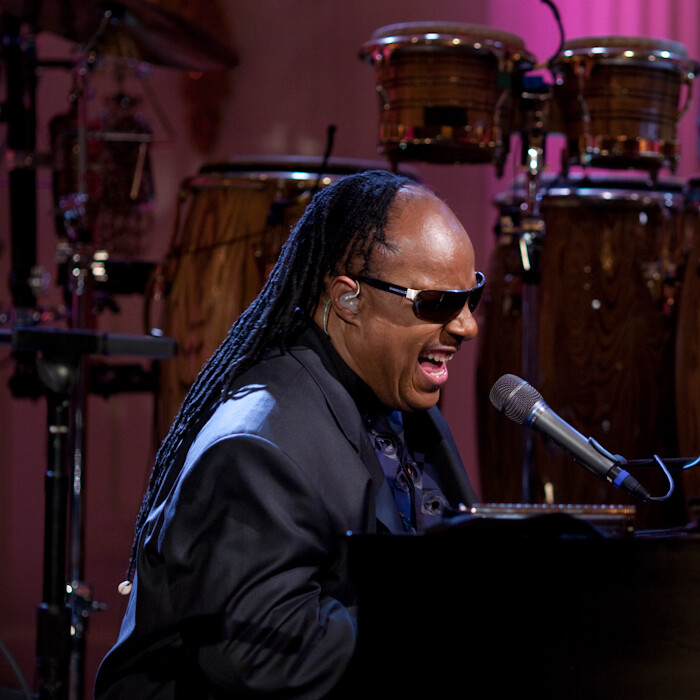
Stevie Wonder, born Stevland Hardaway Judkins in Saginaw, Michigan, in 1950, is an American singer, songwriter, multi-instrumentalist and record producer. He signed with Motown as a child and recorded albums including Talking Book, Innervisions and Songs in the Key of Life. He has won 25 Grammy Awards and received the Presidential Medal of Freedom in 2014.
We have documented 1 statement by Stevie Wonder, in 1 case. Each statement below gives the quotation, its original source and a link to the full case.
Case updates
Want updates on Macklemore's removal from Ed Sheeran's tour?
We'll email you if the other stadium owners named in the Kraft reports respond, or if Macklemore, Sheeran or the tour promoter says more about the removal.
Important updates only. Free. Confirm your email to start. Unsubscribe anytime. How we handle your email.
Role at the time: Singer-songwriter, speaking from the stage at his concert at Glasgow's OVO Hydro
Defended or excused
Statement summary
Speaking from the stage at Glasgow's OVO Hydro, Stevie Wonder said that he and other artists want wars to stop everywhere. Addressing the ban Macklemore had faced, he told the audience, "Ban me as you want."
“We want wars to stop everywhere. ... Ban me as you want”
Stevie Wonder took Macklemore's side over the ban he faced after his Free Palestine remarks. He said artists want wars to stop and told the crowd "Ban me as you want", so we labeled it Defended or excused.
Read the full transcript of Macklemore's 'Free Palestine' speech at MetLife Stadium, then compare the promoter's venue statement with his account of leaving Ed Sheeran's U.S. tour.