
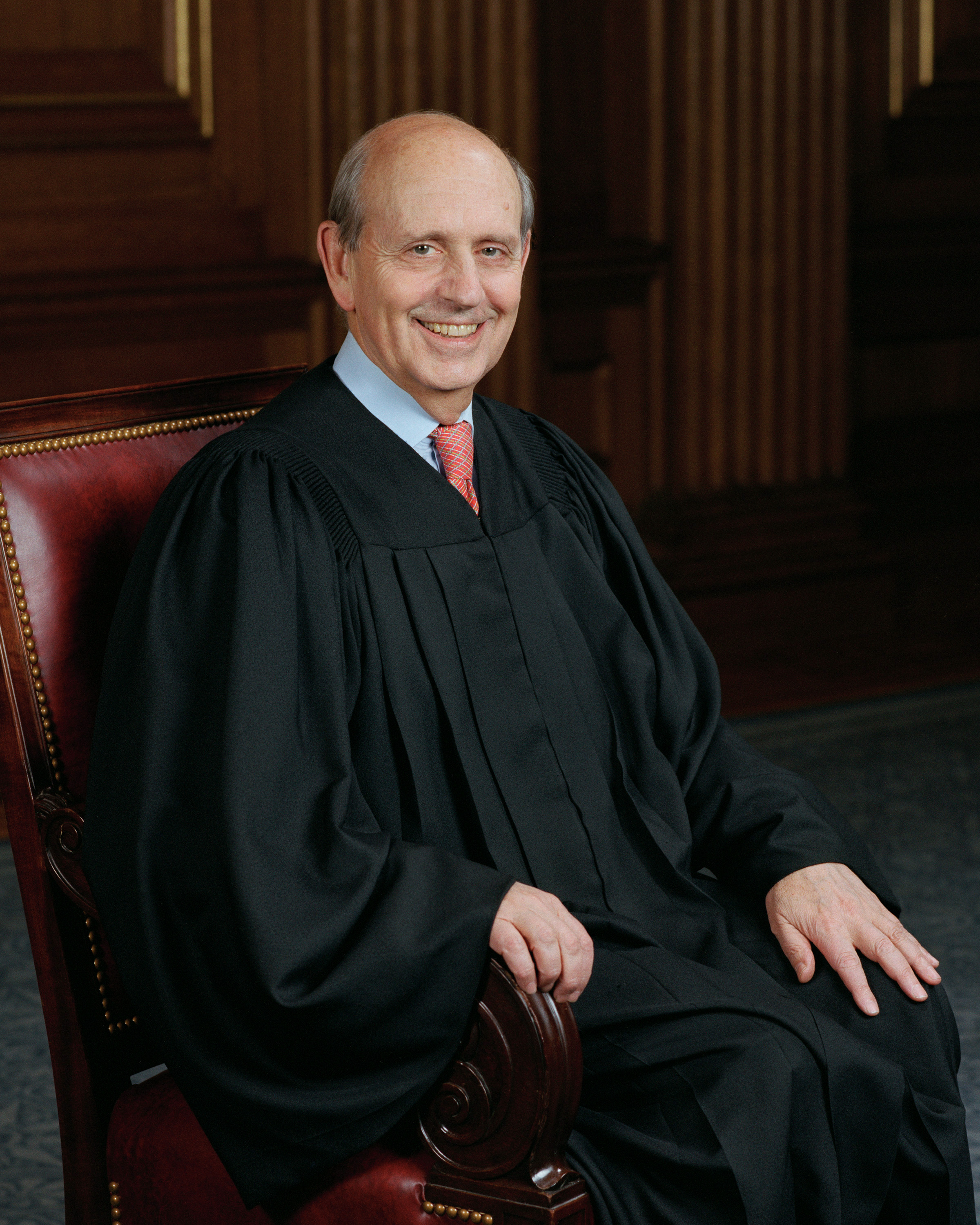
Stephen Breyer

Portrait of Stephen Breyer
Collection of the Supreme Court of the United States, Photographer: Steve PettewaySourcePublic domainOriginal file, without alterations.

Stephen Breyer is an American jurist who served as an associate justice of the United States Supreme Court from 1994 to 2022.

What DI has documented

DI has documented statements by Stephen Breyer on Copyright, Free Speech, and Government Ethics, among other topics. Read the quotations, original sources and related cases below.

Topics in this coverage

Statements by Stephen Breyer

Portrait of Stephen Breyer

Stephen Breyer

Role at the time: Associate justice writing the Supreme Court majority opinion

Defended or excused

Statement summary

Breyer's majority concludes that the particular copying was fair use, with emphasis on the code's function and its use by programmers in a new computing environment.

“Google’s copying did not violate the copyright law.”
Read the original text (opens in a new tab)Google LLC v. Oracle America: Supreme Court majority and dissentNo. 18-956; majority opening and conclusion; Thomas dissent pages 1-2 and 18-19
Why we used this label

The reference is Google's copying of Java API declaring code for Android. The majority expressly justifies that use under copyright's fair-use doctrine.

Portrait of Stephen Breyer

Stephen Breyer

Role at the time: Associate justice of the United States Supreme Court

Mixed or conditional

Statement summary

Breyer says the majority's categorical answer is too absolute.

“In a word, the majority says, “never.” That word, in my view, is too absolute.”
Read the original text (opens in a new tab)Supreme Court opinions in Garcetti v. Ceballos547 U.S. 410; majority and Souter dissent
Why we used this label

Relative to Garcetti's official-duty exclusion, Breyer rejects a categorical bar but would apply balancing in special circumstances involving professional and constitutional obligations. He also criticizes Souter's broader approach.

A participant is a subject of the case. A speaker has a statement documented in it. A commentator has an opinion or editorial documented in it.

Case

Google v. Oracle: Breyer and Thomas split over Java API fair use

Relationship to this case: Participant

Stephen Breyer's majority treated Google's particular reuse of Java API declaring code as fair use. Clarence Thomas dissented, arguing it undermined copyright protection and Oracle's market. Oracle also publicly criticized the ruling.

CopyrightPublished