
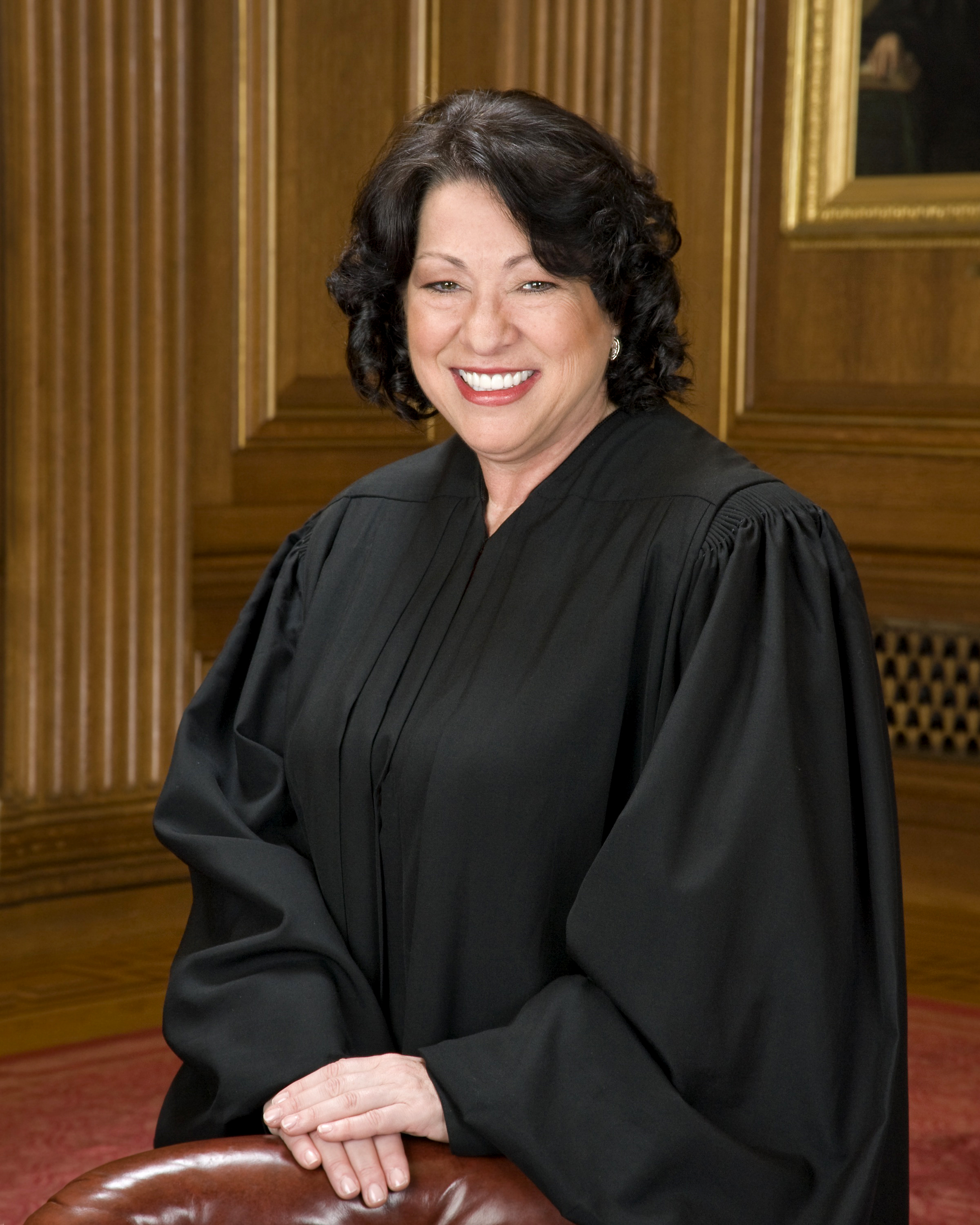
Sonia Sotomayor

Portrait of Sonia Sotomayor
Collection of the Supreme Court of the United States / photo by Steve PettewaySourcePublic domain (U.S. government work)

Sonia Sotomayor is an associate justice of the Supreme Court of the United States. She joined the Court in August 2009 after serving as a federal district judge in New York and on the U.S. Court of Appeals for the Second Circuit.

Judge (2009 to present)Also known as Justice SotomayorWebsite (opens in a new tab)

What DI has documented

DI has documented statements by Sonia Sotomayor on Criminal Justice Policy and Law Enforcement. Read the quotations, original sources and related cases below.

Topics in this coverage

Statements by Sonia Sotomayor

Portrait of Sonia Sotomayor

Sonia Sotomayor

Role at the time: Associate justice of the Supreme Court, dissenting, joined by Justices Elena Kagan and Ketanji Brown Jackson

Condemned

Statement summary

Sotomayor wrote that the Court held due process never requires a retention hearing and that the ruling limits lower courts' ability to address abuses of civil forfeiture.

“Today, the Court holds that the Due Process Clause never requires that minimal safeguard. In doing so, it sweeps far more broadly than the narrow question presented and hamstrings lower courts from addressing myriad abuses of the civil forfeiture system.”
Read the original text (opens in a new tab)Culley v. Marshall, No. 22-585: Supreme Court opinion, concurrence and dissent (May 9, 2024) · Supreme Court of the United StatesMajority opinion by Justice Kavanaugh (slip opinion pages 1-14); concurrence by Justice Gorsuch, joined by Justice Thomas; dissent by Justice Sotomayor, joined by Justices Kagan and Jackson.
Why we used this label

The reference point is Alabama's practice, defended by Attorney General Steve Marshall, of holding seized cars until the civil forfeiture hearing without a separate preliminary hearing, which the owners argued the Due Process Clause requires. Label: Condemned. Sotomayor criticizes the holding that due process never requires a retention hearing, calling such a hearing a minimal safeguard against abuse. The closest competing label is Mixed or conditional; it loses because her plan to let lower courts apply the governing test concerns how to apply it in each forfeiture scheme, not whether she accepts the categorical no-hearing rule.

A participant is a subject of the case. A speaker has a statement documented in it. A commentator has an opinion or editorial documented in it.