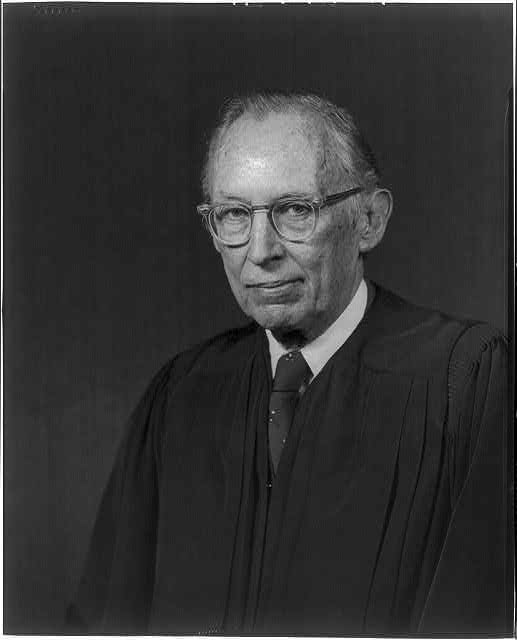
Lewis F. Powell Jr. was an associate justice of the U.S. Supreme Court from 1972 until his retirement from active service in 1987. President Richard Nixon appointed him to the Court.
We have documented 2 statements by Lewis F. Powell Jr., in 2 cases. Each statement below gives the quotation, its original source and a link to the full case.
Case updates
Want the next important update?
Follow "Zacchini v. Scripps-Howard: performer challenges broadcast of his entire act; broadcaster claims press protection" and get an email when an important development changes the record.
Important updates only. Free. Confirm your email to start. Unsubscribe anytime. How we handle your email.
Role at the time: U.S. Supreme Court justice, dissenting with Justices Brennan and Marshall
Defended or excused
Statement summary
Powell argues that routine news use should be protected unless it is a cover for exploitation.
“When a film is used, as here, for a routine portion of a
regular news program, I would hold that the First Amendment protects the station from a "right of publicity" or
"appropriation" suit, absent a strong showing by the plaintiff
that the news broadcast was a subterfuge or cover for private
or commercial exploitation.”
Role at the time: U.S. Supreme Court justice, concurring
Mixed or conditional
Statement summary
Powell joins the Court's opinion while stressing remedies for bad-faith investigations, testimony remote from the investigation, and source demands without a legitimate law-enforcement need.
“I add this brief statement to emphasize what seems to me to be the limited nature of the Court's holding.”
Read the original text (opens in a new tab)Branzburg v. Hayes, 408 U.S. 665: full opinions · Supreme Court of the United StatesSyllabus page 665; majority pages 667-709; Powell pages 709-710; Douglas pages 711-725; Stewart pages 725-752
Why we used this label
Powell supports compelled testimony subject to express protections against improper demands.
The Supreme Court split over broadcasting an entire performance without consent. White's majority rejected constitutional immunity but left state-law protection open. Powell's dissent argued that routine news use deserved First Amendment protection.
Branzburg rejected a First Amendment privilege against relevant grand-jury testimony. The majority stressed criminal investigations; Stewart's dissent stressed confidential reporting. Powell joined the opinion while describing protections against harassment and demands lacking a legitimate law-enforcement need.