
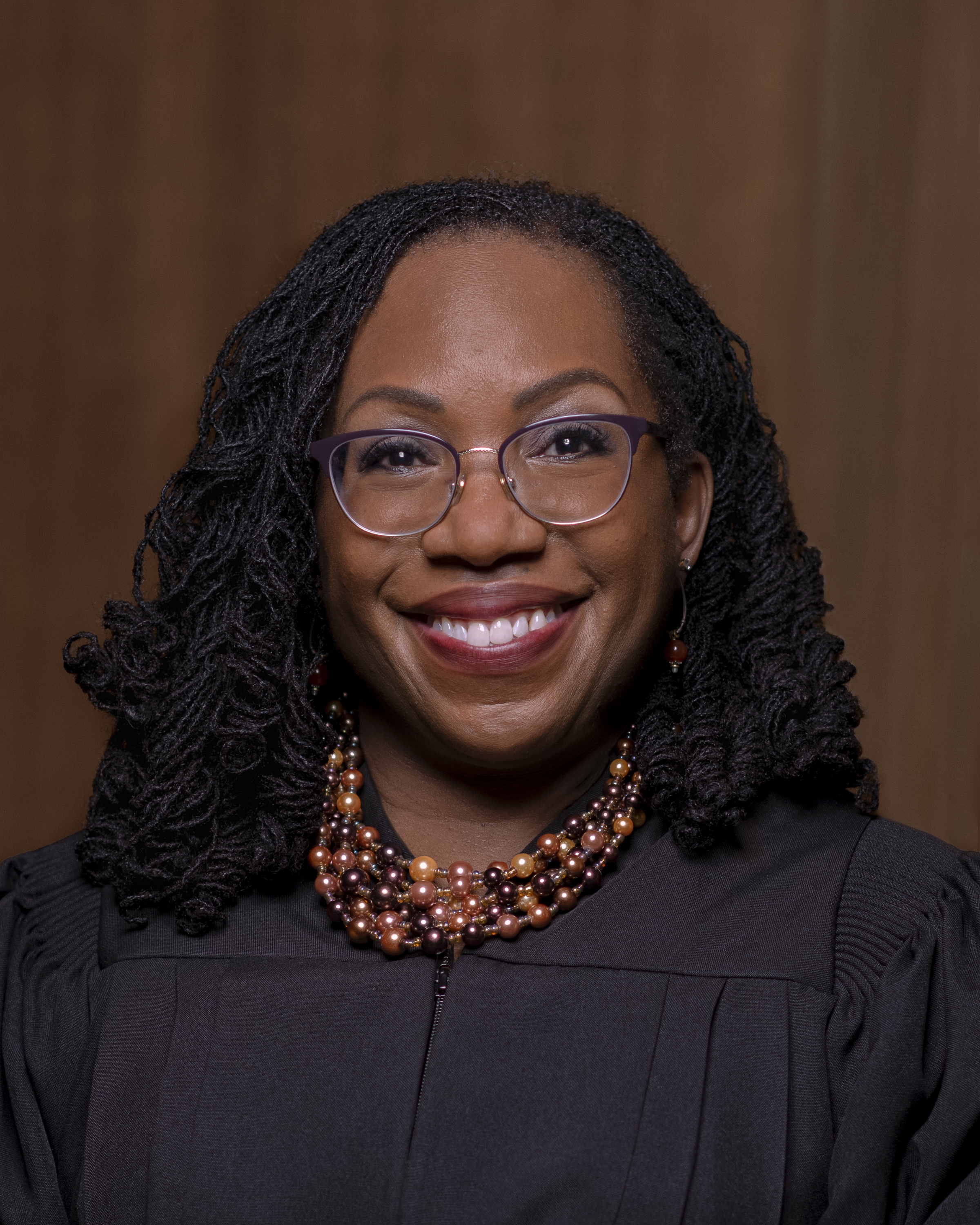
Ketanji Brown Jackson

Portrait of Ketanji Brown Jackson
Fred Schilling, Collection of the Supreme Court of the United StatesSourcePublic domain, U.S. federal government

Ketanji Brown Jackson is an associate justice of the U.S. Supreme Court. She joined the Court in 2022 after serving on the U.S. Court of Appeals for the District of Columbia Circuit and the U.S. District Court for the District of Columbia.

What DI has documented

DI has documented statements by Ketanji Brown Jackson on Criminal Justice Policy, Federalism, and Government Ethics, among other topics. Read the quotations, original sources and related cases below.

Topics in this coverage

Statements by Ketanji Brown Jackson

Portrait of Ketanji Brown Jackson

Ketanji Brown Jackson

Role at the time: U.S. Supreme Court justice, in a concurrence joined by Justice Sonia Sotomayor

Condemned

Statement summary

Jackson argued that the search violated the Fourth Amendment.

“I write separately because I would have gone further to explain that this search violated the Fourth Amendment.”
Read the original text (opens in a new tab)Ketanji Brown Jackson concurrence in Chatrie v. United States · Supreme Court of the United StatesJackson concurrence, printed pages 1-3 (PDF pages 39-41)
Why we used this label

Relative to the government's access to Location History, Jackson both rejects the no-search position and expressly criticizes this search as unconstitutional.

Portrait of Ketanji Brown Jackson

Ketanji Brown Jackson

Role at the time: Supreme Court justice dissenting, joined by Sotomayor and Kagan

Condemned

Statement summary

Jackson says the Court elevates federalism concerns she calls nonexistent over the statute's text.

“The Court’s reasoning elevates nonexistent federalism concerns over the plain text of this statute”
Read the original text (opens in a new tab)Supreme Court opinions in Snyder v. United StatesMajority printed page 1; Jackson dissent printed pages 1-2
Why we used this label

The case concerns the Court's decision to exclude gratuities from Section 666. Jackson rejects that decision and argues that it overrides Congress's text and intent.

A participant is a subject of the case. A speaker has a statement documented in it. A commentator has an opinion or editorial documented in it.