
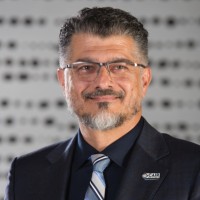
Hussam Ayloush

Portrait of Hussam Ayloush

Hussam Ayloush is a civil-rights advocate and executive director of the Greater Los Angeles office of the Council on American-Islamic Relations. His work includes advocacy for Muslim communities and engagement with public officials on civil rights.

What we have documented

We have documented 3 statements by Hussam Ayloush, in 3 cases. Each statement below gives the quotation, its original source and a link to the full case.

Case updates

Want the next important update?

Follow "Pastor Jack Hibbs says Muslim officeholders cannot swear allegiance to the Constitution; CAIR-LA condemns the remarks" and get an email when an important development changes the record.

Important updates only. Free. Confirm your email to start. Unsubscribe anytime. How we handle your email.

Statements by Hussam Ayloush

Portrait of Hussam Ayloush

Hussam Ayloush

Role at the time: Executive director of the Greater Los Angeles office of the Council on American-Islamic Relations (CAIR-LA), in a press release

Condemned

Response to this claim

Muslims elected to office in the United States cannot swear allegiance to the Constitution because it is forbidden in Islam, and must swear allegiance to Sharia law instead.

“We strongly condemn these hateful and irresponsible remarks targeting the Muslim community and questioning their participation in American civic life. Pastor Hibbs is contributing to a broader climate of fear and prejudice, encouraging his congregation to view their Muslim neighbors with suspicion and hostility. Such rhetoric is rooted in bigotry and perpetuates the false notion that Muslims are somehow less American or less deserving of a voice in our democracy.”
Read the official statement (opens in a new tab)CAIR-LA condemns Southern California pastor's "hateful and irresponsible" remarks targeting Muslim elected officials · CAIR CaliforniaPress release text
Why we used this label

The reference point is Jack Hibbs's sermon remarks that Muslim officeholders cannot swear allegiance to the Constitution. Ayloush expressly condemns those remarks and calls the rhetoric rooted in bigotry. That is a direct condemnation of the remarks rather than a dispute over how Hibbs described Islam, so a label that only challenges the characterization does not fit.

Portrait of Hussam Ayloush

Hussam Ayloush

Role at the time: CAIR-LA executive director, quoted official release

Condemned

Statement summary

Ayloush welcomes officials' condemnations while asking them to demand accountability and apologies from summit organizers and sponsors.

“accountability requires more than condemning the speakers’ words”
Read the official statement (opens in a new tab)Hussam Ayloush calls for further accountability after officials condemn summit remarks · Council on American-Islamic Relations
Why we used this label

The statement renews condemnation and extends the demand for accountability to institutions involved in the event.

Portrait of Hussam Ayloush

Hussam Ayloush

Role at the time: Executive director of the Greater Los Angeles office of the Council on American-Islamic Relations

Condemned

Statement summary

In a CAIR-LA press release, Ayloush said he was deeply concerned by the shooting, called it part of a pattern of brazen and violent immigration enforcement in the Los Angeles area and asked for an independent investigation.

“We are deeply concerned by ICE’s shooting of Carlos Jimenez. This action reflects a broader pattern of brazen and violent immigration enforcement operations being carried out by federal agents throughout the greater Los Angeles area.”
Read the official statement (opens in a new tab)CAIR-LA expresses concern over shooting of Carlos Jimenez and calls for independent probe · Council on American-Islamic RelationsPress release, statement attributed to Executive Director Hussam Ayloush
Why we used this label

The reference point is Ortiz's decision to fire at Jimenez. Ayloush calls the shooting itself part of a pattern of brazen and violent enforcement, which is a criticism of the act. Challenged the characterization is the closer alternative because he also asks for an independent investigation, but he does not wait for that inquiry before judging the shooting. Evidence: the organization's own press release quoting him.

A participant is a subject of the case. A speaker has a statement documented in it. A commentator has an opinion or editorial documented in it.

Topics in this coverage