
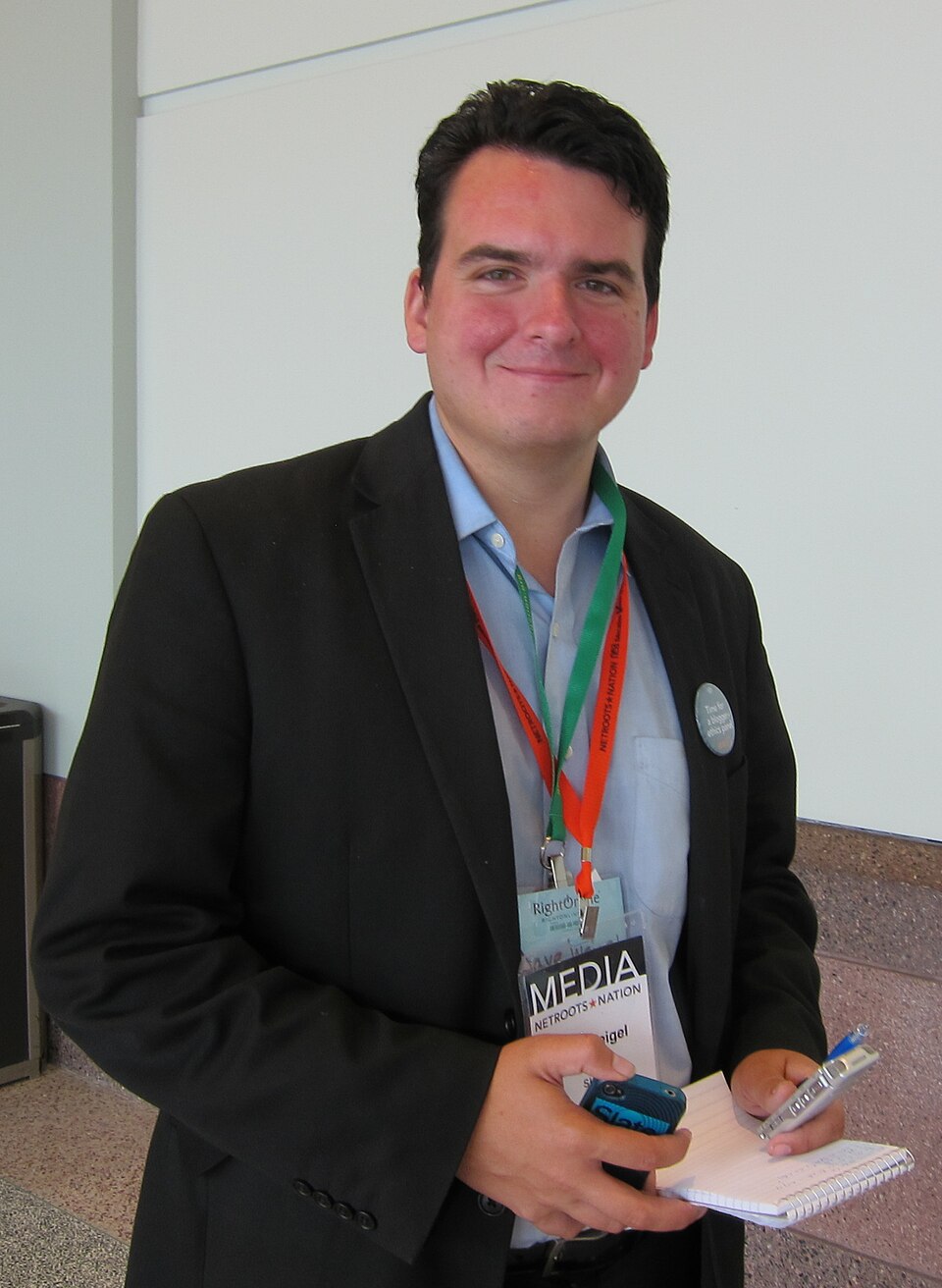
David Weigel

Portrait of David Weigel
Neeta Lind, CC BY 2.0SourceCC BY 2.0Cropped from the original photo by a Wikimedia Commons editor and scaled to 960 by 1312 pixels.

David Weigel is an American political journalist who covers national politics for Semafor. He previously reported on politics for The Washington Post and Bloomberg and wrote for Slate and Reason. He is the author of The Show That Never Ends, a history of progressive rock.

What we have documented

We have documented 1 statement by David Weigel, in 1 case. Each statement below gives the quotation, its original source and a link to the full case.

Case updates

Want the next important update?

Follow "Acton's campaign limits recordings; McColley says she is hiding from voters" and get an email when an important development changes the record.

Important updates only. Free. Confirm your email to start. Unsubscribe anytime. How we handle your email.

Statements by David Weigel

Portrait of David Weigel

David Weigel

Role at the time: National politics reporter for Semafor, posting on X

Challenged the characterization

Statement summary

Writing three days after the election, Weigel says Ramaswamy implied that Acton was addled and suggested she did not let the media record her. Weigel calls the recording claim the weirdest part and says her campaign began by asking the press to cover her.

“Vivek, who's an eloquent and fast-talking snob, implied that she was addled. The weirdest part of that was him suggesting she didn't let the media record her - news to the Acton campaign, which at the beginning was begging the press to cover her and not assume Ramaswamy had it locked.”
Read the original post (opens in a new tab)David Weigel on Ramaswamy's claim about recording ActonSecond paragraph of the post
Why we used this label

Weigel says Ramaswamy's suggestion that Acton kept the media from recording her was news to her campaign, which he says had been asking reporters to cover her. He disputes that description of her campaign, so we labeled it Challenged the characterization.

A participant is a subject of the case. A speaker has a statement documented in it. A commentator has an opinion or editorial documented in it.

Topics in this coverage