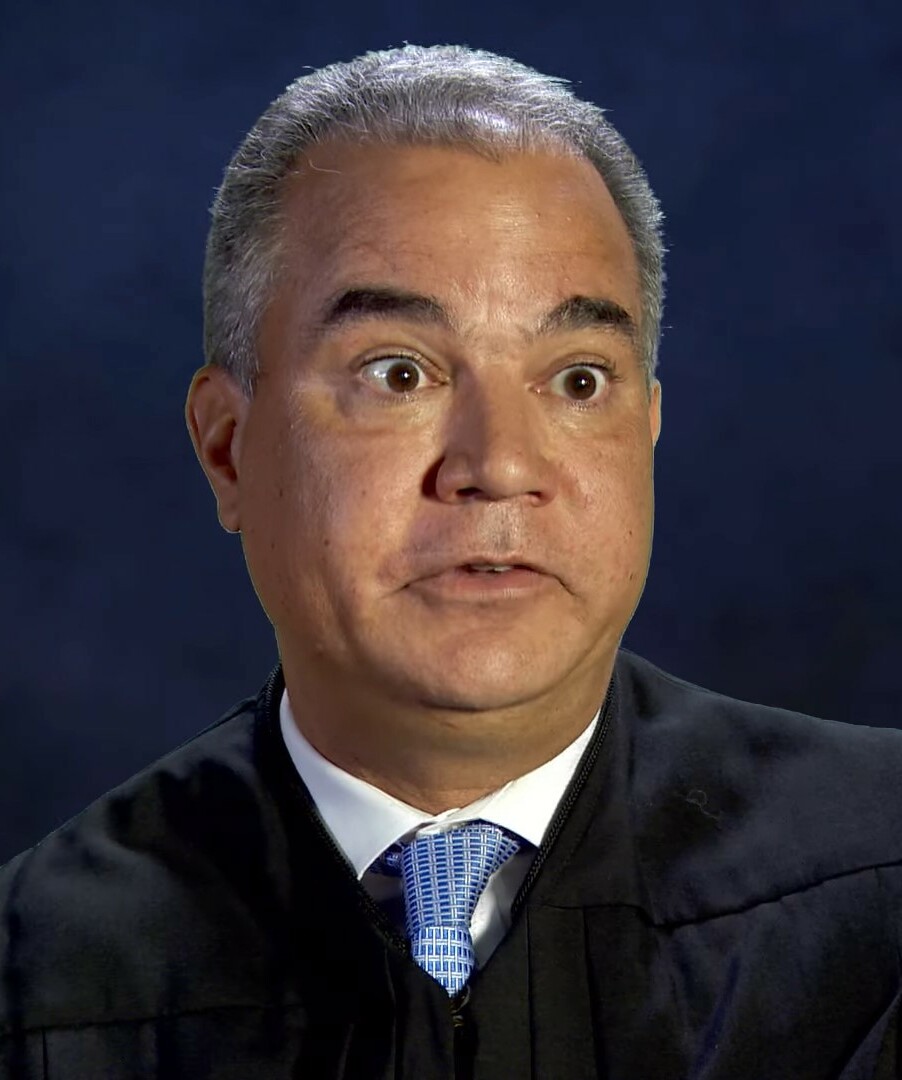
Administrative Office of the United States Courts (video still, via Wikimedia Commons)SourcePublic domain (U.S. government work)Cropped from a frame of the Administrative Office of the U.S. Courts video https://www.youtube.com/watch?v=FNGMgrSP6r8 (Wikimedia Commons crop of File:Christopher_R._Cooper.jpg).
Christopher R. Cooper is a United States district judge on the U.S. District Court for the District of Columbia, where he was appointed in 2014 after unanimous Senate confirmation. He earlier clerked on the U.S. Court of Appeals for the D.C. Circuit, worked as a special assistant to the deputy attorney general at the Justice Department, and spent 17 years in private practice, where he focused on white-collar criminal defense and internal corporate investigations.
Judge (2014 to present)Also known as Casey Cooper, Christopher Cooper, Judge Christopher CooperWebsite (opens in a new tab)
What DI has documented
DI has documented statements by Christopher R. Cooper on Government Transparency and U.S. Politics. Read the quotations, original sources and related cases below.
Role at the time: U.S. district judge for the District of Columbia, in an opinion and order
Condemned
Statement summary
Ordering limited discovery, Judge Cooper wrote that the executive orders and the public record suggested USDS exercised substantial independent authority, contrary to the government's reading.
“First, the language of the President’s USDS-related executive orders, far from resolving the question against CREW, in fact suggests that USDS is exercising substantial independent authority. ... Because the public record contradicts USDS’s already disputable interpretation of the relevant executive orders, discovery is particularly appropriate here.”
Read the original text (opens in a new tab)CREW v. U.S. DOGE Service, No. 25-cv-511: opinion and order granting limited discovery (D.D.C. April 15, 2025)ECF No. 38, Part III.A (CREW is entitled to limited discovery) and Part III.B (scope of requests and depositions).
Why we used this label
The reference point is the Justice Department's position that the U.S. DOGE Service, as a body that advises the President, should not face court-ordered discovery into whether FOIA applies to it. Label: Condemned. In ordering discovery, Cooper rejects the government's argument that the executive orders show USDS is purely advisory and that discovery is unwarranted. The closest competing label is Mixed or conditional; it loses because the limits he placed on CREW's requests narrow the discovery without accepting the government's position that none should proceed.
The Supreme Court agreed on October 13, 2026 to review whether courts may order discovery into the U.S. DOGE Service to decide if FOIA covers it. The Justice Department calls USDS a presidential adviser. CREW says it wielded independent authority.