
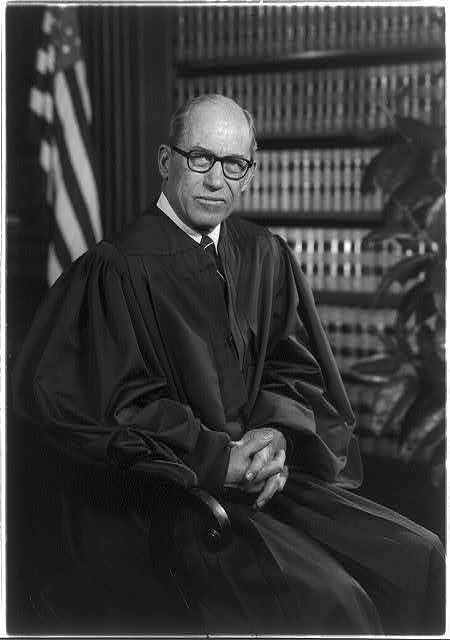
Byron R. White

Portrait of Byron R. White
Robert S. Oakes / Library of CongressSourceNo known restrictions on publicationOriginal JPEG, unchanged.

Byron R. White was an associate justice of the U.S. Supreme Court from 1962 until his retirement from active service in 1993. President John F. Kennedy appointed him to the Court.

Also known as Byron WhiteWebsite (opens in a new tab)

What we have documented

We have documented 3 statements by Byron R. White, in 3 cases. Each statement below gives the quotation, its original source and a link to the full case.

Case updates

Want the next important update?

Follow "Hazelwood v. Kuhlmeier: school defends deleting newspaper pages; student journalists challenge the decision" and get an email when an important development changes the record.

Important updates only. Free. Confirm your email to start. Unsubscribe anytime. How we handle your email.

Statements by Byron R. White

Portrait of Byron R. White

Byron R. White

Role at the time: U.S. Supreme Court justice, writing for the majority

Defended or excused

Statement summary

White concludes that educators may control school-sponsored expression when their actions reasonably serve legitimate educational concerns.

“educators do not offend the First Amendment by exercising editorial control over the style and content of student speech in school-sponsored expressive activities so long as their actions are reasonably related to legitimate pedagogical concerns.”
Read the original text (opens in a new tab)Hazelwood School District v. Kuhlmeier, 484 U.S. 260Official U.S. Reports, pp. 260-291; majority and dissent
Why we used this label

White defends the editorial control exercised in this case.

Portrait of Byron R. White

Byron R. White

Role at the time: U.S. Supreme Court justice, writing for the majority

Condemned

Statement summary

White holds that the Constitution does not immunize the entire-act broadcast, while leaving states free to privilege such use under their own law.

“Wherever the line in particular situations is to be drawn between media reports that are protected and those that are not, we are quite sure that the First and Fourteenth Amendments do not immunize the media when they broadcast a performer's entire act without his consent.”
Read the original text (opens in a new tab)Zacchini v. Scripps-Howard: readable full opinion textMajority opinion paragraph 18; 433 U.S. 574-575
Why we used this label

Relative to the station's broadcast of Zacchini's entire act, White rejects its claimed constitutional immunity from a damages action.

Portrait of Byron R. White

Byron R. White

Role at the time: U.S. Supreme Court justice, writing the majority opinion

Defended or excused

Statement summary

White concludes that requiring newsmen to appear and testify in the proceedings at issue does not abridge First Amendment speech and press protections.

“We hold that it does not.”
Read the original text (opens in a new tab)Branzburg v. Hayes, 408 U.S. 665: full opinions · Supreme Court of the United StatesSyllabus page 665; majority pages 667-709; Powell pages 709-710; Douglas pages 711-725; Stewart pages 725-752
Why we used this label

White expressly upholds the compelled testimony at issue.

A participant is a subject of the case. A speaker has a statement documented in it. A commentator has an opinion or editorial documented in it.

Topics in this coverage