
Explainer
What is a sanctuary policy?
A sanctuary policy is a state or local rule that limits how police, jails or other agencies help federal immigration enforcement, such as declining ICE detainer requests or limiting data sharing. No federal law defines the term, and governments and advocates apply it differently.
What the term covers
Federal law does not define "sanctuary." The Congressional Research Service says there is no legal definition in federal statute for what makes a jurisdiction a sanctuary, and notes that some governments describe themselves that way while others dispute the label. Policies that get the name typically limit how far state or local police, jails and other agencies help federal immigration enforcement, and some limit when a jail will honor a federal detainer request.1 The CRS notes that traditional policies are often described as falling into three types: "don't enforce" policies that bar local police from assisting federal immigration authorities, "don't ask" policies that bar officials from asking about immigration status, and "don't tell" policies that restrict information sharing.2
Federal definitions vary. A January 2025 executive order described so-called sanctuary jurisdictions as ones that "seek to interfere with the lawful exercise of Federal law enforcement operations,"3 and an April 2025 order defined them as "States and local jurisdictions that obstruct the enforcement of Federal immigration laws."4 The Justice Department's list uses criteria such as limits on sharing information about detainees' immigration status and refusing ICE detainer requests "unless there is a warrant signed by a judge."5
Governments split over the label. San Francisco calls its 1989 "City and County of Refuge" ordinance its Sanctuary Ordinance and says it promotes public trust and cooperation.6 Connecticut Attorney General William Tong said in April 2026 that his state "is not a 'sanctuary' state, whatever that means," calling the term meaningless.7 Nevada Gov. Joe Lombardo, announcing an agreement that took Nevada off the Justice Department's list in September 2025, said Nevada "is not a sanctuary state, has never been a sanctuary state."8
Detainers
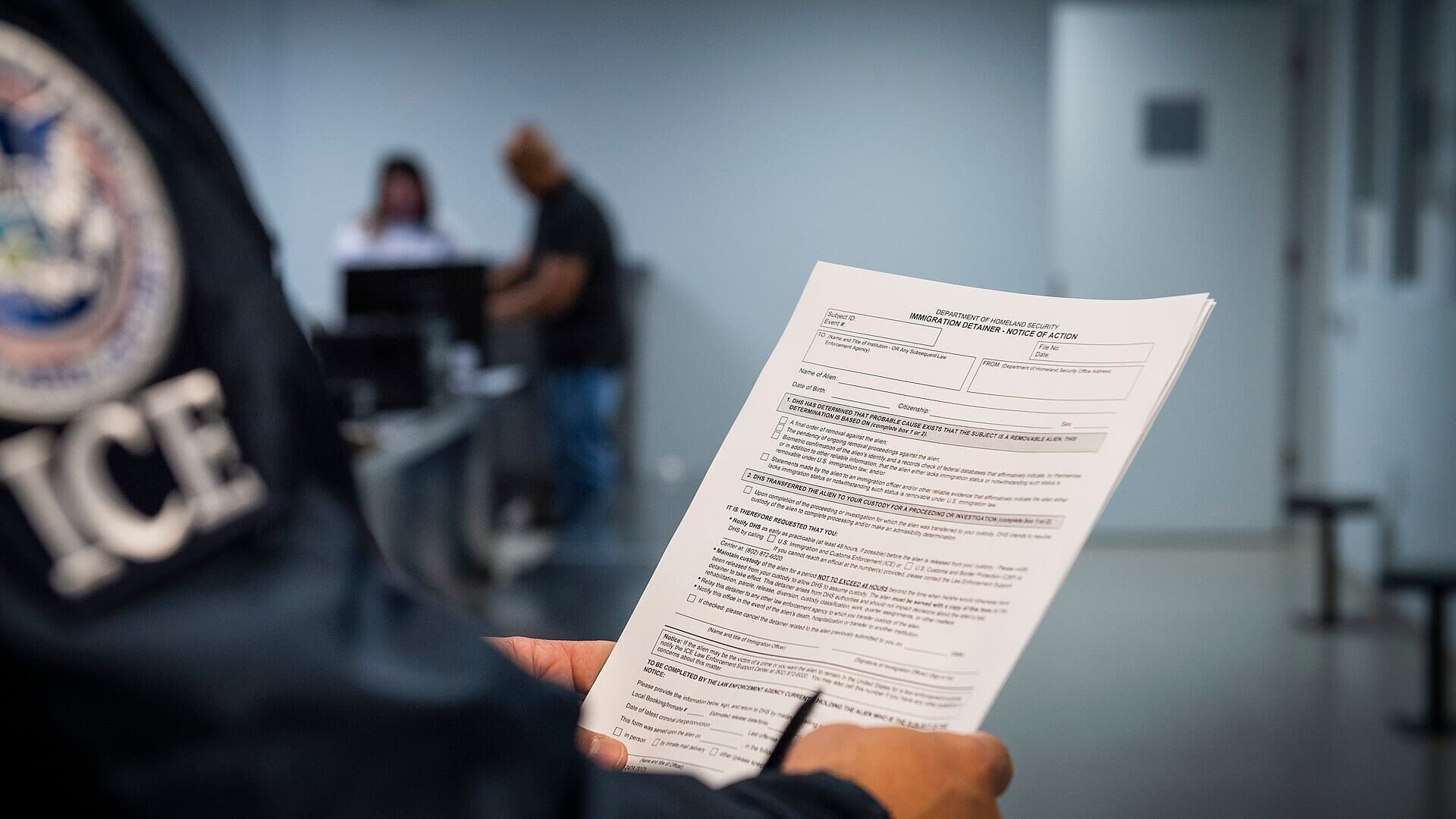
Many disputes turn on detainers. An immigration detainer is a request ICE lodges after its officers or agents find probable cause that a person is removable. It asks a jail to notify ICE before releasing the person and to hold the person up to 48 hours past the usual release time. ICE itself says "Immigration detainers are only requests,"9 and the Congressional Research Service describes them as permissive.1 Some jurisdictions honor a detainer only when it comes with a warrant signed by a judge, which the Justice Department lists as a sanctuary characteristic.5
Courts have raised Fourth Amendment concerns. In 2014 a federal magistrate judge in Oregon ruled for a woman who was kept in a county jail on a detainer after she could have been released, holding that the federal regulation does not require jails to detain people on receiving one and that "the ICE detainer alone did not demonstrate probable cause" to hold her.10 Texas went the other way: its 2017 law, Senate Bill 4, bans sanctuary city policies and requires local officers to comply with ICE detainer requests, and a federal appeals court upheld nearly all of it against a facial challenge at the preliminary-injunction stage in 2018.11
The law behind the fight
States and cities rely on the anti-commandeering doctrine. In Printz v. United States in 1997, the Supreme Court held that the federal government may not "command the States' officers, or those of their political subdivisions, to administer or enforce a federal regulatory program."12 In 2018 it described the doctrine as "the decision to withhold from Congress the power to issue orders directly to the States."13
The main federal statute on the other side is 8 U.S.C. 1373, enacted in 1996, which bars state and local governments from restricting their officials from sharing information about a person's "citizenship or immigration status" with federal immigration authorities.14 A similar provision, 8 U.S.C. 1644, does the same. Courts have disagreed about whether these laws can be squared with the anti-commandeering doctrine, and jurisdictions argue that they cover only immigration status, not information such as release dates.1
A contrasting approach is a 287(g) agreement, under which local officers are deputized to perform immigration enforcement functions. Federal law says no state or locality is required to sign one,15 and California's SB 54 bars its police from being deputized for immigration enforcement.16 A January 2025 executive order directed the Homeland Security secretary to authorize state and local officers to perform immigration functions through such agreements, "with the consent of State or local officials as appropriate."3
The 2025-2026 federal push
The April 2025 order told officials to publish a list of sanctuary jurisdictions and to identify federal funds to them "for suspension or termination."4 The Justice Department published its list on August 5, 2025, naming what the Congressional Research Service counted as 13 states, 18 cities and four counties.1 Nevada was later removed after the state signed an immigration enforcement agreement with the department.8
The department also sued states and cities. Dismissing its suit against New York City on October 15, 2026, a federal judge wrote that the case was among nearly a dozen recent challenges of this kind and that the government's challenges had been rejected in all prior ones. The judge found that blocking the city's rules "would result in the commandeering of state and local resources."17 Another federal judge had dismissed the department's challenge to New York State's limits on courthouse arrests in November 2025, reasoning that "the Tenth Amendment permits a state to decline to assist with federal immigration efforts."18 The department has appealed some of these rulings, including the dismissal of its suit against Illinois, Cook County and Chicago in October 202519 and the New York courthouse ruling in January 2026.20
The safety argument
The two sides disagree about public safety. After an ICE officer shot a man in New York City's Marble Hill neighborhood in October 2026, the Department of Homeland Security said the man had been "released into the community a few days later by reckless Democrat sanctuary policies that put American lives at risk" after a 2023 arrest.21 ICE says at-large arrests are "unpredictable and can be dangerous to the public, aliens and federal law enforcement officers."9 Jessica Vaughan, director of policy studies at the Center for Immigration Studies, told Congress in 2015 that "Sanctuary policies do nothing to build trust between immigrant communities and local law enforcement."22
California has argued the opposite. A federal appeals court, declining in 2019 to block SB 54 at an early stage of the federal government's suit, summarized the state's reasoning that "victims and witnesses of crime are less likely to come forward if they fear that an interaction with law enforcement will lead to their removal or the removal of a family member." The court added that it had "no doubt that SB 54 makes the jobs of federal immigration authorities more difficult."23 San Francisco says its ordinance promotes public trust and cooperation.6
History
- 1979
The Los Angeles Police Department issues Special Order 40.2
- 1980s
Churches shelter Central Americans fleeing civil unrest, the origin of many sanctuary-type initiatives.2
- 1989
San Francisco passes its "City and County of Refuge" ordinance.6
- September 30, 1996
Congress enacts 8 U.S.C. 1373 on sharing immigration-status information.14
- June 27, 1997
Printz v. United States bars the federal government from commanding state and local officers.12
- May 2017
Texas enacts Senate Bill 4, banning sanctuary city policies.11
- May 14, 2018
Murphy v. NCAA restates the anti-commandeering doctrine.13
- April 18, 2019
A federal appeals court declines to block California's SB 54 at an early stage of the federal government's suit.23
- January 20, 2025
Executive Order 14159 targets federal funds to so-called sanctuary jurisdictions.3
- April 28, 2025
Executive Order 14287 orders a published list of sanctuary jurisdictions.4
- August 5, 2025
The Justice Department publishes its list.1
- September 26, 2025
Nevada is removed from the list after an enforcement agreement.8
- November 17, 2025
A federal judge dismisses DOJ's challenge to New York's courthouse-arrest limits.18
- October 15, 2026
A federal judge dismisses DOJ's suit against New York City's sanctuary laws.17
What is disputed
Whether the federal government can use lawsuits to override New York City's limits on detainers and information sharing, after a judge dismissed its challenge.
See the case: DOJ challenges NYC sanctuary laws; Mamdani defends them after dismissalWhether ICE may make civil arrests at California's state courthouses over the state's objection.
See the case: California challenges ICE arrests at state courthousesWhether ICE's conduct at the Meriden courthouse violated Connecticut's TRUST Act.
See the case: Did ICE's conduct at the Meriden, Connecticut, courthouse violate the state's TRUST Act?Whether the ICE shooting in Marble Hill was justified; DHS blamed sanctuary policies for the man's earlier release.
See the case: Was ICE justified in shooting a man in a car in Marble Hill?Whether Mayor Zohran Mamdani should remove Police Commissioner Jessica Tisch over the NYPD's role at the Marble Hill confrontation.
See the case: Should Zohran Mamdani remove Jessica Tisch after the Marble Hill ICE confrontation?Whether sanctuary policies make communities safer or less safe.
Cases on the Dispute Index
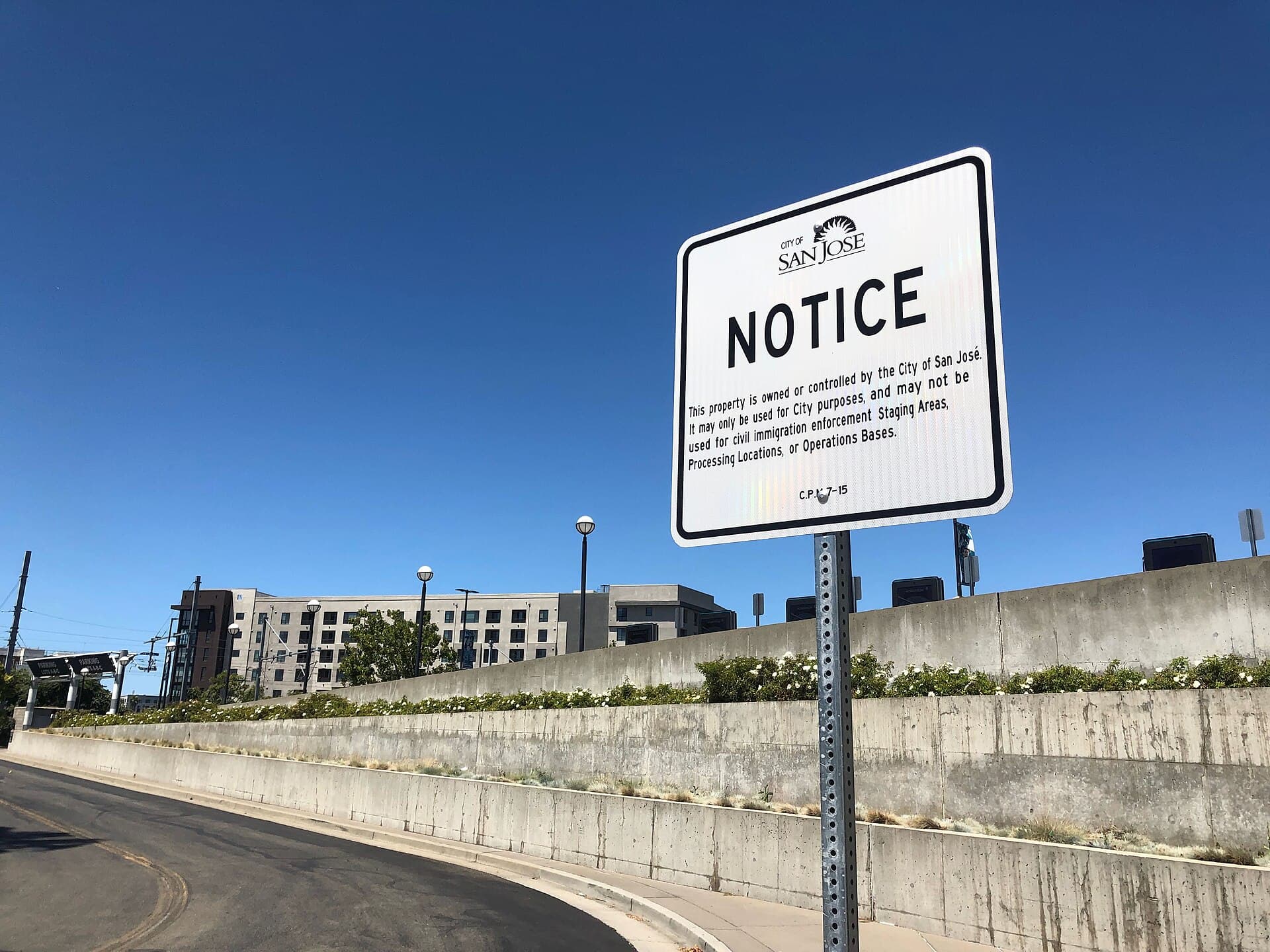
Mamdani tells DHS to keep ICE out of city-owned parking lots or face a lawsuit; DHS says the use is legal
Mayor Zohran Mamdani told DHS that ICE agents must stop staging operations in city-owned parking lots in the Bronx and Queens or the city will sue. DHS says ICE's presence in public parking lots is fully authorized under federal law.
Whitmire orders Houston police to stop contacting ICE over nonviolent offenses; ICE says he is protecting criminals
Houston Mayor John Whitmire ordered police to stop contacting ICE over nonviolent offenses after Democrats won Texas's statewide races. He says the change will reduce fear; ICE says it protects some of the worst criminals in America.
Karen Bass demands an apology after Nithya Raman says Los Angeles was the "gold standard" on immigration noncooperation in the Daryl Gates era
Nithya Raman said Los Angeles was the "gold standard" on noncooperation with immigration enforcement in the Daryl Gates era. Karen Bass called that a lie and demanded an apology. Raman said she meant Special Order 40 and accused Bass of twisting her words.
California challenges ICE arrests at state courthouses
Bonta says ICE arrests deter victims and witnesses from attending state court. California alleges continued practices after a policy was vacated. Federal defendants defend enforcement discretion in a separate appeal.
DOJ challenges NYC sanctuary laws; Mamdani defends them after dismissal
DOJ argues that NYC sanctuary rules obstruct federal law. Mamdani defends local control after a district judge dismisses the challenge to the city's information-sharing and detention restrictions.
Should Zohran Mamdani remove Jessica Tisch after the Marble Hill ICE confrontation?
NYC-DSA makes Tisch's dismissal conditional on ending police complicity with ICE after the Marble Hill confrontation. Chevalier calls for her to step down. City Hall plans to retain her.
Was ICE justified in shooting a man in a car in Marble Hill?
An ICE officer shot a man in a car in Marble Hill on October 8. DHS calls it a targeted arrest and had not said by October 9 why the officer fired. Mamdani says early reports indicate agents surrounded the man and child before firing.
Did ICE's conduct at the Meriden, Connecticut, courthouse violate the state's TRUST Act?
ICE agents arrested a man inside a Meriden, Connecticut, courthouse while activists demanded to know why masked agents were violating the TRUST Act. State officials called it improper; ICE called the arrest appropriate and said marshals impeded it.
Sources
- "Sanctuary" Jurisdictions: Legal Overview, CRS Legal Sidebar LSB11321 (updated September 15, 2025) (opens in a new tab) · Saved copy (opens in a new tab)
- "Sanctuary" Jurisdictions: Federal, State, and Local Policies and Related Litigation, CRS Report R44795 (May 3, 2019) (opens in a new tab) · Saved copy (opens in a new tab)
- Executive Order 14159: Protecting the American People Against Invasion (January 20, 2025) (opens in a new tab) · Saved copy (opens in a new tab)
- Executive Order 14287: Protecting American Communities From Criminal Aliens (April 28, 2025) (opens in a new tab) · Saved copy (opens in a new tab)
- U.S. Sanctuary Jurisdiction List Following Executive Order 14287 (U.S. Department of Justice, updated October 31, 2025) (opens in a new tab) · Saved copy (opens in a new tab)
- Sanctuary City Ordinance (City and County of San Francisco, Office of Civic Engagement and Immigrant Affairs) (opens in a new tab) · Saved copy (opens in a new tab)
- US DOJ sues Connecticut, New Haven over 'sanctuary policies' (CT Mirror, April 14, 2026) (opens in a new tab) · Saved copy (opens in a new tab)
- DOJ and State of Nevada Sign Immigration Enforcement Agreement; Nevada Removed from "Sanctuary State" List (Office of Gov. Joe Lombardo, September 26, 2025) (opens in a new tab)
- Immigration Detainers (U.S. Immigration and Customs Enforcement, updated May 8, 2026) (opens in a new tab) · Saved copy (opens in a new tab)
- Miranda-Olivares v. Clackamas County, No. 3:12-cv-02317-ST (D. Or. April 11, 2014), Opinion and Order (opens in a new tab)
- City of El Cenizo v. Texas, No. 17-50762 (5th Cir. March 13, 2018) (opens in a new tab) · Saved copy (opens in a new tab)
- Printz v. United States, 521 U.S. 898 (1997) (Legal Information Institute) (opens in a new tab) · Saved copy (opens in a new tab)
- Murphy v. National Collegiate Athletic Association, 584 U.S. 453 (2018) (Legal Information Institute) (opens in a new tab) · Saved copy (opens in a new tab)
- 8 U.S. Code § 1373: Communication between government agencies and the Immigration and Naturalization Service (Legal Information Institute) (opens in a new tab) · Saved copy (opens in a new tab)
- 8 U.S. Code § 1357(g): Agreements with state and local officers (Legal Information Institute) (opens in a new tab) · Saved copy (opens in a new tab)
- Immigrant Rights (California Attorney General) (opens in a new tab) · Saved copy (opens in a new tab)
- Federal court dismisses DOJ challenge to NYC sanctuary laws (opens in a new tab)
- United States v. New York, No. 1:25-cv-744 (N.D.N.Y. November 17, 2025), Memorandum-Decision and Order (opens in a new tab) · Saved copy (opens in a new tab)
- DOJ appealing dismissal of sanctuary city policy lawsuit against Illinois, Cook County, Chicago (ABC7 Chicago, October 24, 2025) (opens in a new tab) · Saved copy (opens in a new tab)
- United States v. New York, No. 1:25-cv-744 (N.D.N.Y.), Notice of Appeal to the Second Circuit (January 15, 2026) (opens in a new tab) · Saved copy (opens in a new tab)
- DHS issues statement on Marble Hill ICE shooting, blaming 'radical sanctuary politicians' (opens in a new tab)
- Sanctuary Cities: A Threat to Public Safety, House Judiciary Subcommittee on Immigration and Border Security hearing, July 23, 2015 (testimony of Jessica M. Vaughan, Center for Immigration Studies) (opens in a new tab) · Saved copy (opens in a new tab)
- United States v. State of California, 921 F.3d 865, No. 18-16496 (9th Cir. Apr. 18, 2019), opinion on AB 450, AB 103 and SB 54 (opens in a new tab) · Saved copy (opens in a new tab)
Last reviewed October 19, 2026. We review this explainer when a case that uses it changes. Report an error