
Explainer
What are license-plate readers?
Automated license-plate readers are cameras that photograph passing vehicles, read their plates and log the time and place. Police check the reads against lists of wanted vehicles and can search the stored records later. No federal law governs their use, and state rules vary widely.
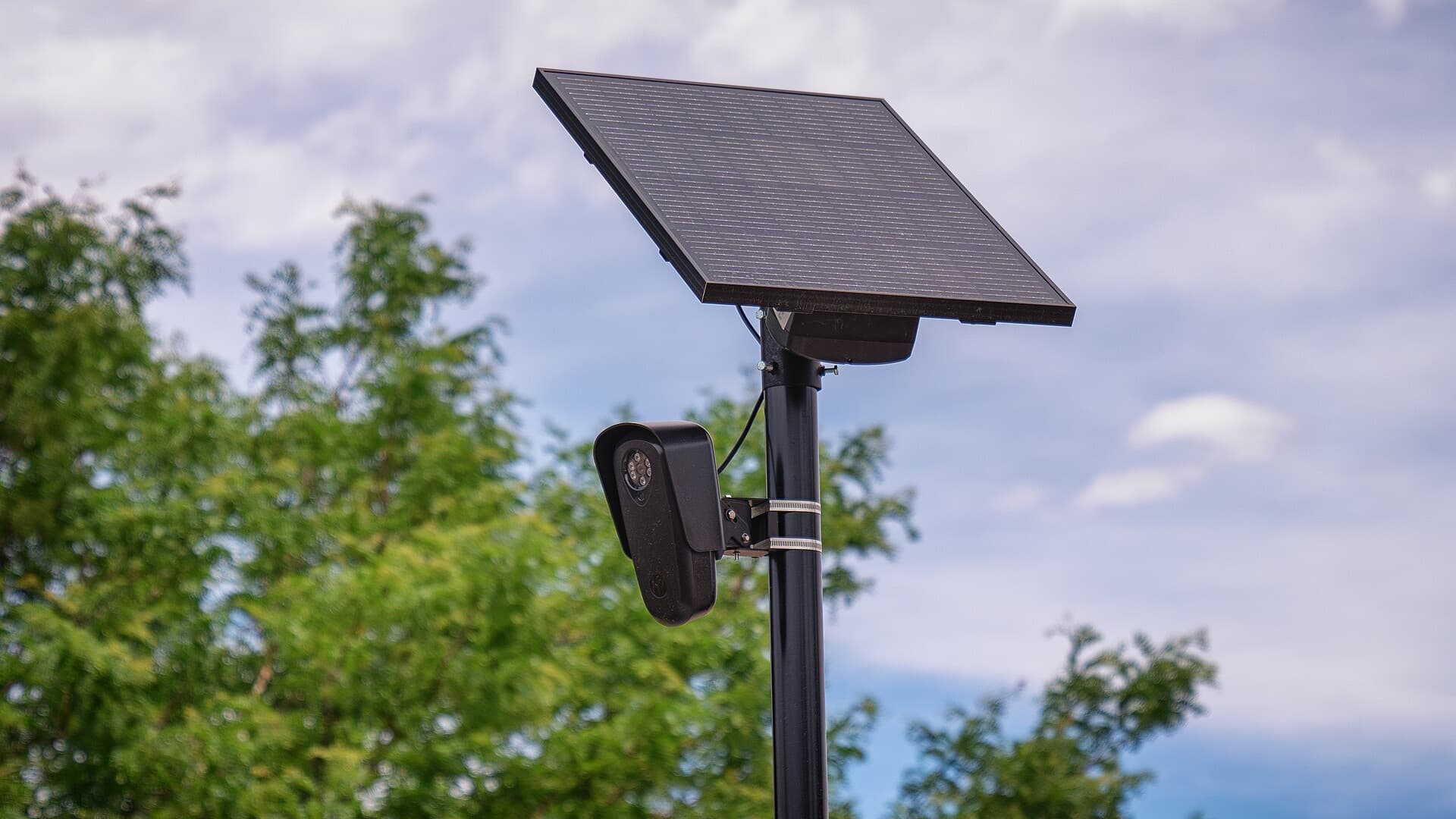
How the cameras work
A license-plate reader photographs passing vehicles and uses software to read their plates. The Congressional Research Service describes the process this way: "ALPR systems work by automatically capturing images or videos of passing vehicles. A computer algorithm then detects, reads, and converts the license plate characters within the image into readable data." The systems can also record a vehicle's type and color, its location, and the date and time.1 According to the National Conference of State Legislatures, readers can be mounted on police cars, road signs, traffic lights or trailers, some record distinctive features such as bumper stickers, and they differ from red-light and speed cameras.2
Each read can be checked at once against "hot lists" of plates, such as those of stolen vehicles or vehicles tied to a crime or a missing person, and the system alerts officers to a match. The reads are also stored, so officers can later look up a plate or follow a vehicle's movements across cameras.2 A September 2026 statement by the International Association of Chiefs of Police and other law-enforcement groups says an alert is a lead, not proof: "A plate detection does not establish guilt and does not, by itself, provide probable cause for an arrest."3 Readers also misread plates. Business Insider reported that Flock Safety's system misread plates in 71 percent of the alerts it sent to police in Roseville, California, in 2023 and 2024.4
Who uses them
Large police agencies are the most likely to use readers. Citing the Bureau of Justice Statistics, the Congressional Research Service reports that nearly 90 percent of sheriffs' offices with 500 or more sworn deputies, and all police departments serving more than 1 million residents, used the technology, compared with 20 percent of all sheriffs' offices and nearly 22 percent of all police departments.1 State transportation departments use readers to study traffic, and homeowners' associations and private businesses use them as well.2
The data may sit in public or private systems that law enforcement can search. Flock Safety runs one of the largest networks: crowdsourced data from an advocacy organization had mapped more than 137,000 readers in the United States by the end of August 2026, with more than 80 percent attributed to Flock, according to the Congressional Research Service.1 Agencies on Flock's network can search one another's cameras. In August 2026, the company said cities could choose the types of offenses for which other agencies may access their cameras.5
What the law says
No federal statute sets rules for police use of plate readers. "There is no specific federal legislative framework that governs law enforcement use of ALPRs," the Congressional Research Service wrote in September 2026.1 Limits come instead from state law, local policy and the settings vendors offer.
As of September 2026, at least 28 states had statutes that expressly address readers or the data they collect, according to the National Conference of State Legislatures. At least 19 states limit how long the data may be kept, from three minutes in New Hampshire to 21 days in Maine, 18 months in Montana and five years in Alabama. Several states bar the use of readers for traffic or immigration enforcement, or to investigate people engaged in constitutionally protected activity or seeking certain health care.2 Florida took a different route on its own roads. On August 31, 2026, its transportation department revoked local police permits for readers on state highway rights-of-way and gave agencies 30 days to remove them.6 Flock changed its own default that month, cutting its recommended retention period from 30 days to seven.5
Is a plate search a Fourth Amendment search?
The Fourth Amendment bars unreasonable searches, and a search usually requires a warrant. Courts disagree over whether looking up a vehicle's stored plate-reader history counts as a search.
The older precedent favors the police. In United States v. Knotts (1983), the Supreme Court said that "[a] person travelling in an automobile on public thoroughfares has no reasonable expectation of privacy in his movements from one place to another."7 Later cases about phones point the other way. In Carpenter v. United States (2018), the Court held that "accessing seven days of CSLI," or historical cell-site location records, "constitutes a Fourth Amendment search." It called the decision narrow and said it did not call into question conventional tools such as security cameras.8 In Chatrie v. United States (2026), the Court held that police conducted a search when they acquired a person's location data from Google.9
Most courts that have ruled on plate readers have found no search. The Fifth Circuit held in March 2026 that police use of about ten fixed cameras in Gautier, Mississippi, was not a search.10 A federal judge in Virginia reached the same conclusion in January 2026 about Norfolk's 176 Flock cameras, and that ruling is on appeal.11 On October 1, 2026, a federal judge in Oklahoma ruled the other way. Judge Sara E. Hill held that a deputy's warrantless query returning a month of a car's locations across several states was a search, and she called the systems "a type of indiscriminate mass surveillance." She acknowledged that nearly every court to examine the question had concluded otherwise.7
The policy debate
Police and prosecutors' groups defend the readers as investigative tools. In September 2026, the International Association of Chiefs of Police and 12 other organizations wrote that the systems can alert officers to a plate tied to "a stolen or wanted vehicle, a missing or endangered person, a person with an outstanding arrest warrant, or a vehicle connected to a crime." They proposed principles on written policies, audits, documented queries and data sharing.3 Some in law enforcement draw a line at newer systems. Sheriff Ross Teeple of Pinal County, Arizona, wrote in testimony for a Senate Judiciary subcommittee hearing that plate readers "are a great tool" but that "the latest camera networks, powered by artificial intelligence and machine learning, are capable of violating our citizens' Fourth Amendment rights."12
Civil liberties groups go further. The Electronic Frontier Foundation says that "ALPR mass surveillance," which it defines as the continuous collection and retention of location data on every driver regardless of suspicion, "should not exist," and that because it does, courts and state legislatures should impose warrant requirements and deletion deadlines.13 Chad Marlow of the American Civil Liberties Union wrote in testimony for the same hearing: "The time has come for Congress to ban any law enforcement entity who receives federal funding from using ALPRs."14 The Institute for Justice attached to its testimony a model bill that would require a warrant for location data more than two hours old and cap retention at seven days without one.15
History
- 1983
In United States v. Knotts, the Supreme Court says a person traveling on public roads has no reasonable expectation of privacy in those movements.7
- June 22, 2018
In Carpenter v. United States, the Supreme Court holds that obtaining seven days of cell-site location records is a search.8
- January 27, 2026
A federal judge rules that Norfolk, Virginia's Flock cameras are not a Fourth Amendment search; the plaintiffs appeal.11
- March 17, 2026
The Fifth Circuit holds that police use of a small plate-reader system in Mississippi was not a search.10
- June 29, 2026
In Chatrie v. United States, the Supreme Court holds that acquiring a person's Google location data was a search.9
- August 13, 2026
Flock Safety cuts its recommended default retention period from 30 days to seven.5
- August 31, 2026
Florida's transportation department revokes local police permits for readers on state highway rights-of-way.6
- September 14, 2026
The International Association of Chiefs of Police and 12 other groups issue principles for plate-reader use.3
- September 23, 2026
A Senate Judiciary subcommittee holds a hearing on Flock's camera network.12
- October 1, 2026
A federal judge in Oklahoma rules that a warrantless search of a car's plate-reader history violated the Fourth Amendment.7
What is disputed
Whether looking up a car's plate-reader history without a warrant is a Fourth Amendment search. One federal judge in Oklahoma has said it is; the Fifth Circuit and most other courts that have ruled have said it is not.
See the case: Did a deputy's warrantless query of Flock license-plate data violate the Fourth Amendment, as a federal judge in Oklahoma ruled?Whether networked plate-reader systems should be banned, or kept with limits such as warrant rules, shorter retention or conditions on public funding.
See the case: Should Flock-style license-plate surveillance networks exist?Whether a vendor should search its customers' live cameras for testing or sales demonstrations, as Flock did through internal accounts.
See the case: Did Flock Safety's use of fake police accounts to search live license-plate cameras cross a line?Whether shorter default retention, required audits and offense filters address the privacy risks critics describe.
See the case: Did Flock Safety's August 2026 privacy safeguards address concerns about its camera network?Whether states should remove readers from public roads or regulate how agencies use them.
See the case: Was Florida right to remove license-plate readers from state highway rights-of-way?
Cases on the Dispute Index
Did a deputy's warrantless query of Flock license-plate data violate the Fourth Amendment, as a federal judge in Oklahoma ruled?
On October 1, 2026, a federal judge in Oklahoma held that a deputy's warrantless search of a car's month of license-plate-reader records violated the Fourth Amendment. Prosecutors had argued plates on public roads carry no privacy interest, and Flock expects reversal.
Should Flock-style license-plate surveillance networks exist?
Networked automated license-plate cameras can assemble searchable records of vehicle movements. Candidates and officials disagree over whether to ban the systems, keep them with limits, or defend them as investigative tools. This tracker separates outright bans from narrower restrictions.
Was Florida right to remove license-plate readers from state highway rights-of-way?
Florida revoked permits for plate readers on state highway rights-of-way, citing privacy and misuse concerns. Flock Safety urged regulation instead of removal, while Miami Beach Mayor Steven Meiner warned that the short deadline could harm criminal investigations.
Did Flock Safety's August 2026 privacy safeguards address concerns about its camera network?
Flock Safety said its August 2026 changes would shorten default data retention and strengthen controls on police searches. The ACLU said most measures remain inadequate and questioned whether Evidence Mode could preserve too much data.
Did Flock Safety's use of fake police accounts to search live license-plate cameras cross a line?
Public records show Flock Safety ran searches on live license-plate cameras through fake police accounts, including for "Star of David" and political bumper stickers. Flock says the searches tested its safeguards; a Dunwoody privacy advocate says it proves the sensitive data is captured regardless.
Sources
- Federal Legislation and Oversight of Law Enforcement Use of Automated License Plate Readers (ALPRs), CRS Insight IN12735 (opens in a new tab) · Saved copy (opens in a new tab)
- Automated License Plate Readers: State Statutes (National Conference of State Legislatures) (opens in a new tab) · Saved copy (opens in a new tab)
- Joint law-enforcement principles for responsible ALPR use (opens in a new tab)
- In one California town, Flock misread license plates in 71% of the alerts it sent to police (opens in a new tab) · Saved copy (opens in a new tab)
- Flock updates privacy, accountability, security, and transparency safeguards (opens in a new tab)
- Engineering and Operations Memorandum 26-01: Revocation of General Use Permits for Automated License Plate Readers (opens in a new tab) · Saved copy (opens in a new tab)
- United States v. Kyle, No. 4:26-cr-00189-SEH, Doc. 62 (N.D. Okla. Oct. 1, 2026) (Opinion and Order granting motion to suppress) (opens in a new tab) · Saved copy (opens in a new tab)
- Carpenter v. United States, 585 U.S. 296 (2018), No. 16-402, opinion of the Court (opens in a new tab) · Saved copy (opens in a new tab)
- Chatrie v. United States, No. 25-112 (U.S. June 29, 2026) (opens in a new tab) · Saved copy (opens in a new tab)
- United States v. Porter, No. 25-60163 (5th Cir. Mar. 17, 2026) (opens in a new tab) · Saved copy (opens in a new tab)
- Schmidt v. City of Norfolk, No. 2:24cv621 (E.D. Va. Jan. 27, 2026) (Opinion and Order) (opens in a new tab)
- Written testimony of Sheriff Ross Teeple, Pinal County Sheriff's Office (Arizona), before the Senate Subcommittee on Crime and Counterterrorism, September 23, 2026 (opens in a new tab)
- EFF's policy position on ALPR surveillance (opens in a new tab)
- Statement of Chad A. Marlow, Senior Policy Counsel, American Civil Liberties Union, before the Senate Subcommittee on Crime and Counterterrorism, September 23, 2026 (opens in a new tab)
- Written testimony of Alasdair Whitney, Legislative Counsel, Institute for Justice, before the Senate Subcommittee on Crime and Counterterrorism, September 23, 2026 (opens in a new tab)
Last reviewed October 7, 2026. We review this explainer when a case that uses it changes. Report an error