
Explainer
When can federal immigration agents use deadly force?
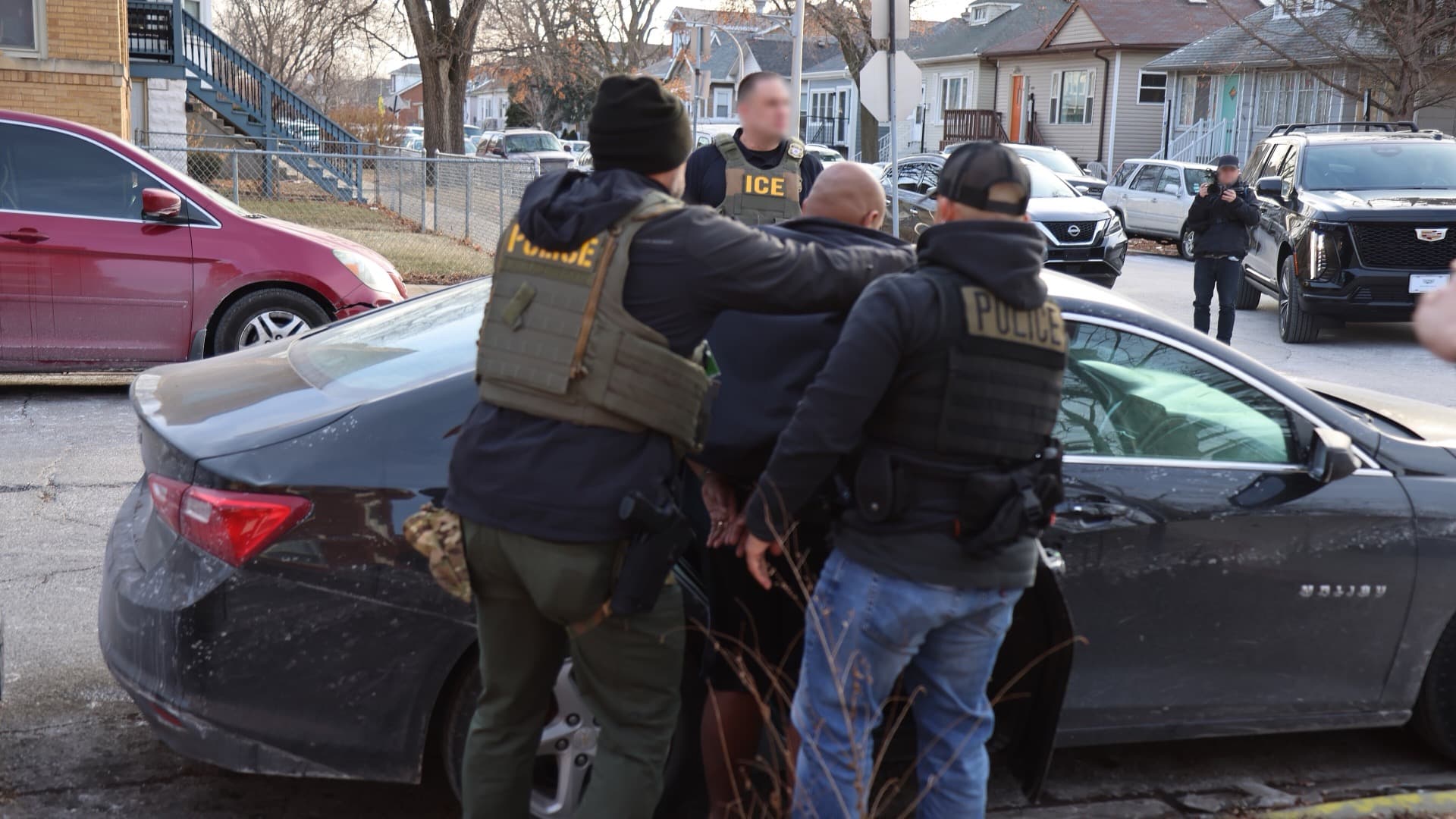
Under a 2023 Homeland Security policy, immigration agents may use deadly force only when they reasonably believe someone poses an imminent threat of death or serious injury. The policy bars shooting at a driver unless deadly force against that driver is itself justified.
The rule in DHS policy
The Department of Homeland Security sets one use-of-force policy for all of its law enforcement officers, including officers of Immigration and Customs Enforcement (ICE) and of Customs and Border Protection (CBP), which runs the Border Patrol. The current version, according to DHS, is Policy Statement 044-05, signed by then-Secretary Alejandro Mayorkas on February 6, 2023.1
The policy allows deadly force "only when necessary," meaning when an officer has "a reasonable belief that the subject of such force poses an imminent threat of death or serious bodily injury" to the officer or someone else.1 Deadly force may not be used "solely to prevent the escape of a fleeing subject." The exception is a person the officer reasonably believes poses a significant threat of death or serious physical harm, when force is needed to stop the escape.1 Officers may not use deadly force against someone who threatens only themselves or property.1
The policy also tells officers to avoid "intentionally and unreasonably placing themselves in positions in which they have no alternative to using deadly force."1 After force is used, officers must get medical help for anyone injured, and they have a duty to intervene in a colleague's excessive force and to report it.1
Shooting at moving cars
The policy addresses vehicles directly. DHS officers "are prohibited from discharging firearms at the operator of a moving vehicle" unless deadly force against the driver is justified under the general standard, and before firing they must consider the danger an out-of-control vehicle poses to officers and bystanders.1 Firing solely to disable a vehicle, or as a warning, is barred outside narrow exceptions for maritime, aviation and Secret Service protective operations.1
CBP's published policy, dated January 2021, is more specific. It says the threat that can justify deadly force "may include a moving vehicle aimed at officers/agents," but not "a moving vehicle merely fleeing" from them unless the vehicle or the escape poses an imminent threat of death or serious injury. It also says agents "should not place themselves in the path of a moving vehicle or use their body to block a vehicle's path."2
Several of the shootings we track turn on this rule: officials said a driver used a car as a weapon, and witnesses or video dispute that account. In one, an ICE officer fired at an SUV leaving a traffic stop in Harrisburg, Pennsylvania; policing experts told CNN that is not how such a stop should be handled.3
What the Constitution requires
Courts judge a shooting under the Fourth Amendment, which bars unreasonable seizures, and the DHS policy rests on the same Supreme Court decisions.1 Under Graham v. Connor (1989), force must be objectively reasonable from "the perspective of a reasonable officer at the scene."4 Tennessee v. Garner (1985) allows deadly force to stop a fleeing suspect only if the suspect threatens the officer with a weapon or there is probable cause to believe the suspect committed a crime involving serious physical harm, and, where feasible, after a warning.1
In May 2025, the Supreme Court ruled unanimously in Barnes v. Felix, a lawsuit over an officer near Houston who jumped onto the doorsill of a car pulling away from a traffic stop and fatally shot the driver about two seconds later. The Court rejected a "moment-of-threat" rule that limited courts to the final seconds before a shooting. Courts must weigh the totality of the circumstances, including earlier events, and "a court deciding a use-of-force case cannot review the totality of the circumstances if it has put on chronological blinders," Justice Elena Kagan wrote.4 The Court left open whether an officer's own role in creating the danger counts against the officer.4
Is the 2023 policy still in force?
DHS says it is. After an ICE officer fatally shot Renée Good in Minneapolis in January 2026, DHS Assistant Secretary Tricia McLaughlin told FOX 2 Detroit that "the agency's current use of force policy is the same as it was in 2023 under President Biden's administration."5 FOX 2 also reported that ICE Directive 19009.3, the agency's May 2023 policy on firearms and use of force, had been posted on ICE's website as recently as November 24, 2025, and was later redacted from the site.5
Some members of Congress say the administration does not follow it. Reps. Delia Ramirez and Seth Magaziner said in January 2026 that "the Trump Administration has publicly disregarded the internal policy," and announced the DHS Use of Force Oversight Act, which would write a ban on chokeholds into law and require DHS to report use-of-force incidents every six months.6
Who reviews a shooting
Under the DHS policy, any employee who knows of an improper use of force must report it, whether to supervisors, internal affairs, the DHS Office of Inspector General or another channel the agency sets.1
States can also investigate federal agents and prosecute them under state law. "The law is clear that there is no absolute immunity for federal officers from state law," Alicia Bannon wrote in the Brennan Center's State Court Report in January 2026. Agents can move such a prosecution to federal court and claim Supremacy Clause immunity, a doctrine traced to the Supreme Court's 1890 decision In re Neagle that protects officers acting reasonably within their federal duties.7
Lawsuits for money damages are harder to bring. In Egbert v. Boule (2022), the Supreme Court held that a man could not sue a Border Patrol agent for excessive force under Bivens, the 1971 decision that allowed some damages suits against federal officers.8
History
- 1985
In Tennessee v. Garner, the Supreme Court limits deadly force against fleeing suspects.1
- 1989
Graham v. Connor makes objective reasonableness the test for force used in an arrest.4
- January 2021
CBP issues the current version of its use-of-force policy, including its rules on firing at moving vehicles.2
- February 6, 2023
DHS Secretary Alejandro Mayorkas signs Policy Statement 044-05, replacing the department's 2018 policy.1
- May 26, 2023
ICE issues Directive 19009.3 on firearms and use of force.5
- May 15, 2025
The Supreme Court decides Barnes v. Felix and rejects the moment-of-threat rule.4
- January 2026
After the Minneapolis shooting of Renée Good, DHS says its use-of-force policy is unchanged since 2023, and ICE's directive is no longer posted on its website.5
- January 15, 2026
Reps. Delia Ramirez and Seth Magaziner announce the DHS Use of Force Oversight Act.6
What is disputed
Whether DHS officers are following the 2023 policy. DHS says the policy is unchanged; some members of Congress say the administration has disregarded it.
Whether officers fired at drivers who were leaving rather than threatening them, as witnesses or video suggest in several shootings.
See the case: Was ICE Officer Jonathan Ross justified in fatally shooting Renée Good?Whether a state can prosecute a federal immigration officer over a shooting. Minnesota has charged ICE officer Christian Castro.
See the case: Was ICE Officer Christian Castro Justified in Shooting Julio Cesar Sosa-Celis?Whether an officer who steps in front of or onto a moving car can rely on the danger that creates. The Supreme Court left that question open in Barnes v. Felix.
Cases on the Dispute Index
Was ICE's use of force in arresting Luis Ochoa in Alamo, Texas, justified?
Video of part of an encounter between ICE agents and two 17-year-olds in Alamo, Texas, circulated after their arrests. Luis Ochoa says agents arrested him without cause and broke his wrist; DHS says the two attempted to obstruct a vehicle stop.
Was the HSI agent justified in fatally shooting Jonah Neal during a Memphis mental-health call?
An HSI agent shot Jonah Neal during a May 20 Memphis task force response to a mental-health call. His family's attorney says body camera footage shows no imminent threat; a state investigation continues, and we found no public federal explanation.
Was the ICE officer justified in firing at a driver during a Harrisburg vehicle stop?
An ICE officer fired at an SUV driving away from a Harrisburg vehicle stop. ICE says the driver rammed an ICE vehicle; PennLive reports its footage shows him driving around it. A county commissioner called for an independent investigation.
Was ICE justified in shooting Tiago Alexandre Sousa-Martins in Glen Burnie, Maryland?
DHS says ICE officers fired defensively when a driver rammed vehicles and drove at them in Glen Burnie, Maryland. County police corrected DHS on where an injured passenger was; the driver said he drove away fearing he would be shot.
Were Border Patrol Agent Jesus Ochoa and CBP Officer Raymundo Gutierrez justified in fatally shooting Alex Pretti?
Border Patrol agent Jesus Ochoa and CBP officer Raymundo Gutierrez fatally shot ICU nurse Alex Pretti in Minneapolis. DHS said he was armed and violently resisted; bystander video shows agents had already disarmed him before firing.
Was ICE Officer Jonathan Ross justified in fatally shooting Renée Good?
ICE officer Jonathan Ross fatally shot Renée Good, a U.S. citizen, in Minneapolis. DHS says she used her car as a weapon; Minneapolis and Minnesota officials say video shows no threat and call the self-defense account false.
Was ICE justified in fatally shooting Lorenzo Salgado Araujo?
ICE says an officer shot Lorenzo Salgado Araujo in self-defense after he used his van as a weapon. Passenger witnesses dispute the claimed threat, and a Harris County grand jury is reviewing the shooting.
Was the ICE officer justified in fatally shooting Johan Sebastián Durán Guerrero?
An ICE officer fatally shot Johan Sebastián Durán Guerrero during a Biddeford vehicle stop. Officials said his car moved toward the officer; the available public footage does not resolve the decisive moment.
Was Border Patrol Agent Charles Exum justified in shooting Marimar Martinez?
Border Patrol Agent Charles Exum shot Marimar Martinez during a Chicago vehicle confrontation. Agents said she drove at Exum; Martinez and a later state review said she was driving away.
Was ICE justified in fatally shooting Silverio Villegas González?
DHS says Silverio Villegas González struck and dragged an ICE agent before the fatal shooting. Compare that account with the Illinois commission's video review and the evidence limits it identified.
Was HSI Agent Benedict Bebber justified in firing at Phillip M. Brown?
HSI agent Benedict Bebber fired into Phillip Brown's vehicle during a D.C. traffic stop. DHS says Brown drove at officers; Brown's lawyers dispute that account. Released video captures the gunfire but not the trigger pull.
Federal agents’ use of force during mistaken detention in Evanston
Federal agents mistakenly detained an Evanston resident who later reported injuries. A witness and advocates criticized the force used, while an involved agent alleged resistance and local police opened an investigation.
Was HSI Special Agent Jack Stevens justified in fatally shooting Ruben Ray Martinez?
HSI agent Jack Stevens fatally shot U.S. citizen Ruben Ray Martinez on South Padre Island in March 2025, saying Martinez's car struck a fellow agent. A grand jury declined to indict him, but body-camera footage shows the car moving very slowly, leaving the shooting disputed.
Was ICE Officer Christian Castro Justified in Shooting Julio Cesar Sosa-Celis?
ICE officer Christian Castro shot Julio Cesar Sosa-Celis in Minneapolis in January 2026. DHS initially called it self-defense against an armed ambush; ICE later said officers' sworn testimony appeared untruthful. Castro faces state assault and federal false-statement charges.
Should ICE's use of force in the shooting of Wilber Rafael Garces Perez be condemned or condoned?
An ICE officer shot Wilber Rafael Garces Perez, a Venezuelan DoorDash driver, in Austin on September 20. He says he was trying to pull over; prosecutors, who charged him with assaulting an officer, say he drove off. The dispute is whether the shooting was justified.
Should DHS lead the investigation of the ICE shooting of a delivery driver in Austin?
DHS says it will lead the investigation of an ICE officer's shooting of Wilber Rafael Garces Perez in Austin. Read its statement, calls for an independent inquiry and the subsequent charge.
Was ICE’s use of force in arresting Marco Antonio Roblero Pérez justified?
ICE says a Taser was used to stop Marco Antonio Roblero Pérez from running toward traffic. His family alleges additional force after he fell, and Guatemala’s government has requested clarification and accountability.
Was ICE Officer Eusebio Ortiz justified in shooting Carlos Jimenez?
ICE officer Eusebio Ortiz shot Carlos Jimenez during an immigration operation in Ontario. The government says Jimenez reversed toward an officer; his lawyers say he was leaving. Court filings exposed evidence and interview disputes.
Was a Border Patrol agent justified in shooting Luis David Niño-Moncada and Yorlenys Zambrano-Contreras in Portland?
A Border Patrol agent shot and wounded two unarmed Venezuelan nationals in a Portland hospital parking lot on January 8, 2026. DHS says the driver weaponized his truck; charges against both were later reduced, and a bullet-removal incident drew scrutiny.
Were federal immigration officers justified in shooting Carlos Iván Mendoza Hernández?
Federal immigration officers shot Carlos Iván Mendoza Hernández during a Patterson vehicle stop. The government says he drove at agents; his attorney says they fired first. Dashcam footage does not resolve the timing.
Was ICE Agent Brian Palacios justified in fatally shooting Keith Porter Jr.?
An off-duty ICE agent, later identified in court filings as Brian Palacios, fatally shot Keith Porter Jr. in Northridge on New Year's Eve. DHS says Porter aimed a rifle and fired; his family says he was firing celebratory shots skyward.
Sources
- DHS Policy Statement 044-05 (Revision 01): Update to the Department Policy on the Use of Force, February 6, 2023 (opens in a new tab) · Saved copy (opens in a new tab)
- CBP Use of Force Policy, 4500-002A, January 2021 (opens in a new tab)
- An ICE officer fired at an SUV fleeing a car stop in Pennsylvania. That’s not how it should happen, policing experts say (opens in a new tab) · Saved copy (opens in a new tab)
- Barnes v. Felix, No. 23-1239 (U.S. Supreme Court, May 15, 2025) (opens in a new tab) · Saved copy (opens in a new tab)
- FOX 2 Detroit, January 9, 2026: ICE policy on use of lethal force redacted as questions linger following Minneapolis ICE shooting (opens in a new tab)
- Rep. Delia Ramirez, January 15, 2026: Ramirez, Magaziner lead bill to codify use of force policy for the Department of Homeland Security (opens in a new tab) · Saved copy (opens in a new tab)
- State Court Report (Brennan Center), January 27, 2026: When Can States Prosecute Federal Agents? (opens in a new tab) · Saved copy (opens in a new tab)
- Egbert v. Boule, No. 21-147 (U.S. Supreme Court, June 8, 2022) (opens in a new tab)
Last reviewed October 6, 2026. We review this explainer when a case that uses it changes. Report an error