
Explainer
What is the Hatch Act, and who enforces it?
The 1939 Hatch Act limits partisan political activity by federal executive branch employees. They may not use their office to sway an election, seek political donations or campaign on duty. The President and Vice President are exempt. The Office of Special Counsel enforces it; the President disciplines top appointees.
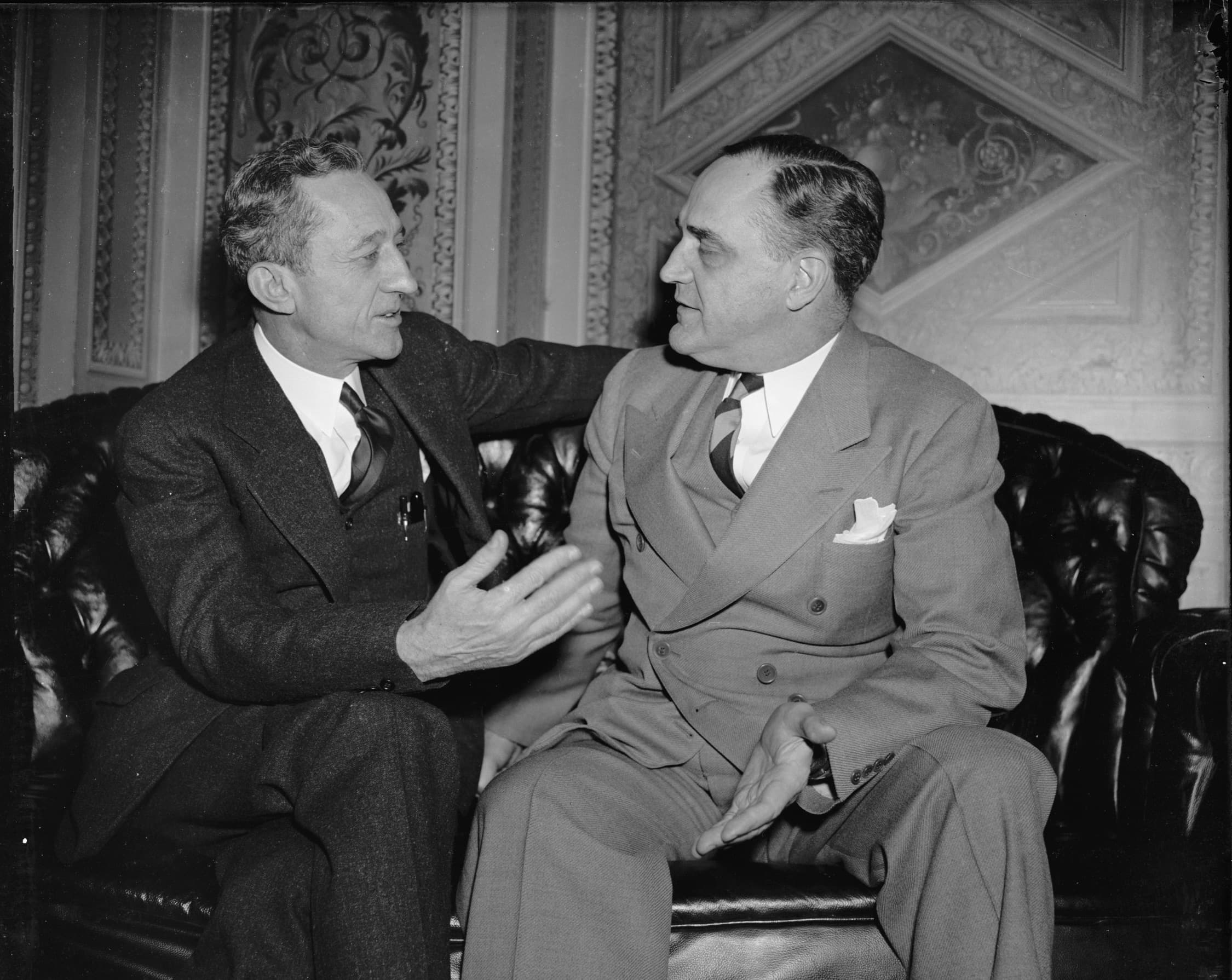
What the Hatch Act bars
The Hatch Act is a 1939 federal law that limits the partisan political activity of federal employees and of some state, D.C. and local employees who work on federally funded programs. The U.S. Office of Special Counsel (OSC), which enforces it, says the law is meant to keep federal programs nonpartisan, protect federal employees from political coercion at work and make sure employees advance on merit rather than political affiliation.1
The law covers nearly all federal civilian executive branch employees, including Postal Service workers, and keeps covering them while they are on leave or furloughed.2 It excludes the President, the Vice President, members of the uniformed services and employees of the Government Accountability Office.3 It does not reach Congress or the federal courts, apart from legislative and judicial branch positions placed in the competitive service.4
Some rules apply at all times. A covered employee may not use "official authority or influence for the purpose of interfering with or affecting the result of an election," may not knowingly solicit or receive political contributions, with a narrow exception for some federal employee union political committees, and may not run as a candidate in a partisan election.5
Other rules depend on time and place. An employee may not engage in political activity while on duty, in a federal building, while wearing a uniform or official insignia, or in a government vehicle.6 Federal regulations define political activity as activity directed at the success or failure of a political party, a candidate for partisan political office or a partisan political group.7 OSC's guidance applies the rule to social media: an employee may not post or share content for or against a party or partisan candidate while on duty or at work.2
Within those limits, most employees may campaign on their own time. They may attend rallies, give campaign speeches, volunteer for campaigns, hold office in political parties and contribute money.2 Employees of some agencies and units are further restricted and may not take an active part in partisan campaigns or party management even off duty. They include the FBI, the Secret Service, the CIA, the Federal Election Commission, the Justice Department's Criminal and National Security Divisions and career members of the Senior Executive Service, though Senate-confirmed appointees in those agencies are excepted.52 Every covered employee keeps the right to vote and to express opinions on political subjects and candidates.5
Senior officials and official capacity
Senior appointees have more room than career staff in one respect. Senate-confirmed officials who set national or foreign policy, and certain officials paid from the Executive Office of the President, are treated as on duty at all times, so the law lets them engage in political activity during work hours as long as the Treasury does not pay its costs.67 The Congressional Research Service (CRS) notes that OSC recommends agencies seek reimbursement within 30 days of a political event.7
The ban on using official authority still applies to them, and every violation OSC described in its 2021 report on senior Trump administration officials involved it.8 OSC's position is that an employee may not support or oppose a candidate for partisan office while acting in an official capacity, such as in an official interview, and that an official cannot switch to a personal capacity partway through one.8 OSC has advised Cabinet officials who speak at partisan events in a personal capacity to avoid talking about their agencies' work, so that their office does not lend weight to their political message.87 CRS lists comments that OSC treats as off limits in official duties, including attacking a candidate's campaign, explaining why voters should support a candidate, comparing campaign proposals and forecasting what would happen if certain candidates won.7
To decide whether an event is political, OSC weighs factors such as the type of event, who organized it and who attends, whether candidates will be there, its link to agency business and how close it is to an election.7 Some political activity on government property is lawful: OSC concluded in 2021 that the Hatch Act as written does not bar political events on certain White House grounds or broadly bar federal employees from taking part in them.9
Agency messages and the 2025 shutdown
Official agency communications raise a related question. During the October and November 2025 government shutdown, agency website banners, mass emails, out-of-office replies and videos blamed Democrats for the lapse in funding, and OSC received more than 1,000 complaints about employees at 37 agencies and the White House.10
In a September 25, 2026 assessment, OSC said agencies had relied on its September 2024 advice that, when discussing legislation or government policy, a reference to a political party "without more" typically is not political activity. OSC said agencies had read an ambiguity in that advice more broadly than it intended, and because its own Hatch Act staff had been furloughed during the shutdown and could not clarify it, OSC found their reliance reasonable and closed the cases without discipline. OSC said some inflammatory, widely distributed messages might have weighed toward a violation but made no final determination about them.10
The same document sets out factors OSC weighs, among all the circumstances, when an official message names a party: whether the message has a clear non-electoral purpose, such as influencing a bill, how close it comes to an election, whether its tone is inflammatory or insulting, and how widely it is distributed. References that are gratuitous, made close to an election and framed as an attack on a party are likely to be political activity, OSC said.10
How the law is enforced
OSC, an independent federal agency, gives advisory opinions on the Hatch Act, investigates complaints and seeks discipline for violations.711 For most employees it files a complaint with the Merit Systems Protection Board, where the employee is entitled to a hearing before the board or an administrative law judge.12 Penalties range from a reprimand or suspension to reduction in grade, removal, debarment from federal employment for up to five years and a civil fine of up to $1,000, an amount the board adjusts each year for inflation.132 The Hatch Act also has criminal provisions, which OSC does not enforce.8
OSC's long-established practice for less serious violations is a warning letter, and other cases end in settlements.8 In September 2026, OSC announced five settlements with employees of the Veterans Affairs Department, the IRS, the FBI and the State Department, with unpaid suspensions of three to 10 days and one employee agreeing to retire.14 Special Counsel Charles Baldis wrote in November 2026 that OSC resolved more than 560 Hatch Act cases in fiscal 2026 and filed six disciplinary complaints with the board, the most since 2010.15
Senior appointees are handled differently. For a Senate-confirmed appointee in a confidential or policy role, the law sends OSC's complaint to the President "for appropriate action" instead of to the board.12 OSC also refers violations by White House commissioned officers, the senior aides the President appoints directly, to the President, and CRS notes that OSC has no role in disciplining these officials beyond issuing a report.1687 In its 2021 report, OSC wrote that for an administration's senior-most officials the law is "only as effective in ensuring a depoliticized federal workforce as the president decides it will be."8
Findings against senior officials
OSC has found violations by senior officials in administrations of both parties. In June 2019, OSC, then led by Special Counsel Henry Kerner, a Trump appointee, called Kellyanne Conway, counselor to President Trump, a repeat offender and recommended that she be removed from federal service. White House Counsel Pat Cipollone denied that she had violated the act and asked OSC to retract its report.17
In November 2021, OSC reported that 13 senior Trump administration officials had violated the act before the 2020 election. OSC found that 11 of them did so in 18 official interviews or media appearances; that Secretary of State Mike Pompeo did so by changing department policy to let himself address the Republican National Convention and then discussing his department's work in the speech; and that Acting Homeland Security Secretary Chad Wolf did so by presiding over a naturalization ceremony that OSC said was orchestrated to create content for the convention.8 OSC said President Trump had publicly defended an employee it found to have repeatedly violated the act, and that discipline was no longer possible because the officials had left government.89
In April 2023, OSC sent President Biden a report finding that Health and Human Services Secretary Xavier Becerra violated the act by voicing support for Sen. Alex Padilla's reelection while speaking in his official capacity.18 In June 2023, it found that White House press secretary Karine Jean-Pierre violated the act by referring to "MAGA Republicans" from the briefing room days before the 2022 election. It issued a warning letter instead of seeking discipline, noting that the White House Counsel's Office had not believed at the time that her remarks were prohibited.11 Government Executive reported that OSC also found violations by Navy Secretary Carlos Del Toro and Social Security Commissioner Martin O'Malley, who criticized Donald Trump in media interviews before the 2024 election.19
OSC since 2025
President Trump fired Special Counsel Hampton Dellinger shortly after taking office in 2025. A federal judge declared the firing unlawful and reinstated him, an appeals court then cleared the way for his removal, and Dellinger dropped his lawsuit in March 2025.20 Jamieson Greer served as acting special counsel.21 Trump's nominee for the post, Paul Ingrassia, withdrew his nomination in October 2025, saying he did not have enough Republican votes.2223 The Senate confirmed Charles Baldis, a former Senate Judiciary Committee staffer who had been Greer's senior counsel and then OSC's chief counsel, as special counsel in August 2026.21
In April 2025, OSC rescinded two 2024 advisory opinions. It dropped a year-round ban on workplace items tied to "current or contemporaneous political figures," saying the ban placed too great a burden on First Amendment interests, returned to referring violations by White House commissioned officers to the President, and paused complaints against former employees until the board's jurisdiction over them was settled.16 In December 2025, it said it would again file complaints against former employees over violations committed while they served, after an administrative law judge confirmed the board's jurisdiction over such cases.24
OSC continues to bring Hatch Act cases against individual employees. In August 2026, it announced complaints alleging that a Postal Service employee and a Veterans Affairs employee ran for state legislative seats despite its warnings.25 In August 2026, Citizens for Responsibility and Ethics in Washington wrote to OSC that OSC had open investigations into six senior Trump appointees after its complaints, five of them pending for more than 10 months, and asked for faster decisions.19 In the weeks before the November 3, 2026 midterm elections, watchdog groups asked OSC to investigate senior officials' remarks at a rally for Sen. Dan Sullivan and an FBI video that featured several Democrats, including Michigan Senate nominee Abdul El-Sayed.2627 We did not find an announced OSC decision on those complaints as of November 17, 2026.
Where the law came from
The Hatch Act grew out of earlier civil service rules. After the Pendleton Act of 1883, the Civil Service Commission barred classified employees from using their authority to coerce others or interfere with an election, and in 1907 it barred them from taking an active part in political management or campaigns.4 OSC's 2021 report recounts how, in the 1938 elections, a regional supervisory staff of the Works Progress Administration was used to record the political affiliation of 18,000 relief workers and the list was handed to a campaign, and how workers hired under a federal relief program were sent to canvass their precincts instead of working on roads.8 In 1939 Congress passed An Act to Prevent Pernicious Political Activities, which extended the restrictions to nearly all federal employees. In 1940 it extended the law to state and local employees who work on federally financed projects.4
The Supreme Court rejected First Amendment challenges to the law in 1947 and 1973.4 In United Public Workers v. Mitchell, it upheld the ban as applied to a federal employee who served as a party ward committeeman and worked at the polls on election day.28 In U.S. Civil Service Commission v. National Association of Letter Carriers, the Court reaffirmed that holding and wrote that federal service "should depend upon meritorious performance rather than political service."29
Congress has since loosened the law. The Hatch Act Reform Amendments of 1993 let most federal employees take part in political activity off duty, while keeping the bans on misusing official authority and on political activity at work.48 The Hatch Act Modernization Act of 2012 expanded the range of penalties and let most state and local employees run for partisan office unless their salary is entirely federally funded.430
History
- 1883
The Pendleton Act creates the Civil Service Commission, whose Rule 1 bars classified employees from using their authority to interfere with an election.4
- 1939
Congress passes An Act to Prevent Pernicious Political Activities, known as the Hatch Act.4
- 1940
Congress extends the act to state and local employees who work on federally financed projects.4
- February 10, 1947
United Public Workers v. Mitchell upholds the ban on active political management and campaigning by federal employees.28
- June 25, 1973
U.S. Civil Service Commission v. National Association of Letter Carriers reaffirms Mitchell.29
- October 6, 1993
- December 28, 2012
- June 13, 2019
OSC recommends that Kellyanne Conway be removed from federal service.17
- November 9, 2021
OSC reports that 13 senior Trump administration officials violated the act before the 2020 election.9
- April 18, 2023
OSC reports to President Biden that HHS Secretary Xavier Becerra violated the act.18
- March 2025
Special Counsel Hampton Dellinger drops his challenge to his firing.20
- April 25, 2025
OSC rescinds two 2024 advisory opinions on workplace campaign items, former employees and White House officers.16
- October 21, 2025
Paul Ingrassia withdraws his nomination to lead OSC.22
- August 7, 2026
OSC announces the Senate's confirmation of Charles Baldis as special counsel.21
- September 25, 2026
OSC closes more than 1,000 complaints about agency shutdown messages without discipline.10
What is disputed
Whether Brendan Carr, Doug Burgum and Howard Lutnick misused their official authority by discussing their agencies' work at an October 13, 2026 rally for Sen. Dan Sullivan, as two watchdog groups allege, or stayed within the law; Carr told the crowd he was there in his personal capacity.
See the case: Watchdog groups ask the Office of Special Counsel to investigate whether Carr, Burgum and Lutnick violated the Hatch Act at a rally for Sen. Dan SullivanWhether the FBI's October 6, 2026 video, which cast several Democrats, including Michigan Senate nominee Abdul El-Sayed, as supporters of defunding the police and credited Director Kash Patel with arrests, was prohibited political activity, as Citizens for Responsibility and Ethics in Washington alleges; the FBI deleted the post.
See the case: FBI posts, then deletes, a video calling Democrats the 'defund the police crowd'; watchdogs say it violated the Hatch ActWhether Social Security and IRS emails crediting President Trump days before the 2026 midterm elections were permissible agency communications or political activity, as Rep. Mike Levin and law professors have suggested; no authority has ruled.
See the case: Social Security and IRS emails praise Trump days before the midterms; law professors and Rep. Mike Levin raise Hatch Act concernsWhether government-paid television ads featuring President Trump are public service announcements, as the White House says, or violate the Hatch Act or federal spending law, as Democratic lawmakers and watchdog groups allege.
See the case: Should taxpayers fund Trump's "public service" television ads?Whether officials used their authority to affect the 2026 election by searching Rep. Ilhan Omar's home three weeks before it, as Democracy Defenders Fund asked OSC to investigate, or carried out a court-authorized search in an ongoing investigation, as the Justice Department says.
See the case: Federal agents search Ilhan Omar's home weeks before the election; Democrats allege political targeting
Cases on the Dispute Index
Social Security and IRS emails praise Trump days before the midterms; law professors and Rep. Mike Levin raise Hatch Act concerns
Days before the Nov. 3 midterms, the Social Security Administration and the IRS emailed Americans messages from Frank Bisignano crediting President Trump. Legal experts and Rep. Mike Levin say the emails raise Hatch Act questions.
MS NOW says the FBI's arrest count under Kash Patel includes arrests made by local police; the FBI says its counting has not changed
MS NOW reports that the FBI's count of 54,000 violent crime arrests under Kash Patel includes arrests by local police and other agencies. The FBI says it has always counted arrests where it has equity in the case.
FBI posts, then deletes, a video calling Democrats the 'defund the police crowd'; watchdogs say it violated the Hatch Act
The FBI deleted a video that called several Democrats, including Senate nominee Abdul El-Sayed, the "defund the police crowd" and praised Kash Patel. CREW and the Democracy Defenders Fund say it violated the Hatch Act.
Watchdog groups ask the Office of Special Counsel to investigate whether Carr, Burgum and Lutnick violated the Hatch Act at a rally for Sen. Dan Sullivan
Two groups asked the Office of Special Counsel to investigate whether Brendan Carr, Doug Burgum and Howard Lutnick violated the Hatch Act by discussing their agencies' work at an October 13 rally for Sen. Dan Sullivan in Alaska.
Federal agents search Ilhan Omar's home weeks before the election; Democrats allege political targeting
Omar calls the search of her home an attempt to target political enemies. The Justice Department says agents executed a judicially authorized warrant in an ongoing criminal investigation. A watchdog group asked the Office of Special Counsel to examine the timing under the Hatch Act.
Should taxpayers fund Trump's "public service" television ads?
The White House calls its Trump-featuring television spots public service announcements and paid for them with taxpayer money. Critics in both parties object, and on October 5 Trump said he would pay with his own and MAGA Inc. money.
Sources
- Hatch Act Overview (opens in a new tab) · Saved copy (opens in a new tab)
- Federal Employee Hatch Act Information (opens in a new tab) · Saved copy (opens in a new tab)
- 5 U.S.C. 7322: Definitions (Hatch Act) (opens in a new tab) · Saved copy (opens in a new tab)
- The Hatch Act: A Primer (IF11512) (opens in a new tab) · Saved copy (opens in a new tab)
- 5 U.S.C. 7323: Political activity authorized; prohibitions (opens in a new tab) · Saved copy (opens in a new tab)
- 5 U.S.C. 7324: Political activities on duty; prohibition (opens in a new tab) · Saved copy (opens in a new tab)
- The Hatch Act: Special Considerations for High-Level Administration Officials (IF13343) (opens in a new tab)
- Investigation of Political Activities by Senior Trump Administration Officials During the 2020 Presidential Election (opens in a new tab) · Saved copy (opens in a new tab)
- OSC Issues Hatch Act Report Documenting Violations by 13 Senior Trump Administration Officials, Including at the 2020 Republican National Convention (opens in a new tab) · Saved copy (opens in a new tab)
- Hatch Act Assessment and Advisory: Partisan Agency Communications During the 2025 Lapse in Appropriations (opens in a new tab) · Saved copy (opens in a new tab)
- Karine Jean-Pierre violated Hatch Act with 'MAGA' remarks, watchdog says (opens in a new tab) · Saved copy (opens in a new tab)
- 5 U.S.C. 1215: Disciplinary action (opens in a new tab) · Saved copy (opens in a new tab)
- 5 U.S.C. 7326: Penalties (Hatch Act) (opens in a new tab) · Saved copy (opens in a new tab)
- OSC Announces Settlements in Five Hatch Act Cases and Files Complaint Against Another Federal Employee (opens in a new tab) · Saved copy (opens in a new tab)
- OSC delivered record results for federal employees in fiscal 2026 (opens in a new tab) · Saved copy (opens in a new tab)
- OSC Announces Updates to Hatch Act Enforcement; Rescinds Past Advisory Opinions (opens in a new tab) · Saved copy (opens in a new tab)
- Special Counsel Calls for Firing of Kellyanne Conway to Enforce Hatch Act (opens in a new tab) · Saved copy (opens in a new tab)
- OSC Issues Report to the President Finding HHS Secretary Xavier Becerra Violated the Hatch Act (opens in a new tab) · Saved copy (opens in a new tab)
- 'Glaring violations' of the Hatch Act by senior Trump officials have gone unpunished for months, good government group alleges (opens in a new tab) · Saved copy (opens in a new tab)
- Former government watchdog on his decision to end legal fight challenging his firing (opens in a new tab) · Saved copy (opens in a new tab)
- Senate Confirms Charles Baldis as Special Counsel of OSC (opens in a new tab) · Saved copy (opens in a new tab)
- Ingrassia withdraws nomination after racist texts (opens in a new tab) · Saved copy (opens in a new tab)
- Embattled Trump nominee Paul Ingrassia withdraws from Thursday confirmation hearing (opens in a new tab) · Saved copy (opens in a new tab)
- OSC Issues New Hatch Act Advisory Opinion Clarifying Jurisdiction Over Former Federal Employees (opens in a new tab) · Saved copy (opens in a new tab)
- OSC Files Disciplinary Action Complaints Against Two Federal Employees for Serious Hatch Act Violations (opens in a new tab) · Saved copy (opens in a new tab)
- Request for Hatch Act Investigation into High-Level Officials' Participation in October 13 Campaign Rally for Alaska Senate Candidate Dan Sullivan (opens in a new tab) · Saved copy (opens in a new tab)
- FBI post featuring El-Sayed runs afoul of Hatch Act, experts say (opens in a new tab) · Saved copy (opens in a new tab)
- United Public Workers v. Mitchell, 330 U.S. 75 (1947) (opens in a new tab) · Saved copy (opens in a new tab)
- U.S. Civil Service Commission v. National Association of Letter Carriers, 413 U.S. 548 (1973) (opens in a new tab) · Saved copy (opens in a new tab)
- State, D.C., or Local Employee Hatch Act Information (opens in a new tab) · Saved copy (opens in a new tab)
Last reviewed November 17, 2026. We review this explainer when a case that uses it changes. Report an error